

解説 / Description
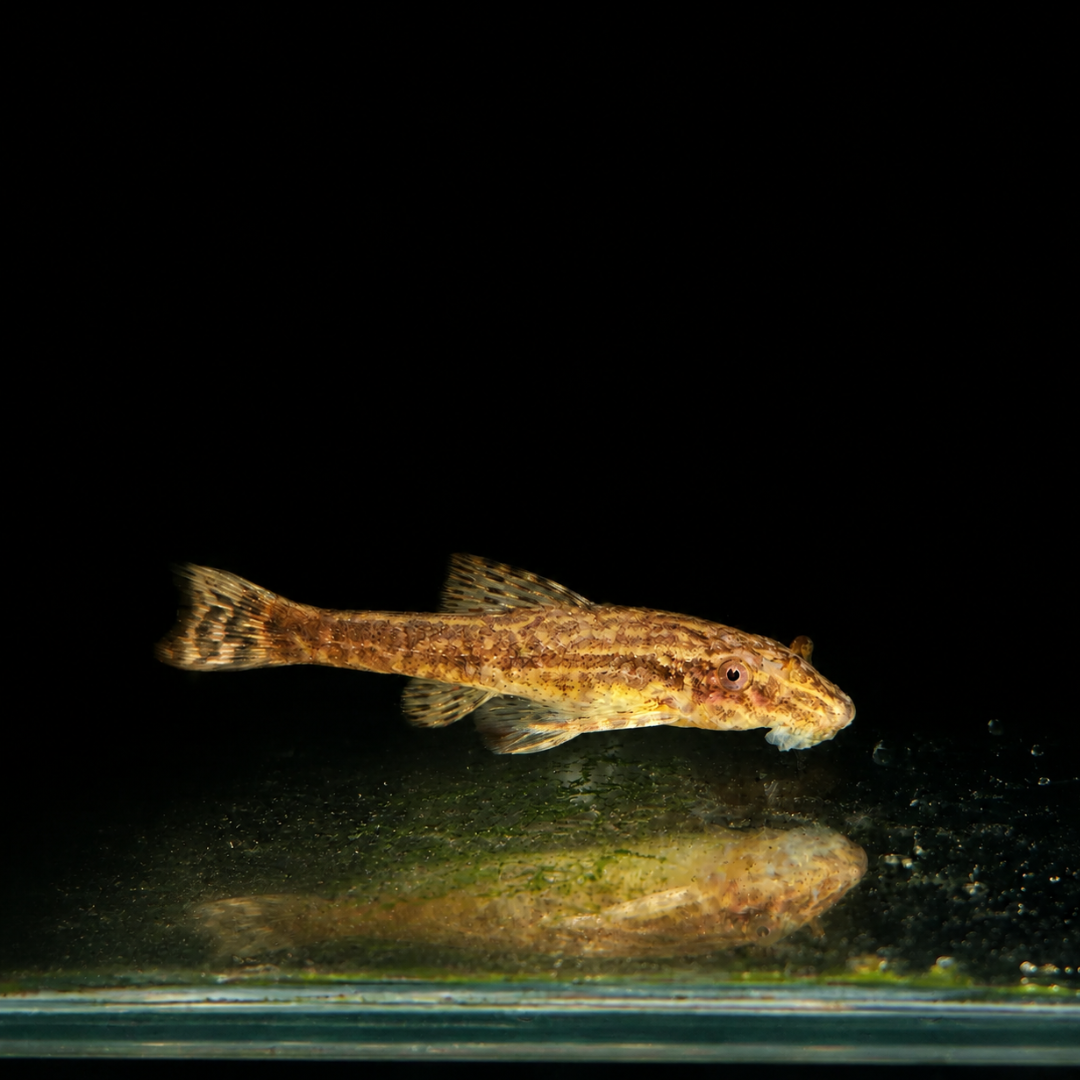
スキゾレキス・ギュンテリーは、ブラジル南東部から南部にかけて広がる大西洋岸森林(マタ・アトランチカ)の、清らかで涼しい沿岸河川にだけ暮らす小型のロリカリア科ナマズです。スキゾレキス属に含まれるのはこの1種だけで、非常に古い系統の生き残りと考えられています。全長4〜5cmほどの体は重なり合う骨板に覆われ、暗褐色や赤茶色の地に淡い斑点や虫食い状のマーブル模様が入ります。模様は一匹ごとに大きく異なり、同じ便で届いた個体を並べると、別の種類が混ざっているように見えるほどです。茶ゴケ(珪藻類)などの柔らかな藻類をよく食べる一方、水草はほとんど傷めないため、水草水槽のお掃除役としても、小型ナマズのコレクション対象としても根強い人気があります。日本へは主にパラオトシン・マクリカウダの便に混じる形で、ブラジル産の野生個体が不定期に輸入されています。ただし、アマゾン産のオトシンクルスと同じ感覚で飼うと失敗しやすい魚でもあります。亜熱帯の涼しい渓流に適応しているため暑さに弱く、コケだけでは栄養が足りずに痩せてしまいやすいからです。この2点さえ押さえれば、頭を振って泥を払いながら石の上で黙々と食事をする、本来の愛らしい姿を水槽で長く楽しめます。 Schizolecis guentheri is a small loricariid catfish found only in the clear, cool coastal rivers of the Atlantic Forest (Mata Atlântica), which stretches from southeastern to southern Brazil. It is the only species in the genus Schizolecis and is thought to be a survivor of a very old lineage. Its body, about 4 to 5 cm in total length, is covered with overlapping bony plates, and its dark brown or reddish-brown base color is marked with pale spots and vermiculated, marble-like patterns. The patterns differ so much from fish to fish that individuals from the same shipment can look like a mix of different species. Because it readily eats soft algae such as diatoms (brown algae) while leaving aquatic plants almost untouched, it is popular both as a cleaner for planted tanks and as a collector’s item among fans of small catfish. Wild fish from Brazil reach Japan irregularly, mainly mixed in with shipments of Parotocinclus maculicauda. However, it is easy to fail with this fish if it is kept like an Amazonian Otocinclus. Adapted to cool subtropical streams, it is sensitive to heat, and algae alone do not give it enough nutrition, so it tends to lose weight. If these two points are kept in mind, you can enjoy its natural, charming behavior, quietly feeding on stones while shaking off silt with its head, for many years.
基本情報 / Basic Information
| 学名 / Scientific Name | Schizolecis guentheri (Miranda Ribeiro, 1918) (原記載の綴りに基づく慣用表記:Schizolecis guntheri/シノニム:Microlepidogaster guntheri、Pseudotocinclus ribeiroi)(Widely used spelling based on the original description: Schizolecis guntheri / Synonyms: Microlepidogaster guntheri, Pseudotocinclus ribeiroi) |
|---|---|
| 通称 / Common Name | スキゾレキス・ギュンテリー、スキゾレキス・グンテリー、スキゾレキス・グエンテリィ、シキゾレシス・ギュンテリー、オトシン・ギュンテリィー、パラオトシン・ギュンテリーGunther’s Algae Eater, Schizolecis, Cascudinho (Brazilian local name) |
| 分類 / Family | ナマズ目 ロリカリア科 ヒポプトポマ亜科(分子系統解析に基づき、オトティリス亜科またはオトティリス族とする見解もある) スキゾレキス属(1属1種)Siluriformes, Loricariidae, Hypoptopomatinae (treated as Otothyrinae or the tribe Otothyrini in some molecular phylogenetic studies), genus Schizolecis (monotypic) |
| 英名 / English Name | Gunther’s Algae Eater |
| 分布 / Distribution | ブラジル南東部〜南部の大西洋岸森林を流れ、大西洋へ直接注ぐ沿岸河川(リオデジャネイロ州、サンパウロ州、パラナ州、サンタカタリーナ州北部)。アマゾン川水系には分布しない。Coastal rivers that flow through the Atlantic Forest of southeastern to southern Brazil and drain directly into the Atlantic Ocean (states of Rio de Janeiro, São Paulo, Paraná, and northern Santa Catarina). It does not occur in the Amazon basin. |
| 最大体長 / Max Size | 全長約4〜5cm(尾ビレを除いた標準体長では、雄で最大約4.0cm、雌で最大約3.1cmの記録があり、雄のほうが大きくなる傾向がある)About 4 to 5 cm in total length (in standard length, excluding the tail fin, recorded maximums are about 4.0 cm for males and about 3.1 cm for females, with males tending to grow larger) |
| 寿命 / Lifespan | 約3〜5年About 3 to 5 years |
飼育環境 / Aquarium Environment
| 水槽サイズ / Tank Size | 60cm規格水槽(約57L)以上が理想。複数匹で飼うのが基本のため、水量に余裕があるほど水質と水温が安定しやすい。導入直後の個体や痩せた個体を回復させる場合は、底砂を敷かないベアタンクの45〜60cm水槽も有効。A 60 cm standard tank (about 57 L) or larger is ideal. Because this fish is best kept in groups, a larger water volume makes water quality and temperature more stable. For newly introduced or underweight fish, a bare-bottom 45 to 60 cm tank is also effective for recovery. |
|---|---|
| 水温 / Temperature | 20〜25℃(理想は22〜24℃前後)。原産地の平均水温は20℃前後と低めで、暑さには弱い。28℃以上が続く環境は避けたい。水温が30℃を超えて全滅した飼育例もあるため、夏場はエアコンや水槽用クーラー、冷却ファンによる対策が欠かせない。 20 to 25°C (ideally around 22 to 24°C). The average water temperature in its native habitat is relatively low, around 20°C, and it does not tolerate heat well. Prolonged periods above 28°C should be avoided. There are reports of entire groups dying when the temperature exceeded 30°C, so cooling with an air conditioner, aquarium chiller, or cooling fan is essential in summer. |
| 水質 / Water Quality | 弱酸性〜中性(pH6.0〜7.5)の軟水〜中硬水。日本の水道水にはなじませやすく、数値を細かく調整するよりも、酸素を豊富に保ち、有機物や硝酸塩をため込まないことが大切。同じ川に暮らすパラオトシン・マクリカウダよりも水質悪化に弱いとされるため、こまめな換水が欠かせない。Slightly acidic to neutral (pH 6.0 to 7.5), soft to moderately hard water. It adapts easily to Japanese tap water, and keeping oxygen levels high and preventing the buildup of organic waste and nitrates matter more than fine-tuning parameters. It is said to be less tolerant of poor water quality than Parotocinclus maculicauda, which lives in the same rivers, so frequent water changes are essential. |
| レイアウト / Layout | 野生では水草の葉よりも石や岩の表面に張り付いて暮らしているため、石や流木を多めに配した渓流風のレイアウトがよく似合う。照明を当てて石の表面に柔らかな藻類を育てておくと、自然な採餌の様子を観察できる。水草はほとんど食べないので、陰性水草や有茎草と組み合わせることもできる。導入直後や繁殖を狙う場合は、フンや食べ残しを吸い出しやすいベアタンクに、石や流木を最小限入れる方式が管理しやすい。In the wild it lives clinging to stones and rocks rather than plant leaves, so a stream-style layout with plenty of stones and driftwood suits it well. If the stones are lit so that soft algae grow on them, you can watch its natural grazing behavior. Because it rarely eats plants, it can also be combined with shade-tolerant plants and stem plants. For newly introduced fish or breeding attempts, a bare-bottom tank with only a few stones and pieces of driftwood is easiest to manage, since waste and leftover food can be siphoned out easily. |
| 注意点 / Precautions | 最大の課題は夏場の高温対策。濾過能力に余裕のあるフィルターとエアレーションで、酸素を十分に行き渡らせる。体表がザラザラしていて網目に引っかかりやすく、乱暴にすくうとスレ傷から病気を招くため、目の細かい柔らかいネットやプラケースで丁寧に扱う。購入時は、腹部が極端に凹んでいる、目が落ち込んでいる、水面付近でぼんやりしているといった個体を避け、石やガラス面を活発に舐め回している個体を選ぶとよい。The biggest challenge is coping with summer heat. Use a filter with spare capacity and aeration to keep the water well oxygenated. Its rough skin easily snags on nets, and rough handling can cause abrasions that lead to disease, so handle it gently with a fine, soft net or a plastic container. When buying, avoid fish with severely sunken bellies or eyes, or that hang listlessly near the surface, and choose individuals actively grazing on stones and glass. |
餌と給餌 / Feeding
| 餌の種類 / Diet | 雑食性。茶ゴケやガラス面の柔らかな藻類に加え、底生魚用の沈下性タブレットを主食にする。皮をむいたズッキーニやキュウリなどの野菜も補助として使える。動物質では活きイトメ(イトミミズ)や冷凍アカムシを大変好み、与えると体つきが目に見えてしっかりしてくる。Omnivorous. In addition to brown algae and soft algae on the glass, sinking tablets for bottom dwellers should be the staple food. Peeled vegetables such as zucchini and cucumber can be used as a supplement. Among animal foods, it is very fond of live tubifex worms and frozen bloodworms, and its body visibly fills out when they are given. |
|---|---|
| 給餌のポイント / Feeding Tips | 「コケだけで飼える」と考えるのは禁物。茶ゴケ以外の硬い藻類はほとんど食べないため、藻類の少ない水槽では数週間で餓死するおそれがある。野生でも、純粋な藻類より、有機物の堆積(デトリタス)や珪藻、微小な水生昆虫が混ざった岩肌のぬめり(バイオフィルム)を主に食べていることが分かっている。つまり飼育下でも、人工飼料と動物質の餌を組み合わせることが長期飼育の鍵になる。食べるのがゆっくりで、アカムシ1本にも時間をかけるため、混泳水槽では消灯の約1時間後に沈下性の餌を入れるなど、他の魚に横取りされない工夫をしたい。Do not assume it can live on algae alone. It hardly eats hard algae other than brown algae, so in tanks with little algae it can starve within a few weeks. Even in the wild, it has been found to feed mainly on the slimy biofilm on rocks, a mix of organic sediment (detritus), diatoms, and tiny aquatic insects, rather than on pure algae. In other words, combining prepared foods with animal foods is the key to keeping it long term in the aquarium as well. It eats slowly, taking its time over even a single bloodworm, so in community tanks it helps to add sinking food about an hour after the lights go out so that other fish do not steal it. |
性格と混泳 / Temperament and Tank Mates
| 性格 / Temperament | 温和で臆病な性格で、他の魚に危害を加えることはない。6匹以上の群れで飼うと落ち着きやすく、自然な行動が見られる。ただし、同種同士ではマクリカウダよりやや強い縄張り意識を見せることがある。特定の個体ばかりが追われるようなら、水槽を広くするか、石や流木で視線を遮ると落ち着きやすい。It is peaceful and timid and does not harm other fish. Kept in groups of six or more, it tends to settle down and show natural behavior. However, it can be somewhat more territorial toward its own kind than P. maculicauda. If one fish is repeatedly chased, a larger tank or stones and driftwood that block lines of sight usually help calm things down. |
|---|---|
| 混泳の相性 / Compatibility | 温和な他種のオトシン類や、中〜上層を泳ぐ小型カラシン(テトラ類)とはよく同居できる。一方、口の大きな魚や肉食魚とは捕食の危険があり、身を守るために立てたヒレの硬い棘が相手の口に刺さって、双方が傷つくおそれもある。餌を素早く奪う貪欲な底生魚と一緒だと、本種が餌にありつけずに痩せてしまう。また、ディスカスなど動きがゆっくりで体高のある魚の体表を舐めようとつきまとう例も報告されているため、組み合わせには注意したい。It coexists well with other peaceful otocinclus-type catfish and with small characins (tetras) that swim in the middle to upper levels. Large-mouthed or predatory fish may eat it, and the hard fin spines it raises in defense can lodge in the predator’s mouth and injure both fish. Kept with greedy bottom dwellers that grab food quickly, it may not get enough to eat and become thin. There are also reports of it following slow-moving, deep-bodied fish such as discus to graze on their skin, so tank mates should be chosen carefully. |
病気と対策 / Diseases and Prevention
| かかりやすい病気 / Common Diseases | 特に注意したいのは、網スレなどの傷から発症する水カビ病と、夏場の高温や水質悪化で起こりやすいカラムナリス症。輸入直後の野生個体は輸送の疲れからヒレの傷みや痩せが見られることが多く、体表に寄生虫が付いていた例も知られている。Particular attention should be paid to saprolegniasis (water mold), which develops from wounds such as net abrasions, and columnaris disease, which tends to occur with high summer temperatures and poor water quality. Newly imported wild fish often show damaged fins and weight loss from the stress of transport, and cases of external parasites have also been recorded. |
|---|---|
| 対策と予防 / Prevention | 小さなナマズにとって発症後の治療は負担が大きいため、何より予防が大切。導入時は柔らかいネットや容器で丁寧に扱い、別水槽で数日から1週間ほど様子を見ながら、十分に餌を与えて体力を回復させる。夏場は水温を25℃前後に抑えることを目標にし、こまめな換水とエアレーションで、清潔で酸素の豊富な水を保つ。Treatment after the onset of disease is hard on such a small catfish, so prevention matters most. Handle new fish gently with a soft net or container, and keep them in a separate tank for several days to a week, feeding them well so they regain their strength. In summer, aim to keep the water at around 25°C, and maintain clean, oxygen-rich water through frequent water changes and aeration. |
増やし方(繁殖) / Breeding
| 雌雄の判別 / Sexing | 雄は吻部(鼻先)が短く丸みを帯び、腹部のラインがまっすぐで、体はやや大きくなる傾向がある。雌は吻部がやや長く見え、成熟すると腹部が丸く膨らむ。体色の濃さや派手さは個体差や周囲の環境で大きく変わるため、判別の手がかりにはならない。1匹だけで見分けるのは難しいので、複数匹を並べて吻部の輪郭と腹部の張りを比べるのが確実。Males tend to have a shorter, more rounded snout, a straighter belly line, and a slightly larger body. Females appear to have a slightly longer snout, and their bellies become rounded when mature. Color intensity and brightness vary greatly between individuals and with surroundings, so they are not useful for sexing. Since a single fish is hard to judge, the most reliable method is to compare the snout outline and belly fullness of several fish side by side. |
|---|---|
| 繁殖形態 / Reproduction | 卵生。成熟した雌雄が揃うと、雌がガラス面や石、流木などの平らな面に粘着性の卵を産みつけ、雄が受精させる。産卵はTポジション、またはそれに近い姿勢で行われると推測されている。親が卵を守るかどうかについては、守らないとする見方と、卵を守るような仕草が見られたとする観察があり、はっきりしていない。卵は約2日で孵化する。仔魚はしばらくヨークサック(卵黄の袋)を抱えたまま物に付着して過ごし、その後2〜3日で自由に泳ぎ始める。Egg-laying. When mature males and females are present, the female attaches adhesive eggs to flat surfaces such as glass, stones, or driftwood, and the male fertilizes them. Spawning is presumed to take place in a T-position or a similar posture. It is unclear whether the parents guard the eggs: some sources say there is no parental care, while others report behavior that looks like egg guarding. The eggs hatch in about two days. The larvae stay attached to surfaces with their yolk sacs for a while and begin swimming freely two to three days later. |
| 繁殖のポイント / Breeding Tips | 難易度は高めだが、国内でも水槽での繁殖・育成に成功した例がある。野外調査では、群れの半数が成熟する大きさが全長約37mmと、最大サイズにかなり近いことが分かっている。つまり、輸入直後によく見られる3cm前後の若魚はまだ繁殖できる段階になく、成魚サイズまでじっくり育てる必要があると考えられる。4cm以上に育った健康な個体を複数匹ベアタンクなどで飼い込み、活きイトメや冷凍アカムシを十分に与えて、雌の腹部が膨らむまで仕上げる。原産地では水温が上がり雨が増える春から夏に繁殖期を迎えるため、20〜22℃程度から23〜25℃へ緩やかに水温を上げつつ、涼しく清潔な新水で換水することが、産卵のきっかけになると期待されている。稚魚の育成には、植物質だけでなく動物性の微小な餌が欠かせないとされる。飼育下での産卵数や育成率のデータはまだ少なく、今後の記録の積み重ねが待たれている。Breeding is relatively difficult, but there are successful cases of spawning and rearing in aquariums in Japan. Field studies have found that the size at which half of a population is mature is about 37 mm in total length, quite close to the maximum size. In other words, the young fish of around 3 cm that often arrive in imports are not yet ready to breed, and they likely need to be grown patiently to adult size. Keep several healthy fish that have reached over 4 cm in a bare-bottom tank or similar setup, and condition them with plenty of live tubifex and frozen bloodworms until the females’ bellies fill out. In the wild, the breeding season comes in spring and summer as water temperature and rainfall rise, so gradually raising the temperature from about 20 to 22°C to 23 to 25°C while changing water with cool, clean water is expected to trigger spawning. Tiny animal-based foods, not just plant matter, are said to be essential for raising the fry. Data on clutch size and survival rates in captivity are still scarce, and more records are awaited. |
雑学と豆知識 / Trivia and Fun Facts
| 1. 名前の主は「もう一人のギュンター」 / 1. Named After “the Other Günther” | 種小名のギュンテリーは、大英博物館で活躍した高名な魚類学者アルベルト・ギュンターにちなむものだと、海外の観賞魚メディアでも長く紹介されてきました。ところが原記載の背景を丁寧にたどると、実際に名前を贈られたのは、サンパウロのパウリスタ博物館のためにサン・セバスティアン島で本種のタイプ標本を含む多くの標本を集めた採集者、フランシスコ・ギュンターだったことが分かっています。あまりに有名な学者と同じ姓だったために生まれた、ちょっとした勘違いだったのです。さらに1918年の原記載では、著者のミランダ・リベイロがあるページではguntheriと綴りながら、次のページでは正しくGüntherと記していました。国際動物命名規約では、ドイツ語の人名に由来するウムラウトをueに置き換えることになっているため、現在の正式な学名はguentheriとされています。それでも原記載の綴りであるguntheriは学術論文や流通の現場に深く根付いており、100年以上たった今も2つの表記が並んで使われています。The species name guentheri has long been described, even in overseas aquarium media, as honoring Albert Günther, the renowned ichthyologist of the British Museum. However, careful research into the original description has shown that the person actually honored was Francisco Günther, a collector who gathered many specimens on the island of São Sebastião for the Museu Paulista in São Paulo, including the type specimens of this species. The confusion arose simply because he shared a surname with a famous scientist. In addition, in the original 1918 description, the author Miranda Ribeiro spelled the name guntheri on one page and then correctly wrote Günther on the next. Under the International Code of Zoological Nomenclature, an umlaut in a name derived from a German personal name is replaced with ue, so the valid name today is guentheri. Even so, the original spelling guntheri is deeply rooted in scientific papers and the aquarium trade, and both spellings are still used side by side more than a century later. |
|---|---|
| 2. 「分けられた小さな板」を意味する属名と、世界の呼び名 / 2. A Genus Name Meaning “Divided Little Plate” and Names Around the World | 属名のスキゾレキスは、古代ギリシャ語で「分ける・裂く」を意味するschizeinと、「小さな皿・板」を意味するlekisを組み合わせたものです。命名者は、鼻先を覆う骨板が頭部の骨板と同じくらいの大きさであることを、この名前で表したとされています。中国語圏で使われる「岡瑟氏裂盤鯰」という名前は、この語源をほぼそのまま漢字に置き換えたもので、観賞魚の市場では体表の木目のような模様から「木紋小精靈」という愛らしい呼び名も使われています。チェコ語では模式産地のサン・セバスティアン島にちなみ、「サン・セバスティアンの鎧ナマズ」を意味する名前が付けられています。同じ魚でも、国によって注目するポイントが違うのが面白いところです。The genus name Schizolecis combines the ancient Greek schizein, meaning “to divide” or “to split,” and lekis, meaning “small plate.” The authors are said to have used it to refer to the plates on the snout being about the same size as those on the head. The Chinese name, which can be read as “Günther’s split-plate catfish,” is an almost literal rendering of this etymology, and in aquarium markets it is also affectionately called a name meaning “little wood-grain sprite,” after the wood-grain-like pattern on its body. In Czech, it is named after its type locality, the island of São Sebastião, with a name meaning “São Sebastião armored catfish.” It is interesting how each country focuses on a different aspect of the same fish. |
| 3. 約4,200万年の古い系統と、隠れていた5つのグループ / 3. A Lineage About 42 Million Years Old and Five Hidden Groups | 本種の研究は、1918年にミクロレピドガステル属の一種として記載されたところから始まりました。1955年には別の属の新種として記載された標本もありましたが、1984年にブラジルの魚類学者ブリツキとガラヴェロがスキゾレキス属を新たに設けた際、それらは同じ種としてまとめられました。21世紀に入って遺伝子を使った系統解析が進むと、スキゾレキスの系統は始新世中期、およそ4,200万年前に他のグループから分かれた、とても古い系統である可能性が示されました。さらに近年、多数の標本の遺伝子と体形を合わせて調べた研究では、これまで1種とされてきた本種が、リオデジャネイロ州からパラナ州にかけての互いに独立した沿岸河川ごとに、少なくとも5つの遺伝的なグループに分かれている可能性が高いと報告されています。グループ間の遺伝的な違いは別種に相当するほど大きい一方で、体の形は産地ごとに少しずつ連続して変わっており、別種として区別できる決定的な特徴はまだ見つかっていません。つまり、遺伝子の上では分かれ始めているものの、見た目の違いがまだはっきり現れていない、種が分かれていく途中の段階にあると考えられているのです。入荷便によって体格や模様の雰囲気が少しずつ違うと感じられるのは、こうした産地ごとの違いを映しているのかもしれません。Research on this species began with its description in 1918 as a member of the genus Microlepidogaster. Specimens were also described as a new species in a different genus in 1955, but when the Brazilian ichthyologists Britski and Garavello established the genus Schizolecis in 1984, these were combined into a single species. As genetic phylogenetic analysis advanced in the 21st century, it was suggested that the Schizolecis lineage is a very old one that split from other groups in the middle Eocene, about 42 million years ago. More recently, a study combining genetic and body-shape analysis of many specimens reported that this species, long regarded as one, is likely divided into at least five genetic groups, each confined to separate coastal river systems from Rio de Janeiro to Paraná. While the genetic differences between the groups are large enough to correspond to separate species, body shape changes gradually and continuously from one locality to the next, and no decisive features for distinguishing separate species have yet been found. In other words, the groups are thought to be partway through splitting into species: they have begun to diverge genetically, but the differences are not yet clearly visible. The impression that fish from different shipments differ slightly in build and pattern may reflect these regional differences. |
| 4. マクリカウダに紛れてやって来る魚 / 4. The Fish That Arrives Hidden Among Maculicauda | 原産地では、本種は同じ川に暮らすパラオトシン・マクリカウダと一緒に網に入ることが多く、現地の輸出業者も両種を厳密に分けずに出荷してきた歴史があります。そのため日本のショップでも、長らくマクリカウダの水槽に紛れ込んだ「混じり個体」として、同じ値段で並ぶことが珍しくありませんでした。その後、ブラジルの観賞魚輸出規制の影響で入荷が一時大きく途絶え、希少になった時期もありました。近年は初夏を中心に本種がまとまって混じる便が見られるようになり、事前に選り分けられて独自の名前で販売されることが増えています。流通名はギュンテリー、グンテリー、グエンテリィ、シキゾレシスなど実にさまざまなので、学名で確かめるのがいちばん確実です。In its native range, this species is often caught in the same nets as Parotocinclus maculicauda, which lives in the same rivers, and local exporters have historically shipped the two without strictly separating them. As a result, in Japanese shops it was long common to find it mixed into maculicauda tanks as a “hitchhiker” sold at the same price. Later, imports were greatly disrupted by Brazil’s ornamental fish export regulations, and there was a period when it became scarce. In recent years, shipments containing substantial numbers of this species have been seen, mainly in early summer, and it is increasingly sorted out in advance and sold under its own name. Its trade names in Japan vary widely, with renderings such as Guntheri, Guentheri, and Shikizoreshisu, so checking the scientific name is the most reliable approach. |
| 5. 食い違うナンバーと、輸入便に紛れていた「LG 4」 / 5. Conflicting Code Numbers and “LG 4” in a Shipment | プレコや小型ロリカリアの愛好家の間で使われるコードナンバーの世界でも、本種はちょっとした話題の主です。ドイツのあるデータベースでは本種に「LDA 13」の番号が付けられている一方、別のデータベースではLDA 13が別属のヒポプトポマ・イネクスペクタトゥムに割り当てられており、情報源によって同じ番号が別の魚を指していることがあります。海外のリストを参照するときは、番号ではなく学名で確かめるのが安心です。また2010年12月、ドイツに輸入されたブラジル南東部産の本種の便の中に、ナマズ研究家のハンス=ゲオルク・エーヴァースとインゴ・ザイデルが著書『Wels-Atlas』の中で、属名も種名も当てはめられないとして「LG 4」と呼んでいた魚が混じっていたことが報告されています。本種が暮らす大西洋岸森林の渓流には、分類がはっきりしない小型ナマズがほかにも暮らしていることを感じさせるエピソードです。In the world of code numbers used by fans of plecos and small loricariids, this species is also a minor topic of conversation. One German database assigns it the number “LDA 13,” while another assigns LDA 13 to Hypoptopoma inexspectatum, a fish in a different genus, so the same number can refer to different fish depending on the source. When consulting overseas lists, it is safer to check the scientific name rather than the number. In December 2010, it was also reported that a shipment of this species from southeastern Brazil imported into Germany contained a fish that catfish researchers Hans-Georg Evers and Ingo Seidel had called “LG 4” in their book “Wels-Atlas,” because neither a genus nor a species name could be applied to it. It is an episode that suggests other small catfish of uncertain classification also live in the Atlantic Forest streams that are home to this species. |
| 6. 亜科で初めて記録されたアルビノ / 6. The First Albino Recorded in the Subfamily | 2005年、リオデジャネイロ州マカエ川水系のボニート川で採集された標準体長約30mmの雄が、アルビノ個体であることが報告されました。淡い黄色の体、半透明の腹、色のないヒレ、そして赤い目を持つこの個体は、ヒポプトポマ亜科で初めてのアルビノの記録とされています。採集された川は清浄で、汚染の影響は考えにくいことから、偶然の遺伝子変異によるものと考えられています。本来なら暗いまだら模様で岩肌に溶け込むはずの魚が、その隠れ蓑を失いながらも成魚まで生き延びられたのは、岩陰に潜んで暮らす習性が身を守るのに役立ったためではないかとも考えられています。In 2005, a male with a standard length of about 30 mm, collected from the Bonito River in the Macaé River system of Rio de Janeiro state, was reported to be an albino. With its pale yellow body, translucent belly, colorless fins, and red eyes, it is regarded as the first record of albinism in the subfamily Hypoptopomatinae. Because the river where it was collected was clean and pollution was unlikely to be a factor, it is thought to have resulted from a chance genetic mutation. It has also been suggested that this fish, which would normally blend into rock surfaces with its dark mottled pattern, was able to survive to adulthood without that camouflage because its habit of hiding among rocks helped protect it. |
| 7. 頭を振って泥を払う、精密なお掃除術 / 7. A Precise Cleaning Technique: Shaking Off Silt | 本種が石やガラス面を掃除する様子をじっくり観察すると、ただ口を当てて滑らせているだけではないことが分かります。野外の研究では、泥やシルトが積もった場所に来ると頭を下に向けて体を小刻みにくねらせ、堆積物を払い落としてから、削り取る動きと吸い付く動きを交互に繰り返し、ぎこちなく前へ進んでいく様子が記録されています。食事のあとの岩には、平行に並んだ細長い独特の食べ跡が残るといいます。日当たりがよく餌の豊富な場所ほど数が多く、条件のよい渓流では採集された魚の6割以上を本種が占めた記録もあります。周囲の明るさに合わせて体色をすばやく濃くしたり薄くしたりする能力も含め、清流の石の上で暮らすために長い年月をかけて磨かれてきた姿だといえるでしょう。If you watch closely as this species cleans stones or glass, you will see that it is not simply pressing its mouth to the surface and sliding along. Field studies have recorded that when it reaches a spot covered with mud or silt, it points its head downward and wiggles its body to shake off the sediment, then moves forward jerkily while alternately scraping and sucking. After it has fed, distinctive, elongated parallel feeding marks are said to remain on the rock. It is more numerous in sunny places where food is plentiful, and in favorable streams there is a record of this species making up more than 60 percent of all fish collected. Together with its ability to quickly darken or lighten its coloration to match the brightness of its surroundings, these traits can be seen as the result of a long history of adaptation to life on the stones of clear streams. |
まとめ / Conclusion
スキゾレキス・ギュンテリーは、わずか4〜5cmほどの体に、ブラジル大西洋岸の清流で長い時間をかけて受け継がれてきた歴史を宿す小さなナマズです。一匹ごとに異なる木目のような模様、周囲に合わせて変わる体色、そして頭を振って泥を払いながら石の上を進む独特の食事の仕草は、眺めるほどに新しい発見を与えてくれます。 Schizolecis guentheri is a small catfish whose body, just 4 to 5 cm long, carries a history passed down over a long time in the clear streams of Brazil’s Atlantic coast. Its wood-grain patterns that differ from fish to fish, its coloration that shifts with its surroundings, and its distinctive way of moving across stones while shaking off silt offer new discoveries the longer you watch.
涼しく酸素の豊富な水を保ち、コケだけに頼らず人工飼料や動物質の餌でしっかりお腹を満たしてあげることが、この魚と長く付き合うためのいちばんの近道です。石組みと清らかな水を整えた水槽では、ふっくらと育った群れが穏やかに石を磨き続け、遠い南米の渓流を思わせる落ち着いた景色を見せてくれることでしょう。 Keeping the water cool and rich in oxygen, and filling their bellies with prepared and animal-based foods rather than relying on algae alone, is the surest way to enjoy many years with this fish. In a tank with arranged stones and clean water, a well-fed group will keep calmly polishing the rocks, creating a peaceful scene reminiscent of a distant South American stream.

困りごとの解決から、用品えらび、水槽づくり、生き物えらびまで。飼育に役立つ案内です。
分布マップ
スキゾレキス・ギュンテリー(Schizolecis guentheri)は、ブラジル南東部から南部にかけての大西洋岸森林を流れ、大西洋へ直接注ぐ沿岸河川に分布します。主な分布域はリオデジャネイロ州、サンパウロ州、パラナ州、サンタカタリーナ州北部の沿岸部で、アマゾン川水系には分布しません。
地図は分布域のおおよその範囲を示す概略表示です。マーカーは分布域の中央付近に置いた目安の地点で、実際の採集地点や生息地点を示すものではありません。本種は上記の州の沿岸部を流れる、互いに独立した中小河川に点在して生息しています。
参考文献
- Reis, R. E. & Lehmann A., P. (2022). A new genus of armored catfish (Siluriformes: Loricariidae) from the Greater Amazon, with a review of the species and description of five new species. Neotropical Ichthyology, 20(2): e220002. DOI: 10.1590/1982-0224-2022-0002
- Lehmann A., P., Schvambach, L. J. & Reis, R. E. (2015). A new species of the armored catfish Parotocinclus (Loricariidae: Hypoptopomatinae), from the Amazon basin in Colombia. Neotropical Ichthyology, 13(1): 47–52. DOI: 10.1590/1982-0224-20140113
- Schaefer, S. A. (1997). The Neotropical cascudinhos: systematics and biogeography of the Otocinclus catfishes (Siluriformes: Loricariidae). Proceedings of the Academy of Natural Sciences of Philadelphia, 148: 1–120.
- Armbruster, J. W. (1998). Modifications of the digestive tract for holding air in loricariid and scoloplacid catfishes. Copeia, 1998(3): 663–675. DOI: 10.2307/1447796
- Axenrot, T. E. & Kullander, S. O. (2003). Corydoras diphyes (Siluriformes: Callichthyidae) and Otocinclus mimulus (Siluriformes: Loricariidae), two new species of catfishes from Paraguay, a case of mimetic association. Ichthyological Exploration of Freshwaters, 14(3): 249–272.
- Noga, E. J. (2010). Fish Disease: Diagnosis and Treatment, 2nd ed. Wiley-Blackwell.
- Fricke, R., Eschmeyer, W. N. & Van der Laan, R. (Eds.). Eschmeyer’s Catalog of Fishes: Genera, Species, References. California Academy of Sciences. https://researcharchive.calacademy.org/research/ichthyology/catalog/fishcatmain.asp
コメント