
解説 / Description
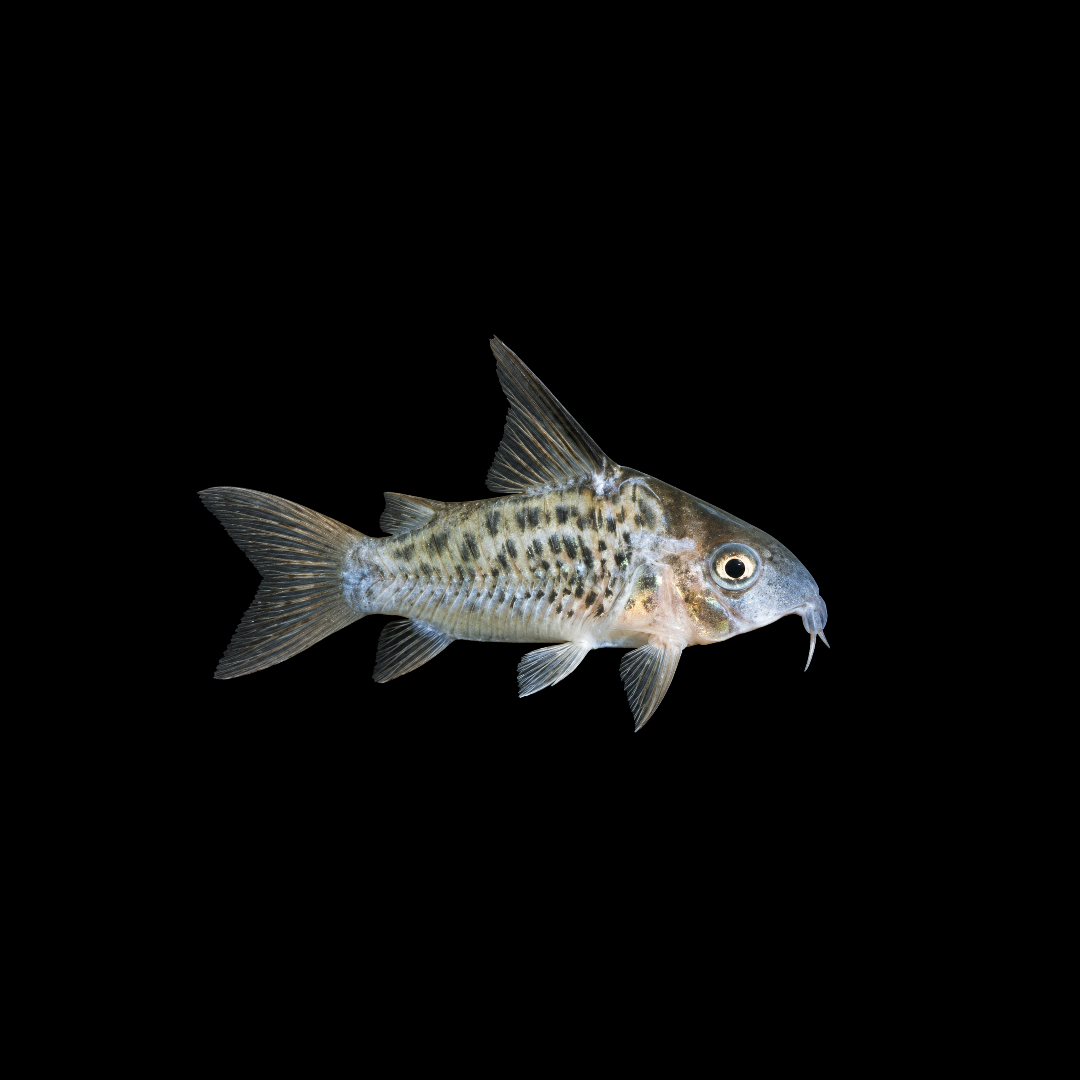
コリドラス・ハイフィンアルマータスは、南米アマゾン川上流域に暮らす装甲ナマズの仲間です。淡いグレーから黄みがかった白の体には黒い斑点と網目模様が散りばめられていますが、何より目を引くのは、高く伸びて先端がゆるやかに弧を描く背ビレです。背ビレの膜には大きな暗色斑が入り、その姿は帆を張った帆船を思わせます。長年「コリドラス・アルマータス」の名で親しまれてきた本種は、2024年に発表された大規模な遺伝子解析の結果を受けてホプリソマ属へと移され、現在の学名はホプリソマ・アルマトゥム(Hoplisoma armatum)となっています。流通するのは主にペルーなどから輸入されるワイルド個体で、入荷は多くありません。そのため、ワイルドコリドラスを集める愛好家のあいだで特に注目される存在です。性格は温和で群れを好むため、細かい砂を敷いた水槽で数匹をまとめて飼えば、仲間と寄り添いながら底砂をつつく愛らしい姿を楽しめます。 The High-fin Armatus Cory is an armored catfish from the upper Amazon basin in South America. Its pale grey to yellowish-white body is scattered with black spots and reticulated markings, but the most eye-catching feature is its tall dorsal fin, which rises high and curves gently at the tip. A large dark blotch on the fin membrane gives it the look of a ship under full sail. Long known in the hobby as Corydoras armatus, it was moved to the genus Hoplisoma following a large-scale genetic study published in 2024, and its current scientific name is Hoplisoma armatum. Most fish in the trade are wild-caught imports, mainly from Peru, and they are not imported in large numbers, which makes the species especially sought after by collectors of wild Corydoras. Peaceful and gregarious, it rewards keepers who house a small group over fine sand with the charming sight of fish sifting the substrate side by side.
基本情報 / Basic Information
| 学名 / Scientific Name | Hoplisoma armatum (Günther, 1868) |
|---|---|
| 通称 / Common Name | コリドラス・ハイフィンアルマータス、コリドラス・アルマータス、ホプリソマ・アルマトゥムHigh-fin Armatus Cory, Armatus Cory |
| 分類 / Family | ナマズ目 カリクティス科 コリドラス亜科 ホプリソマ属(旧コリドラス属)Siluriformes, Callichthyidae, Corydoradinae, genus Hoplisoma (formerly Corydoras) |
| 英名 / English Name | Armatus Cory, High-fin Armatus Cory |
| 分布 / Distribution | 南米アマゾン川上流域。基準産地はペルーのワジャガ川流域(ヘベロス周辺など)です。ほかにエクアドル、コロンビア、ボリビアなどからも記録があり、ブラジルとボリビアの国境付近(マデイラ川上流域)からは外見上ほとんど区別できない個体群が知られています。Upper Amazon basin, South America. The type locality is the Río Huallaga basin in Peru, including the Jeberos area. It has also been recorded from Ecuador, Colombia and Bolivia, and populations that are almost indistinguishable by eye are known from the upper Rio Madeira basin near the Brazil–Bolivia border. |
| 最大体長 / Max Size | 標準体長で約6.5cmとする記録もありますが、一般的には5cm前後です。Some records give up to about 6.5 cm standard length, but around 5 cm is typical. |
| 寿命 / Lifespan | 3~5年程度が目安です。環境が良ければ、それ以上生きることもあります。Around 3–5 years as a guideline, sometimes longer under good conditions. |
飼育環境 / Aquarium Environment
| 水槽サイズ / Tank Size | 60cm規格水槽(約57L)以上を推奨します。群れで暮らす魚なので、少なくとも4~6匹、できればそれ以上でグループ飼育するのが理想です。底面積が広いほど、のびのびと底を探索する姿を観察できます。A standard 60 cm aquarium (about 57 L) or larger is recommended. As a shoaling species, it is ideally kept in a group of at least 4–6, preferably more. The larger the footprint, the more freely you will see the fish forage across the bottom. |
|---|---|
| 水温 / Temperature | 22~26℃。高水温が苦手なため、日本の夏場は冷却ファンや水槽用クーラーで水温の上昇を抑えましょう。 22–26°C (71.6–79°F). It does not tolerate high temperatures well, so use a cooling fan or aquarium chiller to keep the water from overheating during Japanese summers. |
| 水質 / Water Quality | 弱酸性~中性(pH6.0~7.5)の軟水寄り(総硬度2~12 dGH程度)が適しています。サンゴ砂などpHや硬度を上げる素材は避け、急な水質変化を与えないよう注意しましょう。Slightly acidic to neutral water (pH 6.0–7.5) on the soft side (about 2–12 dGH) is suitable. Avoid materials such as coral sand that raise pH or hardness, and take care not to change water chemistry abruptly. |
| レイアウト / Layout | 底床には、田砂のように角が丸く粒の細かい砂を薄く敷くのが最適です。流木や、アヌビアス・ナナ、ミクロソリウム、アマゾンソードなどの陰性水草で隠れ家をつくり、落ち葉を加えて原産地の雰囲気を再現するのもおすすめです。底面フィルターは底床に汚れがたまりやすく、砂を掘り返す本種には向きません。A thin layer of fine, round-grained sand is ideal. Provide hiding places with driftwood and shade-tolerant plants such as Anubias nana, Java fern and Amazon sword, and consider adding leaf litter to recreate its native habitat. Undergravel filters tend to trap waste in the substrate and are unsuitable for a species that constantly digs. |
| 注意点 / Precautions | 大磯砂のような角の鋭い砂利はヒゲを傷つけ、感染症の原因になります。また、背ビレと胸ビレには鋭い棘があって網に絡まりやすいため、すくうときはプラケースなどに追い込むと安全です。胸ビレの棘の付け根付近からは刺激性の分泌物が出ると考えられており、手に刺さると強く痛むことがあるので、素手で扱う際は注意してください。持ち運ぶときは、棘で袋が破れないよう厚手の袋を二重にするなどの工夫が必要です。水流は穏やかにしつつ、水面を適度に波立たせて酸素を十分に行き渡らせましょう。Sharp-edged gravel such as Ohishi sand damages the barbels and leads to infections. The dorsal and pectoral fins bear sharp spines that easily snag in nets, so it is safer to guide the fish into a container when catching them. The base of the pectoral spines is thought to release an irritating secretion, and a puncture can be quite painful, so be careful when handling the fish bare-handed. When transporting, double-bag with thick bags so the spines do not pierce them. Keep the current gentle while agitating the surface enough to supply plenty of oxygen. |
餌と給餌 / Feeding
| 餌の種類 / Diet | 雑食性です。主食には沈下性のコリドラス用タブレットや顆粒状の人工飼料を与え、植物質を補うためにプレコ用の藻類タブレットも時々加えます。さらに週2回ほど、冷凍アカムシやイトメ、冷凍ブラインシュリンプなどの動物性の餌を与えると、体力づくりや繁殖に向けたコンディション調整に役立ちます。Omnivorous. Feed sinking Corydoras tablets or granules as a staple, adding algae wafers occasionally to supply plant matter. Offering frozen bloodworms, tubifex or frozen brine shrimp about twice a week helps build stamina and condition the fish for breeding. |
|---|---|
| 給餌のポイント / Feeding Tips | 他の魚の食べ残しを片付ける「お掃除役」として扱うだけでは、栄養が足りません。本種のための餌が確実に底まで届くようにしましょう。夕方から夜にかけて活発になる傾向があるため、消灯の前後に与えると、上層を泳ぐ魚に横取りされにくくなります。食べ残しは底床の汚れに直結するため、数分で食べきれる量を目安にしてください。Treating it merely as a “cleanup crew” that eats other fish’s leftovers leaves it undernourished, so make sure food meant for it actually reaches the bottom. It tends to become more active in the evening and at night, so feeding around lights-out keeps food from being taken by mid-water fish. Uneaten food quickly fouls the substrate, so feed only what can be finished within a few minutes. |
性格と混泳 / Temperament and Tank Mates
| 性格 / Temperament | とても温和で仲間意識が強く、群れで行動することを好みます。1匹だけで飼うとストレスから物陰に隠れがちになるため、複数匹での飼育が基本です。Very peaceful and strongly social, preferring to move in groups. Kept alone it tends to hide out of stress, so keeping several together is essential. |
|---|---|
| 混泳の相性 / Compatibility | ネオンテトラやエンバーテトラなどの小型カラシン、ラスボラ類、ペンシルフィッシュ、オトシンクルス、アピストグラマなどのドワーフシクリッドとは相性が良好です。一方、底層で縄張りを主張する気の荒いシクリッド、餌を独り占めする大型魚、プレコ類との混泳は、ストレスや餌不足につながるため避けましょう。It does well with small characins such as neon and ember tetras, rasboras, pencilfish, Otocinclus and dwarf cichlids such as Apistogramma. Avoid aggressive, territorial bottom-dwelling cichlids, large fish that monopolize food, and plecos, as they cause stress and underfeeding. |
病気と対策 / Diseases and Prevention
| かかりやすい病気 / Common Diseases | 底床の汚れに敏感で、ヒゲが短く溶けていく「ヒゲ溶け」や、カラムナリス菌などによる尾ぐされ病が代表的です。尾ぐされ病は、ヒレの先端が白く濁り、その周囲が赤く充血するのが初期症状です。進行するとヒレの膜が溶けて骨組みだけが残り、魚は急速に弱ってしまいます。Being sensitive to dirty substrate, it is prone to barbel erosion and to fin rot caused by bacteria such as Columnaris. Early fin rot shows as whitish clouding at the fin tips with reddening around them. As it progresses the membranes dissolve, leaving only the rays, and the fish weakens rapidly. |
|---|---|
| 対策と予防 / Prevention | 粒の細かい清潔な砂を使い、定期的な底床掃除と水換えで汚れの蓄積を防ぐことが最大の予防になります。症状に気づいたら、まず底床掃除と水換えで環境を整えます。細菌感染が明らかな場合は、グリーンFゴールドなどの観賞魚用抗菌剤を使い、隔離水槽で薬浴を行いましょう。初期のヒレの欠損であれば自然に再生することが多いものの、病気の進行は早いため、早期発見と早期対処が大切です。The best prevention is fine, clean sand combined with regular substrate cleaning and water changes to keep waste from building up. If symptoms appear, first improve conditions by cleaning the substrate and changing water. Where bacterial infection is evident, treat the fish in a separate tank with an aquarium antibacterial medication. Minor fin damage often regenerates naturally, but the disease progresses quickly, so early detection and prompt treatment are essential. |
増やし方(繁殖) / Breeding
| 雌雄の判別 / Sexing | 成熟したメスはオスより一回り大きく、抱卵すると上から見て腹部が丸く膨らみます。オスはスリムで直線的な体つきをしています。Mature females are noticeably larger than males and, when carrying eggs, look round-bellied from above. Males have a slimmer, straighter body. |
|---|---|
| 繁殖形態 / Reproduction | 卵生で、粘着性のある卵を産み付けます。コリドラスの仲間はメスがオスの腹部に口を寄せて「T」の字に交差する、Tポジションと呼ばれる姿勢で受精を行い、水草の葉や流木、ガラス面などに卵を少しずつ産み付けていきます。親が卵を守る習性はなく、むしろ卵を食べてしまうことがあります。An egg-layer that deposits adhesive eggs. Like other Corydoras, pairs fertilize the eggs in the so-called “T-position,” with the female placing her mouth against the male’s flank to form a T, and the eggs are laid a few at a time on plant leaves, driftwood or the glass. The parents do not guard the eggs and may even eat them. |
| 繁殖のポイント / Breeding Tips | 本種の水槽内での繁殖報告は少なく、難易度は高いと考えられます。挑戦する場合は、一般的なコリドラスの繁殖方法が参考になります。メス1匹に対しオス2~3匹の割合で、動物性の餌を中心にしっかりと体調を整え、メスのお腹が膨らんできたら、飼育水より2~3℃低い軟らかめの水で多めに換水します。これは原産地の雨季の訪れを再現する方法で、産卵のきっかけになると考えられています。産卵を確認したら親魚を別の水槽へ移すか、卵を指の腹などで慎重にはがし、エアレーションを効かせた別容器へ移しましょう。卵は数日で孵化し、仔魚はお腹の卵黄を吸収し終えると餌を食べ始めます。その後はベビーブラインシュリンプやマイクロワーム、細かくすりつぶした人工飼料を与え、毎日少量ずつ換水して水質を保ちます。Aquarium spawnings of this species are rarely reported, and it is considered a challenging fish to breed. Those who wish to try can follow standard Corydoras breeding methods. Condition a group of two to three males per female mainly on live or frozen foods, and once the female’s belly fills out, carry out a large water change with soft water 2–3°C cooler than the tank. This simulates the onset of the rainy season in its native habitat and is thought to trigger spawning. Once eggs are laid, move the parents to another tank or gently roll the eggs off with a fingertip and transfer them to a separate, well-aerated container. The eggs hatch within a few days, and the larvae begin feeding once they have absorbed their yolk sacs. Then feed baby brine shrimp, microworms or finely crushed dry food, and change a small amount of water daily to maintain water quality. |
雑学と豆知識 / Trivia and Fun Facts
| 1. 「兜」から「武装した体」へ 名前に込められた鎧のイメージ / 1. From “Helmet” to “Armored Body”: Names Built on Armor | 本種を最初に記載したのは大英博物館の動物学者アルベルト・ギュンターで、1868年のことでした。当時の学名はカリクティス・アルマトゥス(Callichthys armatus)です。その後、本種は1世紀以上にわたってコリドラス属に置かれ、コリドラス・アルマータスとして世界中で知られるようになりました。旧属名のコリドラスは、古代ギリシャ語で「兜」と「皮膚」を意味する言葉を組み合わせたもので、体側を覆う骨板を兜に見立てています。種小名のアルマトゥスはラテン語で「武装した」を意味します。ギュンター自身は由来を記していませんが、長く鋭い背ビレの棘や発達した骨板にちなむと考えられています。そして新たな所属先となったホプリソマ属の名も、ギリシャ語で武具を意味する言葉と「体」を意味する言葉に由来し、「武装した体」といった意味を持ちます。分類が大きく変わっても、鎧をまとった魚というイメージは名前の中に受け継がれているのです。なお、種小名の語尾がアルマトゥスからアルマトゥムへ変わったのは、ホプリソマが文法上の中性名詞であるため、ラテン語の規則に従って語尾を合わせたことによるものです。The species was first described in 1868 by Albert Günther, a zoologist at the British Museum, under the name Callichthys armatus. It was later placed in Corydoras for more than a century and became known worldwide as Corydoras armatus. The former genus name Corydoras combines ancient Greek words for “helmet” and “skin,” likening the bony plates on the flanks to a helmet. The species name armatus is Latin for “armed.” Günther did not explain his choice, but it is thought to refer to the long, sharp dorsal spine or the well-developed plates. The name of its new genus, Hoplisoma, likewise derives from Greek words for “weapon” or “armor” and “body,” meaning roughly “armored body.” Even through a major reclassification, the image of a fish clad in armor lives on in its name. The ending changed from armatus to armatum because Hoplisoma is grammatically neuter, and Latin rules require the species name to agree with it. |
|---|---|
| 2. 2024年の大改訂 コリドラス属の再編と古い属名の復活 / 2. The Great Revision of 2024: Reorganizing Corydoras and Reviving Old Names | 150を超える種を抱えていたコリドラス属は、以前から「進化の道筋が異なるいくつものグループが、ひとつの名前の下に混ざっているのではないか」と指摘されてきました。2011年にはミトコンドリアDNAの解析によって9つの系統に分けられることが示され、本種は吻の短い「ショートノーズ系統(Lineage 9)」に位置づけられていました。この長年の課題に答えを出したのが、2024年にDiasやTencattらの研究チームが発表した系統ゲノム解析です。体のつくりと遺伝子の両方のデータを総合した結果、コリドラス属という名前は一部のグループだけに残され、それ以外のグループには、かつてコリドラス属と同じものとして扱われ使われなくなっていた古い属名が復活しました。こうしてコリドラス亜科は、従来のアスピドラス属やスクレロミスタクス属を含めて7つの属に整理されています。本種は、ジュリーやパンダといったおなじみの丸顔の小型種とともに、ホプリソマ属へ移されました。ただし議論はこれで終わったわけではなく、2025年にはホプリソマ属の一部をさらに別の属として分ける提案も出されています。つまり、コリドラスの仲間の分類は今もなお研究が進んでいる最中なのです。お店では今後もしばらく旧学名と新学名が混在すると考えられるため、両方の名前を知っておくと安心です。Corydoras, which once held more than 150 species, had long been suspected of lumping together several groups that followed different evolutionary paths under a single name. A 2011 mitochondrial DNA study divided the group into nine lineages, placing this species in the short-nosed Lineage 9. A phylogenomic study published in 2024 by a team including Dias and Tencatt finally addressed this long-standing problem. Combining anatomical and genetic data, the authors kept the name Corydoras for only one group and revived old genus names, which had fallen out of use after being treated as identical to Corydoras, for the others. As a result, the subfamily Corydoradinae is now organized into seven genera, including the long-established Aspidoras and Scleromystax. This species was moved to Hoplisoma together with familiar round-faced small species such as the Julii and Panda Cory. The debate has not ended, however: in 2025 a proposal was made to split part of Hoplisoma into yet another genus. In other words, the classification of these catfish is still an active area of research. Old and new names are likely to coexist in shops for some time, so it is useful to know both. |
| 3. 「旧アルマータス」と「ハイフィン」 呼び分けが生まれた理由 / 3. “Old Armatus” and “High-fin”: Why Two Names Arose | 日本の熱帯魚店では、本種がわざわざ「ハイフィン」アルマータスと呼ばれることがあります。その背景には、観賞魚の世界で当初、別の魚がアルマータスだと考えられていたという経緯があります。それはペルーのナナイ川に暮らす未記載種で、背ビレの下に縦に走る黒い帯と、目を覆う黒いマスク模様を持つのが特徴です。この魚が本物とは別種だと分かってからは「旧アルマータス」と呼ばれるようになり、本物を区別するために、最大の特徴である高い背ビレを名前に冠した「ハイフィンアルマータス」という呼び名が広まったと考えられています。また、同じペルーのロレト周辺に暮らすロレトエンシスも、斑点模様が似ているためよく混同されますが、本種の方が体高が高く、背ビレの棘も目立って長いことで見分けられます。In Japanese aquarium shops this species is sometimes specifically called the “High-fin” Armatus. The background is that, in the aquarium hobby, a different fish was originally thought to be the armatus. That fish is an undescribed species from the Rio Nanay in Peru, recognizable by a dark vertical bar beneath the dorsal fin and a black mask across the eye. Once it was recognized as a different species it came to be called the “Old Armatus,” and the name “High-fin Armatus,” highlighting the genuine fish’s tall dorsal fin, is thought to have spread as a way to tell them apart. Corydoras loretoensis, found around Loreto in Peru, is also often confused with this species because of its similar spots, but the Armatus has a deeper body and a noticeably longer dorsal spine. |
| 4. 2,500km離れた「そっくりさん」 オガワエとドルサリスの謎 / 4. A Lookalike 2,500 km Away: The Mystery of “Ogawae” and “Dorsalis” | 本種の基準産地はペルーのワジャガ川流域ですが、そこから直線距離で約2,500kmも離れたブラジルとボリビアの国境付近、マデイラ川上流域のアブナ川からも、見た目ではほとんど区別のつかない魚が採集されています。この魚は「コリドラス・オガワエ」や「ドルサリス」、あるいはCW086という番号で流通してきましたが、これらはあくまで商業上の呼び名で、正式な学名ではありません。現在は本種と同じ種として扱われることが一般的ですが、斑点がやや粗いといった違いも指摘されており、別種の可能性を考える見方もあります。これほど遠く離れた場所に同じ種が暮らしているのかどうかは、今後の研究で検証されるべき課題とされています。産地による違いまで含めて楽しめるのも、ワイルドコリドラスならではの奥深さといえるでしょう。The species’ type locality is the Huallaga basin in Peru, yet fish that are almost impossible to tell apart by eye have been collected from the Rio Abunã in the upper Rio Madeira basin near the Brazil–Bolivia border, about 2,500 km away in a straight line. These fish have been sold as “Corydoras ogawae,” “dorsalis” or under the number CW086, but these are trade names, not formal scientific names. They are generally treated as the same species as H. armatum, though differences such as slightly coarser spotting have been noted, and some regard them as a possible separate species. Whether one species really lives in places so far apart is considered a question for future research. Enjoying such differences between localities is part of the depth that wild Corydoras offer. |
| 5. 季節限定の帆? 繁殖期に伸びるといわれる背ビレ / 5. A Seasonal Sail? A Dorsal Fin Said to Grow for Breeding | オスの象徴ともいえる高い背ビレですが、一生伸び続けるわけではない可能性があります。飼育下の観察例では、繁殖期を迎えたオスの背ビレが徐々に伸びてピークを迎え、繁殖期の終わりとともに先端が折れたり擦り切れたりして短くなる様子が報告されています。このことから、伸びた背ビレは一生変わらない飾りというより、繁殖と結びついて現れる特徴である可能性が示唆されています。購入した個体の背ビレが思ったより短くても、状態よく飼い込むうちに見事な帆を広げてくれるかもしれません。The tall dorsal fin, a hallmark of the males, may not keep growing throughout life. Aquarium observations report the dorsal fin of breeding-season males gradually lengthening to a peak, then breaking or fraying at the tip and becoming shorter as the season ends. This suggests that the elongated fin may be a breeding-related feature rather than a permanent ornament. Even if a newly purchased fish has a shorter fin than expected, it may one day unfurl a splendid sail once it settles in and gains condition. |
| 6. 水面へのダッシュの正体 腸で呼吸する魚 / 6. Why It Dashes to the Surface: A Fish That Breathes Through Its Gut | 水槽を眺めていると、底にいたコリドラスが突然水面へ駆け上がり、すぐにまた底へ戻っていく姿を見かけることがあります。これは空気を飲み込みに行く行動です。コリドラスの仲間はエラ呼吸に加えて腸でも呼吸する能力を持ち、飲み込んだ空気から、毛細血管の発達した腸の壁を通して酸素を取り込みます。残ったガスは肛門から排出されます。アマゾンの浅瀬やよどみは、乾季や高水温の時期に極端な酸欠に陥ることがあり、この仕組みのおかげで、ほかの魚が耐えられないような環境でも生き延びられると考えられています。ときどき空気を吸いに行くのは自然な行動ですが、頻繁に水面へ上がるようなら、酸素不足や水質悪化のサインかもしれません。Watching an aquarium, you may see a Corydoras suddenly dart from the bottom to the surface and immediately return. It is going up to gulp air. In addition to gill breathing, these catfish can breathe through their intestine, absorbing oxygen from swallowed air through a gut wall rich in capillaries. The remaining gas is expelled through the vent. Shallow pools and backwaters in the Amazon can become severely oxygen-depleted in the dry season or during hot spells, and this mechanism is thought to let them survive conditions other fish cannot tolerate. Occasional air-gulping is normal, but frequent trips to the surface may signal low oxygen or poor water quality. |
| 7. 鍵のかかる棘 外敵から身を守る防御のしくみ / 7. Locking Spines: A Built-in Defense | 背ビレと胸ビレの最初の一本は、硬く鋭い棘に変化しています。危険を感じるとこれを外側に広げて固定できるため、大きな魚や鳥に飲み込まれにくくなると考えられています。さらに、胸ビレの棘の付け根付近からは刺激性のある分泌物が出ることが示唆されており、人の手に刺さると、ただの刺し傷以上の痛みや腫れが出ることがあります。網にかかった本種がなかなか外れないのも、この棘がしっかりと固定されるためです。愛らしい見た目の裏には、アマゾンを生き抜くための確かな武装が隠されているのです。The first ray of the dorsal and pectoral fins has become a hard, sharp spine. When the fish senses danger it can extend and lock these spines, which is thought to make it harder for larger fish or birds to swallow it. A secretion released near the base of the pectoral spine is also suggested to be irritating, so a puncture in a human hand can cause pain and swelling beyond that of a simple wound. The same locking spines are why this fish is so hard to free from a net. Behind its endearing appearance lies genuine armament for surviving in the Amazon. |
まとめ / Conclusion
コリドラス・ハイフィンアルマータスは、帆のように高く伸びる背ビレと鎧のような骨板を備え、ときに水面へ空気を吸いに行く、アマゾン上流生まれの個性豊かなナマズです。学名がホプリソマ・アルマトゥムへと変わった今も、「武装した」という名にふさわしい凛とした姿は変わりません。 The High-fin Armatus Cory is a distinctive catfish from the upper Amazon, equipped with a sail-like dorsal fin and armor-like bony plates, and given to rising now and then to gulp air at the surface. Even under its new name, Hoplisoma armatum, its dignified form remains true to the meaning “armed.”
細かく清潔な砂と穏やかな水、そして群れをつくる仲間がそろえば、温和な本種は水槽の底で寄り添い合い、ヒゲを揺らしながら砂を探る愛らしい姿を見せてくれます。その背ビレが高く掲げられるたびに、飼い主は遠いアマゾンの川辺に思いを馳せることでしょう。 Given fine, clean sand, calm water and companions to form a shoal, this gentle fish will gather on the bottom and charm you as it sifts the sand with its barbels. Each time it raises that tall dorsal fin, its keeper may find their thoughts drifting to the distant riverbanks of the Amazon.
気になる道具や飼い方を見つけてみませんか?
 アイのアクアグッズ案内バクテリアって、結局なんなんだ? タマスとアイのボトル探究ロック好きのカバ・タマスが初登場。サイクル、ベストバイオ、バイコムのボトルから、菌の役割と保存の工夫、二本組の歴史をアイと探ります。記事はコチラ →
 アイのアクアグッズ案内海水魚初心者の必需品|水槽・人工海水・比重計・水質検査道具の特徴や使い方、選ぶときのポイントをアイが紹介します。記事はコチラ →
さまざまな飼育テーマをご紹介。リンク先の記事には広告・商品紹介が含まれます。
案内・紹介記事一覧へ →分布マップ
南米アマゾン川上流域に分布します。基準産地はペルーのワジャガ川流域で、ほかにエクアドル、コロンビア、ボリビアなどからも記録があります。また、ブラジルとボリビアの国境付近にあたるマデイラ川上流域からは、外見上ほとんど区別できない個体群が知られています。
※地図は分布域のおおまかな範囲を示す概略表示です。マーカーは基準産地であるワジャガ川流域付近に置いた代表地点の目安であり、実際の採集地点を示すものではありません。
参考文献
- Günther, A. (1868). Diagnoses of some new freshwater fishes from Surinam and Brazil, in the collection of the British Museum. Annals and Magazine of Natural History (Series 4), 1(6): 475–481.
https://doi.org/10.1080/00222936808695733 - Alexandrou, M. A., Oliveira, C., Maillard, M., McGill, R. A. R., Newton, J., Creer, S. & Taylor, M. I. (2011). Competition and phylogeny determine community structure in Müllerian co-mimics. Nature, 469: 84–88.
https://doi.org/10.1038/nature09660 - Dias, A. C., Tencatt, L. F. C., Roxo, F. F., Silva, G. S. C., Santos, S. A., Britto, M. R., Taylor, M. I. & Oliveira, C. (2024). Phylogenomic analyses in the complex Neotropical subfamily Corydoradinae (Siluriformes: Callichthyidae) with a new classification based on morphological and molecular data. Zoological Journal of the Linnean Society, zlae053.
https://doi.org/10.1093/zoolinnean/zlae053 - Tencatt, L. F. C., Dias, A. C., Grant, S., Santos, S. A., Carvalho, V., Silva, G. S. C., Roxo, F. F., Britto, M. R., Taylor, M. I. & Oliveira, C. (2025). Another piece to the Hoplisoma paleatum puzzle, with a discussion on the monophyly of Hoplisoma. Neotropical Ichthyology, 23(3): e250048.
https://www.ni.bio.br/1982-0224-2025-0048/ - Fricke, R., Eschmeyer, W. N. & Van der Laan, R. (eds.). Eschmeyer’s Catalog of Fishes: Genera, Species, References. California Academy of Sciences. Species record: Callichthys armatus Günther, 1868 (valid as Hoplisoma armatum).
https://research.calacademy.org/research/Ichthyology/catalog/fishcatget.asp?spid=4821 - Seriously Fish. Corydoras armatus (Günther, 1868) species profile.
https://www.seriouslyfish.com/species/corydoras-armatus/ - Kramer, D. L. & McClure, M. (1980). Aerial respiration in the catfish, Corydoras aeneus (Callichthyidae). Canadian Journal of Zoology, 58: 1984–1991.
- Wright, J. J. (2009). Diversity, phylogenetic distribution, and origins of venomous catfishes. BMC Evolutionary Biology, 9: 282.
https://doi.org/10.1186/1471-2148-9-282



コメント