



解説 / Description
クリプトコリネ・ウェンティ・ロングは、スリランカ固有のクリプトコリネ・ウェンティのうち、とくに細長くすらりとした葉を伸ばす系統として流通している水草です。ゆるく波打つ葉は、明るい緑から落ち着いたブロンズ、茶色へと環境によって色合いを変え、ひとつの株の中でもグラデーションが楽しめます。葉の長さは育て方しだいで大きく変わり、強い光の下では数cmほどのコンパクトなロゼットにまとまる一方、光が控えめな水槽では条件によって15〜40cmほどまで伸びることもあります。 Cryptocoryne wendtii ‘Long’ is sold as a line of C. wendtii, a species endemic to Sri Lanka, with especially long and slender leaves. The gently undulating leaves shift from bright green to calm bronze and brown depending on conditions, and a single plant often shows a soft gradient of these tones. Leaf length varies greatly with how it is grown: under strong light it forms a compact rosette only a few centimetres tall, while in dimmer tanks the leaves can reach around 15–40 cm under some conditions.
成長はゆっくりで、頻繁なトリミングを必要としません。一度根付けば、長く同じ姿で水景を支えてくれます。弱い照明やCO2無添加の環境にもなじみやすく、初めてクリプトコリネを育てる方にも勧めやすい丈夫な種類です。国内では組織培養のカップ入り株が多く出回っており、スネールや残留農薬の心配が少ないため、エビのいる水槽にも導入しやすいのがうれしいところです。 It grows slowly and rarely needs trimming. Once established, it holds the same shape in a layout for a long time. It adapts readily to low light and tanks without CO2, making it a sturdy choice for anyone growing a Cryptocoryne for the first time. In Japan it is widely sold as tissue-culture cups, which carry little risk of snails or pesticide residue and are easy to introduce to tanks with shrimp.
基本情報 / Basic Information
| 学名 / Scientific Name | Cryptocoryne wendtii ‘Long’ 原種のクリプトコリネ・ウェンティは、1958年にオランダの植物学者デ・ウィットによって記載されました。「ロング」は細長い葉の系統に付けられた流通上の品種名で、野生の変種を示す学名ではありません。The parent species, C. wendtii, was described in 1958 by the Dutch botanist H. C. D. de Wit. ‘Long’ is a trade name given to a long-leaved line, not a scientific name for a wild variety. |
|---|---|
| 通称 / Common Name | クリプトコリネ・ウェンティ・ロング、ウェンティ・ロングCryptocoryne wendtii ‘Long’, Wendtii ‘Long’ |
| 分類 / Family | サトイモ科 クリプトコリネ属Araceae, genus Cryptocoryne |
| 分布 / Distribution | 原種はスリランカ固有種です。流れのゆるやかな川や小川の岸辺、季節的に水をかぶる森の林床などに群生し、雨季は水中で、乾季は水上で過ごします。野生株の採取や輸出は規制されており、流通しているのは基本的に栽培・培養された株です。The species is endemic to Sri Lanka. It forms colonies along the banks of slow streams and rivers and on seasonally flooded forest floors, living submerged in the rainy season and emersed in the dry season. Collecting and exporting wild plants is restricted, and plants in the trade are essentially all cultivated or tissue-cultured. |
| 育成難易度 / Difficulty | 易しい種類です。水質や光への適応幅が広く、特別な設備がなくても育ちます。ただし、導入直後や水質が急に変わったときに葉が溶けることがあり、そこで慌てずに見守れるかが上手に育てるポイントになります。Easy. It tolerates a wide range of water and light conditions and grows without special equipment. However, leaves may melt after planting or after sudden changes in water quality, and the key to success is to wait calmly through it. |
育成環境 / Cultivation Environment
| 光量 / Light | 弱〜中程度の光で十分に育つ陰性水草です。光が弱いと葉柄が伸びて背が高くなり、葉は明るい緑色を保ちます。光を強めると草丈は低くまとまり、ブロンズや茶色が濃く出てきます。好みの草姿に合わせて照明を調整してみてください。A shade-tolerant plant that grows well under low to moderate light. In dim light the petioles lengthen, the plant grows taller and the leaves stay bright green. Stronger light keeps it low and compact, with deeper bronze and brown tones. Adjust lighting to suit the look you want. |
|---|---|
| CO2添加 / CO2 Injection | 添加しなくても育ちます。添加すると成長が早まり、葉が密に茂って株がまとまります。KH(炭酸塩硬度)の高い水では添加してもpHが下がりにくく、効果を感じにくいことがあるため、思うように変化が出ないときは水質もあわせて確認するとよいでしょう。Not required. Injection speeds growth and produces a denser, tidier clump. In water with high KH (carbonate hardness), pH drops less when CO2 is added and the benefit may be less noticeable, so check your water parameters if you see little change. |
| 水質 / Water Quality | 水温22〜28℃、pH6.0〜7.5程度、軟水〜中硬水が目安です。国内の水道水なら、ほとんどの地域でそのまま育てられます。数値を細かく合わせるよりも、急な変化を避けて安定させることのほうが大切です。A guide is 22–28°C, pH about 6.0–7.5, and soft to moderately hard water. Tap water in most of Japan works as is. Keeping conditions stable and avoiding sudden changes matters more than hitting exact values. |
| 底床 / Substrate | 根から多くの栄養を吸収するタイプなので、底床選びが育成の決め手になります。栄養系ソイルなら初期から順調に育ちやすい反面、立ち上げ直後は水質が不安定で、溶けが起こりやすい点に注意が必要です。大磯砂のような砂利系の底床は栄養を含まないため、根元に固形肥料を定期的に埋め込んで補いましょう。粒が崩れにくいので、数年単位で植えっぱなしにする長期維持には向いています。It draws most of its nutrients through the roots, so substrate choice largely decides success. Nutrient-rich aquasoil gives a quick start, but freshly set-up soil can make water conditions unstable and trigger melting. Gravel substrates such as Oiso sand contain no nutrients, so push root tabs in near the plant regularly. Because the grains do not break down, gravel suits long-term setups left undisturbed for years. |
レイアウト / Layout
| 配置 / Positioning | 中景が定位置で、後景とのつなぎ役にもぴったりです。後景の有茎草は下葉が落ちて茎が見えやすくなりますが、その手前に植えると根元を自然に隠してくれます。石や流木のきわに添えれば硬い輪郭がやわらぎ、川岸のような落ち着いた雰囲気が生まれます。明るい緑の水草と並べると、ブロンズの葉色がよいコントラストになります。草丈が伸びることを考えると、60cm規格水槽(約57L)以上で特に扱いやすい種類です。Its natural place is the midground, and it also works well as a bridge into the background. Stem plants in the background tend to lose their lower leaves and show bare stems, and planting this in front of them hides those stems naturally. Placed at the base of stones or driftwood, it softens hard outlines and creates a calm, riverbank-like mood. Its bronze tones contrast nicely with bright green plants. Given its potential height, it is especially easy to use in a standard 60 cm tank (about 57 L) or larger. |
|---|---|
| 注意点 / Precautions | 植えた後に場所を動かすと溶けやすいため、配置は最初にしっかり決めておきましょう。ランナーで少しずつ広がるので、前景草のすぐそばに植えると、年月とともにその中へ入り込むことがあります。また、光の強さで草丈が大きく変わるため、照明の当たり方も考えて植える位置を選んでください。Moving it after planting often causes melting, so decide its position carefully at the start. It spreads slowly by runners and, if planted right next to foreground plants, may creep into them over time. Because light intensity changes its height so much, also consider how the light falls when choosing a spot. |
増やし方(トリミング) / Propagation & Trimming
| 増やし方 / Propagation | 環境が合うと地下茎(ランナー)を横に伸ばし、親株の周りに子株を出しながら群生していきます。増やしたいときは、根がしっかり張った子株をランナーの途中で切り離して植え替えます。根をちぎったり乾かしたりしないようピンセットで丁寧に抜き取り、根を5cmほど残して植え込むと安心です。When conditions suit it, it sends out underground runners and forms a colony of daughter plants around the parent. To propagate, cut a well-rooted daughter plant free along the runner and replant it. Lift it gently with tweezers so the roots do not tear or dry out, and replant it with about 5 cm of root left. |
|---|---|
| トリミング / Trimming | 定期的なカットはほとんど必要ありません。色あせた外側の葉やコケが付いた葉だけを、葉柄の付け根から取り除きます。葉の途中で切ると切り口が目立つため、根元をハサミで切るか、軽くひねって外すときれいに仕上がります。Regular trimming is rarely needed. Remove only faded outer leaves or those covered in algae, right at the base of the petiole. Cutting a leaf midway leaves an obvious scar, so snip at the base or gently twist the leaf off for a clean finish. |
病気と対策(コケなど) / Pests & Algae
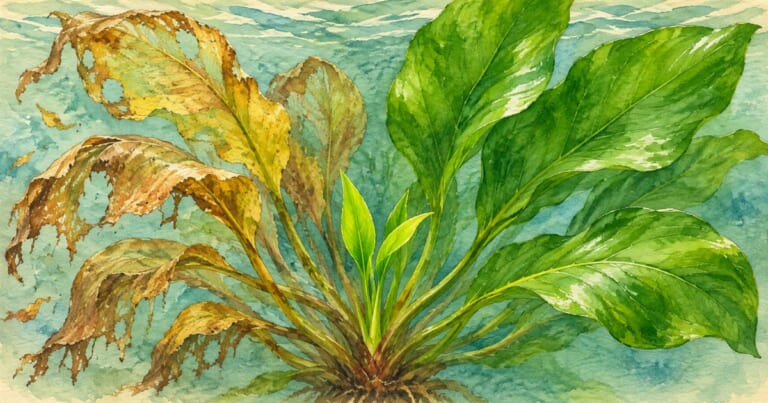
| かかりやすい病気 / Common Issues | いちばん多いトラブルは「クリプト溶け」です。導入直後や大量の水換え、水温の急変、水上葉から水中葉への切り替えなどをきっかけに、葉が数日のうちにとろけるように崩れてしまいます。病気ではなく、環境の変化に対する植物側の反応と考えられています。また、成長が遅いぶん古い葉が長く残るため、黒ヒゲゴケや斑点状のコケが付きやすい傾向があります。The most common problem is “crypt melt”. Triggered by planting, large water changes, sudden temperature shifts or the switch from emersed to submerged growth, the leaves can dissolve within a few days. It is thought to be the plant’s response to environmental change rather than a disease. Because it grows slowly and older leaves stay on for a long time, it also tends to collect black beard algae and spot algae. |
|---|---|
| 対策と予防 / Prevention | 葉が溶けても、根と根茎が硬いまま残っていれば、数週間〜1か月ほどで新しい葉が出てきます。抜いたり動かしたりせず、溶けた葉だけをこまめに取り除いて水の汚れを防ぎましょう。予防には、水温とpHを合わせたうえで1/4〜1/3程度の水換えを定期的に行うのが効果的です。組織培養株は培地を洗い流してから植えれば、ほかの下処理はほぼ必要ありません。ポット株を導入する場合はスネールの卵や残留農薬に注意し、必要に応じて除去処理を行ってください。Even if the leaves melt, a rhizome and roots that remain firm will usually put out new leaves within a few weeks to a month. Do not pull up or move the plant; just remove melted leaves promptly to keep the water clean. For prevention, regular partial water changes of about a quarter to a third, matched in temperature and pH, are effective. Tissue-culture plants need little more than rinsing off the gel before planting. Potted plants may carry snail eggs or pesticide residue, so treat them as needed. |
雑学と豆知識 / Trivia and Fun Facts
| 1. 「隠された棍棒」と一人の愛好家 / 1. A “Hidden Club” and an Aquarist’s Name | クリプトコリネという属名は、ギリシャ語で「隠された」を意味するkryptosと「棍棒」を意味するkoryneを組み合わせたものです。花の中心にある棒状の花序(肉穂花序)が、筒状の仏炎苞の根元にある「ケトル」と呼ばれる膨らみの中にすっぽり隠れていることにちなみます。このケトルは、小さな昆虫を一時的に閉じ込めて受粉を助ける仕組みと考えられています。一方、種小名のウェンティは、ドイツの水草愛好家で著述家でもあったアルベルト・ウェントに献名されたものです。研究者だけでなく、水槽で植物と向き合ってきた愛好家の名前が学名に残っているのは、アクアリウムの世界らしいエピソードといえます。The genus name Cryptocoryne combines the Greek kryptos (“hidden”) and koryne (“club”). It refers to the club-shaped flower spike (spadix), which sits tucked away inside a swollen chamber called the “kettle” at the base of the tubular spathe. The kettle is thought to briefly trap small insects to help with pollination. The species name wendtii honours Albert Wendt, a German aquatic-plant enthusiast and writer. That the name of a hobbyist, not only a scientist, lives on in a scientific name is a fitting story for the aquarium world. |
|---|---|
| 2. 品種の多さを支える染色体の違い / 2. Chromosome Differences Behind So Many Varieties | ウェンティには「グリーン」「ブラウン」「トロピカ」「ミオヤ」など、驚くほど多くの品種があります。その背景のひとつとして挙げられるのが、染色体数の違いです。スリランカの個体群では、同じ種でありながら染色体の数が異なる複数のタイプが確認されています。つまり、ひとくちにウェンティといっても遺伝的な中身には幅があり、それが葉の長さや幅、波打ち方、表面の凹凸、色の出方の違いにつながっていると考えられているのです。「ロング」も、この多様さの中から細長い葉と緑から茶へのグラデーションを持つものが選ばれ、受け継がれてきた系統です。C. wendtii comes in a surprising number of forms, such as ‘Green’, ‘Brown’, ‘Tropica’ and ‘Mi Oya’. One factor often cited is variation in chromosome number: within Sri Lankan populations, several types with different chromosome counts have been found in the same species. In other words, plants all called wendtii can differ considerably in their genetic make-up, and this is thought to contribute to differences in leaf length, width, waviness, surface texture and colour. ‘Long’ is a line selected from this diversity for its slender leaves and green-to-brown gradient. |
| 3. 水の中と外を行き来する暮らし / 3. A Life Between Water and Air | 自生地のウェンティは、雨季に川が増水すると水没して水中葉で過ごし、乾季に水位が下がると水上葉を広げて花を咲かせます。季節によって水中と水上を行き来する環境で暮らしていることが、水質や光の幅広い条件に耐えられる丈夫さにつながっているのでしょう。水槽で見られる溶けも、古い葉を手放して新しい環境に合った葉を出し直す反応だと考えると、この暮らしぶりと重なって見えてくるかもしれません。In the wild, C. wendtii is submerged and grows underwater leaves when rivers swell in the rainy season, then spreads emersed leaves and flowers when the water level drops in the dry season. Living in a place that alternates between underwater and above-water conditions likely underlies its tolerance of a wide range of water and light. If melting in the aquarium is seen as the plant shedding old leaves to grow ones suited to new conditions, it may appear to echo this way of life. |
| 4. カップ入り水草が変えた流通 / 4. How Tissue-Culture Cups Changed the Trade | 日本では植物防疫法により、土の付いた植物の輸入が認められていません。そのため海外のファームで育てた水草は、根の泥を洗い落としてから輸入する必要があり、検査や輸送の間に傷んでしまうことも少なくありませんでした。そこで広まったのが、無菌の容器の中で寒天状の培地を使って育てる組織培養株です。土や害虫が入り込まない状態で届くため検疫がスムーズに進み、店頭でも状態を保ちやすくなりました。さらに一つの株から増やしたクローンなので、形がそろっているのも利点です。ウェンティ・ロングが手軽に手に入るのは、こうした技術の積み重ねのおかげでもあります。Japan’s Plant Protection Act prohibits importing plants with soil attached. Plants grown on overseas farms therefore had to be washed free of mud before import and were often damaged during inspection and transport. The solution that spread was tissue culture: plants grown on gel medium inside sterile containers. Arriving free of soil and pests, they clear quarantine smoothly and keep well on shop shelves. Being clones propagated from a single plant, they are also uniform in shape. The easy availability of Wendtii ‘Long’ owes much to this technology. |
まとめ / Conclusion
クリプトコリネ・ウェンティ・ロングは、細くしなやかな葉と、緑からブロンズへ移ろう穏やかな色合いで、水景に自然な奥行きを与えてくれる水草です。主役として目を引くタイプではありませんが、有茎草の足元や石組みのきわにそっと寄り添い、レイアウト全体を落ち着いた雰囲気にまとめてくれます。 Cryptocoryne wendtii ‘Long’ brings natural depth to an aquascape with its slender, supple leaves and gentle shift from green to bronze. It is not a showy centrepiece, but tucked at the feet of stem plants or along stonework, it quietly gives the whole layout a calm, cohesive feel.
育てるうえでいちばん大切なのは、植えたら動かさず、環境を安定させて気長に付き合うことです。ゆっくりと株が増え、年月をかけて豊かな茂みへ育っていく姿を見守れるのは、この水草ならではの楽しみといえるでしょう。 The most important thing is to leave it in place, keep conditions stable, and be patient with it. Watching it slowly multiply and grow into a lush clump over the years is a pleasure this plant offers in its own quiet way.

困りごとの解決から、用品えらび、水槽づくり、生き物えらびまで。飼育に役立つ案内です。
分布マップ
Cryptocoryne wendtii ‘Long’ の原種、クリプトコリネ・ウェンティはスリランカの固有種です。流れのゆるやかな川や小川の岸辺、季節的に水をかぶる森の林床などに群生し、雨季は水中で、乾季は水上で過ごします。
※この地図は原種の分布地域(スリランカ)を概略で示したもので、自生地の正確な範囲を表すものではありません。マーカーは地図表示のための代表地点で、実際の採集地点や自生地点ではありません。流通している「ロング」は栽培・培養された株です。
地図データ:© OpenStreetMap contributors
参考文献
分類・学名
- de Wit, H. C. D. (1958). Cryptocoryne wendtii sp. nov. Mededelingen Botanische Tuinen en het Belmonte Arboretum der Landbouwhogeschool te Wageningen, 2(4): 97–101.
- World Flora Online. Cryptocoryne wendtii de Wit. https://list.worldfloraonline.org/wfo-0000933289
- Jacobsen, N. (1977). Chromosome numbers and taxonomy in Cryptocoryne (Araceae). Botaniska Notiser, 130: 71–87.
- Arends, J. C., Bastmeijer, J. D. & Jacobsen, N. (1982). Chromosome numbers and taxonomy in Cryptocoryne (Araceae). II. Nordic Journal of Botany, 2: 453–463. https://edepot.wur.nl/296998
分布・生息環境
- Jacobsen, N. (1987). Cryptocoryne. In: Dassanayake, M. D. & Fosberg, F. R. (eds.), A Revised Handbook to the Flora of Ceylon, Vol. 6: 85–99. Amerind Publishing, New Delhi.
育成・トラブル
- Kasselmann, C. (2003). Aquarium Plants. Krieger Publishing, Malabar, Florida.
- de Wit, H. C. D. (1990). Aquarienpflanzen, 2. Auflage. Ulmer, Stuttgart.
組織培養・繁殖
- Kane, M. E., Davis, G. L., McConnell, D. B. & Gargiulo, J. A. (1999). In vitro propagation of Cryptocoryne wendtii. Aquatic Botany, 63: 197–202.
- Stanly, C., Bhatt, A. & Keng, C. L. (2011). An efficient in vitro plantlet regeneration of Cryptocoryne wendtii and Cryptocoryne becketii through shoot tip culture. Acta Physiologiae Plantarum, 33: 619–624.
- Unal, S., Turkmen, G., Yagmur, B., Bayraktar, M. & Gurel, A. (2019). Improved in vitro propagation and direct acclimatization of Cryptocoryne wendtii in aquarium in the presence of aquarium fish Puntius tetrazona (Bleeker). Indian Journal of Experimental Biology, 57(5): 330–337. https://nopr.niscpr.res.in/handle/123456789/47168
輸入検疫
- 農林水産省 植物防疫所「輸入の禁止について」 https://www.maff.go.jp/pps/j/introduction/import/ikinshi/



コメント