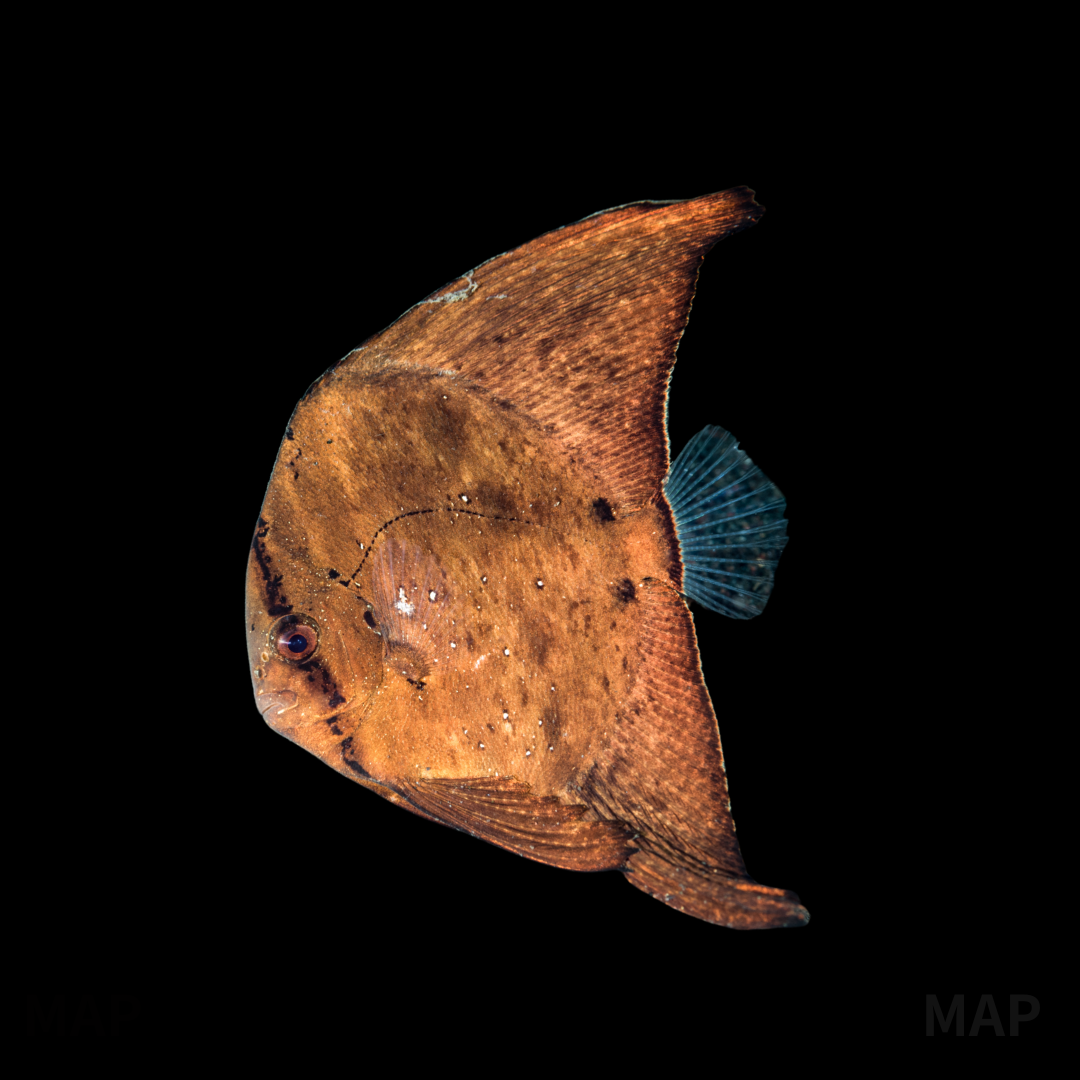
ナンヨウツバメウオは、インド太平洋の広大な海域に生息するマンジュウダイ科の海水魚です。成長の過程で驚くほど劇的な姿の変化を見せることで知られており、幼魚期は長く伸びたヒレと茶褐色の色彩で水面を漂う枯葉に完璧に擬態します。成長するにつれてヒレは短くなり、全体的に丸みを帯びた銀色の円盤状の姿へと変貌を遂げます。知能が高く、飼育者によく慣れるためペットとしての魅力に溢れていますが、非常に成長が早く最終的には大型になるため、飼育には相応の覚悟と大型の設備投資が求められる中級者から上級者向けの魚種です。The Orbicular batfish is a marine fish belonging to the family Ephippidae, widely distributed across the Indo-Pacific region. It is famous for its dramatic physical transformation during its growth process. As a juvenile, it perfectly mimics a floating dead leaf with its elongated fins and brownish coloration. As it grows into an adult, the fins become relatively shorter, and the body transforms into a round, silvery orbicular shape. Being highly intelligent and easily tamed by its caretaker, it holds great appeal as a pet. However, due to its rapid growth and large adult size, it requires significant commitment and investment in large-scale aquarium equipment, making it a fish suited for intermediate to advanced aquarists.
基本情報 / Basic Information
学名 / Scientific Name
Platax orbicularis
通称 / Common Name
ナンヨウツバメウオ、燕魚Orbicular batfish, Round batfish
分類 / Family
スズキ目(ニザダイ目)マンジュウダイ科Perciformes (Acanthuriformes), Family Ephippidae
英名 / English Name
Orbicular batfish
分布 / Distribution
紅海、東アフリカから日本、オーストラリア、ニューカレドニアに至るインド太平洋の熱帯および亜熱帯海域Tropical and subtropical waters of the Indo-Pacific, from the Red Sea and East Africa to Japan, Australia, and New Caledonia.
最大体長 / Max Size
50から60センチメートル50 to 60 cm
寿命 / Lifespan
自然界で5年から10年程度Around 5 to 10 years in the wild
飼育環境 / Aquarium Environment
水槽サイズ / Tank Size
5から9センチメートル程度の幼魚であれば、一時的に60センチ規格水槽(約65リットル)での飼育が可能です。しかし数ヶ月で急激に成長するため、最終的には150センチ規格水槽など、最低でも380リットル、理想としては2000リットルクラスの超大型水槽が必要になります。A 60cm standard tank (approx. 65 liters) is temporarily sufficient for juveniles around 5-9 cm. However, due to rapid growth, a massive tank of at least 380 liters, ideally a 2000-liter system, will eventually be required.
水温 / Temperature
22度から26度22 to 26 degrees Celsius
水質 / Water Quality
比重1.020から1.026、pH8.1から8.4の弱アルカリ性Specific gravity between 1.020 and 1.026, pH 8.1 to 8.4 (slightly alkaline)
レイアウト / Layout
細かい底砂を敷き、ライブロックで洞窟のような隠れ家やせり出した岩の地形を作ります。同時に、成魚が快適に泳げる広いオープンスペースを確保することが重要です。サンゴや無脊椎動物を食べてしまうため、サンゴ水槽(リーフタンク)での飼育はできません。Use fine substrate and create cave-like hiding spots or overhangs with live rock. Simultaneously, ensure ample open swimming space for the adult fish. It is not reef-safe, as it will consume corals and invertebrates.
注意点 / Precautions
生体を移動させる際、一般的なタモ網の使用は厳禁です。長く繊細なヒレが網目に絡まり致命傷となるため、必ず水ごとプラスチックケースなどで掬い取ってください。また、大量の餌を食べて水を汚すため、強力なプロテインスキマーを備えたオーバーフロー濾過システムと定期的な水換えが必須です。水面への飛び出し防止用の蓋も忘れずに設置してください。Never use a standard net to transfer this fish. Their long, delicate fins can easily tangle and suffer fatal damage. Always use a container to scoop them up along with the water. Because they produce a high bioload, an overflow filtration system with a powerful protein skimmer and frequent water changes are essential. Do not forget to install a tight-fitting lid to prevent jumping.
餌と給餌 / Feeding
餌の種類 / Diet
雑食から肉食傾向の強い日和見主義的な食性を持ちます。クリル、イサザアミ、ブラインシュリンプ、アサリやエビの切り身などの動物性飼料のほか、海苔や海藻、スピルリナを配合した人工飼料など、様々なものをよく食べます。They are opportunistic feeders with omnivorous to carnivorous tendencies. They eagerly accept a variety of foods including animal proteins like krill, mysis shrimp, brine shrimp, chopped clams, and shrimp, as well as plant-based foods like dried seaweed and spirulina-enriched pellets.
給餌のポイント / Feeding Tips
非常に大食漢で餌付けは簡単ですが、栄養失調を防ぐために様々な種類の餌をバランスよく与えてください。市販の魚用総合ビタミン剤やオメガ3脂肪酸を餌に浸み込ませるのが効果的です。与えすぎによる消化不良や、他の魚の餌まで独占してしまわないよう、給餌量のコントロールが必要です。They are voracious eaters and easy to feed, but a varied diet is crucial to prevent malnutrition. Soaking food in fish vitamins or Omega-3 supplements is highly effective. Carefully control portion sizes to avoid indigestion from overfeeding and to ensure tank mates get their share of food.
性格と混泳 / Temperament and Tank Mates
性格 / Temperament
幼魚のうちは神経質で物陰に隠れがちですが、環境に慣れると非常に好奇心旺盛になります。飼育者を認識して人によく懐くことから「水槽内の犬」と表現されるほど愛嬌のある性格をしています。ただし、成長すると自己の縄張りを主張するようになります。Juveniles can be nervous and tend to hide, but once acclimated, they become highly curious. They are so affectionate and capable of recognizing their owners that they are often described as the “dogs of the aquarium.” However, they can become territorial as they mature.
混泳の相性 / Compatibility
同種や似た体型の魚には排他的になるため注意が必要です。また、成長したツバメウオの口に入る小型のスズメダイやエビなどは捕食されてしまいます。逆に、ヤッコ類やチョウチョウウオ、フグ類などのヒレをかじる習性のある魚との混泳は、ツバメウオが深刻なダメージを受けるため絶対に避けてください。Caution is needed as they can be aggressive towards conspecifics or similar-looking fish. Small damselfish or shrimps that fit into the adult batfish’s mouth will be eaten. Conversely, never keep them with fin-nipping fish like angelfish, butterflyfish, or puffers, as the batfish will suffer severe damage.
病気と対策 / Diseases and Prevention
かかりやすい病気 / Common Diseases
水質の悪化やストレスにより、海水性の白点病に極めてかかりやすい性質があります。また、網などで擦れた傷からリムフォシスティス病や滑走細菌等による細菌感染症を二次的に発症することが多いです。They are highly susceptible to marine Ich due to poor water quality or stress. Secondary bacterial infections, such as Lymphocystis or those caused by gliding bacteria, often occur from abrasions caused by nets or rubbing.
対策と予防 / Prevention
最大の予防策は、ハンドリング時に網を絶対に使わず、物理的なダメージを与えないことです。治療においては、硫酸銅などの銅イオン系魚病薬への耐性が比較的あるため有効に機能します。また、寄生虫対策として塩分濃度を下げる低比重療法も推奨されます。The best prevention is to avoid physical damage by never using nets during handling. For treatment, they possess a relatively good tolerance to copper-based medications. Hyposalinity treatments are also recommended and effective against parasites.
増やし方(繁殖) / Breeding
雌雄の判別 / Sexing
外見から雌雄を明確に見分ける方法は確立されておらず、水槽内で判別することは非常に困難です。There are no established methods for clear visual sex determination, making it very difficult to sex them in a home aquarium.
繁殖形態 / Reproduction
海面に浮かぶ浮性卵(ペラジック・エッグ)を産卵します。卵の内部に小さな油の塊があり、それによって海面付近を漂いながら海流に乗って広範囲に拡散していきます。They are pelagic spawners, releasing buoyant eggs. The eggs contain tiny oil droplets that allow them to float near the surface and scatter over wide areas via ocean currents.
繁殖のポイント / Breeding Tips
一般的な家庭の水槽環境で繁殖させることは事実上不可能です。海外の一部地域では、国を挙げた規模で大型の生簀を用いた商業養殖の技術開発が進められています。Breeding in a typical home aquarium environment is practically impossible. In some overseas regions, commercial aquaculture techniques utilizing large ocean cages are being developed on a national scale.
雑学と豆知識 / Trivia and Fun Facts
驚異の枯葉擬態とアロメトリー成長Astonishing Leaf Mimicry and Allometric Growth
ナンヨウツバメウオの幼魚は、マングローブ林や波の静かな浅瀬で、水面に浮かぶ枯葉に完璧に擬態して生活しています。海流に対して横向きになったり、水面に体を横たえて不規則に漂ったりする姿は、まさに落ち葉そのものです。これは捕食者の目を欺くだけでなく、獲物を待ち伏せするための見事な生存戦略です。成長するにつれて身体の各部位が異なる速度で発達する「アロメトリー成長」を遂げ、最終的には全く別種の魚かと思うほど丸みを帯びた巨大な成魚へと変貌します。Juvenile Orbicular batfish perfectly mimic floating dead leaves in mangrove forests and calm shallows. Their behavior of swimming sideways against the current or lying flat on the surface to drift irregularly makes them look exactly like fallen leaves. This is a brilliant survival strategy, serving both as camouflage from predators and a disguise to ambush prey. As they undergo “allometric growth,” where different body parts develop at different rates, they eventually transform into massive, round adults that look like an entirely different species.
死滅回遊魚と日本の自家採集文化Seasonal Migratory Fish and Japan’s Collection Culture
本来は熱帯海域の魚ですが、黒潮に乗って夏から秋にかけて日本の太平洋沿岸へと流れ着くことがあります。しかし、日本の厳しい冬の海水温には耐えられないため、そのままでは全滅してしまう運命にあり、これらは「死滅回遊魚」または「季節来遊魚」と呼ばれています。日本のアクアリストの間では、漁港の隅などで枯葉のように漂う幼魚を網でそっと掬い上げ、自宅の水槽へ迎え入れて冬越しさせるという独自の採集文化が根付いています。Although originally a tropical fish, juveniles are often carried by the Kuroshio Current to the Pacific coasts of Japan from summer to autumn. However, unable to survive the harsh Japanese winter water temperatures, they are destined to perish, earning them the name “dead-end migratory fish” or “seasonal migratory fish.” A unique collection culture exists among Japanese aquarists, who gently scoop up these leaf-like drifting juveniles from the corners of fishing ports and bring them home to overwinter in their aquariums.
ルアーを使った知的な狩りIntelligent Hunting Using a Lure
この魚はただ餌を待つだけでなく、非常に知的な狩りを行います。長く伸びた背鰭の先端をまるで釣り竿の「ルアー(疑似餌)」のように小刻みに動かし、好奇心旺盛な小魚などを誘き寄せます。獲物が十分に近づいた瞬間、大きな口で水ごと一気に吸い込んで捕食してしまうのです。さらに、発達した胸鰭を使って海底の砂を仰ぎ、隠れている甲殻類を探し出す賢い行動も観察されています。This fish doesn’t just wait for food; it engages in highly intelligent hunting. It wiggles the tip of its elongated dorsal fin like a fishing lure to attract curious small fish. The moment the prey gets close enough, it instantly sucks them in along with the water using its large mouth. They have also been observed cleverly fanning the sandy bottom with their developed pectoral fins to uncover hidden crustaceans.
タヒチにおける高級魚と養殖の挑戦Premium Fish in Tahiti and Aquaculture Challenges
観賞魚としてのイメージが強いナンヨウツバメウオですが、フランス領ポリネシアのタヒチなどでは「パラハ・ペウエ」と呼ばれ、非常に美味な高級食用魚として重宝されています。乱獲による自然資源の減少を受け、国を挙げて養殖技術の開発が進められてきました。しかし近年、養殖施設から海面の生簀へ稚魚を移した途端に、致死率の極めて高い細菌性の病気(ホワイトパッチ病)が蔓延する事態が発生しており、現在も世界中の研究者がワクチン開発などの対策に奔走しています。While primarily known as an ornamental fish, in places like Tahiti (French Polynesia), it is called “Paraha peue” and highly prized as a delicious, premium food fish. Due to the decline of wild stocks from overfishing, national efforts have been made to develop aquaculture technologies. However, recently, a highly lethal bacterial disease (White-patch disease) has been spreading rapidly when fry are moved from hatcheries to ocean cages, prompting researchers worldwide to scramble for countermeasures such as vaccine development.
アクアリウム・リリースによる外来種問題Invasive Species Issues Due to Aquarium Releases
安価で手に入れやすい幼魚の可愛らしさに惹かれて購入したものの、想定を絶するスピードで数十センチの大きさに成長し、水槽設備が追いつかなくなるケースが後を絶ちません。持て余した飼育者が「海に還してやろう」と安易に海へ放流してしまうことで、本来生息していないアメリカのフロリダ沿岸やカリブ海などで本種が発見され、外来種としてサンゴ礁の生態系を脅かす問題となっています。生き物を飼う際は、最終的な大きさを理解し、最後まで責任を持つことが何よりも大切です。There are endless cases where people buy the cute, inexpensive juveniles, only to find their aquarium equipment overwhelmed by the fish’s unimaginably fast growth to dozens of centimeters. When overwhelmed owners misguidedly release them into the ocean with the thought of “returning them to the wild,” it leads to discoveries of this species in non-native areas like the coasts of Florida and the Caribbean Sea. Here, they pose a threat to coral reef ecosystems as an invasive species. Understanding the final adult size and committing to lifelong responsibility is paramount when keeping any pet.
まとめ / Conclusion
ナンヨウツバメウオは、水面に浮かぶ枯葉から雄大な銀色の円盤へと姿を変える、生命の不思議を体現したような魅力的な海水魚です。人によく慣れる知的な性格は、日々の飼育にこの上ない喜びをもたらしてくれるでしょう。黒潮に乗ってやってくる幼魚との出会いも、海と季節のつながりを感じさせてくれる特別な体験です。The Orbicular batfish is a fascinating marine fish that embodies the wonders of life, transforming from a floating dead leaf into a majestic silver orb. Its highly intelligent and tame nature will bring immense joy to daily aquarium care. Encountering a juvenile carried by the Kuroshio Current is also a special experience that connects us to the ocean and the changing seasons.
しかし、その成長の早さと巨大化に対応するためには、大型水槽や強力な濾過設備への投資が不可欠です。また、網の使用を避けるといった専門的なハンドリング知識も求められます。外来種問題の背景にもあるように、一時的な感情で飼育を始めるのではなく、彼らの寿命が尽きるまで快適な環境を提供し続けるという強い責任感を持って、素晴らしいアクアリウムライフを楽しんでください。However, adapting to their rapid growth and massive size requires an indispensable investment in a large tank and powerful filtration equipment. Specialized handling knowledge, such as avoiding the use of nets, is also necessary. As highlighted by the invasive species issue, rather than starting out of temporary emotion, please enjoy a wonderful aquarium life with a strong sense of responsibility to provide a comfortable environment until the end of their natural lifespan.
Froese, R., and Pauly, D. Editors. FishBase. Platax orbicularis (Forsskal, 1775). World Wide Web electronic publication.
Forsskal, P. (1775). Descriptiones animalium avium, amphibiorum, piscium, insectorum, vermium; quae in itinere orientali observavit. Hauniae.
U.S. Geological Survey (USGS). Nonindigenous Aquatic Species (NAS) Database. Platax orbicularis (Orbicular Batfish) species profile and sighting records.
Reef Environmental Education Foundation (REEF). Exotic Species Sighting Program. Florida and Caribbean sighting reports.
Institut Francais de Recherche pour l’Exploitation de la Mer (Ifremer). Research reports on aquaculture development of Platax orbicularis (Paraha peue) in French Polynesia.
Scientific reports on Tenacibaculosis associated with Tenacibaculum maritimum infection in cultured orbicular batfish (Platax orbicularis).


 アイのアクアグッズ案内マジックリーフ物語|一枚の葉がアクアリウム用品になるまで道具の特徴や使い方、選ぶときのポイントをアイが紹介します。記事はコチラ →
 アイのアクアグッズ案内コケを食べるコイの仲間に合わせる飼育用品|フライングフォックス・アルジイーター・ガラ道具の特徴や使い方、選ぶときのポイントをアイが紹介します。記事はコチラ →
 アイのアクアグッズ案内水槽フィルターの選び方|外掛け・外部・上部から小型オーバーフローまで道具の特徴や使い方、選ぶときのポイントをアイが紹介します。記事はコチラ →
 アイのアクアグッズ案内水槽のろ材の選び方|ウール・リング・活性炭の違いとおすすめ商品フィルターの中の綿や石は何をしている? アイとコタロウが、ウール・スポンジ・セラミック・焼結ガラス・活性炭・ゼオライトを比較。機種との相性、入れ方、洗い方と交換まで商品とともに紹介します。記事はコチラ →



コメント