

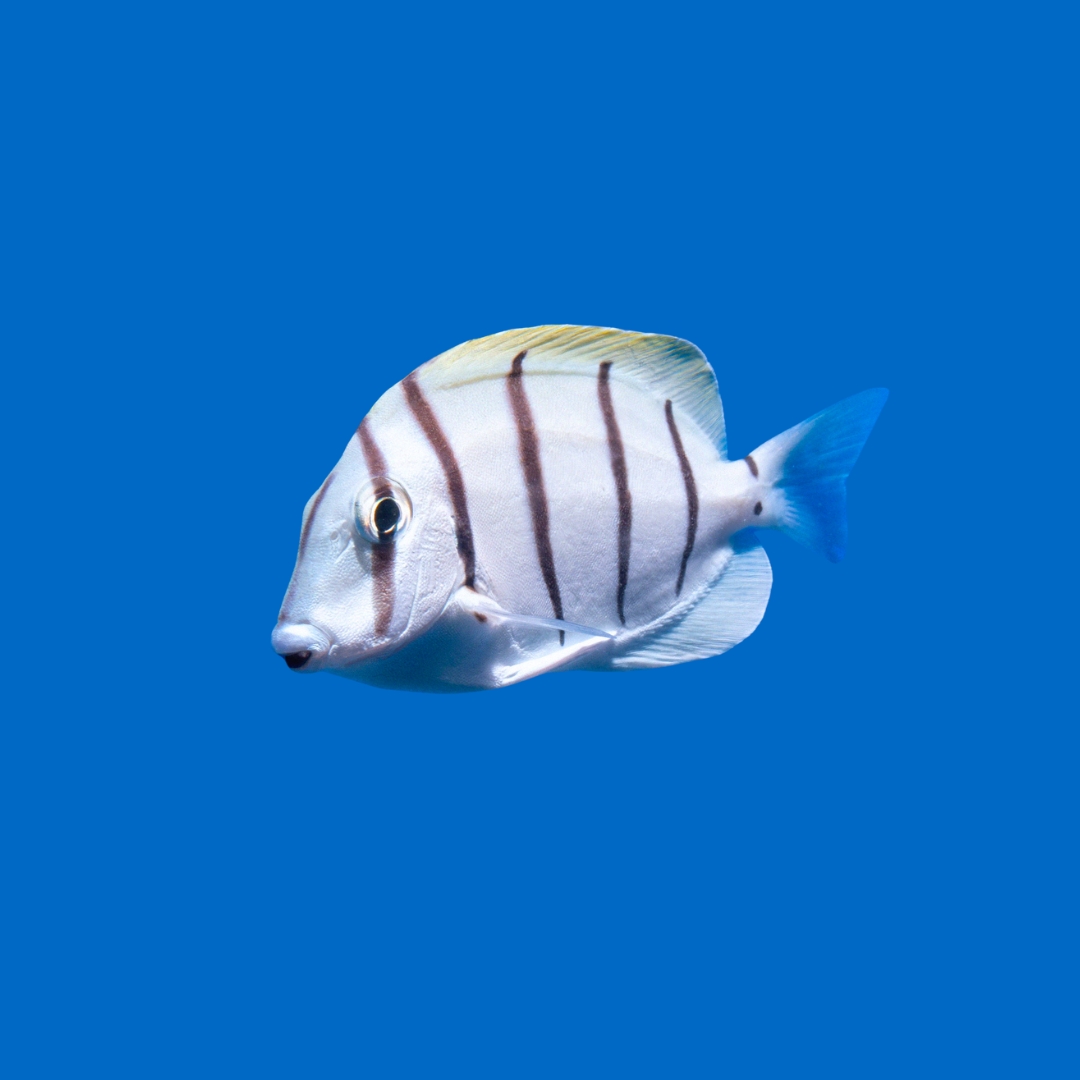
解説 / Description
シマハギは、白っぽい体に黒い縞模様が入る姿が印象的なニザダイ科の海水魚です。自然下ではサンゴ礁や岩礁域で糸状藻類をついばむ草食性の強い魚として知られ、藻類の増えすぎを抑える働きも期待されます。観賞魚としては、派手な色彩で主役になるタイプというより、リーフタンクの景観維持に役立つ「お掃除役の魚」として親しまれます。ただし、広い場所をよく泳ぐ魚であり、植物質を中心にした給餌を継続する必要があるため、見た目の素朴さに反して、長期飼育では水槽サイズと栄養管理がとても大切です。 The convict surgeonfish is a marine tang with a pale body marked by bold black bars. In nature it is a strongly herbivorous grazer on coral and rocky reefs, feeding mainly on filamentous algae and helping limit excessive algal growth. In aquariums, it is appreciated less as a brightly colored centerpiece and more as a useful algae-grazing fish for reef tanks. However, it is an active swimmer and needs a consistently plant-rich diet, so long-term care requires more swimming space and nutritional attention than its modest appearance might suggest.
基本情報 / Basic Information
| 学名 / Scientific Name | Acanthurus triostegus |
|---|---|
| 通称 / Common Name | シマハギ、ミームサ、マニニConvict tang, convict surgeonfish, manini |
| 分類 / Family | 条鰭綱、ニザダイ目、ニザダイ科、クロハギ属。古い資料や一部の体系ではスズキ目に含めて扱われることもあります。Class Actinopterygii, order Acanthuriformes, family Acanthuridae, genus Acanthurus. Some older or alternative classifications place surgeonfishes within Perciformes. |
| 英名 / English Name | Convict Tang, Convict Surgeonfish |
| 分布 / Distribution | インド太平洋の広い範囲に分布し、東太平洋ではカリフォルニア湾南部からパナマ周辺、さらにレビジャヒヘド諸島、ココ島、クリッパートン島、ガラパゴス諸島などでも記録があります。日本では南日本から沖縄にかけて見られます。なお、アラビア半島周辺海域は分布域から外れるとされます。It is widely distributed across the Indo-Pacific. In the eastern Pacific it is recorded from the southern Gulf of California to Panama, including the Revillagigedo, Cocos, Clipperton, and Galapagos islands. In Japan, it is found mainly from southern Japan to Okinawa. Seas around the Arabian Peninsula are generally excluded from its native range. |
| 最大体長 / Max Size | 一般的には約17cm前後で見られることが多く、最大で約27cmに達するとされます。ハワイ周辺のマニニは、資料によっては最大でも約7インチ、約18cmほどにとどまると紹介されます。It is commonly seen around 17 cm total length and is reported to reach about 27 cm. Hawaiian manini are often described in regional sources as rarely exceeding about 7 inches, or roughly 18 cm. |
| 寿命 / Lifespan | 学術的に確認しやすい平均寿命データは限られます。観賞魚としては、適切な水槽サイズ、安定した水質、植物質中心の給餌を維持できれば、数年以上の長期飼育を目指せる魚です。Clearly documented average lifespan data are limited. In aquariums, it can potentially be kept for several years or longer when provided with suitable tank size, stable water quality, and a plant-rich diet. |
飼育環境 / Aquarium Environment
| 水槽サイズ / Tank Size | 長期飼育では90cm規格水槽以上を最低目安にし、余裕を持つなら120cm規格水槽、120cmワイド水槽、またはそれ以上が望ましいです。海外の飼育基準では100ガロン以上、約380L以上、またはそれ以上の大型水槽が推奨されることもあります。日本の販売現場では60cm水槽から可能と案内される場合がありますが、本種の遊泳性を考えると、幼魚期や一時管理向けの目安として受け止める方が安全です。For long-term care, a 90 cm standard aquarium should be treated as a practical minimum, while a 120 cm standard tank, a 120 cm wide tank, or larger is preferable. Overseas care guides often recommend 100 gallons, about 380 L, or more. Although some Japanese retailers may describe it as suitable from 60 cm tanks, that should be treated as a juvenile or temporary-care guideline rather than an ideal adult setup. |
|---|---|
| 水温 / Temperature | 24〜26℃前後を基本に、急な変化を避けて安定させます。飼育資料によっては22〜26℃程度の範囲も示されますが、白点病などを防ぐ意味でも、短時間の上下より安定性を重視します。 Aim for stable temperatures around 24–26°C. Some care references allow a broader range around 22–26°C, but stability is more important than short-term fluctuations, especially for reducing stress-related disease risks such as marine white spot. |
| 水質 / Water Quality | 比重1.020〜1.025、pH8.1〜8.4、炭酸塩硬度8〜12dKHを目安に、一般的なサンゴ礁水槽の水質を安定維持します。草食性でよく食べるため、排泄量も考慮して十分なろ過と定期的な換水を行います。Maintain typical reef-aquarium conditions: specific gravity 1.020–1.025, pH 8.1–8.4, and carbonate hardness around 8–12 dKH. Because this active herbivore eats frequently, provide strong filtration and regular water changes to manage waste. |
| レイアウト / Layout | ライブロックを組んで隠れ家と採餌面を作りつつ、前面や中央にはしっかり泳げる空間を残します。自然下では岩肌の藻類をついばむため、複雑な岩組みは安心感と行動の充実につながります。基本的にはサンゴ食ではなくリーフタンク向きですが、空腹時や個体差によるつつきには注意し、サンゴの状態も観察します。Build live rock structures that provide hiding places and grazing surfaces while leaving open swimming space at the front or center. In nature it grazes algae from rocky surfaces, so complex rockwork provides security and natural behavior. It is generally reef-suitable and not a coral predator, but hungry individuals or individual variation may still lead to exploratory picking, so coral condition should be observed. |
| 注意点 / Precautions | 尾柄部にはニザダイ科特有の鋭い棘があり、捕獲や移動の際に人の手や他魚を傷つけることがあります。ネットだけで無理に追い込まず、容器を併用して落ち着いて扱います。また、狭い水槽では慢性的なストレスから攻撃性や病気のリスクが高まりやすい点にも注意します。Like other surgeonfish, it has sharp caudal peduncle spines that can injure hands or tank mates during handling. Avoid forcing it with only a net; use a container and handle it calmly. In cramped aquariums, chronic stress can increase aggression and disease risk. |
餌と給餌 / Feeding
| 餌の種類 / Diet | 主食はスピルリナや海藻成分を多く含む植物性フレーク、植物性ペレット、海水魚用の海藻シートや乾燥海苔です。補助的に人工飼料や冷凍餌を使うことはできますが、動物性の餌に偏らせず、植物質を食事の中心にします。The staple diet should be plant-based flakes, plant-rich pellets, marine algae sheets, or dried seaweed containing ingredients such as spirulina. General prepared foods or frozen foods may be used as supplements, but the diet should remain centered on plant material rather than animal-protein foods. |
|---|---|
| 給餌のポイント / Feeding Tips | 少量を複数回に分けて与え、週に数回はクリップで乾燥海苔や海藻シートを固定して、自然に近い「ついばむ」食べ方をさせます。植物質が不足すると痩せや栄養状態の悪化につながりやすいため、餌付きの良さだけでなく、内容のバランスを重視します。Feed small portions several times a day, and offer dried seaweed or algae sheets on a clip several times per week so the fish can graze in a natural way. A lack of plant matter can lead to weight loss and poor nutritional condition, so diet balance matters as much as appetite. |
性格と混泳 / Temperament and Tank Mates
| 性格 / Temperament | ニザダイ科の中では比較的温和な部類ですが、成長に伴って縄張り意識が出ることがあります。よく泳ぎ、採餌時には岩肌を熱心についばむ活発な性格です。It is relatively peaceful for a surgeonfish, but territorial behavior may appear as it matures. It is an active swimmer and an eager grazer on rock surfaces. |
|---|---|
| 混泳の相性 / Compatibility | ハゼ類、ベラ類、クマノミ類など、体形や生活圏が大きく異なる魚とは比較的合わせやすいです。チョウチョウウオ類は相性そのものよりもサンゴへの影響や餌の難しさが種類ごとに異なるため、リーフタンクでは慎重に選びます。一方で、同種同士や体形の似たクロハギ属との混泳では争いが起こりやすく、尾柄部の棘によるけがにもつながるため、一般家庭の水槽では単独飼育が無難です。It can usually be combined with fish of different shapes and niches, such as gobies, wrasses, and clownfish. Butterflyfishes require caution in reef tanks because coral compatibility and feeding difficulty vary greatly by species. Keeping multiple convict tangs or similarly shaped Acanthurus species together can lead to fighting and spine injuries, so a single individual is safest in most home aquariums. |
病気と対策 / Diseases and Prevention
| かかりやすい病気 / Common Diseases | 水温や水質の急変、狭い環境によるストレスがあると、白点病などの外部寄生虫症に注意が必要です。また、頭部および側線びらん症候群はニザダイ科で問題になりやすく、栄養の偏り、水質悪化、ストレスなどが関わると考えられています。Sudden changes in temperature or water quality, as well as stress from cramped conditions, can increase the risk of external parasites such as marine white spot. Head and lateral line erosion is also a concern in surgeonfish and is considered to involve factors such as nutritional imbalance, poor water quality, and chronic stress. |
|---|---|
| 対策と予防 / Prevention | 導入前の検疫、急な比重や水温変化を避けた水合わせ、安定したろ過、定期的な換水を徹底します。日常管理では、スピルリナ配合飼料や乾燥海苔を継続的に与え、痩せや体表の荒れが出る前に栄養面を整えることが大切です。Use quarantine before introduction, acclimate carefully to avoid sudden changes in salinity or temperature, and maintain stable filtration with regular water changes. In daily care, provide spirulina-rich foods and dried seaweed consistently, addressing nutrition before weight loss or skin erosion appears. |
増やし方(繁殖) / Breeding
| 雌雄の判別 / Sexing | 外見だけで雌雄を判別するのは難しく、一般的な観賞魚飼育では明確な見分け方は確立されていません。Sexing by appearance is difficult, and there is no reliable visual method commonly used in the aquarium hobby. |
|---|---|
| 繁殖形態 / Reproduction | 自然下では夕暮れ時に産卵群集を作り、複数個体が水中に卵と精子を放出する群集産卵を行います。ハワイでは満月前後の時期と関連して産卵が見られるとされ、ふ化した仔魚は長い浮遊幼生期間を経て、沿岸の浅場やタイドプールへ定着します。In nature, it forms spawning aggregations at dusk, with multiple individuals releasing eggs and sperm into the water column. In Hawaii, spawning is reported to be associated with the period around the full moon. The larvae spend a long pelagic period before settling into shallow coastal habitats or tide pools. |
| 繁殖のポイント / Breeding Tips | 家庭水槽での繁殖は非常に難しく、現実的には専門施設向けです。2018年にはハワイで野生採集卵から稚魚まで育てる人工育成が報告され、カイアシ類、ワムシ、アルテミア、微粒子飼料などを段階的に使う高度な仔魚育成技術が必要とされました。2024年には100% captive-bred、つまり親魚を飼育下で産卵させて育てた個体の発表もありましたが、国内で安定流通しているという意味ではなく、今後の発展が期待される段階です。Breeding in home aquariums is extremely difficult and is realistically a task for specialized facilities. In 2018, Hawaiian work reported rearing juveniles from wild-collected eggs, requiring advanced larval culture with copepods, rotifers, Artemia, and fine prepared feeds. In 2024, 100% captive-bred convict tangs were also announced, meaning fish spawned and raised under captive conditions, but this should not be read as evidence of stable availability in the Japanese trade. |
雑学と豆知識 / Trivia and Fun Facts
| 1. 学名に残る分類学の歴史 / 1. A taxonomic history preserved in the name | シマハギは1758年にリンネによって、現在とは異なるチョウチョウウオ属の一種として記載されました。その後、魚類分類の理解が進むにつれてニザダイ科クロハギ属に移され、現在の学名であるAcanthurus triostegusとして扱われています。現在の主要データベースではニザダイ目に置かれる例が増えていますが、古い飼育書や図鑑ではスズキ目として記されることもあるため、分類名の違いを見ても必ずしも誤記とは限りません。The convict surgeonfish was described by Linnaeus in 1758, originally in a butterflyfish genus rather than its current one. As fish classification improved, it was moved into Acanthurus within the surgeonfish family and is now treated as Acanthurus triostegus. Modern databases often place it in Acanthuriformes, while older aquarium books and guides may still place surgeonfishes within Perciformes, so this difference is not always a simple error. |
|---|---|
| 2. ハワイ個体群をめぐる分類の揺れ / 2. Taxonomic nuance around the Hawaiian population | ハワイのマニニは、胸びれ基部の模様や背びれ・尻びれの軟条数などに違いがあるため、Acanthurus triostegus sandvicensisという亜種、またはAcanthurus sandvicensisという別種として扱う見解があります。一方で、広い分布域を含めてA. triostegusの中に含めるデータベースもあります。記事では読者が混乱しないよう、断定的に「別種」とせず、ハワイ個体群には分類学上の議論がある、という形で扱うのが安全です。Hawaiian manini differ in features such as the marking at the pectoral-fin base and counts of dorsal and anal soft rays, so some authors treat them as the subspecies Acanthurus triostegus sandvicensis or as the species Acanthurus sandvicensis. Other databases include the Hawaiian form within a broad A. triostegus concept. For general aquarium writing, it is safest to say that the Hawaiian population has taxonomic nuance rather than presenting it as unquestionably separate. |
| 3. ハワイの「マニニ」という言葉 / 3. The Hawaiian word “manini” | ハワイではシマハギは「マニニ」と呼ばれ、魚の名前であると同時に、「小さい」「些細な」といった意味にも広がりました。さらに、縞模様を持つバナナなどの作物名にも使われることがあり、海の魚の特徴が陸上の植物名へも映し込まれています。小さな縞模様の魚が、日常会話や植物名、ことわざの中で生き続けている点は、人々が海の生き物を生活や精神文化の中に深く取り込んできたことを物語ります。In Hawaii, the fish is known as manini, a word that also carries meanings such as small or trivial. The same word is also used for some striped crop varieties, including certain bananas, showing how the visual character of a reef fish was extended into the naming of land plants. This little striped fish lives on in speech, plant names, and proverbs, reflecting how deeply marine life is woven into Hawaiian language and culture. |
| 4. サンゴ礁を支える草食魚 / 4. An herbivore that supports coral reefs | シマハギの食事は、アクアリウムではコケ取りとしてありがたい働きに見えますが、自然界ではさらに大きな意味を持ちます。サンゴ礁では、藻類が増えすぎるとサンゴの光や定着場所を奪ってしまいます。シマハギのような草食魚が岩肌をついばむことで、サンゴが育つ余地が保たれ、リーフ全体のバランス維持に貢献していると考えられます。In aquariums, its grazing looks like useful algae control, but in nature it has a broader role. When algae overgrow a reef, they can shade corals and occupy settlement space. By grazing rocky surfaces, herbivores such as the convict surgeonfish help maintain room for corals to grow and are considered contributors to reef balance. |
| 5. 群れで動く理由 / 5. Why it moves in groups | シマハギは群れで採餌することがあり、その姿は沖縄の海でも印象的な観察対象になります。群れで動くと、捕食者から狙われるリスクが一個体に集中しにくくなり、同時に周囲を警戒する負担も軽くなります。その結果、単独のときよりも広い範囲を移動しながら藻類を探しやすくなると考えられています。Convict surgeonfish often graze in groups, creating a memorable sight even in Okinawan waters. Grouping reduces the chance that predation risk falls on any single individual and can reduce the burden of constant vigilance. As a result, fish in groups may move more widely and search for algae more effectively than solitary individuals. |
| 6. 人工育成と完全養殖は分けて考える / 6. Artificial rearing and captive breeding are not the same thing | クロハギ属の繁殖研究では、2018年にハワイで野生卵からシマハギを育て上げた記録が重要な節目になりました。ただし、これは親魚が水槽内で産卵した「完全養殖」と同じ意味ではありません。2024年には100% captive-bredのシマハギも報じられ、観賞魚の持続可能な供給に向けた期待は高まっていますが、国内の店頭で一般的に養殖個体が選べる状況とはまだ切り分けて考える必要があります。A key milestone for Acanthurus culture came in 2018, when convict surgeonfish were reared in Hawaii from wild-collected eggs. However, that is not the same as a fully captive-bred lifecycle in which captive adults spawn and their offspring are raised. In 2024, 100% captive-bred convict tangs were reported, increasing hope for more sustainable aquarium supply, but this should still be separated from the question of whether captive-bred individuals are commonly available in Japanese shops. |
| 7. 沖縄で親しまれる身近な海水魚 / 7. A familiar reef fish in Okinawa | 沖縄ではシマハギは「ミームサ」とも呼ばれ、沿岸の浅場やダイビングスポットで身近に見られる魚として紹介されます。岩肌を列になってついばむ姿は、水中写真や観察の対象としても人気があります。食事に夢中なときは人の接近に対して警戒が薄くなることもあり、観賞魚としてだけでなく、海そのものの魅力を伝える存在にもなっています。In Okinawa, the fish is also introduced under the local name miimusa and is a familiar sight in shallow coastal waters and dive sites. Lines of fish grazing on rock surfaces are popular subjects for underwater observation and photography. When focused on feeding, they may show reduced wariness toward divers, making them not only aquarium fish but also ambassadors for the appeal of the sea itself. |
まとめ / Conclusion
シマハギは、丈夫で実用的なお掃除役の魚として紹介されることが多い一方で、本来は広いサンゴ礁を泳ぎ回る活発な草食魚です。長期飼育では、90cm規格水槽以上、できれば120cmクラス以上の水槽に、十分な遊泳空間とライブロックを用意し、植物質を中心にした餌を継続することが大切です。 The convict surgeonfish is often introduced as a hardy and practical algae-grazing fish, but it is naturally an active herbivore that roams broad reef areas. For long-term care, provide at least a 90 cm standard tank, preferably a 120 cm-class or larger aquarium, with open swimming room, live rock, and a consistently plant-rich diet.
また、この魚はアクアリウムの中だけで価値が語れる存在ではありません。サンゴ礁の藻類を抑える生態的役割、ハワイ語の「マニニ」に見られる文化的な広がり、そして人工育成や完全養殖研究の進展まで、シマハギは小さな縞模様の体に多くの物語を宿しています。飼育する際は、単なるコケ取り要員ではなく、サンゴ礁と人の文化をつなぐ魚として、その背景まで楽しみながら大切に迎えたい種類です。 This fish cannot be understood only as an aquarium utility species. From its ecological role in controlling reef algae to the cultural richness of the Hawaiian word manini and the progress of artificial rearing and captive-breeding research, the convict surgeonfish carries many stories in its striped body. When keeping it, it is best appreciated not merely as an algae eater but as a fish that connects coral reefs, aquariums, and human culture.

気になる道具や飼い方を見つけてみませんか?
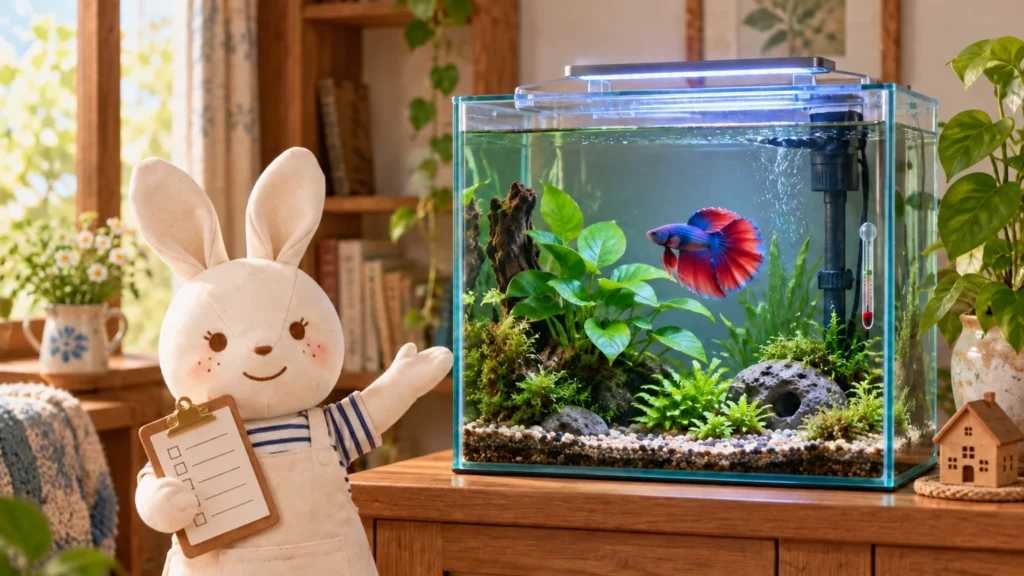 アイのアクアグッズ案内ベタの一匹飼いを楽しむ|水槽・ヒーター・ふた・フィルターの選び方ベタの一匹飼いに向く水槽容量、ふたと空気層、ヒーターと水温計、弱い水流のフィルターを、コタロウとアイの会話で分かりやすく解説します。記事はコチラ →
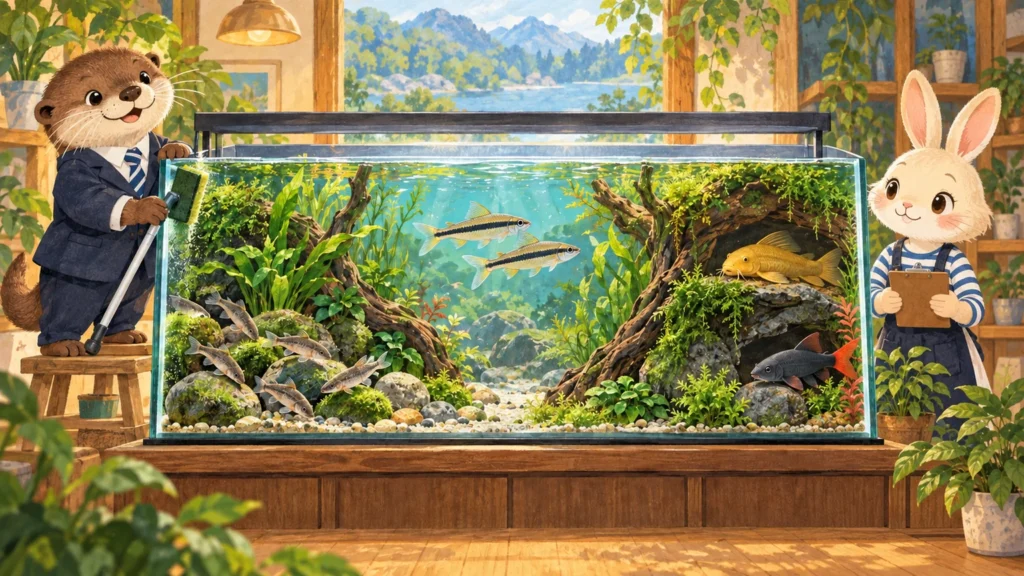 アイのアクアグッズ案内コケを食べるコイの仲間に合わせる飼育用品|フライングフォックス・アルジイーター・ガラ道具の特徴や使い方、選ぶときのポイントをアイが紹介します。記事はコチラ →
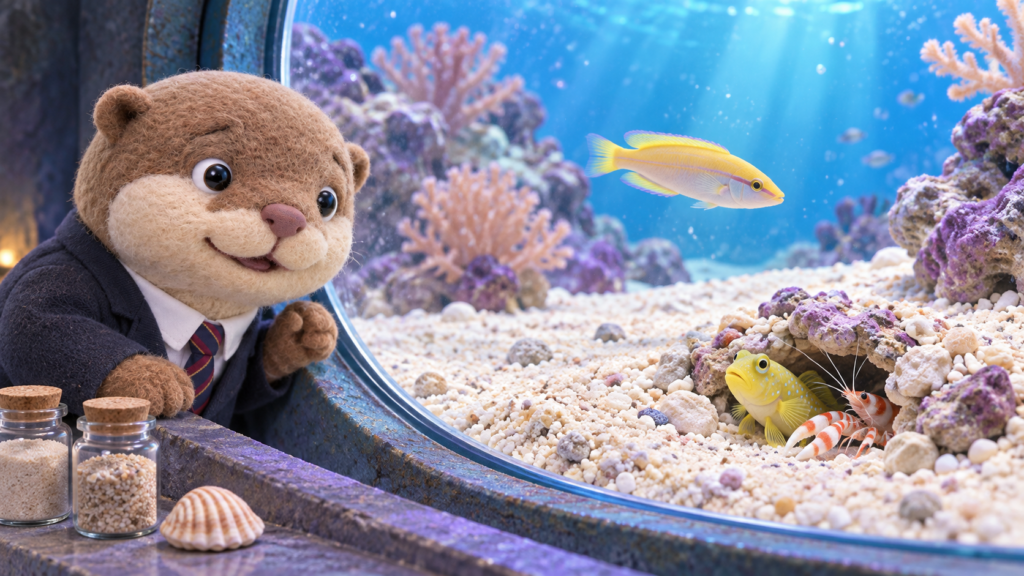 アイのアクアグッズ案内海水魚の底砂の選び方|サンゴ砂・ライブサンドとおすすめ商品道具の特徴や使い方、選ぶときのポイントをアイが紹介します。記事はコチラ →
 アイのアクアグッズ案内ローチの仲間に合わせる飼育用品|クーリー・流水性・ボーシャの水槽と底砂道具の特徴や使い方、選ぶときのポイントをアイが紹介します。記事はコチラ →
さまざまな飼育テーマをご紹介。リンク先の記事には広告・商品紹介が含まれます。
案内・紹介記事一覧へ →参考文献・参照資料
本記事では、シマハギの分類、分布、生息環境、食性、繁殖、飼育時の水質管理、病気・注意点を確認するため、店舗・通販サイト、個人ブログ、一般的なまとめサイトを除外し、学術データベース、公的機関、大学・水族館、獣医学・水産系の資料を中心に参照しました。
-
FishBase. Acanthurus triostegus, Convict surgeonfish.
https://www.fishbase.se/summary/acanthurus-triostegus
分類、学名、分布、最大体長、形態、水深、生息環境、藻類食、産卵群集、IUCN評価の確認に使用。 -
World Register of Marine Species (WoRMS). Acanthurus triostegus (Linnaeus, 1758).
https://www.marinespecies.org/aphia.php?p=taxdetails&id=403096
受容学名、原記載名、分類上の扱い、同物異名の確認に使用。 -
Animal Diversity Web, University of Michigan. Acanthurus triostegus (Fiveband surgeonfish).
https://animaldiversity.org/accounts/Acanthurus_triostegus/
地理的分布、サンゴ礁・潮だまりなどの生息環境、水温帯、発生、繁殖、群れ行動、食性、飼育下寿命の確認に使用。 -
Nausicaá Centre National de la Mer. Convict surgeonfish Acanthurus triostegus.
https://www.nausicaa.fr/en/my-visit/animals/convict-surgeonfish
公共水族館による分類、分布、生息地、食性、サイズ、IUCN評価の確認に使用。 -
沖縄美ら海水族館 魚類図鑑. シマハギ.
https://churaumi.okinawa/sp/en/fishbook/1474278839/
日本国内での読者向け補強として、サンゴ礁域・礁池での生息、岩上の糸状藻類食、大きな群れを作る性質の確認に使用。 -
Randall, J. E. (1961). A contribution to the biology of the convict surgeonfish of the Hawaiian Islands, Acanthurus triostegus sandvicensis. Pacific Science, 15(2), 215-272.
https://scholarspace.manoa.hawaii.edu/bitstreams/531ee0dc-3cf9-4448-bd4b-96b0a6374168/download
ハワイ個体群、繁殖、幼生、定着、生活史に関する基礎文献として使用。 -
Coleman, R. R. et al. (2023). Genomic assessment of larval odyssey: self-recruitment and biased settlement in the Hawaiian surgeonfish Acanthurus triostegus sandvicensis. Journal of Fish Biology, 102(3), 581-595.
https://doi.org/10.1111/jfb.15294
ハワイ個体群の浮遊幼生期間、自己加入、定着、遺伝的連結性に関する近年の研究として使用。 -
OATA. How to test for water quality in a marine tank / aquarium.
https://ornamentalfish.org/what-we-do/advice-information/care-sheets/caresheets-marine-fish/how-to-test-for-water-quality-in-a-marine-tank-aquarium/
海水水槽における塩分、温度、pH、炭酸塩硬度、硝酸塩・リン酸塩などの水質管理と急変回避の根拠として使用。 -
Yanong, R. P. E. University of Florida IFAS Extension. Cryptocaryon irritans Infections (Marine White Spot Disease) in Fish.
https://ask.ifas.ufl.edu/publication/FA164
海水魚の白点病にあたる Cryptocaryon irritans の原因、症状、診断、管理上の注意点の確認に使用。 -
Merck Veterinary Manual. Parasitic Diseases of Fish.
https://www.merckvetmanual.com/exotic-and-laboratory-animals/aquarium-fish/parasitic-diseases-of-fish
観賞魚の外部寄生虫、海水魚の Cryptocaryon、検疫・治療・再感染防止の考え方を確認するために使用。 -
Dannemiller, N. G. et al. (2021). An integrative review of lateral line depigmentation in marine and freshwater fish. Journal of the American Veterinary Medical Association, 259(6), 617-625.
https://avmajournals.avma.org/view/journals/javma/259/6/javma.259.6.617.xml
頭部・側線びらん、側線の退色・損傷、栄養・水質・飼育環境との関連を慎重に扱うための獣医学的レビューとして使用。
注記: 水槽サイズの推奨値は、上記資料に見られる最大体長、遊泳性、群れ行動、礁域での生活、海水魚の水質安定性をもとにした飼育上の実用的な推奨です。学術資料が家庭水槽の規格サイズを直接指定しているわけではないため、示したサイズは「これより小さければ必ず飼えない」という境界ではなく、長期飼育を考えた推奨です。




コメント