

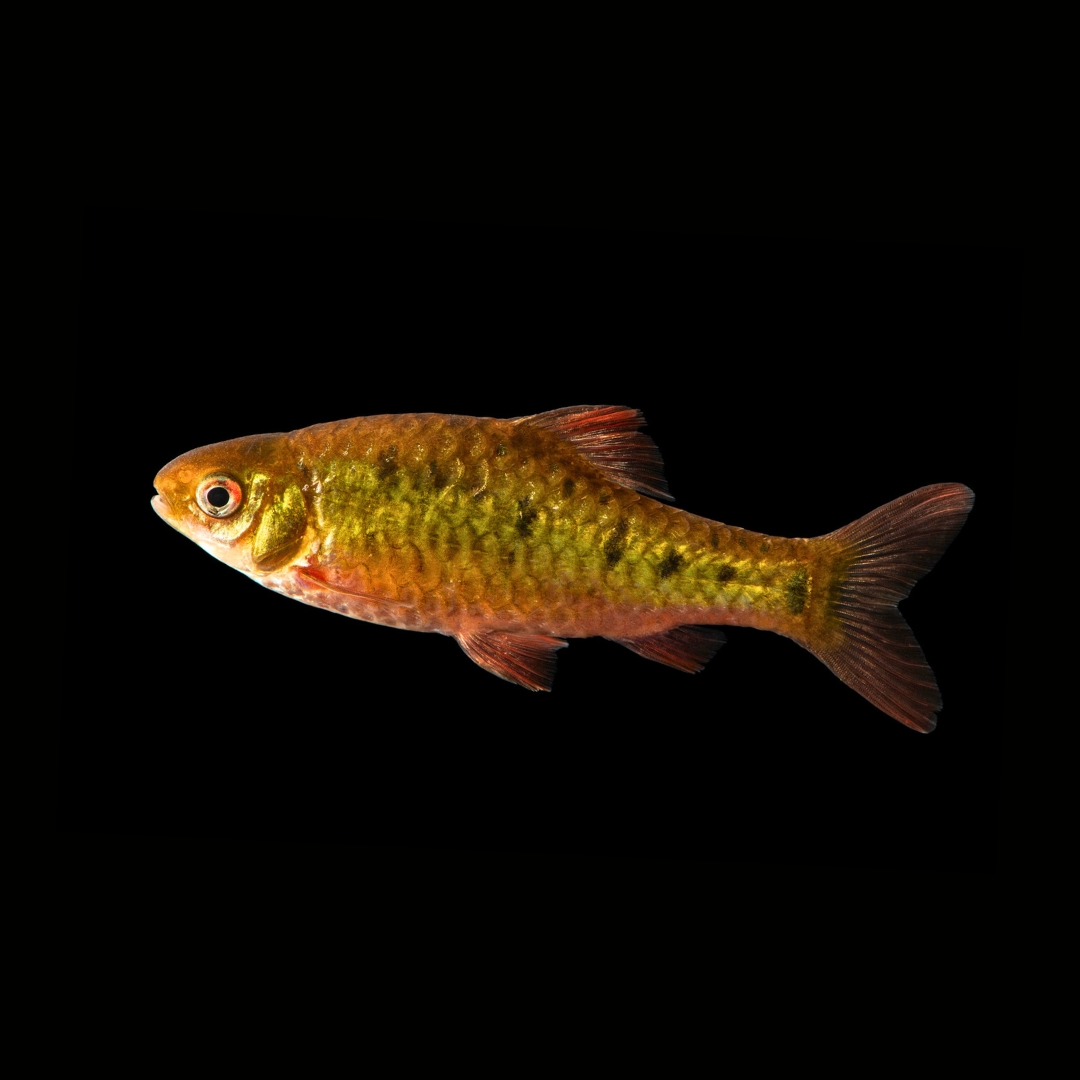
解説 / Description
ゴールデンバーブは、黄金色の体に黒い斑点が入る、明るく親しみやすい印象のコイ科魚類です。観賞魚として流通する個体は、グリーンバーブまたはそれに近い系統から作出された黄化系の改良品種として扱われることが多く、古くから世界中のアクアリウムで親しまれてきました。丈夫で人工飼料にも慣れやすく、群れで活発に泳ぐため、水槽内に動きと華やかさを加えてくれる魚です。一方で、遊泳力が高く食欲も旺盛なため、長いヒレを持つ魚や小型のエビとの混泳には注意が必要です。 The Golden Barb is a bright and approachable cyprinid fish known for its golden body and dark markings. Aquarium specimens are commonly treated as a xanthic ornamental form developed from the Green Barb or a closely related lineage, and the fish has long been enjoyed by aquarists around the world. It is hardy, readily accepts prepared foods, and adds lively movement to the aquarium when kept in a group. At the same time, its active swimming and strong appetite mean that care is needed when housing it with long-finned fish or small shrimp.
基本情報 / Basic Information
| 学名 / Scientific Name | Barbodes semifasciolatus |
|---|---|
| 通称 / Common Name | ゴールデンバーブ、ゴールドバーブ、シューベルティバーブ、グリーンバーブの黄化型として流通する改良品種Golden Barb, Gold Barb, Schuberti Barb, xanthic ornamental form commonly traded as the golden form of the Green Barb |
| 分類 / Family | コイ目 コイ科 バルボデス属Order Cypriniformes, Family Cyprinidae, Genus Barbodes |
| 英名 / English Name | Golden Barb, Gold Barb, Chinese Barb, Schuberti Barb |
| 分布 / Distribution | 原種または近縁の野生型は、中国南部、海南島、ベトナム周辺などに分布するとされ、文献によって台湾やラオス北部などを含めて扱われることもあります。観賞魚として流通するゴールデンタイプは主に養殖個体です。The wild form or closely related wild lineage is reported from southern China, Hainan, and areas around Vietnam, with some sources also treating Taiwan and northern Laos as part of the broader distribution. The golden form sold in the aquarium trade is primarily captive-bred. |
| 最大体長 / Max Size | 一般的な飼育下では約6〜8cm。文献上の最大値はおおむね7〜8cm前後で、非常に良好な環境ではやや大きく見える個体もいます。Usually about 6–8 cm in aquaria. Published maximum sizes are generally around 7–8 cm, although some individuals may appear slightly larger under very favorable conditions. |
| 寿命 / Lifespan | おおよそ5年前後。良好な環境ではさらに長く飼育できることもあります。Around 5 years on average, with the possibility of a longer lifespan under stable, well-maintained conditions. |
飼育環境 / Aquarium Environment
| 水槽サイズ / Tank Size | 5〜6匹程度から飼育できますが、活発さと群れの行動を考えると、60cm規格水槽以上を目安にします。より自然な群泳や余裕のある混泳を楽しむ場合は、8匹以上を90cm規格水槽以上で飼育すると安心です。A group of five to six can be kept, but considering its activity and shoaling behavior, a standard 60 cm aquarium is a practical guide. For a more natural display and safer community keeping, a group of eight or more in a standard 90 cm aquarium or larger is preferable. |
|---|---|
| 水温 / Temperature | 22〜25℃前後で安定させると管理しやすいです。文献上はより低めの水温にも適応するとされ、飼育下では比較的幅広い水温に耐えますが、急変は白点病などの原因になるため避けてください。 A stable range of about 22–25°C is easy to manage. Published ranges include cooler conditions, and the fish tolerates a relatively broad range in aquaria, but sudden changes should be avoided because they may trigger problems such as white spot disease. |
| 水質 / Water Quality | 弱酸性〜弱アルカリ性まで幅広く適応します。日本の一般的な軟水の水道水とも相性がよく、カルキ抜きと定期的な換水を基本にすれば飼育しやすい魚です。It adapts to a wide range from slightly acidic to slightly alkaline water. It is generally compatible with the soft tap water common in Japan, provided chlorine is removed and regular water changes are maintained. |
| レイアウト / Layout | 遊泳スペースを残しつつ、流木、水草、浮き草などで隠れ場所と落ち着ける陰を作るとよいです。暗めの底床を使うと黄金色の体色が引き立ちます。柔らかい新芽はかじられることがあるため、アヌビアスやミクロソリウムなど葉のしっかりした水草も向いています。Leave open swimming space while providing driftwood, aquatic plants, and floating plants for shelter and shaded areas. A darker substrate helps emphasize the golden body color. Tender new plant growth may be nibbled, so tougher plants such as Anubias and Microsorum are also suitable. |
| 注意点 / Precautions | 活発に泳ぐため、狭い水槽や少数飼育では小競り合いが目立つことがあります。導入はできれば5〜6匹以上、余裕があれば8匹以上で行い、攻撃が特定の個体に集中しないようにしてください。また、環境適応力が高い魚であるため、飼いきれなくなっても野外放流は絶対に避ける必要があります。Because it is an active swimmer, chasing and minor disputes may become noticeable in cramped tanks or very small groups. Introduce at least five to six individuals when possible, or eight or more if space allows, so that aggression is dispersed. Its adaptability also means it must never be released into the wild if it can no longer be kept. |
餌と給餌 / Feeding
| 餌の種類 / Diet | 雑食性で、フレークフード、顆粒フード、冷凍アカムシ、冷凍ブラインシュリンプ、ミジンコ、植物質を含む人工飼料などをよく食べます。色揚げや健康維持を考えるなら、動物質だけでなく植物質や藻類成分も含む餌を組み合わせるとよいです。It is omnivorous and readily eats flakes, granules, frozen bloodworms, frozen brine shrimp, daphnia, and prepared foods containing plant or algal ingredients. For good color and long-term health, combine animal-based foods with foods that include plant matter or algae. |
|---|---|
| 給餌のポイント / Feeding Tips | 1日1〜2回、数分で食べきれる量を与えます。食欲が強いため与えすぎると水質悪化につながります。空腹が続くと柔らかい水草をかじることがあるため、水草水槽では少量をこまめに与える方法も有効です。Feed once or twice a day, offering only what the fish can finish within a few minutes. Overfeeding can quickly degrade water quality. In planted aquariums, smaller and more regular feedings can help reduce the chance of the fish nibbling tender plant growth. |
性格と混泳 / Temperament and Tank Mates
| 性格 / Temperament | 基本的には温和ですが、非常に活発で好奇心が強い魚です。同種同士では順位づけのために追いかけ合うことがありますが、十分な匹数とスペースがあれば大きな問題になりにくいです。It is generally peaceful, but very active and curious. Individuals may chase each other as part of social ranking behavior, although this is less likely to become a serious issue when the group is large enough and the aquarium has sufficient space. |
|---|---|
| 混泳の相性 / Compatibility | ラスボラ類、小型〜中型のカラシン、コリドラス、クーリーローチなど、同程度の大きさで温和な魚と相性がよいです。グッピー、ベタ、エンゼルフィッシュのようにヒレが長い魚は、ヒレをかじられる可能性があるため注意が必要です。ミナミヌマエビや稚エビは捕食対象になりやすく、混泳には向きません。It is compatible with similarly sized peaceful fish such as rasboras, small to medium characins, Corydoras, and kuhli loaches. Long-finned fish such as guppies, bettas, and angelfish require caution because fin-nipping may occur. Small shrimp and shrimp fry are likely to be eaten and are not ideal tank mates. |
病気と対策 / Diseases and Prevention
| かかりやすい病気 / Common Diseases | 特別に病弱な魚ではありませんが、水温の急変や水質悪化があると白点病、尾ぐされ病、細菌性の肌荒れなどを起こすことがあります。導入直後のストレスにも注意が必要です。This is not a particularly delicate fish, but sudden temperature changes or poor water quality may lead to white spot disease, fin rot, or bacterial skin problems. Stress immediately after introduction should also be watched carefully. |
|---|---|
| 対策と予防 / Prevention | 水温を安定させ、週1回を目安に4分の1程度の換水を行うと管理しやすいです。導入時は水合わせを丁寧に行い、可能であれば検疫期間を設けます。ろ過をしっかり効かせ、餌の食べ残しを放置しないことが予防の基本です。Keep the temperature stable and perform regular water changes of about one quarter of the tank volume once a week as a practical guide. Acclimate new fish carefully and quarantine them when possible. Good filtration and prompt removal of leftover food are key preventive measures. |
増やし方(繁殖) / Breeding
| 雌雄の判別 / Sexing | オスは比較的スリムで、状態が上がるとヒレや体側に赤みや緑がかった光沢が強く出やすくなります。メスはオスより丸みがあり、抱卵すると腹部がふっくらします。Males are usually slimmer and, when in breeding condition, often show stronger reddish tones and a greenish metallic sheen. Females are rounder, and the abdomen becomes fuller when carrying eggs. |
|---|---|
| 繁殖形態 / Reproduction | 水草や産卵床に卵をばら撒くタイプの産卵を行います。親は卵や稚魚を保護せず、むしろ食卵することがあるため、計画的に増やす場合は繁殖用水槽を用意します。It is an egg-scattering species that deposits eggs among plants or spawning media. The parents do not guard eggs or fry and may eat them, so a separate breeding tank is recommended for planned breeding. |
| 繁殖のポイント / Breeding Tips | 繁殖用水槽にはウィローモスや産卵モップ、または卵が親の口に届かないようにするメッシュやビー玉を用意します。状態のよいペアまたは小グループを夕方に移すと、翌朝に産卵することがあります。産卵後は親を速やかに戻し、孵化後の稚魚にはインフゾリアや極細の稚魚用飼料から始め、成長に合わせてブラインシュリンプの幼生へ移行します。Use Java moss, spawning mops, or a mesh or marbles that allow eggs to fall out of reach of the parents. A well-conditioned pair or small group introduced in the evening may spawn the next morning. Remove the adults promptly after spawning. Start the fry on infusoria or very fine fry food, then move to newly hatched brine shrimp as they grow. |
雑学と豆知識 / Trivia and Fun Facts
| 1. ゴールデンバーブは自然の金色ではなく、選ばれてきた金色 / 1. A golden color shaped by selection, not simply nature | ゴールデンバーブの魅力である黄金色は、グリーンバーブまたはそれに近い系統に由来する色彩変異を、人の手で選別しながら観賞魚として固定してきたものとされています。古い観賞魚文献や流通名には、シューベルティバーブという名前も登場します。これは作出に関わったとされるトーマス・シューベルト氏にちなんだ呼び名として知られますが、正式な学名ではありません。つまりゴールデンバーブは、自然界の魚そのものというより、アクアリウム文化の中で磨かれてきた黄金色の系統として見ると、その背景がより面白くなります。The golden color that makes this fish so attractive is considered a selected ornamental form derived from color variation in the Green Barb or a closely related lineage. Older aquarium literature and trade names often use the name Schuberti Barb, associated with Thomas Schubert, who is commonly credited in the history of this strain. However, that name is not a formal scientific name. In this sense, the Golden Barb is not merely a wild fish brought indoors, but a golden strain refined through aquarium culture. |
|---|---|
| 2. 学名が変わって見える理由 / 2. Why the scientific name may look inconsistent | ゴールデンバーブは、古い本やショップの表示では Puntius semifasciolatus、Barbus semifasciolatus、あるいは Puntius sachsii などの名前で見かけることがあります。これは、アジア産の小型コイ科魚類が長い間、大きな属の中にまとめて扱われてきたためです。現在の整理では Barbodes semifasciolatus が使われることが多く、ゴールデンタイプはその黄化型・改良品種として扱うのが無難です。ただし、シューベルティバーブという呼び名は正式な学名ではなく、観賞魚流通上の名称です。流通名だけを見ると別種のように感じることがありますが、観賞魚の世界では、分類の歴史そのものが名前に残っていることが少なくありません。In older books or shop labels, this fish may appear under names such as Puntius semifasciolatus, Barbus semifasciolatus, or Puntius sachsii. This reflects the long history of grouping many small Asian cyprinids into broad genera. In current usage, Barbodes semifasciolatus is commonly used, and the golden form is best treated as a xanthic or selectively bred ornamental form of that species. However, Schuberti Barb is a trade name rather than a formal scientific name. Although trade names can make the fish seem like different species, aquarium names often preserve traces of taxonomic history. |
| 3. 黄金色でもアルビノとは違う / 3. Golden does not mean albino | ゴールデンバーブの金色は、一般にキサントクロミズム、つまり黄色や赤系の色素が目立つ色彩変異として説明されます。アルビノのようにメラニンをほぼ作れない状態とは異なり、通常のゴールデンバーブでは目が黒く、体にも黒い斑点が残ります。そのため、金色の体に黒い模様が散り、状態のよいオスでは赤や緑の光沢が加わるという、単純な黄色ではない複雑な美しさが生まれます。The golden body color is generally explained as xanthochromism, a color variation in which yellow and reddish pigments become prominent. It differs from albinism, where melanin production is greatly reduced or absent. Standard Golden Barbs usually retain dark eyes and black markings. This is why their beauty is not a simple yellow color, but a layered combination of gold, dark markings, and, in well-conditioned males, reddish and greenish sheen. |
| 4. スネール対策として語られることもある魚 / 4. A fish sometimes valued for snail control | ゴールデンバーブは雑食性が強く、小さな巻貝やプラナリアのような小動物を口にすることがあります。そのため、水草水槽ではスネールの増えすぎを抑える補助になる魚として語られることもあります。ただし、これは薬のように必ず効果が出るという意味ではありません。個体差や餌の量、水槽内の隠れ場所によって結果は変わります。また、小型のエビや稚エビも捕食対象になりやすいため、クリーナー目的だけで導入するのではなく、混泳相手を慎重に選ぶ必要があります。Because Golden Barbs are strongly omnivorous, they may eat small snails and tiny animals such as planarians. For this reason, they are sometimes described as a fish that may help reduce excessive snail numbers in planted aquariums. However, this does not mean they work like a guaranteed treatment. Results vary depending on individual behavior, feeding levels, and hiding places in the tank. Small shrimp and shrimp fry may also be eaten, so they should not be introduced solely as a cleaner fish without carefully considering tank mates. |
| 5. 丈夫だからこそ、放流してはいけない / 5. Its hardiness is exactly why it must never be released | ゴールデンバーブは、観賞魚としては非常にありがたい丈夫さを持っています。水質への適応幅が広く、人工飼料にも慣れやすく、群れでよく泳ぐ姿は初心者にも扱いやすい魅力です。しかし、この丈夫さは野外に出たときのリスクにもつながります。海外では観賞魚が逸出して野生化した事例が知られており、環境条件が合えば在来生態系に影響を与える可能性があります。飼いやすい魚ほど、最後まで飼いきる責任が大切です。The Golden Barb is hardy in a way that is very helpful for aquarium keeping. It tolerates a range of water conditions, accepts prepared foods easily, and shows attractive shoaling behavior that beginners can enjoy. Yet this hardiness also creates risk if the fish is released outdoors. Escaped ornamental fish have established feral populations in some regions, and suitable conditions could allow impacts on native ecosystems. The easier a fish is to keep, the more important responsible lifelong care becomes. |
まとめ / Conclusion
ゴールデンバーブは、丈夫さ、明るい体色、群れで泳ぐ活発さを兼ね備えた、非常に扱いやすい小型〜中型のコイ科魚類です。60cm規格水槽以上を目安に、5匹以上のグループで飼育すると、本来の動きや色彩を楽しみやすくなります。人工飼料にもよく慣れ、幅広い水質に対応できるため、初心者にもすすめやすい魚です。 The Golden Barb is a very manageable small to medium-sized cyprinid that combines hardiness, bright coloration, and lively shoaling behavior. Keeping a group of five or more in a standard 60 cm aquarium or larger makes it easier to enjoy its natural movement and color. Because it readily accepts prepared foods and adapts to a broad range of water conditions, it is suitable even for less experienced aquarists.
一方で、ヒレの長い魚や小型のエビとの混泳には注意が必要で、活発さを受け止められる水槽設計が重要です。美しい黄金色の背景には、改良品種としての歴史や分類名の変遷もあり、ただ丈夫な魚というだけでは語りきれない奥行きがあります。終生飼育と野外放流の禁止を守りながら飼育すれば、ゴールデンバーブは水槽に明るい動きと長く楽しめる魅力をもたらしてくれる存在です。 At the same time, caution is needed with long-finned fish and small shrimp, and the aquarium should be designed to accommodate its active nature. Behind its beautiful golden color lies a history of selective breeding and taxonomic change, giving the fish more depth than its reputation as a hardy beginner species suggests. When kept responsibly for its full life and never released outdoors, the Golden Barb brings bright movement and lasting appeal to the aquarium.

気になる道具や飼い方を見つけてみませんか?
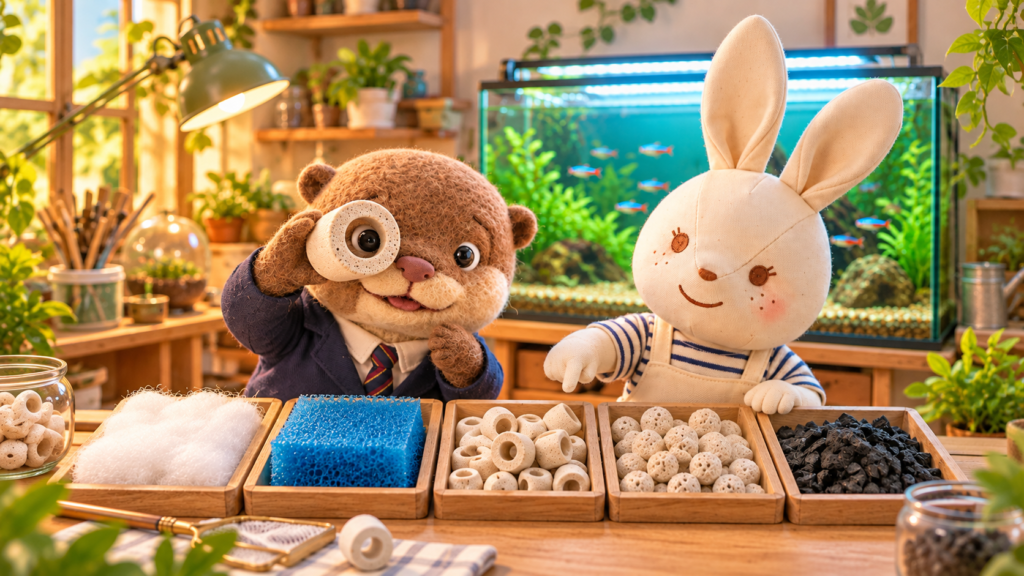 アイのアクアグッズ案内水槽のろ材の選び方|ウール・リング・活性炭の違いとおすすめ商品フィルターの中の綿や石は何をしている? アイとコタロウが、ウール・スポンジ・セラミック・焼結ガラス・活性炭・ゼオライトを比較。機種との相性、入れ方、洗い方と交換まで商品とともに紹介します。記事はコチラ →
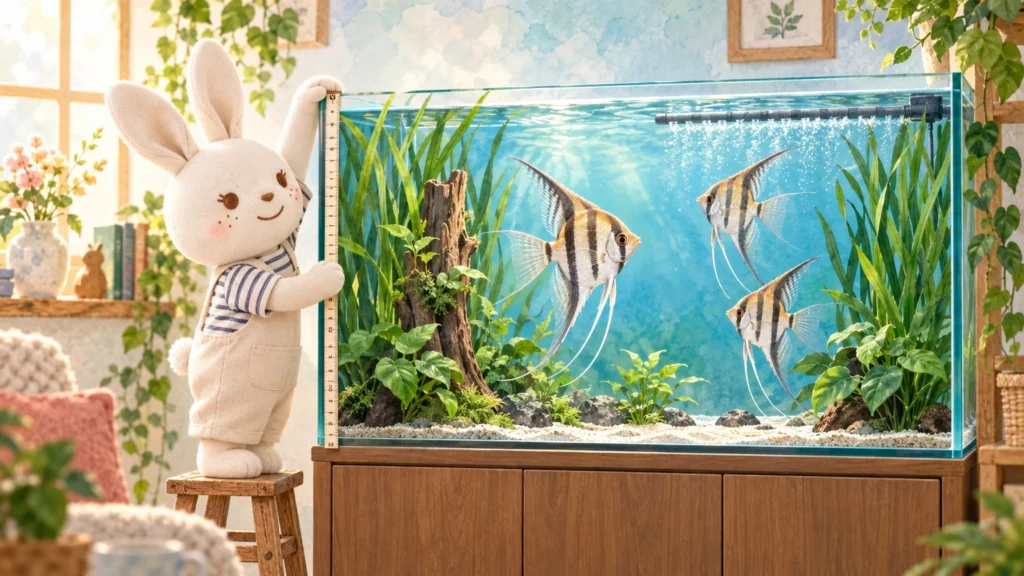 アイのアクアグッズ案内エンゼルフィッシュの飼育用品|高さのある水槽・ろ過・水草・餌の選び方道具の特徴や使い方、選ぶときのポイントをアイが紹介します。記事はコチラ →
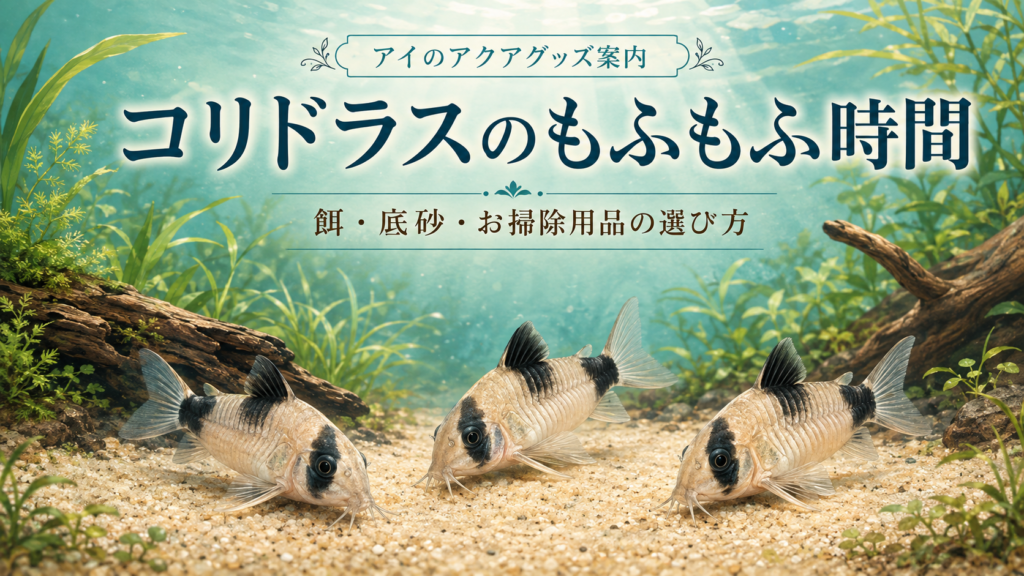 アイのアクアグッズ案内コリドラスのもふもふ時間を楽しむ|餌・底砂・お掃除用品の選び方コリドラスのもふもふする食事風景を楽しむために。沈む餌2種類の違い、口元に配慮した底砂、食べ残しを回収する道具を、アクアグッズナビゲーターのアイが紹介します。記事はコチラ →
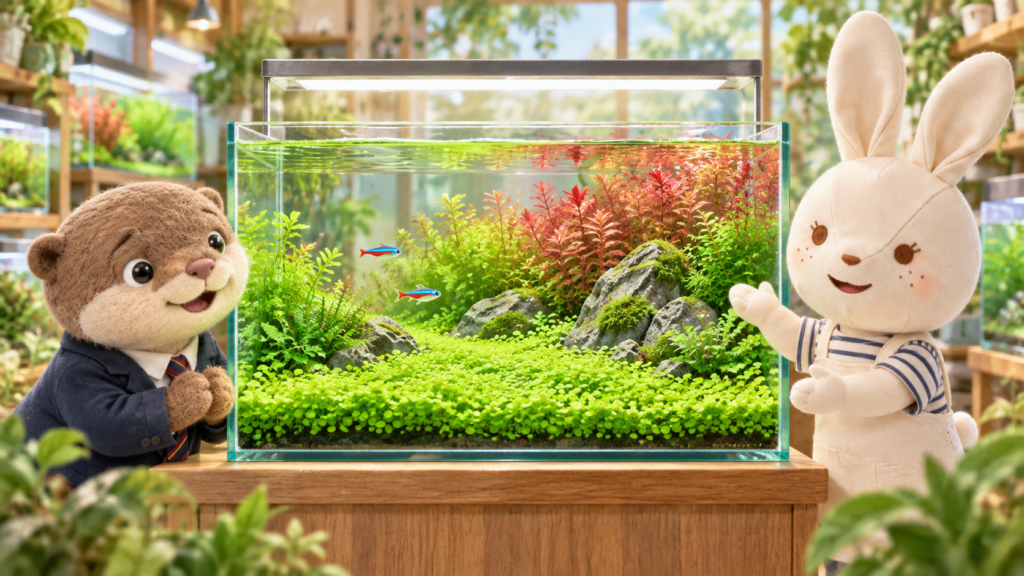 アイのアクアグッズ案内水草用ライトの選び方|緑の絨毯と赤い水草を楽しむ照明・植栽用品道具の特徴や使い方、選ぶときのポイントをアイが紹介します。記事はコチラ →
さまざまな飼育テーマをご紹介。リンク先の記事には広告・商品紹介が含まれます。
案内・紹介記事一覧へ →参考文献・参照資料
本記事では、ゴールデンバーブの分類、分布、体長、水質適応、食性、群泳性、繁殖形態、外来化リスクを確認するため、以下の資料を参照しました。販売店・通販ページは参考文献から除外しています。
-
Froese, R. and Pauly, D. eds. FishBase. Barbodes semifasciolatus, Chinese barb. FishBase.
https://www.fishbase.se/summary/Barbodes-semifasciolatus
学名、分類、分布、最大体長、水質範囲、食性、群れでの飼育目安、IUCN評価の確認に使用しました。 -
Fricke, R., Eschmeyer, W. N. and Van der Laan, R. eds. Eschmeyer’s Catalog of Fishes. California Academy of Sciences. Barbus sachsii Ahl, 1923.
https://researcharchive.calacademy.org/research/ichthyology/catalog/fishcatget.asp?spid=31499
Puntius sachsii や Barbus sachsii などの旧名・シノニム整理、現在の学名表記を確認するために使用しました。 -
GBIF Secretariat. Barbodes semifasciolatus (Günther, 1868). GBIF Backbone Taxonomy.
https://www.gbif.org/species/9515715
分類階級、シノニム、英名・通称、分布記録の補助確認に使用しました。 -
Seriously Fish. Barbodes semifasciolatus – Golden Barb.
https://www.seriouslyfish.com/species/barbodes-semifasciolatus/
飼育水槽サイズ、水温・pH・硬度、食性、混泳、雌雄差、卵ばら撒き型の繁殖、親による食卵リスクの確認に使用しました。 -
U.S. Fish and Wildlife Service. 2019. Green Barb (Barbodes semifasciolatus) Ecological Risk Screening Summary.
https://www.fws.gov/sites/default/files/documents/Ecological-Risk-Screening-Summary-Green-Barb.pdf
原産地の幅、導入・逸出記録、ハワイでの記録、野外放流を避けるべき根拠の確認に使用しました。 -
U.S. Geological Survey, Nonindigenous Aquatic Species Database. Green barb (Puntius semifasciolatus) Species Profile.
https://nas.er.usgs.gov/queries/factsheet.aspx?SpeciesID=634
旧学名で記録された外来導入事例と、ハワイでの非在来記録の補助確認に使用しました。
補足:ゴールデンバーブは、Barbodes semifasciolatus の黄化型・改良品種に用いられる観賞魚流通名です。資料によって分類名や旧学名の表記が異なる場合があります。




コメント