

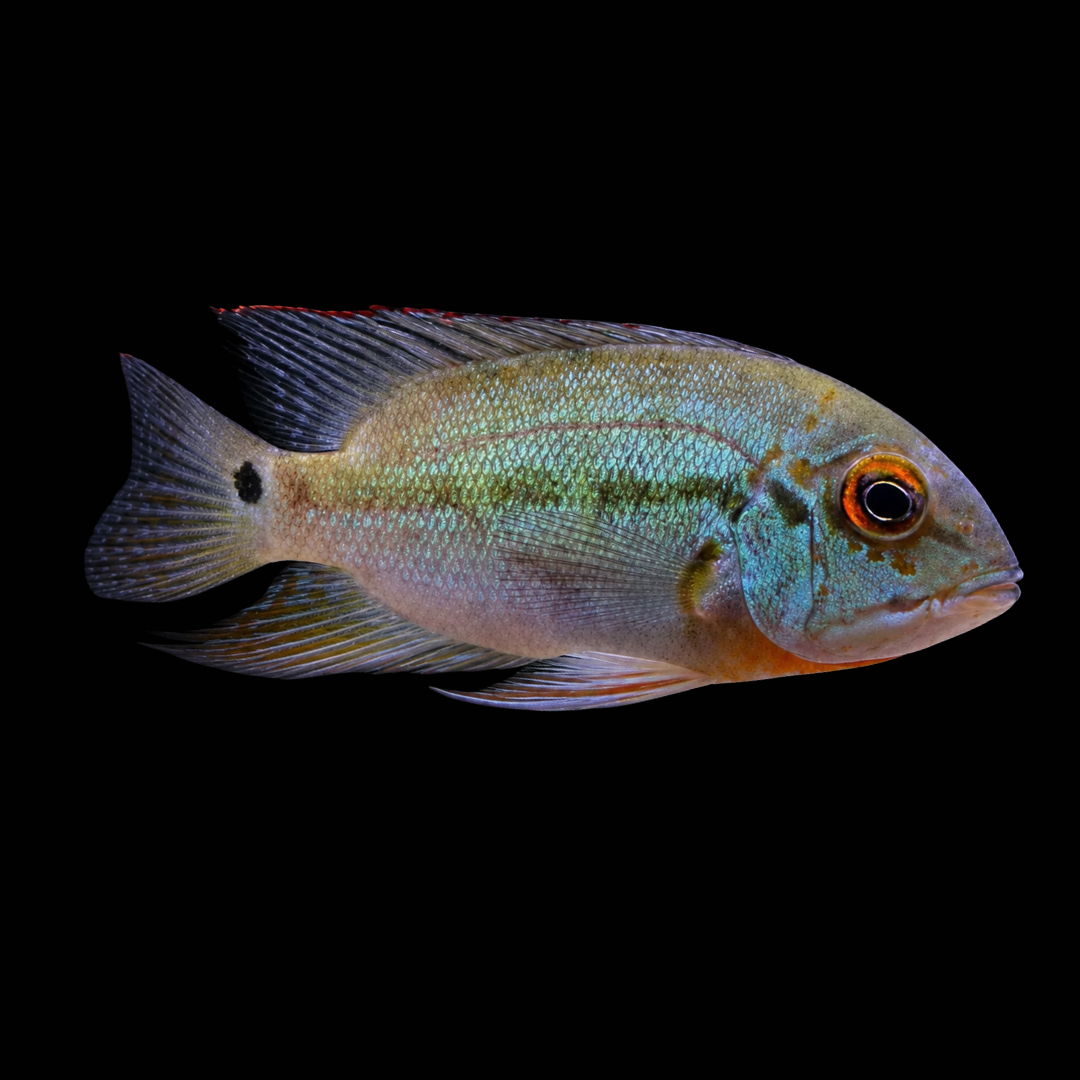
解説 / Description
ホプラルクス・プシッタクスは、アマゾン川流域とオリノコ川流域に分布する大型シクリッドで、日本では「パロットシクリッド」の名で流通する南米原産の野生種です。幼魚期は暗い緑灰色で警戒心が強いことがありますが、成長につれて体高のある力強い体型となり、オリーブグリーンから青緑色の光沢、赤い虹彩が際立つ堂々とした姿へ変化します。とくにコロンビア便で入荷するワイルド個体は、育成に伴う発色と体型の変化を楽しめる存在として大型シクリッド愛好家に支持されています。なお、ブラッドパロットやキングコングパロットなどの人工交雑品種とは分類学的にまったく別の魚です。 Hoplarchus psittacus is a large South American cichlid distributed in the Amazon and Orinoco river basins. In Japan it is commonly traded as the Parrot Cichlid or True Parrot Cichlid. Juveniles can be shy and are often dark gray-green, but with growth they develop a deep, powerful body, olive to turquoise-green iridescence, and striking red eyes. Wild Colombian specimens are especially appreciated by keepers who enjoy watching their coloration and body shape develop over time. This species is taxonomically unrelated to man-made hybrid fishes such as Blood Parrots and King Kong Parrots.
基本情報 / Basic Information
| 学名 / Scientific Name | Hoplarchus psittacus (Heckel, 1840) |
|---|---|
| 通称 / Common Name | パロットシクリッド、トゥルーパロットシクリッドTrue Parrot Cichlid, Parrot Cichlid |
| 分類 / Family | シクリッド目(Cichliformes)・シクリッド科(Cichlidae)・シクリッド亜科(Cichlinae)・ホプラルクス属(Hoplarchus)Order Cichliformes, Family Cichlidae, Subfamily Cichlinae, Genus Hoplarchus |
| 英名 / English Name | True Parrot Cichlid |
| 分布 / Distribution | 南米のアマゾン川流域およびオリノコ川流域。ブラジル、コロンビア、ベネズエラに分布し、日本向けではコロンビア東部のオリノコ・アマゾン移行域からのワイルド個体が流通することがあります。South America, in the Amazon and Orinoco river basins, including Brazil, Colombia, and Venezuela. Wild fish from eastern Colombia, around the Orinoco-Amazon transition zone, are periodically exported to the Japanese aquarium trade. |
| 最大体長 / Max Size | 最大約32〜35cm。飼育下でも30cmを超える大型種として考え、成魚サイズを前提に設備を準備します。Approximately 32–35 cm maximum total length. It should be planned for as a fish exceeding 30 cm even in captivity. |
| 寿命 / Lifespan | 10年以上が目安。適切な水質、栄養、十分な遊泳空間を長期的に維持することが重要です。Around 10 years or more is a practical expectation. Long-term water quality, nutrition, and adequate swimming space are essential. |
飼育環境 / Aquarium Environment
| 水槽サイズ / Tank Size | 成魚の単独飼育では120cmワイド水槽(120×60×60cm、約430L)以上を推奨します。ペア飼育や大型魚との混泳では150〜180cm級で700〜1000L程度を目安に、逃げ場と遊泳空間を確保します。10cm前後の幼魚は90cm規格水槽から育成できますが、あくまで一時的な設備と考え、早めのサイズアップを計画してください。For a single adult, a wide 120 cm aquarium measuring about 120 × 60 × 60 cm, roughly 430 L, is recommended as a minimum target. Pairs or large-fish communities are better housed in 150–180 cm systems of roughly 700–1000 L with both retreat areas and open swimming space. Juveniles around 10 cm can begin in a standard 90 cm aquarium, but this should be treated as temporary housing with an upgrade planned in advance. |
|---|---|
| 水温 / Temperature | 27〜30℃を目安に安定させます。26℃程度でも維持できる場合がありますが、急激な温度変化は避け、導入直後や体調不良時ほど安定性を優先します。 Keep the temperature stable at about 27–30°C. Temperatures around 26°C may be tolerated, but sudden changes should be avoided, especially after introduction or when the fish is stressed. |
| 水質 / Water Quality | 弱酸性の軟水を基本とし、pH 5.5〜6.5、GH 2〜10程度を目安にします。原産地には電気伝導度が非常に低いブラックウォーター環境が含まれるため、硬度の高い水や急なpH上昇は避けます。流木、ピート、モモタマナの葉などはタンニンや腐植物質を供給しやすい一方、極端な低pH化は濾過バクテリアの働きを弱めるため、数値を追い込みすぎず安定した弱酸性を維持することが大切です。Soft, mildly acidic water is preferred, with pH about 5.5–6.5 and roughly 2–10 dGH as a practical target. Natural habitats include extremely low-conductivity blackwater, so hard water and sudden upward pH shifts should be avoided. Driftwood, peat, and Indian almond leaves can provide tannins and humic substances, but excessively low pH can impair biological filtration, making stability more important than chasing extreme values. |
| レイアウト / Layout | 大型流木や丈夫な石組みで視線を遮る場所を作りつつ、中央には十分な遊泳空間を残します。底床は掃除しやすい薄敷きの砂やベアタンクが管理しやすく、暗めの背景や浮草による遮光は導入初期の警戒心を和らげる助けになります。成長すると底床を掘ったり物を動かしたりするため、倒壊しやすい装飾や根の浅い水草は避けます。Use large driftwood and secure rockwork to break lines of sight while leaving generous open swimming space. A thin sand layer or bare-bottom setup is easier to maintain, and a dark background or floating plants can help nervous newly imported fish settle. Adults may dig and rearrange objects, so unstable décor and shallow-rooted plants are unsuitable. |
| 注意点 / Precautions | 大食で排泄量が多いため、強力な生物濾過と定期換水を両立させます。目安として週1回20〜30%程度の換水を基準にしつつ、実際の硝酸塩濃度と給餌量に合わせて調整してください。輸入直後のワイルド個体は水質変化と環境ストレスに敏感なので、急激なpH・硬度変化を避け、落ち着ける環境で慎重に導入します。This is a heavy-feeding, high-waste fish, so strong biological filtration must be combined with regular water changes. A weekly change of roughly 20–30% is a useful starting point, then adjusted to actual nitrate levels and feeding intensity. Newly imported wild specimens can be sensitive to water-chemistry shifts and environmental stress, so avoid abrupt changes in pH or hardness and provide a calm acclimation environment. |
餌と給餌 / Feeding
| 餌の種類 / Diet | 肉食傾向の強い雑食性です。主食には大型シクリッド用の高品質ペレットを用い、冷凍アカムシ、クリル、エビ類、ディスカスハンバーグなどを副食として組み合わせます。スピルリナ配合飼料や茹でたズッキーニなどの植物質も少量取り入れると、食性の偏りを抑えやすくなります。It is an omnivore with a strong carnivorous tendency. Use a high-quality large-cichlid pellet as the staple, supplemented with frozen bloodworms, krill, shrimp, and prepared discus-style meat foods. Small amounts of spirulina-based food or blanched zucchini can help broaden the diet. |
|---|---|
| 給餌のポイント / Feeding Tips | 1日1〜2回、数分で食べ切れる量を基準にし、肥満と水質悪化を避けます。導入直後の幼魚は数日から数週間ほど食欲が不安定になることがあり、照明を落とし、隠れ場所を増やし、嗜好性の高い冷凍餌から人工飼料へ徐々に移行すると成功しやすくなります。活き餌の小魚は捕食行動を引き出しますが、寄生虫や病原体を持ち込む危険があるため常用は勧められません。Feed once or twice daily in portions consumed within a few minutes to limit obesity and water pollution. Newly imported juveniles may eat poorly for days or even weeks; dim lighting, secure hiding places, and a gradual transition from attractive frozen foods to prepared pellets can help. Live feeder fish may stimulate predatory behavior but are not recommended as a routine food because they can introduce parasites or pathogens. |
性格と混泳 / Temperament and Tank Mates
| 性格 / Temperament | 幼魚期は非常に臆病で、物陰に隠れ続けることがありますが、成長して環境に慣れると存在感が増し、シクリッドらしい縄張り意識と強い自己主張を示します。個体識別能力や飼育者への反応も見られやすく、長期飼育では行動の変化を楽しめる魚です。Juveniles can be extremely shy and may remain hidden for long periods, but as they grow and settle in, they become more confident and show the territorial behavior typical of large cichlids. They often respond distinctly to their keeper and can display noticeable behavioral changes over long-term care. |
|---|---|
| 混泳の相性 / Compatibility | 最も安全なのは単独飼育です。混泳する場合は、十分に広い水槽で、口に入らない大きさかつ生活圏が大きく競合しない大型魚を選びます。表層性のアロワナ類、底層性の大型ポリプテルスや大型プレコなどが候補になりますが、相性には大きな個体差があります。同じ中・底層を強く縄張り化する大型シクリッド同士は激しく争うことがあり、小型魚やエビ類は捕食対象になります。過密によって攻撃を分散する方法は水質悪化の危険が高く、一般的な管理法としては勧められません。Solitary keeping is the safest option. If tank mates are attempted, use a very large aquarium and choose robust fish too large to swallow and with less direct overlap in territory. Surface-oriented arowanas, large bichirs, or large plecos may sometimes work, but compatibility varies greatly by individual. Other large territorial cichlids can trigger severe fighting, while small fish and shrimp will be treated as prey. Deliberate overcrowding to diffuse aggression carries a high water-quality cost and is not recommended as routine husbandry. |
病気と対策 / Diseases and Prevention
| かかりやすい病気 / Common Diseases | 大型シクリッドで問題になりやすいのが、食欲低下、痩せ、白く細い粘液状の糞などを伴う腸管内鞭毛虫症です。シクリッドではSpironucleus属の感染が知られ、頭部穴あき症状との関連も報告されています。ただし、頭部や側線周辺のびらんは水質、栄養、慢性的ストレスなど複数要因が関与すると考えられているため、見た目だけで原因を断定しないことが重要です。Large cichlids can develop intestinal flagellate disease associated with signs such as loss of appetite, weight loss, and long pale mucous feces. Spironucleus infections are well documented in cichlids and have also been associated with hole-in-the-head lesions. However, erosion around the head and lateral-line region is considered multifactorial, with water quality, nutrition, and chronic stress potentially contributing, so diagnosis should not be based on appearance alone. |
|---|---|
| 対策と予防 / Prevention | 新規導入魚は可能なら隔離観察し、アンモニア・亜硝酸を検出させず、硝酸塩を低く保つことを基本にします。食欲低下、急な黒化、痩せ、白い糞が続く場合は早めに隔離し、糞便や腸内容物の検査が可能な魚類診療経験のある獣医師へ相談するのが確実です。Spironucleus症ではメトロニダゾールが用いられることがありますが、魚の状態や投与法で安全域が変わるため、自己判断での薬量設定より診断と専門的な指示を優先してください。治療の有無にかかわらず、底床清掃、換水、過密回避、栄養の多様化を同時に見直します。Quarantine new fish when possible, keep ammonia and nitrite undetectable, and maintain low nitrate as the foundation of prevention. Persistent appetite loss, darkening, weight loss, or pale stringy feces warrants prompt isolation and consultation with a veterinarian experienced in fish medicine, ideally with fecal or intestinal examination. Metronidazole is used for Spironucleus infections in ornamental fish, but dose and route depend on the condition of the fish, so diagnosis and professional guidance should take priority over self-directed medication. Regardless of treatment, improve substrate hygiene, water changes, stocking density, and dietary variety at the same time. |
増やし方(繁殖) / Breeding
| 雌雄の判別 / Sexing | 外見だけでの雌雄判別は難しい魚です。成熟したオスは大型化し、体高や頭部の力強さが増す傾向がありますが、確実な判別点とはいえません。繁殖期に生殖突起を確認できれば精度が上がりますが、若魚段階での確定は困難です。Reliable visual sexing is difficult. Mature males may become larger and more robust in body depth and head shape, but these are not definitive characters. Observation of the genital papilla during breeding condition can improve accuracy, while juveniles are particularly difficult to sex. |
|---|---|
| 繁殖形態 / Reproduction | 雌雄異体で体外受精を行う基質産卵型のシクリッドです。相性の良いペアは平らな石や流木などを掃除して産卵床を作り、卵と仔魚を両親で守る傾向があります。産卵数は飼育例により幅がありますが、100〜300個程度が目安として語られています。This is a dioecious, externally fertilizing substrate-spawning cichlid. A compatible pair typically cleans a flat stone or piece of wood and shows biparental guarding of eggs and fry. Reported aquarium clutches vary, with roughly 100–300 eggs often cited as a practical range. |
| 繁殖のポイント / Breeding Tips | 飼育下繁殖は難易度が高く、成熟まで長期間を要するうえ、ペア形成時の激しい争いが最大の障害になります。複数の若魚から自然なペア形成を待つ方法が現実的ですが、成長に伴って分離できる予備水槽が必要です。繁殖を狙う際は大型の専用水槽で弱酸性・軟水を安定させ、平らな産卵基質と十分な退避場所を用意し、産卵後は照明や人の出入りによる刺激を減らします。自由遊泳を始めた稚魚にはブラインシュリンプ幼生など、口に合う小型の初期飼料を切らさず与えます。Captive breeding is difficult because sexual maturity takes time and pair formation can involve severe aggression. Allowing a pair to form naturally from a group of juveniles can be practical, but spare aquariums are essential so incompatible fish can be separated as they mature. For breeding, use a large dedicated aquarium with stable soft acidic water, flat spawning surfaces, and generous retreat areas, then minimize sudden lighting changes and external disturbance after spawning. Once fry become free-swimming, provide suitably small foods such as newly hatched brine shrimp without interruption. |
雑学と豆知識 / Trivia and Fun Facts
| 1. 「本物のパロット」と呼ばれる理由 / 1. Why It Is Called the “True Parrot” | アクアリウムショップで「パロット」と聞くと、丸い体型のブラッドパロットを思い浮かべる人が少なくありません。しかしホプラルクス・プシッタクスは、人為交雑で作られた品種ではなく、南米の河川で自然に進化してきた独立した野生種です。種小名のpsittacusは「オウム」を意味し、その呼び名は頭部の印象や緑を基調とする色彩と結び付けられてきました。見た目の連想から同じ「パロット」という言葉が使われても、両者の成り立ちはまったく異なります。In aquarium shops, the word “parrot” often brings to mind the round-bodied Blood Parrot. Hoplarchus psittacus, however, is not a man-made hybrid but a naturally evolved South American species. The specific name psittacus means “parrot,” a reference historically associated with its head profile and green coloration. The shared nickname therefore reflects appearance, not common biological origin. |
|---|---|
| 2. 1840年から続く学名の旅 / 2. A Taxonomic Journey Since 1840 | 本種は1840年にヨハン・ヤーコプ・ヘッケルによってHeros psittacusとして記載されました。その後、南米シクリッドの分類体系が整う過程で複数の属名を渡り歩き、20世紀後半の再検討を経て現在のHoplarchus psittacusという組み合わせが定着しました。現在も有効種として扱われており、古い文献をたどると異なる学名が現れるのは、この魚そのものが変わったのではなく、研究者側の分類理解が更新され続けてきたためです。The species was described by Johann Jakob Heckel in 1840 as Heros psittacus. As the classification of South American cichlids developed, it passed through several generic combinations before the modern name Hoplarchus psittacus became established after later taxonomic revision. It remains a valid species today, so the variety of older names found in historical literature reflects changing scientific interpretation rather than changes in the fish itself. |
| 3. コロンビア個体の故郷と河川の交差点 / 3. The Colombian Population and a Crossroads of Rivers | コロンビア東部のイニリダ周辺は、オリノコとアマゾンの要素が交わる特別な水域です。イニリダ川、グアビアレ川、アタバポ川などが複雑に結びつく湿地群は「イニリダ河川星」と呼ばれ、国際的に重要な湿地としてラムサール条約にも登録されています。ここではブラックウォーター、ホワイトウォーター、クリアウォーターという性質の異なる水が近接し、多様な魚類相を支えています。水槽で弱酸性の柔らかな水を好む本種の性質も、こうした大河川水系の環境史と切り離せません。The Inírida region of eastern Colombia lies at a remarkable transition between Orinoco and Amazonian influences. The complex wetland formed by rivers such as the Inírida, Guaviare, and Atabapo is known as the Estrella Fluvial Inírida and is internationally recognized as a Ramsar wetland. Blackwater, whitewater, and clearwater systems occur in close proximity, supporting exceptional fish diversity. The preference of this cichlid for soft, acidic conditions in captivity is best understood against this broader riverine history. |
| 4. 雨季と乾季で変わる食卓 / 4. A Diet That Changes with the Seasons | 自然界では一年中同じ餌だけを食べているわけではありません。水位が上がり森林へ水が入り込む季節には、水生昆虫や甲殻類を利用しやすくなり、反対に水位が下がる時期には小魚を捕らえる割合が増えます。この季節性を知ると、水槽でペレット一種類だけに頼らず、甲殻類系の餌や植物質を含む補助食を組み合わせる意味が見えてきます。多様な給餌は単なる贅沢ではなく、野生での柔軟な食性を飼育下に置き換える考え方です。In nature, this fish does not eat the same food throughout the year. During high-water periods, flooded habitats make aquatic insects and crustaceans readily available, while lower-water seasons increase opportunities to prey on smaller fish. This seasonal flexibility helps explain why a varied captive diet makes sense: pellets can form the staple, but crustacean-based foods and some plant matter provide a broader nutritional profile that better reflects its natural feeding ecology. |
| 5. 頭部穴あき症状は一つの原因だけで語れない / 5. Hole-in-the-Head Is Not a One-Cause Problem | シクリッドの頭部穴あき症状は、長く「ヘキサミータ」と一括りに説明されてきました。実際にはSpironucleus属の鞭毛虫が病変から検出され、関連を示す研究がありますが、それだけですべての症例を説明できるわけではありません。水質悪化、栄養の偏り、慢性的なストレスなども同時に疑う必要があり、まず環境を立て直す姿勢が重要です。病気を一つの薬で解決するのではなく、水槽全体の状態を読み解くことこそ、大型シクリッドを長く健全に育てる基本になります。Hole-in-the-head disease in cichlids has often been simplified under the old aquarium label “Hexamita.” Spironucleus flagellates have indeed been recovered from lesions and are associated with some cases, but they do not explain every presentation. Poor water quality, nutritional imbalance, and chronic stress may also contribute. Successful management therefore begins by correcting the aquarium environment rather than treating the problem as something that can always be solved by a single medication. |
まとめ / Conclusion
ホプラルクス・プシッタクスは、幼魚期の慎重で臆病な姿から、成長とともに重厚な体型と深い緑の光沢をまとっていく変化そのものが大きな魅力です。その美しさを十分に引き出すには、成魚サイズを見越した大型水槽、弱酸性・軟水の安定した水質、強力な濾過と定期換水を長く維持する必要があります。 Hoplarchus psittacus is especially rewarding because of the transformation it undergoes from a cautious, shy juvenile into a deep-bodied adult with rich green iridescence. Bringing out that potential requires long-term commitment to an adult-sized aquarium, stable soft acidic water, powerful filtration, and consistent water changes.
環境に慣れた個体は飼育者の存在にもよく反応し、水槽の中で強い個性を示すようになります。十分な空間と落ち着いた環境を用意し、その魚が見せる小さな変化を丁寧に読み取っていけば、年月を重ねるほど存在感を増していく、長く付き合える南米シクリッドです。 Once established, many individuals respond noticeably to their keeper and develop a strong presence in the aquarium. With enough space, a calm environment, and careful attention to subtle behavioral changes, this South American cichlid becomes increasingly impressive with age and can remain a long-term companion for the dedicated aquarist.

気になる道具や飼い方を見つけてみませんか?
 アイのアクアグッズ案内水槽ライトの選び方|魚の見え方・水草・海水で選ぶおすすめ照明道具の特徴や使い方、選ぶときのポイントをアイが紹介します。記事はコチラ →
 アイのアクアグッズ案内おとひめ物語|養殖生まれの餌を、わが家の魚に合う一粒へ道具の特徴や使い方、選ぶときのポイントをアイが紹介します。記事はコチラ →
 アイのアクアグッズ案内金魚を長く楽しむ飼育用品|水槽・フィルター・エアレーション・水換え道具の特徴や使い方、選ぶときのポイントをアイが紹介します。記事はコチラ →
 アイのアクアグッズ案内水槽のコケ掃除|道具の選び方とお掃除生体の得意・不得意道具の特徴や使い方、選ぶときのポイントをアイが紹介します。記事はコチラ →
さまざまな飼育テーマをご紹介。リンク先の記事には広告・商品紹介が含まれます。
案内・紹介記事一覧へ →分布マップ
ホプラルクス・プシッタクス(Hoplarchus psittacus)は、南米のアマゾン川流域およびオリノコ川流域に広く分布し、ブラジル、コロンビア、ベネズエラなどに生息します。地図は両水系を含むおおよその分布範囲を表示しています。
※この地図は文献上の分布地域をもとにした概略表示です。マーカーは分布域を把握しやすくするためコロンビア東部のイニリダ周辺に設定した代表地点であり、実際の採集地点や生息確認地点を示すものではありません。
参考文献
- Fricke, R., Eschmeyer, W. N. & Van der Laan, R. (eds.). Eschmeyer’s Catalog of Fishes: Genera, Species, References. California Academy of Sciences. “Hoplarchus psittacus (Heckel, 1840)” species record. California Academy of Sciences
- Froese, R. & Pauly, D. (eds.). FishBase. “Hoplarchus psittacus (Heckel, 1840)” species summary. 分布、最大体長、水温・pH・硬度、生息場所、自然下の食性を参照。 FishBase species summary
- Lasso, C. A., Usma Oviedo, J. S., Villa, F., Sierra-Quintero, M. T., Ortega-Lara, A., Mesa, L. M., et al. (2009). “Peces de la estrella fluvial Inírida: ríos Guaviare, Inírida, Atabapo y Orinoco (Orinoquía colombiana).” Biota Colombiana, 10(1–2). イニリダ河川星の魚類相、オリノコ水系における生息環境と本種の記録を参照。 Instituto Humboldt / Biota Colombiana
- Froese, R. & Pauly, D. (eds.). FishBase — Reproduction of Hoplarchus psittacus. Main reference: Stawikowski, R. & Werner, U. (1998). 雌雄異体、体外受精、卵を守る繁殖型などの基礎的な繁殖情報を参照。 FishBase reproduction summary
- Paull, G. C. & Matthews, R. A. (2001). “Spironucleus vortens, a possible cause of hole-in-the-head disease in cichlids.” Diseases of Aquatic Organisms, 45(3), 197–202. DOI: 10.3354/dao045197. シクリッドの頭部穴あき症状とSpironucleus vortensの関連を参照。 DOI
- MSD Veterinary Manual. “Parasitic Diseases of Fish.” シクリッドにおけるSpironucleus感染、診断、衛生・過密管理、メトロニダゾールを含む治療上の基礎情報を参照。 MSD Veterinary Manual




コメント