

解説 / Description
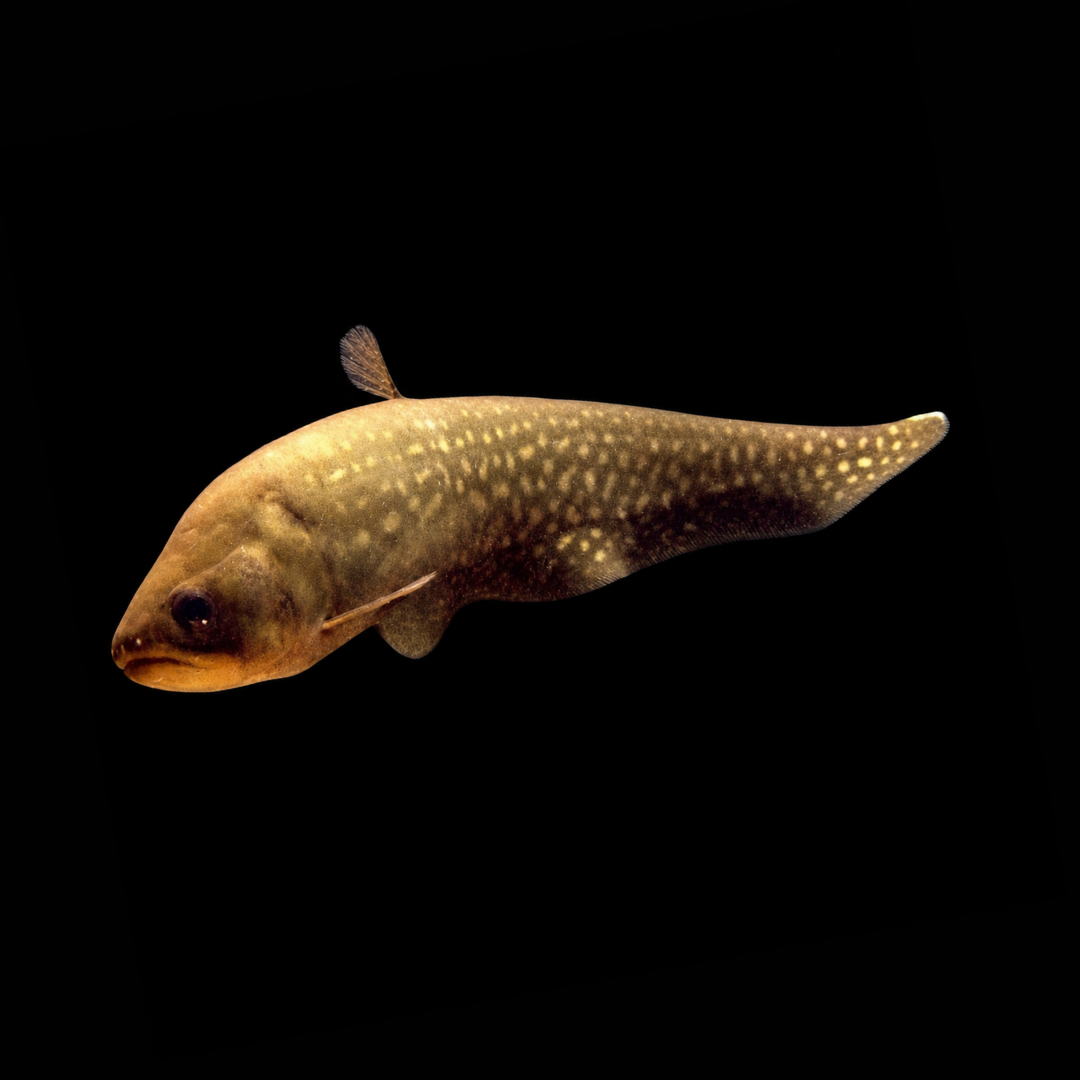
アロワナナイフは、西アフリカの淡水域に分布するナギナタナマズ科パピュロクラヌス属の大型魚です。日本の観賞魚市場で「アロワナナイフ」や「アファー」の名で扱われる魚は、一般に Papyrocranus afer を指します。アロワナを思わせる上向きの口、強く左右に平たい体、腹側から尾に向かって長く伸びる臀鰭が印象的で、この臀鰭を波打たせることで前進だけでなく滑らかな後退も行えます。さらに、水面の空気を利用する呼吸能力や、周囲の微弱な電気刺激を感じ取る受動的電気受容を備えており、独特の姿と高度な感覚機能を併せ持つ魚です。 The Arowana Knifefish is a large member of the family Notopteridae native to freshwater habitats in West Africa. In the Japanese aquarium trade, the names Arowana Knifefish and Afer generally refer to Papyrocranus afer. Its upturned mouth, strongly laterally compressed body, and long anal fin are especially distinctive. By sending waves along the anal fin, it can move not only forward but also backward with remarkable smoothness. It also possesses specialized adaptations including aerial respiration and passive electroreception, making it notable for both its appearance and sensory biology.
基本情報 / Basic Information
| 学名 / Scientific Name | Papyrocranus afer (Günther, 1868) |
|---|---|
| 通称 / Common Name | アロワナナイフ、アファー、パピュロクラヌス・アファーArowana knifefish, Reticulate knifefish, African featherfin |
| 分類 / Family | 条鰭綱・アロワナ目・ナギナタナマズ科・パピュロクラヌス属Actinopterygii, Osteoglossiformes, Notopteridae, Papyrocranus |
| 英名 / English Name | Reticulate knifefish |
| 分布 / Distribution | 西アフリカ。セネガル川・ガンビア川水系から、ガーナのタノ川・プラ川水系、ニジェール川・ベヌエ川・ニジェールデルタ、さらにカメルーンのクロス川・サナガ川水系まで分布します。ボルタ川、チャド湖盆地、オゴウェ川、コンゴ川流域などからは本種の自然分布は確認されておらず、コンゴ川流域には近縁の Papyrocranus congoensis が分布します。West Africa, from the Senegal and Gambia river systems eastward through the Tano and Pra basins in Ghana, the Niger, Benue and Niger Delta, and the Cross and Sanaga river systems in Cameroon. The species is not considered native to the Volta, Lake Chad, Ogooué or Congo basins; the related Papyrocranus congoensis occurs in the Congo basin. |
| 最大体長 / Max Size | 最大約80cm。個体差はありますが、成長後は一般的な家庭用熱帯魚よりはるかに大きくなる可能性を前提に飼育設備を準備する必要があります。Up to about 80 cm total length. Individual growth varies, but aquarium planning should assume the possibility of a very large adult. |
| 寿命 / Lifespan | 信頼できる資料から飼育下の標準寿命を一律に示すことは困難です。長期飼育を前提とし、成魚サイズに対応できる設備を準備してください。A well-supported standard captive lifespan is not clearly established in the available literature. It should be treated as a long-term commitment requiring facilities suitable for a full-grown specimen. |
飼育環境 / Aquarium Environment
| 水槽サイズ / Tank Size | 幼魚の育成には90〜120cm水槽を利用できますが、終生飼育用としては小さすぎます。最大80cmに達する可能性を考え、成魚では最低でも150×60×60cm程度(約540L)、できれば180×60×60cm以上(約650L〜)を目安に、十分な床面積と水量を確保します。水槽の高さよりも、体を無理なく反転できる奥行きと長さを重視してください。Juveniles can be grown in 90–120 cm aquaria, but such tanks should not be regarded as permanent adult housing. Because the species may reach around 80 cm, an adult should be provided with at least about 150 × 60 × 60 cm (roughly 540 L), with 180 × 60 × 60 cm or larger (roughly 650 L or more) preferred. Length and width are more important than excessive height. |
|---|---|
| 水温 / Temperature | 24〜30℃が目安です。日常管理では25〜28℃前後で安定させると扱いやすく、短時間で大きく変動させないことを優先します。 A range of about 24–30°C is suitable. In routine aquarium care, keeping the water stable around 25–28°C is practical, with avoidance of sudden temperature changes being especially important. |
| 水質 / Water Quality | 弱酸性〜中性を基本に、急激なpH変動を避けます。大型の肉食魚は給餌量と排泄量が増えやすいため、アンモニアと亜硝酸を検出させない十分な生物ろ過と、硝酸塩や溶存有機物を蓄積させない定期換水が重要です。数値を細かく追うより、清浄で安定した水を維持することを優先します。Slightly acidic to neutral water is appropriate, with sudden pH changes avoided. As a large carnivorous fish it can impose a substantial biological load, so strong biological filtration, zero detectable ammonia and nitrite, and regular water changes to limit nitrate and dissolved waste are essential. Stability and cleanliness are more important than chasing a narrow numerical target. |
| レイアウト / Layout | 流れの緩い、植物が多い水域を好む魚なので、水槽内にも落ち着ける暗がりと広い遊泳空間を両立させます。大型流木や十分な太さのパイプなどで隠れ場所を作りつつ、長い臀鰭が引っ掛からない通路を残してください。メンテナンス性を優先するならベアタンクも適しています。底砂を使う場合は角の鋭い素材を避けます。The species is associated with calm, well-vegetated waters, so the aquarium should combine shaded retreats with broad, unobstructed swimming space. Large driftwood or suitably wide tubes can provide shelter, but clear routes should remain so the long anal fin is not snagged. A bare-bottom tank is practical for maintenance; if substrate is used, avoid sharp material. |
| 注意点 / Precautions | 本種は空気呼吸を行うため、水面へ常に出られる状態を保ち、フタと水面の間に空気を吸える空間を確保します。空気層に一定の高さを設けることより、水面への経路を塞がないことが重要です。また、大型魚が驚いて突進した際の飛び出しや衝突に備え、十分な強度の水槽と、ずれたり持ち上がったりしにくいフタを使用します。This species is an obligate air-breather, so it must always be able to reach the surface and access an air space beneath the lid. Unobstructed access is more important than specifying a fixed height for that air gap. Because a startled large fish may surge upward or collide with the aquarium, use a strong tank and a secure lid that cannot easily shift or lift. |
餌と給餌 / Feeding
| 餌の種類 / Diet | 肉食性で、飼育下では魚肉、エビ類、昆虫類、冷凍餌などの動物質をよく利用します。状態の良い個体では肉食魚用の人工飼料へ慣らすこともできます。長期飼育では単一の餌に偏らせず、栄養組成の異なる餌を組み合わせる方が管理しやすくなります。It is carnivorous and in captivity readily uses animal-based foods such as fish flesh, shrimp, insects, and frozen foods. Healthy specimens can often be trained to accept prepared carnivore diets. For long-term care, a varied diet is preferable to dependence on a single food type. |
|---|---|
| 給餌のポイント / Feeding Tips | 薄暗い時間帯に活動しやすいため、消灯前後に給餌すると反応を得やすい個体がいます。導入直後に人工飼料を食べない場合は、冷凍エビや魚肉など嗜好性の高い餌から始め、少しずつ人工飼料へ移行します。餌用魚を常用すると病原体や寄生虫を持ち込む可能性があるため、入手先と衛生状態には注意してください。食べ残しは早めに除去します。Because activity often increases under dim conditions, some individuals feed more readily around lights-out. If a newly introduced fish refuses prepared food, begin with attractive items such as frozen shrimp or fish flesh and gradually transition toward a balanced prepared diet. Feeder fish can introduce pathogens or parasites, so source and hygiene matter. Remove uneaten food promptly. |
性格と混泳 / Temperament and Tank Mates
| 性格 / Temperament | 薄明薄暮〜夜行性の捕食魚で、日中は物陰で休むことがあります。同種間の相性には個体差がありますが、成長に伴って縄張り性や攻撃性が表れる可能性があるため、家庭での飼育では、単独飼育を基本に考えるのが安全です。幼魚同士が一時的に同居できても、成魚まで同じ状態が続くとは限りません。It is a crepuscular to nocturnal predator and may rest in cover during the day. Compatibility between conspecifics varies, but territorial and aggressive behavior can become more pronounced with growth, so solitary housing is the safest default in home aquaria. Juveniles tolerating one another does not guarantee adult compatibility. |
|---|---|
| 混泳の相性 / Compatibility | 口に入る小魚やエビは捕食対象になります。混泳を試す場合は、本種の口に入らない十分な大きさで、過度に攻撃的ではなく、長い臀鰭をつつかない大型魚に限ります。ただし、本種から相手を攻撃する場合も、相手から本種が傷つけられる場合もあります。十分な水槽サイズを確保し、異常が見られたらすぐに隔離できる設備を用意したうえで慎重に判断してください。Small fish and shrimp that fit into the mouth should be regarded as prey. If tank mates are attempted, they should be large enough not to be swallowed, not excessively aggressive, and unlikely to nip the long anal fin. Aggression can occur in either direction, so a very large aquarium and an immediate separation plan are essential. |
病気と対策 / Diseases and Prevention
| かかりやすい病気 / Common Diseases | 本種だけに特有の代表的な疾病が確立しているわけではありません。輸送や水質悪化による体表の擦れ、ヒレ傷、白点病など一般的な淡水魚のトラブルには注意が必要です。食欲低下、呼吸頻度の変化、体表の白濁や充血、ヒレの損傷などを日常的に観察してください。No single disease is established as uniquely characteristic of this species. General freshwater-fish problems such as shipping abrasions, fin damage, ich, and secondary infections associated with stress or poor water quality remain relevant. Monitor appetite, breathing pattern, skin clarity, redness, and fin condition routinely. |
|---|---|
| 対策と予防 / Prevention | 予防の基本は、水質を安定させ、外傷を防ぎ、新しい魚や餌生物から病原体を持ち込まないことです。異常が見られたら、まずアンモニア・亜硝酸、水温、外傷、食欲などを確認し、原因を切り分けます。薬剤への感受性は魚種や製品によって異なるため、「古代魚だから規定量の何分の一」と一律に決めるのは避け、使用する魚病薬の適用条件を確認し、必要に応じて魚類を診られる獣医師や専門家へ相談してください。Prevention depends on stable water quality, avoiding injuries, and minimizing the introduction of pathogens with new fish or live foods. When abnormalities appear, first check ammonia, nitrite, temperature, injuries, and appetite to narrow down the cause. Medication sensitivity varies by species and product, so avoid applying an arbitrary reduced dose simply because the fish is considered an ancient fish; follow the product’s applicable-use guidance and seek professional aquatic veterinary advice when necessary. |
増やし方(繁殖) / Breeding
| 雌雄の判別 / Sexing | 若魚の外見だけで雌雄を判別するのは困難です。ナイジェリアのレッキ・ラグーンで行われた研究では、成熟個体の生殖乳頭に雌雄差が認められ、オスではより発達した形態が報告されています。同研究で推定された50%成熟体長は、オス約49.1cm、メス約53.4cmでした。Juveniles are difficult to sex reliably by external appearance. A study from Lekki Lagoon in Nigeria reported sexual differences in the urogenital papilla of mature fish, with a more developed form in males. Estimated length at 50% maturity in that population was about 49.1 cm for males and 53.4 cm for females. |
|---|---|
| 繁殖形態 / Reproduction | 卵生です。レッキ・ラグーンの個体群では雨季に生殖腺指数が高まり、7月にピークが見られたことから、雨季に繁殖する季節性が示されています。成熟雌の抱卵数は比較的少なく、同研究では平均49±17粒が報告されました。オスが卵を守る行動については古い飼育下繁殖記録がありますが、野生下での繁殖行動には未解明な部分が残ります。It is oviparous. In the Lekki Lagoon population, gonadosomatic indices increased during the rainy season and peaked in July, indicating seasonal reproduction associated with the wet season. Fecundity was relatively low, with a mean of 49 ± 17 eggs reported in the study. Historical captive-breeding accounts describe males guarding eggs, but aspects of reproductive behavior in the wild remain poorly documented. |
| 繁殖のポイント / Breeding Tips | 一般家庭で再現性の高い繁殖方法は確立されていません。大きな成熟個体を安全にペアリングするための水量と退避空間が必要で、同居時の攻撃にも備えなければなりません。繁殖を狙う場合は、十分に成熟した個体、広い水槽、複数の隠れ場所、産卵に利用できる安定した基質を用意し、行動を観察しながら無理に接触させないことが重要です。A consistently reproducible home-aquarium breeding method is not well established. Pairing large mature fish requires substantial space, retreat areas, and preparation for aggression. Breeding attempts should use fully mature fish, a very large aquarium, multiple refuges, and stable potential spawning surfaces, with close observation rather than forced pairing. |
雑学と豆知識 / Trivia and Fun Facts
| 1. 「紙」と「頭蓋骨」から生まれた属名 / 1. A genus name built from “paper” and “skull” | Papyrocranus という属名は、ギリシャ語でパピルスを指す「papyros」と、頭蓋骨を意味する「kranion」に由来します。水槽で最初に目を引くのはナイフのような体型ですが、属名が注目しているのは頭部です。学名は、見た目の印象とは少し違う角度から、この魚の形態的な個性を伝えています。The genus name Papyrocranus is derived from Greek words referring to papyrus and the skull. The blade-like body is what most aquarists notice first, yet the scientific name points instead toward the head. It highlights the fish’s distinctive anatomy from a perspective quite different from its aquarium trade name. |
|---|---|
| 2. ナイフのような泳ぎを支える113〜141本の軟条 / 2. 113–141 soft rays power its knife-like swimming | アロワナナイフの臀鰭には113〜141本もの軟条が並びます。魚体そのものを大きく左右へ振らなくても、この長い鰭に波を送ることで推進力を生み出せるため、前進と後退を滑らかに切り替えられます。倒木や植物が入り組む静かな水辺で、狭い空間を行き来するのに適した泳ぎ方といえるでしょう。The anal fin contains 113–141 soft rays. By sending traveling waves along this long fin, the fish can generate thrust without swinging the whole body widely from side to side, allowing smooth transitions between forward and reverse movement. This style of locomotion is well suited to maneuvering around wood and vegetation in calm water. |
| 3. 水面へ上がるのは「苦しいから」とは限らない / 3. Surfacing does not necessarily mean the fish is in distress | アロワナナイフは空気呼吸を行う魚で、鰾を空気呼吸器官として利用します。そのため、水面まで上がって空気を取り込む行動そのものは異常ではありません。もちろん急に呼吸回数が増えた場合には水質や水温を確認する必要がありますが、定期的な浮上をすべて酸欠のサインと判断すると、この魚の本来の生理を見誤ることになります。The Arowana Knifefish is an air-breathing fish that uses its swim bladder as an aerial respiratory organ. Regular trips to the surface for air are therefore normal. A sudden increase in respiratory effort should still prompt checks of water quality and temperature, but routine surfacing should not automatically be interpreted as oxygen distress. |
| 4. 発電魚ではないのに「電気」がわかる / 4. It detects electricity without being an electric fish | パピュロクラヌス属を含むアフリカ産ナギナタナマズ科の一部には、膨大部型の電気受容器があります。アロワナナイフはモルミルス類のように自ら電場を作って周囲を探るのではなく、外部に存在する低周波の微弱な電気刺激を受け取る側です。視界の利きにくい水中でも、視覚とは別の感覚窓を持っていることになります。Some African notopterids, including Papyrocranus, possess ampullary electroreceptors. Unlike weakly electric mormyrids, the Arowana Knifefish is not known for generating an electric field for active electrolocation; instead, it detects weak low-frequency electrical stimuli already present in its surroundings. This gives it a sensory channel beyond vision in dark or turbid water. |
| 5. コンゴ川の個体は別種として扱われる / 5. Congo-basin fish are treated as a different species | かつて Papyrocranus afer とされた記録の中には、現在では近縁種 Papyrocranus congoensis と考えられているものがあります。P. afer の分布を「西アフリカからコンゴ川まで」と大きくまとめてしまうと、二種の境界が曖昧になります。流通名だけでは区別しにくい魚だからこそ、産地と学名を合わせて確認する意味があります。Some historical records once assigned to Papyrocranus afer in the Congo basin are now regarded as the related species Papyrocranus congoensis. Describing P. afer simply as ranging from West Africa all the way into the Congo basin can therefore blur the distinction between the two species. Locality information and scientific names are valuable when identifying imported fish. |
| 6. 繁殖期は雨季と結びついている / 6. Reproduction is linked to the rainy season | ナイジェリアのレッキ・ラグーンで2年以上にわたって調べられた個体群では、雨季に生殖腺の発達が進み、7月に明瞭なピークが見られました。水位が上がる季節と繁殖のタイミングが重なるという事実は、アフリカの季節性水域で暮らす魚の生活史を考えるうえで興味深い手掛かりです。A population studied for more than two years in Nigeria’s Lekki Lagoon showed increased gonadal development during the rainy season, with a clear peak in July. The connection between rising seasonal waters and reproduction provides an important clue to the life history of a fish adapted to strongly seasonal African freshwater environments. |
| 7. 同じナギナタナマズ科でもアフリカンナイフとは別の魚 / 7. It differs markedly from the African Brown Knifefish | アフリカンナイフ Xenomystus nigri とは同じナギナタナマズ科に属し、分布域の一部も重なります。しかし Xenomystus には背鰭がなく、Papyrocranus afer には小さいながら背鰭があります。さらに P. afer ははるかに大型になるため、ショップで幼魚を見たときには、名前の似ている二種を同じ感覚で飼育計画に入れないことが大切です。The African Brown Knifefish, Xenomystus nigri, belongs to the same family and overlaps part of the range, but the two differ clearly. Xenomystus lacks a dorsal fin, whereas Papyrocranus afer has a small one, and P. afer grows substantially larger. Juveniles in shops may appear manageable, but the two species should not be given the same long-term housing plan. |
| 8. 日本では今も「いつでも見られる魚」ではない / 8. It remains an uncommon fish in the Japanese trade | 国内でもアフリカ便由来の個体が販売されることはありますが、一般的な大型魚のように常時安定して見かける種類ではありません。産地によって模様の現れ方に違いがあり、輸入ロットごとに印象が変わることも魅力の一つです。ただし、珍しさより先に最終サイズを確認し、成長後の水槽まで用意できるかを判断することが重要です。Specimens imported from Africa do appear in the Japanese aquarium trade, but the species is not as consistently available as many commonly farmed large fishes. Geographic variation can produce noticeable differences in pattern between shipments. Its rarity is attractive, but adult size should always be considered before purchase, together with whether suitable permanent housing can actually be provided. |
まとめ / Conclusion
アロワナナイフは、ナイフのように側扁した体と長大な臀鰭を生かし、前後へ滑るように泳ぐ西アフリカの大型魚です。水面の空気を利用する呼吸、暗い水中で役立つ電気受容、雨季と結びついた繁殖など、その暮らしには原産地の環境に適応してきた特徴が随所に表れています。見た目の奇抜さだけでなく、体の仕組みや行動まで知るほど魅力が深まる一種です。 The Arowana Knifefish is a large West African fish that glides forward and backward using its blade-like body and long anal fin. Aerial respiration, electroreception suited to dark water, and reproduction linked to the rainy season all reflect adaptations to its native environment. Its appeal grows considerably when the biology behind its unusual appearance is understood.
一方、最大80cmに達する可能性のある体格と肉食性を考えれば、気軽に飼える魚ではありません。十分な長さと奥行きを備えた大型水槽、強力なろ過、水面への確実なアクセス、飛び出しを防ぐフタを整え、混泳に頼らず一匹をじっくり飼い込む環境が適しています。薄暗い隠れ場所から現れ、長い臀鰭だけを波打たせて静かに水槽を進む姿は、成長後まで見据えて向き合う飼育者に、ほかの大型魚とは異なる存在感を見せてくれるでしょう。 Its potential 80 cm size and predatory nature, however, make it unsuitable for casual keeping. A large aquarium with generous length and width, powerful filtration, permanent surface access, and a secure cover should be prepared, with solitary housing treated as the safest default. For an aquarist able to plan for the adult fish from the beginning, the sight of it emerging from a shaded retreat and moving almost silently by rippling its long anal fin offers a presence unlike that of most other large aquarium fishes.
分布マップ
アロワナナイフは西アフリカに分布し、セネガル川・ガンビア川水系から、ガーナのタノ川・プラ川水系、ニジェール川・ベヌエ川・ニジェールデルタ、カメルーンのクロス川・サナガ川水系まで知られています。地図では、この広い分布を把握するための概略代表地点としてニジェール川・ベヌエ川水系付近を示しています。
Google Earthで概略地点を開く※記事の分布欄には緯度・経度が記載されていないため、地図上の点は分布イメージを示す概略代表地点です。実際の採集地点や厳密な生息位置を示すものではありません。また、本種はボルタ川、チャド湖盆地、オゴウェ川、コンゴ川流域などでは自然分布が確認されていません。
参考文献・根拠資料
アロワナナイフ(Papyrocranus afer)の分類、分布、生息環境、生理、繁殖、飼育時の健康管理を確認するため、魚類学の専門データベース、博物館・研究機関による魚類相資料、査読論文、獣医学資料を中心に選定しています。
-
Fricke, R., Eschmeyer, W. N. & Van der Laan, R. (eds.). Eschmeyer’s Catalog of Fishes: Genera, Species, References.
California Academy of Sciences. Online version, updated 19 May 2026. Papyrocranus afer (Günther, 1868).
主な確認範囲:有効学名、命名者・記載年、ナギナタナマズ科における分類学的位置、原記載名と異名。 -
Hopkins, C. D. (2007). Notopteridae.
In: Stiassny, M. L. J., Teugels, G. G. & Hopkins, C. D. (eds.), The Fresh and Brackish Water Fishes of Lower Guinea, West-Central Africa, Vol. 1, pp. 212–218. IRD Éditions / Muséum national d’Histoire naturelle / Musée royal de l’Afrique centrale.
主な確認範囲:形態、最大サイズ、臀鰭軟条数、西アフリカからカメルーンにかけての分布、コンゴ川流域の Papyrocranus congoensis との区別。 -
Froese, R. & Pauly, D. (eds.). FishBase: Papyrocranus afer species summary.
FishBase. 2026年7月26日参照。
主な確認範囲:最大体長約80cm、淡水性、24〜30℃という生息水温情報、植物の密生する穏やかな水域を好むこと、空気呼吸魚であること、主要な分布域。 -
King, R. P. (1994). Seasonal dynamics in the trophic status of Papyrocranus afer (Günther, 1868) (Notopteridae) in a Nigerian rainforest stream.
Revue d’Hydrobiologie Tropicale, 27(2), 143–155.
主な確認範囲:静穏〜緩流で植生のある岸辺・湿地を利用する生息傾向、調査河川の水温・pH・流速、魚類・昆虫・水生無脊椎動物を含む食性。 -
Lefevre, S., Wang, T., Jensen, A., Cong, N. V., Huong, D. T. T., Phuong, N. T. & Bayley, M. (2014). Air-breathing fishes in aquaculture. What can we learn from physiology?
Journal of Fish Biology, 84(3), 705–731. DOI: 10.1111/jfb.12302.
主な確認範囲:空気呼吸魚の呼吸生理と飼育管理上の酸素環境。本論文では Papyrocranus afer の空気呼吸器官として鰾が挙げられています。 -
Kramer, B. (1990). Electrocommunication in Teleost Fishes: Behavior and Experiments.
Zoophysiology, Vol. 29. Springer-Verlag, Berlin Heidelberg. DOI: 10.1007/978-3-642-84026-5.
主な確認範囲:硬骨魚類の電気感覚、膨大部型電気受容器、Papyrocranus afer を含むアフリカ産ナギナタナマズ類の受動的電気受容。 -
Oluwale, F. V. & Ugwumba, A. A. A. (2019). Reproductive parameters of Reticulate Knife fish, Papyrocranus afer (Günther, 1868) from Lekki Lagoon, Lagos Nigeria.
Global Journal of Fisheries and Aquaculture, 7(2), 508–515.
主な確認範囲:レッキ・ラグーン個体群における成熟体長、雌雄の生殖乳頭の差、抱卵数、卵径、雨季に対応した繁殖周期と7月の生殖腺指数ピーク。地域個体群を対象とした一次研究として参照しています。 -
Petty, B. D., Francis-Floyd, R. & Yanong, R. P. E. Management of Aquarium Fish.
Merck Veterinary Manual. Reviewed May 2022; updated September 2024.
主な確認範囲:観賞魚の水質管理、隔離とバイオセキュリティ、アンモニア・亜硝酸への対応、診断なしの予防的投薬を避ける考え方、薬浴時に水量と投与量を正確に扱う必要性。
資料の適用範囲について
Papyrocranus afer の家庭飼育について、査読論文や公的な飼育基準から「最低150×60×60cm」「180×60×60cm以上を推奨」といった水槽寸法そのものを直接規定する資料は確認できませんでした。本文の水槽サイズは、最大約80cmという成長可能性と大型魚が無理なく反転できる空間を考慮した、安全側の飼育目安です。また、混泳や単独飼育の判断についても個体差が大きく、科学文献から一律の基準を設定できないため、本文では事故を避けるためのリスク管理として記述しています。病気についても本種固有の「かかりやすい病気」を確定する十分な資料は乏しく、一般的な観賞魚医学に基づく予防と初期対応を採用しています。




コメント