

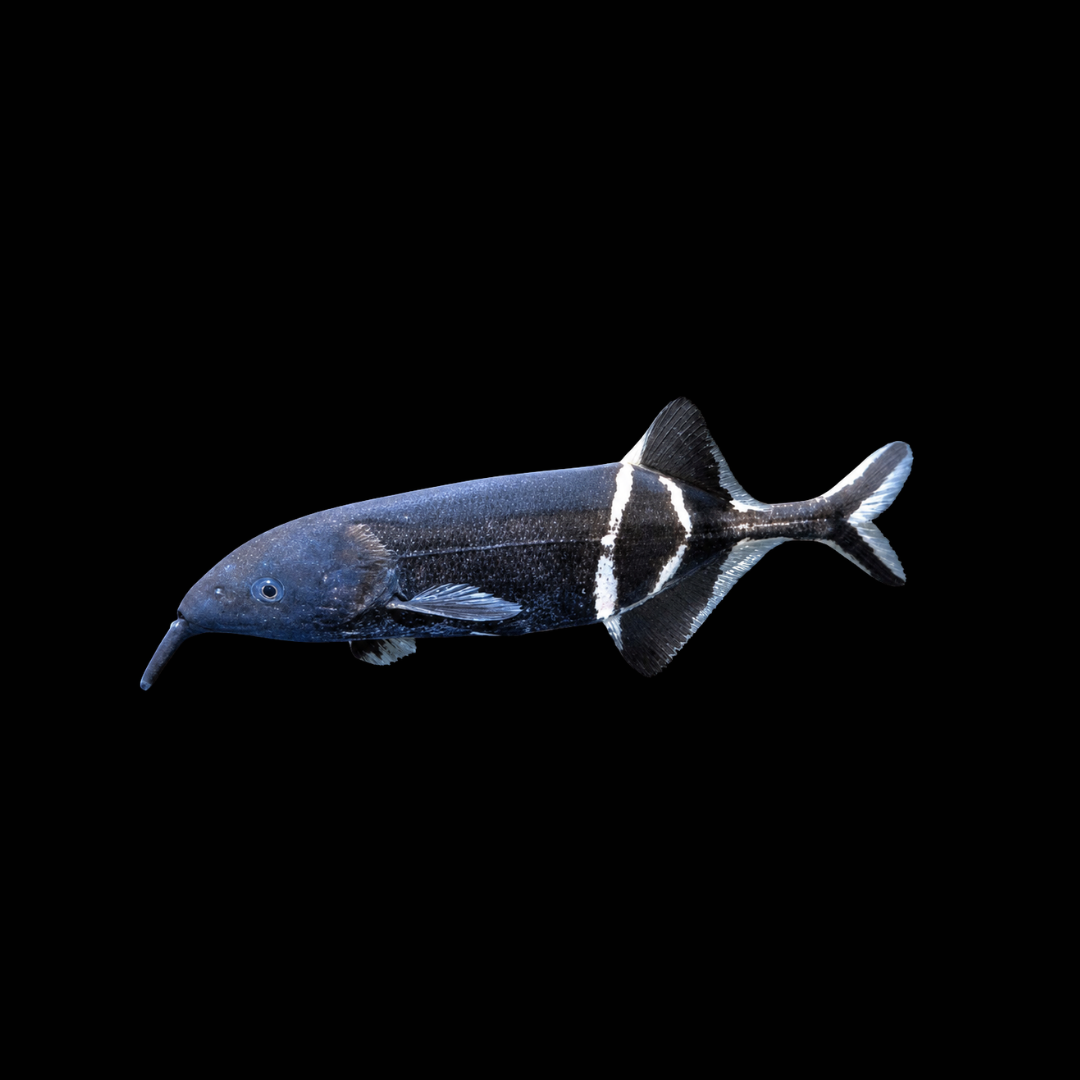
解説 / Description
エレファントノーズフィッシュは、西・中央アフリカの淡水域に生息するモルミルス科の弱電気魚です。名前の由来になった「ゾウの鼻」のような突起は鼻ではなく、下顎が細長く伸びた柔軟な感覚器で、砂や泥の中に潜む小動物を探すときに使われます。暗い水中では尾柄部の電気器官からごく弱い電気パルスを発し、周囲の物体によって生じる電場のゆがみを読み取って、障害物や餌の位置を探ります。黒褐色の落ち着いた体色と白っぽい帯模様、独特のシルエット、そして高度な感覚能力をあわせ持つ、観察するほど魅力が増す魚です。 The elephantnose fish is a weakly electric freshwater fish from West and Central Africa belonging to the family Mormyridae. Its famous “elephant trunk” is not a nose, but a flexible extension of the lower jaw used to probe sand and mud for small prey. In dim or turbid water, it emits weak electric pulses from an organ near the tail and detects distortions in the resulting electric field, helping it locate food and obstacles. Its dark body, pale band markings, unusual silhouette, and sophisticated sensory system make it an especially fascinating aquarium fish to observe.
基本情報 / Basic Information
| 学名 / Scientific Name | Gnathonemus petersii |
|---|---|
| 通称 / Common Name | エレファントノーズ、エレファントノーズフィッシュElephantnose fish, Peter’s elephantnose fish |
| 分類 / Family | アロワナ目・モルミルス科・モルミルス亜科・グナソネムス属Order Osteoglossiformes, family Mormyridae, subfamily Mormyrinae, genus Gnathonemus |
| 英名 / English Name | Elephantnose fish / Peter’s elephantnose fish |
| 分布 / Distribution | 西アフリカから中央アフリカにかけての淡水域。ナイジェリアのニジェール川流域、カメルーン、コンゴ民主共和国などの河川・氾濫原・関連湖沼に分布します。Freshwaters of West and Central Africa, including river systems and floodplain habitats in areas such as the Niger basin, Cameroon, and the Democratic Republic of the Congo. |
| 最大体長 / Max Size | 野生下では標準体長約35cmに達する記録がありますが、一般には20〜25cm前後の個体がよく見られます。Recorded to about 35 cm standard length in the wild, although individuals around 20–25 cm are more commonly encountered. |
| 寿命 / Lifespan | 適切な飼育環境では5〜8年以上が目安とされます。About 5–8 years or longer under stable, appropriate aquarium care. |
飼育環境 / Aquarium Environment
| 水槽サイズ / Tank Size | 小型個体では60cm規格水槽が最低限の目安になりますが、長期飼育では90cm規格水槽以上を推奨します。成長後の遊泳スペースと隠れ家を両立できる余裕を持たせることが大切です。A standard 60 cm aquarium can serve as a lower limit for small individuals, but a standard 90 cm tank or larger is recommended for long-term care, allowing room for both swimming and secure shelters. |
|---|---|
| 水温 / Temperature | 23〜28℃を目安に安定させます。急激な温度変化は避けてください。 Maintain a stable temperature of about 23–28°C and avoid sudden fluctuations. |
| 水質 / Water Quality | pH 6.0〜8.0、総硬度5〜19 dHが目安です。幅広い水質に適応する一方、急激なpH・硬度・水温の変化には弱いため、強力な生物ろ過と少量・高頻度の換水で安定を優先します。A pH of about 6.0–8.0 and general hardness of 5–19 dH are suitable. Although the species tolerates a broad range, sudden changes in pH, hardness, or temperature should be avoided. Stable biological filtration and modest, frequent water changes are preferable. |
| レイアウト / Layout | 強い照明を避け、流木、土管、PVCパイプなどで日中に落ち着ける暗い隠れ家を複数用意します。底床は吻部を傷つけにくい細かな田砂などが向きます。衛生管理を最優先する場合はベアタンクも選択肢ですが、いずれの場合も体を落ち着けられる遮蔽物を確保してください。アヌビアス類やミクロソリウムなど、低光量で育つ水草も相性が良いでしょう。Use subdued lighting and provide several dark shelters with driftwood, pipes, or caves. Fine, smooth sand is suitable because it reduces the risk of injury to the sensitive lower-jaw appendage. A bare-bottom setup can also be used when hygiene is the priority, but secure cover remains essential. Low-light plants such as Anubias and Microsorum can work well. |
| 注意点 / Precautions | アンモニアの蓄積や急な水質変化、強い照明、落ち着けない環境は大きなストレスになります。導入時は特に慎重な水合わせを行い、輸送直後の痩せや白点、呼吸の乱れを観察してください。細かな底床を使う場合でも汚れをためず、底面の清掃を定期的に行います。Ammonia accumulation, abrupt water-parameter changes, bright lighting, and a lack of secure cover can cause considerable stress. Acclimate new fish carefully and monitor imported specimens for weight loss, white spots, or abnormal respiration. Even with fine substrate, keep the bottom clean and prevent organic waste from accumulating. |
餌と給餌 / Feeding
| 餌の種類 / Diet | 冷凍アカムシ、イトミミズ、ブラインシュリンプ、小型の水生無脊椎動物などを好みます。人工飼料に慣れる個体もいますが、導入直後は冷凍餌や生餌の方が反応しやすい傾向があります。Favored foods include frozen bloodworms, tubifex-type worms, brine shrimp, and other small aquatic invertebrates. Some individuals can learn to accept prepared foods, but newly imported fish often respond more reliably to frozen or live foods. |
|---|---|
| 給餌のポイント / Feeding Tips | 索餌は速くないため、混泳魚に餌を奪われやすい点に注意します。消灯前後の落ち着いた時間帯に、スポイトなどで口元や隠れ家の近くへ餌を落とすターゲットフィーディングが有効です。痩せやすい個体では、腹部の厚みや食べ残しを毎日確認し、確実に摂食できているかを見ます。Because feeding is relatively slow, tank mates may outcompete this fish. Target feeding with a pipette near the mouth or shelter, especially around dim periods, is effective. Check body condition and uneaten food regularly to confirm that the fish is actually receiving enough food. |
性格と混泳 / Temperament and Tank Mates
| 性格 / Temperament | 夜行性で警戒心が強く、日中は隠れ家で休むことが多い魚です。他種には比較的おとなしい一方、同種間では縄張り意識が強くなりやすく、狭い水槽では追い回しや衰弱につながることがあります。This is a nocturnal, cautious fish that often rests in cover during the day. It is generally peaceful toward many other species, but conspecifics can become strongly territorial, especially in confined aquaria. |
|---|---|
| 混泳の相性 / Compatibility | 基本は1水槽1匹が扱いやすいでしょう。他種との混泳では、口に入らない大きさで、素早すぎず、底層で激しく競合しない温和な魚が向きます。中〜上層を泳ぐ中型魚などが候補になります。餌取りの速い魚や、ひれをかじる魚、攻撃性の強い魚との組み合わせは避けてください。Keeping one elephantnose fish per aquarium is usually the simplest approach. Suitable tank mates should be peaceful, too large to be swallowed, and not overly aggressive or competitive around the bottom. Mid- to upper-water species can be good candidates. Avoid fin nippers, aggressive fish, and very fast feeders. |
病気と対策 / Diseases and Prevention
| かかりやすい病気 / Common Diseases | 輸入・導入時のストレスをきっかけに白点病が出ることがあります。また、吻部を傷つけた場合は細菌感染につながる可能性があるため、口先の赤み、ただれ、白濁、呼吸の乱れなども早めに確認します。White spot disease may occur after the stress of shipping or introduction. Injuries to the sensitive snout area may also lead to secondary bacterial problems, so watch for redness, erosion, cloudiness, or abnormal breathing. |
|---|---|
| 対策と予防 / Prevention | 最重要なのは、安定した水質、適温、十分な酸素、適切な給餌、そして吻部を傷つけない環境です。治療が必要な場合は隔離水槽を用意し、本種が薬剤に敏感とされる点を考慮して慎重に対応します。とくにマラカイトグリーン系などの薬剤は、一般的な魚と同じ感覚で強く投薬せず、製品の注意事項を確認しながら魚の呼吸や姿勢を細かく観察してください。塩水浴や加温を行う場合も急変を避け、エアレーションを強化します。重症例や薬剤選択に迷う場合は、観賞魚に詳しい販売店や魚病に対応できる専門家へ相談するのが安全です。Prevention depends primarily on stable water quality, suitable temperature, strong oxygenation, reliable feeding, and avoiding injury to the snout. When treatment is necessary, use a separate treatment tank and proceed cautiously because this species is considered sensitive to medication. Products containing strong dyes such as malachite green should not be used casually at full intensity without careful observation and attention to the product instructions. If salt or temperature adjustment is used, make changes gradually and increase aeration. For severe cases or uncertainty about medication, seek advice from an experienced aquarium specialist or fish-health professional. |
増やし方(繁殖) / Breeding
| 雌雄の判別 / Sexing | 外見だけでの雌雄判別は非常に難しく、一般的な観賞魚のような明瞭な色彩差や体型差は期待できません。電気器官放電の波形に性差が現れることが知られていますが、家庭水槽で簡単に利用できる判別法ではありません。Sexing by external appearance is very difficult because there is no obvious, reliable color or body-shape dimorphism. Sex-related differences in electric-organ discharge have been reported, but these are not a practical method for most home aquarists. |
|---|---|
| 繁殖形態 / Reproduction | 卵生です。同種間のコミュニケーションには電気信号が関わり、繁殖期には放電パターンの変化が配偶行動に利用されるとされています。It is egg-laying. Electrical signals play a role in communication between individuals, and changes in discharge patterns are associated with reproductive and courtship behavior. |
| 繁殖のポイント / Breeding Tips | 家庭水槽での安定した繁殖法は確立されておらず、日本国内で流通する個体は野生採集個体が中心とされています。同種間の攻撃性や、ペア形成・放電コミュニケーション・水質条件など複数の要因が関わるため、一般家庭での繁殖は非常に難易度が高い部類です。A reliable home-aquarium breeding method is not established, and fish in the Japanese trade are generally regarded as wild-collected imports. Breeding is considered very difficult because pair formation, territorial behavior, electrical communication, and environmental conditions all appear to be important. |
雑学と豆知識 / Trivia and Fun Facts
| 1. 「鼻」に見える部分は実は下顎 / 1. The “trunk” is actually part of the lower jaw | エレファントノーズフィッシュの最大の特徴である長い突起は、鼻ではなく下顎が前方へ伸びた感覚器です。ドイツ語由来では「シュナウツェンオルガン」と呼ばれ、底砂を探りながら小さな無脊椎動物を見つける役割を担います。外見だけを見ると奇抜な飾りのようですが、実際には暗い水底で生きるための実用的な探索装置です。The elephantnose fish’s most striking feature is not a nose at all, but an elongated, sensory extension of the lower jaw. Often referred to by the German-derived term “Schnauzenorgan,” it helps the fish probe the substrate for small invertebrates. What looks like a bizarre ornament is actually a highly practical tool for life on dark river bottoms. |
|---|---|
| 2. 電気で「見る」弱電気魚 / 2. A weakly electric fish that “sees” with electricity | 尾の近くにある電気器官から微弱なパルスを発し、その電場が石、流木、生きた餌などに当たって変化する様子を皮膚の電気受容器で読み取ります。これにより、濁った水や夜間でも周囲を立体的に把握できます。強い電撃で獲物を倒すデンキウナギとは目的が異なり、こちらは主に探索とコミュニケーションのための繊細な電気です。An electric organ near the tail produces weak pulses, while specialized receptors in the skin detect how surrounding objects distort the field. This allows the fish to build a spatial picture of its surroundings even in murky water or darkness. Unlike an electric eel, it does not use powerful shocks to subdue prey; its electricity is primarily a finely tuned sensory and communication system. |
| 3. 巨大な小脳と驚異的なエネルギー配分 / 3. An enormous cerebellum and extreme energy investment | 複雑な電気情報を処理するため、本種の小脳は非常に発達しています。研究では、脳重量が体重に対して大きく、脳の代謝コストも全身の中で非常に高い割合を占めることが示されています。哺乳類のように大脳の大きさで知能を連想しがちですが、この魚では小脳を中心とした神経系の特殊化が際立っています。Processing complex electrical information requires a highly developed nervous system, and this species has an exceptionally enlarged cerebellum. Research has shown that its brain is unusually large relative to body size and accounts for a very high share of total metabolic expenditure. Rather than emphasizing an enlarged cerebrum as in mammals, this fish stands out for extreme specialization of cerebellar and electrosensory processing systems. |
| 4. 暗闇に適応した「グループ化網膜」 / 4. A grouped retina adapted to dim water | エレファントノーズフィッシュは電気感覚だけに頼っているわけではありません。目の網膜も暗所向けに特殊化しており、光を集める構造によって乏しい光を効率よく利用します。近距離では電気定位、遠くの大きな動きには視覚というように、複数の感覚を使い分けることができる点が興味深いところです。The elephantnose fish does not rely on electrosensation alone. Its retina is also specialized for dim environments, with structures that collect scarce light efficiently. It can combine different senses, using electrolocation for nearby objects and vision for larger, more distant movement. |
| 5. 古代エジプトで特別視されたモルミルス科の魚 / 5. Mormyrid fishes in ancient Egyptian culture | モルミルス科の魚は古代エジプトで宗教的な意味を持ち、オシリス神話と結び付けられていました。中エジプトの都市オクシリンコスは、ギリシャ語で「尖った鼻」を意味する名を持ち、神聖な魚をかたどった青銅製品や魚形の棺が知られています。現在のエレファントノーズフィッシュそのものと古代の「オクシリンコス魚」を完全に同一視するのは慎重さが必要ですが、同じモルミルス科の特徴的な吻を持つ魚が、人々の宗教観や都市のアイデンティティにまで影響していたことは非常に印象的です。Mormyrid fishes held religious significance in ancient Egypt and were connected with traditions surrounding Osiris. The city of Oxyrhynchus took a Greek name meaning “sharp-nosed,” and archaeological finds include bronze fish figures and fish-shaped coffins. It is best not to identify the ancient sacred “Oxyrhynchus fish” uncritically with the modern elephantnose fish itself, but the broader connection between distinctive mormyrid fishes and Egyptian religion is remarkable. |
| 6. 生きた水質センサーとしての研究 / 6. Research as a living water-quality sensor | 弱電気魚の放電は環境変化に敏感なため、ヨーロッパでは電気魚の放電パターンを監視して水質異常を検出する研究やシステム開発が行われてきました。特定の物質だけを測る化学センサーとは異なり、生物が受けた総合的なストレスを反応として捉えられる点が注目されています。ただし、水温などでも放電頻度が変化するため、実用化には厳密な条件管理が必要です。Because weakly electric fish alter their discharge patterns in response to environmental stress, European researchers have explored systems that monitor these signals as biological indicators of water quality. Unlike a chemical sensor that targets only specific compounds, a living organism can respond to the combined biological impact of multiple stressors. Temperature and other environmental factors also affect discharge rate, so careful control is essential. |
| 7. 日本では輸入個体が中心 / 7. Mostly imported fish in the Japanese aquarium trade | 日本の観賞魚市場では、エレファントノーズフィッシュは大型魚・珍魚を扱う専門店や通販で見かけることがあります。国内での商業繁殖は一般的ではなく、流通個体はアフリカからの野生採集個体が中心とされています。そのため、購入時には価格だけでなく、輸入後に十分な期間をかけて状態が整えられているか、痩せていないか、しっかり餌を食べているかを確認することが長期飼育につながります。In Japan, elephantnose fish are most often seen through specialty stores dealing in unusual or larger tropical fish, including online retailers. Commercial domestic breeding is not common, and traded specimens are generally wild-collected imports from Africa. For that reason, choosing a well-acclimated, well-fed specimen in good body condition is often more important than choosing solely by price. |
まとめ / Conclusion
エレファントノーズフィッシュは、微弱な電気で周囲を読み取り、暗い水底を探る特殊な感覚器と発達した神経系を備えた、非常に個性的な熱帯魚です。ゆっくりと底を探りながら餌を見つける姿には、派手な色彩とは違う静かな魅力があります。その一方で、水質の急変、餌不足、同種間の争い、吻部の傷、薬剤への敏感さなど、一般的な丈夫な熱帯魚より細やかな管理を必要とします。 The elephantnose fish is an exceptionally distinctive tropical fish, equipped with weak electrolocation, a specialized probing organ, and a highly developed nervous system. Its slow, deliberate search along the bottom offers a quiet kind of fascination quite different from brightly colored community fish. At the same time, it requires attentive care because abrupt water changes, insufficient feeding, aggression between conspecifics, snout injuries, and medication sensitivity can all become serious problems.
落ち着いた90cm規格水槽以上の環境、安定した水質、やわらかな底床や安全な隠れ家、そして確実なターゲットフィーディングを用意できれば、本種ならではの探索行動や繊細な反応をじっくり観察できます。古代から人の関心を引きつけ、現代では神経科学や環境モニタリングの研究対象にもなってきたこの魚は、水槽の中でも知れば知るほど奥深さを感じさせてくれる存在です。 With a calm 90 cm aquarium or larger, stable water conditions, a safe substrate and shelters, and reliable target feeding, aquarists can observe the species’ remarkable exploratory behavior and subtle responses in detail. A fish that has attracted human attention since antiquity and later became a subject of neuroscience and environmental-monitoring research continues to reveal more depth the longer it is kept and observed.
分布マップ
エレファントノーズフィッシュは、西アフリカから中央アフリカにかけての淡水域に分布し、ナイジェリアのニジェール川流域、カメルーン、コンゴ民主共和国などの河川・氾濫原・関連湖沼で見られます。地図では、この広い分布域をイメージするための代表地点を示しています。
※この地図のプロットは、記事に記載された「西アフリカから中央アフリカ」という広域分布を分かりやすく示すための概略代表地点です。実際の採集地点や、厳密な生息範囲・分布境界を示すものではありません。
参考文献・確認資料
エレファントノーズフィッシュの分類、分布、生息環境、飼育条件、繁殖、病気と健康管理に関する記述を確認するため、学術データベース、査読論文、獣医学・大学機関の資料から選定しています。店舗・通販サイト、個人ブログ、一般的なまとめサイトは参考文献に含めていません。
Fricke, R., Eschmeyer, W. N. & Van der Laan, R. (eds). 2026. Eschmeyer’s Catalog of Fishes. California Academy of Sciences. Electronic version accessed 24 July 2026.
Gnathonemus petersii (Günther, 1862) の有効名、原記載、Mormyridaeへの所属など、分類学上の基礎情報の確認に使用。
Mulelenu, C. M., Snoeks, J., Manda, A. C. & Vreven, E. J. W. M. N. 2026. The African weakly electric fish, Gnathonemus petersii (Günther, 1862) (Osteoglossiformes: Mormyridae): a first morphometric exploration into a hidden species complex. Zoological Journal of the Linnean Society, 206(3), zlaf187.
DOI: 10.1093/zoolinnean/zlaf187
従来広義に扱われてきた G. petersii に複数の隠蔽種が含まれることを示した最新の分類学的検討。ニジェール川からコンゴ川流域という従来の広い分布像を読む際の重要な補足資料。
Froese, R. & Pauly, D. (eds). FishBase. Gnathonemus petersii (Günther, 1862), species summary. Electronic database, accessed 24 July 2026.
最大標準体長約35cm、淡水底生性、従来報告されてきたニジェール川からコンゴ川流域の分布、水温22〜28℃、pH 6.0〜8.0、硬度5〜19 dH、夜間の摂餌、同種間の縄張り性、150cm級を目安とする水槽情報などの確認に使用。
von der Emde, G. & Bleckmann, H. 1998. Finding food: senses involved in foraging for insect larvae in the electric fish Gnathonemus petersii. Journal of Experimental Biology, 201, 969–980.
DOI: 10.1242/jeb.201.7.969
熱帯アフリカの河川で夜間に昆虫幼虫を探索する生態と、餌探索時に複数の感覚を利用することを実験的に検討した資料。夜行性、底層での探索、動物質中心の食性を支える。
Terleph, T. A. 2004. The function of agonistic display behaviours in Gnathonemus petersii. Journal of Fish Biology, 64(5), 1373–1385.
DOI: 10.1111/j.0022-1112.2004.00401.x
個体間の優劣関係、頭突きなどの攻撃的行動、ディスプレイ行動を解析した研究。同種を限られた空間で飼育する際に、縄張り争いや個体間ストレスへ配慮する根拠となる。
Landsman, R. E. 1993. Sex differences in external morphology and electric organ discharges in imported Gnathonemus petersii (Mormyriformes). Animal Behaviour, 46, 417–429.
DOI: 10.1006/anbe.1993.1211
繁殖期に輸入された成熟個体について、臀鰭付近の外部形態と電気器官放電にみられる雌雄差を検討した研究。外見だけでの雌雄判別が容易ではないことや、性差が季節・飼育条件の影響を受けることを理解するうえで重要。
Saunders, A. N. & Gallant, J. R. 2024. A review of the reproductive biology of mormyroid fishes: An emerging model for biomedical research. Journal of Experimental Zoology Part B: Molecular and Developmental Evolution, 342, 144–163.
DOI: 10.1002/jez.b.23242
モルミルス上科の生殖生物学を整理した総説。モルミルス類は研究室環境で安定して繁殖させること自体が難しく、一般飼育に応用できる繁殖条件が十分に確立されていないという記述の根拠として使用。
Petty, B. D., Francis-Floyd, R. & Yanong, R. P. E. Management of Aquarium Fish. MSD Veterinary Manual. Full review May 2022; updated September 2024.
Francis-Floyd, R., Yanong, R. & Pouder, D. 2023. Ichthyophthirius multifiliis (White Spot) Infections in Fish. UF/IFAS Extension, CIR920.
水質管理、アンモニア・亜硝酸対策、導入魚の隔離、輸送や環境変化によるストレス、白点病の原因・症状・感染環を確認するための資料。本種固有の薬剤投与量を示す資料ではないため、薬剤量を一律に決める根拠には使用していない。
参考文献の選定基準:査読論文、国際的な魚類学データベース、獣医学マニュアル、大学Extension資料を優先し、販売促進を目的とする店舗・通販情報および出典追跡が困難な二次まとめ情報は除外しています。




コメント