

解説 / Description
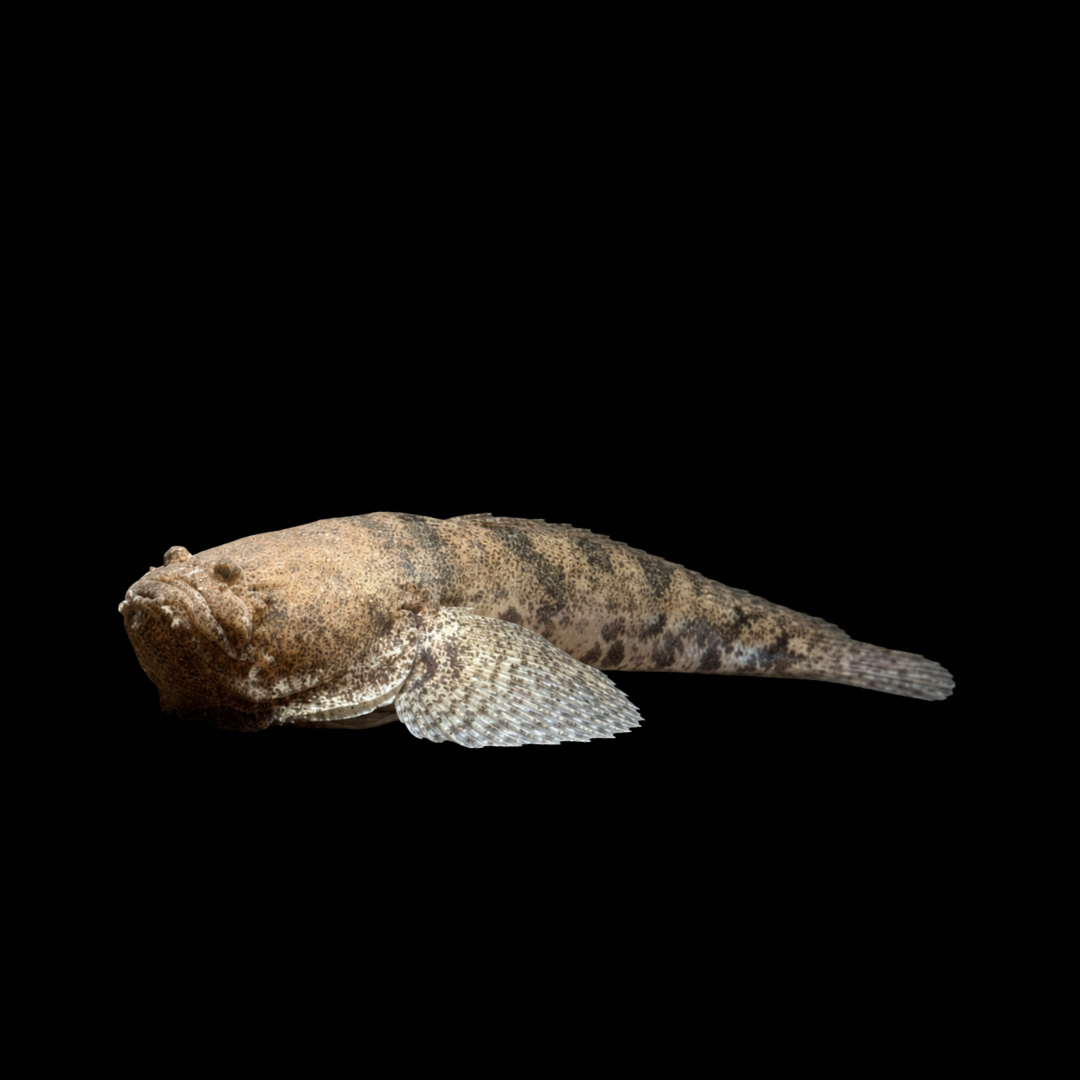
南米淡水ストーンフィッシュは、アマゾン川流域に分布するガマアンコウ科の純淡水魚です。平たく幅広い頭部、上向きの眼、大きな口を備え、砂や泥の中に体を埋めて獲物を待ち伏せします。褐色の不規則な斑紋は川底の砂や落ち葉に溶け込み、動かずに獲物を待つ生活に適した保護色として働きます。成魚でも標準体長は10cmに満たない小型種ですが、背鰭と鰓蓋に毒腺とつながる棘を持つため、飼育には確実な安全対策が欠かせません。 The Amazon freshwater toadfish is a fully freshwater member of the family Batrachoididae from the Amazon River basin. It has a broad, flattened head, upward-facing eyes, and a large mouth, and it buries itself in sand or mud to ambush prey. Its irregular brown pattern blends into the riverbed and leaf litter, providing effective camouflage for a largely motionless hunting strategy. Although it remains under 10 cm in recorded standard length, it has venom-bearing dorsal and opercular spines, making careful safety procedures essential in captivity.
基本情報 / Basic Information
| 学名 / Scientific Name | Thalassophryne amazonica Steindachner, 1876 |
|---|---|
| 通称 / Common Name | 南米淡水ストーンフィッシュ、淡水ストーンフィッシュ、ペルーストーンフィッシュ、プレヒストリック・モンスターフィッシュなどの名称で流通します。Trade names include Amazon freshwater toadfish, freshwater stonefish, Peruvian stonefish, and prehistoric monster fish. |
| 分類 / Family | ガマアンコウ目・ガマアンコウ科・タラソフリネ亜科・タラソフリネ属Order Batrachoidiformes, Family Batrachoididae, Subfamily Thalassophryninae, Genus Thalassophryne |
| 英名 / English Name | Amazon Toadfish / Freshwater Toadfish |
| 分布 / Distribution | ブラジル、コロンビア、エクアドル、ペルーのアマゾン川流域。標本記録は主に中流域から上流域の支流に集中しています。Amazon River basin in Brazil, Colombia, Ecuador, and Peru. Verified specimen records are concentrated mainly in tributaries of the middle and upper basin. |
| 最大体長 / Max Size | 標準体長9.3cmの記録があります。尾鰭を含む全長では、おおむね10cm前後になると考えられます。Recorded to 9.3 cm standard length, corresponding to roughly 10 cm in total length. |
| 寿命 / Lifespan | 信頼できる寿命の記録は確認されていません。No reliable lifespan estimate has been published. |
飼育環境 / Aquarium Environment
| 水槽サイズ / Tank Size | 単独飼育では60cm規格水槽程度を実用的な目安とします。研究施設では80×40×40cmの水槽で成熟した6個体が維持された例があります。複数飼育では水量だけでなく、各個体が潜れる広い底面積を確保してください。A standard 60 cm aquarium is a practical starting point for a single specimen. One published captive observation maintained six mature fish in an 80 × 40 × 40 cm tank. When keeping more than one fish, adequate bottom area for every individual is more important than water volume alone. |
|---|---|
| 水温 / Temperature | 25~28℃を目安に、急変を避けて安定させます。採集地では25.8~30.4℃の範囲が記録されています。 Maintain a stable temperature of about 25–28°C. Recorded collection localities ranged from 25.8 to 30.4°C. |
| 水質 / Water Quality | 原産地の多くは弱酸性で導電率の低い水域です。飼育ではpH6.0~7.0程度の軟水を基本とし、数値を急激に変化させないことを優先します。一方、pH8.5、導電率850µS/cmの水道水で長期維持され、産卵に至った研究例もあるため、順応した個体には一定の適応幅があると考えられます。純淡水魚なので塩分は必要なく、根拠のない常用は避けます。Most recorded habitats are acidic and very low in conductivity. In captivity, soft water around pH 6.0–7.0 is a reasonable target, with stability taking priority over chasing exact values. However, a published group was maintained and produced eggs in tap water at pH 8.5 and 850 µS/cm, indicating that acclimated fish may tolerate a broader range. This is a freshwater species and does not require routine salt addition. |
| レイアウト / Layout | 粒が細かく角のない砂を5cmほど敷き、魚が全身を無理なく潜らせられる環境を整えます。自然下では砂底と泥底の双方から記録されているため、硬く粗い砂利よりも、柔らかな細砂が適しています。流木や落ち葉は隠れ場所になりますが、魚の位置を確認しにくくしすぎないよう配置してください。照明は控えめにすると落ち着きやすくなります。Provide about 5 cm of fine, smooth sand so the fish can bury itself without abrasion. Wild records include both sandy and muddy bottoms, making soft fine substrate preferable to coarse gravel. Driftwood and leaf litter can add cover, but the layout should still allow the fish to be located before maintenance. Subdued lighting is appropriate. |
| 注意点 / Precautions | 背鰭に2本、鰓蓋に左右1本ずつ、毒腺とつながる棘を備えます。素手で触れず、移動には網よりも、水ごと収容できる硬質の容器を使用するほうが安全です。本種そのものによる刺傷症例や毒成分の詳細は十分に報告されていませんが、近縁種では激しい痛み、腫れ、組織壊死が知られています。刺された場合は傷口を清潔に保ち、速やかに医療機関へ相談してください。The fish has two dorsal spines and one venom-bearing opercular spine on each side. Never handle it with bare hands; a rigid container that lifts the fish together with water is generally safer than a net. Species-specific clinical reports and venom chemistry remain limited, but closely related species can cause severe pain, swelling, and tissue necrosis. Any sting should receive prompt professional medical assessment. |
餌と給餌 / Feeding
| 餌の種類 / Diet | 肉食性の待ち伏せ捕食魚です。研究飼育では、生きた川エビ類だけを受け入れた個体群が報告されています。観賞魚飼育では小魚やエビ類が用いられますが、個体によっては冷凍した小魚やエビへ移行できることもあります。人工飼料への反応は安定せず、すべての個体が受け入れるとは限りません。This is a carnivorous ambush predator. In one published captive group, the fish accepted only live river shrimp. Small fish and shrimp are used in aquarium husbandry, and some individuals may eventually accept thawed fish or shrimp. Acceptance of prepared foods is inconsistent and should not be assumed. |
|---|---|
| 給餌のポイント / Feeding Tips | 砂に潜った魚の近くまで餌が届くようにし、実際に捕食したことを確認します。成熟個体を週1回、生きた川エビで維持した研究例がありますが、給餌量は個体の腹部の張りや体型に合わせて調整してください。生餌は病原体を持ち込む可能性があるため、信頼できる入手先を選び、可能であれば別容器で状態を確認してから与えます。食べ残しは早めに取り除きます。Make sure food reaches the area immediately around the buried fish and confirm that it has actually fed. A published adult group was maintained on live river shrimp once weekly, but feeding frequency and quantity should be adjusted to body condition. Live foods can introduce pathogens, so use reliable sources and observe them separately when possible. Remove uneaten food promptly. |
性格と混泳 / Temperament and Tank Mates
| 性格 / Temperament | 普段は砂の中で静止しており、活動量は少なめです。獲物が近づくと素早く飛び出し、大きな口で吸い込むように捕食します。同種間の社会行動に関する詳しい研究はありませんが、成熟した6個体が同じ水槽で維持された例があるため、十分な底面積があれば複数飼育できる可能性があります。The fish spends much of its time motionless beneath the substrate and is generally inactive. When prey approaches, it strikes rapidly and draws the prey into its large mouth. Detailed studies of social behavior are lacking, but six mature individuals have been maintained together, suggesting that group housing may be possible when sufficient bottom area is provided. |
|---|---|
| 混泳の相性 / Compatibility | 安全性と給餌管理の面から、基本は単独飼育または本種だけの飼育が適しています。口に入る大きさの魚やエビは捕食対象になり、活発な魚との混泳では餌を奪われるおそれがあります。また、底床掃除や魚の移動が複雑になるほど毒棘による事故の危険も増すため、混泳は慎重に判断してください。For safety and feeding control, solitary or species-only housing is generally the most practical choice. Fish and shrimp small enough to enter the mouth may be eaten, while active tank mates may take food before the toadfish can strike. Mixed-species setups also complicate maintenance and increase the risk of accidental contact with the venomous spines. |
病気と対策 / Diseases and Prevention
| かかりやすい病気 / Common Diseases | 本種に特有の病気や、発症頻度を示す信頼できる資料は確認されていません。一般的な魚類と同様に、水質悪化、急激な水温変化、輸送ストレス、粗い底床による擦り傷、生餌からの病原体持ち込みには注意が必要です。No reliable information identifies diseases that are uniquely common in this species. As with other aquarium fishes, poor water quality, abrupt temperature changes, transport stress, abrasions from coarse substrate, and pathogens introduced with live food are reasonable concerns. |
|---|---|
| 対策と予防 / Prevention | 十分に立ち上がった濾過槽を用い、アンモニアと亜硝酸を検出されない状態に保ちます。細かな砂を清潔に維持しつつ、深くかき回して魚を驚かせないようにしてください。薬剤や塩分に対する本種固有の安全域は明らかではないため、治療が必要な場合は魚病に詳しい獣医師や専門家へ相談し、自己判断による高濃度処置は避けます。Use a mature filtration system and keep ammonia and nitrite undetectable. Maintain the fine substrate without deeply disturbing a buried fish. Species-specific tolerances for medications and salt are not well established, so serious treatment decisions should be discussed with an aquatic veterinarian or experienced fish-health professional rather than relying on high-dose empirical treatment. |
増やし方(繁殖) / Breeding
| 雌雄の判別 / Sexing | 外見から確実に雌雄を判別する方法は確認されていません。No reliable external method of sexing has been established. |
|---|---|
| 繁殖形態 / Reproduction | 卵生です。飼育下では、大型の卵が粘着性のある足状構造によって砂の表面に立つように置かれた例が報告されています。観察された卵は基質に貼り付けられておらず、親による送水や保護行動も確認されませんでした。ただし、研究者は卵が正常に受精していたかを確認できていないため、本種の繁殖行動の全体像は未解明です。The species is oviparous. In captivity, large eggs were observed resting upright on the sand by means of an adhesive foot-like structure. They were not attached to a solid surface, and no fanning or guarding was observed. However, the researchers could not confirm that the eggs had been normally spawned and fertilized, so the complete reproductive behavior remains unresolved. |
| 繁殖のポイント / Breeding Tips | 確立された繁殖方法はありません。研究例では、導電率50~100µS/cmの脱イオン水を用いて約50%換水した数日後に、複数回の産卵が確認されました。この数値は交換に用いた水の導電率であり、水槽全体を50~100µS/cmに調整したという意味ではありません。導電率の低下が刺激になった可能性は示されていますが、因果関係は証明されていないため、再現を試みる場合も急激な水質変化を避ける必要があります。No established breeding protocol is available. In the published observation, egg deposition occurred several days after a roughly 50% water change using deionized water measuring 50–100 µS/cm. This figure refers to the replacement water, not the final conductivity of the entire aquarium. A reduction in conductivity may have acted as a trigger, but causation was not demonstrated, and abrupt water-chemistry changes should not be imposed on the fish. |
雑学と豆知識 / Trivia and Fun Facts
| 1. 海の仲間が多いガマアンコウ科で、アマゾンの純淡水に暮らす / 1. A Freshwater Specialist in a Predominantly Marine Family | ガマアンコウ科の大部分は海水域や汽水域に生息します。その中で本種は、海から遠く離れたアマゾン川の支流まで分布する数少ない純淡水性のガマアンコウです。属名の Thalassophryne は「海」と「ヒキガエル」に由来するため、純淡水に暮らす本種の生態との対比も印象的です。Most toadfishes inhabit marine or brackish environments. This species is one of the few fully freshwater members of the family and occurs far inland in Amazon tributaries. The contrast is especially striking because the name Thalassophryne is derived from Greek words meaning “sea” and “toad.” |
|---|---|
| 2. 砂に隠れるのではなく、川底の一部になる / 2. Becoming Part of the Riverbed | 本種は細砂や泥の中に体を沈め、眼と口の周辺だけを露出させて獲物を待ちます。普段の動きが少ないのは弱っているからではなく、姿を隠し、必要な瞬間にだけエネルギーを使う待ち伏せ型捕食者としての生活様式です。水槽内でも、底床へ潜れる環境を用意することが自然な行動を引き出す鍵になります。The fish settles into sand or mud until only the eyes and mouth area remain exposed. Its lack of movement is not necessarily a sign of weakness; it is the central feature of an ambush strategy that conserves energy until prey comes close. Providing a suitable substrate is therefore essential for natural behavior in captivity. |
| 3. 螺旋模様を持つ、珍しい卵 / 3. Eggs with an Unusual Spiral Pattern | 飼育下で得られた卵は、赤道部で最大5.6mm、極から極まで最大4.2mmに達する大きなものでした。卵表面には平行な隆起と溝があり、精子の進入口である卵門の周囲へ螺旋状に集まります。この構造が精子を卵門へ導き、受精の成功率を高める可能性が示されていますが、現時点では仮説の段階です。Captive eggs measured up to 5.6 mm across the equator and 4.2 mm from pole to pole. Their surface carries parallel ridges and grooves that converge in a spiral around the micropyle, the entry point for sperm. This arrangement may guide sperm toward the micropyle and improve fertilization success, although that function remains a hypothesis. |
| 4. 親による卵の保護は、本種では確認されていない / 4. Parental Egg Care Has Not Been Confirmed in This Species | ガマアンコウ科には、オスが巣を守り、卵や孵化仔魚を保護する種が知られています。しかし、南米淡水ストーンフィッシュの飼育観察では、卵を守る行動や胸鰭で水を送る行動は見られませんでした。科全体で知られる習性を、そのまま本種の確定事項として扱わないことが重要です。Male nest guarding and care of eggs or hatchlings are well documented in some toadfishes. In the captive observations of this species, however, the eggs were neither guarded nor fanned. A behavior known from the family as a whole should therefore not be presented as confirmed for Thalassophryne amazonica. |
| 5. 「鳴く魚」の仲間だが、本種の発音記録は不明 / 5. A Member of a Sound-Producing Family, but Species-Specific Calls Are Unconfirmed | ガマアンコウ科には、浮き袋と発音筋を使って低い音を出す種が数多く知られています。一方、本種が水槽内でどのような音を出すのか、発音が求愛や縄張り行動に使われるのかを直接示した資料は確認されていません。夜間に音が聞こえたという飼育談は興味深いものの、学術的には今後の観察が待たれます。Many toadfishes use specialized muscles and the swim bladder to produce low-frequency sounds. Direct evidence describing the calls of this species, or demonstrating their role in courtship or territorial behavior, has not been located. Aquarium anecdotes are interesting, but species-specific acoustic behavior remains to be documented. |
| 6. 毒棘は確認されているが、近縁種の毒研究と区別が必要 / 6. Venomous Spines Are Confirmed, but Venom Research Often Concerns a Relative | 本種の背鰭と鰓蓋に毒腺があることは、分類学的資料でも確認されています。ただし、ナッテリンやナテクチンなどの毒成分、重い組織壊死を伴う刺傷例の多くは、ブラジル沿岸に生息する近縁種 Thalassophryne nattereri の研究に基づきます。本種の危険性を軽視してはいけませんが、別種の研究成果をそのまま本種固有の性質として断定することも避ける必要があります。Venom glands associated with the dorsal and opercular spines are confirmed in this species. However, much of the detailed research on toxins such as natterins and nattectin, and many clinical reports involving severe tissue necrosis, concern the coastal relative Thalassophryne nattereri. The risk should never be underestimated, but findings from another species should not be presented as species-specific evidence for T. amazonica. |
| 7. 「ストーンフィッシュ」は流通名 / 7. “Stonefish” Is a Trade Name | 国内で使われる「淡水ストーンフィッシュ」という名称は、石や川底に似た姿から付けられた流通名です。分類上はオニダルマオコゼ類の仲間ではなく、ガマアンコウ科に属します。外見や毒棘という共通点はありますが、生物学的には別の系統です。The name “freshwater stonefish” is an aquarium trade name inspired by the fish’s rock-like appearance. Taxonomically, it is not a true stonefish of the scorpionfish lineage; it belongs to the toadfish family Batrachoididae. The resemblance reflects convergent appearance and venomous defenses rather than close relationship. |
まとめ / Conclusion
南米淡水ストーンフィッシュは、アマゾン川の砂底や泥底に適応し、体を埋めて獲物を待つ独特の生態を持つ小型底生魚です。細かな砂、安定した水温と水質、餌を確実に届けられる静かな環境を整えることで、普段の静止姿勢から瞬間的な捕食まで、本種ならではの行動を観察できます。 The Amazon freshwater toadfish is a small bottom-dwelling fish specialized for life on the sandy and muddy floor of the Amazon basin. With fine substrate, stable water conditions, and a quiet feeding environment, aquarists can observe its characteristic sequence of prolonged stillness followed by a sudden ambush strike.
その一方で、毒棘を備え、食性や繁殖生態にも未解明の部分が多いことから、初心者向けの魚とはいえません。直接触れない管理方法を徹底し、確認されている事実と近縁種からの推測を区別して向き合うことが、本種を安全に長く飼育するための基本です。慎重な管理のもとでは、海水魚の多いガマアンコウ科が純淡水へ適応した姿と、川底に潜む待ち伏せ捕食者の完成度を静かに伝えてくれる存在となります。 At the same time, its venomous spines and the many unresolved aspects of its diet and reproduction make it unsuitable for inexperienced keepers. Safe, non-contact handling and a clear distinction between confirmed facts and inferences from related species are fundamental to responsible long-term care. Under carefully controlled conditions, it offers a rare view of freshwater adaptation within a predominantly marine family and of an ambush predator refined for life beneath the riverbed.
分布マップ
南米淡水ストーンフィッシュは、ブラジル、コロンビア、エクアドル、ペルーにまたがるアマゾン川流域に分布し、記録は主に中流域から上流域の支流に集中しています。
※この地図は記事の「分布」欄をもとに、アマゾン川中流域~上流域を概略的に示した分布イメージです。表示している地点や範囲は実際の採集地点を示すものではなく、厳密な生息範囲を表したものでもありません。
参考文献・情報源
分類、分布、生息環境、飼育下での観察、繁殖、毒棘および魚類の健康管理に関する記述を支える資料です。店舗、通販サイト、個人ブログ、一般的なまとめサイトは含めていません。
-
分類・分布Fricke, R., Eschmeyer, W. N. & Van der Laan, R. (eds.). Eschmeyer’s Catalog of Fishes: Thalassophryne amazonica.
有効学名、命名者と記載年、ガマアンコウ科タラソフリネ亜科への分類、ブラジル・コロンビア・エクアドル・ペルーのアマゾン川流域という分布、純淡水性を確認する基礎資料です。
-
形態・体長Froese, R. & Pauly, D. (eds.). FishBase: Thalassophryne amazonica.
標準体長9.3cm、純淡水・底生・熱帯性、背鰭棘数、側線孔の特徴、背鰭および鰓蓋の毒腺に関する情報を整理した魚類学データベースです。
-
分類・毒器官Collette, B. B. (1966). A review of the venomous toadfishes, subfamily Thalassophryninae. Copeia, 1966(4), 846–864.
タラソフリネ亜科の分類、識別形質、背鰭と鰓蓋に備わる毒棘・毒腺の構造を支える基本的な分類学資料です。
-
分布・生息環境・飼育・繁殖Britz, R. & Toledo-Piza, M. (2012). Egg surface structure of the freshwater toadfish Thalassophryne amazonica (Teleostei: Batrachoididae) with information on its distribution and natural habitat. Neotropical Ichthyology, 10(3), 593–599.
採集地点、水温、pH、導電率、砂底・泥底という生息環境に加え、飼育水槽、給餌、生体数、換水後の産卵、卵の大きさと微細構造、親による保護が観察されなかったことを直接報告する、本記事で最も重要な一次資料です。
-
安全上の注意・近縁種Haddad Jr., V., Pardal, P. P. O., Cardoso, J. L. C. & Martins, I. A. (2003). The venomous toadfish Thalassophryne nattereri (niquim or miquim): report of 43 injuries provoked in fishermen of Salinópolis and Aracaju, Brazil. Revista do Instituto de Medicina Tropical de São Paulo, 45(4), 221–223.
近縁種による刺傷で、激痛、紅斑、浮腫、水疱、皮膚壊死が報告された臨床資料です。本種に毒棘があることを踏まえた安全管理の参考にはなりますが、症状を T. amazonica に直接断定する根拠ではありません。
-
病気予防・一般管理Merck Veterinary Manual. Management of Aquarium Fish.
濾過の成熟、アンモニア・亜硝酸管理、新規導入魚の管理など、記事の病気予防に関する一般原則を支える獣医学資料です。本種固有の治療法を示す資料ではありません。
-
水質・環境性疾患Merck Veterinary Manual. Environmental Diseases of Aquatic Animals in Aquatic Systems.
アンモニア、亜硝酸、低酸素、急激な温度変化など、飼育環境の異常が魚の健康を損なう仕組みと予防の考え方を確認するための資料です。
最終確認日:2026年7月23日。オンラインデータベースは更新されるため、分類や保全状況を再利用する際はリンク先の最新版も確認してください。




コメント