
解説 / Description
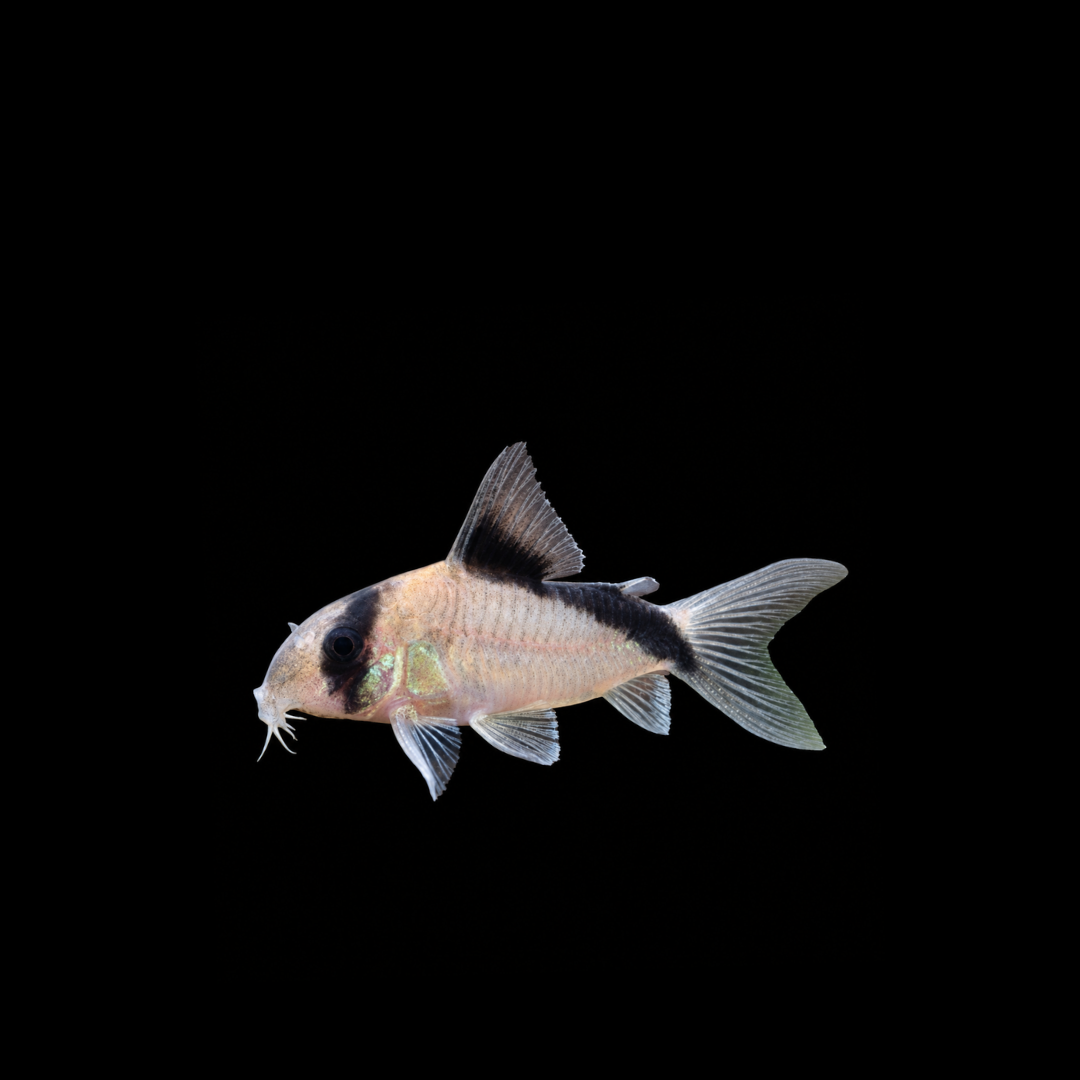
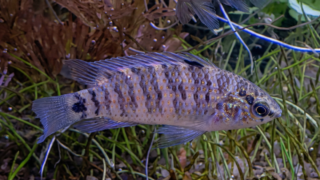
ニューメリニは、ブラジルのネグロ川水系に生息する、小型で温和なコリドラスの仲間です。淡いベージュから薄い褐色の体に、目を通る黒い帯と、背中から尾びれの下側へ続く斜めの黒帯が入り、後頭部にはほのかな橙色が見られます。メリニによく似た姿にちなむ流通名で親しまれ、デビッドサンジィの名前でも販売されます。現在の学名はHoplisoma davidsandsiで、旧学名はCorydoras davidsandsiです。仲間と並んで休み、口ひげを動かしながら砂の中を探る姿も、落ち着いた色彩とともに楽しめる魅力の一つです。広い砂地、清潔で安定した軟水、底まで確実に届く餌を用意することが、健康に飼育するための基本になります。 New Melini, also known as Sands’ cory, is a small, peaceful cory catfish from the Negro River basin in Brazil. Its pale beige to light brown body carries a dark stripe through the eye and an oblique band extending from the back into the lower part of the tail fin. A subtle orange patch appears behind the head. Its Japanese trade name refers to its resemblance to the melini cory, and it is also sold under variations of the name Davidsandsi. Its current scientific name is Hoplisoma davidsandsi, formerly Corydoras davidsandsi. Watching these fish rest beside their companions and explore the sand with their barbels is as rewarding as appreciating their understated colors. An open sandy floor, clean and stable soft water, and food that reliably reaches the bottom provide the foundation for their care.
基本情報 / Basic Information
| 学名 / Scientific Name | Hoplisoma davidsandsi (Black, 1987) |
|---|---|
| 通称 / Common Name | ニューメリニ、コリドラス・ニューメリニ、コリドラス・デビッドサンジィ。デビットサンジィなど、学名の読み方に由来する表記の違いもあります。New Melini and Corydoras New Melini are Japanese trade names. Davidsandsi cory and David Sands’ cory are also used. Several Japanese spellings reflect different renderings of the scientific name. |
| 分類 / Family | ナマズ目・カリクティス科・コリドラス亜科・ホプリソマ属。観賞魚としては、引き続きコリドラスの仲間として親しまれています。Order Siluriformes; family Callichthyidae; subfamily Corydoradinae; genus Hoplisoma. In the aquarium hobby, it remains familiar as one of the cory catfishes. |
| 英名 / English Name | Sands’ cory, David Sands’ cory |
| 分布 / Distribution | 南米ブラジルのネグロ川水系。アマゾナス州のウニニ川流域から知られ、新種記載の基準となる標本の採集地を指す「模式産地」もウニニ川です。The Negro River basin in Brazil, South America. It is known from the Unini River drainage in Amazonas State. The Unini is also its type locality: the collection locality of the specimen used as the basis for its original description. |
| 最大体長 / Max Size | 標準体長約4.4cmの記録があります。標準体長は尾びれを含まない長さです。成熟したメスは、オスより大きく幅広い体つきになる傾向があります。A standard length of approximately 4.4 cm has been recorded. Standard length excludes the tail fin. Mature females tend to be larger and broader than males. |
| 寿命 / Lifespan | 飼育下での寿命やその上限は十分に明らかになっていません。導入時の年齢や個体の状態によっても異なるため、数年単位の長期飼育を見据え、安定した環境を維持できる準備をして迎えましょう。Its captive lifespan and maximum longevity are not well established. Age at purchase and individual condition also affect how long a fish remains in your care. Prepare for a commitment lasting several years and provide consistently suitable conditions. |
飼育環境 / Aquarium Environment
| 水槽サイズ / Tank Size | 同種6匹前後をゆったり飼うなら、60cmワイド水槽(幅60×奥行45×高さ45cm、容量の目安約120L)が選択肢になります。10匹程度の群れや他魚との混泳には、90cm規格水槽(幅90×奥行45×高さ45cm、約180L)をおすすめします。底で活動する魚なので、高さだけでなく底面の広さを重視してください。底砂や装飾、水位によって、実際の水量はこれより少なくなります。For a comfortably housed group of around six, a Japanese 60 cm wide-format aquarium measuring 60 × 45 × 45 cm is an option, with an approximate capacity of 120 L. For around ten fish or a community setup, consider a Japanese 90 cm standard aquarium measuring 90 × 45 × 45 cm, approximately 180 L. As these fish spend much of their time on the bottom, prioritize floor area as well as height. Substrate, decorations, and the operating water level reduce the actual water volume. |
|---|---|
| 水温 / Temperature | 日常管理では22〜26℃程度を目安にし、急激な変化を避けます。夏は高水温が続くと酸素不足を招きやすいため、室内の冷房や水槽用の冷却機器を使い、通気も確保してください。冬はヒーターで安定させ、換水時には新しい水との温度差を小さくします。 Use approximately 22–26°C as a practical range for routine care and avoid sudden changes. Prolonged summer heat can increase the risk of oxygen shortage, so use room cooling or suitable aquarium cooling equipment while maintaining aeration. Keep temperatures stable with a heater in winter and closely match the temperature of replacement water during water changes. |
| 水質 / Water Quality | 弱酸性から中性の軟水を基本とし、pH6.0〜7.0、総硬度(GH)1〜5°dH程度を目安にします。数値を急に合わせようとせず、それまで飼育されていた水との違いを確かめ、徐々に慣らすことが大切です。アンモニアと亜硝酸は検出されない状態を維持し、硝酸塩も蓄積させないようにします。週1回、4分の1〜3分の1程度の換水を目安として、飼育密度や測定結果に合わせて調整してください。換水にはカルキを抜き、水温と水質を合わせた水を使います。Soft, slightly acidic to neutral freshwater is a suitable starting point: approximately pH 6.0–7.0 and a general hardness of 1–5°dH. Check how these conditions differ from the fish’s previous water and acclimate gradually, rather than making abrupt adjustments to reach a target number. Keep ammonia and nitrite undetectable and prevent nitrate accumulation. A weekly water change of roughly one-quarter to one-third is a useful guide, with adjustments according to stocking density and water test results. Use dechlorinated replacement water with closely matched temperature and chemistry. |
| レイアウト / Layout | 粒が細かく滑らかな田砂やボトムサンドなどを敷き、口先で砂を探れる場所を広く残します。掃除のしやすさを考えるなら、砂の厚さは1〜2cm程度から始めると扱いやすいでしょう。流木や水草で陰になる休息場所をつくり、前面には開けた砂地を確保します。砂利を使う場合も角の鋭い粒を避け、隙間に汚れをためないことが大切です。水流は底まで穏やかに行き渡らせ、落ち着いて休める場所も残してください。Provide fine, smooth sand, such as Japanese tasuna or suitable aquarium sand, with plenty of open space for the fish to explore with their snouts. A layer around 1–2 cm deep is a manageable starting point where easy cleaning is a priority. Use wood and plants to create shaded resting places while leaving an open sandy area at the front. If using gravel, avoid sharp particles and prevent debris from accumulating between them. Arrange gentle circulation across the bottom while retaining calm places to rest. |
| 注意点 / Precautions | ろ過が十分に働く、安定した水槽に導入します。空気を取り込むために水面まで泳ぐので、往復できる通り道を空け、飛び出しを防ぐふたも用意してください。水面への往復が急に増えたり、エラの動きが速くなったりしたときは、水温・水質・通気の状態を確認します。背びれと胸びれの硬い棘は網に引っ掛かることがあるため、移動には容器を使うなどして、追い回す時間を短くします。素手で強くつかまず、運搬時の過密も避けましょう。Introduce the fish into an established aquarium with a functioning biological filter. Leave clear routes to the surface for air gulping and fit a lid to prevent jumping. A sudden increase in surface trips or rapid gill movements calls for a check of temperature, water quality, and aeration. The stiff dorsal and pectoral spines can catch in nets, so consider guiding the fish into a container and minimize chasing during transfers. Avoid gripping them tightly with bare hands and do not overcrowd transport containers. |
餌と給餌 / Feeding
| 餌の種類 / Diet | 小さな水生無脊椎動物などを探して食べる、動物質を好む雑食性です。主食には、コリドラス用などの動物質を含む沈下性の総合飼料を使います。補助的に、アカムシ、ブラインシュリンプ、ミジンコなどの冷凍餌を取り入れると、餌に変化をつけられます。イトミミズなどの生餌を使う場合は、衛生状態のよいものを選んでください。コケや他魚の食べ残しだけでは、必要な栄養を十分に補えません。This is an omnivorous bottom forager with a preference for animal foods, including small aquatic invertebrates. Use a nutritionally complete sinking food containing animal ingredients, such as a suitable cory pellet or tablet, as the staple. Supplement with frozen foods such as bloodworms, brine shrimp, and daphnia to provide variety. If offering live foods such as tubifex worms, obtain them from a hygienic source. Algae and scraps left by other fish do not provide a reliable, complete diet. |
|---|---|
| 給餌のポイント / Feeding Tips | 成魚には1日1〜2回を目安に、食べる様子を見ながら量を調整します。餌が底に沈んだかだけでなく、ほかの魚に先に食べられていないか、すべての個体に届いているかを確かめてください。数か所に分けて与えると、控えめな個体にも行き渡りやすくなります。導入直後に警戒している場合は、照明を弱め、周囲が静かな時間に給餌するとよいでしょう。長時間残った餌は取り除き、食べているのに痩せる個体がいないか、腹部の状態も観察します。For adults, start with one or two feedings per day and adjust the amount to their actual intake. Check that food is not merely reaching the bottom but is also reaching every fish before tank mates consume it. Distribute it among several locations to help less assertive individuals feed. Newly introduced, wary fish may respond better in subdued lighting during a quiet period. Remove food that remains uneaten for a prolonged time and monitor body condition, including any fish that loses weight despite appearing to eat. |
性格と混泳 / Temperament and Tank Mates
| 性格 / Temperament | 温和で、同種の仲間と過ごすことを好みます。6匹前後以上の群れを目安にすると、寄り添って休んだり、一緒に砂地を探ったりする姿を楽しみやすくなります。いつも一塊で泳ぐわけではなく、それぞれが餌を探しながら緩やかに集まることもあります。導入直後や周囲が騒がしい環境では隠れがちになるため、隠れ場所を用意し、慣れるまで静かに見守りましょう。Peaceful and sociable, it benefits from the company of its own species. A group of around six or more provides opportunities to observe companions resting together and exploring the sandy floor. They do not remain in a tightly synchronized school at all times and may form a loose group while foraging individually. Newly introduced fish, or those in a busy environment, may spend more time hiding. Provide cover and allow them to settle quietly. |
|---|---|
| 混泳の相性 / Compatibility | 同じ水温・水質を好む、温和な小型テトラやペンシルフィッシュなどが候補になります。混泳相手の大きさだけでなく、底の餌を独占しないかも確認してください。アピストグラマなど底層に縄張りを持つ魚は、特に繁殖期にニューメリニを追い払うことがあるため、慎重に組み合わせます。ニューメリニを飲み込める大きさの魚や、ひれをかじる魚との混泳は避けましょう。Peaceful small tetras and pencilfishes with compatible temperature and water requirements are potential companions. Consider whether a tank mate monopolizes food on the bottom as well as its size. Bottom-territorial fishes, including Apistogramma, require caution because they may drive New Melini away, particularly during breeding. Avoid fishes large enough to swallow them and fishes that nip fins. |
病気と対策 / Diseases and Prevention
| かかりやすい病気 / Common Diseases | 飼育環境の悪化や病原体の持ち込みにより、白点病、傷口の水カビ、口ひげ・口元・ひれの損傷に伴う細菌感染などが起こることがあります。口ひげが短くなる、腹部が赤くなる、体表が荒れる、食欲が落ちるといった変化に注意してください。痩せが続く場合は、餌不足や他魚との餌の取り合いに加え、寄生虫の感染なども考えられます。口ひげの傷みや体表の赤みは、見た目だけでは原因を判断しにくい症状です。水質や底床の状態、食欲や行動の変化も併せて確認します。Deteriorating aquarium conditions or the introduction of pathogens can lead to problems such as white spot disease, water mold on wounds, and bacterial infections associated with damaged barbels, mouth tissue, or fins. Watch for shortening barbels, abdominal redness, damaged skin, or reduced appetite. Continuing weight loss may reflect insufficient food or competition, but parasitic infection is another possibility. Barbel damage and skin redness are difficult to diagnose from appearance alone. Check water quality, substrate condition, appetite, and behavior together. |
|---|---|
| 対策と予防 / Prevention | 新しく迎えた魚は、可能なら別水槽で健康状態と摂餌を観察してから合流させます。日頃は底床表面の汚れをこまめに吸い出し、食べ残しを減らして、ろ過と酸素供給を安定させてください。不調が見られたら、まず水温、アンモニア、亜硝酸などを確認し、必要に応じて隔離します。薬剤を使う際は、症状に合う製品を選び、コリドラス類への使用可否と用法・用量を確認してください。原因がはっきりしないまま薬を重ねて使うことは避け、改善しない場合は魚の診療に対応する獣医師などに相談しましょう。When possible, observe new fish in a separate aquarium until their health and feeding behavior are satisfactory. Regularly siphon debris from the substrate surface, limit leftover food, and maintain dependable filtration and oxygenation. If a fish becomes unwell, first check temperature, ammonia, nitrite, and other relevant conditions, then isolate it if needed. When medication is appropriate, choose a product suited to the problem and check its suitability for cory catfishes and its labeled dosage. Avoid combining treatments without identifying the cause, and consult a veterinarian who treats fish if the problem persists. |
増やし方(繁殖) / Breeding
| 雌雄の判別 / Sexing | 成熟したメスはオスより大きく、体高があり、上から見ると腹部から胴にかけて幅広く見える傾向があります。オスは比較的細身です。若い個体では判別が難しく、腹部の膨らみだけで抱卵と断定することもできません。体格の違いに加え、健康状態や求愛行動を合わせて観察します。Mature females tend to be larger, deeper-bodied, and noticeably broader through the abdomen when viewed from above. Males are generally slimmer. Juveniles are difficult to sex, and a swollen abdomen alone does not establish that a female is carrying eggs. Consider overall body shape, health, and courtship behavior together. |
|---|---|
| 繁殖形態 / Reproduction | 卵生で、ガラス面や水草などに粘着性の卵を付着させます。求愛が進むとメスがオスの腹部付近に口を寄せ、上から見てT字に見える「Tポジション」をとります。その後、メスは卵を腹びれの間に保持したまま産卵場所を探し、卵を付着させます。この一連の行動を繰り返して産卵が進みます。産卵数は親魚の大きさや状態によって変わり、少数の卵だけで終わることもあります。親魚は卵を守らず、食べてしまうことがあります。An egg-laying species, it attaches adhesive eggs to surfaces such as aquarium glass and plants. During courtship, the female places her mouth near the male’s abdomen, forming the characteristic T-position when viewed from above. She then holds an egg or eggs between her pelvic fins while searching for a place to attach them. Spawning proceeds through repetitions of this sequence. Egg numbers vary with the size and condition of the breeders, and some spawnings produce only a few eggs. The adults do not guard the eggs and may eat them. |
| 繁殖のポイント / Breeding Tips | 健康な成熟魚の栄養状態を整え、メス1匹にオス2匹程度を一つの目安として組み合わせます。産卵用には、卵や稚魚を吸い込みにくいスポンジフィルターと、ウィローモスなどの細かな水草を用意すると管理しやすくなります。換水や通気の改善が産卵のきっかけになることがありますが、産卵を急いで冷たい水による大量換水を繰り返すことは避けてください。 卵は親魚から離し、産卵水槽と水温・水質をそろえた容器で、弱い通気をしながら管理します。白濁した卵や水カビの生えた卵は取り除きます。孵化は産卵から3〜5日程度が目安ですが、水温などによって前後します。孵化直後はお腹の卵黄を使って成長するため、その間の給餌は不要です。卵黄を使い終えて餌を探し始めたら、微細な稚魚用飼料や微小な生餌を少量ずつ与え、口に入るようになれば孵化したてのブラインシュリンプも利用します。底の汚れを毎日スポイトなどで取り除き、水温・水質を合わせた少量の換水で清潔に保ちましょう。Bring healthy, mature fish into good nutritional condition; around two males per female is a useful starting arrangement. A sponge filter that minimizes the risk of drawing in eggs or fry, together with fine plants such as Java moss, makes a practical breeding setup. Water changes and improved aeration may help trigger spawning, but avoid repeatedly forcing large changes with cold water in an attempt to hurry the fish. Separate the eggs from the adults and maintain them with gentle aeration in a container matched to the spawning aquarium’s temperature and water chemistry. Remove opaque or moldy eggs. Hatching takes approximately 3–5 days after spawning, although the timing varies with temperature and other conditions. Newly hatched larvae initially rely on their yolk and do not need food during that period. Once the yolk is absorbed and they begin searching for food, offer small amounts of suitably fine fry food or tiny live foods. Introduce newly hatched brine shrimp when the fry can swallow them. Remove bottom debris daily with a pipette or similar tool, and maintain cleanliness through small water changes using closely matched water. |
雑学と豆知識 / Trivia and Fun Facts
| 1. 「新しいメリニ」という呼び名と、学名に残る人の名前 / 1. A Trade Name and a Person Remembered | 「ニューメリニ」という名前には、この魚がメリニによく似ているという、観賞魚を見分ける人々の視点が表れています。黒い帯の印象は共通していますが、ニューメリニは独立した種類で、1987年にB. Blackによって新種として記載されました。一方、種小名のdavidsandsiは、英国のアクアリストで著述家のデビッド・サンズにちなんだ献名です。流通名には魚の姿の特徴が、学名にはナマズの理解と普及に関わった人物の名が残されています。The name “New Melini” reflects an aquarist’s first impression: this fish looks much like the melini cory. Despite their similar dark bands, New Melini is a distinct species, described by B. Black in 1987. Its specific name, davidsandsi, honors the English aquarist and author David Sands. The trade name describes the fish’s appearance, while the scientific name preserves the name of someone involved in improving the understanding and appreciation of catfishes. |
|---|---|
| 2. コリドラスからホプリソマへ続く分類の歩み / 2. From Corydoras to Hoplisoma | 長く使われてきたCorydoras davidsandsiという学名は、2024年に公表された系統研究を受けてHoplisoma davidsandsiへと変わりました。DNAの多数の領域と体の構造を調べることで、従来ひとまとめにされていた仲間の血縁関係が、より詳しく整理されたためです。ホプリソマはこのとき初めてつくられた名前ではなく、1838年に提唱されていた属名が復活したものです。 属名は、ギリシャ語に由来する「鎧・盾」と「体」を組み合わせた意味を持ち、体側に並ぶ骨板にちなんでいます。種小名のdavidsandsiは、人名を「〜の」という所有を表す形にした語なので、属名に合わせて語尾を変える必要がありません。お店で親しまれる「コリドラス」という呼び方の奥には、小さな魚たちのつながりを少しずつ解き明かしてきた分類学の歩みがあります。The familiar scientific name Corydoras davidsandsi became Hoplisoma davidsandsi following a phylogenetic study published online in 2024. Comparisons of numerous DNA regions and anatomical features clarified relationships among fishes previously grouped together. Hoplisoma was not a newly invented name: it revived a genus originally proposed in 1838. The name combines Greek roots associated with armor or a shield and the body, referring to the bony plates along the fish’s sides. The epithet davidsandsi is a possessive form based on a person’s name, so its ending does not need to change to agree with the new genus. Behind the familiar aquarium word “corydoras” lies a continuing effort to understand how these small catfishes are related. |
| 3. 黒い帯をたどると見えてくる、似た魚との違い / 3. Following the Dark Band | ニューメリニを見分けるときは、黒い帯だけでなく、その周囲の色にも目を向けてみてください。頭部の黒帯と背中の黒帯の間に現れる淡い橙色と、細かな暗色模様の目立たない体側が、メリニとの比較に役立ちます。メリニでは、体側の骨板に沿った細かな黒っぽい模様が見られることがあります。メタエもよく似ていますが、ニューメリニの帯が尾びれの下側へ続くのに対し、メタエの帯は尾びれの付け根にあたる尾柄付近で終わる点が手がかりになります。 ただし、発色は照明や個体の状態によって見え方が変わります。一本の線や一か所の色だけで判断せず、頭部の色、体側の模様、帯の続き方、体形を合わせて眺めると、それぞれの魚の特徴が見えてきます。When identifying New Melini, look at the colors surrounding the dark band as well as the band itself. The pale orange area between the facial stripe and dorsal band, together with flanks lacking conspicuous fine dark markings, helps distinguish it from the melini cory. Melini may show small dark markings associated with the body plates. The metae cory is another similar fish, but its dark band ends around the caudal peduncle, the narrow region just before the tail fin, whereas that of New Melini continues into the lower part of the tail fin. Lighting and the condition of the individual can alter how these colors appear. Considering the head color, flank markings, course of the band, and overall body shape together is more useful than relying on a single line or patch. |
| 4. 紅茶色の水を生み出す、森と川のつながり / 4. The Forest Behind the Tea-Colored Water | ニューメリニの故郷であるネグロ川水系では、落ち葉や木々から溶け出した有機物によって、水が紅茶のような色を帯びる場所が見られます。ブラックウォーターと呼ばれるこうした水は、周囲の森と深く結びついています。森から落ちる葉や枝、季節によって変わる水位が、水辺の魚たちの生活環境を形づくっています。ウニニ川にも、このような森と川のつながりが見られます。 水槽で流木や観賞魚用の落ち葉を使うと、陰や小さな隠れ場所をつくりながら、その雰囲気を楽しめます。ただし、水の色だけではpHや硬度、清潔さは分かりません。落ち葉は少量から取り入れて状態を見守り、分解物をためすぎないように管理しましょう。自然を思わせる景色と日々の水質管理を両立させることが、落ち着いた飼育環境につながります。Parts of the Negro River basin are stained like tea by organic substances released from leaves and wood. This blackwater is closely connected to the surrounding forest. Falling leaves and branches, together with seasonal changes in water level, help shape the living conditions of fishes along the river margins. The Unini also reflects this relationship between forest and water. Aquarium-safe wood and leaves can suggest that setting while providing shade and small shelters. Water color alone, however, does not reveal pH, hardness, or cleanliness. Add leaves gradually, monitor their condition, and avoid excessive accumulation of decomposing material. A natural appearance works best alongside regular water quality management. |
| 5. 小さな体を守る、骨板と棘 / 5. Bony Plates and Spines That Protect a Small Body | ニューメリニの体側には、硬い骨板が上下2列に並んでいます。このつくりはカリクティス科の特徴の一つで、英語で仲間が「鎧をまとったナマズ」と呼ばれる理由にもなっています。背びれや胸びれの硬い棘も、小さな体を捕食者から守るための備えです。水槽では温和に見える魚にも、自然の中を生き抜く体の仕組みが備わっています。 コリドラスの仲間では、胸びれの付け根付近にある腋窩腺という分泌器官なども研究されています。一部の種類では、強いストレスを受けた際に出す分泌物によって、狭い輸送容器内の魚が弱ることがあります。ただし、分泌物の成分や影響の強さを、すべての種類で同じと考えることはできません。ニューメリニを移動させるときも、棘を無理に押さえつけず、過密や長時間の追い回しを避け、穏やかに扱うことが大切です。Two rows of hard bony plates run along each side of New Melini’s body. This is a characteristic feature of the family Callichthyidae and explains why these fishes are often called armored catfishes. Stiff dorsal and pectoral spines provide another form of protection against predators. Even a peaceful aquarium fish carries adaptations shaped by the challenges of life in the wild. Secretory organs, including axillary glands near the pectoral-fin bases, have also been studied in cory catfishes. In some species, substances released under severe stress can cause fish confined in small transport containers to become weak. Their composition and potency cannot be assumed to be identical across species. When moving New Melini, handle it gently, avoid forcing its spines flat, and minimize overcrowding and prolonged chasing. |
| 6. 水面へのひと泳ぎは、腸で呼吸するため / 6. A Quick Trip to the Surface | 砂地で休んでいたニューメリニが、突然すっと水面まで上がり、すぐに底へ戻ることがあります。これは空気を飲み込んで行う腸呼吸に関係する行動です。コリドラスの仲間は、エラで水中の酸素を取り込むことに加え、水面で飲み込んだ空気からも酸素を取り込めます。腸の一部が酸素を吸収しやすい構造になっており、残った気体は肛門から排出されます。 この呼吸は、水中の酸素が十分にあるときにも見られます。たまの浮上だけで慌てる必要はありませんが、普段より明らかに回数が増えたり、食欲やエラの動きにも変化があったりするときは、飼育環境を確認してください。いつもの動きを知っておくことが、小さな異変に気づく助けになります。A New Melini resting on the sand may suddenly dart to the surface and return straight to the bottom. This behavior is associated with intestinal air breathing. In addition to extracting oxygen from water through their gills, cory catfishes can obtain oxygen from air swallowed at the surface. A specialized region of the intestine absorbs oxygen, and the remaining gas is expelled through the vent. Air breathing can occur even when the water contains adequate oxygen. An occasional surface trip is therefore not automatically a cause for alarm. A clear increase over the fish’s usual pattern, particularly alongside altered appetite or gill movements, should prompt a check of aquarium conditions. Becoming familiar with normal behavior makes subtle changes easier to notice. |
| 7. T字の姿勢に秘められた、繁殖の不思議 / 7. The Mystery Within the T-Position | 繁殖時のTポジションは、コリドラスの仲間を観察する楽しみの一つです。ニューメリニでも、オスとメスが短いあいだT字に寄り添い、その後メスが腹びれに卵を受けて産卵場所を探します。卵を保持したメスが水草やガラス面の間を移動する姿からは、産卵が一連の細かな動作によって進むことが分かります。 さらに、赤コリとして親しまれるアエネウスでは、メスが口から取り込んだ精液中の精子が消化管を通り、腹びれの間に保持した卵の受精に使われる仕組みが知られています。精子はメスの体内を通りますが、受精が起こるのは腹びれの間、つまり体の外です。ニューメリニでも同じ仕組みが働くかは、十分に確かめられていません。よく似た求愛の姿にも、種類ごとの違いを探る余地が残っています。The T-position is one of the most intriguing behaviors to observe in cory catfishes. In New Melini, the male and female briefly form a T before the female receives an egg between her pelvic fins and searches for somewhere to attach it. Her movements among plants and glass while holding the egg show that spawning proceeds through a sequence of small, coordinated actions. In the bronze cory, commonly known as aeneus, sperm from semen ingested by the female passes through her digestive tract and is used to fertilize eggs held between her pelvic fins. Although the sperm travels through the female’s body, fertilization occurs between the pelvic fins, outside the body. Whether the same mechanism operates in New Melini has not been adequately established. Similar-looking courtship can still leave room for differences between species. |
| 8. 似た装いを持つ、遠い親戚のナマズたち / 8. Similar Colors in Distant Relatives | 南米の小型ナマズには、系統が離れているのによく似た配色を持つものがいます。別の科に属するブラキラムディアの仲間とコリドラス類の類似も、その一例として研究されてきました。体側の骨板や口ひげをよく見ると異なる魚でも、捕食者には似た模様の魚として認識される可能性があります。 棘などの防御手段を持つ魚どうしが似た模様を共有すると、捕食者がその模様を避けるよう学習することで、両方の魚が襲われにくくなる可能性があります。こうした仕組みをミューラー型擬態と呼び、ブラキラムディアとコリドラス類の似た配色を説明する仮説の一つになっています。ただし、模様の類似だけで、特定の2種が同じ群れで暮らすことや、実際に互いの生存に役立っていることまで確かめられるわけではありません。ニューメリニの黒い帯は、見た目の美しさに加えて、魚たちの血縁や防御の進化を考える入り口にもなります。Some small South American catfishes share similar colors despite belonging to distant evolutionary lineages. Resemblances between Brachyrhamdia catfishes and cory catfishes, which belong to different families, have been studied in this context. Fishes that differ in body plates and barbels may nevertheless be recognized by a predator as having a similar pattern. When fishes equipped with defenses such as spines share a recognizable pattern, a predator may learn to avoid that pattern, potentially reducing attacks on both fishes. This is the principle of Müllerian mimicry, one hypothesis used to explain the similar coloration of Brachyrhamdia and cory catfishes. A resemblance alone does not establish that a particular pair of species schools together or actually improves one another’s survival. New Melini’s dark band can therefore invite questions about ancestry and the evolution of defenses as well as appreciation of its appearance. |
まとめ / Conclusion
ニューメリニは、淡い体色に映える黒い帯と、後頭部の柔らかな橙色が美しい小型のナマズです。仲間と寄り添って休み、砂を探り、ときには水面まで素早く泳ぐ姿には、観察を重ねるほどに気づく楽しさがあります。広い砂地と陰になる場所を用意し、水質の安定、底床の清潔さ、十分な酸素、確実な給餌を大切にすることで、その穏やかな暮らしを支えられます。 New Melini is a small catfish whose dark bands and soft orange head patch stand out against a pale body. Resting beside companions, searching the sand, and occasionally making a swift trip to the surface, it offers details that become more rewarding with patient observation. Open sand, shaded resting places, stable water conditions, a clean substrate, adequate oxygen, and reliable feeding support its peaceful daily life.
日々の世話を通して、一匹ずつの食欲や体つきだけでなく、群れが水槽に馴染んでいく様子も見えてきます。砂の上に並ぶ姿や、落ち着いた環境で見せる自然な振る舞いに、ニューメリニならではの穏やかな魅力があります。 Daily care reveals not only each fish’s appetite and body condition but also how the group settles into its surroundings. Their forms resting together on the sand and their natural behavior in a comfortable aquarium are central to New Melini’s quiet appeal.
気になる道具や飼い方を見つけてみませんか?
 アイのアクアグッズ案内ローチの仲間に合わせる飼育用品|クーリー・流水性・ボーシャの水槽と底砂道具の特徴や使い方、選ぶときのポイントをアイが紹介します。記事はコチラ →
 アイのアクアグッズ案内エビのおうち、食べちゃっていいの!? コタロウと探る、不思議なエビのごはん道具の特徴や使い方、選ぶときのポイントをアイが紹介します。記事はコチラ →
さまざまな飼育テーマをご紹介。リンク先の記事には広告・商品紹介が含まれます。
案内・紹介記事一覧へ →分布マップ
ニューメリニ(Hoplisoma davidsandsi)は、南米ブラジルのネグロ川水系に分布し、アマゾナス州のウニニ川流域から知られています。地図ではネグロ川水系とその周辺を表示し、ウニニ川河口付近に代表マーカーを置いています。
※ 地図は分布地域の位置関係を示す概略表示です。表示範囲全域に本種が生息することを示すものではありません。マーカーはウニニ川河口付近の代表地点であり、実際の採集地点を示すものではありません。
参考文献
分類・分布・生息環境
- Dias, A. C., et al.(2025). Phylogenomic analyses in the complex Neotropical subfamily Corydoradinae (Siluriformes: Callichthyidae) with a new classification based on morphological and molecular data. Zoological Journal of the Linnean Society, 203(3), zlae053. DOI: 10.1093/zoolinnean/zlae053. オンライン先行公開:2024年6月11日。
- Fricke, R., Eschmeyer, W. N., & van der Laan, R.(編)(2026). Eschmeyer’s Catalog of Fishes: Genera, Species, References — Hoplisoma davidsandsi (Black, 1987). California Academy of Sciences. 閲覧日:2026年10月19日。
- Froese, R., & Pauly, D.(編)(2026). FishBase — Hoplisoma davidsandsi (Black, 1987). World Wide Web electronic publication, version 06/2026. 閲覧日:2026年10月19日。
- Sobreiro, T., et al.(2010). An evaluation of fishery co-management experience in an Amazonian black-water river (Unini River, Amazon, Brazil). Environment, Development and Sustainability, 12, 1013–1024. DOI: 10.1007/s10668-010-9238-8.
飼育・繁殖
- Chiang, A., et al.(2024). Comprehensive Husbandry Protocol for Corydoras Catfish and Many Other Amazonian Species. Journal of the American Association for Laboratory Animal Science, 63(5), 472–479. DOI: 10.30802/AALAS-JAALAS-24-039.
- Kohda, M., Tanimura, M., Kikue-Nakamura, M., & Yamagishi, S.(1995). Sperm drinking by female catfishes: a novel mode of insemination. Environmental Biology of Fishes, 42, 1–6. DOI: 10.1007/BF00002344.
病気・健康管理
- Francis-Floyd, R., Stilwell, N. K., & Yanong, R. P. E.(2025). Introduction to Fish Health Management. University of Florida, UF/IFAS Extension, CIR921/FA004. 2025年6月改訂。
- Francis-Floyd, R., Yanong, R. P. E., & Pouder, D. B.(2026). Ichthyophthirius multifiliis (White Spot) Infections in Fish. University of Florida, UF/IFAS Extension, CIR920/FA006. 2026年5月改訂。
生理・生態
- Pineda, M., Aragao, I., McKenzie, D. J., & Killen, S. S.(2020). Social dynamics obscure the effect of temperature on air breathing in Corydoras catfish. Journal of Experimental Biology, 223(21), jeb222133. DOI: 10.1242/jeb.222133.
- Kiehl, E., Rieger, C., & Greven, H.(2006). Axillary gland secretions contribute to the stress-induced discharge of a bactericidal substance in Corydoras sterbai (Callichthyidae, Siluriformes). Verhandlungen der Gesellschaft für Ichthyologie, 5, 111–115.
- Slobodian, V., & Bockmann, F. A.(2013). A new Brachyrhamdia (Siluriformes: Heptapteridae) from Rio Japurá basin, Brazil, with comments on its phylogenetic affinities, biogeography and mimicry in the genus. Zootaxa, 3717(1), 1–22. DOI: 10.11646/zootaxa.3717.1.1.



コメント