
解説 / Description
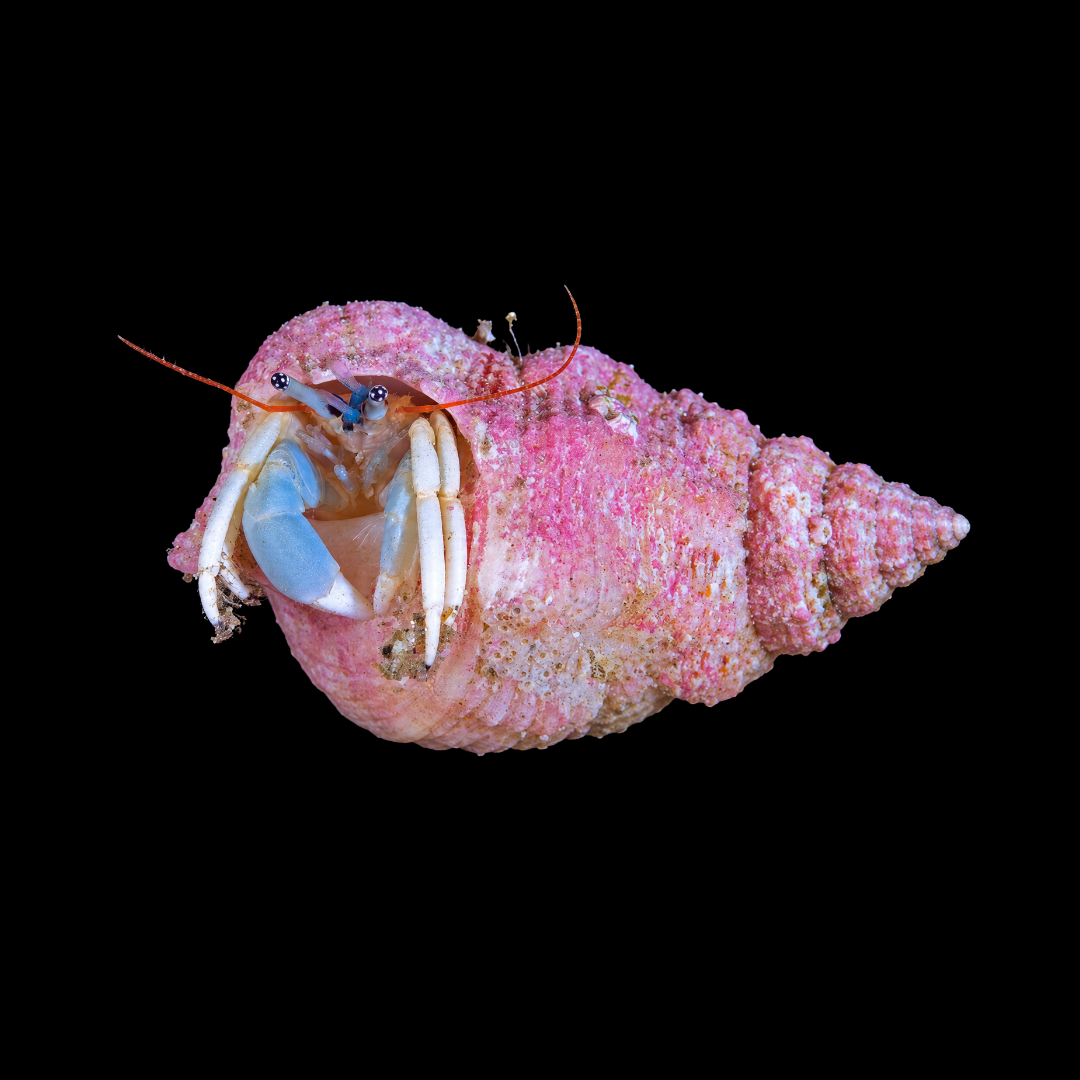
ウスイロサンゴヤドカリは、乳白色から淡い灰緑色の体に、赤〜オレンジ色の触角が映える小型の海産ヤドカリです。左のハサミが右より大きく、歩脚の先端は黒っぽくなります。眼柄やハサミの色には個体差があり、青みを帯びる個体も見られます。岩の表面を少しずつついばみながら歩く姿や、貝殻を背負ったまま隙間に収まる様子が魅力です。自然界では浅い岩礁やサンゴ礁に暮らし、付着藻類や有機物を餌にしています。海水水槽ではお掃除役として親しまれますが、食べ残しだけに頼らず、十分な食事と隠れ場所、体に合う空の貝殻を用意しましょう。 Calcinus vachoni is a small marine hermit crab with a creamy-white to pale gray-green body and contrasting red or orange antennae. Its left claw is larger than its right, and its walking legs have dark tips. Eye-stalk and claw coloration varies, with some individuals showing bluish tones. Its appeal lies in its careful grazing movements and the way it fits its borrowed shell into a crevice. In nature, it inhabits shallow rocky and coral reefs, feeding on attached algae and organic material. Although valued as an aquarium scavenger, it needs adequate food, shelter, and suitably sized empty shells rather than leftovers alone.
基本情報 / Basic Information
| 学名 / Scientific Name | Calcinus vachoni Forest, 1958 |
|---|---|
| 通称 / Common Name | ウスイロサンゴヤドカリ。購入時には、販売名とあわせて学名も確認しましょう。Usuiro-sango-yadokari, its Japanese common name. Check the scientific name as well as the retail name when purchasing. |
| 分類 / Family | 節足動物門・甲殻亜門・軟甲綱・十脚目・ヤドカリ下目・ヤドカリ科・サンゴヤドカリ属。Phylum Arthropoda; subphylum Crustacea; class Malacostraca; order Decapoda; infraorder Anomura; family Diogenidae; genus Calcinus. |
| 英名 / English Name | 広く定着した英名は確認できません。学名で表記されることがあります。No widely established English common name could be confirmed. The scientific name is sometimes used. |
| 分布 / Distribution | 日本、台湾、ベトナム、フィリピンなどの西太平洋域。国内では琉球列島のほか、九州・四国・紀伊半島・伊豆半島などの沿岸で見られます。韓国の済州島からも記録されています。従来はインド太平洋に広く分布するとされてきましたが、その範囲には遺伝的に異なる系統が含まれるため、すべてを同じ系統の分布として扱うことはできません。Western Pacific waters including Japan, Taiwan, Vietnam, and the Philippines. In Japan, it occurs around the Ryukyu Islands and coastal Kyushu, Shikoku, the Kii Peninsula, and the Izu Peninsula, among other locations. It has also been recorded on Jeju Island, South Korea. Its historically broad Indo-Pacific range includes genetically distinct lineages and should not be treated as the range of a single lineage. |
| 最大体長 / Max Size | 信頼できる最大体長の情報は確認できません。小型種で、研究では頭胸甲の前方にある硬い部分「前甲」の長さなどを使って大きさを示します。販売時の殻込みのサイズと、ヤドカリ自身の体の大きさは区別してください。A reliable maximum body size could not be confirmed. This is a small species, and research measurements include shield length, the length of the hardened anterior part of the carapace. Retail measurements that include the shell should be distinguished from the crab’s own body size. |
| 寿命 / Lifespan | 本種の寿命を明確に示す情報は限られています。採集個体は年齢が分からないことも多く、飼育下で生きた期間だけでは、本来の寿命を判断できません。Species-specific lifespan information is limited. Wild-collected individuals are often of unknown age, so their time in captivity alone does not establish their natural lifespan. |
飼育環境 / Aquarium Environment
| 水槽サイズ / Tank Size | 少数の飼育でも、水質の安定を重視して45cm規格水槽(45×30×30cm、約40L)以上を目安にすると管理しやすくなります。魚やサンゴと一緒に飼う場合は60cm規格水槽(60×30×36cm、約65L)以上を検討し、同居生体に必要な広さも確保しましょう。水量は満水時の概算で、底砂や岩を入れると実際の水量は減ります。これらは管理上の目安であり、本種に固有の最低水槽サイズが確立されているわけではありません。Even for a small number, a standard Japanese 45 cm tank measuring 45 × 30 × 30 cm, approximately 40 L, or larger is a practical starting point for stable water conditions. With fish or corals, consider a standard 60 cm tank measuring 60 × 30 × 36 cm, approximately 65 L, or larger, while allowing enough space for its companions. These are approximate full capacities; substrate and rocks reduce actual water volume. They are husbandry guidelines, not established species-specific minimums. |
|---|---|
| 水温 / Temperature | 一般的な海水水槽での管理目安は24〜26℃程度です。本種に固有の最適温度として確立された数値ではありませんが、温度を安定させ、急変を避けることが大切です。室温や季節に応じてヒーター、冷却ファン、クーラーを使い分け、高温や酸素不足に注意しましょう。 Around 24–26°C is a practical management range for a typical marine aquarium, rather than an established species-specific optimum. Keep the temperature stable and avoid abrupt changes. Use heating or cooling equipment according to room conditions and season, and guard against overheating and low oxygen. |
| 水質 / Water Quality | ろ過が十分に機能する海水水槽で、塩分33〜35‰程度、pH8.1〜8.4を管理の目安にします。比重は測定条件によって変わりますが、25℃付近ではおおむね1.025前後です。測定器の校正と温度補正を確認してください。アンモニアと亜硝酸が検出されない状態を維持し、硝酸塩や有機物の蓄積を換水と適量の給餌で抑えます。蒸発した分は淡水で補い、換水には水槽と温度・塩分を合わせた海水を使います。Use a marine aquarium with established biological filtration, with practical targets of approximately 33–35 ppt salinity and pH 8.1–8.4. Specific gravity varies with measurement conditions but is roughly around 1.025 near 25°C. Check instrument calibration and temperature compensation. Keep ammonia and nitrite undetectable, and control nitrate and organic buildup through water changes and appropriate feeding. Replace evaporation with freshwater, and match temperature and salinity when preparing replacement seawater. |
| レイアウト / Layout | ライブロックや海水用の岩を崩れないように固定し、貝殻ごと入れる隙間や日陰を複数つくります。底砂は清掃しやすい厚さにし、深い砂床を必須と考える必要はありません。引越し用には、現在の殻と同程度から少し大きいサイズまで、形や入口の異なる清潔な空の巻貝殻を複数用意しましょう。Secure live rock or marine-safe rock to provide several shaded crevices large enough for the crab and its shell. Keep substrate at a manageable depth; a deep sand bed is not an established requirement. Offer several clean, empty gastropod shells with different shapes and openings, ranging from similar to slightly larger than the current shell. |
| 注意点 / Precautions | 導入時は輸送水と水槽水の温度・塩分を確認し、その差に応じて水合わせを行います。銅を含む魚病薬など、甲殻類に適さない薬剤は使用しないでください。脱皮前後には隠れる時間が増え、食欲が落ちることがあります。貝殻から引き出したり、脱ぎかけの外骨格を無理にはがしたりせず、静かに見守りましょう。脱皮不全の原因をヨウ素不足と決めつけ、予防のために添加剤を使い続けることは避けてください。Check the temperature and salinity of transport and aquarium water, and acclimate according to the differences. Do not expose the crab to copper-based fish medications or other products unsuitable for crustaceans. Increased hiding and reduced appetite can occur around molting. Never pull it from its shell or forcibly remove an exoskeleton that is still being shed. Do not assume iodine deficiency is responsible for molting problems or continually dose supplements as a preventive measure. |
餌と給餌 / Feeding
| 餌の種類 / Diet | 付着藻類や有機物をついばむ雑食性です。沈下性の海水魚用・甲殻類用人工飼料を基本に、藻類を配合した餌や、細かくしたアミ・エビなどを少量組み合わせます。水槽内のコケや魚の食べ残しだけで、十分な栄養を取れるとは限りません。An omnivore that grazes attached algae and organic material. Offer sinking marine fish or crustacean pellets, supplemented with algae-based foods and small amounts of finely chopped small shrimp. Aquarium algae and fish leftovers alone may not provide adequate nutrition. |
|---|---|
| 給餌のポイント / Feeding Tips | 少量から始め、実際に食べているかを観察しながら量と頻度を調整します。魚に餌を取られる場合は、消灯前後に岩の近くへ沈めると食べやすくなります。食べ残したアミやエビなどは回収し、水質悪化を防ぎましょう。複数飼育では餌を与える場所を分散させ、ほかの個体に押しのけられがちな個体にも行き渡るようにします。Begin with small portions and adjust quantity and frequency after observing actual feeding. If fish intercept the food, place sinking portions near the rocks around lights-out. Remove uneaten fresh or frozen food to protect water quality. With several crabs, distribute food among multiple locations so less competitive individuals can eat. |
性格と混泳 / Temperament and Tank Mates
| 性格 / Temperament | 岩の表面や隙間を探索しながら過ごします。餌や貝殻をめぐって同種・他種のヤドカリと争うこともあるため、穏やかに見える個体でも同居生体との関係を観察しましょう。過密を避け、隠れ場所と空の貝殻を十分に確保することが大切です。It spends much of its time exploring rock surfaces and crevices. Disputes over food or shells can occur with other hermit crabs, so observe its interactions even if it appears peaceful. Avoid crowding and provide ample shelter and empty shells. |
|---|---|
| 混泳の相性 / Compatibility | 甲殻類を捕食しない小型の海水魚とは組み合わせやすい一方、フグ、モンガラカワハギ類、大型のベラ類などには捕食されるおそれがあります。巻貝や小さな底生動物との同居でも、空腹時や貝殻争いには注意が必要です。サンゴと飼育できる場合もありますが、上を歩いてポリプを刺激したり、固定が不十分な小片を落としたりすることがあります。サンゴをしっかり固定し、接触によってポリプが閉じたままになる場合は、配置や同居の組み合わせを見直しましょう。It can often live with small marine fish that do not prey on crustaceans. Puffers, triggerfish, and large wrasses may eat it. Snails and small bottom-dwelling animals also require observation, especially during food shortages or shell disputes. It may coexist with corals, but climbing can irritate polyps or dislodge unsecured fragments. Secure corals and reconsider placement or compatibility if repeated contact keeps their polyps closed. |
病気と対策 / Diseases and Prevention
| かかりやすい病気 / Common Diseases | 本種に多い病気や、その発生頻度についての情報は限られています。飼育上は脱皮不全、水質悪化や急な塩分変化による衰弱、争いや捕食による脚の損傷に注意します。野生個体ではフクロムシ類の寄生も報告されています。動かない、貝殻を離れるといった様子だけでは、原因を断定できません。Information on common diseases in this species and their frequency is limited. Husbandry concerns include failed molts, weakness caused by poor water quality or abrupt salinity changes, and limb injuries from conflict or predation. Rhizocephalan parasitism has also been reported in wild individuals. Inactivity or shell abandonment alone does not identify the cause. |
|---|---|
| 対策と予防 / Prevention | 水温と塩分を安定させ、十分な酸素と偏りの少ない食事を確保し、定期的に換水します。脱皮不全には複数の要因が関わり得るため、ヨウ素など一つの成分だけで解決しようとしないことが大切です。添加剤は必要性と濃度を確認して使い、測定せずに追加し続けないでください。異常が見られたら、まず水質と同居生体からの攻撃の有無を確認します。隔離が必要な場合も、元の水槽との温度・塩分の差を避け、水質の安定した環境で保護しましょう。購入時には活動の様子、脚の状態、目立つ付着物を観察してください。Maintain stable temperature and salinity, good oxygenation, a varied diet, and regular water changes. Molting difficulties can have several causes and should not be treated as a single-element problem. Assess the need and concentration of supplements rather than repeatedly adding them without testing. If problems arise, first check water conditions and signs of aggression. When isolation is necessary, provide stable water and avoid temperature or salinity differences from the original tank. Before purchasing, inspect activity, limb condition, and conspicuous attached organisms. |
増やし方(繁殖) / Breeding
| 雌雄の判別 / Sexing | 体色やハサミの大きさだけで確実に見分けるのは困難です。ヤドカリ類では一般に、メスは第3胸脚、オスは第5胸脚の付け根にある生殖孔が判別の手がかりになります。ただし、小型個体では確認が難しく、貝殻に入った状態では見えにくい部分です。腹部に抱えた卵を確認できればメスと分かりますが、判別のために貝殻から無理に引き出さないでください。Color and claw size alone do not reliably distinguish the sexes. In hermit crabs, females generally have genital openings at the bases of the third pereopods and males at the fifth. These are difficult to inspect in small individuals and may be concealed while the crab occupies its shell. Confirmed eggs carried on the abdomen identify a female, but never force a crab out of its shell to determine its sex. |
|---|---|
| 繁殖形態 / Reproduction | 卵生で、メスが腹部に卵を抱えて保護します。孵化した幼生は親とは異なる姿で海水中を漂い、ゾエア期などの発育段階を経て、海底で暮らすようになります。幼生が浮遊する期間には、海流によってほかの場所へ運ばれる可能性があります。Oviparous, with females brooding eggs on the abdomen. Hatchlings are planktonic larvae rather than miniature adults. They pass through zoeal and subsequent developmental stages before adopting a bottom-dwelling life. During the planktonic period, currents can carry them to other locations. |
| 繁殖のポイント / Breeding Tips | 通常の混泳水槽で、孵化した幼生を稚ヤドカリまで育てるのは難しいと考えられます。繁殖に取り組む場合は幼生専用の飼育容器を用意し、ろ過装置などへの吸い込みを防ぎながら、適度な水流と酸素を確保します。幼生の大きさや発育段階に合う生きた餌を準備し、海底で暮らし始める時期には小さな空の貝殻も用意します。本種の家庭向けの繁殖方法は十分に確立されておらず、ほかのヤドカリで成功した条件が、そのまま本種にも適するとは限りません。Raising larvae to juvenile hermit crabs in a conventional community aquarium is difficult. A breeding attempt requires a separate larval vessel with suitable circulation and oxygenation, while preventing larvae from being drawn into filtration equipment. Provide appropriately sized live foods for each developmental stage and tiny empty shells when the larvae settle. A dependable home-breeding protocol for this species is not well established, and successful methods for other hermit crabs may not be suitable. |
雑学と豆知識 / Trivia and Fun Facts
| 1. 淡い色の奥にある、同定の歴史 / 1. A History of Mistaken Identity | ウスイロサンゴヤドカリは、1958年にジャック・フォレストによって記載され、模式産地はベトナムです。模式産地とは、種の名前の基準となる標本が採集された場所を指します。本種には、よく似たシロサンゴヤドカリと取り違えられて報告されてきた歴史があります。淡い体色は見分ける手がかりになりますが、それだけで種を決められるわけではありません。眼柄の模様、歩脚の色の配分、ハサミの表面にある細かな突起などを組み合わせて調べることで、似た姿の中に違いが見えてきます。色彩には個体差もあるため、珍しい色の個体を見つけても、それだけで別種と判断することはできません。Jacques Forest described Calcinus vachoni in 1958, with Vietnam as its type locality: the place where the name-bearing specimen was collected. The species has a history of being reported under the name of the similar C. seurati. Pale coloration is one clue, but eye-stalk markings, walking-leg patterns, and fine structures on the claws also help establish identity. Individual color variation means an unusual-looking crab is not necessarily a different species. |
|---|---|
| 2. そっくりでも、海域ごとに異なる系統 / 2. Similar Appearance, Different Lineages | かつて広い海に分布する一つの種として扱われていたウスイロサンゴヤドカリには、西太平洋、クック諸島周辺、マスカリン諸島周辺に対応する、遺伝的に区別される三つの系統が報告されています。つまり、よく似た外見でも、離れた海域の個体群には異なる進化の歴史があると考えられます。幼生が海流に乗って移動できることと、遠く離れた個体群どうしが混ざり続けることは同じではありません。DNAを調べる研究は、外見だけでは捉えにくい隔たりを明らかにしてくれます。ただし、遺伝的な系統が区別されたことだけで、正式に別種として命名されたことにはなりません。Three genetically distinct lineages have been reported, corresponding to the western Pacific, the Cook Islands, and the Mascarene region. This suggests that similar-looking populations in distant seas have different evolutionary histories. Larvae capable of traveling on currents do not necessarily keep distant populations connected. DNA research can reveal divisions that appearance alone may conceal, but identifying a genetic lineage does not by itself mean it has been formally named as a separate species. |
| 3. スナギンチャクのそばで見つかったヤドカリ / 3. Hermit Crabs Beside Colonial Anemones | 済州島では、ウスイロサンゴヤドカリがイワスナギンチャク類の群体付近で見つかり、両者の関係が注目されました。スナギンチャクの周囲が隠れ場所や捕食者を避ける場所になっている可能性はありますが、近くにいたという観察だけでは、毒による防御効果や、放出された化学物質に引き寄せられる仕組みまでは確かめられません。確認されたのは一緒に見つかったという事実であり、その場所を選んだ理由は、さらに調べる必要があります。興味深い生態の手がかりですが、飼育のためにスナギンチャクを追加する必要はありません。On Jeju Island, C. vachoni was found near colonies of Palythoa, prompting interest in a possible ecological association. The surroundings might provide shelter or reduce predation, but proximity alone does not demonstrate toxin-based protection or attraction to released chemicals. The observation establishes that they occurred together; further research is needed to explain why. This is an interesting ecological clue, not a requirement to add colonial anemones to its aquarium. |
| 4. 貝殻選びは、暮らしの土台づくり / 4. Choosing a Home | ヤドカリの柔らかな腹部を守る貝殻は、自分でつくったものではなく、巻貝が残した殻です。成長して窮屈になると引越し先が必要になりますが、大きければ何でもよいわけではありません。重さや入口の形、内部の広さが体に合わなければ、歩きにくくなったり、十分に身を隠せなかったりします。候補の殻に触れ、入口を調べる動きは、その殻が使えるかどうかを確かめる行動です。いくつかの選択肢を用意することは、成長を支えるとともに、貝殻をめぐる争いを減らす助けにもなります。ただし、空の貝殻があれば生きた巻貝への攻撃を完全に防げる、というわけではありません。A hermit crab protects its soft abdomen with a shell left behind by a gastropod. Growth eventually calls for a new home, but larger is not always better. Weight, opening shape, and internal space affect movement and protection. Handling a candidate shell and probing its entrance help the crab assess whether it is suitable. Offering several choices supports growth and can reduce shell disputes, although empty shells do not guarantee that living snails will never be attacked. |
| 5. ヤドカリに寄生する、フジツボの仲間 / 5. A Barnacle Relative with a Parasitic Life | ウスイロサンゴヤドカリを宿主とする寄生性甲殻類として、Dipterosaccus shiinoiが知られています。フクロムシ類の仲間で、岩に付着するフジツボとは大きく異なる姿と暮らし方をしています。フクロムシ類は、宿主の体内に根のような組織を広げて栄養を得て、腹部の外側に繁殖のための袋状の部分をつくります。また、宿主の繁殖を妨げることも知られています。ただし、ほかの宿主と寄生者の組み合わせで調べられた、オスがメスに似た特徴を示す現象や行動の変化が、この組み合わせでもすべて起こるとは限りません。腹部に不審な付着物が見えても、卵などとの区別が必要です。見た目だけで決めつけ、無理に取り除かないようにしましょう。Dipterosaccus shiinoi is a parasitic crustacean known to use C. vachoni as a host. It belongs to the rhizocephalan barnacles, whose appearance and lifestyle differ strikingly from familiar rock-attached barnacles. These parasites develop root-like internal tissues and external reproductive sacs and can interfere with host reproduction. Effects documented in other host–parasite combinations, such as males developing female-like traits or altered behavior, should not automatically be assumed for this combination. Suspicious abdominal structures require careful identification and should not be forcibly removed. |
| 6. 脱皮は成長と再生の節目 / 6. Molting, Growth, and Regeneration | 硬い外骨格を持つヤドカリは、それを脱ぎ替えながら成長します。失った脚が脱皮を通じて再生することもありますが、一度で元の大きさに戻るとは限りません。脱皮直後は新しい外骨格がまだ柔らかく、身を守りにくい時期です。隠れ場所にこもっている姿を見つけたら、触ったり動かしたりせず、そっと見守りましょう。脱皮を支える基本は、安定した海水環境と十分な栄養、そして邪魔されずに過ごせる場所です。本種では、脱皮不全をヨウ素不足だけで説明できる根拠や、ヨウ素添加によって予防できるという確かな根拠は確認されていません。A hermit crab grows by shedding and replacing its rigid exoskeleton. Lost limbs may regenerate through molting, although restoring their original size can require more than one molt. Immediately afterward, the new exoskeleton is still soft, leaving the crab vulnerable. Allow a hiding crab to remain undisturbed rather than handling or moving it. Stable seawater, adequate nutrition, and secure shelter are the foundations of good molting conditions. Reliable species-specific evidence that iodine deficiency alone explains failed molts, or that supplementation prevents them, has not been confirmed. |
まとめ / Conclusion
ウスイロサンゴヤドカリは、淡い体色と鮮やかな触角、岩肌を丹念についばむ仕草が魅力の小さな海の住人です。お掃除役としての働きだけでなく、貝殻を選び、隙間を探して暮らす姿にも目を向けると、その存在をより身近に感じられます。 Calcinus vachoni brings quiet charm to a marine aquarium through its pale colors, bright antennae, and careful grazing movements. Watching it choose a shell or find a sheltered crevice offers enjoyment beyond its role as a scavenger.
安定した海水、十分な食事、体に合う貝殻、安心して隠れられる場所を整え、脱皮の時期には静かに見守りましょう。いつもの岩陰から顔を出したり、新しい貝殻で歩き始めたりする小さな変化が、水槽を眺める時間に穏やかな楽しみを添えてくれます。 Provide stable seawater, adequate food, suitable shells, and secure shelter, and allow it peace during molting. Emerging from a familiar hiding place or taking its first steps in a new shell can become a small, welcome moment in aquarium life.
気になる道具や飼い方を見つけてみませんか?
 アイのアクアグッズ案内水換え・底砂掃除の道具の選び方|砂利・砂・ソイルに合うクリーナーとポンプ道具の特徴や使い方、選ぶときのポイントをアイが紹介します。記事はコチラ →
 アイのアクアグッズ案内水槽用浄水器の選び方|水換えを楽にするタイプとROの違い道具の特徴や使い方、選ぶときのポイントをアイが紹介します。記事はコチラ →
さまざまな飼育テーマをご紹介。リンク先の記事には広告・商品紹介が含まれます。
案内・紹介記事一覧へ →分布マップ
ウスイロサンゴヤドカリ(Calcinus vachoni)は、日本・台湾・ベトナム・フィリピンなどの西太平洋域に分布し、韓国の済州島からも記録されています。国内では琉球列島のほか、九州・四国・紀伊半島・伊豆半島などの沿岸で見られます。
地図は分布欄に記載された地域を見渡すための概略表示です。表示範囲のすべてに生息することや、正確な分布境界を示すものではありません。マーカーは沖縄本島付近に設定した代表地点で、実際の採集地点ではありません。Google Earthのリンクも同じ代表地点を開きます。従来の広いインド太平洋の分布記録には遺伝的に異なる系統が含まれるため、ここでは西太平洋域を中心に表示しています。
参考文献
-
DecaNet/WoRMS:Calcinus vachoni Forest, 1958
World Register of Marine Species. 学名の有効性、分類、原記載、模式産地。 -
Jung, J. & Park, J.-K.(2023)Morphological and molecular analysis of the tropical hermit crab Calcinus vachoni (Decapoda, Diogenidae) and its potential association with colonial anemone.
PeerJ, 11, e15691. 形態、分布、生息環境、済州島での記録、スナギンチャク類との関連と遺伝的系統。 -
Malay, M. C. D. & Paulay, G.(2010)Peripatric speciation drives diversification and distributional pattern of reef hermit crabs (Decapoda: Diogenidae: Calcinus).
Evolution, 64(3), 634–662. サンゴヤドカリ属の分子系統と地理的分化、ウスイロサンゴヤドカリに含まれる複数の系統。 -
Provenzano, A. J., Jr.(1962)The larval development of Calcinus tibicen (Herbst) (Crustacea, Anomura) in the laboratory.
The Biological Bulletin, 123(1), 179–202. 同属の近縁種を対象とした、浮遊幼生の発育と飼育に関する基礎研究。 -
Yoshida, R., Hirose, M. & Hirose, E.(2013)A new peltogastrid rhizocephalan parasitising a hermit crab from the Japanese coast: a second species of Dipterosaccus Van Kampen & Boschma, 1925 (Crustacea: Cirripedia).
Systematic Parasitology, 84, 137–147. ウスイロサンゴヤドカリを宿主とする寄生性甲殻類 Dipterosaccus shiinoi の記載。 -
Holmes-Farley, R.(2014)Optimal Parameters for a Coral Reef Aquarium.
Reef2Reef掲載の専門解説。一般的な海水水槽の水温、塩分・比重、pH、水質管理とヨウ素添加の考え方。 -
Yanong, R. P. E.:Use of Copper in Marine Aquaculture and Aquarium Systems.
University of Florida, IFAS Extension, FA165. 海水飼育における銅の作用、無脊椎動物への毒性と薬剤使用時の注意点。
コメント