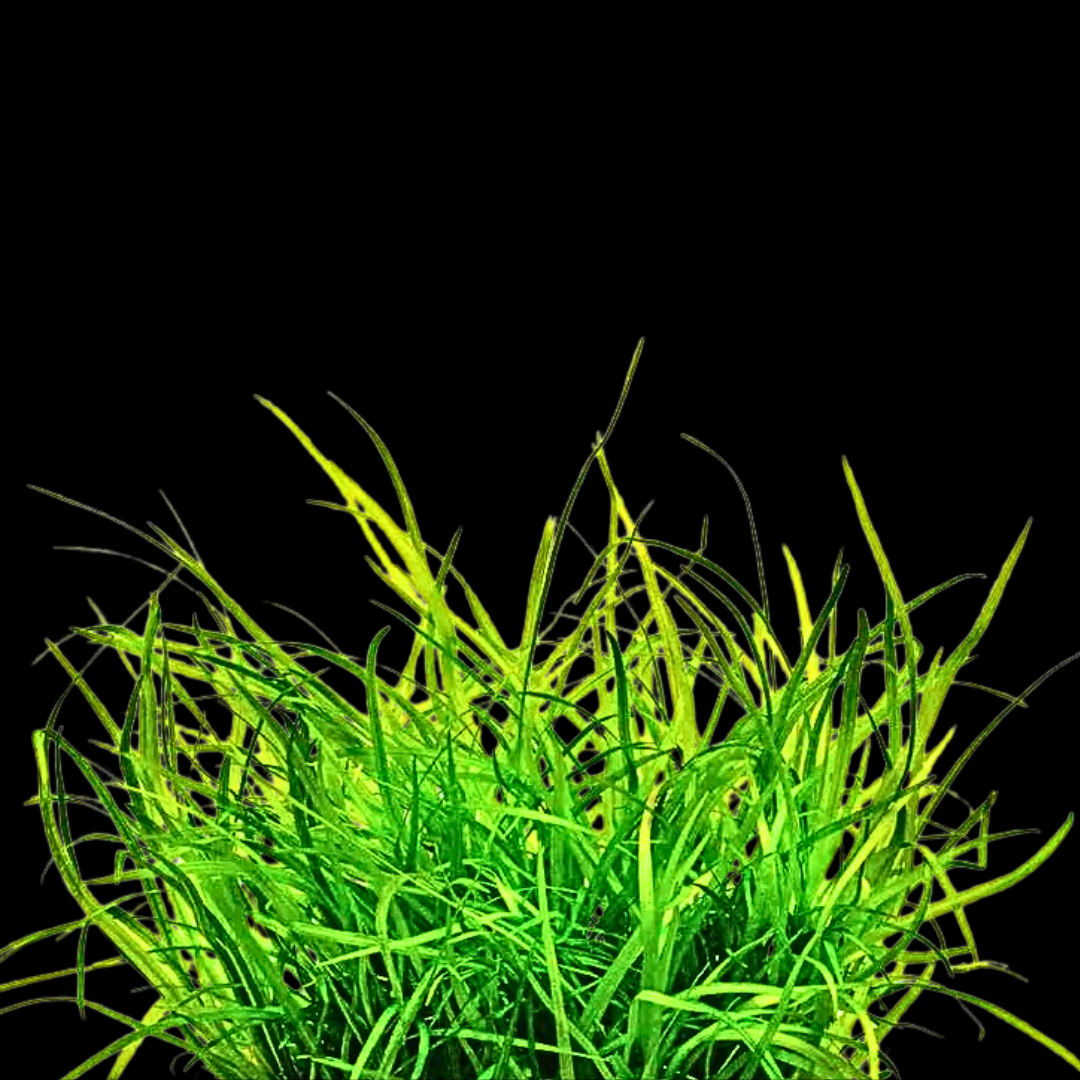
ヘランティウム・テネルム・グリーンは、中南米を中心に分布するオモダカ科の水生植物です。かつてはエキノドルス・テネルスという名称で広く知られていましたが、現在は分子系統学的な知見に基づき、独立したヘランティウム属として扱われるのが一般的です。本種は園芸流通名として「グリーン」と呼ばれ、強光下においても比較的緑色を維持しやすいという特徴を持っています。ランナーを伸ばして底床を這うように増殖するため、水槽の前景を彩る草原のようなレイアウトに適しています。古くから定番の前景草として知られており、その丈夫さから初心者から熟練者まで多くのファンを持つ水草です。Helanthium tenellum ‘Green’ is an aquatic plant from the Alismataceae family, primarily distributed across Central and South America. Formerly widely known as Echinodorus tenellus, it is now commonly classified under the independent genus Helanthium based on molecular phylogenetic findings. The name ‘Green’ is a horticultural common name, and it is characterized by its tendency to maintain a green color even under intense lighting. It propagates by sending out runners that creep along the substrate, making it ideal for creating meadow-like foreground layouts. Long known as a staple foreground plant, its hardiness has made it a favorite among both beginners and experienced aquarists.
中~高(目安:60cm規格水槽で20W型LED照明2灯以上)Moderate to High (Guideline: At least two 20W LED units for a standard 60cm tank)
CO2添加 / CO2 Injection
無くても育成可能だが、密生させるには添加が有効Possible to grow without, but injection is effective for dense growth
水質 / Water Quality
pH 5.0~7.5(目安)、軟水~中硬水pH 5.0–7.5 (Guideline), Soft to Medium-hard water
底床 / Substrate
ソイル、砂(栄養豊富な底床が推奨されます)Soil, Sand (Nutrient-rich substrate is recommended)
レイアウト / Layout
配置 / Positioning
前景~中景(石組みの周囲や流木の足元など)Foreground to Midground (Around stones or at the base of driftwood)
注意点 / Precautions
光量が不十分な場合は上に向かって伸びやすいため、低く維持したい場合は高めの照度で管理するのがコツです。If light is insufficient, it tends to grow tall. To keep it low, manage with higher intensity lighting.
増やし方(トリミング) / Propagation & Trimming
増やし方 / Propagation
ランナー(匍匐茎)を伸ばし、その先に新しい子株を作ることで増殖します。It propagates by extending runners and forming new plantlets at their tips.
トリミング / Trimming
領域を広げすぎたランナーをハサミでカットして間引くか、古くなった葉を根元から取り除きます。Thin out runners that have spread too far with scissors, or remove older leaves from the base.
病気と対策(コケなど) / Pests & Algae
かかりやすい病気 / Common Issues
葉の表面に付着する糸状のコケや、底床付近の藍藻など。Common issues include filamentous algae on leaf surfaces and cyanobacteria near the substrate.
対策と予防 / Prevention
お掃除役のエビなどを導入し、適切な水換えと通水性の確保を心がけることが予防に役立ちます。Introducing cleanup shrimp and maintaining proper water changes and circulation helps in prevention.
雑学と豆知識 / Trivia and Fun Facts
1. 分類学上の変遷:エキノドルスから独立した属へ / 1. Taxonomic Shift: Independence from Echinodorus
本種は長らくエキノドルス・テネルスとして親しまれてきましたが、近年の研究によりヘランティウム属へと整理されました。この分類変更には、花の形態的な特徴に加えて、分子系統学的な解析結果が大きく関わっています。アクアリウムの世界では旧名が使われることもまだ多いですが、学術的には新しい分類が定着しつつあります。Long known as Echinodorus tenellus, this species was reclassified into the genus Helanthium based on recent research. This shift was largely driven by molecular phylogenetic analysis alongside morphological traits of the flowers. While the old name is still frequently used in the aquarium hobby, the new classification is becoming academically established.
2. 「グリーン」という品種が持つ特性 / 2. Characteristics of the ‘Green’ Cultivar
通常、テネルムの原種は強光下や栄養豊富な環境で新芽が赤みを帯びることがありますが、流通名「グリーン」として扱われる個体は、強光下でも緑色を保ちやすい性質を持っています。完全に赤くならないと断定することは難しいですが、爽やかな緑の絨毯を維持したいレイアウトにおいては非常に重宝される品種特性といえます。While the wild type of tenellum may develop reddish new shoots under intense light or high nutrient levels, the cultivar traded as ‘Green’ is known for its tendency to maintain a green color even under such conditions. Although it’s hard to claim it will never turn red, this trait makes it highly valuable for aquascapes aiming for a fresh green carpet.
3. 日本のアクアシーンにおける普及の歴史 / 3. History of Popularity in the Japanese Aqua Scene
1990年代、日本のアクアリウム文化、特にネイチャーアクアリウムの隆盛とともに、本種は前景草の定番として広く普及しました。当時の育成環境においても比較的適応しやすく、ランナーで広がる性質が「自然な草原」を表現するのに最適だったためです。現在でも石組レイアウトの周囲を彩る水草として、その地位は揺るぎないものとなっています。In the 1990s, along with the rise of the Nature Aquarium movement in Japan, this species became widely popular as a staple foreground plant. It was relatively adaptable to the equipment of the time, and its habit of spreading via runners was perfect for creating a “natural meadow.” Even today, its status remains firm as a go-to plant for accenting the areas around stone arrangements.
4. 組織培養による安全な導入 / 4. Safe Introduction via Tissue Culture
近年、日本国内では無菌状態で生産された組織培養カップが広く流通しています。これを利用することで、スネールやプラナリアといった厄介な害虫の混入リスクを大きく減らすことが可能になりました。また、農薬の心配がないため、ミナミヌマエビのようなデリケートな生体を飼育している水槽でも安心して導入できる点が大きなメリットです。In recent years, tissue culture cups produced under sterile conditions have become widely available in Japan. Using these significantly reduces the risk of introducing pests like snails and planaria. Furthermore, since they are pesticide-free, they can be safely introduced into tanks housing delicate livestock like dwarf shrimp.
まとめ / Conclusion
ヘランティウム・テネルム・グリーンは、その育てやすさと清涼感のある姿から、前景草としての地位を確立した名脇役です。初心者の方でも、適切な光と栄養を与えることで、憧れの緑の絨毯を再現する楽しさを教えてくれるでしょう。Helanthium tenellum ‘Green’ is a quintessential foreground plant that has established its place through its ease of growth and refreshing appearance. Even for beginners, providing adequate light and nutrients will allow them to experience the joy of recreating a coveted green carpet.
中南米の大自然からやってきたこの水草は、現代の日本においても組織培養などの技術によって、より身近で安全なものとなりました。ぜひ、あなたの水槽にもこの時代を超えて愛される緑の草原を取り入れてみてください。Coming from the wild landscapes of Central and South America, this aquatic plant has become more accessible and safer to use in modern Japan thanks to technologies like tissue culture. We encourage you to incorporate this timeless green meadow into your own aquarium.
Lehtonen, S. & Myllys, L. (2007). Cladistic analysis of Alismataceae with special emphasis on Echinodorus and Helanthium. Cladistics, 23(1), 59-77. doi:10.1111/j.1096-0031.2006.00127.x
(オモダカ科の系統解析および、ヘランティウム属を独立属として扱う分類学的根拠)
Haynes, R. R. & Holm-Nielsen, L. B. (1994). The Alismataceae. Flora Neotropica, 64, 1-112.
(中南米におけるオモダカ科植物の広範な分布と形態的特徴を網羅した基礎文献)



 アイのアクアグッズ案内おとひめ物語|養殖生まれの餌を、わが家の魚に合う一粒へ道具の特徴や使い方、選ぶときのポイントをアイが紹介します。記事はコチラ →
 アイのアクアグッズ案内コリドラスのもふもふ時間を楽しむ|餌・底砂・お掃除用品の選び方コリドラスのもふもふする食事風景を楽しむために。沈む餌2種類の違い、口元に配慮した底砂、食べ残しを回収する道具を、アクアグッズナビゲーターのアイが紹介します。記事はコチラ →
 アイのアクアグッズ案内エーハイムはおもちゃから始まった? 小さな噴水から水槽へ、アイとコタロウの探訪道具の特徴や使い方、選ぶときのポイントをアイが紹介します。記事はコチラ →
 アイのアクアグッズ案内お魚を撮ったのに、ボクが写ってる! スマホで楽しむ水槽撮影と便利な道具道具の特徴や使い方、選ぶときのポイントをアイが紹介します。記事はコチラ →



コメント