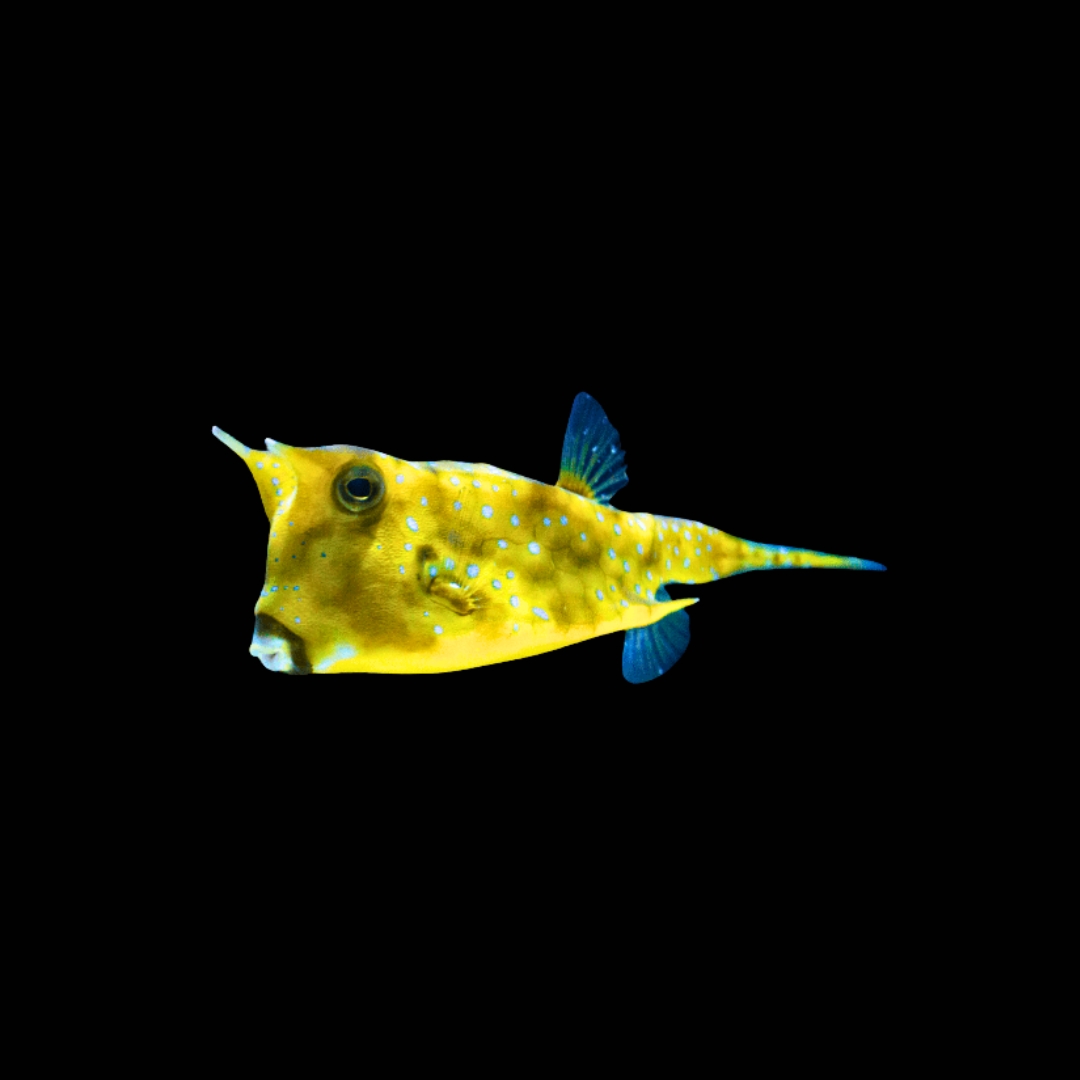
コンゴウフグは、牛の角のように前方へ伸びる棘と、箱のように硬い体をもつハコフグ科の海水魚です。愛嬌のある姿から観賞魚として人気がありますが、飼育はやさしい魚ではありません。泳ぎはゆっくりで、強い水流や急な水質変化、混泳魚からの攻撃に弱く、強いストレスを受けると皮膚粘液中に魚毒性のあるパフトキシンを出すことがあります。そのため、十分な水量、安定した水質、落ち着いた環境、そして緊急時の換水・活性炭対応を前提に迎えるべき中級者から上級者向けの海水魚です。The Longhorn Cowfish is a marine boxfish known for its horn-like spines and rigid, box-shaped body. Its charming appearance makes it popular in marine aquariums, but it is not an easy species to keep. It is a slow swimmer, sensitive to strong current and sudden water-quality changes, and may release the ichthyotoxic skin secretion known as pahutoxin when severely stressed. For this reason, it is best suited to experienced marine aquarists who can provide a large, stable, low-stress system and prepare for emergency water changes and activated carbon use.
フグ目 ハコフグ科 コンゴウフグ属Order Tetraodontiformes, family Ostraciidae, genus Lactoria
英名 / English Name
Longhorn cowfish
分布 / Distribution
主にインド太平洋の熱帯から亜熱帯海域。紅海・東アフリカ方面から東南アジア、オセアニア、南日本周辺まで広く知られています。日本沿岸では黒潮の影響で幼魚が季節的に見られることがあります。Mainly tropical to subtropical Indo-Pacific waters, from the Red Sea and East Africa through Southeast Asia and Oceania to southern Japan. Juveniles may appear seasonally around Japan under the influence of the Kuroshio Current.
最大体長 / Max Size
およそ45〜50cm前後。家庭水槽では幼魚や若魚で流通することが多いものの、成長後の大きさを前提に計画する必要があります。Around 45–50 cm. Although juveniles are commonly sold for aquariums, long-term planning should assume adult size.
寿命 / Lifespan
明確な標準寿命は飼育条件により差があります。良好な大型水槽で数年以上の長期飼育が目標になりますが、輸送ストレスや病気、水質事故で短命になる例も少なくありません。A precise standard lifespan varies with husbandry. In a well-managed large marine aquarium, multi-year care is a reasonable goal, but transport stress, disease, and water-quality accidents can shorten survival.
飼育環境 / Aquarium Environment
水槽サイズ / Tank Size
幼魚期でも水質を安定させやすい90cm規格水槽以上が望ましく、長期飼育では120cmワイド水槽以上、できれば150cm級以上の余裕ある海水水槽を推奨します。最終的には非常に大きくなるため、成魚までの飼育を考えるなら400L以上を目安に、ろ過容量にも余裕を持たせます。Even juveniles are best kept in a stable system of at least a standard 90 cm aquarium. For long-term care, a 120 cm wide tank or larger, ideally a 150 cm-class marine aquarium, is recommended. Because adults become large, 400 L or more with generous filtration capacity is a practical target.
水温 / Temperature
24〜26℃前後を安定維持します。急な温度変化はストレスになりやすいため、ヒーターとクーラーを併用し、日内変動を小さく抑えます。Maintain a stable temperature of about 24–26°C. Sudden changes are stressful, so use appropriate heating and cooling to minimize daily fluctuation.
水質 / Water Quality
比重は1.020〜1.025前後、pHは8.1〜8.4を目安にします。アンモニアと亜硝酸は0を維持し、硝酸塩も低めに管理します。強力な生物ろ過、プロテインスキマー、十分な酸素供給、定期的な換水が重要です。Aim for a specific gravity around 1.020–1.025 and pH 8.1–8.4. Ammonia and nitrite must remain at zero, and nitrate should be kept low. Strong biological filtration, a protein skimmer, good oxygenation, and regular water changes are important.
レイアウト / Layout
細かめのサンゴ砂やアラゴナイトサンドを敷き、砂を吹いて餌を探す自然な行動を引き出せる環境にします。ライブロックで隠れ場所を作りつつ、体をぶつけないよう広い遊泳スペースを確保します。強すぎる水流は苦手なので、全体に緩やかに循環する流れを意識します。Use fine coral sand or aragonite sand to allow natural sand-blowing foraging behavior. Provide live rock shelters while keeping open swimming space to prevent collisions. Avoid overly strong currents and aim for gentle overall circulation.
注意点 / Precautions
最大の注意点はストレス管理です。捕獲、急な水合わせ、攻撃的な混泳、酸欠、アンモニア上昇はパフトキシン放出の引き金になる可能性があります。常に新しい活性炭を用意し、万一水が白く泡立つ、魚が急に苦しむなどの異変があれば、大量換水と活性炭の追加をすぐ行える体制を整えておきます。The key precaution is stress control. Netting, abrupt acclimation, aggressive tank mates, low oxygen, and ammonia spikes may trigger toxin release. Keep fresh activated carbon available at all times, and be prepared for large water changes and additional carbon if the water suddenly foams, turns cloudy, or fish show acute distress.
餌と給餌 / Feeding
餌の種類 / Diet
雑食性で、冷凍アサリ、エビ、イサザアミ、オキアミ、沈下性の海水魚用ペレットなどを組み合わせます。自然下では底生藻類や小型の底生生物を食べるため、肉質餌に偏りすぎず、栄養バランスを意識します。歯の摩耗のため、殻付きのアサリや小型巻貝など硬さのある餌を適度に取り入れるとよいでしょう。This omnivorous species can be offered frozen clam, shrimp, mysids, krill, and sinking marine pellets. In nature it feeds on benthic algae and small bottom-dwelling organisms, so avoid an overly meaty diet and aim for variety. Occasional hard foods such as shell-on clam or small snails can help wear the teeth naturally.
給餌のポイント / Feeding Tips
水面の浮上性フードを追わせる給餌は避け、沈む餌を水中で与えます。空気を飲み込むと浮力異常につながることがあるためです。動きの速い魚と同居していると餌を取られやすいため、単独飼育または給餌を確実に管理できる環境が安全です。1回量は少なめにし、食べ残しを出さない範囲で1日2〜3回を目安にします。Avoid making the fish chase floating foods at the surface; offer sinking foods underwater instead. Swallowing air may lead to buoyancy problems. Fast tank mates can outcompete this slow swimmer, so species-only care or very controlled feeding is safer. Feed small portions, roughly two to three times daily, without leaving leftovers.
性格と混泳 / Temperament and Tank Mates
性格 / Temperament
性格は比較的おとなしく、人に慣れると前面に出てくることもあります。一方で泳ぎは遅く、驚いたときの回避能力も高くありません。角や甲羅は防御に役立ちますが、閉鎖水槽では怪我やストレスを避ける配慮がより重要です。It is generally calm and may become personable in captivity. However, it swims slowly and is not good at escaping sudden threats. Its horns and carapace are defensive structures, but in an aquarium, preventing injury and stress is more important.
混泳の相性 / Compatibility
基本は単独飼育を強く推奨します。攻撃的な魚、餌を素早く奪う魚、ヒレや角をつつく魚との混泳は不向きです。エビ、カニ、貝などの小型無脊椎動物は餌になる可能性があり、サンゴ水槽にも向きません。混泳させる場合でも、十分な水量、温和な相手、確実な給餌、非常時の隔離手段が必要です。Species-only care is strongly recommended. Avoid aggressive fish, fast feeders, and species that nip fins or horns. Small invertebrates such as shrimp, crabs, and snails may be eaten, and reef aquariums are generally unsuitable. If any tank mates are attempted, the system must be large, calm, carefully fed, and equipped for emergency separation.
病気と対策 / Diseases and Prevention
かかりやすい病気 / Common Diseases
輸入直後や環境変化の後は、白点病、外部寄生虫、細菌性の肌荒れ、食欲不振が問題になります。体表が特殊で薬剤に敏感な面があるため、一般的な海水魚よりも治療の判断には慎重さが必要です。After import or environmental changes, marine ich, external parasites, bacterial skin problems, and loss of appetite may occur. Because boxfish have distinctive skin and may be sensitive to medications, treatment decisions require more caution than with many common marine fish.
対策と予防 / Prevention
購入時は痩せ、白点、呼吸の荒さ、角や口先の傷をよく確認します。導入時は隔離水槽で観察し、急な薬浴は避けます。銅製剤を含む薬剤治療は有効な場面がある一方、ハコフグ科では薬害やストレスの危険もあるため、専用の検査薬で濃度を確認し、できれば経験者や専門店の助言を得て行います。日常予防としては、水質の安定、過密回避、UV殺菌灯、良質な餌、活性炭の常備が有効です。When buying, check for thinness, white spots, rapid breathing, and injuries to the horns or snout. Observe new arrivals in a quarantine tank and avoid abrupt medication. Copper-based treatments can be useful in some cases, but with boxfish they also carry risks of medication stress and overdose; use accurate test kits and seek experienced guidance where possible. Stable water quality, low stocking density, UV sterilization, varied food, and fresh activated carbon are useful preventive measures.
増やし方(繁殖) / Breeding
雌雄の判別 / Sexing
明瞭な雌雄差は知られておらず、外見だけで確実に判別するのは困難です。資料では雌のほうが大型になりやすい傾向が示されていますが、家庭水槽での性判別に使えるほど確実な特徴ではありません。Clear sexual dimorphism is not known, so reliable visual sexing is difficult. Females may tend to become larger, but this is not a dependable method for sexing individuals in home aquariums.
繁殖形態 / Reproduction
自然下では雄が複数の雌を含むなわばりを持ち、日没前後などに産卵するとされます。卵や仔魚は浮遊性で、海流に乗って分散します。In nature, a male may maintain a territory with several females, and spawning is reported around dusk or under low-light conditions. Eggs and larvae are pelagic and disperse with currents.
繁殖のポイント / Breeding Tips
家庭水槽での繁殖は現実的には非常に難しい部類です。大型水槽、安定した複数個体管理、産卵行動の再現、微小な浮遊仔魚への初期餌料、長期間の育成技術が必要になります。一般的な飼育では繁殖を狙うより、健康な長期飼育を第一目標にするのが現実的です。Breeding in home aquariums is extremely difficult. It would require a large stable system, management of multiple individuals, induction of spawning behavior, appropriate first foods for tiny pelagic larvae, and advanced larval rearing. For most aquarists, long-term healthy maintenance is the realistic goal.
雑学と豆知識 / Trivia and Fun Facts
1. 名前に込められた「牛」と「角」 / 1. The cow and the horns in its name
属名のLactoriaは「乳牛」を連想させる語とされ、種小名のcornutaは「角のある」という意味を持ちます。英名のLonghorn cowfishも、まさに長い角を持つ牛のような魚という外見から来ています。和名のコンゴウフグは、硬い甲羅や角の印象から、硬さや力強さを感じさせる名前として親しまれています。The genus name Lactoria is associated with a milk-cow image, and the species name cornuta means horned. The English name Longhorn cowfish comes directly from its cow-like horns. The Japanese name Kongou-fugu evokes hardness and strength, fitting its armored appearance.
2. 箱型の体は「速さ」より「守り」と「小回り」 / 2. A body built for defense and control, not speed
コンゴウフグの体は流線型とは言いにくく、速く泳ぐための形ではありません。その代わり、硬い甲羅と角で捕食されにくくし、胸ビレや背ビレ、臀ビレを細かく動かして、障害物の多いサンゴ礁周辺でゆっくり向きを変えながら行動します。水槽内で強水流に弱いのも、この独特な泳ぎ方と関係しています。The Longhorn Cowfish is not built like a fast, streamlined swimmer. Instead, its rigid carapace and horns make it harder to swallow, while delicate fin movements help it maneuver slowly around complex reef habitats. This swimming style also explains why overly strong aquarium current is stressful.
3. パフトキシンは「最後の防御手段」 / 3. Pahutoxin as a last line of defense
ハコフグ科の仲間は、強いストレスを受けると皮膚粘液中に魚毒性のある物質を出すことがあります。コンゴウフグではパフトキシンがよく知られ、野外では水で薄まりますが、閉鎖された水槽内では他の魚を短時間で弱らせる危険があります。飼育で大切なのは「毒を出したら対処する」だけでなく、「毒を出させない環境を作る」ことです。Boxfishes can release ichthyotoxic compounds in their skin mucus when severely stressed. In the Longhorn Cowfish, pahutoxin is the best-known example. In the ocean it disperses, but in a closed aquarium it can quickly endanger tank mates. Good husbandry is not only about emergency response; it is about preventing the stress that causes release in the first place.
4. 音を出す魚としての一面 / 4. A fish that can make sounds
コンゴウフグは、浮き袋に関係する筋肉を使ってクリック音やハム音のような音を出すことが知られています。つかまれたときに小さく鳴くように感じられることがありますが、これは単なる珍現象ではなく、同種間の認識や繁殖行動に関わる可能性のある、生態的に意味のある能力です。The Longhorn Cowfish is known to produce sounds such as clicks and hums using muscles associated with the swim bladder. The grunting sound sometimes noticed when it is handled is not merely a curiosity; acoustic signals may play a role in recognition and reproductive behavior.
5. 飼育記事としての安全な読み方 / 5. How to read care information safely
コンゴウフグは、見た目のかわいらしさと飼育難易度の差が大きい魚です。小さな幼魚を見て「小型水槽で飼える」と考えるのではなく、成長後の大きさ、餌の量、排泄量、毒素放出リスクまで含めて判断する必要があります。初心者が最初の海水魚として選ぶより、安定した大型海水水槽の経験を積んでから迎える魚と考えると安全です。This species has a large gap between its cute appearance and its husbandry difficulty. A small juvenile should not be mistaken for a small-tank fish. Adult size, food intake, waste production, and toxin-release risk must all be considered. It is safer to regard it as a species for aquarists who already have experience with stable large marine aquariums.
まとめ / Conclusion
コンゴウフグは、角を持つユニークな姿、硬い甲羅、ゆったりした泳ぎ、そしてパフトキシンという特異な防御手段を備えた、非常に個性的な海水魚です。その魅力は大きい一方で、一般的な小型海水魚と同じ感覚で飼える種類ではありません。The Longhorn Cowfish is a highly distinctive marine fish, with horn-like spines, a rigid carapace, slow hovering movement, and the unusual defensive secretion known as pahutoxin. Its appeal is considerable, but it should not be kept like an ordinary small marine fish.
長期飼育を目指すなら、大型で安定した水槽、弱めから中程度の水流、沈下性中心の給餌、混泳を避けた落ち着いた環境、そして万一に備えた活性炭と換水体制が欠かせません。かわいらしさだけでなく、リスクと必要設備を理解したうえで迎えることが、コンゴウフグにも飼育者にもやさしい選択です。For long-term care, it needs a large stable aquarium, gentle to moderate flow, mainly sinking foods, a calm environment with minimal tank-mate stress, and emergency readiness with activated carbon and water-change capacity. Understanding both its charm and its risks is the kindest choice for both the fish and the aquarist.
Lieske, E. & Myers, R. (1994). Collins Pocket Guide: Coral Reef Fishes, Indo-Pacific & Caribbean. HarperCollins. 用途:インド太平洋のサンゴ礁魚類としての分布・環境情報の補助確認。
繁殖・成長・形態
Moyer, J. T. (1979). Mating strategies and reproductive behavior of ostraciid fishes at Miyake-jima, Japan. Japanese Journal of Ichthyology, 26(2). 用途:ハコフグ科魚類の求愛、産卵行動、繁殖生態に関する記事記述の裏付け。
Leis, J. M. & Moyer, J. T. (1985). Development of eggs, larvae and pelagic juveniles of three Indo-Pacific ostraciid fishes. Japanese Journal of Ichthyology, 32(2), 189–202. https://doi.org/10.1007/BF02938448 用途:卵、仔魚、浮遊期、甲羅形成などの発生過程に関する補助資料。
Yang, W., Nguyen, V., Porter, M. M., Meyers, M. A. & McKittrick, J. (2014). Structural characterization and compressive behavior of the boxfish horn. Advances in Bioceramics and Biotechnologies II: Ceramic Transactions, 105–112. 用途:角状突起の構造、硬い外骨格、形態的特徴に関する記述の補助。
毒性・混泳上の注意点
Boylan, D. B. & Scheuer, P. J. (1967). Pahutoxin: a fish poison. Science, 155(3760), 52–56. https://doi.org/10.1126/science.155.3760.52 用途:パフトキシンの化学的性質、魚毒性、ハコフグ類の防御物質に関する基礎資料。
Thomson, D. A. (1969). Toxic stress secretions of the boxfish Ostracion meleagris. Copeia, 1969(2), 335–352. 用途:ストレス時の毒性粘液分泌、閉鎖水槽での混泳リスクを説明するための補助資料。
Kalmanzon, E., et al. (2003). Cooperative cocktail in a chemical defence mechanism of a trunkfish. Cellular & Molecular Biology Letters, 8(3), 617–626. 用途:ハコフグ類の化学防御機構を補足するための参考資料。
飼育条件・疾病・薬剤使用の注意
Michael, S. W. (2001). Marine Fishes: 500+ Essential-To-Know Aquarium Species. TFH Publications. 用途:海水魚飼育における水槽サイズ、給餌、混泳可否、飼育難易度の補助確認。商業販売ページではなく、専門書として参照。
Noga, E. J. (2010). Fish Disease: Diagnosis and Treatment, 2nd edition. Wiley-Blackwell. 用途:魚病の診断、治療、銅系薬剤を含む薬剤使用時の注意点の確認。
Colorni, A. & Burgess, P. (1997). Cryptocaryon irritans Brown 1951, the cause of “white spot disease” in marine fish: an update. Aquarium Sciences and Conservation, 1, 217–238. https://doi.org/10.1023/A:1018360323287 用途:海水性白点病の生活環、発生条件、治療・予防を考えるための基礎資料。



 ポチップ
ポチップ




コメント