

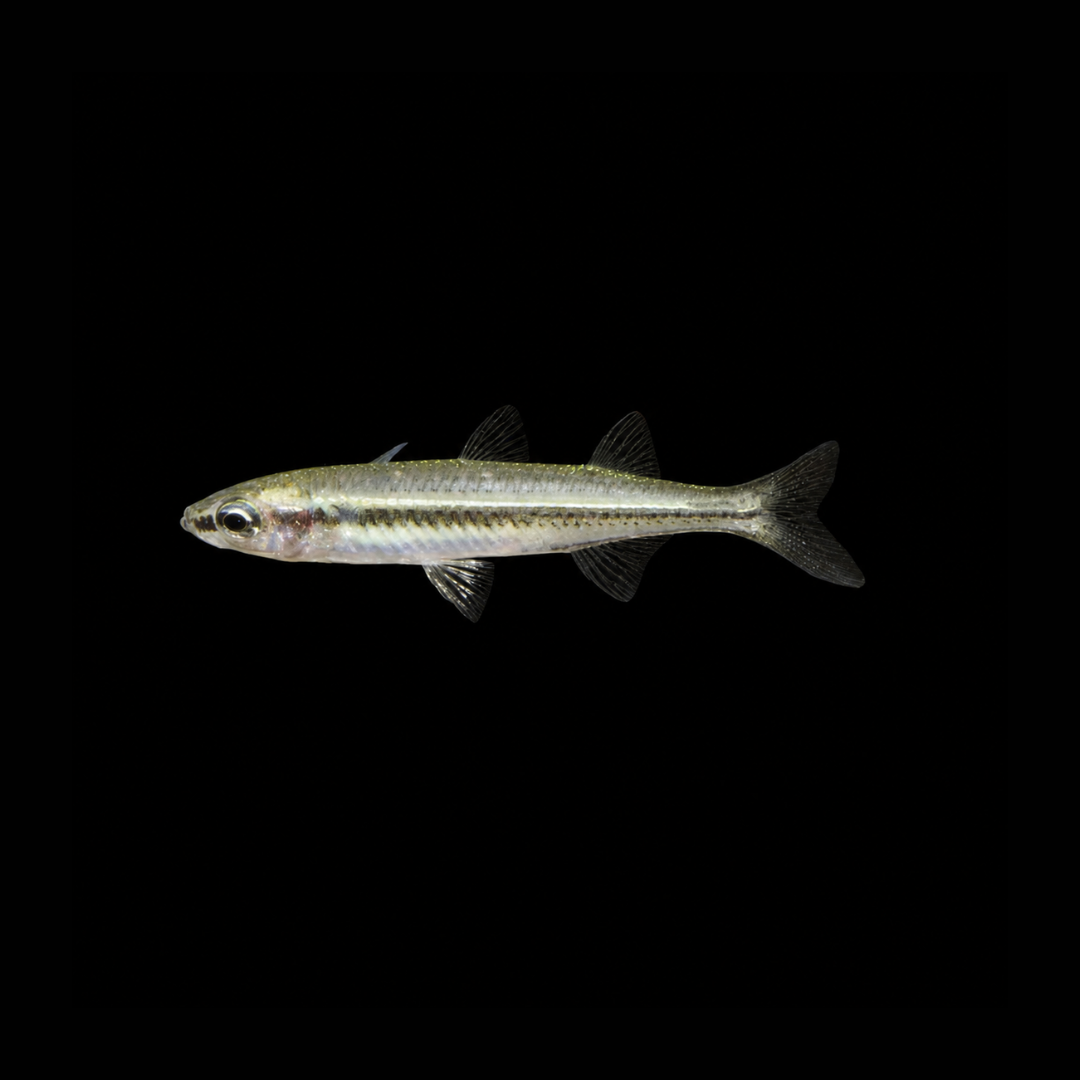
解説 / Description
クブナハーディヘッドは、ニューギニア島中南部の淡水域に分布する、細身のハーディヘッドです。体側には吻端から尾柄部まで続く暗色の縦帯があり、その周囲に黒い斑点と銀色から青みを帯びた光沢が現れます。個体によっては腹部が深い金色を帯び、明るい照明の下では繊細な色彩が際立ちます。日本では流通例が確認されているものの、定番種のように常時入手できる魚ではありません。本種に限った飼育・繁殖資料は少ないため、公開されている生息環境と近縁種の知見を参考にしながら、購入時の管理条件を起点として慎重に飼育する必要があります。 The Kubuna hardyhead is a slender freshwater hardyhead from central-southern New Guinea. A dark midlateral band extends from the snout to the caudal peduncle, accompanied by black spotting and a silvery to bluish sheen. Mature fish may also develop a deep golden abdomen, giving the species a subtle appearance under bright aquarium lighting. It has appeared in the Japanese aquarium trade, but it is not consistently available. Because reliable species-specific husbandry and breeding records remain limited, care should begin with the conditions used by the seller and proceed cautiously, drawing only conservative guidance from its documented habitat and related hardyheads.
基本情報 / Basic Information
| 学名 / Scientific Name | Craterocephalus randi Nichols & Raven, 1934 |
|---|---|
| 通称 / Common Name | クブナハーディヘッド。国内流通では「クプナハーディヘッド」や「クブナハードヘッド」と表記される場合もあります。英名と模式産地の綴りはKubunaです。Kubuna hardyhead. Japanese trade spellings vary, but the English common name and the type locality are spelled Kubuna. |
| 分類 / Family | トウゴロウイワシ目・クラテロケファルス科・クラテロケファルス属。分類体系によっては、トウゴロウイワシ科クラテロケファルス亜科として扱われます。Order Atheriniformes, family Craterocephalidae, genus Craterocephalus. Some databases retain the group as subfamily Craterocephalinae within Atherinidae. |
| 英名 / English Name | Kubuna Hardyhead |
| 分布 / Distribution | ニューギニア島中南部。パプアニューギニアのクブナ川、フライ川・ストリックランド川水系、モアヘッド川、ベンスバック川、バリモ・ラグーン、レイク・マレー周辺から、インドネシア領ニューギニアのヤムール湖周辺まで記録されています。Central-southern New Guinea, including the Kubuna River, Fly-Strickland system, Morehead and Bensbach rivers, Balimo Lagoon and Lake Murray area in Papua New Guinea, extending westward toward Lake Yamur in Indonesian New Guinea. |
| 最大体長 / Max Size | 標準体長で8.1cm。尾びれを含む全長の確かな最大値は、参照した主要データベースでは示されていません。8.1 cm standard length. A reliable maximum total length was not stated in the principal databases consulted. |
| 寿命 / Lifespan | 本種に限定した信頼できる飼育下寿命の資料は確認できません。近縁種の寿命をそのまま本種へ当てはめることは避けるべきです。No reliable captive lifespan specific to this species was confirmed. Lifespan figures for related hardyheads should not be applied automatically. |
飼育環境 / Aquarium Environment
| 水槽サイズ / Tank Size | 本種固有の公的な飼育基準はありません。標準体長8cmほどに達する細身の遊泳魚であることを踏まえると、少数群でも60cm規格水槽以上、安定した群れや混泳には90cm規格水槽以上を用意するのが現実的です。これは生物学的な最低値ではなく、遊泳空間を確保するための飼育上の目安です。No formal species-specific tank standard is available. Considering its maximum standard length of about 8 cm and active, slender form, a standard 60 cm aquarium is a practical minimum for a small group, while a standard 90 cm tank or larger is preferable for a settled group or community. These are husbandry guidelines rather than verified biological thresholds. |
|---|---|
| 水温 / Temperature | 本種固有の推奨水温は確立されていません。熱帯域の淡水魚として24〜26℃前後を暫定的な導入範囲とし、販売店や輸入元の管理水温から急変させない方法が安全です。長期間の高水温では酸素不足が起こりやすいため、十分な通気と水面の撹拌を行います。 A species-specific temperature range has not been established. As a provisional starting point for a tropical freshwater fish, about 24–26°C may be used, but the fish should be transferred gradually from the seller’s holding temperature. Strong aeration and surface movement are important because prolonged high temperatures reduce available oxygen. |
| 水質 / Water Quality | pHや硬度の確かな許容範囲は確認できません。立ち上がった淡水水槽を用い、購入時の水質に近い条件から始めて、急な変化を避けます。アンモニアと亜硝酸は検出されない状態を保ち、硝酸塩と有機物の蓄積を定期的な部分換水で抑えてください。淡水生息種であるため、海産系統を理由に塩分を加える必要はありません。Reliable pH and hardness tolerances have not been confirmed. Begin in a mature freshwater aquarium with chemistry close to the seller’s water, and avoid abrupt changes. Ammonia and nitrite should remain undetectable, while nitrate and organic waste should be controlled through regular partial water changes. The species is freshwater, so salt should not be added merely because hardyheads belong to a lineage that also includes marine and brackish fishes. |
| レイアウト / Layout | 野外では透明度のある河川や小支流の、泥・砂・岩が混じる底質から記録されています。水槽では中央に長い遊泳空間を残し、側面と背面に水草や流木を配置すると、開放感と落ち着ける場所を両立できます。底床は細かな砂に限定されず、角の鋭くない砂利や石を組み合わせても構いません。飛び出しに備えて、ふたの隙間はふさいでください。In the wild it has been recorded from clear rivers and small tributaries over mud, sand and rock. In aquaria, leave a long open swimming zone through the center and place plants or wood along the sides and rear. Fine sand is not mandatory; smooth gravel and rounded stones may also be used. Cover gaps around the lid because active surface-oriented fishes may jump. |
| 注意点 / Precautions | 入荷直後は輸送による消耗と水質差の影響を受けやすいため、照明を抑え、時間をかけて水合わせを行います。単独飼育より複数飼育が適すると考えられ、実務上は6匹前後以上をひとつの目安にできますが、本種で検証された絶対的な最低数ではありません。購入できる匹数が少ない場合は、過密を避けつつ、落ち着き方と摂餌状態を注意深く観察します。Newly imported fish may be weakened by transport and differences in water chemistry, so keep lighting subdued and acclimate them gradually. Group housing is more appropriate than solitary care; around six or more can serve as a practical target, but this is not a species-tested absolute minimum. When only a few specimens are available, avoid crowding and monitor confidence, swimming behavior and feeding closely. |
餌と給餌 / Feeding
| 餌の種類 / Diet | 本種の野外食性を詳しく示す資料は限られています。飼育下では、口に入る大きさの小粒ペレットや細かくしたフレークを基本に、冷凍ミジンコ、ブラインシュリンプ、細かな冷凍アカムシなどを補助的に与えます。入荷個体が人工飼料を認識しない場合は、動きのある小型餌から段階的に切り替えます。Detailed information on the wild diet of this species is limited. In captivity, offer suitably small pellets or crushed flakes as staples, supplemented with frozen daphnia, brine shrimp and finely sized frozen bloodworms. If newly imported fish do not recognize prepared food, begin with small moving foods and convert them gradually. |
|---|---|
| 給餌のポイント / Feeding Tips | 1日1〜2回、短時間で食べ切れる量を広い範囲へ少しずつ与えます。細身の魚は摂餌量が分かりにくいため、腹部の張りと群れ全体への行き渡り方を確認してください。食べ残しを増やさず、複数種類の餌を少量ずつ組み合わせるほうが、水質と栄養の両面で管理しやすくなります。Feed once or twice daily in small portions that are consumed quickly, distributing food across a broad area. Because intake can be difficult to judge in slender fishes, watch abdominal condition and make sure all individuals receive food. Small portions of varied foods are easier to manage nutritionally and create less waste than heavy feeding. |
性格と混泳 / Temperament and Tank Mates
| 性格 / Temperament | 本種を対象とした詳細な行動研究は多くありません。国内外の流通情報では温和な群泳魚として扱われており、近縁のハーディヘッド類も群れを形成します。落ち着いた個体は中層をよく泳ぎますが、入荷直後や少数飼育では物陰に寄ることがあります。Detailed behavioral studies on this species are scarce. Aquarium trade accounts generally treat it as a peaceful shoaling fish, and related hardyheads form schools. Settled fish tend to use open midwater, while newly imported or undersized groups may remain close to cover. |
|---|---|
| 混泳の相性 / Compatibility | 同程度の大きさで温和な魚を選び、餌を独占する魚や、ひれをかじる魚、大型の肉食魚は避けます。小型レインボーフィッシュ、ブルーアイ類、穏やかなハゼ類などが候補になりますが、導入時は水温と水質の適合を優先してください。純粋な系統で繁殖を試みる場合は、近縁のハーディヘッド類との同居を避けるほうが安全です。Choose peaceful fishes of similar size and avoid aggressive feeders, fin-nippers and large predators. Small rainbowfishes, blue-eyes and gentle gobies may be suitable, provided their temperature and water requirements match. When attempting to maintain a pure breeding line, it is safer not to house the species with closely related hardyheads. |
病気と対策 / Diseases and Prevention
| かかりやすい病気 / Common Diseases | 本種に特有と確認された病気の情報はありません。輸送ストレスや水質悪化が重なると、白点病、細菌性のひれの損傷、体表のただれ、カビ症状など、一般的な淡水観賞魚の疾病が現れる可能性があります。急な水温・pH変化による衰弱にも注意が必要です。No disease has been confirmed as specific to this species. Transport stress and declining water quality may lead to common freshwater aquarium problems such as white spot disease, bacterial fin damage, skin lesions or fungal growth. Weakness after sudden changes in temperature or pH is also a concern. |
|---|---|
| 対策と予防 / Prevention | 可能であれば新着魚を別水槽で観察し、摂餌、呼吸、体表、排せつ物を確認してから本水槽へ移します。異常が見られた場合は、薬剤を使う前に水温、アンモニア、亜硝酸、硝酸塩、pHを確認してください。治療では症状に合った薬剤を選び、製品の用量を守ります。本種の薬剤耐性に関する資料が乏しいため、過量投与は避け、反応を慎重に観察します。When possible, observe new arrivals in a separate tank and check feeding, respiration, skin condition and waste before moving them to the main aquarium. At the first sign of trouble, test temperature, ammonia, nitrite, nitrate and pH before medicating. Select treatment according to the symptoms and follow the product dosage. Because drug tolerance is poorly documented for this species, avoid overdosing and monitor reactions carefully. |
増やし方(繁殖) / Breeding
| 雌雄の判別 / Sexing | 本種で確立された外見上の雌雄判別法は確認できません。成熟した雌では腹部の丸みが手がかりになる可能性がありますが、体色や腹部形状だけで断定するのは困難です。近縁種に見られる性差を、そのまま本種へ当てはめないよう注意してください。No reliable external sexing method was confirmed for this species. A fuller abdomen in mature females may offer a clue, but color and body shape alone are not sufficient for certainty. Sexual differences reported in related species should not be assumed to apply unchanged. |
|---|---|
| 繁殖形態 / Reproduction | 本種固有の産卵様式を詳しく記載した公開資料は限られています。近縁のハーディヘッド類では、水草や細い繊維状の基質に粘着性の卵を付着させ、親魚は育児を行いません。本種でも同様の繁殖形態が想定されますが、現段階では近縁種からの推定として扱う必要があります。Published descriptions of reproduction in this species are limited. Related hardyheads attach adhesive eggs to plants or fine fibrous substrates and provide no parental care. A similar pattern is plausible for the Kubuna hardyhead, but it should be treated as an inference from related species rather than a confirmed species-specific account. |
| 繁殖のポイント / Breeding Tips | 繁殖を試す場合は、十分に餌を与えた複数の成魚を、スポンジフィルターと産卵用モップまたは細葉の水草を入れた別水槽で管理します。卵が確認できたら、親魚または産卵床を分け、食卵の可能性を減らします。孵化日数、適正な繁殖水温、初期餌料の開始時期は本種で確立されていないため、卵の発生と稚魚の遊泳開始を毎日観察し、インフゾリア級の微小餌から慎重に始めてください。For an experimental breeding attempt, condition several adults well and place them in a separate aquarium with a sponge filter and spawning mops or fine-leaved plants. If eggs are found, separate either the adults or the spawning medium to reduce possible egg predation. Incubation time, optimal breeding temperature and first-feeding timing are not established for this species, so observe egg development and the onset of free swimming daily, beginning cautiously with infusoria-sized foods. |
雑学と豆知識 / Trivia and Fun Facts
| 1. 現在は独立種として扱われる / 1. Currently Treated as a Valid Species | クブナハーディヘッドは、オーストラリアのフライスペックルド・ハーディヘッドに近く、文献によってはその亜種として扱われた経緯があります。しかし、2026年7月版のEschmeyer’s Catalog of Fishesでは、Craterocephalus randiを有効な独立種として掲載しています。分類階級については資料間に差があり、同カタログはクラテロケファルス科、FishBaseはトウゴロウイワシ科クラテロケファルス亜科を採用しています。The Kubuna hardyhead is closely related to the Australian flyspecked hardyhead and has sometimes been treated as a subspecies. However, the July 2026 edition of Eschmeyer’s Catalog of Fishes lists Craterocephalus randi as a valid species. Higher classification differs among sources: the Catalog uses Craterocephalidae, while FishBase retains Craterocephalinae within Atherinidae. |
|---|---|
| 2. 模式標本はクブナ川から / 2. The Type Specimen Came from the Kubuna River | 本種は1934年にジョン・T・ニコルズとヘンリー・C・レイヴンによって記載されました。模式産地はパプアニューギニアのクブナ川で、ホロタイプはアメリカ自然史博物館のAMNH 12477です。標本は1933〜1934年の第1次アーチボルド・ニューギニア探検に関係する収集品で、種小名randiは探検に参加した動物学者オースティン・ルーマー・ランドに献名されています。John T. Nichols and Henry C. Raven described the species in 1934. The type locality is the Kubuna River in Papua New Guinea, and the holotype is AMNH 12477 at the American Museum of Natural History. The specimen was associated with the 1933–1934 First Archbold Expedition to New Guinea, and the name randi honors zoologist Austin Loomer Rand. |
| 3. 体色は「緑の線」より複雑 / 3. Its Color Pattern Is More Complex Than a Green Stripe | 1991年の再記載では、生体の特徴として、深い金色を帯びる腹部、体側の黒い斑点、銀色の光沢、銀青色のえらぶた、吻端から尾柄部まで途切れずに続く体側帯が記録されています。照明や背景によって緑がかった光沢に見える場合はありますが、「メタリックグリーンの線」を本種の固定的な診断形質として断定するのは適切ではありません。A 1991 redescription recorded a deep golden abdomen, black lateral spots, a silvery sheen, silvery-blue opercles and an unbroken midlateral band from the snout to the caudal peduncle. Aquarium lighting may create a greenish impression, but a fixed “metallic green stripe” should not be presented as a formal diagnostic character. |
| 4. 清澄な川と支流に暮らす / 4. A Fish of Clear Rivers and Tributaries | FishBaseでは、泥・砂・岩の底質をもつ透明度の高い河川や小支流が生息環境として挙げられています。1991年の分類学的再検討では、フライ川、ベンスバック川、クブナ川、ストリックランド川、レイク・マレーから記録され、パプアニューギニア南部河川の下流域では比較的普通に見られる可能性が示されました。水槽では、強い急流を再現するよりも、清浄な水と十分な遊泳空間を優先するほうが資料に忠実です。FishBase records the species from clear rivers and small tributaries over mud, sand and rock. A 1991 taxonomic review documented it from the Fly, Bensbach, Kubuna and Strickland rivers and Lake Murray, suggesting it may be fairly common in the lower reaches of southern Papua New Guinea rivers. In aquaria, clean water and open swimming room are better supported by the evidence than an attempt to create an extreme current. |
| 5. IUCN評価は低懸念 / 5. Assessed as Least Concern | FishBaseが参照するIUCN評価では、本種は2019年12月3日付で低懸念に分類されています。ただし、低懸念は「脅威が存在しない」という意味ではありません。広い分布域をもつ種全体の絶滅リスクを示す評価であり、個々の河川での生息数や環境変化を保証するものではないため、地域ごとの継続調査が重要です。The IUCN assessment cited by FishBase classifies the species as Least Concern, assessed on 3 December 2019. Least Concern does not mean that no threats exist. It reflects extinction risk across the species’ range and does not guarantee stable numbers or habitat conditions in every river, so local monitoring remains important. |
| 6. 環境DNAの31%は個体数の31%ではない / 6. Thirty-One Percent of eDNA Reads Is Not Thirty-One Percent of the Fish | クンベ川の環境DNA研究では23種が検出され、全シーケンスリードのうちCraterocephalus randiが31.19%を占めました。これは同調査でDNA断片が多く検出されたことを示しますが、魚の個体数や生息密度をそのまま31.19%と換算することはできません。放出されるDNA量、分解速度、水流、参照データベースの精度などが結果に影響するため、在来魚群集の把握に役立つ重要な指標として、慎重に解釈する必要があります。An environmental DNA study of the Kumbe River detected 23 species, with Craterocephalus randi accounting for 31.19% of sequence reads. This shows that its DNA fragments were prominent in the samples, but it does not mean that 31.19% of individual fishes belonged to this species. DNA shedding, degradation, water flow and reference-database accuracy all affect read proportions, so the result is useful but must be interpreted cautiously. |
| 7. 国内流通は「皆無」ではなく不定期 / 7. Japanese Availability Is Irregular, Not Absent | 国内の小売店や業者向けサイトには、クブナハーディヘッドの入荷・取扱記録が確認できます。そのため、「日本では流通していない」とする表現は正確ではありません。一方で、一般的な定番魚のような安定供給を示す資料もなく、時期や店舗によって入手性が大きく変わる魚と捉えるのが適切です。流通名には「クブナ」と「クプナ」が混在していますが、英名と模式産地に沿う表記はクブナです。Japanese retailers and trade suppliers have published arrival or stock records for the Kubuna hardyhead, so it would be inaccurate to say that the species is absent from the Japanese market. At the same time, there is no evidence of stable year-round supply comparable with common aquarium species. Availability is best described as irregular and dependent on timing and retailer. Both “Kubuna” and “Kupuna” appear in Japanese trade usage, while Kubuna matches the English name and type locality. |
まとめ / Conclusion
クブナハーディヘッドは、ニューギニア島中南部の淡水域に分布し、細長い体形、途切れない体側帯、黒い斑点、銀青色の光沢を備えた小型魚です。分類上は独立種として扱われていますが、近縁種との混同の歴史があり、分類体系によって科の扱いも異なるため、学名を確認したうえで取り扱うことが重要です。 The Kubuna hardyhead is a small freshwater fish from central-southern New Guinea, distinguished by its slender form, continuous midlateral band, black spotting and silvery-blue sheen. It is currently treated as a valid species, although it has a history of confusion with close relatives and its family placement differs among classification systems, making verification of the scientific name important.
観賞魚としては、群れで泳ぐ姿と控えめな光沢に独自の魅力があります。一方、本種固有の飼育水質、寿命、雌雄判別、繁殖条件には未解明な点が多く、一般化された数値を確定情報として扱うことはできません。十分な遊泳空間を備えた安定した淡水水槽で、購入時の管理条件から急変させず、複数個体の行動と摂餌を丁寧に観察することが、長期維持に向けた最も確実な出発点となります。 As an aquarium fish, it offers a distinctive combination of coordinated group movement and restrained iridescence. However, species-specific information on water parameters, lifespan, sexing and breeding remains incomplete, and generalized figures should not be presented as established facts. The most reliable starting point is a stable freshwater aquarium with ample swimming room, gradual acclimation from the seller’s conditions, and careful observation of group behavior and feeding.
分布マップ
クブナハーディヘッドは、ニューギニア島中南部のクブナ川、フライ川・ストリックランド川水系、モアヘッド川、ベンスバック川、バリモ・ラグーン、レイク・マレー周辺から、インドネシア領ニューギニアのヤムール湖周辺まで記録されています。
Google Earthで概略地点を開くこのマーカーは、ニューギニア島中南部に広がる分布域のイメージを示すための概略代表地点です。実際の採集地点や厳密な生息範囲を示すものではありません。
記事関連のおススメアイテム
REFERENCE LIST
クブナハーディヘッドの記事を支える参考文献
分類、分布、形態、生息環境、自然食性、飼育管理、繁殖、疾病予防に関係する資料のうち、学術論文、自然史博物館・大学・行政機関の刊行物、専門データベース、獣医学マニュアルに限定して選定しています。店舗、通販サイト、個人ブログ、まとめサイトは含めていません。
資料の適用範囲
本種固有の資料から直接確認できるのは、分類、形態、分布、生息環境、自然食性、現地での検出記録などです。本種に限定した水槽サイズ、水温、pH、寿命、雌雄判別、産卵条件、孵化日数、疾病感受性の研究は確認できませんでした。そのため、飼育・繁殖・病気の項目には、近縁のハーディヘッド類に関する公的資料と、観賞魚一般を対象とする獣医学資料を補助的に用いています。記事中の60cm・90cm水槽や24〜26℃という数値は、種固有の実験値ではなく、体長、遊泳性、熱帯域の分布、導入時の安全性を考慮した編集上の目安です。
本種を直接扱う中核資料
-
Nichols, J. T. & Raven, H. C. (1934). “Two New Fresh-water Fishes (Percesoces) from New Guinea.” American Museum Novitates, No. 755, pp. 1–4.
Craterocephalus randiの原記載。学名、記載者、記載年、模式産地、模式標本、初期の形態記載を確認する基礎資料です。
American Museum of Natural History所蔵資料を見る -
Crowley, L. E. L. M., Ivantsoff, W. & Allen, G. R. (1991). “Freshwater Fishes of the Genus Craterocephalus (Atherinidae) from the Southern Drainages of Papua New Guinea and Irian Jaya with Reference to C. s. stercusmuscarum from Australia.” Records of the Western Australian Museum, 15(1), 33–52.
ニューギニア南部のクラテロケファルス属を再検討した分類学的中核論文。C. randiの再記載、体色・斑紋、形態、分布記録、近縁種との識別、過去の異名関係を支えます。
Western Australian MuseumのPDFを見る -
Fricke, R., Eschmeyer, W. N. & Van der Laan, R. (eds.). Eschmeyer’s Catalog of Fishes: Genera, Species, References. California Academy of Sciences.
現在の有効名、命名情報、模式標本、異名、科・亜科の扱い、ニューギニア中南部という分布概要を確認するための国際的な魚類分類データベースです。
Craterocephalus randiの項目を見る -
Roberts, T. R. (1978). An Ichthyological Survey of the Fly River in Papua New Guinea with Descriptions of New Species. Smithsonian Contributions to Zoology, No. 281, 1–72. DOI: 10.5479/si.00810282.281
フライ川水系の現地調査に基づく一次資料。C. randiの現地記録に加え、小型水生昆虫の幼生、糸状藻類、水生植物片を食べるという自然食性の記述を支えます。
Smithsonian Institutionの資料を見る -
Froese, R. & Pauly, D. (eds.). FishBase: Craterocephalus randi, Kubuna hardyhead.
最大標準体長8.1cm、ニューギニア中南部の分布、透明度の高い河川・小支流、泥・砂・岩の底質、淡水性という記事内の基本情報を照合する専門データベースです。IUCNの2019年評価も参照できます。
FishBaseの種ページを見る -
Wibowo, A., Kurniawan, K., Atminarso, D., Prihadi, T. H., Baumgartner, L. J., Rourke, M. L., Nagai, S., Hubert, N. & Vasemagi, A. (2022). “Assessing Freshwater Fish Biodiversity of Kumbe River, Papua (Indonesia) through Environmental DNA Metabarcoding.” Pacific Conservation Biology, 29, 340–350. DOI: 10.1071/PC21078
クンベ川における本種の検出記録と魚類群集を扱う査読論文。C. randiが全シーケンスリードの31.19%を占めたという記述、およびその数値を個体数比と同一視できないという注意点の根拠になります。
論文のDOIページを見る
飼育・繁殖を補う公的資料
-
NSW Department of Primary Industries. Murray Hardyhead – Craterocephalus fluviatilis. Primefact.
同属のマレーハーディヘッドに関する行政機関の資料です。水草間へ卵を産み付けるバッチ産卵、受精後5〜10日での孵化例など、ハーディヘッド類の繁殖を考える補助資料として使用できます。ただし、これらの数値をC. randiへ直接適用することはできません。
ニューサウスウェールズ州政府のPDFを見る -
Merck Veterinary Manual. “Management of Aquarium Fish.”
成熟した生物ろ過、アンモニア・亜硝酸・硝酸塩の監視、急激なpH変化の回避、定期的な換水、未知の魚種に対する薬浴・塩分処置の慎重さなど、飼育環境と注意点を支える獣医学資料です。
Merck Veterinary Manualを見る
病気・導入時の注意を補う獣医学資料
-
Merck Veterinary Manual. “Disorders and Diseases of Fish.”
ストレス、水質悪化、過密、隔離不足が疾病発生を助長すること、白点病、細菌性疾患、真菌症などが観賞魚で起こり得ることを示す総説です。本種固有の罹患傾向を示す資料ではありません。
Merck Veterinary Manualを見る -
Merck Veterinary Manual. “Routine Health Care of Fish.”
新規導入魚や病魚を別水槽で観察する隔離飼育の目的と、感染症を既存水槽へ持ち込まないための基本的な考え方を支える資料です。
Merck Veterinary Manualを見る
最終確認日:2026年7月21日。データベース類は更新されるため、分類や保全評価を引用する際は、リンク先の更新日と現行表示を再確認してください。




コメント