

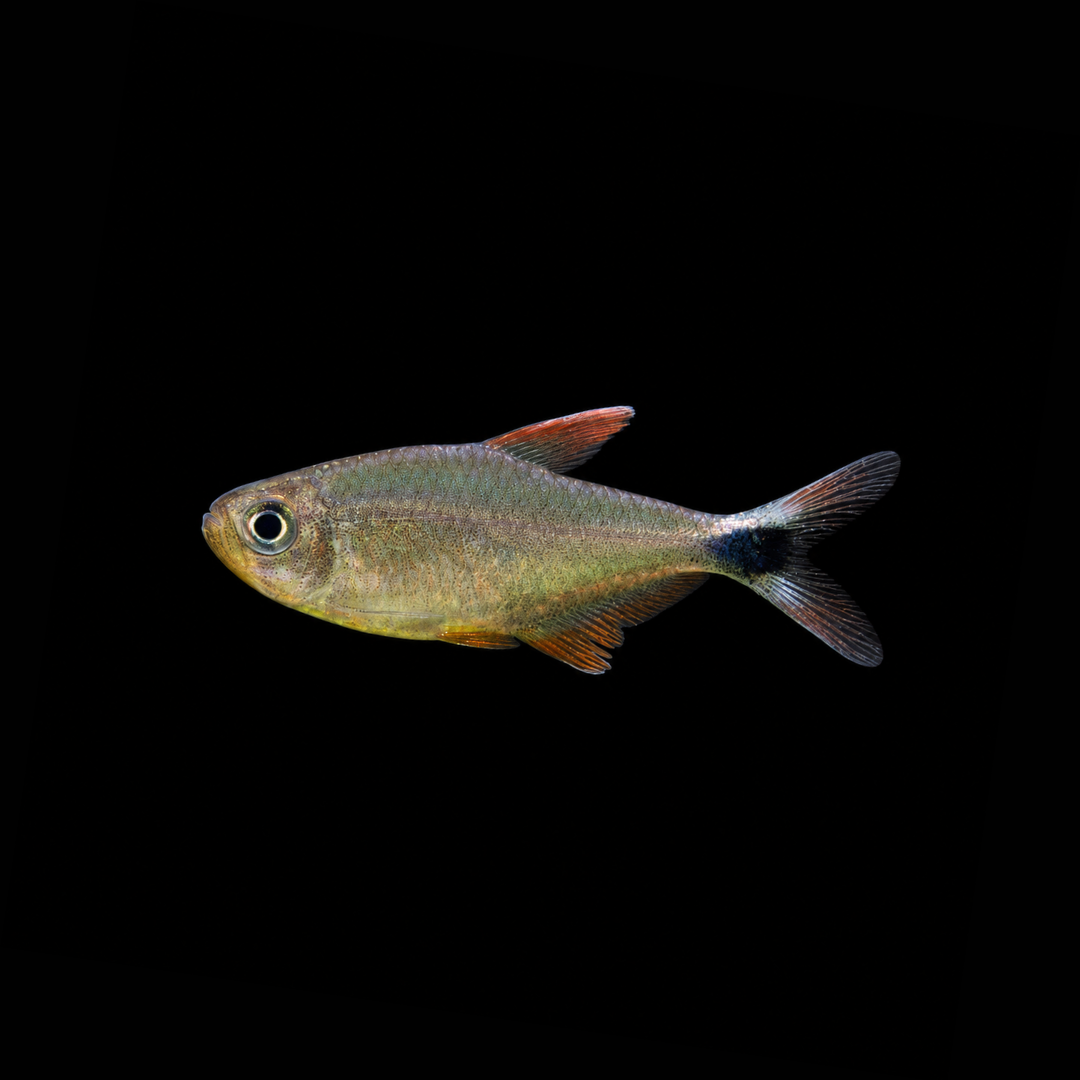
解説 / Description
ソルソルテトラは、ペルーのアマゾン上流域から流通する小型カラシンで、海外ではジュニアテトラやパンドゥロテトラの名でも知られています。透明感のある銀灰色の体に、オスでは赤、メスでは黄色みを帯びやすい鰭の色がのり、水草レイアウト水槽では派手すぎない温かな差し色になります。日本では「レッドタイプ」「イエロータイプ」として扱われることがありますが、海外の流通情報ではこの差を強い性的二色性、つまり雌雄差として説明する例があり、飼育では赤い個体だけを集めるよりも、黄色い個体を含めた群れで迎えるほうが自然な行動を引き出しやすくなります。 The Sol Sol Tetra is a small characin from the upper Amazon region of Peru, also known internationally as the Junior Tetra or Panduro Tetra. Its translucent silver-gray body is accented by warm fin colors: males tend to show red, while females tend to show yellow. In Japan, these fish are sometimes sold as “red type” and “yellow type,” but international trade information often explains the difference as pronounced sexual dichromatism. For aquarium keeping, a mixed group that includes yellow females is usually more natural and easier to manage than a group made only of red males.
基本情報 / Basic Information
| 学名 / Scientific Name | Hyphessobrycon robustulus (Cope, 1870)。近年のチェックリストでは、1870年のタイプ標本に基づく名称として扱われ、現在流通するジュニアテトラとの厳密な対応には検討の余地があるとされています。(Cope, 1870). Recent checklist treatments regard the name as based on the 1870 type series, so the exact match between the historical name and the aquarium-trade Junior Tetra should be treated with some caution. |
|---|---|
| 通称 / Common Name | ソルソルテトラ、ジュニアテトラ、パンドゥロテトラ、パンドゥリーニテトラ、赤ソルソル、黄ソルソルSol Sol Tetra, Junior Tetra, Panduro Tetra, Pandurini Tetra, Red Sol Sol, Yellow Sol Sol |
| 分類 / Family | カラシン目ハイフェソブリコン属。従来はカラシン科として紹介されることが多い一方、近年の系統分類や一部データベースではAcestrorhamphidae科、Hyphessobryconinae亜科として扱われます。Order Characiformes, genus Hyphessobrycon. It is often introduced under the traditional family Characidae, while recent phylogenetic classifications and some databases place it in Acestrorhamphidae, subfamily Hyphessobryconinae. |
| 英名 / English Name | Junior Tetra, Panduro Tetra, Pandurini Tetra |
| 分布 / Distribution | 南米ペルーのアマゾン上流域。タイプ産地は現在のペルー・ロレト県、アンピヤク川水系のペバス付近とされます。観賞魚として流通する個体は、イキトス上流のタミシヤク周辺などから入るとされています。Upper Amazon basin in Peru. The type locality is now interpreted as the Pebas area in Loreto, Peru, in the Ampiyacu River system. Aquarium-trade specimens are reported from areas such as Tamishiyacu upstream from Iquitos. |
| 最大体長 / Max Size | 通常3.5〜4cmほど。資料によっては最大4.5〜5cm前後とされます。Usually around 3.5–4 cm, with some sources giving a maximum of about 4.5–5 cm. |
| 寿命 / Lifespan | おおむね3〜4年。安定した水質と無理のない群れ管理ができれば、より長く楽しめることもあります。Generally about 3–4 years. With stable water conditions and low-stress group management, individuals may live longer. |
飼育環境 / Aquarium Environment
| 水槽サイズ / Tank Size | 単独の小型水槽向きというより、群れで泳がせて魅力が出る魚です。最低でも45cm規格水槽を目安にできますが、8〜10匹前後で安定させるなら60cm規格水槽、または80L前後以上の余裕ある水槽が扱いやすいです。This species is best appreciated in a group rather than as a single specimen in a small tank. A 45 cm standard aquarium can be used as a practical minimum, but a 60 cm standard aquarium or a tank of around 80 L or more is easier for keeping a stable group of about 8–10 fish. |
|---|---|
| 水温 / Temperature | 22〜28℃。色彩と体調の安定を考えると、23〜26℃前後が扱いやすい範囲です。日本の夏は高水温になりやすいため、冷却ファンや水槽用クーラーで30℃前後の状態を長く続けないようにします。 22–28°C. Around 23–26°C is an easy range for stable color and condition. In Japanese summers, use cooling fans or an aquarium chiller to avoid prolonged temperatures around 30°C. |
| 水質 / Water Quality | 弱酸性から中性寄りの軟水が基本です。pHは6.0〜7.0前後、GHは3〜8程度を目安にし、急変を避けます。ソイル、流木、マジックリーフ、ヤシャブシの実などを使うと、落ち着いたブラックウォーター寄りの環境を作りやすくなります。Soft, slightly acidic to near-neutral water is ideal. Aim for about pH 6.0–7.0 and GH 3–8, while avoiding sudden changes. Aquasoil, driftwood, Indian almond leaves, and alder cones can help create a calm, mildly tannin-stained environment. |
| レイアウト / Layout | 前面から中央には遊泳スペースを残し、後景や左右に水草、流木、落ち葉を配置します。暗めの底床や背景にすると体の透明感と鰭の赤・黄色が映えやすく、オス同士の追い合いから逃げ込める場所も確保できます。Leave open swimming space in the front and middle, while placing plants, driftwood, and leaf litter toward the back and sides. A darker substrate or background enhances the translucent body and red or yellow fins, while providing cover for fish that need to avoid male chasing. |
| 注意点 / Precautions | 導入直後は水質変化に敏感に見えることがあるため、点滴法などでゆっくり水合わせします。赤い個体ばかりを集めるとオス比率が高くなる可能性があり、追い合いが目立ちやすくなります。性比を意識し、黄色い個体も含めて群れを作ると落ち着きやすいです。Newly imported fish can be sensitive to water-quality changes, so acclimate them slowly, such as by drip acclimation. Selecting only red individuals may result in a male-heavy group, making chasing more noticeable. A group that includes yellow females is often calmer and more balanced. |
餌と給餌 / Feeding
| 餌の種類 / Diet | 小粒の顆粒飼料、細かく砕いたフレーク、色揚げ用フード、冷凍ブラインシュリンプ、ミジンコ、冷凍アカムシなどをよく食べます。自然下では小さな甲殻類、落下昆虫、動物プランクトンなどを食べる微小捕食者に近い雑食性と考えると管理しやすいです。Accepts fine granules, crushed flakes, color-enhancing foods, frozen brine shrimp, daphnia, and frozen bloodworms. In husbandry terms, it is best treated as an omnivorous micro-predator that feeds on small crustaceans, fallen insects, and zooplankton in nature. |
|---|---|
| 給餌のポイント / Feeding Tips | 1日1〜2回、数分で食べ切れる量を与えます。導入直後や繁殖を狙う時期は、人工飼料に加えて冷凍餌を少量ずつ組み合わせると状態を上げやすくなります。軟水・弱酸性の水槽では食べ残しによる水質悪化が出やすいため、少量多回の感覚で控えめに与えます。Feed once or twice a day, only as much as the fish can finish within a few minutes. After introduction or when conditioning for breeding, small portions of frozen foods in addition to prepared foods help improve condition. In soft, slightly acidic aquariums, uneaten food can quickly affect water quality, so feed modestly. |
性格と混泳 / Temperament and Tank Mates
| 性格 / Temperament | 基本的には温和な群泳性のカラシンです。ただし、成熟したオスは同種に対してフィンスプレッディングや短い追いかけ合いを見せることがあります。十分な匹数と隠れ場所がある環境では、激しい争いというより本種らしいディスプレイ行動として観察しやすくなります。Generally a peaceful shoaling characin. Mature males may display spread fins and short chases toward other males. With adequate group size and cover, this behavior is more likely to be observed as natural display rather than serious aggression. |
|---|---|
| 混泳の相性 / Compatibility | ネオンテトラ、レモンテトラ、ペンシルフィッシュ、小型ラスボラ、小型コリドラス、オトシンクルスなど、同程度の大きさで温和な魚と相性が良好です。大型魚や気の強いシクリッド、長い鰭をつつく魚、大型甲殻類との混泳は避けます。稚エビは捕食される可能性があります。Compatible with similarly sized peaceful fish such as neon tetras, lemon tetras, pencilfish, small rasboras, small Corydoras, and Otocinclus. Avoid large fish, aggressive cichlids, fin-nippers, and large crustaceans. Tiny shrimp fry may be eaten. |
病気と対策 / Diseases and Prevention
| かかりやすい病気 / Common Diseases | 輸入直後や水質変化が大きい時は、白点病、尾ぐされ、肌荒れ、痩せに注意します。特に導入時の急なpH・硬度変化、高水温、低水温、オス同士の過度な追い回しは、体力を落とすきっかけになります。After import or during large water-quality changes, watch for ich, fin rot, skin irritation, and wasting. Sudden changes in pH or hardness, excessive heat, low temperatures, and intense male chasing can all weaken the fish. |
|---|---|
| 対策と予防 / Prevention | 導入時は別水槽でのトリートメント期間を設け、ゆっくり水合わせします。普段は急な大量換水を避け、週1回20〜30%程度の水換えを目安に安定を優先します。病気が疑われる場合は早めに隔離し、症状に合った薬浴を行います。小型カラシンは薬に敏感な場合があるため、用法用量を守り、弱った個体には強すぎる処置を避けます。Quarantine new fish when possible and acclimate them slowly. Avoid sudden large water changes; weekly 20–30% changes are a useful guideline for stability. If disease is suspected, isolate the fish early and use medication appropriate to the symptoms. Small characins can be sensitive to treatment, so follow dosage instructions carefully and avoid overly harsh treatment for weakened fish. |
増やし方(繁殖) / Breeding
| 雌雄の判別 / Sexing | 成熟したオスは背鰭、脂鰭、尻鰭、尾鰭の一部が赤く発色し、体型はやや引き締まります。メスは同じ部位が黄色から山吹色になりやすく、成熟すると腹部に丸みが出ます。日本で流通名として使われる「レッドタイプ」「イエロータイプ」は、飼育管理上はオスとメスの違いとして扱うと実用的です。Mature males develop red coloration on the dorsal, adipose, anal, and parts of the caudal fin, and are often slimmer. Females tend to show yellow to golden-yellow coloration in the same areas and develop a rounder belly when mature. For husbandry, the Japanese trade labels “red type” and “yellow type” are most practically treated as male and female forms. |
|---|---|
| 繁殖形態 / Reproduction | 卵生の散卵性で、親魚は卵や稚魚を保護しません。産卵後は食卵しやすいため、繁殖を狙う場合は親魚を早めに戻すか、底面にネットやモスを使って卵を守ります。An egg-scattering species with no parental care. Adults may eat the eggs, so remove the parents after spawning or protect the eggs with a bottom mesh, moss, or spawning mop. |
| 繁殖のポイント / Breeding Tips | 30〜45cm程度の繁殖用水槽にスポンジフィルターを設置し、ウィローモスや産卵モップを多めに入れます。水温25〜26℃、pH6.0前後の軟水、薄暗い照明が狙いやすい条件です。赤く発色したオス1匹に対し、腹部の丸いメス1〜2匹を入れるとよいでしょう。稚魚の初期飼料はインフゾリアや稚魚用リキッドフードから始め、口が大きくなってから孵化したてのブラインシュリンプへ移行します。Use a 30–45 cm breeding tank with a sponge filter and plenty of Java moss or spawning mops. Soft water around 25–26°C and pH 6.0, with dim lighting, is a good target. Pair one well-colored male with one or two rounded females. Start fry on infusoria or liquid fry food, then move to newly hatched brine shrimp once their mouths are large enough. |
雑学と豆知識 / Trivia and Fun Facts
| 1. 1870年から続く分類学の物語 / 1. A taxonomic story that began in 1870 | 本種名の出発点は、エドワード・ドリンカー・コープが1870年に記載した Hemigrammus robustulus です。タイプ産地は当時「エクアドル、ペバス」と記されましたが、現在ではペルー・ロレト県のアンピヤク川水系と解釈されています。近年のチェックリストでは、古いタイプ標本が幼魚で状態も良くないため、種の同定には不確実性が残るとされ、Hyphessobrycon robustulus はSpecies inquirendaeとして扱われています。つまり、観賞魚として親しまれているソルソルテトラは、名前そのものにも南米小型カラシン分類の難しさをまとった魚なのです。The name traces back to Edward Drinker Cope’s 1870 description of Hemigrammus robustulus. The type locality was originally given as Pebas, Ecuador, but is now interpreted as the Ampiyacu River system in Loreto, Peru. Recent checklists treat the name as Species inquirendae because the old type specimens are juveniles in poor condition, leaving some uncertainty in identification. In that sense, the Sol Sol Tetra carries not only beauty but also the taxonomic complexity of small South American characins. |
|---|---|
| 2. ジュニアテトラという名前の背景 / 2. The story behind the name Junior Tetra | 海外で使われるジュニアテトラという通称は、ペルーの輸出業者ホルヘ・パンドゥロ氏の親子間の事業継承に由来すると紹介されています。そのため、パンドゥロテトラ、パンドゥリーニテトラという名でも呼ばれます。学名だけでは見えてこない、人の手を経て世界の水槽へ届いた観賞魚らしい物語を持つ通称です。The common name Junior Tetra is reported to come from the business succession between Peruvian exporter Jorge Panduro Sr. and Jorge Panduro Jr. This also explains the names Panduro Tetra and Pandurini Tetra. It is a trade name with a human story behind it, showing how a fish from the Amazon reached aquariums around the world through local collecting and export networks. |
| 3. 赤と黄色は「タイプ」よりも雌雄差として見る / 3. Red and yellow are best understood as sex differences | ソルソルテトラの赤い個体と黄色い個体は、国内では色彩タイプのように扱われることがあります。しかし、海外の流通情報では、赤い鰭を持つ個体がオス、黄色い鰭を持つ個体がメスとして説明されており、カラシン類としては目立つ性的二色性の例とされています。この見方を知っておくと、赤い個体だけを集めてしまう偏りを避けやすくなり、群れの落ち着きや繁殖の可能性も高めやすくなります。In Japan, red and yellow individuals may be treated like separate color types. International trade information, however, explains red-finned individuals as males and yellow-finned individuals as females, describing the species as unusually sexually dichromatic for a characin. Understanding this helps avoid collecting only red males and makes it easier to keep a calmer, more naturally balanced group with breeding potential. |
| 4. 「ソルソル」の語感と夕暮れの色 / 4. The sound of “Sol Sol” and sunset colors | スペイン語の sol は太陽を意味します。「ソルソル」という日本での流通名について、由来を明確に示す一次資料は多くありませんが、赤や黄色に染まる鰭の印象と結びつきやすい、温かい響きを持つ名前です。夕焼けそのものを意味すると断定するより、太陽や夕暮れを連想させる名前として受け止めると、言葉の確度と魚の雰囲気の両方を大切にできます。In Spanish, sol means sun. There are few easily verifiable primary sources proving the exact origin of the Japanese trade name “Sol Sol,” but the name has a warm sound that pairs naturally with the red and yellow fin colors. Rather than stating that it literally means sunset, it is more accurate to understand it as a name that evokes the sun and evening light. |
| 5. 流通名と学名の間に残る余白 / 5. The gap between trade name and scientific name | 観賞魚の世界では、輸入名や流通名が先に広がり、あとから学名との対応が整理されることがあります。ソルソルテトラもその一例で、ジュニアテトラとして入荷した美しい魚に Hyphessobrycon robustulus の名が定着した一方、近年の学術的な整理では慎重な扱いが示されています。図鑑としては、現在もっとも流通上通じやすい学名を示しながら、分類学上の不確実性も添えるのが誠実な紹介になります。In the aquarium trade, import names and trade names sometimes become popular before their scientific identity is fully resolved. The Sol Sol Tetra is one such case: the attractive fish imported as Junior Tetra has become widely associated with Hyphessobrycon robustulus, while recent academic treatments remain cautious. A responsible profile should use the name commonly understood in the trade while also noting the remaining taxonomic uncertainty. |
まとめ / Conclusion
ソルソルテトラは、透明感のある体に赤と黄色の鰭色を浮かべる、静かな華やかさを持ったペルー産小型カラシンです。弱酸性寄りの軟水、落ち着ける水草や流木、そして十分な遊泳スペースを整えることで、群れの動きと繊細な発色が美しく引き出されます。 The Sol Sol Tetra is a Peruvian small characin with quiet elegance, showing red and yellow fin colors over a translucent body. Soft, slightly acidic water, calming plants and driftwood, and enough swimming space bring out its delicate coloration and graceful shoaling behavior.
赤いオスと黄色いメスをひとつの群れとして迎えると、色の対比だけでなく、フィンスプレッディングや追い合い、繁殖へ向かう気配まで含めて、本種らしい表情が見えやすくなります。分類学上の余白を残しながらも、水草の陰を行き交う姿には、アマゾン上流域から届いた小さな魚ならではの奥深い魅力があります。 When red males and yellow females are kept together as one group, the aquarist can enjoy not only the color contrast but also natural displays, brief chases, and the possibility of breeding. Even with its remaining taxonomic questions, its movement among aquatic plants carries the subtle depth of a small fish from the upper Amazon.

気になる道具や飼い方を見つけてみませんか?
 アイのアクアグッズ案内小型カラシンの群れを楽しむ|餌と水換えから考える飼育用品ガイド小型カラシンの群れを眺める時間を、もっと楽しく。泳ぐ余白、餌の食べ方、続けやすい水換えを軸に、日本で揃えやすい用品の選び方を紹介します。記事はコチラ →
 アイのアクアグッズ案内プレコ飼育に必要なもの|餌・流木・ろ過・隠れ家・掃除用品道具の特徴や使い方、選ぶときのポイントをアイが紹介します。記事はコチラ →
 アイのアクアグッズ案内水槽の底砂の選び方|砂・砂利の違いとおすすめ商品道具の特徴や使い方、選ぶときのポイントをアイが紹介します。記事はコチラ →
 アイのアクアグッズ案内水槽用ヒーターの選び方|固定式・温度調節式と、水量に合うW数の考え方水槽の魚は冬に寒くない? アイとコタロウが水温計から固定式・温度調節式・分離式ヒーターまで比較。水量と室温に合うW数、設置場所、水換えや交換の注意点を、国内メーカーの商品とともに紹介します。記事はコチラ →
さまざまな飼育テーマをご紹介。リンク先の記事には広告・商品紹介が含まれます。
案内・紹介記事一覧へ →分布マップ
ソルソルテトラは、南米ペルーのアマゾン上流域、特にロレト県のアンピヤク川水系ペバス周辺や、イキトス上流のタミシヤク周辺から知られる小型カラシンです。この地図では、分布イメージを示すためにペルー・ロレト県のアマゾン上流域を概略代表地点として表示しています。
このマップのプロットは、記事内の分布欄をもとにした概略代表地点です。実際の採集地点や厳密な生息範囲を示すものではありません。
参考文献
本リストは、ソルソルテトラの記事本文のうち、分類、分布、生息環境、飼育条件、繁殖、病気や導入時の注意点を支える資料に限定して選定しています。店舗・通販ページ、個人ブログ、SNS、一般的なまとめサイト、日本国内の販売価格情報は除外しました。
-
Toledo-Piza, M. et al. 2024. Checklist of the species of the Order Characiformes (Teleostei: Ostariophysi). Neotropical Ichthyology, 22(1): e230086.
主な裏付け範囲:カラシン目全体の最新チェックリスト、Hyphessobrycon robustulus のSpecies inquirendae扱い、タイプ産地およびタイプ標本に関する注意点。
https://doi.org/10.1590/1982-0224-2023-0086 -
Fricke, R., Eschmeyer, W. N. & Van der Laan, R. (eds.). 2026. Eschmeyer’s Catalog of Fishes: Genera, Species, References. California Academy of Sciences.
主な裏付け範囲:学名、命名者、原記載、異名、分類学上の名称確認。魚類の学名確認における権威的データベースとして参照。
https://researcharchive.calacademy.org/research/ichthyology/catalog/fishcatmain.asp -
Froese, R. & Pauly, D. (eds.). FishBase. Hyphessobrycon robustulus (Cope, 1870).
主な裏付け範囲:ペルーを含む南米アマゾン上流域の分布、淡水性・底中層性、熱帯域、水温、最大体長、観賞魚としての利用。
https://www.fishbase.se/summary/Hyphessobrycon-robustulus -
AQUALOG Lexikon. Hyphessobrycon robustulus (= sp. Junior Pandurini).
主な裏付け範囲:観賞魚飼育における実用条件。原産地ペルー、60〜100cm水槽、22〜26℃、pH6.0〜7.0、雑食性、群泳性、昼行性の目安。
https://www.aqualog.de/en/lexikon/hyphessobrycon-robustulus-sp-junior-pandurini-2/ -
Yanong, R. P. E. Fish Health Management Considerations in Recirculating Aquaculture Systems—Part 3: General Recommendations and Problem-Solving Approaches. UF/IFAS Extension.
主な裏付け範囲:導入時の隔離、検疫、水質の安定、給餌・栄養、清掃、バイオセキュリティなど、病気予防と管理上の注意点。
https://ask.ifas.ufl.edu/publication/FA101 -
Merck Veterinary Manual. Disorders and Diseases of Fish.
主な裏付け範囲:白点病、皮膚・鰓・細菌性疾患、栄養、アンモニアやpH急変、過密や衛生不良など、淡水観賞魚に共通する病気と予防上の注意点。
https://www.merckvetmanual.com/all-other-pets/fish/disorders-and-diseases-of-fish -
Merck Veterinary Manual. Parasitic Diseases of Fish.
主な裏付け範囲:白点病の原因生物 Ichthyophthirius multifiliis、感染経路、症状、治療が水温や生活環に左右される点、器具や新規導入個体を介した伝播への注意。
https://www.merckvetmanual.com/exotic-and-laboratory-animals/aquarium-fish/parasitic-diseases-of-fish -
Cole, B. et al. 1999. Spawning and Production of the Serpae Tetra, Hyphessobrycon serpae. Center for Tropical and Subtropical Aquaculture.
主な裏付け範囲:同属Hyphessobryconの繁殖管理の参考。産卵床、親魚による食卵防止、孵化後の初期育成、ブラインシュリンプや粉末飼料への移行など。ソルソルテトラ固有の一次資料ではないため、繁殖一般論の補助資料として扱います。
https://www.ctsa.org/files/publications/CTSA_1386316728568618675601.pdf




コメント