

解説 / Description
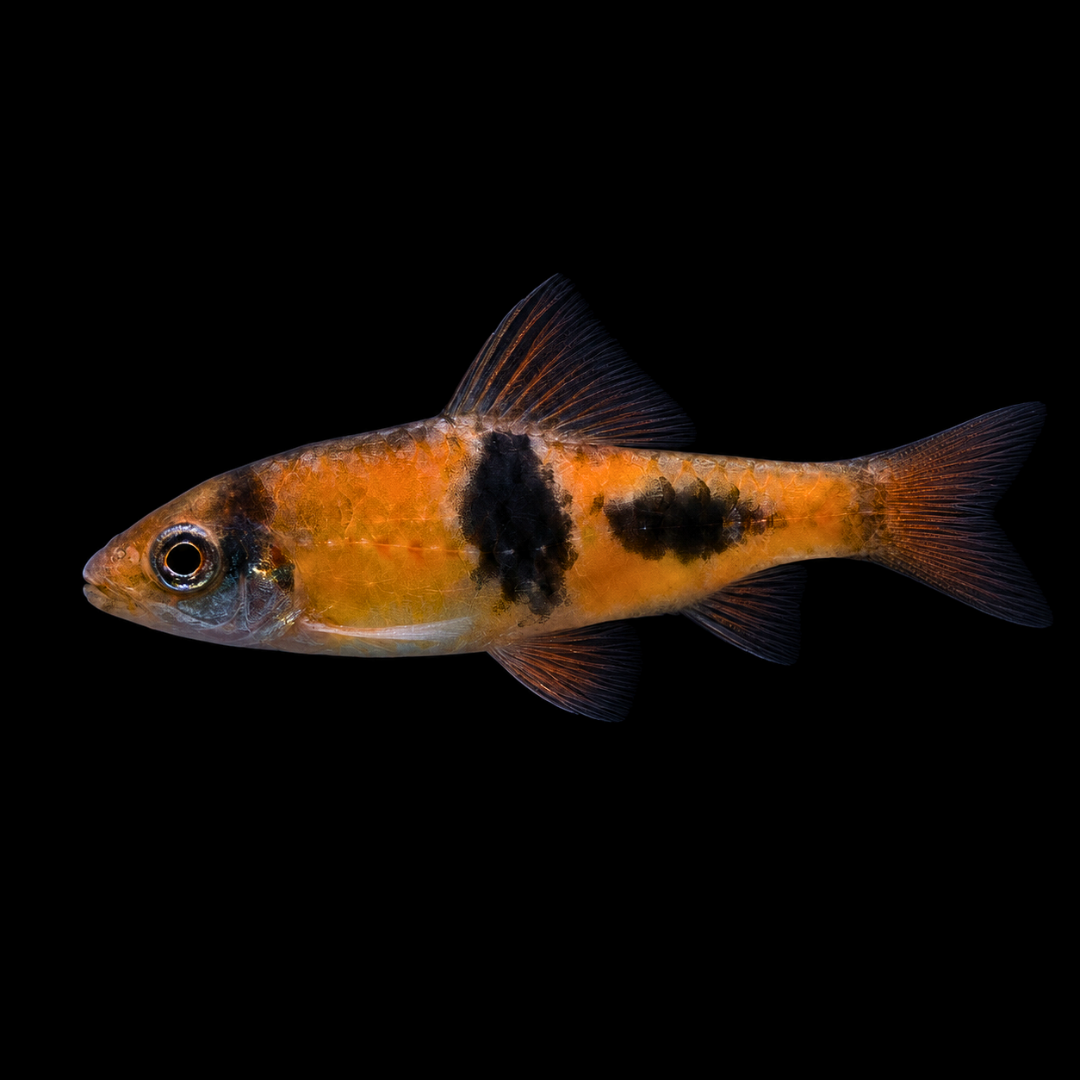
メロンバルブは、南インドの西ガーツ山脈周辺に分布する小型から中型のコイ科魚類です。赤橙色を帯びた体色と黒い横帯が印象的で、落ち着いた水草水槽の中では、群れで泳ぐ姿がやわらかな暖色のアクセントになります。バルブの仲間らしい活発さはありますが、十分な匹数で飼えば性格は比較的温和で、コミュニティタンクにも取り入れやすい魚です。 The Melon Barb is a small to medium-sized cyprinid from southern India, especially the Western Ghats region. Its warm orange-red body color and dark vertical bars make it an attractive accent in planted aquariums. Although it is an active barb, it is generally peaceful when kept in a proper group and can be a good choice for many community aquariums.
基本情報 / Basic Information
| 学名 / Scientific Name | Haludaria fasciata (Jerdon, 1849) |
|---|---|
| 通称 / Common Name | メロンバルブ、ハルダーリア・ファスキアータMelon Barb |
| 分類 / Family | コイ目 コイ科 スミリオガストリナエ亜科Order Cypriniformes, family Cyprinidae, subfamily Smiliogastrinae |
| 英名 / English Name | Melon Barb |
| 分布 / Distribution | 南インドに固有。文献上は西ガーツ山脈周辺の河川や流れのある淡水域に生息するとされています。Endemic to southern India, with records from rivers and other flowing freshwater habitats around the Western Ghats region. |
| 最大体長 / Max Size | およそ6〜7cm。資料によっては7cm前後までとされます。About 6–7 cm. Some aquarium references give a maximum of around 7 cm. |
| 寿命 / Lifespan | およそ3〜5年が目安です。高水温の長期化や水質悪化を避け、群れで落ち着かせることで長期飼育しやすくなります。Typically around 3–5 years in aquaria. Stable water quality, moderate temperatures, and group keeping help maintain long-term condition. |
飼育環境 / Aquarium Environment
| 水槽サイズ / Tank Size | 最低でも60cm規格水槽程度から飼育できますが、活発に泳ぐため、8〜10匹以上で美しい群泳を楽しむなら90×30cm以上の底面積、または90cm規格水槽がより安心です。小型魚としては遊泳力があるため、奥行きよりも泳ぐ長さを意識するとよいでしょう。A standard 60 cm tank can work as a practical minimum, but because this species is active, a footprint of at least 90 × 30 cm or a standard 90 cm aquarium is preferable for a natural-looking group of 8–10 or more individuals. |
|---|---|
| 水温 / Temperature | 22〜26℃前後。日本の夏に30℃近い状態が長く続くと負担になりやすいため、必要に応じて冷却ファンや水槽用クーラーで管理します。 Around 22–26°C. Prolonged temperatures close to 30°C can be stressful, so cooling fans or an aquarium chiller may be useful during hot summers. |
| 水質 / Water Quality | 弱酸性〜中性、軟水〜中硬水を目安にします。pHは6.0〜7.5程度で飼育しやすく、原産地情報ではpH 6.0〜6.5程度のやや酸性寄りの水域が示されています。急変を嫌うため、数値を追い込みすぎるより安定を重視します。Slightly acidic to neutral, soft to moderately hard water is suitable. A practical aquarium range is around pH 6.0–7.5, while habitat references indicate slightly acidic water around pH 6.0–6.5. Stability is more important than forcing exact values. |
| レイアウト / Layout | 水草、流木、石を使い、隠れ場所と開けた遊泳スペースを両方用意します。暗色系の底床や背景は体色を落ち着いて見せやすく、雄の赤橙色を引き立てます。強すぎない水流と十分な酸素量を保つと、本来のきびきびした泳ぎが出やすくなります。Use plants, driftwood, and stones while leaving open swimming space. Dark substrate and backgrounds can help the orange-red coloration stand out. Moderate current and good oxygenation suit its active riverine nature. |
| 注意点 / Precautions | 単独や少数飼育では落ち着かず、発色が鈍ったり、個体間の追い回しが目立ったりすることがあります。6匹以上、できれば8〜10匹以上で導入し、水換えは急な水質変化を避けて定期的に行います。Avoid keeping single fish or very small groups, as stress and chasing may increase and coloration may fade. Keep at least six, preferably eight to ten or more, and perform regular water changes without sudden parameter swings. |
餌と給餌 / Feeding
| 餌の種類 / Diet | 人工飼料、顆粒フード、フレーク、冷凍アカムシ、冷凍ブラインシュリンプなどをよく食べます。自然下では小型の無脊椎動物や有機物、藻類なども利用すると考えられるため、スピルリナ配合フードや植物質を含む餌も組み合わせるとバランスが取りやすくなります。It accepts quality prepared foods, granules, flakes, frozen bloodworms, and frozen brine shrimp. Because it likely feeds on small invertebrates, organic matter, and algae in nature, foods containing spirulina or other plant matter help provide a balanced diet. |
|---|---|
| 給餌のポイント / Feeding Tips | 少量を1日1〜2回、食べ残しが出ない量で与えます。動物性の餌だけに偏ると消化面で負担になることがあるため、植物質を含む餌を定期的に混ぜるのがおすすめです。水草の柔らかい新芽をつつく場合は、空腹時間や植物質不足も見直します。Feed small portions once or twice a day, avoiding leftovers. Do not rely exclusively on rich animal-based foods; rotate in plant-based foods regularly. If the fish nip tender plant shoots, review feeding frequency and plant-matter intake. |
性格と混泳 / Temperament and Tank Mates
| 性格 / Temperament | 活発で群れを好む一方、同程度のサイズの魚に対しては比較的温和です。雄同士がヒレを広げて見せ合うことがありますが、十分な匹数とスペースがあれば、激しい攻撃に発展しにくいタイプです。Active and strongly social, yet generally peaceful toward similarly sized fish. Males may display to one another, but with enough space and group size this rarely becomes serious aggression. |
|---|---|
| 混泳の相性 / Compatibility | ラスボラ、ダニオ、中型カラシン、コリドラス、小型から中型のローチ類など、遊泳速度や水質の好みが近い魚と相性がよいです。ベタやグッピーのように長いヒレを持つ魚、極端におとなしい魚、口に入るサイズの稚エビとの混泳は避けた方が無難です。ヤマトヌマエビのような大きめのエビは、十分な隠れ場所があれば混泳できる場合があります。Good tank mates include rasboras, danios, medium-sized tetras, Corydoras, and small to medium loaches that enjoy similar conditions and activity levels. Avoid very slow fish, long-finned species such as bettas and guppies, and tiny shrimp that may be eaten. Larger shrimp such as Amano shrimp may work when hiding places are available. |
病気と対策 / Diseases and Prevention
| かかりやすい病気 / Common Diseases | 本種に特有の病気が広く知られているわけではありませんが、白点病、尾ぐされ、細菌性の肌荒れ、輸入直後の寄生虫や消耗には注意します。特に野生採集個体や状態の分からない入荷個体では、導入直後の体表、エラ、便の状態をよく観察します。No highly species-specific aquarium disease is widely recognized, but ich, fin rot, bacterial skin problems, and stress or parasites in newly imported fish can occur. Wild-caught or recently imported individuals should be observed carefully after arrival. |
|---|---|
| 対策と予防 / Prevention | 導入時は可能なら隔離水槽で数週間観察し、急な水温差やpH差を避けて水合わせします。ろ過を安定させ、過密、食べ残し、高水温の長期化を避けることが最大の予防です。薬浴が必要な場合は、症状を見極めてから規定量を守って行います。Quarantine new fish for a few weeks when possible and acclimate them carefully to avoid temperature and pH shock. Stable filtration, moderate stocking, clean feeding, and avoiding prolonged high temperatures are the best preventive measures. Medicate only after identifying the likely problem and follow dosage instructions carefully. |
増やし方(繁殖) / Breeding
| 雌雄の判別 / Sexing | 成熟した雄は体がやや細く、発情時に赤橙色が強く出ます。雌は腹部に丸みが出やすく、雄ほど強い赤みは出にくい傾向があります。繁殖期の雄では吻部や顔まわりに追星が見られることがあります。Mature males are usually slimmer and show stronger orange-red coloration when in breeding condition. Females tend to have a rounder belly and more subdued coloration. Breeding males may develop small breeding tubercles around the snout and head. |
|---|---|
| 繁殖形態 / Reproduction | 卵をばらまくタイプの卵生魚です。親魚は卵や稚魚を保護せず、産卵後に卵を食べることがあるため、確実に増やす場合は採卵用水槽を用意します。An egg-scattering species. The parents do not care for eggs or fry and may eat the eggs, so a separate breeding setup is recommended for planned breeding. |
| 繁殖のポイント / Breeding Tips | 弱酸性寄りの軟水、やや高めの26℃前後、ウィローモスや産卵モップ、底に卵が落ち込むネットやビー玉を使うと管理しやすくなります。よく太った雌と状態のよい雄を夕方に入れると、翌朝に産卵することがあります。産卵を確認したら親を戻し、卵はカビを防ぐために清潔な水と弱いエアレーションで管理します。仔魚は非常に小さいため、初期はインフゾリアや微細な稚魚用フード、その後にブラインシュリンプ幼生へ移行します。Slightly acidic soft water, a temperature around 26°C, Java moss or spawning mops, and a mesh or marbles on the bottom can improve egg survival. Well-conditioned males and females introduced in the evening may spawn the following morning. Remove adults after spawning, keep the eggs clean with gentle aeration, and start tiny fry on infusoria or fine fry food before moving to newly hatched brine shrimp. |
雑学と豆知識 / Trivia and Fun Facts
| 1. 学名がたどった回り道 / 1. A Scientific Name with a Detour | メロンバルブは、もともとCirrhinus fasciatusとして記載され、その後PuntiusやDravidiaを経て、現在はHaludaria fasciataが有効名として扱われています。Dravidiaという属名は、すでに昆虫で使われていた名前と重なることが分かり、2013年にHaludariaという置き換え名が提案されました。古い名前で流通していた時代が長いため、店頭や古い飼育書では今でもプンティウス・ファスキアータスの名に出会うことがあります。The Melon Barb was originally described as Cirrhinus fasciatus, later placed in Puntius and Dravidia, and is now treated as Haludaria fasciata. The name Dravidia was found to be preoccupied by an insect genus, so Haludaria was proposed as a replacement name in 2013. Because older names were used for many years, aquarists may still encounter Puntius fasciatus in shops or older books. |
|---|---|
| 2. Haludariaという属名の由来 / 2. The Origin of Haludaria | Haludariaという属名は、フランシス・ハミルトンの魚類図版に関わったベンガル人画家Haludarに由来するとされています。小さな観賞魚の名前の奥には、博物学者だけでなく、魚の姿を紙の上に残した画家の存在も息づいています。The genus name Haludaria is derived from Haludar, a Bengali artist associated with illustrations used in Francis Hamilton’s work on fishes. Behind the name of this small aquarium fish is not only ichthyology, but also the history of artists who preserved the appearance of fishes on paper. |
| 3. メロン色は群れと環境で引き出す / 3. Bringing Out the Melon Color | メロンバルブの赤橙色は、単に餌だけで決まるものではありません。落ち着ける群れ、暗すぎず明るすぎない照明、隠れ場所、清潔な水、そして雄同士が無理なく見せ合えるスペースがそろうことで、じわりと深みを増します。少数で不安げに飼うより、群れの中で自然な緊張感を持たせた方が美しさを観察しやすい魚です。The warm orange-red coloration is not controlled by food alone. A secure group, balanced lighting, hiding places, clean water, and enough space for males to display all help deepen the color. It often looks far better in a confident shoal than in a tiny, nervous group. |
| 4. 保全情報は断定しすぎない / 4. Conservation Notes Should Be Read Carefully | 本種はIUCNでは軽度懸念とされていますが、この評価は地域ごとの環境変化がないことを意味しません。西ガーツ山脈の淡水魚では、採集圧よりも河川改変、森林伐採、農業排水、ダムなど複数の要因が重なって問題になることがあります。メロンバルブ自体がインドのWild Life Protection Actで直接規制されているとは確認できないため、販売や輸入に関する記述では、法令名を使って不確かな規制を断定しないことが大切です。The species is listed as Least Concern by the IUCN, but this does not mean that every local habitat is stable. Freshwater fishes of the Western Ghats can be affected by river modification, deforestation, agricultural runoff, dams, and collection pressure. Direct regulation of the Melon Barb itself under India’s Wild Life Protection Act was not confirmed, so legal statements about trade should be written cautiously. |
まとめ / Conclusion
メロンバルブは、派手さを押し出す魚というより、群れの動きと赤橙色のにじむような発色をじっくり楽しむ魚です。水草や流木の間を軽快に泳ぎ、雄同士がそっと見せ合う姿には、小型バルブらしい活気と、温和な群泳魚らしい落ち着きが同居しています。 The Melon Barb is not merely a flashy fish; it is best appreciated through the movement of the shoal and the gradual glow of its orange-red coloration. As it moves among plants and driftwood, the gentle displays between males bring together the energy of a barb and the calm charm of a peaceful schooling fish.
十分な遊泳スペース、安定した弱酸性寄りの水、植物質を含むバランスのよい餌、そして何より安心できる仲間の数がそろうと、本種は水槽の中で静かに存在感を増していきます。日々の管理の積み重ねに応えるように色を深めるその姿は、飼育者にとって長く付き合うほど味わいが増す一群になります。 With ample swimming space, stable slightly acidic water, a balanced diet including plant matter, and above all a secure group, this species steadily gains presence in the aquarium. Its color deepens in response to consistent care, making it a shoal whose appeal grows the longer it is kept.

気になる道具や飼い方を見つけてみませんか?
 アイのアクアグッズ案内水槽ライトの選び方|魚の見え方・水草・海水で選ぶおすすめ照明道具の特徴や使い方、選ぶときのポイントをアイが紹介します。記事はコチラ →
 アイのアクアグッズ案内コケを食べるコイの仲間に合わせる飼育用品|フライングフォックス・アルジイーター・ガラ道具の特徴や使い方、選ぶときのポイントをアイが紹介します。記事はコチラ →
 アイのアクアグッズ案内アカヒレの仲間に合わせる飼育用品|無加温・混泳・繁殖の水槽とろ過道具の特徴や使い方、選ぶときのポイントをアイが紹介します。記事はコチラ →
 アイのアクアグッズ案内ローチの仲間に合わせる飼育用品|クーリー・流水性・ボーシャの水槽と底砂道具の特徴や使い方、選ぶときのポイントをアイが紹介します。記事はコチラ →
さまざまな飼育テーマをご紹介。リンク先の記事には広告・商品紹介が含まれます。
案内・紹介記事一覧へ →分布マップ
メロンバルブは、南インドに固有とされ、西ガーツ山脈周辺の河川や流れのある淡水域に分布するとされています。 下の地図では、分布イメージをつかむための概略代表地点として、南インド西ガーツ山脈周辺を示しています。
Google Earthで開くこの地図上のプロットは、記事内の分布情報をもとにした分布イメージ用の概略代表地点です。 実際の採集地点や厳密な生息範囲を示すものではありません。
参考文献
メロンバルブの分類、分布、生息環境、飼育条件、繁殖、病気や注意点を支える資料だけを選定しました。店舗、通販、個人ブログ、まとめサイトは除外し、分類データベース、査読論文、公的機関・大学系の魚病資料を中心にしています。水槽サイズや混泳などの実践的な飼育表現は、下記の自然史・繁殖研究・魚病資料をもとに、安全側へ編集するための補助情報として扱っています。
分類・学名を支える資料
-
Fricke, R., Eschmeyer, W. N. & Van der Laan, R. (eds.). Eschmeyer’s Catalog of Fishes. California Academy of Sciences.
Haludaria fasciata species record
現行有効名、原記載名 Cirrhinus fasciatus、シノニム、科・亜科、分布の大枠を確認するための中核資料です。 -
Jerdon, T. C. (1849). On the fresh-water fishes of southern India. Madras Journal of Literature and Science, 15(2), 302–346.
本種の原記載にあたる古典文献です。実用記事では、原記載の存在確認はCatalog of Fishesの該当レコードと併せて扱うのが安全です。 -
Pethiyagoda, R., Meegaskumbura, M. & Maduwage, K. (2012). A synopsis of the South Asian fishes referred to Puntius (Pisces: Cyprinidae). Ichthyological Exploration of Freshwaters, 23(1), 69–95.
PDF
旧来の広義 Puntius 属からの再整理、Dravidia の設立、近縁群の形態的特徴を支える資料です。 -
Pethiyagoda, R. (2013). Haludaria, a replacement generic name for Dravidia (Teleostei: Cyprinidae). Zootaxa, 3646(2), 199–199.
DOI: 10.11646/zootaxa.3646.2.9
Dravidia が昆虫の属名として先取されていたため、魚類の属名として Haludaria が置換提唱された経緯を確認できます。
分布・生息環境・保全を支える資料
-
Froese, R. & Pauly, D. (eds.). FishBase. Haludaria fasciata species summary.
FishBase species summary
南インド固有、淡水・河川性、pH 6.0–6.5、水温22–26℃、観賞魚としての利用など、分布・水質・環境条件の基礎確認に使える資料です。 -
Abraham, R. (2015). Haludaria fasciata. The IUCN Red List of Threatened Species 2015: e.T172367A70085467.
IUCN Red List
保全評価、分布域、脅威情報の補助資料です。評価年が古い可能性があるため、現在の輸出規制や国内流通可否の判断には別途最新の法令確認が必要です。 -
Molur, S., Smith, K. G., Daniel, B. A. & Darwall, W. R. T. (compilers). (2011). The Status and Distribution of Freshwater Biodiversity in the Western Ghats, India. IUCN and Zoo Outreach Organisation.
IUCN Library PDF
西ガーツ山脈の淡水生物多様性、固有性、河川環境への脅威を背景として整理するための地域保全資料です。
飼育条件・繁殖を支える資料
-
Chacko, J. J. & Sekharan, M. N. (2022). Sexual dimorphism in structures, size and shape of the cyprinid Nilgiri melon barb, Haludaria fasciata. Fisheries & Aquatic Life, 30, 138–148.
DOI: 10.2478/aopf-2022-0013
雌雄差、雄の追星、胸ビレの微細な結節、繁殖行動に関わる形態差を支える資料です。 -
Chacko, J. J. & Sekharan, M. N. (2022). Effect of Temperature on the Embryonic Development of Nilgiri Melon Barb Haludaria fasciata. Bhartiya Krishi Anusandhan Patrika, 37(2), 178–182.
DOI: 10.18805/BKAP475
卵の発生温度、孵化時間、26℃での高い孵化・生存率など、繁殖水槽の温度設定を裏付ける資料です。 -
Chacko, J. J. & Sekharan, M. N. (2022). Optimization of Disinfectants for Controlling Fungus Growth on the Eggs of Nilgiri Melon Barb (Haludaria fasciata) During Incubation. Fishery Technology, 59(2), 79–87.
DOI: 10.56093/ft.v59i2.123609
卵の水カビ対策、メチレンブルーや過酸化水素の濃度影響、過剰処理による死亡・奇形リスクを支える資料です。
病気・注意点を支える資料
-
Petty, B. D., Francis-Floyd, R. & Yanong, R. P. E. Management of Aquarium Fish. MSD Veterinary Manual.
MSD Veterinary Manual
水質、診断、治療上の注意、検疫とバイオセキュリティ、家庭水槽での管理リスクを整理するための獣医学系資料です。 -
Yanong, R. P. E. Ichthyophthirius multifiliis (White Spot) Infections in Fish. UF/IFAS Extension.
UF/IFAS Extension publication
白点病の症状、顕微鏡確認の必要性、早期発見の重要性を支える資料です。メロンバルブ固有の病気ではなく、淡水観賞魚一般の注意点として参照します。
参考文献は、水槽内で見られる赤橙色の発色、群れでの行動、繁殖期の変化を、原産地の川や分類史、卵や仔魚の研究へつなげるための道しるべです。根拠を知るほど、メロンバルブは単なる小型バルブではなく、西ガーツ山脈の自然を水槽に映す存在として、より奥行きのある魅力を見せてくれます。




コメント