| 学名 / Scientific Name |
Pterygoplichthys pardalis / Pterygoplichthys disjunctivus |
| 通称 / Common Name |
サッカープレコ、ヒポプレコ、並プレコ、コモンプレコ(流通個体の主体はマダラロリカリア属とその交雑個体で、伝統的に充てられてきたHypostomus plecostomusは別属の種です)Sucker pleco, Hypo pleco, common pleco (most traded fish are Pterygoplichthys species and their hybrids; Hypostomus plecostomus, the name traditionally applied, is a species of a different genus) |
| 分類 / Family |
ナマズ目ロリカリア科ヒポストムス亜科マダラロリカリア属Order Siluriformes, family Loricariidae, subfamily Hypostominae, genus Pterygoplichthys |
| 英名 / English Name |
Common pleco, Suckermouth catfish, Amazon sailfin catfish (P. pardalis), Vermiculated sailfin catfish (P. disjunctivus) |
| 分布 / Distribution |
南米のアマゾン川水系(ペルー、ブラジル、ボリビアなど)。なお、本来のHypostomus plecostomusの自然分布は、ギアナ楯状地(ガイアナ、スリナム、フランス領ギアナ)の沿岸河川に限られます。現在流通している個体の多くは、東南アジアなどの養殖場で生産されたブリード個体です。The Amazon River basin in South America (Peru, Brazil, Bolivia, and elsewhere). The true Hypostomus plecostomus, by contrast, is naturally restricted to coastal rivers of the Guiana Shield (Guyana, Suriname, and French Guiana). Most fish in today’s trade are captive-bred on farms in Southeast Asia and other regions. |
| 最大体長 / Max Size |
飼育下で約40〜50cm(野外では50cmを超える記録もあります)About 40–50 cm in captivity (records exceeding 50 cm exist in the wild) |
| 寿命 / Lifespan |
飼育下では10〜15年ほどが一般的とされ、条件が良ければそれ以上生きる例も紹介されています。Generally around 10–15 years in captivity, with reports of individuals living longer under good conditions. |
| 水槽サイズ / Tank Size |
幼魚のうちは60cm規格水槽(60×30×36cm、総容量約65L)でも飼えますが、成長が速いため短期間で手狭になります。30cm級の成魚には最低でも90cm規格水槽(90×45×45cm、約182L)が必要です。40〜50cm級まで育つことを見据えるなら120cm規格水槽(120×45×45cm、約243L)から120cmワイド水槽(120×60×60cm、約432L)、ゆとりを持たせるなら奥行き60cmの150〜180cm水槽が理想です。底層で暮らす魚なので、高さよりも奥行きを優先すると方向転換がしやすくなります。プレコの硬い歯や骨板はアクリル面を傷つけやすいため、ガラス水槽が適しています。Juveniles can be kept in a standard 60 cm tank (60×30×36 cm, about 65 L total capacity), but their rapid growth soon makes it too small. A 30 cm adult needs at least a standard 90 cm tank (90×45×45 cm, about 182 L). For a fish that will reach 40–50 cm, plan on anything from a standard 120 cm tank (120×45×45 cm, about 243 L) to a 120 cm wide tank (120×60×60 cm, about 432 L); for more room, a 150–180 cm tank with a depth of 60 cm is ideal. Because it lives on the bottom, prioritizing depth (front to back) over height makes it easier for the fish to turn around. Its hard teeth and plates easily scratch acrylic, so a glass tank is recommended. |
| 水温 / Temperature |
22〜28℃が適温で、混泳水槽では26℃前後が目安です。20℃前後で食欲が落ち始め、15℃以下では動きが鈍くなり、10℃前後の低水温が続くと命に関わるとされています。夏場の高水温時は酸欠になりやすいため、冷却ファンやエアコンを併用しましょう。
The suitable range is 22–28°C, with around 26°C a good target in community tanks. Appetite begins to drop at around 20°C, the fish becomes sluggish below 15°C, and prolonged temperatures around 10°C are considered life-threatening. High summer temperatures make oxygen shortages more likely, so use a cooling fan or air conditioning as needed.
|
| 水質 / Water Quality |
弱酸性から中性(pH5.5〜7.5)が適しており、水質への適応範囲は比較的広い魚です。ただし大食漢で排泄量が多いため、水槽内の水質が急に酸性に傾いたり、アンモニアがたまったりすると、大きく育った個体でも突然死することがあります。大容量のフィルターと強めのエアレーションを用意し、週1回、3分の1程度の換水を続けてください。Slightly acidic to neutral water (pH 5.5–7.5) is suitable, and the fish tolerates a relatively wide range of conditions. However, because it eats heavily and produces a lot of waste, a sudden drop in pH or a buildup of ammonia can cause sudden death even in large, well-grown fish. Provide a high-capacity filter and strong aeration, and keep up weekly water changes of about one-third. |
| レイアウト / Layout |
成魚の管理には、大量の糞や流木のかじりカスを掃除しやすいベアタンク(底砂なし)が基本です。夜行性で物陰を好むため、大きな流木や土管、シェルターを必ず入れて、昼間に隠れられる場所を用意しましょう。ソイルは掘り返され、水草も食べられたり抜かれたりしやすいため、水草水槽には向きません。水草を入れる場合は、流木や岩に活着させた丈夫な種類に限られます。For keeping adults, a bare-bottom tank is the standard, as it makes it easy to remove the large volume of droppings and driftwood shavings. Because the fish is nocturnal and likes cover, always add large driftwood, clay pipes, or shelters so it has somewhere to hide during the day. It digs up aquasoil and tends to eat or uproot plants, so it is not suited to planted tanks. If you do add plants, limit them to hardy species attached to driftwood or rocks. |
| 注意点 / Precautions |
もっとも大切なのは、購入前に最後まで飼える設備を用意できるかを確かめることです。水槽は水やキャビネットを含めると非常に重く、120cm規格水槽で総重量およそ350kg、180cm水槽では900kgを超えることもあります。住宅の居室の床は、建築基準法施行令で1m²あたり約180kgの積載荷重を想定して設計されています。この数値は床全体にならした平均値で、超えた瞬間に床が抜ける限界値ではありませんが、大型水槽ではその数倍の重さが一か所に集中することになります。設置前に建物の構造を確認し、賃貸住宅では管理会社に相談したうえで、必要に応じて床の補強も検討してください。また、ヒーターに張り付いてやけどを負う事故が多いため、ヒーターカバーは必須です。驚いて急浮上することもあるので、頑丈なガラス蓋も用意しましょう。本種は特定外来生物には指定されておらず、飼育自体は合法です。ただし、環境省の生態系被害防止外来種リストに掲載されており、沖縄本島などでは野外での定着が確認されています。外来種被害予防の三原則である「入れない・捨てない・拡げない」を必ず守ってください。The most important step is to confirm before purchase that you can provide facilities for the fish’s entire life. Including water and cabinet, aquariums are extremely heavy: a standard 120 cm tank weighs roughly 350 kg in total, and a 180 cm tank can exceed 900 kg. Under Japan’s Building Standards Act Enforcement Order, residential room floors are designed to carry a live load of about 180 kg per square meter. This figure is an average spread over the whole floor, not a limit beyond which the floor collapses, but a large aquarium concentrates several times that weight in a single spot. Before installation, check the building’s structure, consult the management company if you rent, and consider reinforcing the floor if necessary. Burns from clinging to heaters are also common, so a heater guard is essential, and because the fish may dart to the surface when startled, a sturdy glass lid is needed. The species is not designated as a Specified Invasive Alien Species, so keeping it is legal. However, it is included on the Ministry of the Environment’s list of invasive alien species that threaten ecosystems, and established wild populations have been confirmed on Okinawa Island and elsewhere. Always follow the three principles for preventing invasive species damage: don’t introduce, don’t release, and don’t spread. |
| 1. 「サッカー」は球技にあらず:名前に隠された口の形 / 1. Not Soccer: A Name That Describes a Mouth |
「サッカープレコ」と聞くと球技を思い浮かべるかもしれませんが、この「サッカー」は英語のsucker、つまり「吸い付くもの」のことで、吸盤状の口を持つナマズを指す英語のsuckermouth catfishに由来します。一方の「プレコ」は、長らく充てられてきた学名の種小名plecostomusを縮めたものです。この語は、ギリシャ語で「折り畳む」を意味するplékōと「口」を意味するstómaを組み合わせた造語で、頭の下面に開く、ひだのある吸盤状の唇を表しています。つまり名前の前半も後半も、ガラス面にぴたりと張り付くあの口元を言い表しているのです。“Sucker pleco” may bring soccer to mind, but here “sucker” means something that clings by suction, and comes from “suckermouth catfish,” the English term for catfishes with suction-cup mouths. “Pleco,” meanwhile, is a shortening of plecostomus, the species name long applied to the fish. This word was coined from the Greek plékō, meaning “to fold,” and stóma, meaning “mouth,” and describes the pleated, suction-cup lips on the underside of the head. In other words, both halves of the name describe that familiar mouth pressed tightly against the glass. |
| 2. 250年越しの名前の混乱と「本物」の行方 / 2. A 250-Year Naming Muddle and the Whereabouts of the “Real” One |
Hypostomus plecostomusは、1758年にリンネが『自然の体系』第10版で記載した魚です。当初はチョウザメの仲間として命名されましたが、のちにヒポストムス属が設けられると、その基準となる種に位置づけられました。ところが、ヒポストムス属は現在130種以上を含む大きなグループで、よく似た大型プレコが南米各地にいます。そのため観賞魚業界だけでなく学術文献でも、似た魚にまでこの名前が使われ続けてきました。この混乱に区切りをつけたのが、2012年に発表されたウェーバーらの再検討です。リンネが残した標本群が実は2種の混ざったものだったことを明らかにし、学名の基準となる標本を改めて定めました。その結果、本物のH. plecostomusはギアナ楯状地沿岸の河川だけにすむ魚だと整理されています。専門家からは、本物が観賞魚として輸出されたことがあるかどうかさえ疑わしいという指摘も出ています。つまり、私たちが「ヒポプレコ」と呼んできた魚の多くは、名前だけを受け継いだ別の属の魚だったと考えられているのです。Hypostomus plecostomus was described by Linnaeus in 1758 in the 10th edition of Systema Naturae. It was originally named as a kind of sturgeon, but when the genus Hypostomus was later established, it became the genus’s reference species. Hypostomus, however, is now a large group of more than 130 species, and similar-looking large plecos live throughout South America. As a result, the name continued to be applied to look-alike fish not only in the aquarium trade but even in scientific literature. A 2012 revision by Weber and colleagues brought order to this confusion: it showed that the specimens Linnaeus left behind actually included two species, and it designated a new reference specimen for the name. The true H. plecostomus is now understood to live only in coastal rivers of the Guiana Shield. Specialists have even pointed out that it is doubtful the real species has ever been exported as an aquarium fish. In other words, most of the fish we have called “Hypo plecos” are thought to belong to another genus that merely inherited the name. |
| 3. 背鰭の軟条を数えれば正体がわかる / 3. Count the Dorsal Rays to Reveal Its Identity |
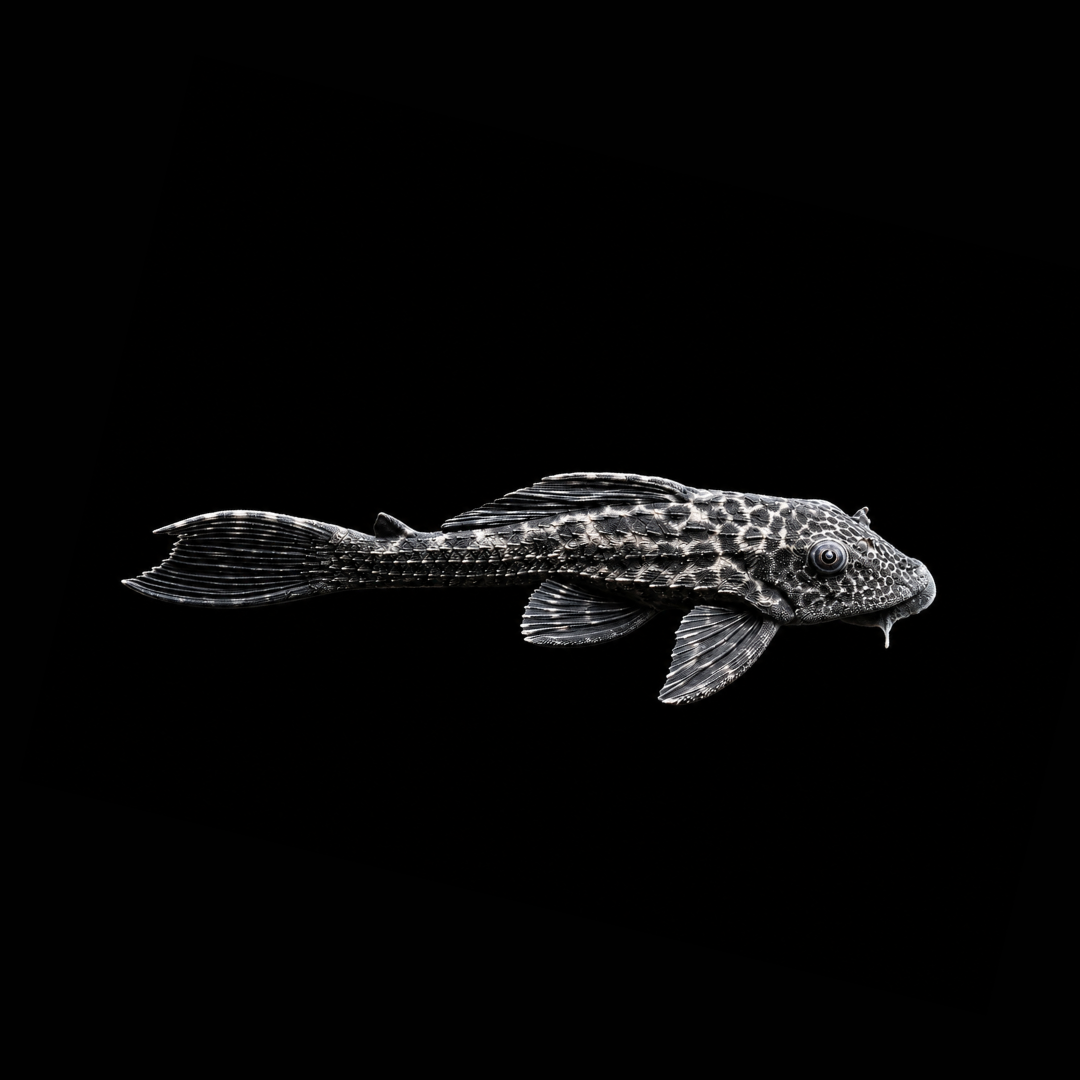
では、自分の水槽の個体がどちらの属なのかは、どうすれば確かめられるのでしょうか。もっとも客観的な手がかりは、背鰭の軟条(柔らかい鰭の筋)の数です。ヒポストムス属の背鰭は1本の棘と7本ほどの軟条からなるコンパクトなものですが、マダラロリカリア属では軟条が9〜14本(通常は10本以上)あり、背鰭が大きく広がります。プレコが背鰭を立てたときに、先頭の太い棘の後ろに並ぶ軟条を数え、10本以上あればマダラロリカリア属だと判断できます。さらに、お腹に独立した黒い斑点が並んでいればP. pardalis、斑点がつながって虫食いや迷路のような模様になっていればP. disjunctivusの特徴とされます。ただし養殖場では両種の交雑も起きており、中間的な模様を持つ個体も珍しくありません。なお、隣の水槽で売られていることの多い「セルフィンプレコ」も同じマダラロリカリア属の仲間です。明るい茶褐色の地に豹柄が入り、ヨットの帆のように高い背鰭を持つため、観賞魚としてはやや高値で取引されています。So how can you tell which genus your own fish belongs to? The most objective clue is the number of soft rays (the flexible supporting rods) in the dorsal fin. In Hypostomus, the dorsal fin is compact, with one spine and about seven soft rays, whereas in Pterygoplichthys it has 9–14 soft rays (usually 10 or more) and spreads out broadly. When your pleco raises its dorsal fin, count the soft rays behind the thick leading spine; if there are 10 or more, you can conclude it is a Pterygoplichthys. Furthermore, a belly with separate dark spots is characteristic of P. pardalis, while spots joined into a wormlike or maze pattern are characteristic of P. disjunctivus. Hybrids between the two do occur on farms, however, so fish with intermediate patterns are not unusual. The “sailfin pleco” often sold in the next tank is also a Pterygoplichthys. With leopard markings on a light brown base and a dorsal fin as tall as a yacht’s sail, it usually sells for a slightly higher price as an ornamental fish. |
| 4. 「胃がない」どころか、胃で空気を吸う魚 / 4. Far From Stomachless: A Fish That Breathes With Its Stomach |
「プレコには胃袋がない」と紹介されることがありますが、実際はまったく逆です。ヒポストムス属やマダラロリカリア属は、お腹の中の大きな部分を占める、よく発達した胃を持っています。この胃の壁はとても薄く、細かな毛細血管が網の目のように張り巡らされていて、酸素を取り込む器官として働くことが知られています。水中の酸素が少なくなると、プレコは水面へ浮かび上がって空気を呑み込み、胃から直接酸素を取り込むのです。つまり、エラだけに頼らずに呼吸できるということで、この能力は汚れた止水域や熱帯の乾季を生き抜く切り札になっています。胃にためた空気は、浮力の調整にも使われていると考えられています。海外の養殖池では、水を抜いて空にした池に再び水を入れたところ、プレコが再び姿を現したという報告もあります。Plecos are sometimes said to have no stomach, but the truth is quite the opposite. Hypostomus and Pterygoplichthys have a well-developed stomach that takes up a large part of the body cavity. Its wall is very thin and laced with a fine network of capillaries, and it is known to work as an organ for taking in oxygen. When oxygen in the water runs low, the pleco rises to the surface, gulps air, and absorbs oxygen directly through its stomach. In other words, it can breathe without relying solely on its gills, and this ability is a trump card for surviving in polluted still waters and tropical dry seasons. The air held in the stomach is also thought to help with buoyancy control. There are even reports from fish farms abroad of plecos reappearing after a pond was drained and then refilled. |
| 5. ナノレベルで設計された鎧 / 5. Armor Engineered at the Nanoscale |
プレコの体は、一般的な魚のような鱗の代わりに、柔軟につながった骨板で覆われています。材料工学の研究でP. pardalisの骨板を非常に細かいスケールで調べたところ、外側には硬く石灰化したコラーゲン繊維が層状に並び、内側にはスポンジ状の組織が挟まった、いわばサンドイッチのような構造であることがわかりました。これはアルマジロやカメの甲羅にも通じる仕組みで、噛みつかれたときの力を一点に集中させずに広く分散し、柔らかい体の内部まで歯が届くのを防ぐと考えられています。その守りは非常に堅く、野生化した地域では、プレコを呑み込もうとしたペリカンなどの鳥が、硬い鰭の棘によって命を落とした例さえ報告されています。Instead of the scales found on ordinary fish, the pleco’s body is covered with flexibly linked bony plates. When materials scientists examined the plates of P. pardalis at a very fine scale, they found a sandwich-like structure, with layers of hard, mineralized collagen fibers on the outside and a spongy tissue in between on the inside. This arrangement resembles the shells of armadillos and turtles, and is thought to spread the force of a bite over a wide area rather than letting it concentrate at a single point, keeping teeth from reaching the soft body inside. The defense is so strong that, in areas where plecos have gone feral, birds such as pelicans have even been reported to die after trying to swallow them, killed by the hard fin spines. |
| 6. 昼と夜で形を変える「オメガ虹彩」 / 6. The “Omega Iris” That Changes Shape by Day and Night |
サッカープレコの目を近くでよく見ると、瞳が丸ではなく、三日月形や逆U字形に見えることがあります。これはロリカリア科に特有の「オメガ虹彩」と呼ばれる構造です。虹彩の上部から弁のような組織が垂れ下がっていて、明るい昼間にはこれが広がって瞳の中央を覆い、ギリシャ文字のオメガ(Ω)を逆さにしたような形に光を絞り込みます。暗い夜には弁が縮んで瞳が大きく開くため、夜間の見やすさと昼間のまぶしさ対策を両立できるのです。さらに、捕食者の目につきやすい黒く丸い瞳の輪郭を崩すことで、カモフラージュにも役立っている可能性が示唆されています。Look closely at a sucker pleco’s eye and you may notice that its pupil is not round but crescent-shaped or like an upside-down U. This is a structure peculiar to the Loricariidae called the “omega iris.” A flap of tissue hangs down from the top of the iris; in bright daylight it expands to cover the center of the pupil, narrowing the incoming light into the shape of an upside-down Greek letter omega (Ω). At night the flap contracts and the pupil opens wide, so the fish can see well in the dark while also coping with daytime glare. It has also been suggested that breaking up the outline of a dark, round pupil, which predators easily notice, may help with camouflage. |
| 7. 流木はかじっても栄養にはならない / 7. It Gnaws Driftwood, but Gains No Nourishment From It |
「プレコは流木を腸内の微生物で分解し、エネルギーにしている」という話を聞いたことがあるかもしれません。ところが、魚の消化の仕組みを研究するドノバン・ジャーマンらの研究によって、この通説は大きく見直されることになりました。マダラロリカリアやロイヤルプレコなどに色をつけた木材を与えたところ、木片は4時間もかからずに消化管を素通りし、木の繊維を分解する酵素の働きもごくわずかだったのです。さらに、木材だけを与えた個体は体重が減り、藻類を与えた個体は大きく体重を増やしました。つまりサッカープレコは、シロアリのように木を時間をかけて消化する本当の木食動物ではなく、本来は水底にたまった有機物(デトリタス)や藻類を食べる魚だと考えられています。流木をかじるのは、傷みかけた木の表面に育つ微生物の膜や付着した藻類をこそげ取るためなのでしょう。水槽に入れる流木は主食ではなく、隠れ家や暮らしの刺激、そしてちょっとした餌場として役立っているのです。You may have heard that plecos break down driftwood with the help of gut microbes and turn it into energy. However, research by Donovan German and colleagues, who study digestion in fish, led to a major reassessment of this belief. When Pterygoplichthys, royal plecos, and related species were fed dyed wood, the fragments passed straight through the gut in less than four hours, and the enzymes that break down wood fibers showed very little activity. Moreover, fish fed only wood lost weight, while those fed algae gained substantially. In other words, the sucker pleco is not a true wood-eater like the termite, which digests wood slowly over time, but is thought to be essentially a fish that feeds on organic debris on the bottom (detritus) and on algae. It likely gnaws driftwood to scrape off the films of microbes and attached algae growing on decaying surfaces. Driftwood in an aquarium serves not as a staple food but as shelter, enrichment, and a small grazing spot. |
| 8. 皮膚にまとう「歯」と、何にでも吸い付く口 / 8. “Teeth” Worn on the Skin and a Mouth That Grips Anything |
プレコの骨板や鰭の棘をなでるとザラザラしていますが、その正体は「オドントード(皮歯)」と呼ばれる小さなトゲです。つくりや形づくられる仕組みが脊椎動物の歯とよく似ていることから、いわば歯を皮膚の表面に並べたような組織だと考えられています。また、吸盤状の口の裏側には細かな突起がびっしりと並んでいて、ザラザラした砂利の上でも張り付いたまま、呼吸と餌の削り取りを同時にこなせることが研究で示されています。水中でしっかり吸着できるこの巧みな仕組みは、新しい吸着技術のお手本としても注目されています。Stroke a pleco’s plates or fin spines and they feel rough; the cause is tiny spines called odontodes. Because their structure and the way they develop closely resemble vertebrate teeth, they are thought of as something like teeth arranged over the surface of the skin. In addition, the underside of the suction mouth is densely covered with tiny projections, and research has shown that this allows the fish to stay attached even to rough gravel while breathing and scraping food at the same time. This clever mechanism for gripping firmly underwater is also attracting attention as a model for new adhesion technology. |
| 9. 地味なコケ取り役が歩んだアクアリウム史 / 9. The Aquarium History of a Humble Algae Cleaner |
吸盤状の口を持つ大型ナマズの商業輸入は、19世紀末の欧米ですでに始まっていたと記録されています。1960〜70年代にはベネズエラやスリナム、ガイアナなど南米北部から盛んに輸出され、「大型プレコといえばヒポストムス属」という時代が続きました。ところが1980年代以降、輸出の中心はペルーやブラジルへ移り、アマゾンに多いマダラロリカリア属が大量に出回るようになります。さらに米国フロリダ州や東南アジアで養殖が本格化し、現在の安価なサッカープレコは、ほぼ養殖由来の系統に置き換わりました。その一方で、「ヒポプレコ」という呼び名だけが商習慣として残ったのです。日本でも、プレコ類は長く脇役の掃除屋として親しまれてきました。しかし1980年代末にインペリアルゼブラプレコが紹介されたことをきっかけに、「Lナンバー」と呼ばれる識別番号とともに、コレクション性の高い主役級の観賞魚へと格上げされていきます。そうしたなかでもサッカープレコは、ワンコインで買える定番のコケ取り役という立ち位置を今も守り続けています。Commercial imports of large suckermouth catfishes are recorded as having already begun in Europe and North America in the late 19th century. In the 1960s and 1970s they were exported in large numbers from northern South America, including Venezuela, Suriname, and Guyana, and for a long time “large pleco” meant Hypostomus. From the 1980s onward, however, the center of exports shifted to Peru and Brazil, and Pterygoplichthys, common in the Amazon, came onto the market in large numbers. As farming then took off in Florida and Southeast Asia, today’s inexpensive sucker plecos were almost entirely replaced by farm-raised lines, while only the name “Hypo pleco” survived as a trade custom. In Japan, too, plecos were long loved as humble supporting-cast cleaners. But after the imperial zebra pleco was introduced in the late 1980s, they rose, together with identification codes known as “L-numbers,” to become collectible stars of the hobby. Even so, the sucker pleco still holds its place as the classic algae cleaner that can be bought for a single coin. |
| 10. 南米の食卓を支える「カスコード」と「カラチャマ」 / 10. “Cascudo” and “Carachama”: A Staple of South American Tables |
日本ではもっぱら観賞魚として語られるプレコですが、原産地の南米では大切な食材でもあります。ブラジルではカスコードやボドと呼ばれ、アマゾナス州ではボドを使ったスープや燻製焼きが郷土料理として親しまれています。ペルーではカラチャマと呼ばれ、アマゾン流域の町イキトスの市場に並び、スープなどの料理に使われます。現地では丸ごと加熱してから硬い骨板を剥がし、中の身を食べるのが一般的とされています。鎧のような体も、料理になれば身を包む頑丈な天然の器になるというわけです。In Japan, plecos are discussed almost exclusively as aquarium fish, but in their native South America they are also an important food. In Brazil they are called cascudo or bodó, and in Amazonas State soups and smoked dishes made with bodó are beloved regional fare. In Peru they are known as carachama; they are sold in the markets of Iquitos, a town in the Amazon basin, and used in soups and other dishes. Locally, the fish are commonly cooked whole, after which the hard plates are peeled away to eat the flesh inside. Once cooked, that armor-like body becomes a sturdy natural vessel wrapped around the meat. |
| 11. 強さゆえに世界へ広がった外来魚としての顔 / 11. A Toughness That Has Made It an Invader Worldwide |
空気呼吸、堅い鎧、そして酸素不足や水質悪化への強さ。こうした能力は、ひとたび野外に放たれると大きな脅威に変わります。メキシコの貯水池では、大繁殖したプレコが地域の漁業に深刻な打撃を与えました。米国フロリダ州の湧水地帯では、越冬中のマナティーの体にプレコが吸い付く様子が観察されています。インドネシアのジャカルタやタイの一部の水域でも、捕獲される魚の大半をプレコが占めるほど増えたと報じられています。日本では1980年代後半から沖縄本島の河川で定着が確認され、在来の魚との競合や、外来の寄生虫が持ち込まれたことも報告されています。さらに近年は、工場などの温かい排水が流れ込む本州の水域でも見つかる例が出てきました。本来は低い水温に弱い熱帯魚であっても、人の暮らしが生み出す温かい水を足がかりに、すみかを広げるおそれがあるのです。Air breathing, tough armor, and resistance to low oxygen and poor water quality: once released into the wild, these abilities turn into a serious threat. In a Mexican reservoir, booming pleco populations dealt a severe blow to the local fishery. In the spring areas of Florida, plecos have been observed latching onto the bodies of overwintering manatees. In Jakarta, Indonesia, and in some waters of Thailand, plecos have reportedly increased to the point of making up most of the fish caught. In Japan, established populations have been confirmed in rivers on Okinawa Island since the late 1980s, along with reports of competition with native fish and the introduction of foreign parasites. In recent years, plecos have also been found in waters on Honshu that receive warm discharge from factories and similar facilities. Even a tropical fish that is naturally vulnerable to cold water may extend its range, using the warm water created by human activity as a foothold. |



コメント