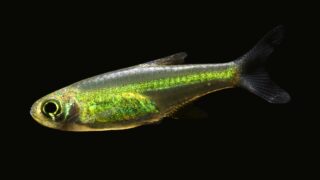
コリドラス・アルボリネアータスは、ボリビアとブラジルの国境を流れるイトゥネス川(ブラジル名:グァポレ川)水系に生息する小型のコリドラスです。吻が短く丸いショートノーズ体型で、頭部から背中にかけては茶褐色〜黒色の細かなスポットが散りばめられ、その下には体側の中央に沿って太く明るい白いラインが走ります。すべての鰭が模様のない透明であることも大きな特徴で、ゴマ塩模様と白いライン、澄んだ鰭の対比が、落ち着きの中にも気品を感じさせる姿をつくっています。学名の種小名「albolineatum」はラテン語で「白い線のある」という意味で、この白いラインにちなんで名付けられました。2004年に新種として記載される前から「C056」というCナンバーで愛好家に知られており、2024年に発表された分類の見直しによって、現在はホプリソマ属(Hoplisoma)に分類され、学名はホプリソマ・アルボリネアータムとなっています。日本では流通個体のほとんどが現地で採集された野生個体とされ、主に南米産ナマズを得意とする専門店で見かける、やや珍しい種類です。細かい砂の上を群れでせわしなく探り回る姿にはコリドラスらしい愛嬌があり、環境を整えれば水槽でも長く楽しむことができます。The White Stripe Cory is a small cory native to the Río Iténez (known in Brazil as the Rio Guaporé) system, which flows along the border between Bolivia and Brazil. It has a short, rounded snout typical of the “short-nosed” group. Fine brown to black spots are scattered from the head across the back, and below them a broad, bright white line runs along the middle of the flank. Another key feature is that all of its fins are clear and completely unpatterned. The contrast between the salt-and-pepper spotting, the white line and the transparent fins gives the fish a calm yet elegant appearance. The species name “albolineatum” means “with a white line” in Latin, referring to this stripe. Before its formal description in 2004 it was already known to hobbyists by the C-number “C056,” and following a taxonomic revision published in 2024 it is now placed in the genus Hoplisoma, under the scientific name Hoplisoma albolineatum. In Japan, most specimens on the market are said to be wild-caught, and it is a somewhat uncommon species found mainly at shops specializing in South American catfish. The sight of a group busily foraging over fine sand is full of typical cory charm, and with a suitable setup it can be enjoyed in the aquarium for many years.
基本情報 / Basic Information
学名 / Scientific Name
Hoplisoma albolineatum (Knaack, 2004)
通称 / Common Name
コリドラス・アルボリネアータス、ホプリソマ・アルボリネアータム、C056、旧シングエンシス(過去の流通名)。旧学名はCorydoras albolineatus。White Stripe Cory, C056. Formerly known as Corydoras albolineatus.
分類 / Family
ナマズ目 カリクティス科 コリドラス亜科 ホプリソマ属Order Siluriformes, Family Callichthyidae, Subfamily Corydoradinae, Genus Hoplisoma
英名 / English Name
White Stripe Cory
分布 / Distribution
南米。ボリビア東部とブラジル西部の国境を流れるイトゥネス川(グァポレ川)水系と、その支流であるパラグア川の流域に分布します。この一帯はマデイラ川上流域にあたり、最終的にはアマゾン川へと注ぎます。模式産地はボリビア・サンタクルス県のパラグア川の河口付近です。South America: the Río Iténez (Rio Guaporé) system along the border of eastern Bolivia and western Brazil, including its tributary the Río Paraguá. This area lies in the upper Rio Madeira basin, which ultimately drains into the Amazon. The type locality is near the mouth of the Río Paraguá in Santa Cruz Department, Bolivia.
最大体長 / Max Size
記録上の最大は標準体長(尾鰭を除いた長さ)約3.7cm。飼育下ではメスが4.0〜4.5cm程度まで育つこともあります。The recorded maximum is about 3.7 cm standard length (excluding the tail fin). In aquariums, females may grow to around 4.0–4.5 cm.
寿命 / Lifespan
本種についての詳しい記録は少ないものの、ほかの小型コリドラスと同様に、飼育下では5年前後、環境が良ければそれ以上生きると考えられています。Detailed records for this species are limited, but like other small cories it is thought to live around 5 years in captivity, and possibly longer under good conditions.
飼育環境 / Aquarium Environment
水槽サイズ / Tank Size
群れで飼うことが前提となるため、60cm規格水槽(約57L)以上がおすすめです。10匹以上の群れを泳がせる場合は、80L以上を目安に、60cmワイド水槽や90cm規格水槽など底面積に余裕のある水槽を用意すると、より自然な群泳を楽しめます。Because this species should be kept in a group, a 60 cm standard tank (about 57 L) is the recommended minimum. For a group of 10 or more, aim for 80 L or more and choose a tank with a generous footprint, such as a 60 cm wide tank or a 90 cm standard tank, to enjoy more natural shoaling behavior.
水温 / Temperature
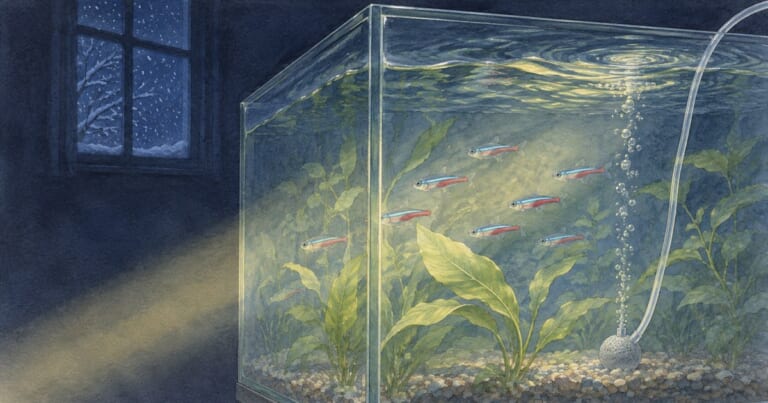
22〜27℃が目安です。原産地は水温が30℃前後に達する温かい水域で、高水温にもある程度耐えます。ただし、水温が高いほど水に溶け込める酸素が少なくなるため、夏場はエアレーションを強めて酸欠を防ぎましょう。About 22–27°C is a good guideline. Its native waters are warm, reaching around 30°C, and it tolerates fairly high temperatures. However, warmer water holds less dissolved oxygen, so strengthen aeration in summer to prevent oxygen shortage.
水質 / Water Quality
pH6.0〜7.5の弱酸性〜中性、総硬度(GH)0〜10程度の軟水が適しています。原産地の水は電気伝導度が20µS/cm台と報告されており、ミネラルがほとんど溶けていない、極めて軟らかい水です。日本の水道水は多くの地域で軟水なので、カルキを抜いた水で定期的に水換えをすれば十分に対応できます。Slightly acidic to neutral water (pH 6.0–7.5) and soft water with a general hardness (GH) of about 0–10 are suitable. Its native waters have been reported to have a conductivity in the 20 µS/cm range, meaning they are extremely soft with almost no dissolved minerals. Tap water in most parts of Japan is soft, so regular water changes with dechlorinated water are generally sufficient.
レイアウト / Layout
最も大切なのは底砂です。本種は砂ごと餌を口に含み、砂だけをエラから吐き出して食べるため、田砂など角の丸い細かい砂を敷いてください。原産地は白く細かい砂の砂州に落ち葉が積もる環境です。流木や水草、マジックリーフなどの落ち葉で適度な日陰と隠れ家を作りつつ、手前には砂の見えるオープンスペースを広めに残すと、群れで砂を探る自然な行動をよく観察できます。The most important element is the substrate. This species takes sand into its mouth along with food and expels the sand through its gills, so use fine, round-grained sand such as river sand (tasuna). Its native habitat consists of fine white sandbanks covered with fallen leaves. Create shade and hiding places with driftwood, plants and leaf litter such as Indian almond leaves, while leaving a wide open sandy area in front, and you will be able to watch the group forage through the sand naturally.
注意点 / Precautions
大磯砂のような粗い砂利や角の立った底砂は、吻やヒゲを傷つけて細菌感染の原因になるため避けましょう。また、本種を含むコリドラスの仲間は、強いストレスを受けると体から有害な分泌物を出すことがあり、水量の少ない容器では自分自身や同居魚を弱らせてしまう場合があります(いわゆる「自毒」)。網ですくうときや移動させるときは、できるだけ驚かせないようにし、たっぷりの水量で扱ってください。胸鰭の棘は鋭く、刺さると強く痛むとされるため、素手でつかむのは避けましょう。単独や少数で飼うと物陰に隠れて落ち着かなくなるので、6〜8匹以上、理想的には10匹以上での飼育がおすすめです。Avoid coarse gravel such as Oiso sand and other sharp-grained substrates, which can damage the snout and barbels and lead to bacterial infection. Cories, including this species, may release harmful secretions from their bodies when under strong stress, and in a small volume of water this can weaken the fish itself and its tankmates (often called “self-poisoning”). When netting or moving the fish, avoid startling it and handle it in plenty of water. The pectoral spines are sharp and are said to cause intense pain if they puncture the skin, so do not grab the fish with bare hands. Kept alone or in very small numbers it tends to hide and become unsettled, so a group of at least 6–8, ideally 10 or more, is recommended.
餌と給餌 / Feeding
餌の種類 / Diet
水底で暮らす雑食性の魚で、野生では砂の中にいる昆虫の幼虫や小さな甲殻類、ミミズの仲間、水底に積もった有機物などを食べています。飼育下ではコリドラス用の沈下性人工飼料(タブレットや顆粒)を主食にし、冷凍アカムシ、冷凍イトミミズ、孵化させたブラインシュリンプなどの動物性の餌を定期的に加えると、健康な体づくりにつながります。It is a bottom-dwelling omnivore. In the wild it feeds on insect larvae, small crustaceans and worms hidden in the sand, as well as organic matter settled on the bottom. In the aquarium, use sinking foods for corydoras (tablets or granules) as the staple, and regularly add animal-based foods such as frozen bloodworms, frozen tubifex and newly hatched brine shrimp to keep the fish in good condition.
給餌のポイント / Feeding Tips
コリドラスは「残り餌を片付けるお掃除役」と見られがちですが、本種は小さな体のわりによく食べる魚で、ほかの魚の食べ残しだけでは栄養が足りません。必ず本種のための餌を底まで届けてあげましょう。上層を泳ぐテトラ類と混泳している場合は、テトラ類の動きが落ち着く消灯前後に沈下性の餌を与えると、嗅覚とヒゲで餌を探すコリドラスにもしっかり行き渡ります。食べ残しは水質悪化の原因になるので、数分で食べきれる量を目安にしてください。Cories are often seen as “cleanup crew” for leftover food, but this species has a hearty appetite for its size and will not get enough nutrition from leftovers alone. Always make sure food intended for it reaches the bottom. When kept with tetras that swim in the upper levels, feeding sinking food around lights-out, when the tetras settle down, ensures that the cories, which locate food by smell and with their barbels, get their share. Uneaten food degrades water quality, so give an amount that can be finished within a few minutes.
性格と混泳 / Temperament and Tank Mates
性格 / Temperament
とても温和で、ほかの魚に危害を加えることはまずありません。野生では数千匹規模の大きな群れで暮らすとされ、仲間と一緒にいることで落ち着く、社会性の強い魚です。群れで飼うと、底砂の上を並んで探り回ったり、ときおり水面へ空気を吸いに上がったりする、活発で愛嬌のある姿を見せてくれます。It is very peaceful and almost never harms other fish. In the wild it is said to live in large shoals numbering in the thousands, and it is a highly social fish that feels secure with companions. Kept in a group, it shows lively and charming behavior, foraging side by side over the sand and occasionally rising to the surface to gulp air.
混泳の相性 / Compatibility
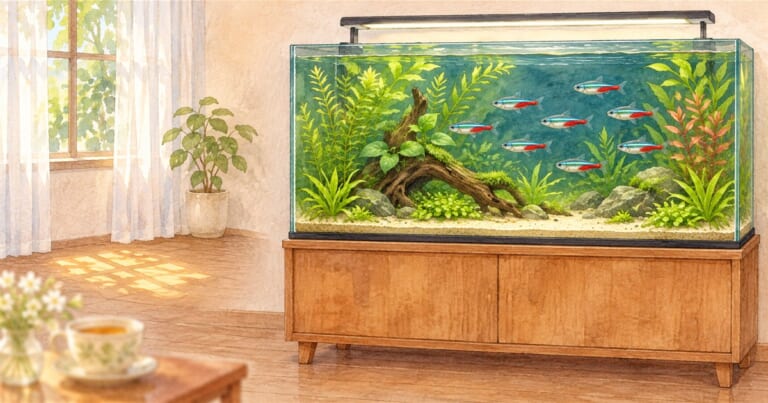
ネオンテトラやペンシルフィッシュなど、同じ南米産で水槽の中層〜上層を泳ぐ温和な小型魚とは相性が良好です。原産地では近縁のコリドラス・パラグアと一緒に餌を探す様子も観察されているとされ、ほかの温和なコリドラスとの混泳も可能です。一方で、本種を口に入れられる大きさの中型〜大型魚や、底で縄張りを強く主張するシクリッド類との混泳は避けましょう。It is well suited to peaceful small fish from South America that swim in the middle to upper levels, such as neon tetras and pencilfish. In the wild it has reportedly been observed foraging alongside the closely related Paragua cory, and it can be kept with other peaceful cories. Avoid medium to large fish that could swallow it, and cichlids that aggressively defend territories on the bottom.
病気と対策 / Diseases and Prevention
かかりやすい病気 / Common Diseases
最も注意したいのは、底砂や水質の悪化でヒゲや吻が傷つき、そこからエロモナス菌などの細菌に感染して、ヒゲが溶けるように短くなってしまう症状です。また、輸入されたばかりの野生個体は環境の変化で体力が落ちやすく、白点病や細菌感染症にかかることがあります。群れが頻繁に水面へ空気を吸いに行くようになった場合は、アンモニアや亜硝酸の蓄積、酸素不足など、水質が悪化しているサインと考えられます。The main concern is damage to the barbels and snout from unsuitable substrate or poor water quality, followed by bacterial infection (such as Aeromonas) that causes the barbels to erode and shorten. Newly imported wild fish can also lose condition due to environmental change and may develop white spot disease or bacterial infections. If the group starts going to the surface to gulp air frequently, this is considered a sign of deteriorating water quality, such as accumulated ammonia or nitrite or a lack of oxygen.
対策と予防 / Prevention
角の丸い細かい砂を使い、底砂にたまった汚れを定期的に掃除することが、ヒゲを守る一番の予防策です。水換えはこまめに行い、食べ残しを放置しないようにしましょう。新しく迎えた個体は、可能であれば別の水槽でしばらく様子を見てから本水槽に合流させると安心です。コリドラスは薬品に敏感な面があるため、薬浴をする際は規定量より控えめな濃度から始め、エアレーションを十分に行ってください。日頃から水面へ上がる頻度を観察しておくと、水質の異変に早く気づけます。Using fine, round-grained sand and regularly cleaning debris from the substrate is the best way to protect the barbels. Change water frequently and do not leave uneaten food in the tank. If possible, quarantine new fish in a separate tank for a while before adding them to the main aquarium. Cories can be sensitive to chemicals, so when medicating, start with a lower concentration than the standard dose and provide ample aeration. Keeping an eye on how often the fish rise to the surface helps you notice changes in water quality early.
増やし方(繁殖) / Breeding
雌雄の判別 / Sexing
十分に成熟した個体であれば、上から見ると判別しやすくなります。メスはオスより一回り大きく、卵を持つと腹部が丸く幅広くなります。オスはほっそりとした体型のままで、成熟するにつれて鰭の先がやや尖る傾向があります。In fully mature fish, sexing is easiest when viewed from above. Females grow slightly larger than males, and their bellies become rounder and broader when carrying eggs. Males stay slender, and their fin tips tend to become slightly more pointed as they mature.
繁殖形態 / Reproduction
卵を産むタイプの魚で、親が卵や稚魚を守ることはありません。オスがメスを追いかけて求愛し、メスがオスの腹部に口を寄せてT字型に交わる、コリドラス特有の「Tポジション」で受精が行われます。その後、メスは左右の腹鰭を合わせて数個の卵を抱え、ガラス面や水草の葉など滑らかな場所に、粘り気のある卵を産み付けます。It is an egg-layer, and the parents do not guard their eggs or fry. The male chases and courts the female, and fertilization takes place in the “T-position” characteristic of cories, in which the female places her mouth against the male’s belly so the pair forms a T shape. The female then holds a few eggs between her pelvic fins and attaches the sticky eggs to smooth surfaces such as the aquarium glass or plant leaves.
繁殖のポイント / Breeding Tips
本種の繁殖報告はまだ少ないものの、ほかのコリドラスと同じ手順で挑戦できます。まず、成熟した雌雄の群れに動物性の餌を十分に与え、メスの抱卵を促します。その後、水換えの際に飼育水より2〜3℃低い水を入れると、原産地で雨季に川が増水するときの環境に近い刺激となり、産卵のきっかけになると考えられています。親魚は自分たちの卵も食べてしまうため、産卵が終わったら卵を慎重に剥がし、エアレーションをした別の容器へ移しましょう。水温25℃前後であれば、4〜5日ほどで孵化します。稚魚はしばらくお腹に付いた栄養の袋(ヨークサック)で育つので、その間は餌を与えません。自由に泳ぎ始めたら、インフゾリアやマイクロワーム、孵化したてのブラインシュリンプを、1日数回に分けて少量ずつ与えます。稚魚は水質の悪化に弱いため、スポイトでこまめに食べ残しを取り除き、少量ずつ頻繁に水換えをすることが育成の鍵になります。Breeding reports for this species are still few, but the same approach used for other cories can be tried. First, feed a group of mature males and females plenty of animal-based food to bring the females into spawning condition. Then, during a water change, add water 2–3°C cooler than the tank water. This is thought to mimic the rising rivers of the rainy season in its native habitat and act as a spawning trigger. Because adults will eat their own eggs, carefully remove the eggs after spawning and move them to a separate aerated container. At around 25°C the eggs hatch in about 4–5 days. The fry live on their yolk sacs at first, so do not feed them during this period. Once they begin swimming freely, give small amounts of infusoria, microworms and newly hatched brine shrimp several times a day. Fry are very sensitive to poor water quality, so removing leftovers with a pipette and making small, frequent water changes are the keys to raising them.
雑学と豆知識 / Trivia and Fun Facts
1. 「シングエンシス」と呼ばれていた時代 / 1. The Era When It Was Called “Xinguensis”
本種が日本に入ってきた当初、店頭では「コリドラス・シングエンシス」という名前で売られていたといわれています。どちらも細かいスポットを持つショートノーズ体型で、さらに産地の情報が正確に伝わっていなかったことから、名前の取り違えがそのまま定着してしまったようです。しかし本物のシングエンシスは、ブラジルのシングー川水系に暮らす、体高が高いなど姿の異なる別種でした。2004年、ドイツのコリドラス研究者ヨアヒム・クナックが本種を新種として記載し、産地がイトゥネス川(グァポレ川)水系であることがはっきりしたことで、現在の名前に落ち着きます。クナックはこのとき、本種を含む複数の新種をまとめて発表しています。今でも古くからの愛好家の間では「旧シングエンシス」という呼び名が通じることがあり、その呼び名には、日本のコリドラス趣味が手探りで情報を集めていた時代の名残が感じられます。When this species first arrived in Japan, it is said to have been sold under the name “Corydoras xinguensis.” Both fish have fine spots and a short-nosed body, and because accurate locality information was not passed along, the mix-up became established. The true xinguensis, however, is a different species from Brazil’s Rio Xingu system, with a different appearance including a deeper body. In 2004 the German corydoras researcher Joachim Knaack described this fish as a new species, and once its origin in the Río Iténez (Rio Guaporé) system became clear, it settled on its present name. Knaack described several new species, including this one, at the same time. Even today, long-time hobbyists sometimes refer to it as the “old xinguensis,” a name that carries traces of an era when Japanese cory enthusiasts gathered information by trial and error.
2. 白いラインで見分けるポリスティクタスとの違い / 2. Telling It Apart from the Polystictus Cory by the White Line
同じグァポレ川水系からは、よく似たゴマ塩模様を持つコリドラス・ポリスティクタスも輸入されます。頭の形や細かいスポットの雰囲気は驚くほど似ていますが、見分けるポイントは意外とシンプルです。アルボリネアータスには体側の中央を走る明るい白いラインがあり、ポリスティクタスにはこれがありません。また、ポリスティクタスがふっくらと体高のある体型なのに対し、アルボリネアータスはやや細身の紡錘形をしています。これに加えて、すべての鰭が透明であることも本種らしさのひとつです。この三つを意識して観察すると、ショップの水槽の中でもぐっと見分けやすくなります。From the same Guaporé system comes the Polystictus Cory, which has very similar salt-and-pepper spotting. The head shape and fine spots look remarkably alike, but the key to telling them apart is surprisingly simple. The White Stripe Cory has a bright white line along the middle of its flank, while the Polystictus Cory does not. In addition, the Polystictus Cory is plump and deep-bodied, whereas the White Stripe Cory has a somewhat slimmer, spindle-shaped body. Completely clear fins are another hallmark of this species. Keeping these three points in mind makes the two much easier to distinguish, even in a shop tank.
3. コリドラス属からホプリソマ属へ / 3. From Corydoras to Hoplisoma
長い間、コリドラス属は170を超える種を含む、ナマズの仲間でも最大級のグループでした。しかし以前から遺伝子の解析によって、この属がひとつの祖先から枝分かれしたまとまりではなく、系統の異なるいくつものグループが寄り集まったものであることが指摘されていました。つまり、見た目が似ているために同じ名前でくくられていただけで、進化の道筋の上では別々のグループだったということです。2024年、国際的な研究チームが遺伝子と体のつくりの特徴をあわせて検討した結果を発表し、旧コリドラス属は複数の属に分けられることになりました。本種が含まれるグループには、19世紀に提唱されたまま長く使われていなかった「ホプリソマ」という属名が復活して与えられ、学名はHoplisoma albolineatum(ホプリソマ・アルボリネアータム)となりました。種小名の語尾が「-us」から「-um」に変わったのは、ラテン語の文法上、新しい属名が中性名詞として扱われ、種小名もそれに合わせる必要があったためです。とはいえ、観賞魚の世界では今も「コリドラス・アルボリネアータス」や「C056」という呼び名が広く使われています。学術上の名前と趣味の世界の呼び名が並んで生きていることも、この魚の面白いところです。For a long time, the genus Corydoras was one of the largest catfish genera, with more than 170 species. Genetic studies had long suggested, however, that it was not a single group branching from one ancestor but a collection of several separate lineages. In other words, these fish shared a name because they looked alike, even though they followed different evolutionary paths. In 2024 an international research team published a study combining genetic and anatomical data, and the former Corydoras was divided into multiple genera. The group containing this species was given the revived name Hoplisoma, proposed in the 19th century but long unused, and its scientific name became Hoplisoma albolineatum. The ending of the species name changed from “-us” to “-um” because, under Latin grammar, the new genus name is treated as neuter, so the species name had to agree with it. Even so, the names “Corydoras albolineatus” and “C056” remain widely used in the aquarium hobby, and the coexistence of scientific and hobbyist names is one of the interesting aspects of this fish.
4. 「自毒」の正体と二段構えの守り / 4. The Truth Behind “Self-Poisoning” and a Two-Layered Defense
アクアリストの間では、コリドラスの一部は輸送中などに強いストレスを受けると体から毒を出し、袋の中で自分や同じ袋の魚を弱らせてしまうことがあると言われてきました。こうした「自毒」は長く経験則として語られてきましたが、研究によって少しずつその仕組みが見えてきています。コリドラスの仲間の多くは、胸鰭の付け根の皮膚の下に「腋窩腺(えきかせん)」と呼ばれる分泌腺を持っています。ストレスを受けたコリドラスが水中に出す物質に、この腺の分泌物と同じ成分が含まれていることが報告されており、近年の研究では、腋窩腺の分泌物そのものに強い毒性がある可能性も示されています。さらに、ホプリソマ属などの一部のグループでは、胸鰭の硬い棘に沿って毒腺が発達しており、刺さった相手に直接毒を送り込めることが報告されています。つまり本種は、水中に物質を出して身を守る仕組みと、棘で刺して身を守る仕組みの両方を備えていると考えられます。日本の専門店が本種を発送する際、1匹ずつ、あるいは少数ずつをたっぷりの水で梱包したり、棘で袋が破れないよう袋を重ねたりと細やかな工夫をしているのも、こうした性質を踏まえたものです。Aquarists have long said that some cories, when severely stressed during transport, release toxins that can weaken themselves and other fish in the same bag. This “self-poisoning” was long discussed as rule-of-thumb knowledge, but research is gradually revealing how it works. Many cories have secretory glands called axillary glands beneath the skin at the base of the pectoral fins. Substances released into the water by stressed cories have been reported to contain the same components as these glands’ secretions, and recent research suggests that the axillary gland secretions themselves may be strongly toxic. In addition, in certain groups including Hoplisoma, venom glands have been reported to develop along the hard pectoral spines, allowing venom to be delivered directly into anything the spine punctures. In other words, this species is thought to have two defensive systems: releasing substances into the water and stinging with its spines. This is why Japanese specialist shops take care when shipping it, packing fish singly or in small numbers with plenty of water and using multiple layers of bags so the spines do not puncture them.
5. 似た模様の魚たちが群れる理由 / 5. Why Similar-Looking Fish Swim Together
南米の川では、系統の異なるコリドラスの仲間同士がよく似た模様をまとい、同じ場所で混ざり合って群れを作る現象が知られています。身を守る毒を持つ魚同士が同じ模様を共有すると、捕食者は「この模様の魚は危険だ」と早く覚えるため、どの種も襲われにくくなると考えられています。これをミュラー型擬態と呼びます。一方、守りの弱い種が強い種の模様に便乗している場合はベイツ型擬態と呼ばれ、コリドラスの世界ではこの二つが複雑に絡み合っているのではないかと考えられています。アルボリネアータスが野生で大きな群れを作る行動も、一匹あたりが狙われる確率を下げるだけでなく、群れ全体で「危険だ」という合図を目立たせる意味があるのかもしれません。水槽の中で群れがそろって動く姿の背景には、そんな長い進化の物語が隠れているのです。In South American rivers, cories from different lineages are known to share very similar color patterns and form mixed shoals in the same places. When fish armed with defensive toxins share a pattern, predators quickly learn that “fish with this pattern are dangerous,” which is thought to make every species less likely to be attacked. This is called Müllerian mimicry. When a less defended species benefits by resembling a better defended one, it is called Batesian mimicry, and among cories the two are thought to be intricately intertwined. The White Stripe Cory’s habit of forming large shoals in the wild may not only lower each fish’s chance of being targeted but also make the group’s shared warning signal more conspicuous. Behind the sight of a group moving together in the aquarium lies a long evolutionary story.
6. 腸で空気を吸う魚 / 6. A Fish That Breathes Air Through Its Gut
コリドラスがときどき水面までさっと泳ぎ上がり、すぐに底へ戻ってくる姿を見たことがある方も多いでしょう。これは空気を飲み込む行動です。飲み込まれた空気は、毛細血管が張り巡らされた腸の後ろの部分で酸素として取り込まれ、残りはお尻から排出されます。南米では乾季になると川の流れが途絶え、取り残された水たまりの酸素がとても少なくなることがあります。この能力は、そうした環境を生き抜くために発達したものと考えられています。ときどき水面に上がるのは自然な行動ですが、あまりに頻繁に繰り返すようなら、水が汚れていたり酸素が不足していたりするサインかもしれません。この小さな仕草は、水槽の状態を教えてくれる大切な目安にもなっています。Many keepers have seen cories dart up to the surface and quickly return to the bottom. This is air-gulping behavior. The swallowed air passes through the rear part of the gut, which is rich in capillaries, where oxygen is absorbed, and the remaining air is expelled through the vent. In South America, rivers can stop flowing in the dry season, leaving isolated pools with very little oxygen. This ability is thought to have developed to survive such conditions. Occasional trips to the surface are natural, but if they become very frequent, it may be a sign of dirty water or a lack of oxygen. This small behavior also serves as a useful indicator of the aquarium’s condition.
7. 蒸留水のような故郷の水 / 7. Home Waters Almost Like Distilled Water
2000年代初頭の現地調査では、生息地の水温はおよそ29〜32℃と温かい一方で、電気伝導度はわずか22〜27µS/cmほどだったと報告されています。電気伝導度は水に溶けているミネラルなどの量の目安で、この数値はミネラルがほとんど含まれておらず、蒸留水にかなり近い状態であることを意味します。川沿いには細かく真っ白な砂が積もった砂州が広がり、熱帯林から落ちた葉が堆積しています。そのため水は透き通っているか、落ち葉から溶け出した成分で紅茶色に染まっています。周辺にはノエル・ケンプ・メルカード国立公園をはじめとする豊かな自然が残されており、本種はそうした水辺で、砂を口に含んではエラから吐き出しながら小さな生き物を探して暮らしています。水槽に細かい砂を敷くことは、この故郷の風景を小さく再現することでもあります。Field surveys in the early 2000s reported that the water in its habitat was warm, around 29–32°C, yet had a conductivity of only about 22–27 µS/cm. Conductivity indicates how much mineral content is dissolved in water, and this value means the water contains almost no minerals, making it quite close to distilled water. Along the rivers lie sandbanks of fine, pure white sand, and leaves falling from the tropical forest pile up on them. As a result, the water is either crystal clear or tinted tea-brown by substances leaching from the leaves. Rich wilderness remains in the surrounding area, including Noel Kempff Mercado National Park, and in these waters the species lives by taking sand into its mouth, expelling it through its gills and searching for small creatures. Laying fine sand in the aquarium is a way of recreating a small piece of this homeland.
まとめ / Conclusion
コリドラス・アルボリネアータスは、体側に一筋の白いラインを走らせた、控えめながらも印象に残る小型のコリドラスです。かつては別の種の名前で呼ばれ、今ではホプリソマ属の一員として数えられるように、名前の移り変わりそのものが物語を持つ魚でもあります。その小さな体には、身を守るための分泌腺と棘、そして空気を吸って乾季を乗り越える力など、アマゾンの水辺を生き抜くための工夫がいくつも備わっています。The White Stripe Cory is a small, understated yet memorable cory with a single white line running along its flank. Once sold under another species’ name and now counted as a member of the genus Hoplisoma, it is a fish whose very changes in name tell a story. Its small body holds many adaptations for surviving in Amazonian waters, from defensive glands and spines to the ability to breathe air and endure the dry season.
細かい砂、清潔な水、十分な餌、そして一緒に暮らす仲間たち。この魚が求めるものはとても素朴ですが、それらがそろったとき、群れは砂の上をにぎやかに探り回り、透明な鰭をきらめかせながら水槽の底に生き生きとした時間をもたらしてくれます。白いラインを並べて泳ぐ小さな群れは、眺めるたびに遠いグァポレ川の白い砂州へと思いを運んでくれる、静かで頼もしい同居人となるでしょう。Fine sand, clean water, enough food and companions to live with: what this fish asks for is very simple, but when these are in place, the group forages busily over the sand, its clear fins glinting, bringing lively moments to the bottom of the aquarium. A small shoal swimming side by side with their white lines becomes a quiet and dependable companion that carries your thoughts, each time you watch it, to the white sandbanks of the distant Rio Guaporé.
Knaack, J. (2004). Beschreibung von sechs neuen Arten der Gattung Corydoras La Cepède, 1803 aus Bolivien (Teleostei: Siluriformes: Callichthyidae). Zoologische Abhandlungen, Staatliches Museum für Tierkunde Dresden, 54.
Dias, A. C., Tencatt, L. F. C., Roxo, F. F., Silva, G. S. C., Santos, S. A., Britto, M. R., Taylor, M. I., & Oliveira, C. (2024). Phylogenomic analyses in the complex Neotropical subfamily Corydoradinae (Siluriformes: Callichthyidae) with a new classification based on morphological and molecular data. Zoological Journal of the Linnean Society, 203(3), zlae053. https://doi.org/10.1093/zoolinnean/zlae053
Kiehl, E., Rieger, C., & Greven, H. (2006). Axillary gland secretions contribute to the stress-induced discharge of a bactericidal substance in Corydoras sterbai (Callichthyidae, Siluriformes). Verhandlungen der Gesellschaft für Ichthyologie, 5, 111–115. https://www.ichthyologie.de/wp-content/uploads/2019/11/Axillary_gland_secretions.pdf
Wright, J. J. (2009). Diversity, phylogenetic distribution, and origins of venomous catfishes. BMC Evolutionary Biology, 9, 282. https://doi.org/10.1186/1471-2148-9-282
Morphological diversification of defensive glands in Corydoradinae catfishes indicates a mixed Müllerian-Batesian mimicry system. (2026). Neotropical Ichthyology, 24(4), e260051. https://www.ni.bio.br/1982-0224-2026-0051/
Alexandrou, M. A., Oliveira, C., Maillard, M., McGill, R. A. R., Newton, J., Creer, S., & Taylor, M. I. (2011). Competition and phylogeny determine community structure in Müllerian co-mimics. Nature, 469, 84–88. https://doi.org/10.1038/nature09660
生理(腸呼吸)
Kramer, D. L., & McClure, M. (1980). Aerial respiration in the catfish, Corydoras aeneus (Callichthyidae). Canadian Journal of Zoology, 58(11), 1984–1991.






コメント