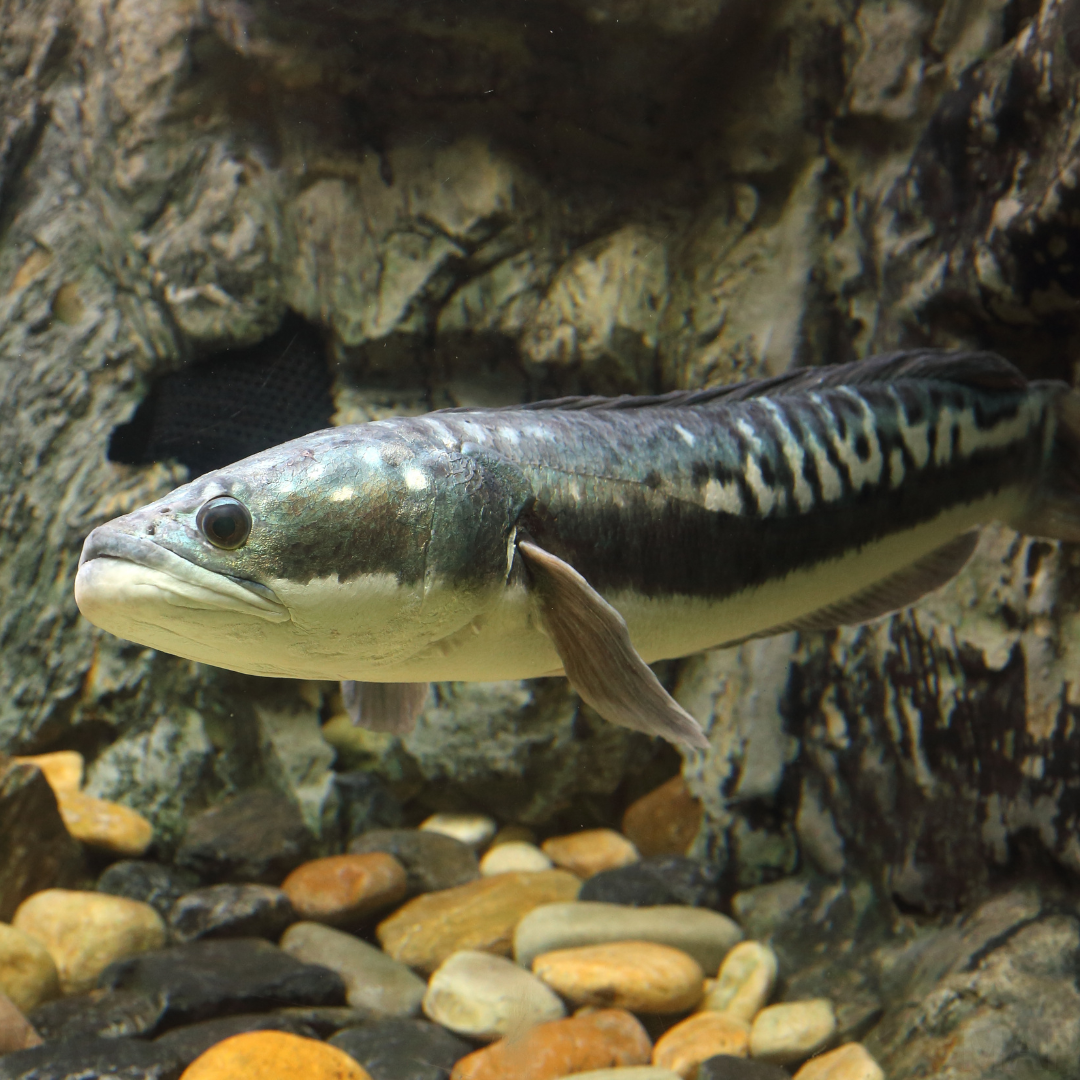
レッドスネークヘッドは、タイワンドジョウ科の中で最大級のサイズを誇り、圧倒的な存在感と力強さを兼ね備えた大型肉食魚です。その名の通り、幼魚期には燃えるような鮮やかな赤色の体色に黒い縦縞模様を纏い、アクアリストの目を釘付けにします。しかし、成長とともにその姿は劇的に変化し、成魚になると青みがかった重厚な暗色へと変貌を遂げます。この驚異的な色彩の変化こそが本種の最大の魅力であり、一匹の魚がこれほどまでに異なる表情を見せる例は他に類を見ません。東南アジアの原産地では頂点捕食者として君臨し、高い知性と社会性を持ち合わせています。飼育には相応の覚悟と巨大な設備が必要となりますが、それゆえに得られる充実感と、飼い主に懐くような仕草を見せるほどの知性は、多くの熱帯魚愛好家を魅了して止みません。The Red Snakehead is the largest member of the Channidae family, boasting an overwhelming presence and immense power. True to its name, juveniles sport a vibrant, fiery red body with distinct black stripes that captivate any aquarist. As they mature, they undergo a dramatic ontogenetic color change, transforming into heavy, bluish-dark adults. This remarkable metamorphosis is the species’ greatest allure, with few other fish showing such distinct stages of beauty. In its native Southeast Asia, it reigns as an apex predator with high intelligence and social complexity. While keeping this fish requires significant commitment and massive facilities, the profound sense of fulfillment and the creature’s near-tame responsiveness make it a legendary favorite among large predatory fish enthusiasts.
東南アジア(タイ、マレーシア、インドネシア、ベトナムなど)Southeast Asia (Thailand, Malaysia, Indonesia, Vietnam, etc.)
最大体長 / Max Size
100cm以上(野生下では最大180cmに達することもあります)Over 100 cm (Known to reach up to 180 cm in the wild)
寿命 / Lifespan
10年〜15年以上10 to 15 years or more
飼育環境 / Aquarium Environment
水槽サイズ / Tank Size
180cm以上の規格水槽(奥行き90cm以上推奨)または240cmワイド水槽。水量は1000L以上を想定する必要があります。Minimum 180 cm standard tank (90 cm depth recommended) or 240 cm wide tank. Expect water volume over 1000 liters.
水温 / Temperature
25℃〜28℃(熱帯性のため冬期の保温は必須です)25°C to 28°C (Strict tropical temperature required; heaters are vital in winter)
水質 / Water Quality
弱酸性〜中性(pH 6.0〜7.5)。排泄量が多いため、非常に強力なろ過システムが必要です。Slightly acidic to neutral (pH 6.0–7.5). High waste output requires an extremely powerful filtration system.
レイアウト / Layout
成魚では大型の突進による事故を防ぐため、シンプルな構成が推奨されます。底砂は細かめの砂利、浮草などは落ち着きを与えます。A simple layout is recommended to prevent injury from sudden bursts of speed. Fine gravel and floating plants help provide a sense of security.
注意点 / Precautions
驚異的な跳躍力を持つため、フタの物理的なボルト固定や重しが絶対に必要です。また、総重量が数トンに達するため、床の補強工事が不可欠となります。Due to incredible jumping ability, lids must be physically bolted or heavily weighted. Floor reinforcement is mandatory as the total weight can reach several tons.
餌と給餌 / Feeding
餌の種類 / Diet
生餌(金魚、アジ、エビ、カエル)のほか、大型肉食魚用の人工飼料にもよく餌付きます。Live food (feeder fish, horse mackerel, shrimp, frogs) and floating pellets for large carnivores.
給餌のポイント / Feeding Tips
非常に貪欲ですが、肥満や水質悪化を防ぐため適切な量を心掛けてください。飼い主の顔を覚え、餌をねだるようになります。They are very greedy eaters; manage portions carefully to prevent obesity and water pollution. They can learn to recognize their owner for food.
性格と混泳 / Temperament and Tank Mates
性格 / Temperament
極めて攻撃的で縄張り意識が強く、執拗な攻撃を見せることがあります。Extremely aggressive and territorial, often showing relentless aggression towards intruders.
混泳の相性 / Compatibility
基本的に単独飼育が鉄則です。成魚は他種を排除しようとするため、大型魚同士でも混泳は極めて困難です。Single-specimen keeping is the standard. As adults, they will attempt to eliminate other fish, making mixed-species tanks almost impossible.
病気と対策 / Diseases and Prevention
かかりやすい病気 / Common Diseases
エロモナス感染症、水質悪化による眼球の白濁、飛び出しによる外傷。Aeromonas infections, cloudy eye due to poor water quality, and physical trauma from jumping.
対策と予防 / Prevention
定期的な大規模換水と、水槽内の清潔維持が最良の予防策です。外傷を負った場合は早めに薬浴や塩水浴を行います。Regular large-scale water changes and maintaining tank cleanliness are the best preventions. Use medicinal or salt baths for any physical injuries.
増やし方(繁殖) / Breeding
繁殖形態 / Reproduction
浮遊性の卵を産み、両親が協力して孵化後の稚魚を外敵から守り抜く手厚い保護行動を見せます。They lay buoyant eggs, and both parents cooperate to fiercely protect the fry from predators after hatching.
繁殖のポイント / Breeding Tips
飼育下での繁殖には巨大な池や特大水槽、そしてペア形成のための十分なスペースが必要であり、一般家庭では非常に難易度が高いです。Captive breeding requires massive ponds or oversized tanks and sufficient space for pair bonding, making it extremely difficult in a home environment.
雑学と豆知識 / Trivia and Fun Facts
1. 劇的な色彩変化のメカニズム / 1. Ontogenetic Color Change
レッドスネークヘッドという名は、幼魚期の鮮烈なオレンジ色に由来しています。この色は、濁った熱帯の水中で兄弟同士が群れを維持し、親魚が群れを識別するための重要なシグナルです。しかし、成長して自立する頃には、水底に溶け込むための黒い迷彩模様へと完全に変化します。この変化は神経系によって制御されており、魚類学的に見ても非常に高度な適応戦略といえます。The name comes from the vivid orange of juveniles, which acts as a visual signal for siblings to school and parents to identify them in murky water. Upon maturity, they shift to a dark marbled camouflage to blend into the depths. This change is neurally controlled and represents a sophisticated evolutionary strategy.
2. 空気呼吸を支える「迷路器官」の正体 / 2. The Truth of the Labyrinth Organ
本種はエラ呼吸だけでなく、空気中の酸素を直接取り込むことができる絶対的空気呼吸魚です。第一鰓弓が拡張して形成された特殊な呼吸器官を持ち、水面に浮上して空気を吸い込みます。アクアリウムの世界では「ラビリンス器官」や、その複雑に入り組んだ構造から「迷宮」というロマンあふれる名称で親しまれていますが、学術・解剖学的には「迷路器官(上鰓器官)」と呼ぶのが正しい名称です。これにより低酸素環境でも生存可能ですが、定期的に空気を吸わなければ溺れてしまうという意外な性質も併せ持っています。This species is an obligatory air-breather, using a specialized organ derived from the first gill arch. While aquarists affectionately call it the Labyrinth Organ or even a maze-like palace due to its intricate structure, the correct scientific and anatomical term is the Maze Organ (suprabranchial chamber). While this allows survival in oxygen-depleted waters, they will actually drown if prevented from reaching the surface to gulp air.
3. 命がけの献身「レッドボール」 / 3. The Protective Red Ball
孵化後の稚魚たちは、赤い球体のように密集して泳ぐことから現地ではレッドボールと呼ばれます。両親はこの群れにつきっきりで付き添い、近づく者にはたとえ人間であっても容赦なく襲いかかります。この自己犠牲的な防衛行動は、本種が持つ高い知性と社会性の証拠です。Young fry school so tightly they appear as a red sphere, known locally as a red ball. Parents guard this group relentlessly, attacking anything that gets close—including humans. This selfless defense highlights their high cognitive ability and social depth.
4. 侵略的外来種としての側面とeDNA / 4. Invasive Impact and eDNA Monitoring
その強靭さゆえ、本来の生息地以外では在来種を駆逐する侵略的外来種として恐れられています。台湾やスリランカでは深刻な被害が出ており、近年では水中に残されたDNAの痕跡から生息を早期発見する環境DNA(eDNA)技術が、本種の管理に導入されています。日本でも、放流は絶対に行ってはいけません。Due to their hardiness, they are feared as invasive species outside their native range, notably in Taiwan and Sri Lanka. Modern management uses environmental DNA (eDNA) to detect their presence early from water samples. In Japan, releasing them into the wild is strictly forbidden.
5. 東南アジアの食文化と回復食 / 5. Culinary and Medicinal Importance
現地ではイカン・トーマンと呼ばれ、重要な高級食材料理として親しまれています。特に、その身には傷の治癒を早める成分が含まれていると信じられており、手術後の患者や出産後の女性に回復食として振る舞われる文化的な側面も持っています。Known as Ikan Toman in Southeast Asia, they are a valued food source. Cultural beliefs suggest their flesh accelerates wound healing, leading to their use as recovery meals for post-surgery patients and new mothers.
まとめ / Conclusion
レッドスネークヘッドは、そのダイナミックな成長と知的な行動、および圧倒的な迫力で、飼育者に一生の思い出を与える素晴らしい魚です。しかし、1メートルを超える巨体と数トンに及ぶ設備の重量、および数十年にわたる寿命を考えると、飼育には物理的にも経済的にも相応の準備が求められます。The Red Snakehead is a magnificent fish that offers a lifetime of memories with its dynamic growth, intelligent behavior, and sheer power. However, considering its 1-meter-plus size, the tons of weight in equipment, and its long lifespan, keeping one demands significant physical and financial preparation.
安価な幼魚の姿に惑わされることなく、その未来の姿をしっかりと見据えた上で、この「怪魚」との対話を楽しみましょう。適切な環境を維持できれば、彼はあなたにとって最高のパートナーとなり、野性の息吹を毎日感じさせてくれるはずです。Do not be misled by the inexpensive price of juveniles; look ahead to their future form and embrace the dialogue with this monster fish. If you can maintain the proper environment, it will become your greatest aquatic partner, bringing the raw breath of the wild into your home every day.




コメント