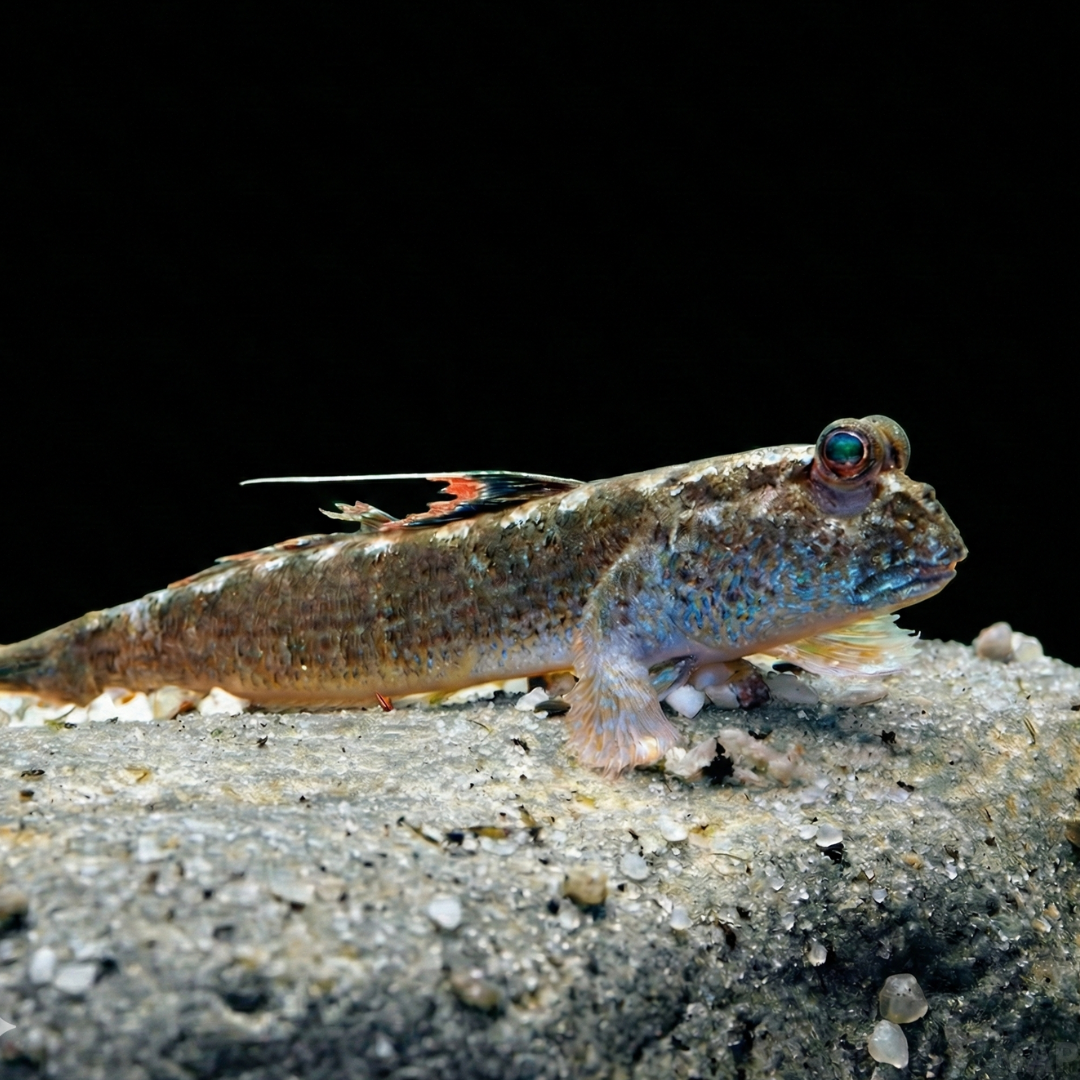
その名の通り宝石のような青い瞳を持ち、水の中よりも陸の上で過ごす時間を愛する不思議な魚、それがブルーアイマッドスキッパーです。主に「ニューギニアトビハゼ」という通称で流通する本種は、日本の干潟でおなじみのムツゴロウやトビハゼの仲間ですが、より鮮やかな色彩と愛嬌のある仕草で多くのアクアリストを魅了しています。彼らの最大の特徴である青い瞳は、色素によるものではなく構造色と呼ばれる光の干渉によって輝いており、角度によって深いサファイアブルーからエメラルドグリーンへと表情を変えます。胸鰭を使って器用に陸地を歩き回り、時には飼育主の顔を覚えて餌をねだるような知性の高さも見せてくれる、まさに「水辺の小さな住人」と呼ぶにふさわしい存在です。Living up to their name with jewel-like blue eyes, the Blue Eye Mudskipper is a fascinating fish that prefers spending time on land rather than in water. Commonly traded under the name “New Guinea Mudskipper,” this species is a relative of the Mudskippers found in Japanese mudflats but captivates aquarists with its vivid coloration and charming behaviors. Their most striking feature, the blue eyes, shines not from pigment but from structural coloration, shifting from deep sapphire blue to emerald green depending on the angle of light. Walking deftly on land using their pectoral fins and sometimes showing enough intelligence to recognize their owner and beg for food, they are truly the “little inhabitants of the waterside.”
基本情報 / Basic Information
学名 / Scientific Name
Periophthalmodon septemradiatus
通称 / Common Name
ニューギニアトビハゼ、ブルーアイマッドスキッパーBlue Eye Mudskipper, New Guinea Mudskipper
インド、ミャンマー、タイ、ベトナム(メコンデルタ)、インドネシアなどの河口域Estuaries of India, Myanmar, Thailand, Vietnam (Mekong Delta), and Indonesia.
最大体長 / Max Size
約10cm〜12cmApprox. 10cm – 12cm (4 – 4.7 inches)
寿命 / Lifespan
飼育下で3年〜5年3 – 5 years in captivity
飼育環境 / Aquarium Environment
水槽サイズ / Tank Size
60cm規格水槽(幅60×奥行30×高さ36cm)以上推奨。広い陸地面積を確保するため、底面積の広さが重要です。60cm Standard Tank (approx. 60L capacity) or larger. A large footprint is crucial to provide ample land area.
水温 / Temperature
25℃〜28℃
水質 / Water Quality
汽水(比重 1.004〜1.010)、弱アルカリ性(pH 7.5〜8.5)。必ず人工海水の素を使用し、ミネラルを含んだ汽水を作ってください。Brackish water (Specific Gravity 1.004 – 1.010), Weak Alkaline (pH 7.5 – 8.5). Always use marine salt mix to provide essential minerals.
レイアウト / Layout
陸地6割、水場4割程度のパルダリウム形式。細かいサンゴ砂などを傾斜をつけて敷き、常に湿った陸地を作ります。Paludarium style with 60% land and 40% water. Create a constantly moist land area using fine coral sand with a slope.
注意点 / Precautions
脱走の名人です。ガラス蓋などで隙間を完全に塞いでください。また、冬場は水中ヒーターだけでなく、空間を温めるパネルヒーターや爬虫類用ヒーターの併用が必須です。They are master escape artists. Completely seal any gaps with a lid. In winter, use space heaters (like reptile heat emitters) in addition to water heaters to warm the air.
餌と給餌 / Feeding
餌の種類 / Diet
肉食性です。冷凍アカムシ、クリル(乾燥オキアミ)、コオロギなどの昆虫を好みます。人工飼料(肉食魚用ペレット)に餌付く個体もいます。Carnivorous. Prefers frozen bloodworms, krill, and insects like crickets. Some individuals will accept carnivorous fish pellets.
給餌のポイント / Feeding Tips
水中にばら撒くのではなく、陸上の餌皿に置くか、ピンセットで直接口元へ運びます。視覚で獲物を認識するため、目の前で動かすと食いつきが良いです。Place food on a dish on land or feed directly with tweezers instead of scattering in water. They rely on vision, so moving the food in front of them encourages feeding.
性格と混泳 / Temperament and Tank Mates
性格 / Temperament
縄張り意識が強く、特にオス同士は激しく争います。人にはよく慣れ、知能が高い一面を見せます。Highly territorial; males will fight aggressively. However, they can become tame towards humans and show signs of intelligence.
混泳の相性 / Compatibility
基本的には単独飼育、あるいは広い水槽でのペア飼育が推奨されます。口に入るサイズの小魚は捕食され、大型のカニには逆に傷つけられるため避けてください。Single species or pair keeping in a large tank is recommended. Avoid small fish (prey) and large crabs (predators).
病気と対策 / Diseases and Prevention
かかりやすい病気 / Common Diseases
皮膚のただれや白カビなどの皮膚病。純淡水での飼育や、水質悪化、乾燥が主な原因となります。Skin diseases like sores or fungus. Often caused by keeping in fresh water, poor water quality, or dry air.
対策と予防 / Prevention
適切な濃度の汽水(比重1.004以上)を維持することが最大の予防です。水量が少ない環境では水質が悪化しやすいため、こまめな水換えを行ってください。Maintaining proper brackish water (SG 1.004+) is the best prevention. Perform frequent water changes as small water volumes foul quickly.
増やし方(繁殖) / Breeding
繁殖形態 / Reproduction
泥の中に深く掘った巣穴の最深部で産卵します。オスが求愛のダンス(ジャンプや背鰭の誇示)でメスを誘います。They spawn deep inside burrows dug into the mud. Males entice females with courtship displays involving jumping and fin-flaring.
繁殖のポイント / Breeding Tips
深い泥の層と潮汐の再現が必要であり、幼生期の管理も非常に難しいため、水槽内での繁殖は極めて困難とされています。Breeding in captivity is extremely difficult due to the need for deep mud, tidal simulation, and complex larval care.
雑学と豆知識 / Trivia and Fun Facts
1. 進化した「瞬き」の機能 / 1. The Evolution of “Blinking”
魚類には通常まぶたがありませんが、マッドスキッパーの仲間は陸上生活に適応するため、独自に「瞬き」を進化させました。眼球を頭の中に引き込み、下まぶたのような皮膚のカップで表面を拭うことで、乾燥を防ぎ、眼を清潔に保っています。これは人間などの四足動物とは全く別のルートで獲得された、収斂進化の素晴らしい例です。Fish usually lack eyelids, but mudskippers evolved “blinking” to adapt to life on land. They retract their eyes into their sockets to wipe them with a dermal cup, keeping them moist and clean. This is a remarkable example of convergent evolution.
2. 三つの呼吸エンジン / 2. Three Respiratory Engines
彼らが陸上で窒息しないのは、鰓(えら)だけでなく、湿った皮膚から直接酸素を取り込む「皮膚呼吸」と、口の中に空気を含んで酸素交換を行う「口腔咽頭呼吸」を併用しているからです。さらに、鰓が入っている部屋に水を溜め込み、いわば「持ち運び式のスキューバタンク」のように使うことで、陸上でも鰓機能を維持しています。They survive on land by using three methods: gills, cutaneous respiration through wet skin, and buccopharyngeal respiration by holding air in their mouth. They also store water in their gill chambers like a “portable scuba tank.”
3. 青い眼の正体 / 3. The Secret of the Blue Eye
本種の魅力である眼の青い輝きは、特定の色素によるものではありません。角膜や水晶体周辺の微細な構造が光を反射・干渉させる「構造色」によるものです。これは強い直射日光から視覚を守り、泥の上の獲物を見つけやすくするためのサングラスのような役割を果たしていると考えられています。The blue shine of their eyes is not pigment but “structural color” created by light interference. It is thought to act like sunglasses, protecting their vision from harsh sunlight and helping them spot prey on the mud.
まとめ / Conclusion
ブルーアイマッドスキッパーの飼育は、単に魚を水槽で泳がせることとは一線を画す体験です。太古の昔、生命が海から陸へと進出した瞬間のドラマを、自宅のリビングルームで再現することに他なりません。湿度や温度、陸地の管理など少し手間はかかりますが、彼らがクリクリとした青い瞳で見つめ返し、ピンセットから餌を受け取る姿を見れば、その苦労は喜びに変わるでしょう。適切な汽水環境と脱走防止策を整え、この愛すべき「陸を歩く魚」との生活を楽しんでください。Keeping Blue Eye Mudskippers is an experience unlike any other. It is like recreating the evolutionary drama of life moving from sea to land right in your living room. While managing humidity, temperature, and land areas requires effort, the joy of seeing them gaze back with blue eyes and take food from tweezers is unmatched. Provide proper brackish water and secure lids, and enjoy life with these lovable walking fish.
(注:本種は特定外来生物ではありませんが、日本の自然環境に放流することは生態系への影響が懸念されるため、絶対に避けてください。)(Note: Never release this species into the wild, as it may disrupt local ecosystems.)



 アイのアクアグッズ案内水槽ライトの選び方|魚の見え方・水草・海水で選ぶおすすめ照明道具の特徴や使い方、選ぶときのポイントをアイが紹介します。記事はコチラ →
 アイのアクアグッズ案内プレコ飼育に必要なもの|餌・流木・ろ過・隠れ家・掃除用品道具の特徴や使い方、選ぶときのポイントをアイが紹介します。記事はコチラ →
 アイのアクアグッズ案内グッピー・プラティ・モーリーを親子で楽しむ飼育用品|水槽・稚魚保護・ろ過・餌・水草道具の特徴や使い方、選ぶときのポイントをアイが紹介します。記事はコチラ →
 アイのアクアグッズ案内金魚を長く楽しむ飼育用品|水槽・フィルター・エアレーション・水換え道具の特徴や使い方、選ぶときのポイントをアイが紹介します。記事はコチラ →




コメント