


解説 / Description
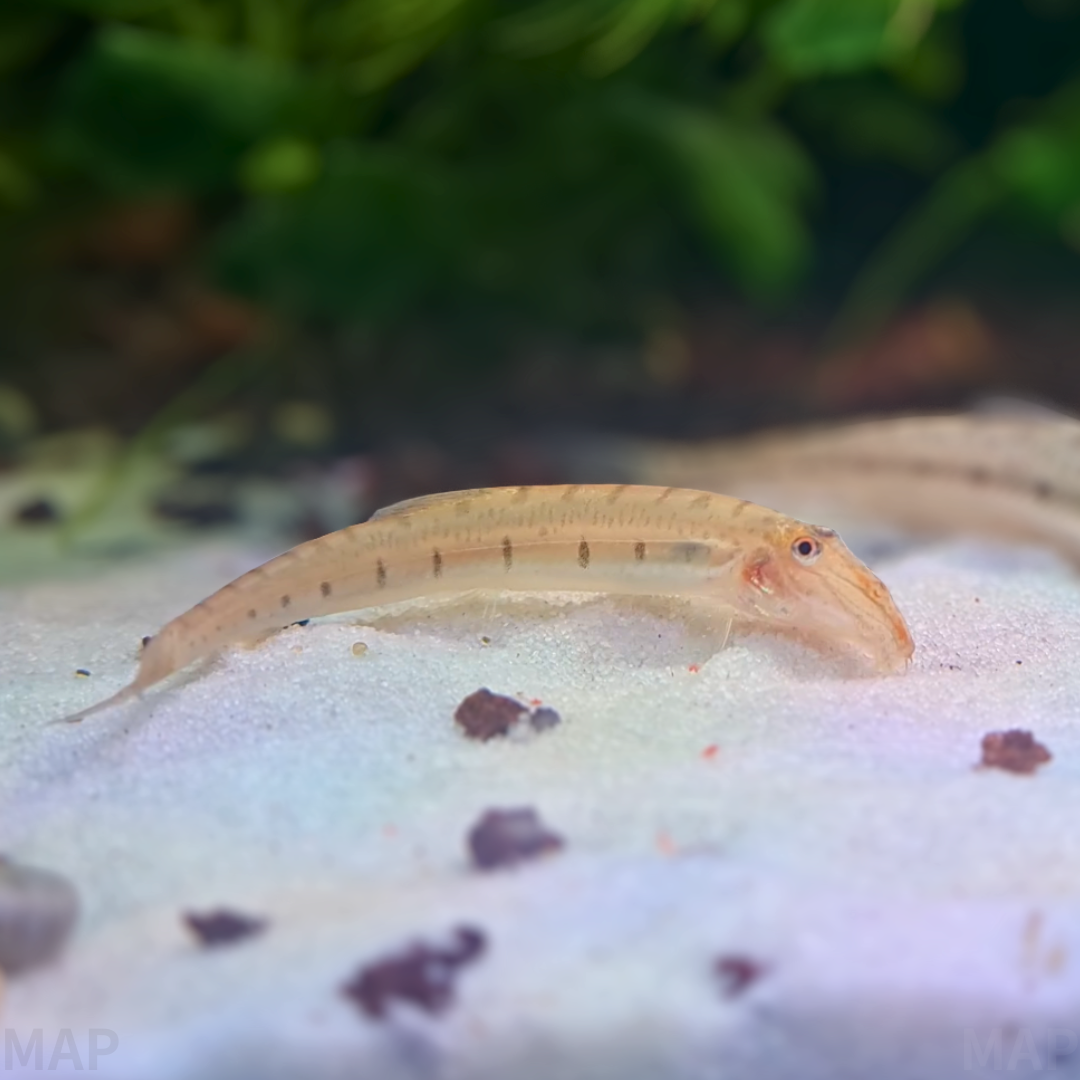
ホースフェイスローチは、その名の通り「馬の顔」のように長く伸びたユニークな吻部を持つドジョウの仲間です。東南アジアの清流に生息し、砂の中に潜って生活する底生魚として知られています。最大の特徴は、砂をエラから勢いよく排出しながら餌を濾し取る「フィルターフィーディング」のような摂食行動と、危険を感じると瞬時に砂の中へ姿を消す「潜行習性」にあります。
長らく学名や分類が混同されてきましたが、現在では真のホースフェイスローチは Acantopsis dialuzona とされています。底砂から顔だけをひょっこりと出してこちらの様子を伺う姿は非常に愛らしく、一度飼育するとその不思議な生態の虜になるアクアリストが後を絶ちません。
The Horseface Loach is a unique member of the loach family, characterized by its long, horse-like snout. Native to the clear streams of Southeast Asia, this benthic fish is known for its habit of burrowing into the sand. Its most distinctive features are its feeding behavior, where it filters food by expelling sand through its gills, and its ability to instantly vanish into the substrate when threatened.
Although its scientific classification has long been confused, the true Horseface Loach is now identified as Acantopsis dialuzona. Their adorable behavior of peeking just their heads out of the sand to observe their surroundings captivates many aquarists.
基本情報 / Basic Information
| 学名 / Scientific Name | Acantopsis dialuzona |
|---|---|
| 通称 / Common Name | ホースフェイスローチ、馬面ドジョウHorseface Loach, Banana Loach |
| 分類 / Family | コイ目 ドジョウ科 (Cobitidae)Cypriniformes, Cobitidae |
| 英名 / English Name | Horseface Loach |
| 分布 / Distribution | 東南アジア(インドネシア、マレー半島、タイなどの河川)Southeast Asia (Rivers in Indonesia, Malay Peninsula, Thailand, etc.) |
| 最大体長 / Max Size | 自然下では約20~25cm(飼育下ではやや小型に留まることが多い)Approx. 20-25cm in nature (Often smaller in captivity) |
| 寿命 / Lifespan | 5年~10年以上(適切な環境下では長寿)5-10+ years (Long-lived in proper conditions) |
飼育環境 / Aquarium Environment
| 水槽サイズ / Tank Size | 90cm規格水槽(約150L)以上推奨。 若魚であれば60cm規格水槽でも飼育可能ですが、遊泳力があり大きく成長するため、将来的には大型水槽が必要です。90cm standard tank (approx. 150L) or larger recommended. While 60cm tanks are acceptable for juveniles, larger tanks are necessary as they grow and swim actively. |
|---|---|
| 水温 / Temperature | 24°C ~ 28°C |
| 水質 / Water Quality | pH 6.0 ~ 7.5(弱酸性~中性)、軟水~中硬水。 清浄な水を好むため、アンモニアや亜硝酸の蓄積には注意が必要です。pH 6.0 – 7.5 (Slightly acidic to Neutral), Soft to Medium Hard. They prefer clean water, so care must be taken to avoid accumulation of ammonia and nitrites. |
| レイアウト / Layout | 【底砂が最重要】 角のない細かい砂(田砂やボトムサンドなど)を3~5cm以上の厚さで敷くことが必須です。角のある大磯砂や崩れやすいソイルは適しません。[Substrate is Crucial] Fine, rounded sand is essential, laid at a depth of 3-5cm or more. Sharp gravel or soil that crumbles easily is not suitable. |
| 注意点 / Precautions | 驚くと砂から飛び出し、勢い余って水槽外へ飛び出す事故が非常に多いため、隙間のないフタが必須です。また、砂を掘り返すため、根張りの浅い水草は抜かれる可能性があります。A tight-fitting lid is essential as they are prone to jumping out of the tank when startled. Also, shallow-rooted plants may be uprooted due to their digging behavior. |
餌と給餌 / Feeding
| 餌の種類 / Diet | 雑食性ですが、動物質を好みます。 沈下性のタブレット、顆粒状の人工飼料、冷凍赤虫、ブラインシュリンプなどをバランスよく与えます。Omnivorous but prefers animal protein. Sinking tablets, granular pellets, frozen bloodworms, and brine shrimp should be given in a balanced manner. |
|---|---|
| 給餌のポイント / Feeding Tips | 砂ごと口に含んで選別して食べるため、砂の隙間に入り込むような細かい餌や、ふやけやすいタブレットが適しています。夜行性の傾向があるため、消灯前に給餌すると痩せを防ぎやすくなります。Since they filter sand to eat, fine food that settles in gaps or soft tablets are suitable. Feeding before lights out helps prevent weight loss as they are nocturnal. |
性格と混泳 / Temperament and Tank Mates
| 性格 / Temperament | 基本的に温和で、他種を攻撃することは稀です。ただし、同種間では場所や餌を巡って小競り合いをすることがあります。Generally peaceful and rarely aggressive towards other species. However, minor squabbles may occur between conspecifics over territory or food. |
|---|---|
| 混泳の相性 / Compatibility | 上層を泳ぐ小型のコイ科(ラスボラ等)やカラシンとの混泳は非常に良好です。同種を飼育する場合は、攻撃を分散させるために3匹以上のグループにするか、隠れ家を多く用意します。エビの稚魚などは捕食される可能性があるため注意が必要です。Excellent with top-dwelling small Cyprinids (Rasboras, etc.) or Characins. If keeping conspecifics, keep them in groups of 3 or more to disperse aggression, or provide plenty of hiding spots. Baby shrimp may be eaten. |
病気と対策 / Diseases and Prevention
| かかりやすい病気 / Common Diseases | 白点病や、口先を怪我したことによるカラムナリス症(口腐れ病)にかかりやすい傾向があります。Prone to Ich (White Spot Disease) and Columnaris (Mouth Rot) caused by snout injuries. |
|---|---|
| 対策と予防 / Prevention | 本種は鱗が退化しており、魚病薬への耐性が低いです。治療の際は規定量の1/2~1/3程度に薄めて使用してください。予防には、底砂を清潔に保つ(プロホース等での掃除)ことが最も効果的です。They have reduced scales and are sensitive to medications. Use 1/2 to 1/3 of the standard dose when treating. Keeping the substrate clean is the most effective prevention. |
増やし方(繁殖) / Breeding
| 繁殖形態 / Reproduction | 飼育下での繁殖は極めて困難であり、確立された方法は存在しません。自然界では季節的な回遊や水位の変化が引き金になっていると考えられています。Breeding in captivity is extremely difficult, and no established method exists. Seasonal migration and water level changes are thought to be triggers in nature. |
|---|---|
| 繁殖のポイント / Breeding Tips | 国内流通個体はワイルド(野生採集)個体がほとんどです。偶発的な繁殖例はありますが、一般的には狙って殖やすことは難しい魚種です。Most individuals in the market are wild-caught. While there are accidental breeding cases, it is generally difficult to breed them intentionally. |
雑学と豆知識 / Trivia and Fun Facts
| 1. 学名の混乱と真実 / 1. Scientific Name Confusion | 日本では長らく旧学名の Acantopsis choirorhynchos として知られていましたが、近年の研究により A. dialuzona が正しい学名とされました。また、よく似た「ロングノーズローチ(A. octoactinotos)」と混同されることがありますが、ロングノーズ種は「砂に潜らない」という決定的な違いがあります。購入時に砂に潜っているか確認するのが、本物のホースフェイスローチを見分けるコツです。Long known as A. choirorhynchos, recent studies identified A. dialuzona as the correct name. They are often confused with the “Longnose Loach” (A. octoactinotos), but the key difference is that Longnose Loaches do not burrow into the sand. Checking if they are buried in the substrate is the best way to identify a true Horseface Loach. |
|---|---|
| 2. 忍者のような隠れ身の術 / 2. Ninja-like Hiding Skills | 水槽導入直後、砂に潜ったまま数日間全く姿を見せないことがあり、飼い主を不安にさせることがあります。これは彼らの得意技であり、消灯後にこっそりと出てきて餌を食べ、朝にはまた砂の中に戻っていることが多いのです。まさに水槽の「忍者」と言えるでしょう。After introduction, they may disappear into the sand for days, worrying their owners. This is their specialty; they often emerge secretly after lights out to feed and return to the sand by morning. They are truly the “Ninjas” of the aquarium. |
| 3. 現地ではスナック感覚? / 3. A Snack in Their Homeland? | 私たちにとっては大切な観賞魚ですが、原産地のタイやラオスなどの市場では、食用魚として桶に入れられて売られています。内臓ごと唐揚げにするとサクサクして美味しく、スナック感覚で食べられているという、ちょっと驚きの文化があります。While we cherish them as ornamental fish, in their native markets in Thailand and Laos, they are sold as food. Surprisingly, they are often deep-fried whole and eaten as a crispy snack. |
まとめ / Conclusion
ホースフェイスローチは、そのユニークな顔立ちと砂に潜る生態で、水槽の底層を賑やかにしてくれる素晴らしい魚です。飼育の鍵は「潜れる細かい砂」と「飛び出し防止のフタ」を用意することに尽きます。適切な環境を整えれば、非常に長生きし、砂からひょっこりと顔を出してあなたを見つめる、愛嬌たっぷりのパートナーとなってくれることでしょう。 The Horseface Loach is a fantastic fish that enlivens the bottom of the tank with its unique appearance and burrowing habits. The keys to success are providing “fine, burrow-friendly sand” and a “jump-proof lid.” With the right environment, they can live a long life and become charming partners, peeking out from the sand to gaze at you.
日本の住宅事情でも、90cm水槽が用意できれば理想的ですが、しっかりと管理された60cm水槽でも彼らの魅力を楽しむことは可能です。ぜひ、この「砂潜り名人」をあなたの水槽に迎えてみてください。 While a 90cm tank is ideal, you can still enjoy their charm in a well-maintained 60cm tank. We encourage you to welcome this “Master of Burrowing” into your aquarium.


▶ 記事の生体をYahooで買う

コメント