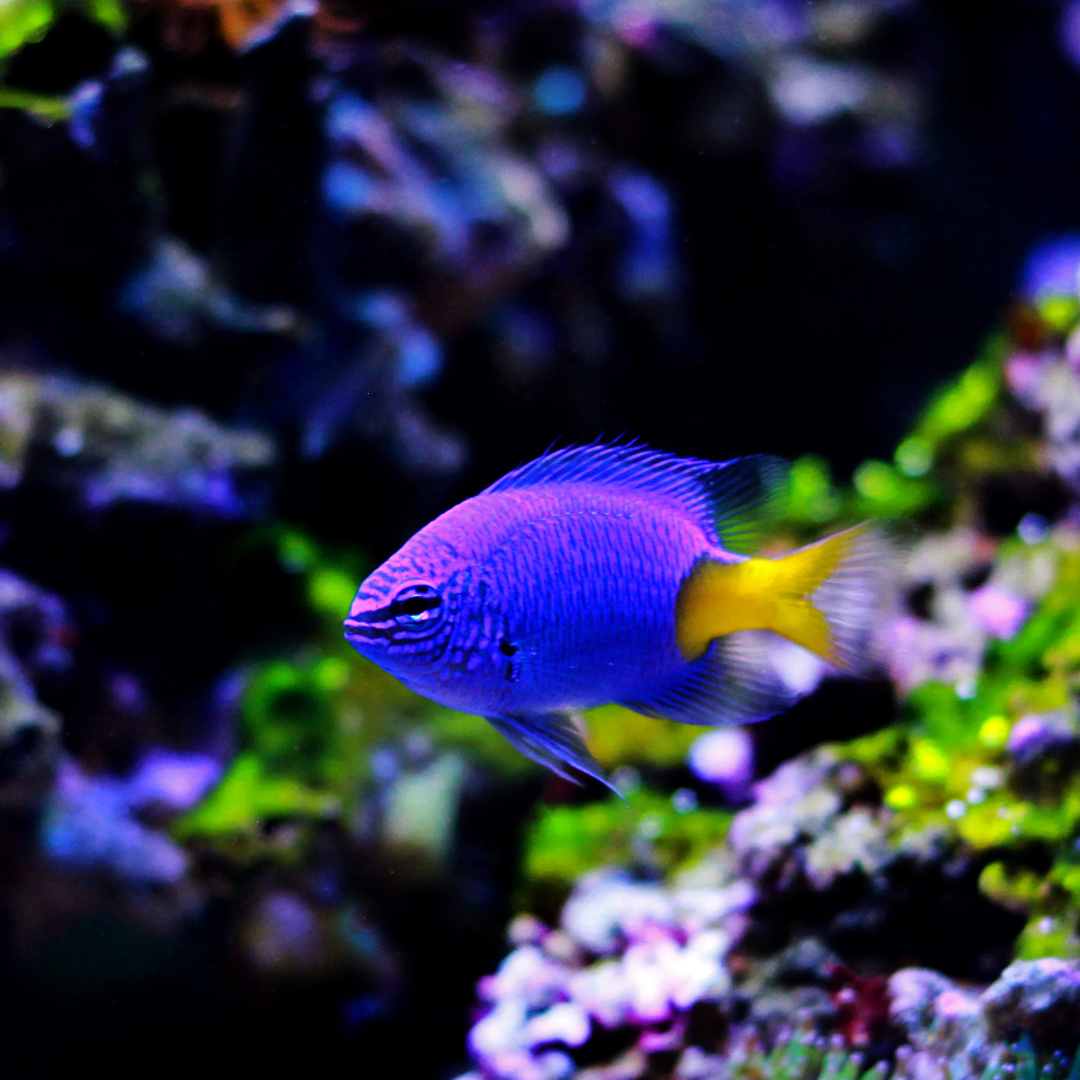
シリキルリスズメは、深く濃厚なベルベットを思わせるインディゴブルーの体と、尾柄部から尾鰭にかけての鮮烈な黄色が織りなすバイカラーが美しい、スズメダイ科の代表的な小型魚です。西太平洋のサンゴ礁域に広く分布し、日本国内でも琉球列島などでその姿を見ることができます。非常に強健で環境適応能力が高いため、海水魚飼育の入門種として世界中で愛されていますが、その色彩の美しさはベテラン愛好家をも魅了し続けています。サンゴとの相性も抜群で、ミドリイシの枝間を泳ぐ姿はアクアリウムの景観に華やかさを添えてくれます。The Yellowtail Damselfish (Chrysiptera parasema) is a popular marine fish characterized by its deep indigo blue body and vivid yellow tail. Widely distributed across the coral reefs of the Western Pacific, it is known for its incredible hardiness and adaptability, making it an ideal choice for both beginners and experienced aquarists. Its stunning color contrast adds a vibrant touch to any aquarium, especially when swimming among Acropora corals.
基本情報 / Basic Information
学名 / Scientific Name
Chrysiptera parasema
通称 / Common Name
シリキルリスズメ、シリキYellowtail Damselfish
分類 / Family
スズメダイ科 ルリスズメダイ属Pomacentridae, Chrysiptera genus
英名 / English Name
Yellowtail Blue Damsel, Goldtail Demoiselle
分布 / Distribution
西太平洋(フィリピン、インドネシア、ソロモン諸島、琉球列島など)Western Pacific (Philippines, Indonesia, Solomon Islands, Ryukyu Islands, etc.)
最大体長 / Max Size
約7cmApprox. 7cm (2.75 inches)
寿命 / Lifespan
5年〜15年(飼育環境による)5 to 15 years (depending on the environment)
飼育環境 / Aquarium Environment
水槽サイズ / Tank Size
単独飼育:約75リットル(60cm規格水槽)以上、複数飼育:約150リットル(90cm規格水槽)以上を推奨Single: 75L (60cm tank) or more. Group: 150L (90cm tank) or more recommended.
水温 / Temperature
23℃〜27℃(ヒーターおよびクーラーによる通年の安定が必要)23°C to 27°C (74°F to 80°F) – stable year-round control is required.
ライブロックを組み上げ、無数の隠れ家(洞窟や隙間)を作ることが重要です。サンゴ(特にミドリイシ属)との相性が非常に良いです。Incorporate live rock to create numerous hiding spots and caves. Excellent compatibility with stony corals like Acropora.
注意点 / Precautions
強健ですが、導入時の水合わせは丁寧に行いましょう。また、蒸発による比重の変化を防ぐため、こまめな足し水が必要です。Though hardy, careful acclimation is necessary. Maintain stable salinity by replacing evaporated water.
非常に食欲旺盛で餌付けの心配はほとんどありません。青色の発色を維持するため、動物性タンパク質と植物性栄養素をバランスよく与えてください。They are hearty feeders. Offer a balanced diet of meaty and plant-based foods to maintain their vibrant coloration.
性格と混泳 / Temperament and Tank Mates
性格 / Temperament
スズメダイの中では温和ですが、成長に伴い自身の縄張りを持つようになります。Relatively peaceful for a damselfish, though they become more territorial as they mature.
混泳の相性 / Compatibility
クマノミ類、ハゼ類、小型のベラなどと好相性です。混泳を成功させるには、臆病な魚を先に導入し、本種を後から入れる「後行導入」が効果的です。Compatible with clownfish, gobies, and small wrasses. Use the “stocking order” method by introducing this species last to minimize aggression.
病気と対策 / Diseases and Prevention
かかりやすい病気 / Common Diseases
海水白点病、ウーディニウム病、スレ傷による細菌感染症(エロモナス感染症など)Marine Ich, Amyloodinium, and bacterial infections resulting from physical injuries.
対策と予防 / Prevention
水質の安定と殺菌灯の設置が予防に有効です。細菌感染の治療には、隔離水槽にてグリーンFゴールドを用いた薬浴を5〜7日間行います。Maintain stable water quality. For bacterial infections, treat in a separate quarantine tank with appropriate antibacterial medication for 5-7 days.
増やし方(繁殖) / Breeding
雌雄の判別 / Sexing
外見での判別は困難ですが、繁殖期にはペアを形成し、オスが産卵床の準備や防衛を行うようになります。Difficult to distinguish visually; behavior changes during the breeding season as they form pairs.
繁殖形態 / Reproduction
基質産卵型。岩肌やサンゴの骨格などに沈性卵を産み付け、孵化までオスが献身的に保護します。Substrate spawner. Eggs are laid on rocks or coral skeletons and guarded by the male until they hatch.
繁殖のポイント / Breeding Tips
産卵・孵化は比較的容易ですが、非常に微小な仔魚を育てるにはワムシ等の特別な初期飼料と高度な管理技術が必要となります。While spawning is common, raising the tiny fry is challenging and requires specialized micro-foods like rotifers.
雑学と豆知識 / Trivia and Fun Facts
1. 学名に刻まれた「金の翼」 / 1. “Golden Wings” in the Name
属名の「Chrysiptera」は、ギリシャ語で金を意味する「khrusos」と鰭を意味する「pteron」を組み合わせた言葉です。その名の通り、本種の最大の特徴である美しい黄色の尾鰭が「金の翼」と見なされたことに由来しています。The genus name Chrysiptera combines the Greek words for gold (khrusos) and fin/wing (pteron), perfectly describing its iconic yellow tail.
2. 捕食者を欺く「陽動戦略」 / 2. Survival Strategy: Diversion
青い体に黄色の尾という配色は、単なる装飾ではありません。これは「パラセマティック」と呼ばれる生存戦略で、外敵の注意を急所である頭部から、失っても致命傷になりにくい尾の方へと逸らす役割を果たしていると考えられています。The contrasting yellow tail serves as a “parasematic” signal, distracting predators away from the head and toward the tail, which is less vital for survival.
3. 水槽の隠れたお掃除役 / 3. Hidden Pest Control
観賞用の美しさだけでなく、実利的な側面も持ち合わせています。サンゴ水槽の天敵であるヒラムシを捕食することが知られており、化学薬品を使わずに害虫を駆除する「生物兵器」としてのポテンシャルを秘めています。Beyond their beauty, they are known to consume Red Planaria (flatworms), making them an effective natural pest control in reef tanks.
4. スズメダイ界のジェントルマン / 4. A Gentleman Among Damsels
スズメダイの仲間は気が強いことで有名ですが、本種はその中でも例外的に温和な性質を持っています。他魚を激しく攻撃することが少ないため、海水魚コミュニティ水槽の「ディザーフィッシュ(他の魚を安心させる役)」としても重宝されます。While damselfish are notorious for aggression, this species is exceptionally peaceful, often serving as a “dither fish” that helps other timid tank mates feel secure.
まとめ / Conclusion
シリキルリスズメは、その美しさ、強健さ、そして温和な性格という三拍子が揃った、海水魚飼育の理想的なパートナーです。初心者の方にとっては安心して飼育を始められる入門種であり、熟練のアクアリストにとってはサンゴ水槽に彩りと生態学的な深みをもたらす重要な存在となるでしょう。適切な隠れ家と安定した水質を提供することで、5年から10年以上にわたってその輝く姿を楽しませてくれます。The Yellowtail Damselfish is an ideal partner for marine aquarists, offering beauty, hardiness, and a relatively peaceful temperament. Whether for a beginner’s first tank or a complex reef system, they provide vibrant color and fascinating ecological interactions. With proper care and hiding spots, they can grace your aquarium for over a decade.
自然界のサンゴ礁をそのまま切り取ったような、ミドリイシの枝間を縫うように泳ぐシリキルリスズメの姿は、見る者の心を癒してくれます。最近では環境保護の観点から養殖個体の流通も増えており、サステナブルなアクアリウムの楽しみ方を象徴する魚とも言えるでしょう。ぜひ、この「金の翼」を持つ小さな宝石を、あなたの水槽に迎えてみてはいかがでしょうか。Watching them navigate the intricate branches of coral mimics the serenity of natural reefs. As sustainable, aquacultured specimens become more available, keeping this “golden-winged” gem reflects a modern, eco-conscious approach to the hobby. Why not invite this tiny jewel into your own aquatic home?
Fowler, H. W. (1918). “New or little-known fishes from the Philippine Islands.” Proceedings of the Academy of Natural Sciences of Philadelphia, Vol. 70, pp. 2-71.
(シリキルリスズメの原記載および分類学的地位に関する基本文献)
IUCN Red List of Threatened Species (2021). “Chrysiptera parasema: Assessment details.” International Union for Conservation of Nature.
(保全状況評価「低懸念:LC」に関する最新データ)




 ポチップ
ポチップ





コメント