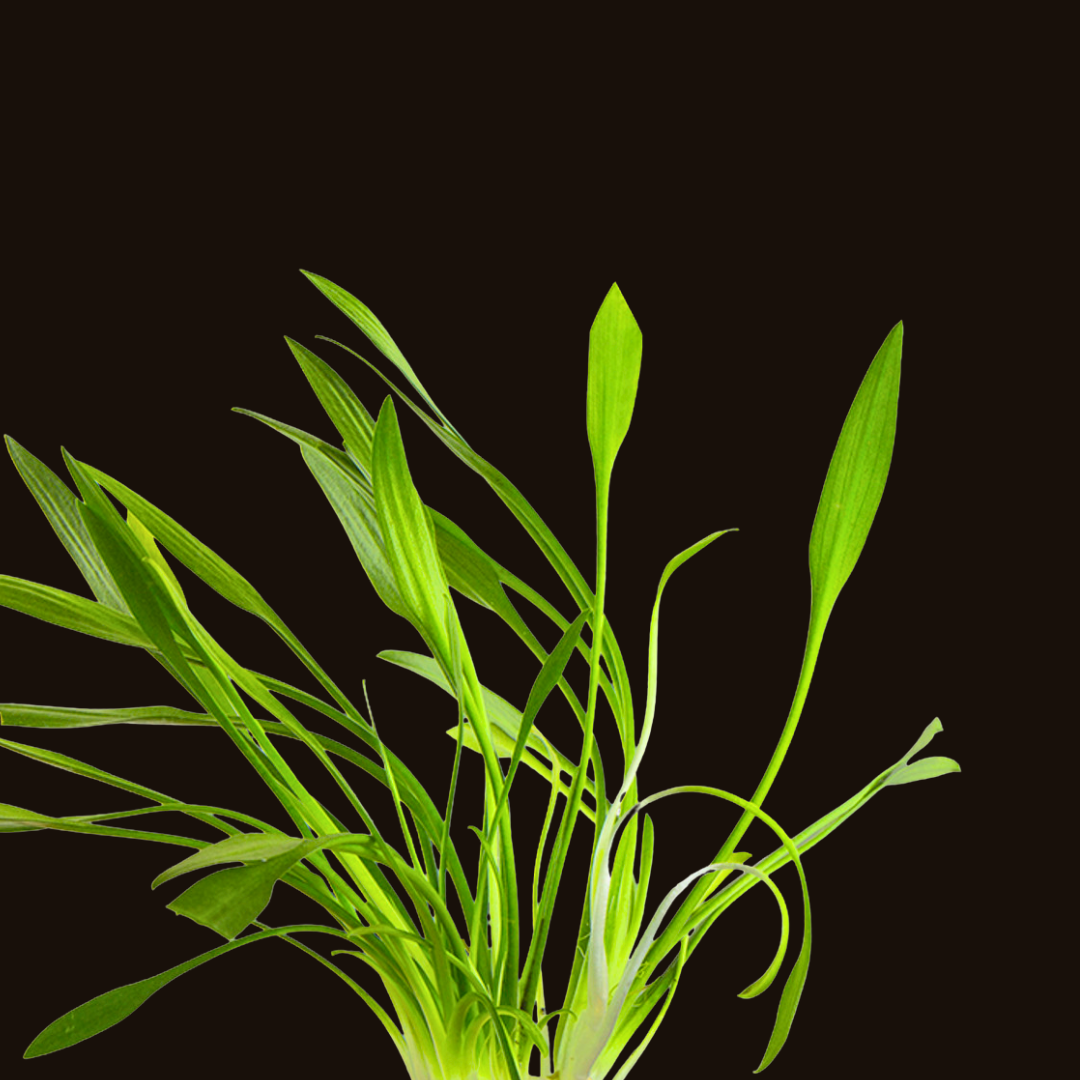
クリプトコリネ・パルヴァは、スリランカの限られた地域にのみ自生する、サトイモ科クリプトコリネ属の中でも最小クラスの水草です。草丈はわずか3から8センチメートルほどにしかならず、その極端に遅い成長速度と、他のクリプトコリネ類に比べ水上葉と水中葉の差が非常に小さいという特徴から、水槽の前景を彩る絨毯(カーペット)プランツとして独特の地位を確立しています。一度しっかりと根付いてしまえば、長期間にわたってトリミングの手間がかからない、非常に優秀なローメンテナンス・プランツでもあります。Cryptocoryne parva is one of the smallest species in the Cryptocoryne genus, native only to specific regions of Sri Lanka. Growing to a height of only 3 to 8 centimeters, it has established a unique position as a foreground carpet plant due to its extremely slow growth rate and relatively little variation between emerged and submersed forms. Once well-rooted, it is an excellent low-maintenance plant that requires very little trimming over long periods.
基本情報 / Basic Information
学名 / Scientific Name
Cryptocoryne parva
通称 / Common Name
クリプトコリネ・パルヴァDwarf Cryptocoryne
分類 / Family
サトイモ科 クリプトコリネ属Araceae (Cryptocoryne)
分布 / Distribution
スリランカ固有種(中央高地キャンディ周辺の水系)Endemic to Sri Lanka (River systems around Kandy in the central highlands)
育成難易度 / Difficulty
普通からやや難しい。水質への適応力はありますが、成長が極めて遅いため、コケに見舞われないよう長期間環境を安定させる忍耐力が求められます。Medium to somewhat difficult. While adaptable to various water conditions, its extremely slow growth requires patience to maintain a stable environment and avoid algae.
育成環境 / Cultivation Environment
光量 / Light
中からやや強めの光量を好みます。多くのクリプトコリネの仲間が少ない光でも育つ陰性水草であるのに対し、本種は比較的明るい環境を必要とします。葉が非常に小さく、また水槽の最前面に植えられるため、光が届きにくいことが原因と考えられています。Medium to moderately high. Unlike many other Cryptocoryne species that thrive in low light, this species requires a relatively brighter environment. This is likely because its very small leaves and foreground placement often make it harder for light to reach.
CO2添加 / CO2 Injection
生存のために必須ではありませんが、美しい緑の絨毯を現実的な期間で作り上げるためには、10から20 mg/L程度の二酸化炭素の添加が推奨されます。Not essential for survival, but recommended (10-20 mg/L) to encourage growth and form a beautiful green carpet within a realistic timeframe.
水質 / Water Quality
水温は23から26度、pHは6.2から7.5の弱酸性から中性が最適です。軟水から中硬水まで幅広く適応しますが、極端に硬度が高い水は避けます。何よりも水温や水質の急激な変化を嫌うため、環境を一定に保つことが重要です。Temperature between 23-26 C, pH 6.2-7.5 (slightly acidic to neutral). Adaptable to soft to medium hard water, but extreme hardness should be avoided. Above all, it dislikes sudden changes in water parameters, so maintaining a stable environment is crucial.
底床 / Substrate
水中の葉からではなく、底床の根から直接栄養を吸収する性質(ルートフィーダー)が強い水草です。そのため、初期から鉄分やカリウムなどの栄養を豊富に含む栄養系ソイル(アクアソイルなど)の使用が適しています。It is a strong root feeder, absorbing nutrients directly from the substrate rather than through its leaves in the water column. Therefore, using a nutrient-rich soil (such as aqua soil) containing abundant iron and potassium from the start is highly suitable.
レイアウト / Layout
配置 / Positioning
草丈が低いため、水槽の最前面(前景)に配置します。30cmキューブ水槽(約27リットル)のような小型水槽でも圧迫感なくレイアウトでき、60cm規格水槽(約65リットル)以上の大型水槽では広大な草原を表現するのに役立ちます。Due to its short height, place it at the very front (foreground) of the aquarium. It can be used without feeling oppressive even in small tanks like a 30cm cube (approx. 27L), and helps create vast grasslands in larger tanks like a standard 60cm tank (approx. 65L) or more.
注意点 / Precautions
背の高い有茎草や流木などの影にならないよう、確実に光が当たる場所を選んでください。成長して横に広がるまでに非常に時間がかかるため、植え込みの初期段階で株を小分けにし、1から2センチメートルの間隔である程度密に植え込むのが、早くカーペットを完成させるコツです。Ensure it is placed where it receives direct light, avoiding shadows from tall stem plants or driftwood. Because it takes a very long time to grow and spread horizontally, the secret to completing a carpet quickly is to divide the plants and plant them somewhat densely at intervals of 1 to 2 centimeters in the initial stage.
増やし方(トリミング) / Propagation & Trimming
増やし方 / Propagation
地中を這うランナー(匍匐茎)を伸ばし、根茎から新しい子株を展開して増えていきます。環境が整っていれば着実に増えますが、群落を形成するまでには半年から数年単位の長い時間が必要です。It propagates by sending out runners creeping underground and developing new side shoots from the rhizome. While it will reliably multiply under the right conditions, it takes a long time, from half a year to several years, to form a dense colony.
トリミング / Trimming
成長が極めて遅いため、グロッソスティグマやヘアーグラスのように定期的に短く刈り込むようなトリミングは長期間必要ありません。古くなって黄色くなった葉や、コケが付着してしまった葉を見つけたら、ハサミで根元から丁寧に切り落とす程度で十分です。Because its growth is extremely slow, it does not require regular, short trimming like Glossostigma or Hairgrass for a long period. It is sufficient to carefully cut off old, yellowing leaves or leaves covered with algae from the base with scissors.
病気と対策(コケなど) / Pests & Algae
かかりやすい病気 / Common Issues
水温や水質の急変によって葉がドロドロに溶けて抜け落ちる、クリプトコリネ特有の現象(クリプト病)が起こりやすいです。また、鉄分不足による葉の白化(クロロシス)や、カリウム不足による葉の穴あき(ピンホール)にも注意が必要です。成長が遅いため、古い葉には緑藻などのコケが付着しやすくなります。Prone to a phenomenon specific to Cryptocoryne where leaves melt and fall off due to sudden changes in water temperature or quality (Crypt melt). Also, watch out for leaf whitening (chlorosis) due to iron deficiency and small holes in the leaves (pinholes) due to potassium deficiency. Due to its slow growth, old leaves easily attract algae such as green spot algae.
対策と予防 / Prevention
クリプト病は環境が安定すれば新しい葉を展開して復活することが多いので、慌てず水質を一定に保ちます。栄養不足に対しては、底床深くに固形肥料を追肥することが有効です。導入時の害虫やコケの持ち込みを防ぐため、農薬や害虫を持ち込みにくいクリーンな組織培養カップの利用が推奨されます。コケ対策として、ヤマトヌマエビなどを適度な数(60cm規格水槽で5から10匹程度)導入しておくと予防になります。If Crypt melt occurs, do not panic and keep the water quality stable, as it often revives by developing new leaves once the environment stabilizes. For nutrient deficiencies, adding solid root fertilizers deep into the substrate is effective. To prevent bringing in pests and algae during introduction, using clean tissue culture cups, which are less likely to carry pesticides or pests, is recommended. As an algae countermeasure, introducing a moderate number of Amano shrimp (e.g., 5-10 in a standard 60cm tank) serves as a good prevention.
雑学と豆知識 / Trivia and Fun Facts
1. 名前を間違えられ続けた過去 / 1. A History of Mistaken Identity
クリプトコリネ・パルヴァという小さな水草は、長年、近縁種である大型水草クリプトコリネ・ネヴィリーなどと混同されて流通していた時期がありました。アクアリウムの世界でも、パルヴァやその仲間たちが間違った名前で呼ばれ続けるという混乱があったのです。この誤解が解け、ラテン語で小さいという意味を持つパルヴァとして正式に独立した種として整理されたのは、比較的後年のことでした。今でも古い文献などには、その名残が見え隠れすることがあります。For a long time, this small aquatic plant was confused and distributed under the name of related species, such as the larger Cryptocoryne nevillii. In the aquarium world, there was confusion where parva and its relatives continued to be called by the wrong name. It was relatively later that this misunderstanding was resolved and it was officially classified as an independent species named parva, meaning small in Latin. Traces of this historical mix-up can still be found in older literature today.
2. 環境に適応したしたたかな姿 / 2. A Resilient Form Adapted to the Environment
多くの水草は、水上から水中へと生活の場を移すとき、光の強さや水の中のガスの少なさに適応するため、葉の形や色を変化させます。しかし、パルヴァはそのような変化が比較的少なく、水上でも水中でも小さなロゼット型の草姿と鮮やかな緑色を保つ傾向があります。彼らが自生するのはスリランカの河川など流れのある場所です。水の抵抗を受けて葉が傷んだり、根が引き抜かれたりしにくいよう、葉を小さく保ち泥の中にしっかりと根を張るという生態を持っています。過酷な自然環境に適応した、したたかな姿と言えるでしょう。Many aquatic plants change their leaf shape and color when moving from emerged to submersed environments to adapt to different light and gas conditions. However, parva shows relatively little variation, tending to maintain its small rosette shape and bright green color both above and below water. They naturally grow in areas with water currents, such as Sri Lankan rivers. To prevent leaves from being damaged or roots from being pulled out by water resistance, they have an ecology of keeping their leaves small and rooting firmly in the mud. It can be said that this is a resilient form adapted to the harsh natural environment.
3. 虫を誘引する特殊な花 / 3. Special Flowers that Attract Insects
サトイモ科の植物の花は独特な形をしているものが多いですが、クリプトコリネ属の花(仏炎苞)もまた、昆虫を誘引する特殊な構造を持つことで知られています。水上に小さな花を咲かせ、特有の匂いを放つことで特定の昆虫を呼び寄せます。花の中に潜り込んだ虫は、内部の構造によって一時的に閉じ込められ、植物のペースに合わせて受粉作業をさせられます。限られた生息地で確実に受粉を成功させ、命を繋ぐための巧妙なシステムが備わっていると考えられています。Many plants in the Araceae family have uniquely shaped flowers, and the flowers (spathes) of the Cryptocoryne genus are also known for having special structures to attract insects. They bloom small flowers above the water and emit specific scents to lure certain insects. Insects that crawl into the flower are temporarily trapped by the internal structure and are forced to pollinate at the plant’s pace. It is believed that they are equipped with a clever system to ensure successful pollination and continue their lineage in limited habitats.
4. 組織培養技術による安定流通 / 4. Stable Distribution through Tissue Culture Technology
現在、野生のクリプトコリネ・パルヴァは生息環境の変化などにより希少になってきており、野生個体(ワイルド株)は近年ほとんど流通していません。私たち日本のアクアリストがこの貴重な水草を今も楽しめるのは、無菌の培地の中で植物を増殖させる組織培養という技術のおかげです。この技術により自然への負担を減らしつつ安定した供給が可能になりました。さらに、農薬や不快な害虫、コケの胞子を水槽に持ち込みにくいという組織培養のクリーンな特徴は、繊細な生体を飼育する愛好家のニーズと見事に合致しています。現在では、組織培養株が流通の中心としてアクアリウムを彩っています。Currently, wild Cryptocoryne parva has become rare due to changes in its habitat, and wild-collected plants have rarely been circulated in recent years. The reason Japanese aquarists can still enjoy this precious aquatic plant is thanks to tissue culture technology, which multiplies plants in a sterile medium. This technology has enabled a stable supply while reducing the burden on nature. Furthermore, the clean characteristics of tissue culture, which make it less likely to introduce pesticides, pests, or algae spores into the aquarium, perfectly match the needs of hobbyists who keep delicate livestock. Today, tissue-cultured plants are the mainstay of distribution, coloring our aquariums.
まとめ / Conclusion
クリプトコリネ・パルヴァは、単なる背の低い水草という枠には収まらない、興味深い歴史と生態を秘めた魅力的な存在です。スリランカの河川環境に適応したその小さな姿は、現在のアクアリウムにおいて、自然感を演出する素晴らしい前景草として重宝されています。Cryptocoryne parva is more than just a short aquatic plant; it is a fascinating entity with an interesting history and ecology. Its tiny form, adapted to Sri Lankan river environments, is highly valued in modern aquariums as a wonderful foreground plant that creates a natural feel.
育成には少しコツがいります。成長が極端に遅いため、美しい緑の絨毯が完成するまでには環境を一定に保つ忍耐力が必要になります。しかし、安全な組織培養カップを活用し、じっくりと時間をかけて育て上げたパルヴァの草原は、一度根付けば長期間トリミングの手間がかからない最高の癒しの空間を約束してくれます。ぜひ、この小さな命の物語を感じながら、水景作りを楽しんでみてください。It requires a little knack to grow. Because its growth is extremely slow, it takes patience to maintain a stable environment until a beautiful green carpet is completed. However, a parva meadow carefully grown over time using a safe tissue culture cup promises the ultimate relaxing space that, once rooted, requires no trimming for a long time. We hope you enjoy creating your aquascape while feeling the story of this little life.
The IUCN Red List of Threatened Species
International Union for Conservation of Nature. (クリプトコリネ・パルヴァの保全状況、およびスリランカ中央高地における地理的分布と生態環境の参照)
Plants of the World Online (POWO)
Royal Botanic Gardens, Kew. “Cryptocoryne parva de Wit”. (植物分類学的配置、および正式な学名記載情報の確認)
The National Red List 2020 – Conservation Status of the Flora of Sri Lanka
Biodiversity Secretariat, Ministry of Environment, Sri Lanka. (スリランカ固有の植物群としての絶滅危惧評価の参照)
The Crypts Pages
Jan D. Bastmeijer. (クリプトコリネ属に関する世界的な専門データベース。1928年のペッチによる誤同定の歴史、および近縁種との形態的差異に関する参照)
Pollination biology of Araceae
(サトイモ科植物全般に見られる、匂いを用いた昆虫の誘引とトラップ構造による受粉メカニズムの生態学的背景として参照)



 ポチップ
ポチップ





コメント