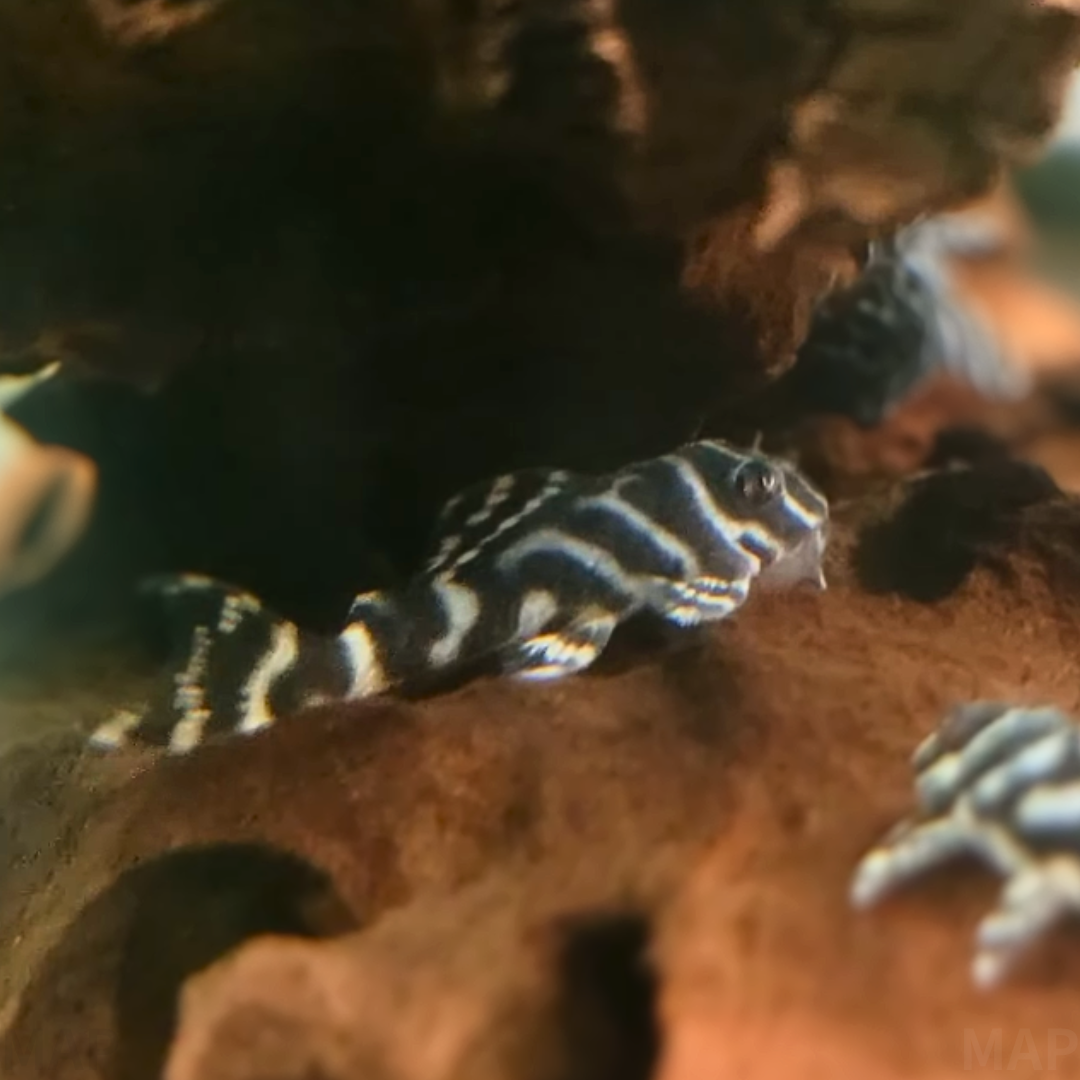
ニューキングロイヤルペコルティアは、南米ブラジルのシングー川に生息する小型のプレコです。白と黒のコントラストが美しいゼブラ模様が最大の特徴で、アクアリストの間ではキンペコの愛称で親しまれています。一匹ごとに模様のパターンが異なり、非常にコレクション性が高いことから、日本国内では独自のブリード文化が花開いています。特に白の面積が広いリアルメガクラウンと呼ばれる個体は、動く芸術品とも称されるほどの美しさを誇ります。The New King Royal Pleco is a small species of catfish inhabiting the Xingu River in Brazil. Known for its striking black-and-white zebra patterns, it is a favorite among aquarists. Since each individual possesses a unique pattern, it has fostered a sophisticated breeding culture in Japan. Highly sought-after variations like the Real Mega Crown, characterized by an expansive white base, are celebrated as living works of art.
基本情報 / Basic Information
学名 / Scientific Name
Hypancistrus seideli
通称 / Common Name
ニューキングロイヤルペコルティア、キンペコ、L333New King Royal Pleco, Kin-peko, L333
分類 / Family
ロリカリア科ヒパンキストルス属Loricariidae, Genus Hypancistrus
英名 / English Name
New King Royal Pleco
分布 / Distribution
ブラジル、シングー川下流域Lower Xingu River, Brazil
最大体長 / Max Size
約12cmから15cm程度Approximately 12cm to 15cm
寿命 / Lifespan
約10年から15年(飼育環境による)Approximately 10 to 15 years depending on environment
飼育環境 / Aquarium Environment
水槽サイズ / Tank Size
60cm規格水槽(約60リットル)以上。複数飼育や繁殖を目指す場合は90cm規格水槽以上が推奨されます。60cm standard tank (approx. 60L) or larger. 90cm or larger is recommended for breeding groups.
水温 / Temperature
26.0度から31.0度。代謝を活性化させるため、やや高めの水温が適しています。26.0 to 31.0 degrees Celsius. Slightly higher temperatures are ideal for boosting metabolism.
水質 / Water Quality
pH 5.5から7.5の軟水から中性。硝酸塩などの蓄積には注意が必要です。pH 5.5 to 7.5, soft to neutral water. High sensitivity to nitrate accumulation.
レイアウト / Layout
流木や産卵筒を用いて、多くの隠れ家を用意してください。水流を好むため、パワーヘッド等での水流作成も有効です。Provide plenty of hiding spots using driftwood and breeding caves. Creating water currents with powerheads is highly effective.
注意点 / Precautions
高水温を維持するため、夏場の水温上昇や冬場のヒーター故障、また高水温による溶存酸素量の低下に注意が必要です。Due to the high water temperature requirements, monitor for oxygen depletion and ensure heater reliability.
餌と給餌 / Feeding
餌の種類 / Diet
肉食傾向の強い雑食性です。冷凍赤虫やブラインシュリンプのほか、沈下性の肉食魚用人工飼料をメインに与えます。Omnivorous with a strong carnivorous preference. Feed frozen bloodworms, brine shrimp, and sinking carnivorous pellets.
給餌のポイント / Feeding Tips
夜行性のため、消灯前後に与えるのが効果的です。若魚期は特に栄養不足にならないよう、こまめな給餌を心がけましょう。Since they are nocturnal, feeding around lights-out is most effective. Ensure consistent feeding for juveniles to prevent malnutrition.
性格と混泳 / Temperament and Tank Mates
性格 / Temperament
基本的には温和ですが、同種間や近い種類のプレコとは縄張り争いを行うことがあります。Generally peaceful, but may engage in territorial disputes with other plecos of similar species.
混泳の相性 / Compatibility
小型のテトラ類やコリドラスとは良好です。ただし、同属他種(インペリアルゼブラ等)とは交雑の危険があるため避けるべきです。Good compatibility with small tetras and Corydoras. Avoid housing with other Hypancistrus species to prevent hybridization.
病気と対策 / Diseases and Prevention
かかりやすい病気 / Common Diseases
エロモナス感染症、水カビ病、白点病。特に導入直後のストレスによる発症に注意が必要です。Aeromonas infections, water mold, and Ich. Be cautious of diseases triggered by stress during initial introduction.
対策と予防 / Prevention
定期的な換水による清潔な水質の維持が最大の予防です。異常を感じたら、早めの隔離と適切な薬浴を行ってください。Regular water changes to maintain pristine conditions are the best prevention. Isolate and treat immediately if signs of illness appear.
増やし方(繁殖) / Breeding
繁殖形態 / Reproduction
産卵筒などを用いた洞窟産卵型です。オスが筒の中で卵と稚魚を保護する父系保護を行います。Cave spawners using breeding tubes. The male provides paternal care, protecting the eggs and fry within the cave.
繁殖のポイント / Breeding Tips
気圧の低下や換水による水温刺激が産卵のきっかけとなります。良質な肉食性飼料で親魚をしっかり仕上げることが重要です。Spawning is often triggered by changes in barometric pressure or water temperature from water changes. Conditioning parents with high-protein food is key.
雑学と豆知識 / Trivia and Fun Facts
1. 分類学の大きな転換:ハイパンキストルス・ザイデリの誕生1. A Major Taxonomic Shift: The Birth of Hypancistrus seideli
長年、L333やL66、L236といったLナンバーで呼び分けられてきた個体群ですが、2025年の最新研究によって、これらはすべて同一種ハイパンキストルス・ザイデリ(Hypancistrus seideli)として統合されました。この学名は、当属の繁殖技術確立に大きく貢献したインゴ・ザイデル氏への敬意を込めて名付けられたものです。見た目の違いは、生息環境の流速や水深による適応の証であることが科学的に証明されました。For years, these fish were categorized by L-numbers such as L333, L66, and L236. However, 2025 research consolidated them into a single species: Hypancistrus seideli. Named after the expert Ingo Seidel, this species exhibits high phenotypic plasticity, meaning their varied patterns are adaptations to specific river conditions rather than signs of being different species.
2. 究極の美、リアルメガクラウンの遺伝学2. The Genetics of the Ultimate Beauty: Real Mega Crown
白と黒が反転したような極美個体、リアルメガクラウン。この表現は劣性遺伝の性質に近い挙動を示すことが、日本のブリーダーたちのデータから示唆されています。たとえ親の見た目が黒っぽくても、その家系にリアルメガクラウンを輩出した実績があれば、次世代で再びその美しさが現れる可能性があります。そのため、単なる見た目以上に、血統(ライン)の管理が非常に重要視されています。The Real Mega Crown, where white replaces most of the black, is the pinnacle of the hobby. Japanese breeders have found that this trait behaves like a recessive gene. Even dark-patterned parents can produce Real Mega Crown fry if they carry the right lineage. This has made pedigree management as crucial as physical appearance in the hobby.
3. シングー川の過酷な環境を生き抜く適応力3. Resilience in the Harsh Xingu River
原産地のシングー川ではダム建設などの環境破壊が進み、多くの近縁種が絶滅の危機にさらされています。しかし、本種は水深1メートルから40メートルの深場まで、さらには激流から緩やかな流れまで対応できる驚異的な適応力を持っています。この柔軟性こそが、私たちが水槽という限られた環境で、この美しい魚と出会える理由なのかもしれません。The Xingu River faces severe environmental changes due to dam construction, threatening many endemic species. However, H. seideli thrives at depths from 1m to 40m and adapts to both rapids and slow currents. This remarkable ecological flexibility is likely why they adapt so well to life in home aquariums.
まとめ / Conclusion
ニューキングロイヤルペコルティアは、その美しさと奥深い遺伝の謎で、多くのアクアリストを魅了し続けています。2025年に正式な学名が与えられたことで、種としての理解はさらに深まりました。適切な環境と愛情を持って接すれば、水槽の中で次世代を育む感動も味わせてくれることでしょう。The New King Royal Pleco continues to captivate aquarists with its beauty and the deep mysteries of its genetics. With its official naming in 2025, our understanding of this species has reached a new level. Provided with the right environment and care, they offer the rewarding experience of breeding these stunning creatures at home.
一匹一匹が異なる模様を持つ彼らは、まさに自然が描いた一点ものの絵画です。信頼できる血統からお気に入りの個体を探し出し、自分だけの美の極致を追求する楽しみは、アクアリウムの醍醐味そのものと言えます。この記事が、あなたの素晴らしいプレコライフの一助となることを願っております。Each individual is a unique masterpiece painted by nature. Finding your favorite fish from a trusted lineage and pursuing your own ideal of beauty is the true essence of the aquarium hobby. We hope this guide supports your wonderful journey with these remarkable catfish.
Recent taxonomic revision of Hypancistrus (Neotropical Ichthyology, 2025). (ハイパンキストルス属の分類学的再定義と H. seideli / H. yudja の新種記載に関する研究)
■ 環境・保全に関する資料(Environmental Reports)
Norte Energia S.A. / Consórcio Belo Monte (2024). Assessment of ichthyofauna in the Volta Grande do Xingu. (ベロ・モンテダム建設に伴うシングー川ヴォルタ・グランデ流域の魚類相モニタリング報告書)
■ 系統・分類の基礎文献(Monographs)
Armbruster, J. W. (2004). Phylogenetic relationships of the suckermouth armoured catfishes (Loricariidae) with emphasis on the Hypostominae and the Ancistrinae. (ロリカリア科ナマズの系統関係および形態的基礎に関する研究)
■ アクアリスト向け・Lナンバー資料(Aquarist Resources)
Seidel, I. (2008). Back to Nature Guide to L-Catfishes. Aqualog Verlag GmbH. (Lナンバープレコの分類と飼育に関するガイドブック)
DATZ (Die Aquarien- und Terrarienzeitschrift). L-Number System Records: L66, L236, L333, L399/400. (ドイツDATZ誌による各Lナンバーの登録および記載記録)
Fauna Tropica / Web Resources. Technical information on Hypancistrus sp. L333. (熱帯魚の生態・表現変異に関するオンラインデータベース資料)



 ポチップ
ポチップ



コメント