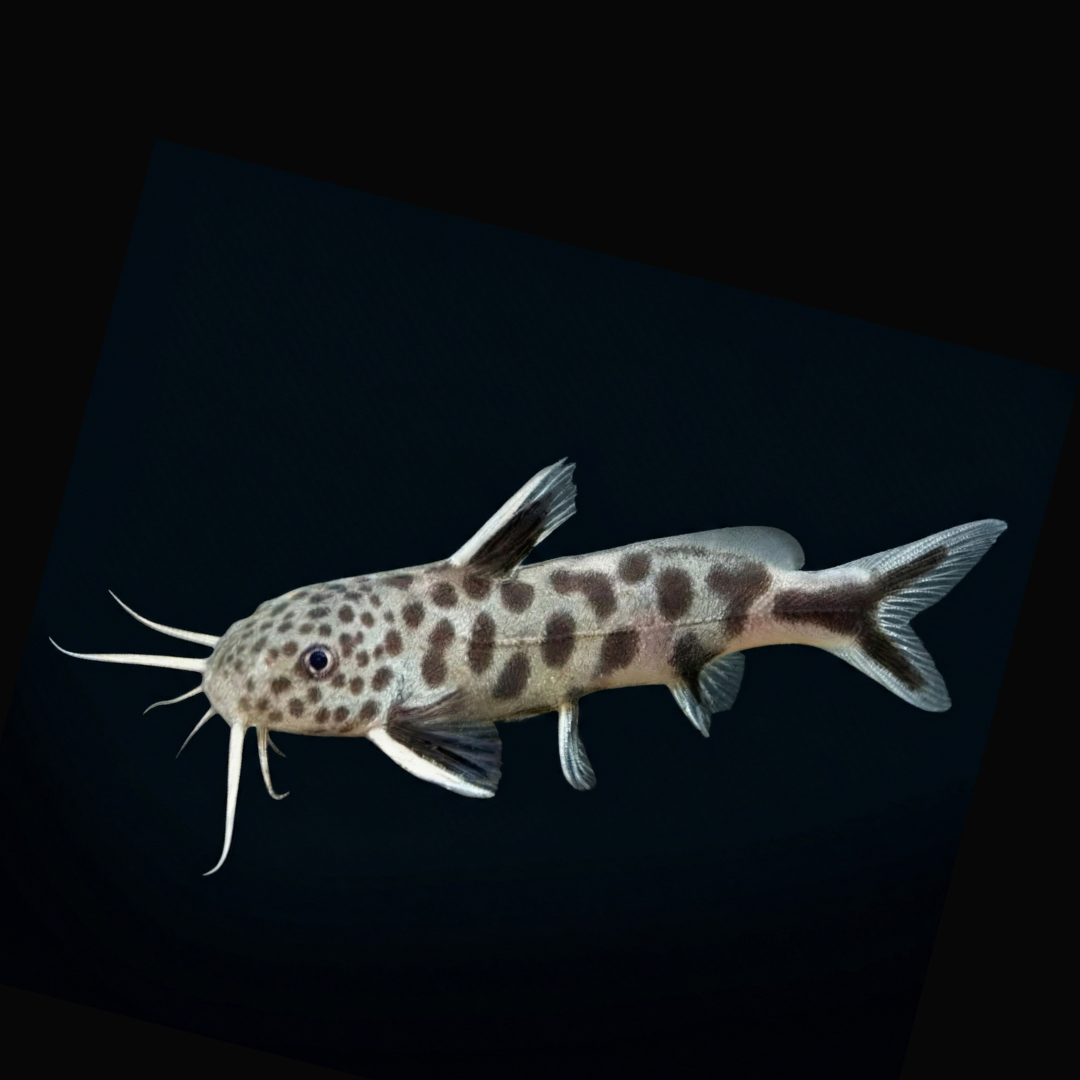
シノドンティス・ペトリコーラは、アフリカの古代湖、タンガニーカ湖にのみ生息する小型のナマズです。明るい茶褐色の体色に美しい黒のスポット模様が散りばめられ、各ヒレの縁が純白に染まるコントラストは、まさにタンガニーカ湖の宝石と呼ぶにふさわしい美しさを持っています。最大でも13センチメートル程度と、シノドンティス属の中でも小柄であり、日本の住環境に多い小型から中型の水槽でも飼育しやすいことが大きな魅力です。性格は非常に温和で、アフリカンシクリッドの混泳相手として世界中で愛されています。また、環境に慣れると非常に強健で、アクアリウムにおける「お掃除役」としても素晴らしい活躍を見せてくれます。Synodontis petricola is a small catfish endemic to Lake Tanganyika, one of the ancient lakes in Africa. Its light brownish body is adorned with beautiful black spots, and the pure white edges of its fins provide a stunning contrast, earning it the nickname “gem of Lake Tanganyika.” Reaching a maximum size of about 13 cm, it is smaller than many other Synodontis species, making it an ideal choice for the small to medium-sized tanks common in Japanese households. Known for its peaceful temperament, it is highly valued worldwide as a compatible tank mate for African cichlids. Once acclimated, it is exceptionally hardy and excels as a “cleaner fish” in the aquarium.
アフリカ:タンガニーカ湖(固有種)Endemic to Lake Tanganyika, Africa
最大体長 / Max Size
約11.5センチメートルから13.5センチメートルApprox. 11.5 cm to 13.5 cm
寿命 / Lifespan
8年から15年程度(飼育下では長寿な傾向があります)8 to 15 years (tend to be long-lived in captivity)
飼育環境 / Aquarium Environment
水槽サイズ / Tank Size
60リットル以上(60cm規格水槽以上を推奨)。群れを好むため、複数飼育なら90cm規格水槽(約150リットル)が理想的です。60 liters or more (recommended 60cm standard tank). For groups, a 90cm standard tank (approx. 150 liters) is ideal.
水温 / Temperature
24度から26度24°C to 26°C
水質 / Water Quality
pH 7.5から9.0の弱アルカリ性、中硬水から硬水。Weakly alkaline pH 7.5 to 9.0, medium-hard to hard water.
レイアウト / Layout
岩組みで多くの隠れ家を作り、底床にはサンゴ砂や細かい砂利を使用してください。Provide plenty of hiding spots with rockwork and use coral sand or fine gravel as the substrate.
注意点 / Precautions
日本の水道水は軟水であることが多いため、サンゴ砂やろ材等で硬度とpHを高める工夫が必要です。Since Japanese tap water is often soft, adjustments using coral sand or specific filter media are necessary to raise hardness and pH.
餌と給餌 / Feeding
餌の種類 / Diet
雑食性。人工飼料(沈下性タブレット)、イサザアミ(冷凍ミシス)、冷凍赤虫などをバランスよく与えます。Omnivorous. Provide a balanced diet of sinking pellets, frozen mysis shrimp, and frozen bloodworms.
給餌のポイント / Feeding Tips
夜行性が強いため、消灯直前に給餌すると効率よく食べさせることができます。他の魚に餌を取られないよう注意しましょう。They are nocturnal, so feeding just before lights out is effective. Ensure they aren’t outcompeted for food by faster tank mates.
性格と混泳 / Temperament and Tank Mates
性格 / Temperament
非常に温和で、同種間でも激しい争いはしません。Very peaceful and rarely engages in aggression, even with their own kind.
混泳の相性 / Compatibility
タンガニーカ湖産やマラウイ湖産のシクリッドと最高の相性です。口に入るほど小さな稚魚などは食べてしまう可能性があります。Excellent compatibility with Lake Tanganyika and Lake Malawi cichlids. However, they may eat tiny fry small enough to fit in their mouths.
病気と対策 / Diseases and Prevention
かかりやすい病気 / Common Diseases
白点病、水カビ病、皮膚の損傷。Ich (White spot disease), velvet, and skin abrasions.
対策と予防 / Prevention
鱗がないため薬品に敏感です。薬浴の際は規定量の半分から始めるなどの慎重さが必要です。安定した水質維持が最大の予防です。As they are scaleless, they are sensitive to medications. Use half-doses and monitor closely. Maintaining stable water quality is the best prevention.
増やし方(繁殖) / Breeding
雌雄の判別 / Sexing
成魚ではメスの方が腹部がふっくらと丸みを帯び、体高が高くなります。Adult females have a rounder, plumper abdomen and a deeper body profile than males.
繁殖形態 / Reproduction
岩盤産卵型(ばら撒き型)。岩の隙間などに卵を産み落とします。Crevice spawner (egg scatterer). They lay eggs in narrow gaps between rocks.
繁殖のポイント / Breeding Tips
「ビー玉メソッド」と呼ばれる、ビー玉を敷き詰めた容器を産卵床にする手法が効果的です。親魚による食卵を防ぎ、効率的に卵を回収できます。The “Marble Method,” using a container filled with marbles as a spawning site, is effective. This prevents the parents from eating the eggs and allows for easy egg collection.
雑学と豆知識 / Trivia and Fun Facts
1. 分類学の大きな転換:ルキピンニスとの統合 / 1. Taxonomical Shift: Merging with lucipinnis
長い間、本種には「ドワーフ・ペトリコーラ」という通称で呼ばれる、より小型で模様が異なる別種(シノドンティス・ルキピンニス)が存在すると信じられてきました。しかし、2024年の最新の研究により、遺伝的・形態的な精査が行われた結果、ルキピンニスはペトリコーラの地域的な変異個体群に過ぎないことが判明し、同一種として統合されました。アクアリウム市場では今でも別名で取引されることがありますが、科学的には一つの大きな種として再定義されています。For a long time, it was believed that a smaller, distinctly patterned sister species called Synodontis lucipinnis (Dwarf Petricola) existed. However, a major study in 2024 involving genetic and morphological analysis revealed that lucipinnis is simply a regional phenotype of petricola. Consequently, they were merged into a single species. While they may still be traded under different names in the market, they are now scientifically recognized as one species.
2. 摩擦で音を奏でるナマズ:摩擦発音の仕組み / 2. The Squeaker: Mechanism of Stridulation
シノドンティスの仲間は、英語でスクイーカー(鳴くもの)と呼ばれます。これは、彼らが驚いたり、相手を威嚇したりする際に「ギュッギュッ」という音を出すためです。この音は喉で鳴らしているのではなく、胸ビレの棘を肩の骨(擬鎖骨)の溝に擦り合わせることで発生させています。この摩擦発音は、暗い湖底でのコミュニケーションや捕食者への警戒信号として役立っていると考えられており、小さな体に秘められた驚きの進化の一つと言えるでしょう。Members of the Synodontis genus are often called “squeakers.” This is because they produce a distinctive squeaking sound when startled or defending territory. This sound isn’t vocal but is created by rubbing the base of their pectoral fin spines against the grooves in their shoulder girdle (cleithrum). This mechanism, known as stridulation, is thought to be used for communication in the dark depths of the lake or as an aposematic warning to predators.
3. 托卵への誤解:カッコウナマズとの違い / 3. Misconceptions about Brood Parasitism
タンガニーカ湖産のナマズの中には、シクリッドの口の中に自分の卵を預けて育てさせる「托卵(たくらん)」を行うカッコウナマズ(シノドンティス・マルチプンクタータス)がいます。ペトリコーラもかつてはこの托卵を行うと誤解されることがありましたが、実際には岩の隙間に卵を産み落とすだけの、ごく一般的な繁殖形態をとります。同じ湖に住む近縁種でありながら、一方は托卵という極めて特殊な道を選び、一方は自立した繁殖を選んだという対比は、生物の多様性を感じさせる面白いエピソードです。In Lake Tanganyika, the Cuckoo Catfish (S. multipunctatus) is famous for its brood parasitism, sneaking its eggs into the mouths of mouth-brooding cichlids. For a time, S. petricola was misunderstood to exhibit the same behavior. However, it has been confirmed that petricola is a crevice spawner and does not practice brood parasitism. The contrast between these closely related species—one evolving an extreme parasitic strategy and the other maintaining traditional spawning—is a fascinating example of biological diversity.
まとめ / Conclusion
シノドンティス・ペトリコーラは、その美しい模様と愛らしい仕草、そして何より日本の住環境でも無理なく付き合えるサイズ感が魅力の、非常に素晴らしい熱帯魚です。アフリカンシクリッドとの相性は言うまでもなく、水槽の底の方でちょこちょこと動き回り、時に逆さまになって岩陰を掃除する姿は、見る人を飽きさせません。Synodontis petricola is a wonderful tropical fish, boasting beautiful patterns, charming behaviors, and a size that fits perfectly within the constraints of typical Japanese aquariums. Their compatibility with African cichlids is unparalleled, and watching them dart around the bottom or swim upside down to clean under rocks is a source of endless fascination for aquarists.
最新の分類学によって「ルキピンニス」との同一性が証明されたことで、より多様な表現型を持つ種としてその魅力が再評価されています。水質の調整という少しのコツさえ掴めば、非常に長く付き合える良きパートナーとなってくれるでしょう。ぜひ、タンガニーカ湖の神秘をあなたのアクアリウムに迎えてみてください。With the recent taxonomic merger with S. lucipinnis, the species is being re-evaluated for its rich phenotypic diversity. As long as you master the small trick of water chemistry adjustment, they will be long-term companions in your hobby. We invite you to bring a piece of Lake Tanganyika’s mystery into your own aquarium.
Englmaier, G. K., et al. (2024). Taxonomic revision of the Lake Tanganyika Synodontis (Siluriformes: Mochokidae) yields high species overestimation and evidence for a monophyletic radiation. Zoological Journal of the Linnean Society, 202(3). doi:10.1093/zoolinnean/zlae112
Wright, J. J. & Page, L. M. (2006). Taxonomic revision of Lake Tanganyikan Synodontis (Siluriformes: Mochokidae). Zootaxa, 1184, 1-125. doi:10.11646/zootaxa.1184.1.1
Froese, R. and D. Pauly. Editors. (2025). FishBase. World Wide Web electronic publication. www.fishbase.org, version (02/2025). Synodontis petricola (Ref. 51838).
Parmentier, E., et al. (2010). Sound production in the catfish Synodontis: mechanism and development. Journal of Experimental Biology, 213, 2791-2799. doi:10.1242/jeb.041665
IUCN Red List of Threatened Species. (2025). Synodontis petricola. https://www.iucnredlist.org/ (Accessed on April 8, 2026).
Poll, M. (1971). Revision des Synodontis africains (Famille Mochocidae). Annales du Musee Royal de l’Afrique Centrale, Serie 8, Sciences Zoologiques, 191, 1-497. (FishBase Ref. 82238).
Matthes, H. (1959). Poissons nouveaux au lac Tanganika. Folia Scientifica Africae Centralis, 5, 18.

 ポチップ
ポチップ




コメント