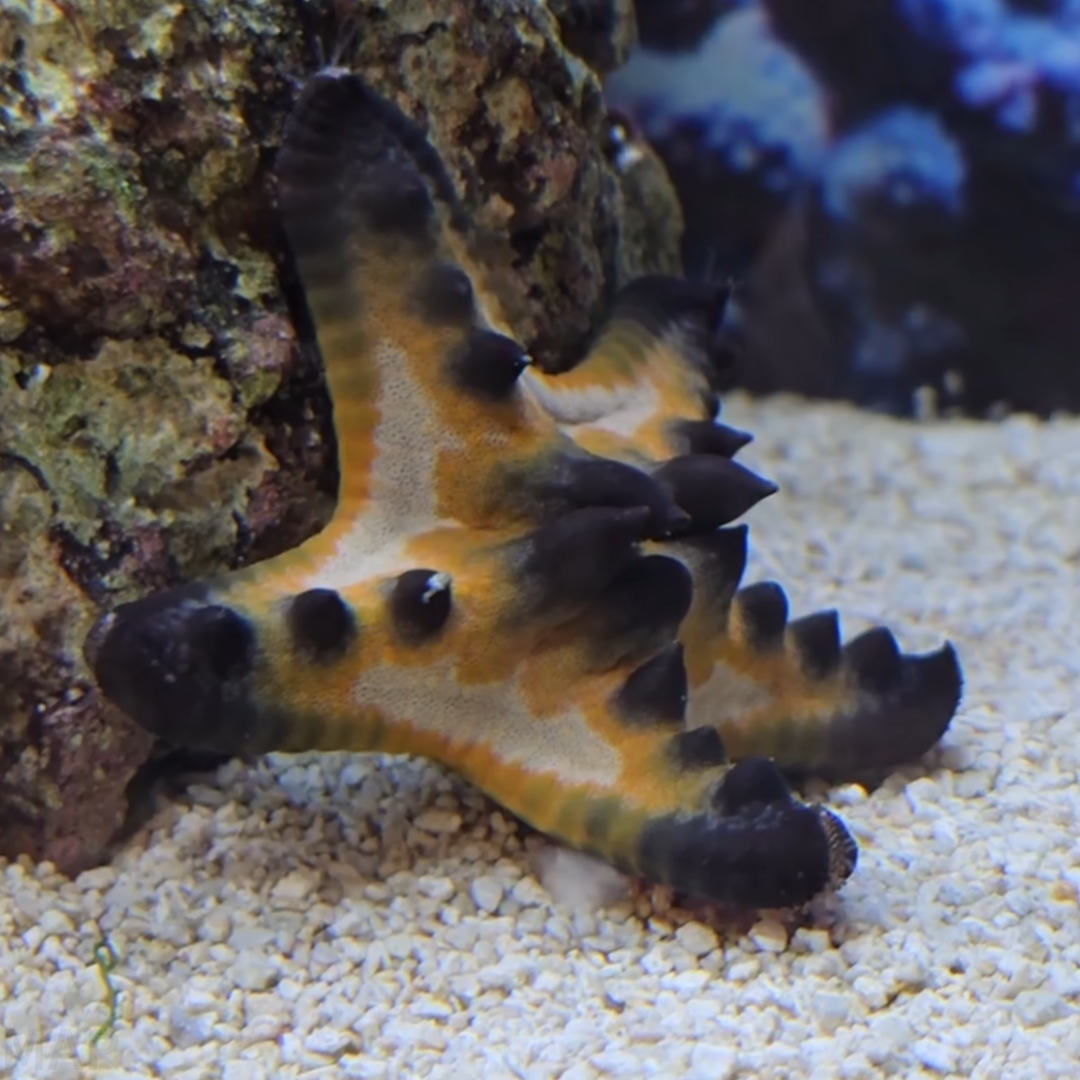
クッキー生地にチョコチップを散りばめたような愛らしい色彩と、背中に並ぶ円錐形の「コブ」が特徴的な大型のヒトデです。「チョコレートチップ・シースター」という英名でも親しまれ、観賞用としてだけでなく、乾燥標本(マリンインテリア)としても古くから世界中で愛されています。そのユニークな姿が水槽内をゆっくりと移動する様子は見ていて飽きませんが、実は非常に食欲旺盛な肉食性を持っています。安価で丈夫なため初心者向けとして販売されることが多いですが、長期飼育のためには餌やりや水質管理など、正しい知識とケアが必要な生き物です。Characterized by its adorable coloration resembling chocolate chips scattered on cookie dough and the conical “knobs” lining its back, this large starfish is widely loved. Also known by the English name “Chocolate Chip Sea Star,” it has long been popular worldwide not only as an aquarium pet but also as dried specimens for marine decor. Watching its unique form move slowly around the tank is fascinating, but despite its cute looks, it is a voracious carnivore. Although often sold as a hardy species for beginners due to its low price, long-term care requires proper knowledge and attention, particularly regarding feeding and water quality management.
基本情報 / Basic Information
学名 / Scientific Name
Protoreaster nodosus
通称 / Common Name
コブヒトデ / チョコチップスターChocolate Chip Sea Star / Horned Sea Star
分類 / Family
コブヒトデ科Oreasteridae
英名 / English Name
Chocolate Chip Sea Star
分布 / Distribution
インド洋~西太平洋(フィリピン、インドネシアなどの熱帯海域)Indo-Pacific (Tropical waters such as Philippines, Indonesia)
最大体長 / Max Size
直径 20cm~25cm(稀に30cm)Diameter 20cm – 25cm (Rarely up to 30cm)
寿命 / Lifespan
約5年~10年Approx. 5 – 10 years
飼育環境 / Aquarium Environment
水槽サイズ / Tank Size
60cm規格水槽(約60L)以上推奨。底面積の広い水槽が望ましい。60cm standard tank (approx. 60L) or larger recommended. Tanks with a wide bottom area are preferred.
パウダーから小粒のサンゴ砂を3~5cm程度敷く。ライブロックは崩されないよう安定させる。Layer coral sand (powder to small grain) to a depth of 3-5cm. Secure live rocks so they are not toppled.
注意点 / Precautions
導入時の水合わせは非常に重要です。点滴法で1~2時間かけて慎重に行ってください。硝酸塩の蓄積にも弱いため、定期的な水換えが必要です。Acclimation is crucial. Use the drip method for 1-2 hours carefully. They are also sensitive to nitrate accumulation, so regular water changes are necessary.
餌と給餌 / Feeding
餌の種類 / Diet
アサリ、イカ、エビの切り身、肉食魚用の沈下性タブレットフード。Clams, squid, chopped shrimp, sinking tablet food for carnivorous fish.
給餌のポイント / Feeding Tips
コケ取り能力は限定的で、コケだけでは餓死します。2~3日に1回、ヒトデの進行方向に餌を置くか、そっと被せるようにして与えてください。Their ability to clean algae is limited, and they will starve on algae alone. Feed them every 2-3 days by placing food in their path or gently placing them over the food.
性格と混泳 / Temperament and Tank Mates
性格 / Temperament
動きはゆっくりですが、貪欲な肉食性です。餌の匂いに敏感で、獲物を見つけると覆いかぶさって捕食します。Slow-moving but voracious carnivores. They are sensitive to the smell of food and will cover and devour prey upon finding it.
混泳の相性 / Compatibility
【注意】サンゴ、貝類、イソギンチャクは捕食されるため混泳不可(Reef Safeではありません)。魚類(クマノミ等)とは混泳可能ですが、フグやフリソデエビは天敵です。[Caution] Not Reef Safe. Corals, clams, and anemones will be eaten. Compatible with fish (like Clownfish), but Puffers and Harlequin Shrimp are predators and must be avoided.
病気と対策 / Diseases and Prevention
かかりやすい病気 / Common Diseases
体の崩壊(Disintegration)。体表が白くただれ、溶けるように崩れていく現象で、致死率が高いです。Disintegration. A condition where the body surface turns white, necrotic, and melts away, often fatal.
対策と予防 / Prevention
主な原因は導入時の水質ショック、水質悪化、そして餓死です。慎重な水合わせと十分な給餌、清潔な水質の維持が最大の予防策です。Main causes are water quality shock during introduction, poor water quality, and starvation. Careful acclimation, sufficient feeding, and maintaining clean water are the best prevention.
増やし方(繁殖) / Breeding
繁殖形態 / Reproduction
雌雄異体で、海中に卵と精子を放出する有性生殖を行います。Dioecious, engaging in sexual reproduction by releasing eggs and sperm into the water.
繁殖のポイント / Breeding Tips
浮遊幼生期を経て成長するため、一般的な水槽設備での意図的な繁殖・育成は極めて困難です。Intentional breeding and raising in standard aquariums is extremely difficult due to their planktonic larval stage.
雑学と豆知識 / Trivia and Fun Facts
1. 驚異の「体外消化」 / 1. Extra-oral Digestion
コブヒトデは食事の際、なんと自分の胃袋を口から体の外へ「反転」させ、直接餌に押し当てます。消化酵素で獲物を溶かし、栄養スープ状にしてから吸収するため、自分の口に入らないような大きな獲物も食べることができます。When feeding, Protoreaster nodosus inverts its stomach out of its mouth and presses it directly onto the food. It dissolves the prey with digestive enzymes and absorbs the nutrients, allowing it to eat prey larger than its own mouth.
2. 防御物質「サポニン」 / 2. Defensive Saponins
彼らの体には「アステロサポニン」という物質が含まれており、これが魚たちに「不味い」「危険」と思わせる化学的な防御壁となっています。ただし、水槽内でヒトデが死んでしまうと、この成分が水中に溶け出し、魚に悪影響を与えることがあるため、死骸はすぐに取り出す必要があります。Their bodies contain substances called “Asterosaponins,” which act as a chemical defense, making them taste bad or dangerous to fish. However, if a starfish dies in the tank, this substance can leach into the water and harm the fish, so the carcass must be removed immediately.
3. 再生能力には限界がある? / 3. Limits of Regeneration?
ヒトデといえば「腕一本からでも再生する」イメージがありますが、コブヒトデ属の場合、再生には通常「中心盤(体の中央部分)」の一部が残っている必要があります。アオヒトデのように千切れた腕だけで完全な個体に復活することは稀です。While starfish are known for regenerating from a single arm, species in the genus Protoreaster usually require a part of the “central disk” to remain for regeneration. Unlike Linckia species, it is rare for them to fully regenerate from just a severed arm.
まとめ / Conclusion
コブヒトデは、そのユーモラスな姿で水槽のアイドルになれる存在ですが、決して「ただの飾り」や「掃除屋」ではありません。彼らは適切なケアをすれば5年から10年も生きる長寿な生き物です。サンゴ水槽には入れられないという制約はありますが、彼らのために用意された砂地の水槽で、餌を求めて元気に歩き回る姿を観察するのは、アクアリストならではの特権と言えるでしょう。Protoreaster nodosus can be the star of your aquarium with its humorous appearance, but it is neither a mere decoration nor just a cleanup crew. With proper care, they are long-lived creatures that can survive for 5 to 10 years. Although they cannot be kept in reef tanks, observing them energetically moving around a sandy tank prepared specifically for them is a privilege unique to aquarists.
導入初期の丁寧な水合わせと、定期的な給餌さえ心がければ、非常に丈夫で飼育しやすいパートナーとなってくれます。ぜひ、この愛らしい「海の星」との生活を楽しんでみてください。As long as you ensure careful acclimation during the initial introduction and provide regular feeding, they will become very hardy and easy-to-keep partners. We hope you enjoy life with this adorable “Star of the Sea.”

 ポチップ
ポチップ



コメント