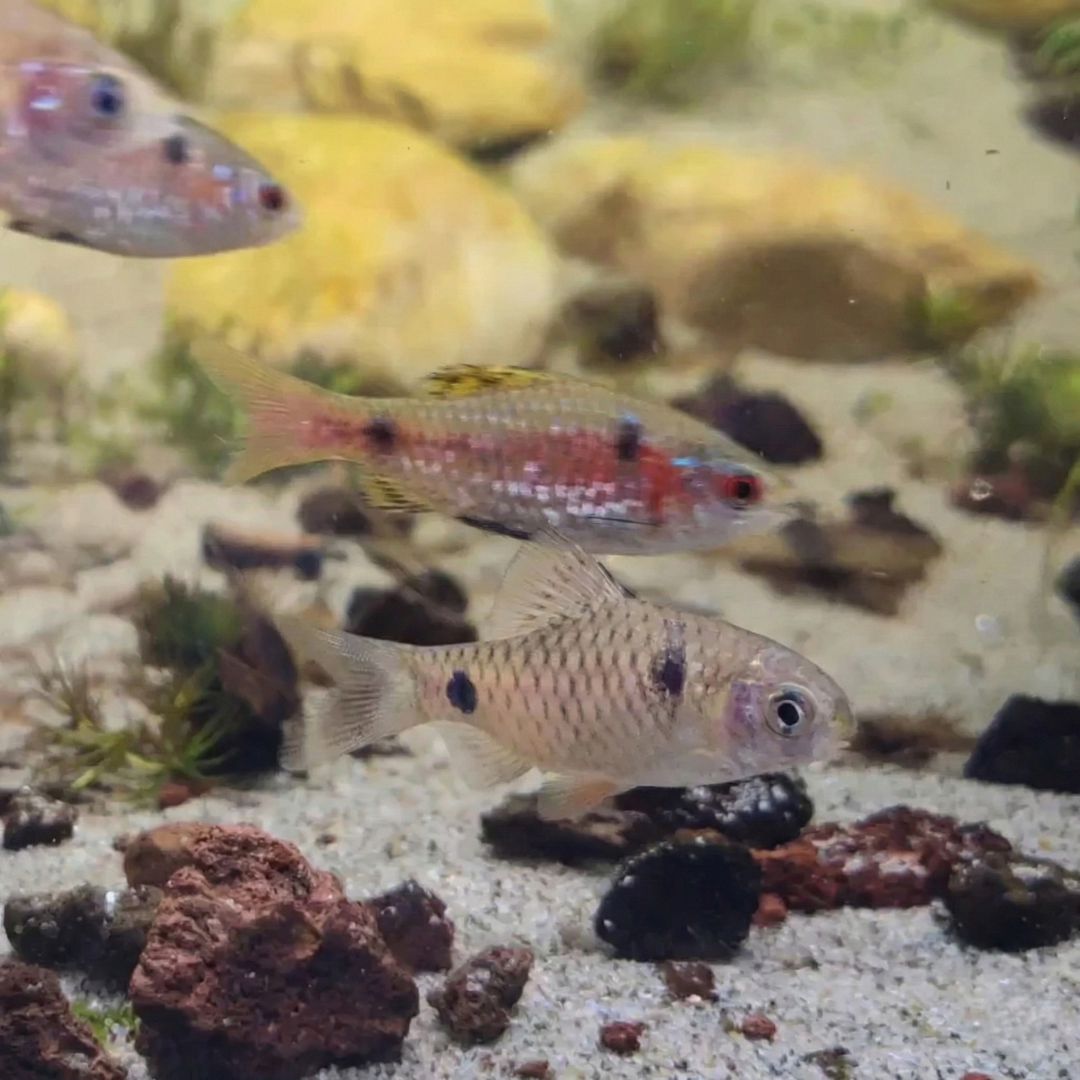
オデッサバルブは、雄の体側を走る鮮烈な真紅の帯と、活発な遊泳性でアクアリウムの主役を務める美しいコイ科の魚です。古くから観賞魚として親しまれてきましたが、実は2008年になるまで正式な学名が存在せず、その故郷も謎に包まれていました。ウクライナのオデッサを経由して世界に広まったという数奇な歴史を持ち、現在ではその美しさと飼育のしやすさから、初心者からマニアまで幅広く愛されています。特に水草水槽における緑と赤のコントラストは息をのむ美しさです。The Odessa Barb is a beautiful cyprinid fish that plays a leading role in aquariums with the vivid crimson band running along the male’s side and its active swimming nature. Although it has been popular as an ornamental fish for a long time, it actually did not have an official scientific name until 2008, and its homeland was shrouded in mystery. It has a singular history of spreading to the world via Odessa, Ukraine, and is now widely loved by beginners to enthusiasts for its beauty and ease of breeding. The contrast between green and red in a planted aquarium is particularly breathtaking.
60cm規格水槽(約60L)以上推奨60cm standard tank (approx. 60L) or larger recommended
水温 / Temperature
16°C〜26°C
水質 / Water Quality
弱酸性〜中性(pH 6.5〜7.5)Slightly acidic to neutral (pH 6.5 – 7.5)
レイアウト / Layout
暗色の底床を使用すると発色が良くなります。水草や流木で隠れ家を作ってください。Using a dark substrate improves coloration. Provide hiding spots with aquatic plants and driftwood.
注意点 / Precautions
高水温(30°C以上)には弱いため、夏場の水温管理に注意してください。活発に泳ぐため飛び出し事故にも注意が必要です。They are sensitive to high temperatures (over 30°C), so manage water temperature carefully in summer. Be careful of jumping accidents as they swim actively.
餌と給餌 / Feeding
餌の種類 / Diet
人工飼料(粒状、フレーク)、冷凍赤虫、冷凍ブラインシュリンプなどArtificial feed (pellets, flakes), frozen bloodworms, frozen brine shrimp, etc.
給餌のポイント / Feeding Tips
大食漢で何でもよく食べます。美しい赤色を維持するために、色揚げ効果のあるフードや赤虫を与えるのがおすすめです。肥満になりやすいため与えすぎには注意しましょう。They are gluttonous and eat almost anything. To maintain the beautiful red color, it is recommended to feed color-enhancing food or bloodworms. Be careful not to overfeed as they are prone to obesity.
性格と混泳 / Temperament and Tank Mates
性格 / Temperament
非常に活発で、同種間で群れることを好みます。スマトラほど攻撃的ではありませんが、ヒレの長い魚や動きの遅い魚には興味を示していたずらすることがあります。Very active and prefers to school with its own kind. Not as aggressive as Tiger Barbs, but may show interest in and nip at long-finned or slow-moving fish.
混泳の相性 / Compatibility
同程度のサイズの遊泳魚(中型テトラ、ラスボラ、ダニオ)や、生活圏の被らないコリドラスなどが適しています。グッピーやベタなどのヒレの長い魚、小型のエビ類との混泳は避けてください。Similar-sized swimming fish (medium-sized Tetras, Rasboras, Danios) and Corydoras which do not share the same swimming layer are suitable. Avoid keeping with long-finned fish like Guppies and Bettas, or small shrimps.
病気と対策 / Diseases and Prevention
かかりやすい病気 / Common Diseases
非常に丈夫な魚ですが、水温の急変による白点病や、高水温による酸欠には注意が必要です。They are very hardy fish, but be careful of Ich caused by sudden temperature changes and oxygen deficiency caused by high water temperatures.
対策と予防 / Prevention
導入時の水合わせを丁寧に行い、夏場はファンやクーラーで水温上昇を防ぎます。エアレーションを行い、溶存酸素量を確保することも有効です。Acclimatize carefully when introducing them, and prevent water temperature rise with fans or coolers in summer. Aeration is also effective to ensure dissolved oxygen levels.
増やし方(繁殖) / Breeding
繁殖形態 / Reproduction
ばら撒き型産卵を行います。水草の茂みなどに卵を産み落としますが、親魚が卵を食べてしまうため隔離が必要です。They are egg scatterers. They spawn in thickets of aquatic plants, but isolation is necessary because parents eat the eggs.
繁殖のポイント / Breeding Tips
成熟したペアをウィローモスなどを入れた産卵用水槽に移します。産卵後は親魚を速やかに取り出します。稚魚は非常に小さいため、初期飼料としてインフゾリア(ゾウリムシなど)を用意することが成功の鍵です。Move a mature pair to a breeding tank with Java moss. Remove parents immediately after spawning. Fry are very small, so preparing Infusoria as an initial food is the key to success.
雑学と豆知識 / Trivia and Fun Facts
1. 「鉄のカーテン」を超えた魚 / 1. The Fish that Crossed the Iron Curtain
本種が世界に広まったのは1970年代、ソビエト連邦の港湾都市オデッサを経由したことがきっかけでした。当時、西側の研究者が立ち入れない地域から独自のルートで持ち込まれたため、長い間「人工着色された魚ではないか」と疑われたり、正確な産地が不明なままでした。「オデッサバルブ」という名は、冷戦時代のミステリーを今に伝える歴史的なネーミングなのです。This species spread to the world in the 1970s via the Soviet port city of Odessa. At that time, it was brought in through unique routes from areas inaccessible to Western researchers, so it was suspected of being “artificially colored” and its exact origin remained unknown for a long time. The name “Odessa Barb” is a historic naming that conveys the mystery of the Cold War era.
2. 驚異の「pH 11.0」 / 2. The Astonishing “pH 11.0”
2008年の新種記載時の調査により、ミャンマーにある本種の生息地(人工池)の水質が、なんとpH 11.0という強アルカリ性であることが判明しました。これは通常の魚なら生存困難な数値ですが、オデッサバルブはこの環境でも繁栄していました。この事実は彼らの並外れた適応能力を示していますが、飼育下では日本の水道水(中性付近)で全く問題なく、むしろその方が管理しやすいです。A survey during the new species description in 2008 revealed that the water quality of its habitat (artificial pond) in Myanmar was strongly alkaline at pH 11.0. This is a level difficult for normal fish to survive, but Odessa Barbs thrived in this environment. This fact demonstrates their extraordinary adaptability, but in captivity, they do perfectly fine in tap water (near neutral), which is actually easier to manage.
3. ワイルド個体とブリード個体の違い / 3. Wild vs. Captive Bred
日本で流通する個体には、養殖(ブリード)と野生採集(ワイルド)の2タイプがあります。ブリード個体は丸みを帯びた体型で常に一定の赤さを保ちますが、ワイルド個体はより流線型でスマートな体型をしています。ワイルドは環境に馴染んで婚姻色が出た瞬間、金属光沢を伴う爆発的な発色を見せることがあり、マニアの間では「予測不能な美しさ」として珍重されています。There are two types distributed in Japan: captive-bred and wild-caught. Bred individuals have a rounded body shape and maintain a constant redness, while wild individuals have a more streamlined and smart body shape. Wild specimens can show explosive coloration with metallic luster the moment they settle in and display nuptial colors, which is prized by enthusiasts as “unpredictable beauty”.
4. 学名「パダミャ」の意味 / 4. Meaning of “Padamya”
学名の種小名である padamya は、ビルマ語で「ルビー」を意味します。これは雄の体側にある燃えるような赤色に由来しています。かつて流通名として「ルビーバルブ」と呼ばれたこともありましたが、現在では歴史ある「オデッサ」の名が定着しています。The specific epithet “padamya” means “ruby” in Burmese. This is derived from the burning red color on the male’s side. It was once called “Ruby Barb” as a trade name, but the historic name “Odessa” has now become established.
まとめ / Conclusion
オデッサバルブは、その美しい色彩と飼育のしやすさ、そして歴史的背景において他に類を見ない魅力を持つ熱帯魚です。日本の軟水環境や60cm規格水槽という一般的な飼育設備に完全に適応するため、初心者の方にも自信を持っておすすめできます。The Odessa Barb is a tropical fish with unique appeal in terms of its beautiful colors, ease of breeding, and historical background. It adapts perfectly to Japan’s soft water environment and common equipment like 60cm standard tanks, so it can be confidently recommended to beginners.
水草レイアウトの中で群泳する雄の姿は、まさに「泳ぐ宝石」です。安価なブリード個体から始めるもよし、ワイルド個体の野性味を追求するもよし。ぜひあなたの水槽に、この歴史ある美しい魚を迎えてみてください。The sight of males schooling in a planted layout is truly a “swimming jewel”. You can start with affordable bred individuals or pursue the wild nature of wild-caught ones. Please welcome this historic and beautiful fish into your aquarium.



 ポチップ
ポチップ



コメント