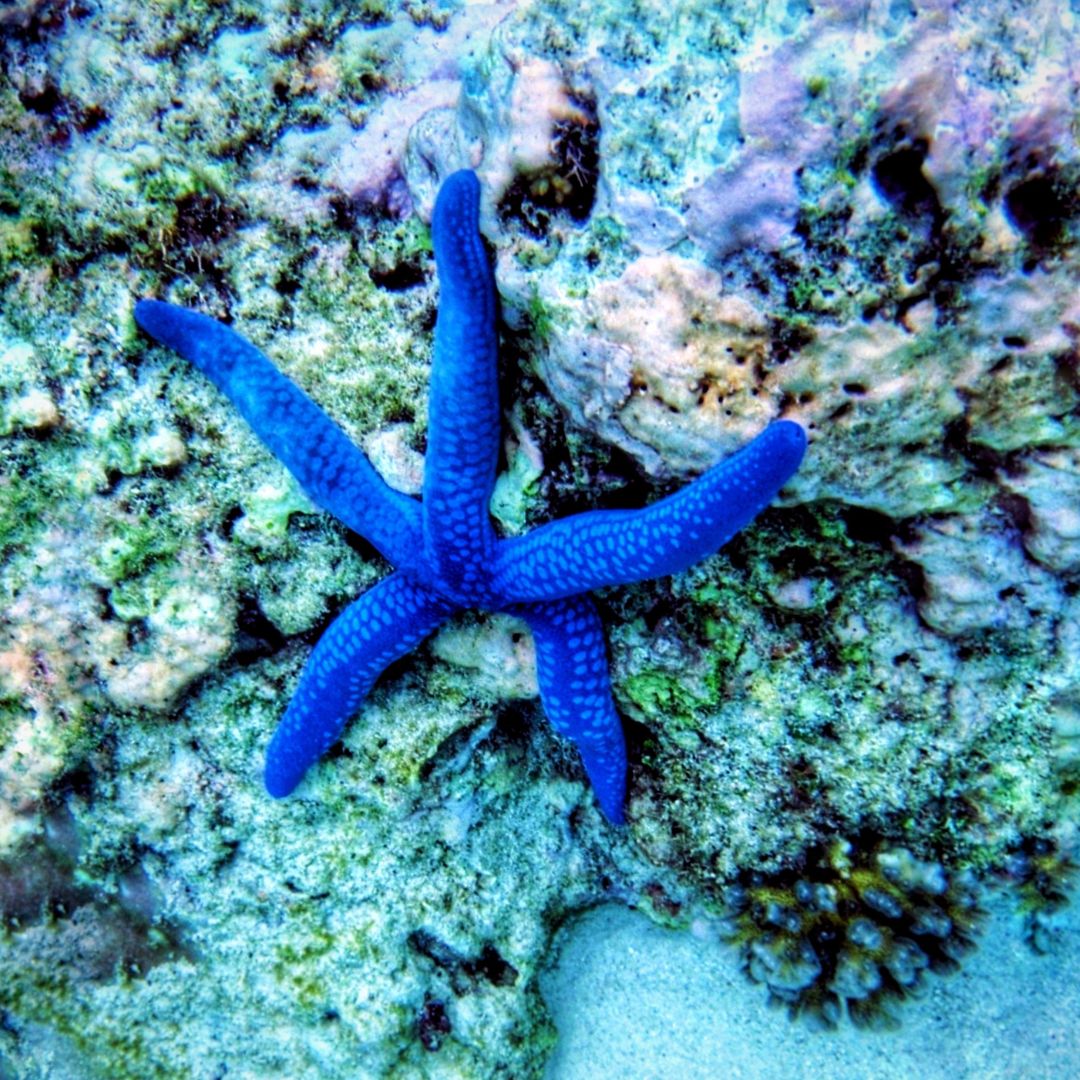
インド太平洋の熱帯海域、とりわけサンゴ礁の浅瀬において、ひと際目を引く鮮烈なコバルトブルーの姿。アオヒトデは、その美しい色彩と整った星形のフォルムから、アクアリウムの世界で不動の人気を誇る無脊椎動物です。しかし、彼らは単なる美しい装飾品ではありません。波の荒いサンゴ礁環境に適応した強靭な骨格を持ちながら、体内では独自の視覚システムや複雑な水管系を駆使して生きる、進化の妙を感じさせる生き物です。しばしば初心者向けの「掃除屋」として紹介されますが、長期飼育には熟成したライブロックと安定した水質、そして何より飼育者の深い理解と観察眼が必要となる、奥深い魅力を持った存在なのです。The Blue Starfish (Linckia laevigata) is one of the most visually striking invertebrates found in the tropical waters of the Indo-Pacific, particularly in shallow coral reefs. With its vivid cobalt blue coloration and perfect star shape, it is a favorite in the aquarium trade. However, they are far more than just beautiful ornaments. Adapted to high-energy reef environments with a robust skeleton, they possess unique visual systems and complex water vascular systems. Often marketed as a “clean-up crew” for beginners, successful long-term care actually requires mature live rock, stable water quality, and above all, the aquarist’s deep understanding and keen observation.
基本情報 / Basic Information
学名 / Scientific Name
Linckia laevigata
通称 / Common Name
アオヒトデBlue Starfish, Blue Linckia
分類 / Family
ホウキボシ科 (Ophidiasteridae)Ophidiasteridae
英名 / English Name
Blue Starfish
分布 / Distribution
インド太平洋全域(日本では沖縄以南の南西諸島など)Indo-Pacific region (in Japan, south of Okinawa and the Ryukyu Islands)
最大体長 / Max Size
直径 20cm ~ 30cm(最大40cmに達することもある)Diameter 20cm – 30cm (can reach up to 40cm)
寿命 / Lifespan
自然界では長寿と推測されるが、飼育下での長期維持は難易度が高い。Presumed to be long-lived in the wild, but long-term maintenance in captivity is challenging.
飼育環境 / Aquarium Environment
水槽サイズ / Tank Size
長期飼育には90cm規格水槽(約150L)以上が必須。120cm水槽(300Lクラス)以上が理想的。これは遊泳スペースではなく、餌となる微生物が発生するライブロックの表面積を確保するためです。A 90cm standard tank (approx. 150L) or larger is essential for long-term care. Ideally 120cm (300L class). This is not for swimming space, but to ensure enough live rock surface area for their food source (microorganisms).
水温 / Temperature
24℃ – 26℃
水質 / Water Quality
比重 1.025 – 1.026、pH 8.1 – 8.4。急激な変動に極めて弱いため、安定した環境維持が求められます。硝酸塩は低濃度(2-10ppm程度)が望ましいです。Specific Gravity 1.025 – 1.026, pH 8.1 – 8.4. They are extremely sensitive to rapid changes, so stable conditions are required. Low nitrates (2-10ppm) are preferred.
レイアウト / Layout
表面に微生物や石灰藻が豊富に付着した「熟成した」ライブロックを多めに配置します。底砂はパウダー状のサンゴ砂を敷くことで、有機物を摂取しやすくなります。Ideally use plenty of “mature” live rock rich in microorganisms and coralline algae. A substrate of powdered coral sand allows them to feed on organic matter more easily.
注意点 / Precautions
導入時の水合わせは最重要工程です。点滴法で2.5時間〜4時間かけ、慎重に行ってください。また、移動の際は絶対に空気に触れさせてはいけません。体内に空気が入ると壊死の原因となります。Acclimation is the most critical process. Use the drip method for 2.5 to 4 hours. Also, never expose them to air during transfer; trapped air can cause necrosis.
餌と給餌 / Feeding
餌の種類 / Diet
主にライブロックやガラス面のバイオフィルム(細菌膜)、微細藻類、デトリタスを食べます。一部、海綿(スポンジ)を食べる傾向もあります。人工飼料を直接食べることは稀です。Mainly feeds on biofilms, microalgae, and detritus on live rock and glass. They may also consume sponges. Rarely accepts artificial food directly.
給餌のポイント / Feeding Tips
直接餌を与えるよりも、植物プランクトンやアミノ酸を添加し、水槽内の微生物相を豊かにすることが最大の給餌となります。補助的に、岩に塗りつけるタイプの餌(Masstickなど)が有効な場合があります。Enriching the tank’s microfauna with phytoplankton and amino acids is more effective than direct feeding. Paste-type foods (like Masstick) applied to rocks can be effective as a supplement.
性格と混泳 / Temperament and Tank Mates
性格 / Temperament
非常に温和で、魚や他のサンゴを襲うことは基本的にありません。ただし、餌不足時に小型のヒトデ(アステリナ等)を捕食する様子が観察されています。Very peaceful; generally does not attack fish or corals. However, they have been observed preying on small starfish (Asterina sp.) when food is scarce.
混泳の相性 / Compatibility
多くのサンゴや魚と共存可能ですが、ヒトデをつつく習性のあるフグ類、大型のベラ、ヤッコ類との混泳は避けてください。Compatible with most corals and fish, but avoid tank mates that peck at starfish, such as puffers, large wrasses, and angelfish.
病気と対策 / Diseases and Prevention
かかりやすい病気 / Common Diseases
「自己融解(Melting)」が最も恐ろしい症状です。腕の一部が白く溶け始め、全身に広がります。これはビブリオ感染や、導入時のpHショックなどが原因です。“Melting” is the most dreaded condition, where arms turn white and disintegrate. This is caused by Vibrio infection or pH shock during introduction.
対策と予防 / Prevention
購入時に「青い寄生貝(クリムシガイ)」が付着していないか確認し、いれば除去します。また、傷やただれのある個体を選ばないこと、導入時の水合わせを徹底することが唯一にして最大の予防策です。Check for and remove parasitic snails (Thyca crystallina) upon purchase. The best prevention is selecting healthy specimens without sores and performing thorough acclimation.
増やし方(繁殖) / Breeding
繁殖形態 / Reproduction
雌雄異体での放卵放精のほか、腕が千切れて再生する無性生殖も行います。1本の腕から再生中の個体は、彗星のように見えるため「コメット」と呼ばれます。Reproduces sexually via spawning and asexually via regeneration from severed arms. A specimen regenerating from a single arm looks like a comet, hence the name “Comet”.
繁殖のポイント / Breeding Tips
水槽内での意図的な繁殖は困難です。幼生期間が長く、濾過槽に吸い込まれてしまうためです。再生能力は高いですが、再生には多大なエネルギーを要するため、栄養状態が悪いと失敗します。Intentional breeding in aquaria is difficult due to the long larval stage. While regeneration capacity is high, it requires significant energy and often fails if the starfish is malnourished.
雑学と豆知識 / Trivia and Fun Facts
鮮やかな青の正体The Secret of the Blue
アオヒトデの美しい青色は、「リンキアシヤニン」という特殊なタンパク質と色素の複合体によるものです。通常、色素単体では赤や橙色をしていますが、タンパク質と結合することで青色に見えます。そのため、死んでしまったり、標本にするためにアルコールに浸けると、この結合が解けて瞬時に赤橙色に変色してしまうのです。The beautiful blue color comes from a complex called “Linckiacyanin”. When the starfish dies or is preserved in alcohol, the protein bond breaks, and it instantly turns reddish-orange.
実は「目」が良い?Can They See?
最新の研究により、アオヒトデは腕の先端にある「眼点」を使って、周囲の景色を見ていることが判明しました。解像度は低いですが、サンゴ礁の岩場などの大きな構造物を認識し、自分の棲み処へ戻るためのナビゲーションに使っています。ただ海底を彷徨っているのではなく、意思を持って「家」を目指しているのです。Recent studies reveal they use “ocelli” at their arm tips to see. Though low resolution, they can recognize large structures like reefs to navigate back to their preferred habitats.
小さな同居人と寄生者Symbionts and Parasites
彼らの体表は小さな生態系です。「ヒトデヤドリエビ」は体色を青く変えて共生する美しいパートナーですが、一方で「クリムシガイ」という青い巻貝は、体液を吸う危険な寄生虫です。どちらも同じような青色で見分けにくいですが、購入時には「ただのコブ」だと思わずに注意深く観察してみてください。Their body surface is a micro-ecosystem. The “Starfish Shrimp” is a beautiful commensal partner, but the blue snail “Thyca crystallina” is a dangerous parasite that sucks their body fluids.
まとめ / Conclusion
アオヒトデを水槽に迎えるということは、単に美しいアクセントを加えること以上の意味を持ちます。彼らは「水質の指標」となるほど繊細であり、その長期飼育に成功することは、あなたの水槽環境がサンゴ礁の海に近いレベルで安定していることの証明でもあります。Welcoming a Blue Starfish into your tank means more than just adding a beautiful accent. They are sensitive enough to be an “indicator of water quality,” and successfully keeping them long-term proves your tank environment is stable and close to a real coral reef.
お店で見かける安価な価格とは裏腹に、その生命を維持するには熟成した大型水槽と、導入時の細心のケアが必要です。しかし、その手間をかけた先に、青い星が岩肌をゆっくりと巡る、神秘的で心安らぐ光景が待っています。ぜひ、万全の準備を整えて、この海の宝石をお迎えしてみてください。Despite their affordable price in shops, maintaining their life requires a large, mature tank and meticulous care during introduction. But beyond that effort lies the mysterious and soothing sight of a blue star slowly patrolling the rocks. Please prepare thoroughly and welcome this gem of the sea.


 ポチップ
ポチップ



コメント