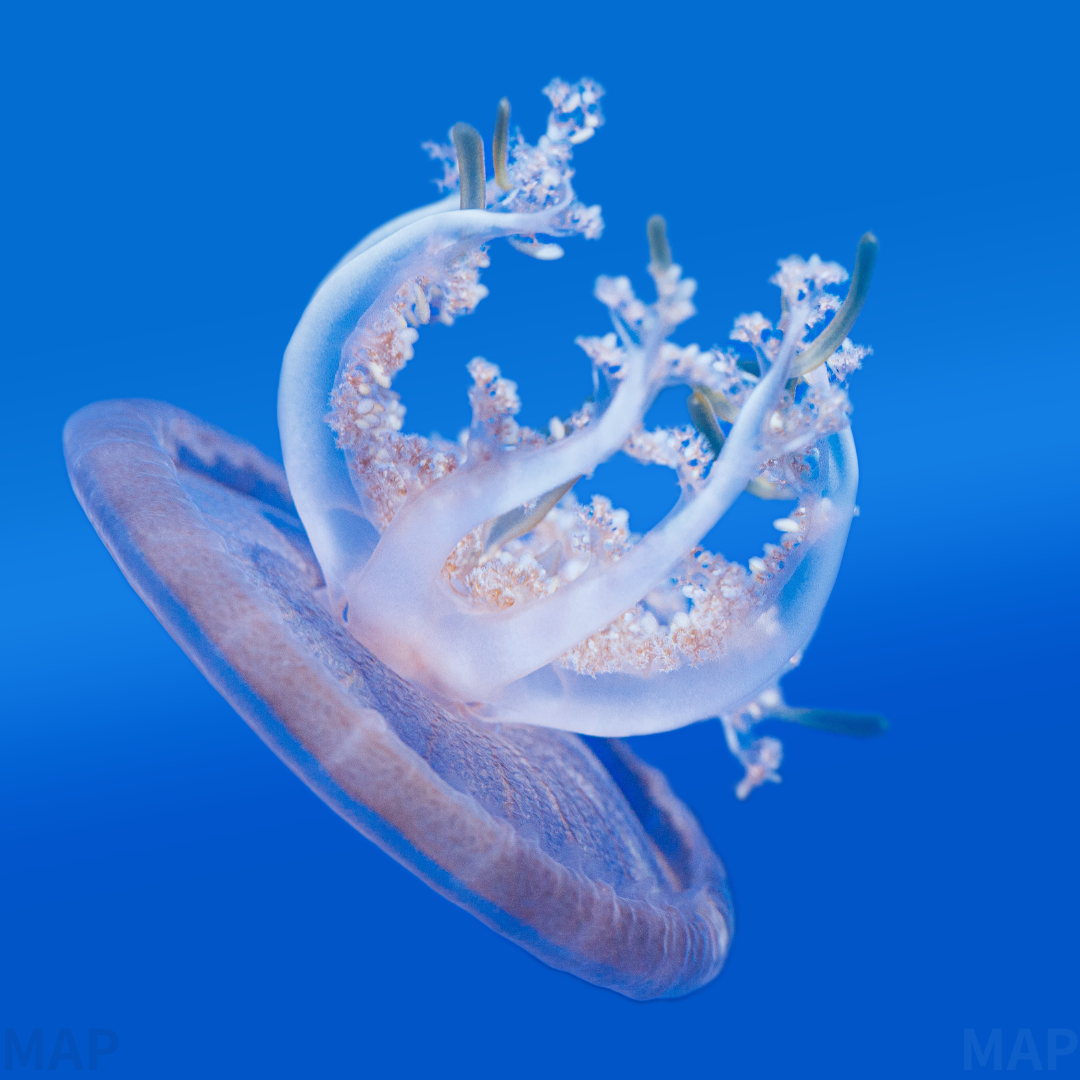
サカサクラゲは、その名の通り傘を海底に向け、口腕を空に向かって突き出すという、クラゲの常識を覆す逆さまの姿勢で生活する非常にユニークな生き物です。彼らはただ奇妙な格好をしているわけではありません。体内の細胞に褐虫藻を共生させており、逆さまになることでこの藻類に効率よく太陽光を当て、光合成によるエネルギーを得ているのです。マングローブ林の浅瀬などでゆったりと拍動するその姿は、まるで海の中に咲く花のようでもあり、アクアリウムの世界でも古くから愛されています。近年の研究では、脳を持たないにもかかわらず睡眠をとることや、粘液中に毒を仕込んだ細胞塊を放つ特殊な防衛手段を持つことが判明し、科学的な注目度も高まっています。The Upside-down jellyfish (Cassiopea) is a uniquely fascinating organism that lives in a reversed posture, with its bell against the seabed and its oral arms reaching toward the surface. This “upside-down” lifestyle is a brilliant adaptation to facilitate photosynthesis by zooxanthellae (symbiotic algae) residing in their tissues. Commonly found in mangrove forests and shallow lagoons, they resemble aquatic flowers pulsing gently. Recent scientific discoveries have highlighted their remarkable nature, including sleep-like behavior despite lacking a central nervous system and a sophisticated defense mechanism involving specialized stinging cell clusters called cassiosomes.
基本情報 / Basic Information
学名 / Scientific Name
Cassiopea mayeri (および Cassiopea 属の各群)
通称 / Common Name
サカサクラゲUpside-down Jellyfish
分類 / Family
サカサクラゲ科Cassiopeidae
英名 / English Name
Upside-down jellyfish
分布 / Distribution
琉球列島(西表島など)、世界の熱帯・亜熱帯沿岸域Ryukyu Islands (Iriomote, etc.), tropical and subtropical coastal areas worldwide.
最大体長 / Max Size
約20cm(飼育下では10cm前後が多い)Approx. 20 cm (usually around 10 cm in captivity).
寿命 / Lifespan
約1年〜1年半Approximately 1 to 1.5 years.
飼育環境 / Aquarium Environment
水槽サイズ / Tank Size
30cm以上(底面積を重視するため、30cmキューブ水槽や45cm規格水槽以上が推奨されます。水量は15L以上あると安定します。)30 cm or larger. Priority should be given to bottom surface area. A 30 cm cube or 45 cm standard tank (approx. 15L or more) is recommended for stability.
水温 / Temperature
24℃〜28℃(熱帯の生き物のため、冬場はヒーター、夏場はクーラーによる一定の温度管理が必須です。)24°C to 28°C. Constant temperature control using heaters and coolers is essential as they are tropical organisms.
水質 / Water Quality
海水(比重1.020〜1.025)。清浄な水を好みますが、極端な貧栄養よりは適度な有機物がある環境を好みます。Seawater (specific gravity 1.020–1.025). They prefer clean water but thrive in environments with moderate nutrient levels.
レイアウト / Layout
細かいサンゴ砂を薄く敷き、クラゲが平らになれるスペースを確保します。サンゴ育成用のような強いLED照明が光合成のために不可欠です。A thin layer of fine coral sand provides a natural base. High-intensity LED lighting, similar to that used for growing corals, is vital for photosynthesis.
注意点 / Precautions
フィルターの吸水口に吸い込まれる事故が非常に多いため、スポンジフィルターを装着するなどの対策が必要です。また、水流は極めて弱く設定してください。Suction accidents at filter inlets are common; use sponge covers to prevent injury. Keep the water flow extremely gentle.
餌と給餌 / Feeding
餌の種類 / Diet
光合成(主)、ふ化したブラインシュリンプ、液体状のサンゴフード。Photosynthesis (primary), hatched brine shrimp, and liquid coral food.
給餌のポイント / Feeding Tips
光だけでも維持できますが、成長させるには週に2〜3回、スポイトで口腕のあたりに優しく餌を吹きかけてあげると効果的です。While light can sustain them, supplemental feeding 2–3 times a week by gently puffing food near the oral arms with a dropper encourages growth.
性格と混泳 / Temperament and Tank Mates
性格 / Temperament
極めて温和で、底に定着してほとんど動きません。Extremely peaceful and sedentary, spending most of their time fixed to the bottom.
混泳の相性 / Compatibility
お掃除役の貝類やエビとは可能ですが、活発な魚やクラゲを食べる魚(カワハギなど)との混泳は厳禁です。魚がクラゲの毒に刺されるリスクもあります。Compatible with “utility” invertebrates like snails or small shrimp. Avoid active fish or those that might nip at them. Fish may also be stung by the jellyfish’s toxins.
病気と対策 / Diseases and Prevention
かかりやすい病気 / Common Diseases
組織の縮小・白化。これは主に光量不足や水質悪化、栄養失調によって引き起こされます。Tissue shrinkage and bleaching, typically caused by insufficient light, poor water quality, or malnutrition.
対策と予防 / Prevention
十分な照明時間を確保し、定期的な換水(週1回20%程度)を行うことで水質を維持します。カシオソームによる「刺す水」による自身のストレスにも注意が必要です。Ensure adequate lighting duration and perform regular water changes (approx. 20% weekly). Be mindful of stress caused by their own stinging cells in confined spaces.
増やし方(繁殖) / Breeding
繁殖形態 / Reproduction
メタジェネシス。ポリプからエフィラを放出して増えます。また、ポリプ自身がクローンの芽体を出す「プラヌロイド出芽」も行います。Metagenesis. They reproduce by releasing ephyrae from polyps. Polyps also engage in “planuloid budding” to create clones.
繁殖のポイント / Breeding Tips
ポリプがエフィラに変態するためには、環境中から褐虫藻を取り込むことが必須のトリガーとなります。水槽内でもポリプが定着すれば自然に増えることがあります。A crucial trigger for polyps to transform into ephyrae is the uptake of zooxanthellae from the environment. They may breed naturally if polyps establish in the tank.
雑学と豆知識 / Trivia and Fun Facts
1. 逆さまの刑罰?名前の由来となった悲劇の王妃1. A Mythical Punishment? Origin of the Name
属名のカッシオペア(Cassiopea)は、ギリシャ神話に登場するエチオピアの王妃カッシオペイアに由来します。彼女はその美しさを鼻にかけ、海の精霊を侮辱した罪で、天に上げられた後も椅子に縛り付けられ、1日の半分を逆さまの姿で過ごす刑罰を与えられました。海底でひっくり返って過ごすこのクラゲの姿が、神話の中の王妃の姿に重なったことから、この詩的な名が付けられたのです。The genus name “Cassiopea” comes from Queen Cassiopeia of Greek mythology. As punishment for her hubris, she was placed in the sky as a constellation that hangs upside down for half the day. The jellyfish’s permanent upside-down posture perfectly mirrors this mythical sentence, leading 19th-century scientists to bestow this poetic name.
2. 脳がないのに「居眠り」をする?2. Do Jellyfish Dream of Salty Sheep?
2017年の研究で、サカサクラゲは脳(中枢神経)を持たない生物として初めて「睡眠」をとることが証明されました。夜間になると傘の拍動がゆっくりになり、刺激に対する反応も鈍くなります。さらに、夜中に無理やり起こし続けると翌日の活動が鈍る「睡眠不足」の状態になることも確認されており、睡眠という現象が脳の出現よりもずっと古く、細胞レベルの修復のために必要な原始的な機能であることを教えてくれます。In 2017, researchers proved that Cassiopea exhibits sleep-like behavior, the first organism without a brain to do so. They show decreased activity at night and a slower response to stimuli. If deprived of rest, they show signs of “sleep deprivation” the following day, suggesting that sleep is a fundamental cellular requirement that predates the evolution of the central nervous system.
3. 非接触型の地雷!「刺す水」の正体3. Floating Mines: The Secret of “Stinging Water”
サカサクラゲに直接触れていないのにチクチク痛む「刺す水」現象。その正体は、彼らが放つ粘液に含まれる「カシオソーム」という微小な細胞塊です。この塊は表面に無数の毒針(刺胞)を持ち、繊毛を使って自律的に水の中を動き回ります。移動能力を捨てた代わりに、周囲の空間に動く地雷をバラ撒くことで、獲物を捕らえ、外敵から身を守るという驚異的な生存戦略を確立しているのです。The mysterious “stinging water” experienced near these jellyfish is caused by “cassiosomes”—microscopic clusters of stinging cells embedded in mucus. These clusters can swim independently using cilia, acting like autonomous floating mines. This allows the sedentary jellyfish to dominate the surrounding water for feeding and defense without moving an inch.
4. 海をかき混ぜる「生態系エンジニア」4. Ecosystem Engineers: Mixing the Sea
サカサクラゲは、ただそこに居るだけで環境を変える力を持っています。傘の拍動によって、1個体あたり1時間になんと200L以上もの水を垂直に押し上げます。このポンプのような働きが、停滞しがちなマングローブの水の循環を助け、海底に眠る栄養分を水中に引き上げることで、他の多くの生き物たちの繁栄を支える「エンジニア」としての役割を果たしているのです。Cassiopea act as “ecosystem engineers.” A single jellyfish can pump over 200 liters of water per hour through its pulsations. This vertical jet mixes stagnant water in mangroves and brings nutrients from the seabed into the water column, supporting the primary production that feeds the entire local ecosystem.
まとめ / Conclusion
サカサクラゲは、その奇妙な外見の中に、生命進化の驚異的な知恵をいくつも隠し持っています。太陽の光を浴びてエネルギーを得る植物のような性質、脳を持たずとも休息を必要とする動物としての側面、そして周囲の環境を能動的に整えるエンジニアとしての顔。一つの水槽の中でこれほど多角的な生命のドラマを観察できる生き物は、他にはなかなかいないでしょう。The Upside-down jellyfish hides incredible evolutionary wisdom within its strange appearance. From its plant-like reliance on sunlight to its primal need for sleep despite lacking a brain, and its role as an active engineer of its environment, few creatures offer such a multi-faceted display of life’s drama within the confines of a single aquarium.
ただし、その高い繁殖力や適応力は、一度自然界へ逸出すれば生態系を脅かす刃にもなり得ます。また、目に見えないカシオソームによる刺傷は、飼育者自身の注意も必要とします。この「生きた科学のプラットフォーム」を自宅に迎える際は、深い敬意と高い倫理観を持ち、その神秘に満ちた生活を優しく見守ってあげてくださいね。However, their high reproductive potential means they can become invasive if released into the wild, posing a threat to local ecosystems. Additionally, the invisible cassiosomes require careful handling by the aquarist. When welcoming this “living scientific platform” into your home, please do so with deep respect and ethical responsibility, gently observing their mysterious lives.
Nath, R. D., Bedbrook, C. N., Abrams, M. J., et al. (2017). The Jellyfish Cassiopea Exhibits a Sleep-like State. Current Biology, 27(19), 2984-2990.
(脳を持たない刺胞動物における睡眠現象を初めて証明した研究)
Ames, C. L., Klompen, A. M. L., Badhiwala, K. N., et al. (2020). Cassiosomes are swimming, stinging cell structures used by the upside-down jellyfish Cassiopea xamachana to catch prey. Communications Biology, 3, 67.
(「刺す水」の正体である自律型刺胞細胞塊カシオソームの発見)
Ohdera, A. H., Ames, C. L., et al. (2018). Upside-Down but Headed in the Right Direction: Review of the Highly Versatile Cassiopea System. Frontiers in Ecology and Evolution, 6, 35.
(サカサクラゲ属の生態、共生、発生に関する包括的なレビュー)
Péron, F., & Lesueur, C. A. (1810). Tableau des caractères génériques et spécifiques de toutes les espèces de méduses connues jusqu’à ce jour. Annales du Muséum national d’Histoire naturelle, 14, 325-366.
(ボーダン探検隊の成果に基づくサカサクラゲ属の原記載資料)
Morandini, A. C., & Marques, A. C. (2010). Revision of the genus Cassiopea (Scyphozoa: Rhizostomeae: Cassiopeidae), with a redescription of Cassiopea andromeda (Forskål, 1775). Zootaxa.
(サカサクラゲ属の分類学的再検討と歴史的背景)
Wild, C., et al. (2012). The Jellyfish Cassiopea xamachana as an Ecosystem Engineer. Marine Ecology Progress Series.
(水柱の混合や栄養塩循環における生態系エンジニアとしての機能研究)


 ポチップ
ポチップ



コメント