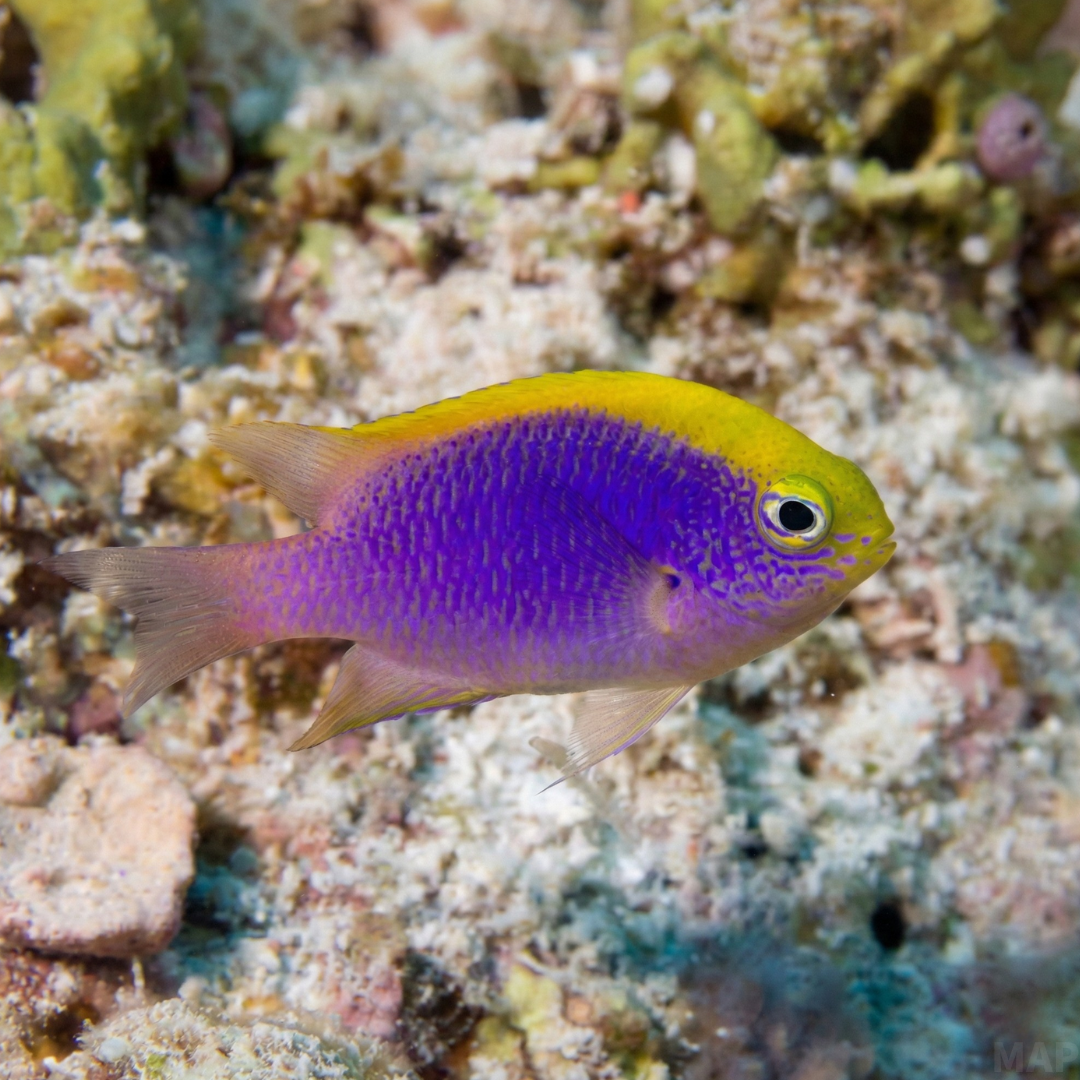
ブリーカーズダムゼルは、スズメダイ科ルリスズメダイ属に分類される、美しくも謎めいた海水魚です。フィリピンやインドネシアを中心とする「コーラル・トライアングル」海域の固有種であり、水深20メートル以深のやや深い岩礁域を主な生息場所としています。その体色は、深海の薄暗い環境に適応したパステル調の青紫色(バイオレットブルー)を基調とし、背部には鮮やかな黄色の帯が入ります。日本国内でよく見られる「セナキルリスズメダイ」と外見が酷似していますが、尾鰭と臀鰭が青いことが本種を識別する最大の特徴です。一般的なルリスズメダイとは異なり、少し深場を好むその生態は、飼育においても独自の魅力を放ちます。Bleeker’s Damsel is a beautiful and somewhat enigmatic marine fish belonging to the genus Chrysiptera in the family Pomacentridae. Endemic to the “Coral Triangle” region, primarily the Philippines and Indonesia, it inhabits deeper reef areas, typically below 20 meters. Its body coloration is a pastel violet-blue adapted to the dim light of deeper waters, featuring a vivid yellow stripe along the back. While it closely resembles the Starck’s Damselfish (Chrysiptera starcki) found in Japan, Bleeker’s Damsel can be distinguished by its blue caudal and anal fins. Unlike common damselfish, its preference for deeper environments adds a unique appeal to aquarium keeping.
基本情報 / Basic Information
学名 / Scientific Name
Chrysiptera bleekeri
通称 / Common Name
ブリーカーズダムゼルBleeker’s damsel
分類 / Family
スズメダイ科 ルリスズメダイ属Pomacentridae (Chrysiptera)
英名 / English Name
Bleeker’s damsel
分布 / Distribution
西部中央太平洋(フィリピン、インドネシア、マレーシア)Western Central Pacific (Philippines, Indonesia, Malaysia)
最大体長 / Max Size
約8cm(飼育下では4-6cm)Approx. 8cm (4-6cm in captivity)
寿命 / Lifespan
3〜5年以上(飼育環境による)3-5+ years (depending on care)
飼育環境 / Aquarium Environment
水槽サイズ / Tank Size
60cm規格水槽(約60L)以上推奨。単独飼育であれば45cmキューブ水槽でも可能ですが、水量の安定性を重視してください。60cm standard tank (approx. 60L) or larger is recommended. A 45cm cube tank is acceptable for a single specimen, but stability is key.
水温 / Temperature
24-26℃
水質 / Water Quality
比重1.023前後。清浄な水質を好みます。Specific gravity around 1.023. Clean water quality is preferred.
レイアウト / Layout
自然界では岩礁の隙間やガレ場に生息しています。ライブロックを複雑に組み上げ、多くの隠れ家を作ってください。底床には小粒のサンゴ砂や粗めの砂利を敷くと落ち着きます。In nature, they inhabit rocky crevices and rubble zones. Create complex hiding spots with live rock. A substrate of small coral sand or coarse gravel helps them feel secure.
注意点 / Precautions
深場種のため、強すぎる白色光はストレスになることがあります。ブルー系(20000K〜)の照明下で飼育すると、本来の美しい体色が映えます。また、驚くと飛び跳ねるため、フタは必須です。As a deep-water species, intense white light can be stressful. Blue spectrum lighting (20000K+) enhances their natural coloration. A lid is essential to prevent jumping.
餌と給餌 / Feeding
餌の種類 / Diet
動物食性が強い雑食性。人工飼料(フレーク、粒状)、冷凍コペポーダ、ブラインシュリンプなどをよく食べます。Omnivorous with a preference for meaty foods. Accepts artificial food (flakes, pellets), frozen copepods, and brine shrimp.
給餌のポイント / Feeding Tips
自然下では流れてくるプランクトンを食べています。色揚げ効果のあるアスタキサンチンなどを含む高品質な餌を与えると、背中の黄色や体色の青を鮮やかに保つことができます。In the wild, they feed on drifting plankton. Feeding high-quality food containing astaxanthin helps maintain their vivid yellow and blue coloration.
性格と混泳 / Temperament and Tank Mates
性格 / Temperament
スズメダイの中では比較的温和ですが、縄張り意識はあります。特に同種間では激しく争う可能性があるため注意が必要です。Relatively peaceful for a damselfish, but territorial. Aggression towards conspecifics can be severe, so caution is advised.
混泳の相性 / Compatibility
60cm水槽では同種は1匹、またはペアのみとします。他種との混泳は、遊泳層が異なるハゼ類(ハタタテハゼ等)や温和なベラ類が適しています。サンゴには無害(リーフセーフ)です。Keep singly or as a mated pair in a 60cm tank. Compatible with bottom-dwelling gobies or peaceful wrasses. Completely Reef Safe.
病気と対策 / Diseases and Prevention
かかりやすい病気 / Common Diseases
白点病、トリコディナ、ウーディニウム病など。特にスズメダイ特有のウロネマ感染症(体表がただれる病気)には注意が必要です。Ich, Trichodina, Velvet. Be especially wary of Uronema marinum infection, which causes red sores on the body.
対策と予防 / Prevention
購入時に体に赤い充血や傷がないかを厳しくチェックすることが最重要です。深場からの採集個体は減圧症の影響を受けていないかも確認してください。Carefully inspecting the fish for red sores or wounds before purchase is crucial. Also check for signs of decompression sickness in deep-water specimens.
増やし方(繁殖) / Breeding
繁殖形態 / Reproduction
卵生(基質産卵)。ペアが形成されると、オスが掃除した岩肌や巣穴にメスが産卵し、オスが孵化まで保護します。Oviparous (substrate spawning). Once a pair forms, the female lays eggs on a cleaned surface, and the male guards them until hatching.
繁殖のポイント / Breeding Tips
産卵させることは可能ですが、孵化した仔魚は非常に小さく、ワムシなどの微細な初期餌料が必要となるため、育成の難易度は高いです。Spawning is possible, but raising the fry is challenging due to their small size, requiring microscopic live food like rotifers.
雑学と豆知識 / Trivia and Fun Facts
1. 学名の由来と歴史 / 1. Origin of the Name
学名「bleekeri」は、19世紀の偉大な魚類学者ピーター・ブリーカー博士に献名されたものです。彼はオランダ領東インド(現在のインドネシア)で軍医として働きながら、現地の魚類を精力的に研究し、1,925種もの新種を記載しました。この魚は、彼が情熱を注いだインドネシアの海を象徴する存在として、その名を冠しています。The specific name “bleekeri” honors Dr. Pieter Bleeker, a 19th-century ichthyologist. While working as an army surgeon in the Dutch East Indies (now Indonesia), he described 1,925 new species. This fish bears his name as a symbol of the Indonesian seas he so passionately studied.
2. セナキルリスズメダイとの見分け方 / 2. Distinguishing from Starck’s Damsel
日本のアクアリウムショップでは、よく似た「セナキルリスズメダイ」と混同されることがありますが、見分け方は明確です。尾鰭(おびれ)と臀鰭(しりびれ)に注目してください。それらが黄色ければ別種(キレレンスズメダイ等)、青ければブリーカーズダムゼルです。セナキルリスズメダイは背中だけが黄色く、青色の彩度がより高い傾向があります。Often confused with Starck’s Damselfish in shops, they can be clearly distinguished by their fins. If the caudal and anal fins are blue, it is Bleeker’s Damsel. Starck’s Damsel typically has a more vivid blue body with yellow confined to the back.
3. 深海が生んだ「青」の機能 / 3. Function of the Deep Blue
ブリーカーズダムゼルの美しいパステルブルーは、水深20m以深の環境に適応した保護色です。赤い光が届かない深い海では、青い体色は背景の海水に溶け込み、捕食者から身を守ります。一方、背中の黄色いラインは、紫外線を含むわずかな光でも仲間に自分の存在を知らせるシグナルとして機能していると考えられています。Their pastel blue coloration is camouflage adapted to depths below 20m. In deep water where red light doesn’t penetrate, blue blends into the background. The yellow stripe likely serves as a signal for species recognition even in dim light.
4. レア種である理由 / 4. Why are they rare?
日本国内で見かける機会が少ないのは、彼らが「深場」に住んでいるためです。深い場所での採集は減圧症のリスクがあり、輸送コストもかかります。そのため、安価なスズメダイとして大量に入荷することは稀で、知る人ぞ知るコレクターズアイテムのような位置づけになっています。They are rare in the trade because they inhabit deep waters. collecting involves risks of decompression sickness and higher costs. Thus, they are not mass-imported like cheaper damselfish and remain a collector’s item.
まとめ / Conclusion
ブリーカーズダムゼルは、単なる美しい魚というだけでなく、アクアリウムの歴史や深海の生態系を感じさせてくれる特別な存在です。その上品なパステルブルーと鮮やかなイエローのコントラストは、適切なブルーライトの下で飼育することで、あなたの水槽に深遠な海の雰囲気をもたらしてくれるでしょう。Bleeker’s Damsel is more than just a beautiful fish; it embodies the history of ichthyology and the ecosystem of the deep reef. Its elegant contrast of pastel blue and vivid yellow, when displayed under proper blue lighting, will bring the profound atmosphere of the deep ocean to your aquarium.
飼育にあたっては、彼らが好む「深場の環境」を意識し、十分な隠れ家と落ち着いた照明を用意してあげてください。少しの手間と知識を持って接すれば、この「深場の青き宝石」は、長く水槽の主役として輝き続けてくれるはずです。When keeping them, keep in mind their preference for a “deep-water environment” by providing ample hiding spots and subdued lighting. With a little care and knowledge, this “Deep Blue Gem” will shine as the star of your tank for years to come.



 アイのアクアグッズ案内ローチの仲間に合わせる飼育用品|クーリー・流水性・ボーシャの水槽と底砂道具の特徴や使い方、選ぶときのポイントをアイが紹介します。記事はコチラ →
 アイのアクアグッズ案内アフリカンシクリッドの飼育用品|水槽・ろ過・底砂・岩組み・餌の選び方道具の特徴や使い方、選ぶときのポイントをアイが紹介します。記事はコチラ →
 アイのアクアグッズ案内コケを食べるコイの仲間に合わせる飼育用品|フライングフォックス・アルジイーター・ガラ道具の特徴や使い方、選ぶときのポイントをアイが紹介します。記事はコチラ →
 アイのアクアグッズ案内マジックリーフ物語|一枚の葉がアクアリウム用品になるまで道具の特徴や使い方、選ぶときのポイントをアイが紹介します。記事はコチラ →



コメント