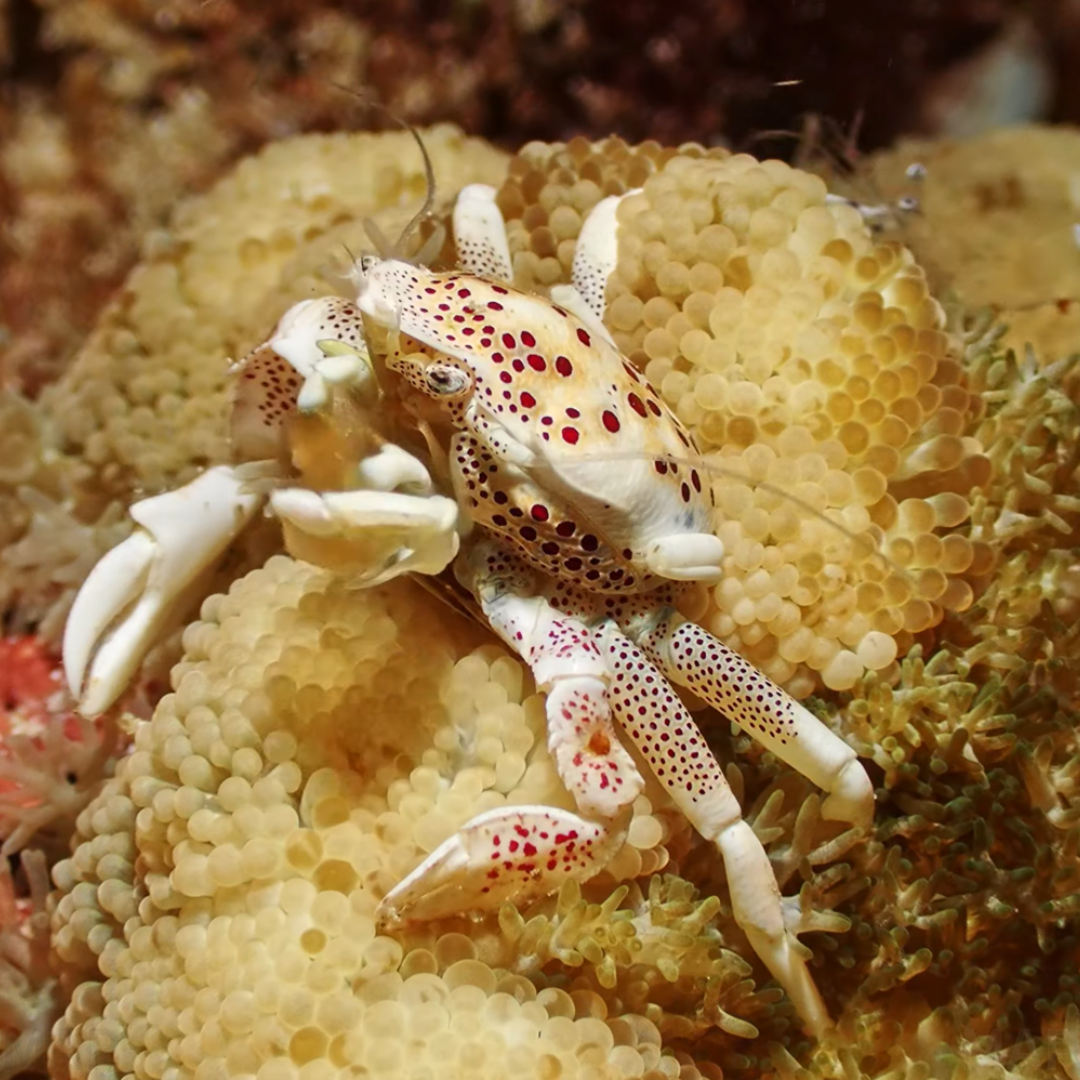
最大の特徴は、大きなハサミと、扇のように広がる特殊な器官を使って水中のプランクトンを濾し取って食べる「濾過摂食(ろかせっしょく)」という食事スタイルです。水槽の中で一生懸命に手を振るような仕草で食事をする様子は、見ていて飽きることがありません。比較的小型で温和なため、イソギンチャクが飼育できる環境であれば、サンゴ礁水槽の素晴らしいアクセントとなってくれるでしょう。The Spotted Porcelain Crab (Neopetrolisthes maculatus) is a unique crustacean that, despite its crab-like appearance, is not a true crab. Characterized by vivid red spots scattered across a creamy white body, it looks as if it’s wearing a polka-dot dress. In nature, they have a deep symbiotic relationship with large sea anemones, using the dangerous forest of tentacles as a safe haven.
Their most distinctive feature is their “filter feeding” style, where they use fan-like specialized organs to filter plankton from the water. Watching them wave their “hands” in the aquarium to catch food is truly captivating. Being relatively small and gentle, they make a wonderful accent to coral reef aquariums, provided that sea anemones can be maintained.
基本情報 / Basic Information
学名 / Scientific Name
Neopetrolisthes maculatus
通称 / Common Name
アカホシカニダマシSpotted Porcelain Crab / Anemone Crab
分類 / Family
十脚目 異尾下目 カニダマシ科 (Porcellanidae)Order Decapoda, Infraorder Anomura, Family Porcellanidae
英名 / English Name
Spotted Porcelain Crab
分布 / Distribution
インド太平洋(アフリカ東岸、オーストラリア北部、日本の南西諸島など)Indo-Pacific (East Africa, Northern Australia, Ryukyu Islands of Japan, etc.)
最大体長 / Max Size
甲幅 約2.5cmCarapace width approx. 2.5cm (1 inch)
寿命 / Lifespan
詳細なデータは乏しいが、飼育下では一般的に2~3年程度とされるDetailed data is scarce, but generally considered to be about 2-3 years in captivity.
飼育環境 / Aquarium Environment
水槽サイズ / Tank Size
小型のため30cm水槽でも可能ですが、水質の安定と共生イソギンチャクの飼育を考慮すると、45cm規格水槽(約35L)以上が推奨されます。While a 30cm tank is possible due to their small size, a standard 45cm tank (approx. 35L) or larger is recommended for water stability and anemone care.
共生できる大型のイソギンチャク(ハタゴイソギンチャク、センジュイソギンチャクなど)の導入が強く推奨されます。隠れ家となるライブロックも配置しましょう。Introduction of symbiotic large anemones (e.g., Stichodactyla haddoni, Heteractis magnifica) is strongly recommended. Place live rocks for hiding.
注意点 / Precautions
高水温に弱いため、夏場は水槽用クーラーなどが必須です。また、硝酸塩の蓄積はホストであるイソギンチャクの健康を損なうため注意が必要です。They are sensitive to high temperatures, so a chiller is essential in summer. Also, be careful of nitrate accumulation as it harms the host anemone.
口元の顎脚にある網状の毛を広げて餌を捕らえます。水槽内に微生物が豊富なら給餌不要なこともありますが、スポイトで餌を吹きかける「ターゲットフィーディング」を行うと確実です。They catch food by spreading net-like hairs on their maxillipeds. While feeding may not be necessary if the tank is rich in microorganisms, “target feeding” with a pipette is effective.
性格と混泳 / Temperament and Tank Mates
性格 / Temperament
基本的に温和ですが、イソギンチャクという限られた「家」を守るため、同種間や他の共生者とは場所を巡って争うことがあります。Generally peaceful, but may compete with conspecifics or other symbionts for space to protect their limited “home” (anemone).
混泳の相性 / Compatibility
クマノミ類とは共存できる場合もありますが、イソギンチャクが小さいと追い出されることがあります。ベラ、フグ、大型ヤッコなど、甲殻類を好んで食べる魚との混泳は避けてください。Coexistence with clownfish is possible, but they may be expelled if the anemone is too small. Avoid tank mates that prey on crustaceans, such as wrasses, puffers, and large angelfish.
病気と対策 / Diseases and Prevention
かかりやすい病気 / Common Diseases
特定の病気というよりは、脱皮不全や、導入時の環境変化によるショックに注意が必要です。また、稀に寄生虫がついていることがあります。More than specific diseases, beware of molting failure and shock from environmental changes upon introduction. Rarely, parasites may be present.
対策と予防 / Prevention
購入時に脚の欠損が少なく、元気に濾過行動をしている個体を選びましょう。甲羅や腹部に怪しい付着物がないかもチェックしてください。適切な水質維持が最大の予防です。Choose individuals with few missing legs and active filtering behavior. Check for suspicious attachments on the shell or abdomen. Proper water quality maintenance is the best prevention.
増やし方(繁殖) / Breeding
繁殖形態 / Reproduction
メスは受精卵を腹部に抱えて保護し、孵化した幼生は「ゾエア」と呼ばれるプランクトン生活を送ります。Females carry fertilized eggs on their abdomen. Hatched larvae live as plankton called “zoea”.
繁殖のポイント / Breeding Tips
水槽内での抱卵までは観察されますが、微細な幼生を稚ガニまで育てることは非常に困難です。特別な餌や環境が必要とされ、確立された繁殖方法はまだありません。While carrying eggs is observed in tanks, raising tiny larvae to crabs is extremely difficult. It requires special food and environment; no established method exists yet.
雑学と豆知識 / Trivia and Fun Facts
1. 実は「カニ」ではない?1. Not actually a “Crab”?
名前に「カニ」とつきますが、分類学的にはタラバガニやヤドカリの仲間です。本物のカニは歩くための脚が4対(8本)見えますが、カニダマシ類は一番後ろの脚が極端に小さく退化して甲羅の中に隠れているため、3対(6本)しか見えません。これはヤドカリのような祖先が進化してカニのような姿になった「カニ化(カーシニゼーション)」の典型的な例です。隠れた小さな脚は、エラ掃除や卵の手入れに使われています。Despite the name, they are taxonomically related to king crabs and hermit crabs. True crabs show 4 pairs of walking legs, but porcelain crabs show only 3 pairs, as the last pair is vestigial and hidden under the shell. This is a classic example of “carcinization,” where hermit crab-like ancestors evolved into crab-like forms. The hidden tiny legs are used for cleaning gills and tending eggs.
2. イソギンチャクとの本当の関係2. The True Relationship with Anemones
彼らはイソギンチャクに守ってもらうだけでなく、実はイソギンチャクの出す粘液や、時には触手の一部をこっそり食べている可能性が指摘されています。単なる仲良しの協力関係(相利共生)というだけでなく、少しちゃっかりした「居候」のような側面(寄生的側面)も持っているのかもしれません。それでも、大きな害を与えることは稀です。Besides being protected, it’s suggested they might secretly feed on the anemone’s mucus or even parts of tentacles. Their relationship might not just be a friendly cooperation (mutualism) but also have aspects of a shrewd “freeloader” (parasitism). However, they rarely cause significant harm.
3. 「オオシマ」の謎と名前の変遷3. The Mystery of “Ohshima”
かつては「オオシマカニダマシ(Neopetrolisthes ohshimai)」という別種として扱われたり、細かい斑点のタイプを「コホシカニダマシ」と呼んだりしていましたが、現在はすべて同じ種(シノニム)として整理されています。「オオシマ」という名前は日本の動物学者に由来すると考えられますが、今は古い呼び名として図鑑の片隅に残るのみとなりました。Formerly treated as a separate species “Neopetrolisthes ohshimai” or called “Kohoshi-kanidamashi” for fine-spotted types, they are now all synonymous with this species. The name “Ohshima” likely originates from a Japanese zoologist, but now remains only as an old alias in the corners of field guides.
まとめ / Conclusion
アカホシカニダマシは、イソギンチャクというパートナーと共に暮らすことで真価を発揮する、大変興味深い生き物です。その美しい水玉模様と、一生懸命にプランクトンを集める愛らしい仕草は、あなたの水槽に小さなドラマを生み出してくれるでしょう。The Spotted Porcelain Crab is a fascinating creature that truly shines when living with its anemone partner. Its beautiful polka-dot pattern and adorable behavior of gathering plankton will create a little drama in your aquarium.
飼育には少しコツがいりますが、適切な環境を用意してあげれば、カニの進化の不思議を間近で観察できる貴重な体験となるはずです。ぜひ、イソギンチャクと一緒に彼らの生活を覗いてみてください。Breeding requires some knacks, but providing the right environment offers a valuable experience to observe the wonders of crab evolution up close. We invite you to peek into their lives along with their sea anemones.



 アイのアクアグッズ案内コケを食べるコイの仲間に合わせる飼育用品|フライングフォックス・アルジイーター・ガラ道具の特徴や使い方、選ぶときのポイントをアイが紹介します。記事はコチラ →
 アイのアクアグッズ案内エーハイム、安いのと高いのは何が違う? コタロウと見比べる外部フィルター道具の特徴や使い方、選ぶときのポイントをアイが紹介します。記事はコチラ →
 アイのアクアグッズ案内水槽用ヒーターの選び方|固定式・温度調節式と、水量に合うW数の考え方水槽の魚は冬に寒くない? アイとコタロウが水温計から固定式・温度調節式・分離式ヒーターまで比較。水量と室温に合うW数、設置場所、水換えや交換の注意点を、国内メーカーの商品とともに紹介します。記事はコチラ →
 アイのアクアグッズ案内エンゼルフィッシュの飼育用品|高さのある水槽・ろ過・水草・餌の選び方道具の特徴や使い方、選ぶときのポイントをアイが紹介します。記事はコチラ →



コメント