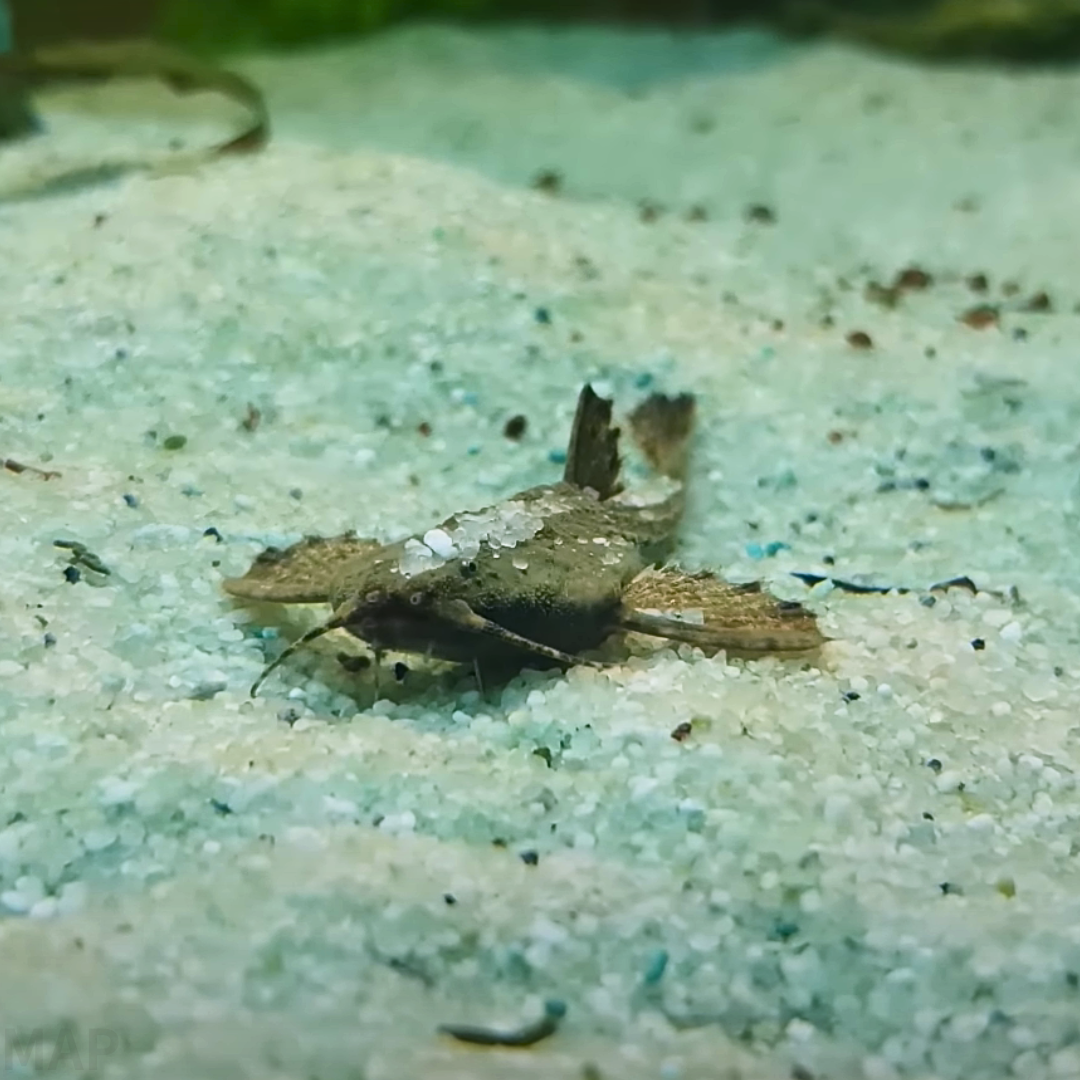
バンジョーキャットは、南米アマゾン川流域に生息するアスプレド科のナマズの総称です。その名の通り、頭部から胸部にかけて極端に平たく、尾に向かって細くなる独特の体型が楽器のバンジョーを彷彿とさせます。日中は砂の中に潜り、落ち葉やデトリタスに完璧に擬態して過ごす極めて控えめな性格をしていますが、その生態は驚きに満ちています。硬骨魚類としては珍しい表皮の脱皮、鰓から水を噴射するジェット推進、そして外敵に対して死んだふりをする擬死行動など、過酷な自然界を生き抜くための高度な戦略を数多く備えた「究極の変わり種」と言える魚です。Banjo Catfish is a general term for catfish of the family Aspredinidae, native to the Amazon River basin in South America. As the name suggests, their unique body shape—extremely flattened from the head to the chest and tapering towards the tail—resembles the musical instrument, the banjo. During the day, they spend their time buried in the sand, perfectly camouflaged as fallen leaves or detritus. Despite their modest temperament, their ecology is full of surprises. They possess numerous advanced strategies for survival in the harsh natural world, such as skin molting (rare among bony fish), jet propulsion via opercular water ejection, and thanatosis (playing dead) against predators.
基本情報 / Basic Information
学名 / Scientific Name
Bunocephalus coracoideus (代表的な流通種)
通称 / Common Name
バンジョーキャット、ブノケファルスBanjo Catfish, Guitarrita
分類 / Family
ナマズ目アスプレド科ブノケファルス亜科Order Siluriformes, Family Aspredinidae, Subfamily Bunocephalinae
英名 / English Name
Banjo Catfish, Two-colored Banjo Catfish
分布 / Distribution
南米:ブラジル、ペルー、コロンビアなどのアマゾン川流域South America: Amazon River basin in Brazil, Peru, and Colombia.
最大体長 / Max Size
約12cm〜15cm (流通する一般種の場合)Approx. 12cm – 15cm (for common species in the trade).
寿命 / Lifespan
約8年〜12年Approx. 8 – 12 years.
飼育環境 / Aquarium Environment
水槽サイズ / Tank Size
60cm規格水槽(約60L)以上。底面積の広い水槽が適しています。Standard 60cm tank (approx. 60L) or larger. A tank with a large bottom surface area is ideal.
水温 / Temperature
22℃〜28℃(24℃〜26℃前後が最も安定します)22°C – 28°C (24°C – 26°C is most stable).
水質 / Water Quality
弱酸性〜中性の軟水(pH 6.0〜7.5)Slightly acidic to neutral soft water (pH 6.0 – 7.5).
レイアウト / Layout
パウダー状の細かい砂を敷き、流木や落ち葉(マジックリーフ等)を配置した薄暗い環境を好みます。Prefers a dim environment with fine, powdery sand and decor like driftwood or leaf litter (e.g., Indian Almond leaves).
注意点 / Precautions
網(ネット)の使用は厳禁です。棘が絡まりやすいため、移動にはプラスチック容器などを使用してください。The use of nets is strictly prohibited. Their spines easily get tangled, so use a plastic container for moving them.
餌と給餌 / Feeding
餌の種類 / Diet
沈下性の人工飼料(ナマズ用タブレット)、冷凍アカムシ、イトミミズなど。Sinking artificial food (catfish tablets), frozen bloodworms, and tubifex.
給餌のポイント / Feeding Tips
完全な夜行性のため、消灯直後の給餌が効果的です。匂いに敏感で、砂の中から探し出して食べます。Being strictly nocturnal, feeding immediately after lights out is effective. They are sensitive to smell and will find food while buried in the sand.
性格と混泳 / Temperament and Tank Mates
性格 / Temperament
非常に温和で非攻撃的ですが、口に入るサイズの稚魚は夜間に食べてしまうことがあります。Very peaceful and non-aggressive, though they may eat fry small enough to fit in their mouths at night.
混泳の相性 / Compatibility
温和な中・上層魚(テトラやラスボラ等)と好相性。底生魚との混泳は餌の奪い合いに注意が必要です。Good compatibility with peaceful middle and upper-layer fish (tetras, rasboras, etc.). Caution is needed when cohabiting with other bottom-dwellers to ensure they get enough food.
底床掃除を丁寧に行い、剥がれ落ちた古い粘膜(皮)を放置しないことが重要です。It is crucial to clean the substrate thoroughly and not leave behind sloughed-off mucous layers (skin).
増やし方(繁殖) / Breeding
雌雄の判別 / Sexing
非常に困難ですが、繁殖期の雌は抱卵により腹部がわずかに膨らみます。Extremely difficult, but females may show slightly rounded bellies when carrying eggs during the breeding season.
繁殖形態 / Reproduction
砂利や砂の上にバラ撒くように産卵します(一部の種は腹部で卵を保護します)。They scatter eggs over gravel or sand (some species protect eggs on their bellies).
繁殖のポイント / Breeding Tips
水温の急下降(雨季の模倣)がトリガーとなります。稚魚には微小なインフゾリアが必要です。A sudden drop in water temperature (mimicking the rainy season) can trigger spawning. Fry require microscopic infusoria as initial food.
雑学と豆知識 / Trivia and Fun Facts
1. 魚類には珍しい「脱皮」のメカニズム / 1. The Mechanism of Molting, Rare in Fish
バンジョーキャットを飼育していると、水槽の底に薄い透明な皮のようなものが落ちていることがあります。これは病気ではなく、彼らの重要な生体防御反応です。鱗を持たない代わりに表皮が角質化しており、定期的に粘膜層とともに古い表皮を剥がし落とすことで、体表に付着した細菌や寄生虫を物理的に排除しています。水質が急変した際にもこの「脱皮」が見られることがあり、環境変化に対する彼らなりの適応行動と言えます。When keeping Banjo Catfish, you might find thin, transparent skin-like material on the bottom of the tank. This is not a disease but an important biological defense. Lacking scales, their epidermis undergoes keratinization, and they periodically slough off the old layer along with mucus to physically remove bacteria and parasites. This “molting” can also occur during sudden changes in water quality, serving as an adaptive response to environmental shifts.
2. 鰓から噴射!「オペルキュラー・ジェット推進」 / 2. Opercular Jet Propulsion: Blasting from the Gills
普段は全く動かない彼らですが、驚いた時や緊急時には驚異的な瞬発力を見せます。その秘密は「ジェット推進」にあります。彼らの鰓(えら)の開口部は非常に狭くスリット状になっており、口から取り込んだ水をこの狭い隙間から後方へ力強く噴射することで、ロケットのように加速します。これは、水底に密着している際に発生する粘性抵抗を打ち消し、一瞬で危険から脱出するための進化の結晶です。Though usually motionless, they exhibit incredible bursts of speed when startled. The secret lies in “jet propulsion.” Their gill openings are very narrow and slit-like; by powerfully ejecting water taken into the mouth through these gaps, they accelerate like a rocket. This evolutionary marvel allows them to counteract the viscous resistance encountered when pressed against the substrate, enabling an instantaneous escape from danger.
3. 究極の死んだふり「擬死行動」 / 3. The Ultimate “Playing Dead”: Thanatosis
バンジョーキャットは捕食者に見つかった際、全身の力を抜いて完全に動かなくなる「擬死(タナトーシス)」を行います。網ですくい上げても、水槽から出しても、まるで枯れ葉のようにだらりと力なく横たわる姿は、初めて見る人を驚かせます。しかし、彼らの意識ははっきりとしており、周囲の状況を鋭敏に観察しています。「既に死んで腐敗したものは食べない」という捕食者の習性を利用した、非常に理にかなった生存戦略なのです。When spotted by a predator, Banjo Catfish perform “thanatosis” or playing dead, becoming completely limp and motionless. Whether lifted in a net or taken out of the tank, they lie as lifelessly as a fallen leaf, which often surprises first-time observers. However, they remain fully conscious and acutely aware of their surroundings. This is a logical survival strategy that exploits the instinct of many predators to avoid eating dead, decaying matter.
4. 母親の腹部が胎盤に?驚異の保育システム / 4. A Belly for a Placenta? Miraculous Brooding System
アスプレド属などの一部の種では、雌が腹部に卵をくっつけて持ち運ぶ「スキンブルーディング」という行動をとります。驚くべきことに、卵が付着する雌の腹部には「コティレフォア」と呼ばれる特殊な肉質突起が形成され、そこから卵へ酸素を供給する機能があると考えられています。これは哺乳類の胎盤に近い役割を果たしており、酸素濃度の低い過酷な環境下でも確実に次世代へ命を繋ぐための、驚くべき適応の形です。In some species like those of the genus Aspredo, females engage in “skin-brooding,” carrying eggs attached to their bellies. Remarkably, specialized fleshy protrusions called “cotylephores” form on the female’s abdomen where the eggs attach, and these are believed to supply oxygen to the developing embryos. Functioning much like a mammalian placenta, this is an incredible adaptation for ensuring the survival of the next generation in harsh, low-oxygen environments.
まとめ / Conclusion
バンジョーキャットは、そのユニークな容姿と控えめな性格から、アクアリウムにおける「究極のオドボール(変わり種)」として愛されています。一見すると動かない石や枯れ葉のようですが、その裏側には、過酷なアマゾンを生き抜くための緻密な生存戦略と、驚異的な生理機能が隠されています。彼らのペースに合わせた静かな環境を整えてあげることで、夜闇に紛れて砂から這い出し、不器用に「歩く」その姿を長く楽しむことができるでしょう。The Banjo Catfish is beloved as the ultimate “oddball” in the aquarium hobby due to its unique appearance and modest temperament. While they may look like motionless stones or fallen leaves at first glance, behind that facade lie meticulous survival strategies and miraculous physiological functions designed to endure the harsh Amazon. By providing a quiet environment that matches their pace, you can enjoy the sight of them emerging from the sand under the cover of night to clumsily “walk” across the substrate for many years.
飼育の際は、特に「網を使わないこと」と「清潔で細かい砂を用意すること」の2点を守ってください。彼らが砂の中に平和に身を隠し、時折見せる脱皮の跡や、消灯後の活発な探索行動を観察することは、アクアリストにとってこの上ない喜びとなるはずです。自然の造形美と進化の神秘を、ぜひあなたの水槽で体感してみてください。When keeping them, please strictly follow two rules: never use a net and provide clean, fine sand. Observing them peacefully hidden in the sand, finding their occasional molted skin, or watching their active exploration after lights out will surely bring immense joy to any aquarist. Experience the beauty of nature’s design and the mystery of evolution right in your own aquarium.
Linnaeus, C. (1758). Systema Naturae per regna tria naturae, secundum classes, ordines, genera, species, cum characteribus, differentiis, synonymis, locis. Tomus I. Editio decima, reformata. Holmiae. (Aspredo aspredo 原記載)
Cope, E. D. (1874). On the fishes of the Peruvian Amazon, obtained by the Professor Orton during his Expeditions of 1867 and 1873. Proceedings of the Academy of Natural Sciences of Philadelphia, 26(2), 120-137. (Bunocephalus coracoideus 原記載)
Mees, G. F. (1987). The genera of the family Aspredinidae (Pisces, Nematognathi). Zoologische Mededelingen, 61(13), 173-197. (アスプレド科の属レベルにおける包括的再検討)
Friel, J. P. (1994). A Phylogenetic Study of the Neotropical Banjo Catfishes (Siluriformes: Aspredinidae). Ph.D. Thesis, Duke University, Durham, NC. (系統分類学的基礎研究)
Friel, J. P. (2008). Pseudobunocephalus, a new genus of small banjo catfishes with the description of a new species from the Paraguay River system. Neotropical Ichthyology, 6(3), 293-300. (プセウドブノケファルス属の新設と定義)
Gradwell, N. (1971). A muscular jet-propulsion mechanism in Siluriformes. Journal of Zoology, London, 163(3), 389-396. (アスプレド科におけるジェット推進メカニズムの解明)
Carvalho, M. S., Reis, R. E., & Friel, J. P. (2018). Molecular phylogeny of the banjo catfishes (Siluriformes: Aspredinidae). Molecular Phylogenetics and Evolution, 127, 452-460. (最新の分子系統学的解析と分類の更新)
Sands, D. D. (1996). Back to Nature Guide to Catfishes. Back to Nature. ISBN: 9197273410. (飼育管理および生態的特性の体系的ガイド)



 アイのアクアグッズ案内金魚を長く楽しむ飼育用品|水槽・フィルター・エアレーション・水換え道具の特徴や使い方、選ぶときのポイントをアイが紹介します。記事はコチラ →
 アイのアクアグッズ案内水槽ライトの選び方|魚の見え方・水草・海水で選ぶおすすめ照明道具の特徴や使い方、選ぶときのポイントをアイが紹介します。記事はコチラ →



コメント