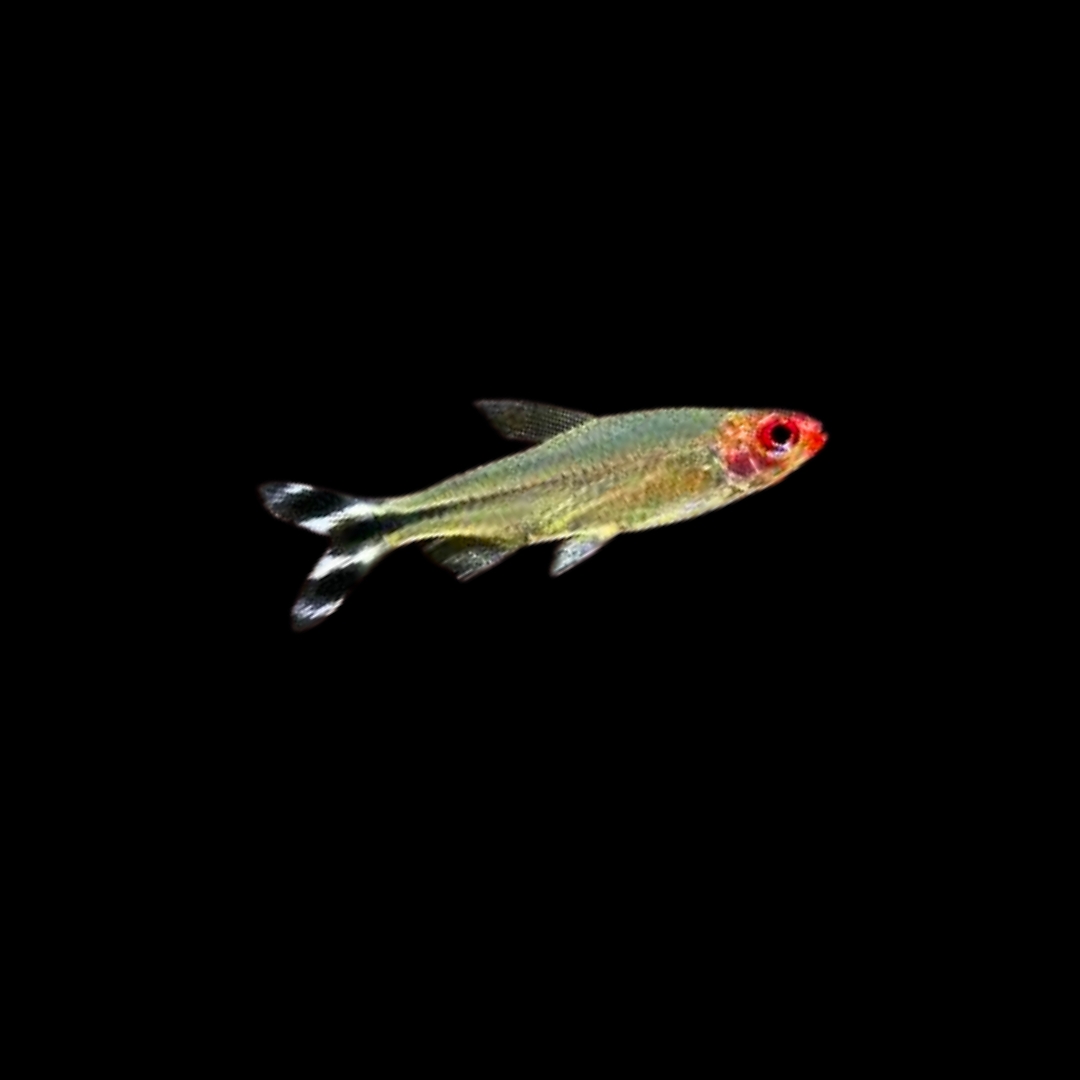
ラミノーズテトラは、赤く染まる頭部と白黒の縞模様をもつ尾びれが印象的な、南米原産の小型カラシンです。水草水槽の緑の中を群れで泳ぐ姿は非常に美しく、ネオンテトラやカージナルテトラとはまた違った、まとまりのある群泳美を楽しませてくれます。日本で流通する「ラミノーズテトラ」には、Petitella bleheri、Petitella rhodostoma、Petitella georgiaeなど近縁の複数種が関わるため、販売名と学名が必ずしも厳密に一致しないことがあります。本記事では、日本市場でラミノーズテトラとして扱われることが多いP. bleheriを中心に、近縁種にも共通しやすい飼育上の要点を整理します。The rummy-nose tetra is a small South American characin admired for its red head and black-and-white striped tail. In planted aquariums, its tight schooling behavior creates a calm yet dynamic display that differs from the sparkle of neon or cardinal tetras. In the aquarium trade, the name “rummy-nose tetra” may involve several closely related species, including Petitella bleheri, Petitella rhodostoma, and Petitella georgiae, so trade names and scientific names do not always match perfectly. This article focuses mainly on P. bleheri, which is commonly encountered under the rummy-nose name, while also covering care points shared by the group.
カラシン目 アセストロラムフス科 メガラムフォドゥス亜科 ペティテラ属。古い文献や流通名ではHemigrammus bleheriと表記されることがあります。Order Characiformes, family Acestrorhamphidae, subfamily Megalamphodinae, genus Petitella. Older literature and trade labels may still use Hemigrammus bleheri.
P. bleheriとしては、南米のネグロ川水系とメタ川水系、主にブラジルおよびコロンビアの淡水域に分布するとされています。なお、ラミノーズテトラ類として流通する近縁種まで含めると、アマゾン川下流域やオリノコ川流域など、より広い南米北部の水系が関わります。日本市場では東南アジアなどで養殖されたブリード個体と、南米からのワイルド個体が流通します。P. bleheri is reported from the Negro and Meta River drainages in South America, mainly in Brazil and Colombia. If related rummy-nose species in the aquarium trade are included, the group involves a broader range of northern South American waters, including parts of the lower Amazon and Orinoco basins. In Japan, both captive-bred fish from regions such as Southeast Asia and wild-caught South American imports are available.
最大体長 / Max Size
約4〜5cm。水槽内では3.5〜4.5cm前後でまとまることが多いです。About 4–5 cm. In aquariums, most individuals remain around 3.5–4.5 cm.
寿命 / Lifespan
一般的には3〜5年ほど。安定した水質、穏やかな混泳環境、無理のない給餌管理ができれば、より長く楽しめることもあります。Typically around 3–5 years. With stable water quality, peaceful tank mates, and careful feeding, some individuals may live longer.
飼育環境 / Aquarium Environment
水槽サイズ / Tank Size
最低でも45cm規格水槽は用意したい魚ですが、群泳の美しさと安定感を重視するなら60cm規格水槽以上が安心です。10匹以上で飼うと落ち着きやすく、60cm規格水槽では10〜20匹ほどが扱いやすい目安です。より大きな群れを楽しむ場合は90cm規格水槽以上が向いています。A 45 cm standard tank is the practical minimum, but a 60 cm standard tank or larger is safer if you want stable schooling behavior. Groups of 10 or more settle more easily, and 10–20 fish are a manageable range for a 60 cm standard aquarium. For larger schools, a 90 cm standard tank or bigger is recommended.
水温 / Temperature
23〜28℃を目安に管理します。日常管理では24〜26℃前後が扱いやすく、ディスカスなど高めの水温で飼育される魚と合わせる場合でも、長期的には28℃前後までを上限の目安にすると安全です。30℃近い高水温は治療時や一時的な状況では使われることがありますが、通常飼育の標準温度としてはおすすめしません。Keep it around 23–28°C. For everyday care, about 24–26°C is easy to manage. When kept with warmer-water fish such as discus, staying around 28°C as an upper long-term guideline is safer. Temperatures near 30°C may be used temporarily in treatment or special circumstances, but they are not recommended as the normal everyday setting.
水質 / Water Quality
弱酸性〜中性寄りの軟水を好みます。P. bleheriの自然環境情報ではpH 5.0〜6.0程度、低〜中程度の硬度が示されることがありますが、ブリード個体は中性付近の日本の水道水にも比較的なじみやすい傾向があります。栄養系ソイル、流木、マジックリーフなどを用いて弱酸性寄りに保つと発色と落ち着きが安定しやすくなります。硝酸塩や有機物の蓄積には弱いため、定期的な換水とフィルターの目詰まり確認が大切です。It prefers soft, slightly acidic to near-neutral water. Natural-habitat data for P. bleheri often indicate around pH 5.0–6.0 with low to moderate hardness, while captive-bred fish usually adapt more readily to near-neutral Japanese tap water. Active soil, driftwood, and Indian almond leaves can help maintain a softer, slightly acidic environment and stabilize color and behavior. Regular water changes are important because the species is sensitive to accumulated nitrate and organic waste.
レイアウト / Layout
前面から中央に遊泳スペースを残し、背面や側面に水草、流木、陰になる場所を配置すると落ち着きます。緑の水草と赤い頭部は視覚的な対比が美しく、群れが動くことで水景全体にリズムが生まれます。水流は弱すぎるよりも適度にあった方が泳ぎやすいですが、強すぎる流れは疲労の原因になるため、排水を分散させて緩やかに回すのが理想です。Leave open swimming space in the front and middle, while using plants, driftwood, and shaded areas along the back and sides. The red head contrasts beautifully with green aquatic plants, giving the aquascape depth and motion. A moderate current is useful, but excessive flow can cause exhaustion, so filter outflow should be diffused.
注意点 / Precautions
導入時の水質差に弱いため、購入後は点滴法で1〜2時間かけて水合わせを行うと安全です。袋や輸送水には病原体や高濃度の老廃物が含まれる可能性があるため、最後は魚だけを網ですくって水槽に入れます。また、柔らかい新芽をついばむことがあるため、繊細な有茎草を多用する水槽では植物質を含む細かな餌を十分に与え、必要に応じてマツモなど成長の早い水草を身代わりとして使うとよいでしょう。The species is sensitive to differences in water chemistry during introduction, so drip acclimation over 1–2 hours is recommended. Transport water may contain pathogens or high levels of waste, so net the fish and move only the fish. It may nibble tender plant shoots, so in delicate planted tanks, offer fine foods containing vegetable matter and consider using fast-growing plants such as hornwort as a sacrificial snack plant.
餌と給餌 / Feeding
餌の種類 / Diet
雑食性です。細かな顆粒フード、砕いたフレーク、冷凍アカムシ、冷凍ミジンコ、ブラインシュリンプ、冷凍イサザアミ類などを食べます。近縁種では小さな甲殻類、ワーム類、植物質を摂ることが知られているため、スピルリナや植物質原料を含む小型魚用フードを組み合わせるとバランスを取りやすくなります。Omnivorous. It accepts fine granules, crushed flakes, frozen bloodworms, frozen daphnia, brine shrimp, and small frozen mysid-type foods. Related species are known to feed on small crustaceans, worms, and plant matter, so combining standard small-fish foods with spirulina or vegetable ingredients helps provide balance.
給餌のポイント / Feeding Tips
口が小さく、水面に浮いた大きな餌を食べるのはあまり得意ではありません。ゆっくり沈む細かな餌を、1〜2分で食べ切れる量だけ与えます。群れ全体に行き渡るように、餌を一か所に落とすよりも少し広げて与えると安心です。食べ残しは水質悪化と赤色の退色につながるため、少量をこまめに与える管理が向いています。Its mouth is small, and it is not especially good at taking large floating foods from the surface. Offer fine, slow-sinking foods in amounts that can be consumed within 1–2 minutes. Spread the food slightly so the whole school can feed. Small, frequent feedings are preferable because leftovers quickly degrade water quality and can cause the red coloration to fade.
性格と混泳 / Temperament and Tank Mates
性格 / Temperament
非常に温和で、同種同士でまとまって泳ぐ性質が強い魚です。少数飼育では臆病になり、物陰に隠れたり色が薄くなったりしやすいため、できるだけ群れで飼育します。活発に泳ぎますが攻撃的ではなく、水槽内では中層を中心に移動します。Very peaceful and strongly schooling. When kept in too small a group, it may become shy, hide, or lose color, so group keeping is strongly recommended. It is active but not aggressive and usually occupies the middle water column.
混泳の相性 / Compatibility
同じく温和な小型カラシン、ラスボラ、コリドラス、オトシンクルス、小型プレコ、アピストグラマ、ジャーマンラム、ディスカスなどと相性が良いです。特に落ち着いた群泳を見せるため、ディスカス水槽や水草レイアウト水槽の中層魚としてよく選ばれます。ただし高水温を必要とする魚と合わせる場合も、ラミノーズ側に無理が出ない温度設定と十分な酸素量を意識してください。大きな魚、口に入るサイズの魚を捕食する魚、気性の荒いシクリッド、強く追い回す魚との混泳は避けましょう。Good tank mates include peaceful small characins, rasboras, Corydoras, Otocinclus, small plecos, Apistogramma, German blue rams, and discus. Because it forms attractive schools, it is often chosen as a midwater fish for discus aquariums and planted layouts. When pairing it with warmer-water species, keep the temperature and oxygen level suitable for the rummy-nose tetras as well. Avoid large predatory fish, aggressive cichlids, and species that chase or harass small schooling fish.
病気と対策 / Diseases and Prevention
かかりやすい病気 / Common Diseases
導入直後や水温変化の後は白点病に注意が必要です。水質悪化や底床の汚れが続くと、尾ぐされ病、口ぐされ病、カラムナリス症などの細菌性トラブルも起こり得ます。頭部の赤色が日中も戻らない、群れから離れる、呼吸が荒い、ヒレをたたむといった変化は早期発見のサインです。Ich is a common concern after introduction or temperature swings. Poor water quality and dirty substrate can also contribute to bacterial problems such as fin rot, mouth rot, and columnaris-type infections. Warning signs include red coloration that does not return during the day, isolation from the school, rapid breathing, and clamped fins.
対策と予防 / Prevention
予防の基本は、急な水温変化を避けること、点滴法で丁寧に水合わせすること、過密を避けること、硝酸塩や有機物をためない換水習慣を作ることです。白点病が疑われる場合は、水温を急に上げず1日1〜2℃程度の範囲で徐々に調整し、薬剤の使用可否を水草やエビの有無も含めて慎重に判断します。薬浴や塩浴を行う場合は、魚種、同居生体、水草、濾過バクテリアへの影響を考え、説明書の用量を厳守してください。Prevention begins with avoiding sudden temperature changes, performing careful drip acclimation, preventing overcrowding, and maintaining a routine that prevents nitrate and organic waste buildup. If ich is suspected, adjust temperature gradually rather than abruptly, and choose medication carefully, especially if plants or shrimp are present. When using medication or salt, follow the product instructions exactly and consider effects on fish, invertebrates, plants, and biological filtration.
増やし方(繁殖) / Breeding
雌雄の判別 / Sexing
外見だけでの判別は難しい魚です。成熟したメスは抱卵すると腹部がふっくらし、オスはやや細身になる傾向があります。オスの尻びれには微小なカラシンフックが出ることがありますが、肉眼での確認は困難です。家庭繁殖では、確実なペア取りよりも、状態の良い複数個体を小群で繁殖水槽に入れる方法が現実的です。Sexing is difficult by appearance alone. Mature females may become rounder when carrying eggs, while males tend to be slimmer. Males may develop tiny characin hooks on the anal fin, but these are difficult to see with the naked eye. For home breeding, using a well-conditioned small group is often more practical than trying to select a guaranteed pair.
繁殖形態 / Reproduction
卵を水草や産卵床の周辺にばらまく卵散布型です。親魚は卵を食べてしまうため、底面に鉢底ネットのようなメッシュを敷いたり、ウィローモスや人工産卵藻を使ったりして、卵を親から隔離する工夫が必要です。An egg-scattering species. Adults readily eat the eggs, so the breeding tank should include a protective mesh floor, Java moss, or spawning mops that allow eggs to fall out of reach of the parents.
繁殖のポイント / Breeding Tips
家庭での繁殖難度は高めです。繁殖水槽は40L前後、45cm規格水槽程度を目安にし、pH 6.5以下の軟水、26〜28℃、弱い水流で管理します。親魚はブラインシュリンプなどで数週間コンディションを整え、産卵後はすぐに取り出します。卵や孵化直後の仔魚は強い光に弱いと紹介されることが多いため、少なくとも産卵後しばらくは水槽を暗めに保つ管理が無難です。自由遊泳直後はブラインシュリンプを食べられないことが多く、インフゾリア、ゾウリムシ、ビネガーイールなどの微小な初期飼料を用意することが成功の鍵になります。Home breeding is challenging. Use a breeding tank of around 40 L, similar to a 45 cm standard tank, with very soft water below about pH 6.5, 26–28°C, and gentle filtration. Condition adults for several weeks with nutritious foods such as brine shrimp, then remove them immediately after spawning. Eggs and newly hatched fry are often described as sensitive to strong light, so keeping the tank dim for a while after spawning is the safer approach. Newly free-swimming fry often cannot take brine shrimp at first, so infusoria, paramecia, or vinegar eels should be prepared as first foods.
雑学と豆知識 / Trivia and Fun Facts
1. 「酔っぱらいの鼻」という名前 / 1. A Name Meaning “Drunk Nose”
英名のRummy-noseは、赤く染まった鼻先を「お酒を飲んで赤くなった鼻」に見立てた、少しユーモラスな名前です。日本語の「ラミノーズ」もこの英名に由来します。けれども、その赤は単なる飾りではありません。水が合い、群れが落ち着き、餌をよく食べているときほど赤は深くなり、逆に輸送直後、水質悪化、急なpH変動、強いストレスがあると色が薄くなることがあります。つまりラミノーズテトラの鼻先は、美しさと同時に水槽の小さな警告灯のようにも使えるのです。ただし、夜間の退色や照明条件による見え方の違いもあるため、赤色だけで水質を断定せず、行動や呼吸、換水履歴と合わせて判断しましょう。The English name “rummy-nose” humorously compares the fish’s red snout to a nose reddened by alcohol. The Japanese name “raminozu” comes from this English name. Yet the red is not merely decorative. It becomes deeper when the fish is settled, feeding well, and kept in suitable water, but may fade after transport, water deterioration, sudden pH shifts, or strong stress. In this sense, the red snout can serve like a small warning light in the aquarium. However, nighttime fading and lighting conditions also affect how the color appears, so do not judge water quality by red color alone; look at behavior, breathing, and maintenance history as well.
2. ラミノーズと呼ばれる3種 / 2. The Three “Rummy-nose” Species
アクアリウムで「ラミノーズテトラ」と呼ばれる魚には、Petitella bleheri、Petitella rhodostoma、Petitella georgiaeというよく似た3種が関わります。かつてはHemigrammus属とPetitella属に分かれて扱われていましたが、近年の研究により3種はPetitella属として整理されました。P. bleheriは赤がエラぶたを越えて体側前方まで広がりやすく、P. rhodostomaは赤が頭部にとどまりやすいなどの違いがあります。ただし販売現場では旧学名や近縁種名が混ざることもあり、ラベルだけで完全に見分けるのは簡単ではありません。飼育条件は近いため、一般飼育では「弱酸性軟水を好む、群れで飼う、導入時は丁寧に水合わせする」という基本を守ることが何より大切です。The aquarium name “rummy-nose tetra” involves three very similar species: Petitella bleheri, Petitella rhodostoma, and Petitella georgiae. They were once divided between Hemigrammus and Petitella, but recent work has placed all three in Petitella. P. bleheri usually shows red coloration extending beyond the gill cover toward the front body, while P. rhodostoma tends to keep the red more restricted to the head. In the trade, however, old names and related species names are often mixed, so labels alone are not always reliable. Since their care is broadly similar, the practical essentials are soft slightly acidic water, group keeping, and careful acclimation.
3. 夜に赤が消える理由 / 3. Why the Red Fades at Night
夜、消灯後のラミノーズテトラを見ると、昼間の赤が嘘のように薄れていて驚くことがあります。これは多くの場合、病気ではなく休息時の自然な退色です。魚が暗い環境で休むと、体表の色素細胞の働きが変化し、赤や黒の見え方が弱まります。朝に照明が点き、魚が活動を始めると、数分から数十分かけて色が戻っていきます。日中も戻らない場合は注意が必要ですが、夜だけ白っぽくなる現象は、ラミノーズテトラが一日のリズムを持って暮らしている証拠でもあります。After the lights go out, the red of a rummy-nose tetra may fade so much that beginners become alarmed. In many cases this is not disease but normal resting coloration. In darkness, pigment cells change their state and red or black markings become less visible. Once the lights come on and the fish become active, color usually returns within minutes to tens of minutes. If the color does not return during the day, check the aquarium, but nighttime fading alone is part of the fish’s daily rhythm.
4. 水草水槽で映える理由 / 4. Why It Looks So Good in Planted Tanks
水草レイアウトでラミノーズテトラが特別に映えるのは、単に赤い魚だからではありません。葉の緑、体の銀色、頭部の赤、尾びれの白黒がそれぞれ異なる役割を持ち、群れが一方向に動いた瞬間、水景全体に視線の流れが生まれます。特に背面を深い緑でまとめ、前景に遊泳空間を作ると、群れの動きそのものがレイアウトの一部になります。小さな魚でありながら、水槽の奥行きとスケール感を演出できる点が、レイアウターから長く愛される理由です。The rummy-nose tetra looks exceptional in planted aquariums not just because it is red. Green leaves, silver body, red head, and black-and-white tail each play a different visual role. When the school turns together, the viewer’s eye moves through the aquascape. A deep green background and open foreground swimming space make the movement of the school part of the layout itself. Although small, the species can make an aquarium feel deeper and more expansive, which is why aquascapers have valued it for so long.
5. 研究対象としてのラミノーズ / 5. A Fish Studied for Schooling Behavior
ラミノーズテトラの仲間は、観賞魚としてだけでなく、動物の集団行動を研究するうえでも注目されてきました。個体が周囲の仲間との距離や向きを読み取りながら、引き寄せられたり、方向をそろえたり、壁を避けたりする様子は、単純な反射では説明しきれない複雑な行動です。水槽の中で私たちが「きれいだ」と感じるまとまりのある泳ぎは、自然界で捕食者から身を守るために磨かれてきた、精巧な社会的な動きでもあります。Rummy-nose tetras and their close relatives have drawn scientific interest in studies of collective animal motion as well as in the aquarium hobby. Each fish responds to the distance and direction of its neighbors, balancing attraction, alignment, and wall avoidance. This is more complex than a simple reflex. The coordinated movement we admire in the aquarium is also a refined social behavior shaped by the need to reduce predation risk in nature.
まとめ / Conclusion
ラミノーズテトラは、赤い頭部、白黒の尾びれ、強い群泳性を兼ね備えた、水草水槽に非常によく合う小型魚です。丈夫なブリード個体が多く流通している一方で、導入時の水質差や水質悪化には敏感な面があります。45cm規格水槽以上、できれば60cm規格水槽以上で10匹前後からの群れを作り、弱酸性寄りの清潔な軟水を保つことで、本来の美しさを引き出せます。The rummy-nose tetra is a superb small fish for planted aquariums, combining a red head, black-and-white tail, and strong schooling behavior. Although many hardy captive-bred fish are available, it remains sensitive to poor water and abrupt differences in water chemistry during introduction. Keeping a group of about 10 or more in at least a 45 cm standard tank, preferably a 60 cm standard tank or larger, and maintaining clean, soft, slightly acidic water will bring out its natural beauty.
日々の管理では、鼻先の赤色を観察することが大きな手がかりになります。赤が冴えていれば環境はおおむね安定している可能性が高く、色が戻らない場合は換水、フィルター、水温、混泳ストレスを見直す合図になります。ただし色の変化には睡眠、照明、輸送直後の緊張も関わるため、単独の判断材料にせず、魚の行動や水質測定と合わせて確認しましょう。見た目の美しさだけでなく、水槽の状態を静かに語ってくれる存在として、ラミノーズテトラは初心者からベテランまで長く付き合える魅力的な魚です。In daily care, the red snout is an important clue. When the red is vivid, the aquarium is likely stable; when it remains pale, it is a signal to review water changes, filtration, temperature, and social stress. However, color changes are also affected by sleep, lighting, and post-transport stress, so use them together with behavior and water testing rather than as the only indicator. More than a beautiful schooling fish, the rummy-nose tetra quietly tells the aquarist how the aquarium is doing, making it a rewarding species for both beginners and experienced keepers.



 アイのアクアグッズ案内ダニオの仲間に合わせる飼育用品|ゼブラダニオから超小型種まで水槽・ろ過・餌を選ぶ道具の特徴や使い方、選ぶときのポイントをアイが紹介します。記事はコチラ →
 アイのアクアグッズ案内エーハイムはおもちゃから始まった? 小さな噴水から水槽へ、アイとコタロウの探訪道具の特徴や使い方、選ぶときのポイントをアイが紹介します。記事はコチラ →



コメント