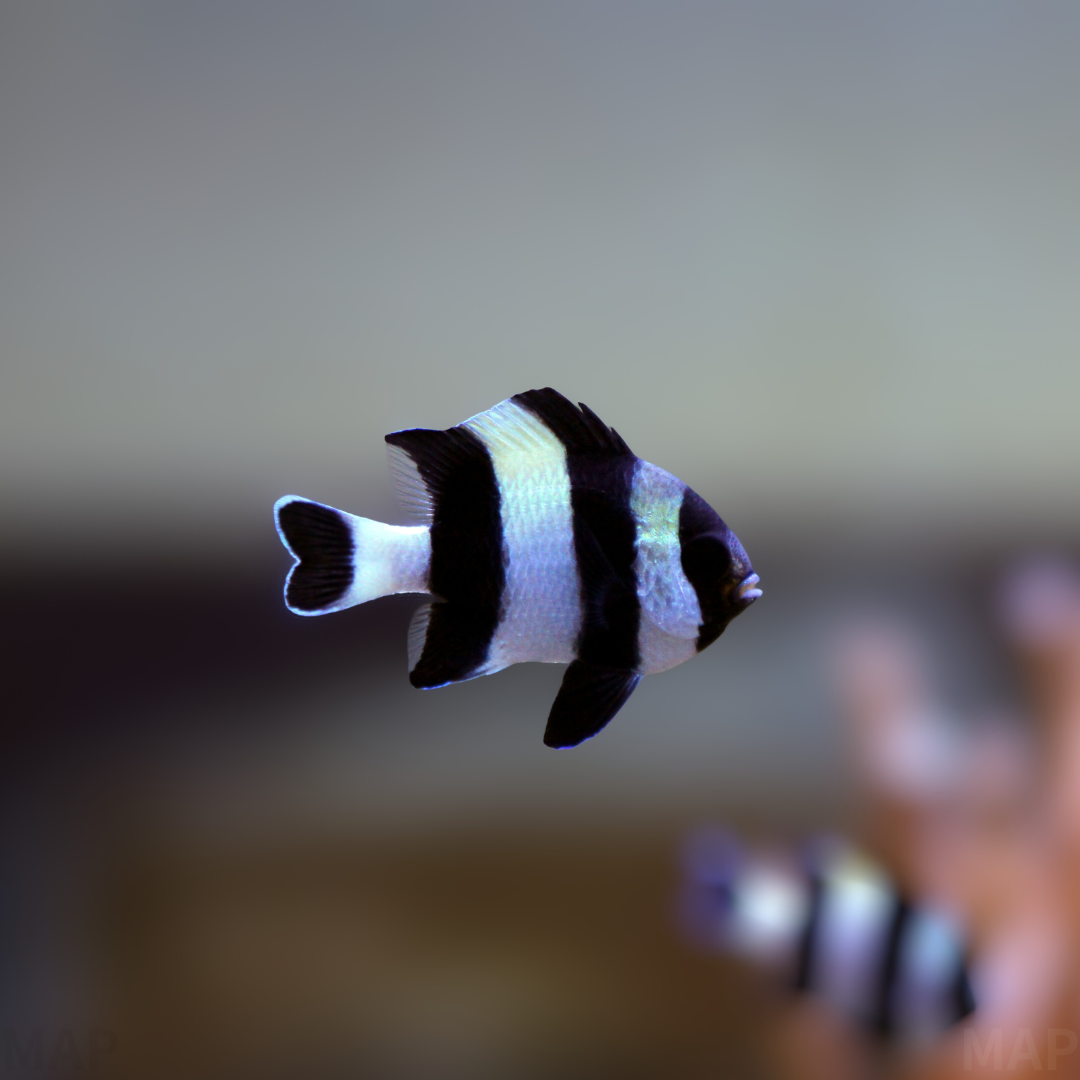
観賞魚としては「入門種」として知られ、非常に丈夫で安価に入手できるため、初めての海水魚飼育に選ばれることも多い魚です。幼魚の頃はイソギンチャクに入る愛らしい姿を見せてくれますが、成長すると非常に気が強くなる「スズメダイ・パラドックス」の持ち主でもあります。その性格を理解し、適切な環境を用意してあげれば、水槽内を活発に泳ぎ回り、長期間にわたって飼育者を楽しませてくれる素晴らしいパートナーとなります。The Four-stripe Damselfish is a striking marine fish featuring bold black stripes on a brilliant white body. Native to coral reefs from Okinawa southwards, they are often seen schooling around branching corals like Acropora and Pocillopora.
Known as a “starter fish” in the aquarium hobby, they are extremely hardy and affordable, making them a popular choice for beginners. While juveniles display adorable behavior such as hosting in anemones, adults are known for their aggressive territoriality—a classic example of the “Damselfish Paradox.” With proper understanding of their temperament and an appropriate environment, they can be lively, long-lived companions in your tank.
スズキ目 スズメダイ科 ミスジリュウキュウスズメダイ属Order Perciformes, Family Pomacentridae, Genus Dascyllus
英名 / English Name
Four-stripe damselfish
分布 / Distribution
西部太平洋(琉球列島以南、フィリピン、インドネシア、オーストラリア北部など)Western Pacific (Ryukyu Islands, Philippines, Indonesia, Northern Australia, etc.)
最大体長 / Max Size
約6cm〜8cm(自然界では最大10cmの記録あり)Approx. 6-8cm (Records up to 10cm in the wild)
寿命 / Lifespan
飼育下では5年以上(丈夫で長生きする傾向にあります)5+ years in captivity (Generally hardy and long-lived)
飼育環境 / Aquarium Environment
水槽サイズ / Tank Size
単独飼育なら30L(45cm規格水槽)から可能ですが、他種と混泳させる場合は90cm規格水槽(約150L)以上を強く推奨します。Minimum 30L (45cm tank) for a single specimen, but 150L+ (90cm tank) is strongly recommended for community tanks due to aggression.
水温 / Temperature
24〜26℃
水質 / Water Quality
清浄な海水(比重 1.020〜1.025)。硝酸塩の蓄積には比較的強いですが、適切な水換えが必要です。Clean saltwater (SG 1.020-1.025). They are relatively tolerant of nitrates but require regular water changes.
レイアウト / Layout
ライブロックを複雑に組み、視線を遮る「死角」を多く作ることが重要です。サンゴ(特に枝状ミドリイシなど)との相性は抜群です。Create complex structures with live rock to provide visual barriers and hiding spots. Excellent compatibility with corals, especially branching types like Acropora.
注意点 / Precautions
縄張り意識が非常に強いため、狭い水槽での混泳はトラブルの元です。十分な遊泳スペースと隠れ家を確保してください。Due to their strong territorial nature, keeping them in small community tanks can lead to trouble. Ensure ample swimming space and hiding spots.
餌と給餌 / Feeding
餌の種類 / Diet
人工飼料(粒状フード)、冷凍ブラインシュリンプ、コペポーダなど。何でもよく食べる雑食性です。Artificial pellets, frozen brine shrimp, copepods, etc. They are omnivorous and accept most foods readily.
給餌のポイント / Feeding Tips
代謝が高く痩せやすいため、1日2〜3回、腹部がふっくらする程度に与えます。色揚げ効果のある餌を与えると美しい白黒を維持できます。Feed 2-3 times a day as they have high metabolism. Color-enhancing foods help maintain their striking black and white contrast.
性格と混泳 / Temperament and Tank Mates
性格 / Temperament
非常に気が強く、明確な順位制を持ちます。水槽全体を自分の縄張りだと認識すると、新入りの魚を執拗に攻撃することがあります。Very aggressive and establishes a strict hierarchy. They may claim the entire tank as territory and attack new tank mates relentlessly.
混泳の相性 / Compatibility
気が強いヤッコ、ハギ、ベラなどとは混泳可能です。大人しい魚や、姿が似ている同属(ミスジリュウキュウスズメダイなど)との混泳は避けてください。本種は水槽へ「最後」に導入するのが鉄則です。Compatible with assertive fish like Angelfish, Tangs, and Wrasses. Avoid peaceful fish or conspecifics (like D. aruanus). Always add this species to the tank LAST.
病気と対策 / Diseases and Prevention
かかりやすい病気 / Common Diseases
非常に強健ですが、導入直後の白点病や、輸送ストレスによるビブリオ病(充血や擦れ)には注意が必要です。Very hardy, but susceptible to Marine Ich or Vibriosis (redness/abrasions) due to stress upon introduction.
対策と予防 / Prevention
白点病には硫酸銅治療が有効です。細菌性の感染症には抗菌剤(グリーンFゴールド顆粒など)による薬浴が効果的です。Copper treatment is effective for Ich. Antibacterial baths are effective for bacterial infections.
増やし方(繁殖) / Breeding
繁殖形態 / Reproduction
基質産卵性で、オスが卵を守ります。雌性先熟(メスからオスへ性転換)の性質を持ち、コロニー内で最も強い個体がオスになります。Demersal spawners where the male guards the eggs. They are protogynous hermaphrodites (female to male sex change).
繁殖のポイント / Breeding Tips
産卵までは比較的容易ですが、孵化直後の仔魚が極めて小さく(約2mm)、一般的なワムシを食べられません。育成には初期餌料として「コペポーダのノープリウス幼生」の培養が必須となり、難易度は非常に高いです。Spawning is common, but larvae are tiny (approx. 2mm) and cannot eat rotifers. Successful rearing requires culturing copepod nauplii as a starter food, making it very challenging.
雑学と豆知識 / Trivia and Fun Facts
1. 「ヨスジ」と「ミスジ」の見分け方 / 1. “Four-stripe” vs “Three-stripe”
よく似ているミスジリュウキュウスズメダイとの違い、分かりますか? ポイントは「尾鰭(おびれ)」です。ヨスジはその名の通り、尾鰭にも黒い帯が入ります(これが4本目)。一方、ミスジの尾鰭は白や透明です。学名の melanurus が「黒い(melano)尾(ura)」を意味していることを覚えておけば、もう間違えることはありません。Can you tell the difference from the Three-stripe damselfish? The key is the tail fin. The Four-stripe has a black band on its tail (the 4th stripe), while the Three-stripe has a white or clear tail. The scientific name melanurus means “Black Tail,” which is a perfect memory aid.
2. 魚たちの「おしゃべり」 / 2. Fish “Chatter”
実は彼ら、とってもおしゃべりなんです。求愛のダンス(シグナルジャンプ)をする時や、威嚇する時に、喉の奥の歯をこすり合わせて「ポップ」「チャープ」といった音を出します。最近の研究では、この音のリズムで同種かどうかを聞き分けている可能性まで指摘されています。水槽の前で耳をすませば、彼らの会話が聞こえてくるかもしれません。They are actually quite chatty! They produce “pop” and “chirp” sounds by grinding pharyngeal teeth during courtship dances or aggression. Studies suggest they use these sound rhythms to recognize their own species.
3. イソギンチャクとの仮初めの契約 / 3. Temporary Pact with Anemones
イソギンチャクに入るのはクマノミだけではありません。ヨスジの幼魚も、身を守るためにイソギンチャクと共生することがあります。彼らは体表の粘液成分(シアル酸)を調整し、刺胞毒のスイッチが入らないように化学的な「透明マント」を纏っているのです。ただし、大人になるとこの能力への依存を減らし、サンゴの枝間へと引っ越していきます。Not only Clownfish host in anemones. Juvenile Dascyllus also associate with them for protection. They alter their mucus composition (sialic acid) to chemically cloak themselves from the anemone’s stings. However, they usually move to coral branches as they mature.
4. 水槽の中の気圧計 / 4. The Tank Barometer
古くからのアクアリストの言い伝えに「スズメダイが隠れると台風が来る」というものがあります。彼らは気圧(水圧)の変化に非常に敏感で、荒天を予知して避難行動をとる習性があると言われています。もし元気なヨスジたちが急に岩陰から出てこなくなったら、天気予報をチェックしてみると良いかもしれません。Old aquarists say, “When damselfish hide, a typhoon is coming.” They are sensitive to pressure changes and may hide in anticipation of bad weather. If your active fish suddenly disappear into the rocks, check the weather forecast!
まとめ / Conclusion
ヨスジリュウキュウスズメダイは、手頃な価格と丈夫さから「雑魚」扱いされがちですが、その生態は驚くほど奥深いものです。音によるコミュニケーションや複雑な社会構造、そして白黒のスタイリッシュな姿は、適切な環境で飼育すれば、サンゴ礁の臨場感をそのまま部屋に持ち込んでくれます。Often overlooked as a common “cheap fish,” the Four-stripe Damselfish has a surprisingly complex ecology. Their vocal communication, social structure, and stylish black-and-white appearance bring the vibrant reality of the coral reef right into your room when kept in the proper environment.
「気性が荒い」という点さえクリアできれば(広い水槽を用意する、最後に導入するなど)、これほど飼育しがいのある魚はいません。ぜひ、彼らの「黒い尾」と愛らしい挙動を、あなたの水槽で観察してみてください。If you can manage their aggression (by providing a large tank and adding them last), few fish are as rewarding to keep. We hope you enjoy observing their “black tails” and fascinating behaviors in your own aquarium.



 ポチップ
ポチップ


コメント