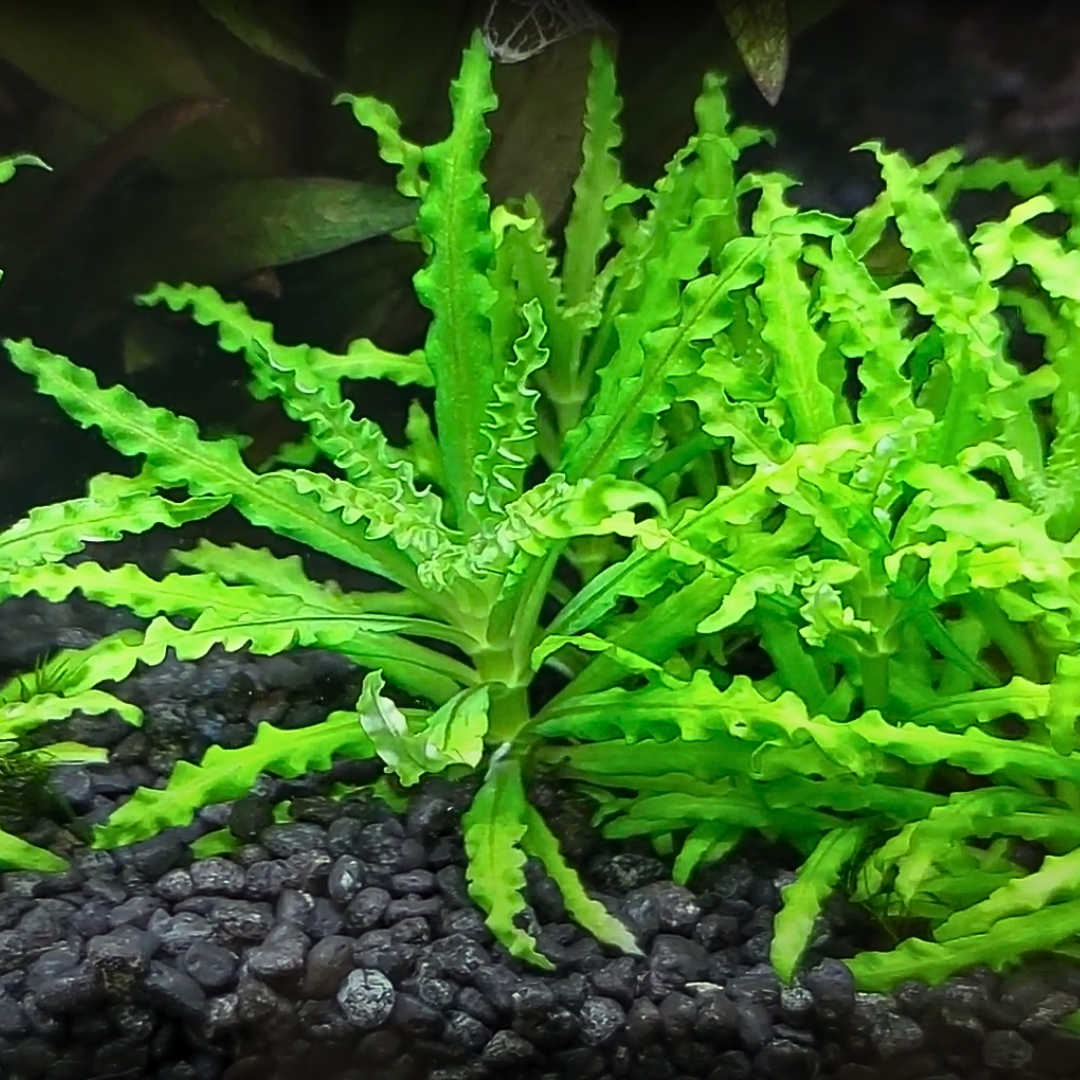
まるで水底に降り注いだ星のような姿から、原産地タイでは「ダオノイ(小さな星)」と呼ばれ親しまれている独特な水草です。最大の特徴は、縁が細かく波打つ縮れ葉(クリスプ・リーフ)が、ロゼット状(放射状)に展開することです。このユニークな形状と鮮やかなライトグリーンは、水槽内で唯一無二の存在感を放ちます。かつては育成が難しい「高嶺の花」とされていましたが、組織培養技術の確立により入手しやすくなりました。ただし、現地の石灰岩地帯とは異なる日本の軟水環境では「溶け」やすいため、水質への理解が必要な、育てがいのある種類です。Known as “Dao Noi” (Little Star) in its native Thailand, Pogostemon helferi is a unique aquatic plant that resembles stars fallen to the riverbed. Its most distinctive feature is its crinkled, curly leaves (crisp leaves) that grow in a rosette formation. This unique shape and vibrant light green color create a one-of-a-kind presence in the aquarium. Once considered difficult to cultivate, it has become more accessible thanks to tissue culture technology. However, since Japanese tap water is soft unlike the hard water of its native limestone habitats, it requires an understanding of water chemistry to prevent “melting,” making it a rewarding challenge for aquarists.
基本情報 / Basic Information
学名 / Scientific Name
Pogostemon helferi
通称 / Common Name
ポゴステモン・ヘルフェリー / ダオノイPogostemon helferi / Downoi
分類 / Family
シソ科 (Lamiaceae)Lamiaceae
分布 / Distribution
タイ、ミャンマー国境付近(クワイ川流域)Thailand, Myanmar border (Kwai River basin)
育成難易度 / Difficulty
中〜上級(特に日本の軟水環境下では注意が必要)Medium to High (Especially challenging in Japan’s soft water)
育成環境 / Cultivation Environment
光量 / Light
中〜強光量が必須です。60cm規格水槽であれば、LEDライト2灯(2000〜3000lm相当)が目安となります。光量が不足すると茎が間延び(徒長)し、美しい星型が崩れてしまいます。Medium to high light is essential. For a standard 60cm tank, roughly 2000-3000 lumens (equivalent to 2 LED lights) is recommended. Insufficient light causes the stems to elongate, ruining the beautiful star shape.
CO2添加 / CO2 Injection
美しく育てるためには添加が強く推奨されます。1秒に1〜2滴程度添加することで、成長速度が上がり、水中葉への移行もスムーズになります。Strongly recommended for beautiful growth. Adding about 1-2 bubbles per second will increase growth rate and smooth the transition to submersed leaves.
水質 / Water Quality
pH 6.0-7.0。最も重要なのは硬度(GH)です。自生地は石灰岩地帯のため、カルシウム分を含む硬水を好みます。日本の一般的な水道水(軟水)ではカルシウム不足で溶けやすいため、硬度上昇剤や龍王石などを用いて、GHを4〜8程度に保つのがコツです。pH 6.0-7.0. The most critical factor is hardness (GH). Being native to limestone areas, it prefers hard water rich in calcium. Since Japanese tap water is typically soft, it is prone to melting due to calcium deficiency. It is recommended to maintain GH at 4-8 using hardening agents or Seiryu stones.
底床 / Substrate
根からの栄養吸収が旺盛なため、栄養系ソイルの使用がベストです。砂利を使用する場合は、固形肥料の追肥が欠かせません。Nutrient-rich soil is best as it absorbs nutrients vigorously through its roots. If using gravel, supplementary solid fertilizer is essential.
レイアウト / Layout
配置 / Positioning
中景(石や流木の際)が最適です。前景草と背景草の「つなぎ」として機能します。特に石組みレイアウト(Iwagumi)では、石の硬質な質感と本種の複雑な葉の形が互いを引き立て合います。Best placed in the midground (next to rocks or driftwood). It serves as a bridge between foreground and background plants. In Iwagumi layouts specifically, the hard texture of the stones and the complex leaf shape of this plant complement each other perfectly.
注意点 / Precautions
導入初期は根が張っていないため、浮力が強く抜けやすいです。ヤマトヌマエビなどの大型のエビがいると引き抜かれてしまうことがあるため、活着するまではエビの数を減らすなどの工夫が必要です。Initially, it has strong buoyancy and is easily uprooted before rooting. Large shrimp like Amano shrimp may pull them out, so it’s necessary to reduce their number until the plants are established.
増やし方(トリミング) / Propagation & Trimming
増やし方 / Propagation
環境が合うと側芽(脇芽)を出して増えます。ある程度育った側芽をカットして差し戻すか、株自体が大きくなった際に根元から分割することで増やすことができます。組織培養カップの導入時は、小さく分けすぎないように注意して植栽します。Under the right conditions, it propagates by producing side shoots. You can cut and replant mature side shoots, or split the clump from the base when it grows large. When using tissue culture cups, be careful not to divide them into too small pieces.
トリミング / Trimming
成長は比較的緩やかですが、葉が重なり合ってくると下葉に光が当たらず枯れやすくなります。古くなった下葉や、巨大化しすぎた葉を適宜カットして通水性を確保します。Growth is relatively slow, but if leaves overlap too much, lower leaves may wither due to lack of light. Ensure water circulation by trimming old lower leaves or leaves that have become too large.
病気と対策(コケなど) / Pests & Algae
かかりやすい病気 / Common Issues
最大の問題は「溶け」です。水槽導入直後や大量の水換え後に、葉が透明になりドロドロに溶けることがあります。これは急激な水質変化(特に硬度やpH)による浸透圧ショックやカルシウム不足が原因です。また、新芽が白くなる場合は鉄分不足、葉色が薄い場合は窒素不足の可能性があります。The biggest issue is “melting.” Leaves may turn transparent and mushy shortly after introduction or large water changes. This is caused by osmotic shock or calcium deficiency due to rapid water quality changes (especially GH/pH). White new shoots indicate iron deficiency, while pale leaves suggest nitrogen deficiency.
対策と予防 / Prevention
導入時は「点滴法」で時間をかけて水合わせを行います。育成中はGH(硬度)を4以上に保つことが最も有効な予防策です。もし溶けてしまっても、茎と根が生きていれば復活する可能性が高いので、諦めずに様子を見てください。溶けた葉はカビの原因になるので吸い出します。Use the “drip method” for acclimation when introducing. Maintaining GH above 4 is the most effective prevention during cultivation. Even if leaves melt, if the stem and roots are alive, they often recover, so do not give up. Siphon out melted leaves as they can cause mold.
雑学と豆知識 / Trivia and Fun Facts
1. 「ダオノイ」の名と発見 / 1. “Dao Noi” and Discovery
現地タイでの呼び名「ダオノイ(Dao Noi)」は「小さな星」を意味します。植物学的には古くから知られていましたが、アクアリウム用として再発見されたのは2006年頃と比較的最近です。当初、日本ではそのユニークな姿から「ホシクサの仲間ではないか?」と噂され、非常に高価で謎めいた植物として扱われていました。The local Thai name “Dao Noi” means “Little Star.” While known botanically for a long time, it was only rediscovered for aquarium use relatively recently, around 2006. Initially in Japan, due to its unique appearance, it was rumored to be a type of Pipewort (Eriocaulaceae) and was treated as a very expensive and mysterious plant.
2. 縮れ葉の科学的な理由 / 2. Science of Crinkled Leaves
特徴的な葉の縮れは、単なる飾りではありません。自生地は流れの速い川であり、このデコボコした形状が葉の表面に微細な水流の乱れを生じさせ、効率よくCO2や栄養を取り込むための進化だと考えられています。水流が弱く光が少ない環境では、この縮れが弱くなることがあります。The characteristic crinkled leaves are not just for show. Native to fast-flowing rivers, this textured shape is thought to be an evolution to create micro-turbulence on the leaf surface, allowing for efficient absorption of CO2 and nutrients. In low-flow, low-light environments, this crinkling may diminish.
3. 日本の水には「優しすぎる」? / 3. Is Japanese Water Too Soft?
本種が日本で「難しい」とされる最大の理由は、日本の水道水が「軟水」だからです。自生地は石灰岩地帯で、カルシウムが豊富な硬水です。カルシウムは植物の細胞壁を強くするセメントのような役割を果たします。軟水環境では細胞壁が弱くなり、少しのショックで壊れて「溶け」てしまうのです。あえて水を硬くすることが、成功への近道です。The main reason this species is considered “difficult” in Japan is that Japanese tap water is “soft.” Its natural habitat is limestone based, rich in calcium (hard water). Calcium acts like cement to strengthen plant cell walls. In soft water, cell walls become weak and break easily with slight shock, causing “melting.” Deliberately hardening the water is the shortcut to success.
まとめ / Conclusion
ポゴステモン・ヘルフェリーは、その星のような愛らしい姿で水景に独自のアクセントを加えてくれる素晴らしい水草です。日本の軟水環境では、カルシウム不足による「溶け」に注意が必要ですが、逆に言えば水質(GH)さえ管理できれば、十分に美しく育てることができます。Pogostemon helferi is a wonderful aquatic plant that adds a unique accent to the aquascape with its lovely star-like appearance. In Japan’s soft water environment, care must be taken against “melting” due to calcium deficiency, but conversely, if water quality (GH) is managed, it can be grown beautifully.
石組みレイアウトの岩の隙間に、あるいは流木の足元に、この「小さな星」を散りばめてみてください。鮮やかな緑と複雑なテクスチャが、あなたの水槽をより一層輝かせてくれるはずです。Try scattering these “Little Stars” in the crevices of rocks in an Iwagumi layout or at the base of driftwood. Their vibrant green and complex texture will surely make your aquarium shine even brighter.

 ポチップ
ポチップ



コメント