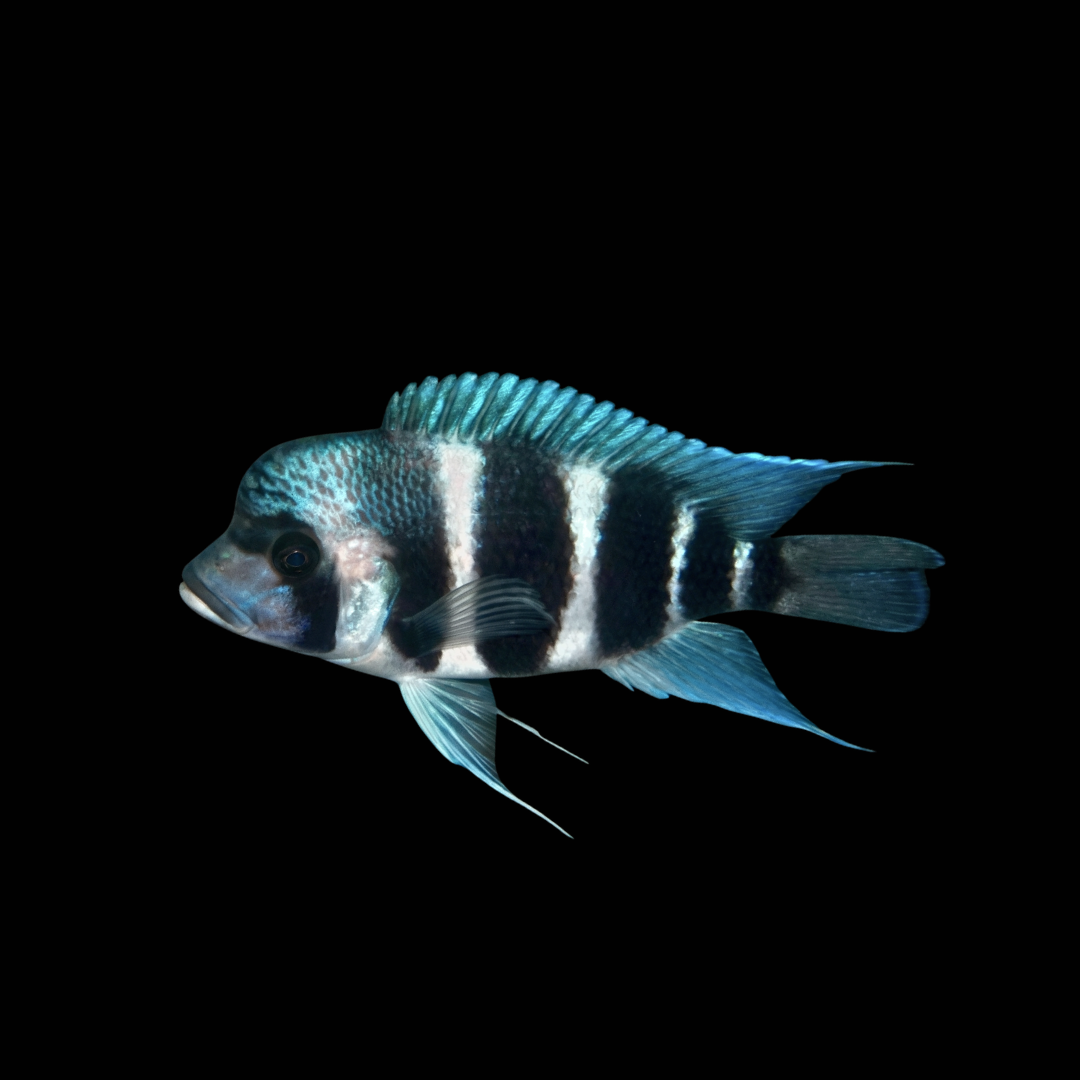
キフォティラピア・ギベローサ(Cyphotilapia gibberosa)は、アフリカ東部の巨大な古代湖、タンガニイカ湖の南半分に固有分布するシクリッドです。かつては約1世紀にわたりキフォティラピア・フロントーサと同一の種として扱われてきましたが、2003年に日本の研究者らによる詳細な形態調査の結果、別種として正式に記載されました。水深15メートルから最大120メートルという、淡水魚としては極めて珍しい深水域を主な生息地としており、高水圧かつ安定した環境に適応した、穏やかで知性的な性格を持っています。体側には5本の太い垂直バンドが入り、成長したオスは前頭部に脂肪が蓄積された立派な肉瘤を発達させます。その威風堂々とした姿から、アクアリウムにおける「湖の王者」として、世界中の愛好家から絶大な敬意と人気を集めています。Cyphotilapia gibberosa is a large cichlid endemic to the southern half of Lake Tanganyika, a vast ancient lake in East Africa. For nearly a century, it was treated as the same species as C. frontosa, but in 2003, it was officially described as a distinct species following detailed morphological research by Japanese scientists. Inhabiting deep waters ranging from 15 to 120 meters—a rare habitat for freshwater fish—it possesses a calm and intelligent temperament adapted to high-pressure environments. It features five bold vertical bands on its body, and mature males develop a magnificent nuchal hump. Known as the “King of the Lake,” it commands immense respect and popularity among aquarists worldwide.
基本情報 / Basic Information
学名 / Scientific Name
Cyphotilapia gibberosa
通称 / Common Name
ギベローサ、ブルーザイール、モバ、カパンパ、キトゥンバGibberosa, Blue Zaire, Moba, Kapampa, Kitumba
分類 / Family
スズキ目シクリッド科キフォティラピア属Cichlidae, Genus Cyphotilapia
英名 / English Name
Humphead Cichlid (Gibberosa variant)
分布 / Distribution
タンガニイカ湖南部(コンゴ民主共和国、タンザニア、ザンビアの各沿岸域)に分布しています。Distributed in the southern half of Lake Tanganyika (Coasts of DR Congo, Tanzania, and Zambia).
最大体長 / Max Size
約35cmから40cm以上に達します。オスはメスよりも著しく大型化する傾向があります。Reaches approx. 35cm to 40cm+. Males tend to grow significantly larger than females.
寿命 / Lifespan
約20年から25年です。適切な管理下では、非常に長期にわたる飼育を楽しむことができます。Approx. 20 to 25 years. Long-term keeping is possible under proper management.
飼育環境 / Aquarium Environment
水槽サイズ / Tank Size
500リットル以上を推奨します。90cmワイド水槽や120cm、150cm規格水槽、あるいは180cm以上の大型水槽が必要です。500L+ recommended. Requires a 90cm wide, 120cm/150cm standard, or 180cm+ large tank.
水温 / Temperature
23度から27度で安定させてください。急激な温度変化は体調を崩す大きな原因となりますので、注意が必要です。Maintain between 23-27°C. Stable temperature is crucial as sudden changes can cause illness.
水質 / Water Quality
pH 8.0から9.5の強アルカリ性と、高い硬度を維持してください。日本の軟水では、バッファー剤による調整が不可欠です。Maintain strong alkalinity (pH 8.0-9.5) and high hardness. Buffering is essential in Japanese soft water.
レイアウト / Layout
底床には細かな砂を敷き、大型の岩を組んで洞窟状の隠れ家を作ります。深場を模した落ち着いた照明が、美しい発色を促します。Use fine sand and create cave-like hiding spots with large rocks. Subdued lighting promotes better coloration.
注意点 / Precautions
高pH下ではアンモニアの毒性が強まるため、強力なろ過と定期的な換水(20%から30%)を怠らないようにしてください。Since ammonia toxicity increases at high pH, powerful filtration and regular water changes (20-30%) are essential.
餌と給餌 / Feeding
餌の種類 / Diet
肉食性が強いです。沈下性ペレットを主食とし、クリルやイサザアミなどを組み合わせて動物性タンパク質を与えてください。Strongly carnivorous. Use sinking pellets as a staple, supplemented with krill and mysis shrimp.
給餌のポイント / Feeding Tips
小赤などの生き餌は、病気の持ち込みやビタミン欠乏症のリスクがあるため推奨されません。代謝が遅いため、与えすぎに注意します。Live food like goldfish is not recommended due to disease risks. Avoid overfeeding to match their slow metabolism.
性格と混泳 / Temperament and Tank Mates
性格 / Temperament
基本的には穏やかですが、高度な社会構造を持っています。優位なオスを中心にハーレムを形成し、適度な距離を保って生活します。Basically calm but has a complex social structure. Forms harems around a dominant male.
混泳の相性 / Compatibility
口に入るサイズの小型魚は捕食されます。混泳相手には、同じタンガニイカ湖産で体格の近い大型のシクリッドなどが適しています。Small fish will be preyed upon. Suitable tank mates include similar-sized large Tanganyika cichlids.
病気と対策 / Diseases and Prevention
かかりやすい病気 / Common Diseases
腹水病(ブロート)やエラ病、水質悪化に伴う細菌性疾患にかかりやすい傾向があります。Susceptible to bloat, gill disease, and bacterial infections due to poor water quality.
対策と予防 / Prevention
硝酸塩濃度を低く保ち、水質の緩衝能力を高く維持してください。新しい魚を導入する際は、厳重な検疫とトリートメントが必須です。Keep nitrate levels low and maintain high buffering capacity. Strict quarantine is mandatory for new fish.
増やし方(繁殖) / Breeding
雌雄の判別 / Sexing
成魚ではオスの方が一回り大きく、肉瘤が顕著に発達します。確実に見分けるには、腹部にある生殖突起の形状を確認してください。オスは先端が細く尖った「V字型」をしており、メスは産卵に適した、丸みを帯びて太い「U字型」をしているのが特徴です。Adult males are larger and develop a prominent nuchal hump. For certain sexing, check the genital papilla: males have a pointed “V-shape,” while females feature a rounded, blunt “U-shape” adapted for spawning.
繁殖形態 / Reproduction
母系口内保育型(マウスブルーダー)です。メスは約5週間にわたり卵を口の中で保護し、稚魚が育つまで守り続けます。Maternal mouthbrooder. The female broods eggs and fry in her mouth for about 5 weeks.
繁殖のポイント / Breeding Tips
「後退産卵」という独自の行動を見せます。稚魚の生存率を上げるため、エッグタンブラーを用いた人工孵化も一般的に行われます。Displays unique “backward spawning.” Egg tumblers are often used to increase the survival rate of fry.
雑学と豆知識 / Trivia and Fun Facts
1. 日本の研究者が解き明かした分類の謎1. Taxonomic Mystery Solved by Japanese Researchers
ギベローサは長年フロントーサと混同されてきましたが、2003年に日本の高橋氏と仲谷氏の研究によって独立した種であることが証明されました。決定的な違いは鱗の列にあります。フロントーサの側線間の鱗列が2列であるのに対し、ギベローサは3列存在します。この繊細な差異の発見は、タンガニイカ湖の進化研究において極めて重要な一歩となりました。Gibberosa was long confused with Frontosa until 2003, when research by Takahashi and Nakaya proved it to be a distinct species. The key difference lies in the scales; while Frontosa has two scale rows between the lateral lines, Gibberosa possesses three. This discovery was a vital step in the evolutionary study of Lake Tanganyika.
2. ブルーザイール・モバ:深淵が育んだ天然の青2. Blue Zaire Moba: Natural Blue from the Abyss
ギベローサの中でも、コンゴ民主共和国のモバ周辺で採集される個体群は「ブルーザイール・モバ」として特別な地位を確立しています。その強烈なウルトラマリンブルーは、光の波長を反射する構造色によるものであり、時折見せるマゼンタの輝きは愛好家を虜にします。この色彩は人為的な改良ではなく、太陽光の届きにくい深海のような環境が生み出した、まさに自然の芸術品です。Among Gibberosa, the population near Moba, DR Congo, holds a special status as “Blue Zaire Moba.” Their intense ultramarine blue is a structural color reflecting specific light wavelengths, often showing magenta flashes. This is not selective breeding but a masterpiece of nature created in the dark, deep-water environment.
3. 「後退産卵」という驚くべき適応3. The Remarkable Adaptation of “Backward Spawning”
ギベローサは、産卵時に反転することなく後退しながら卵を回収する「後退産卵(バック産卵)」という特異な行動をとります。これは、彼らが本来生息する深場の狭い岩の隙間において、大型の体が180度反転するための空間を確保できなかったことから進化した知恵であると考えられています。限られた環境の中で卵を確実に守るための、究極の生存戦略といえるでしょう。Gibberosa performs “backward spawning,” collecting eggs by moving back without turning around. This is thought to have evolved as wisdom to survive in narrow deep-water rock crevices where their large bodies lacked the space to turn 180 degrees. It is an ultimate survival strategy to reliably protect their eggs in restricted habitats.
4. 流通の裏側:ダイバーの命がけの作業と航空法4. Behind the Scenes: Risky Collection and Aviation Laws
水深70メートルを越える深場からワイルド個体を採集するには、命がけの作業が伴います。急激な減圧によるダメージを防ぐため、ダイバーは何日もかけてゆっくりと水面へ引き上げるか、注射針で浮き袋を調整する「針抜き」という高度な処置を施します。また、日本国内の航空法により、冬場の輸送時には使い捨てカイロの同梱が禁じられているため、厳冬期の遠隔地への発送は非常に高いリスクを伴うことでも知られています。Collecting wild specimens from depths exceeding 70 meters involves life-risking work. To prevent pressure damage, divers surface them over days or use advanced “needle venting” techniques. Additionally, due to Japanese aviation laws banning heat packs in winter air transport, shipping to remote areas during severe cold seasons carries significant risks.
まとめ / Conclusion
キフォティラピア・ギベローサを飼育することは、タンガニイカ湖という悠久の歴史を持つ古代湖の深淵を、自らの水槽で再現することに他なりません。2003年の新種記載を経て、私たちは彼らが持つ独自の形態と、深場での生活に適応した驚くべき知恵を知ることができました。Keeping Cyphotilapia gibberosa is equivalent to recreating the abyss of the ancient Lake Tanganyika in your own tank. Following the 2003 species description, we have come to understand their unique morphology and the remarkable wisdom they possess to adapt to deep-water life.
日本の愛好家には、水道水を適切な水質へと練り上げる管理技術と、彼らの寿命に見合う長期的な献身が求められます。アフリカの深淵から届く「青い宝石」との出会いは、あなたのアクアリウム人生において、他では得られない深い感動と充足感をもたらしてくれるはずです。Japanese aquarists are required to have the management skills to refine tap water and the long-term dedication to match their lifespan. Encountering this “blue gem” from the African abyss will surely bring profound emotion and fulfillment to your aquarium life.


 ポチップ
ポチップ



コメント