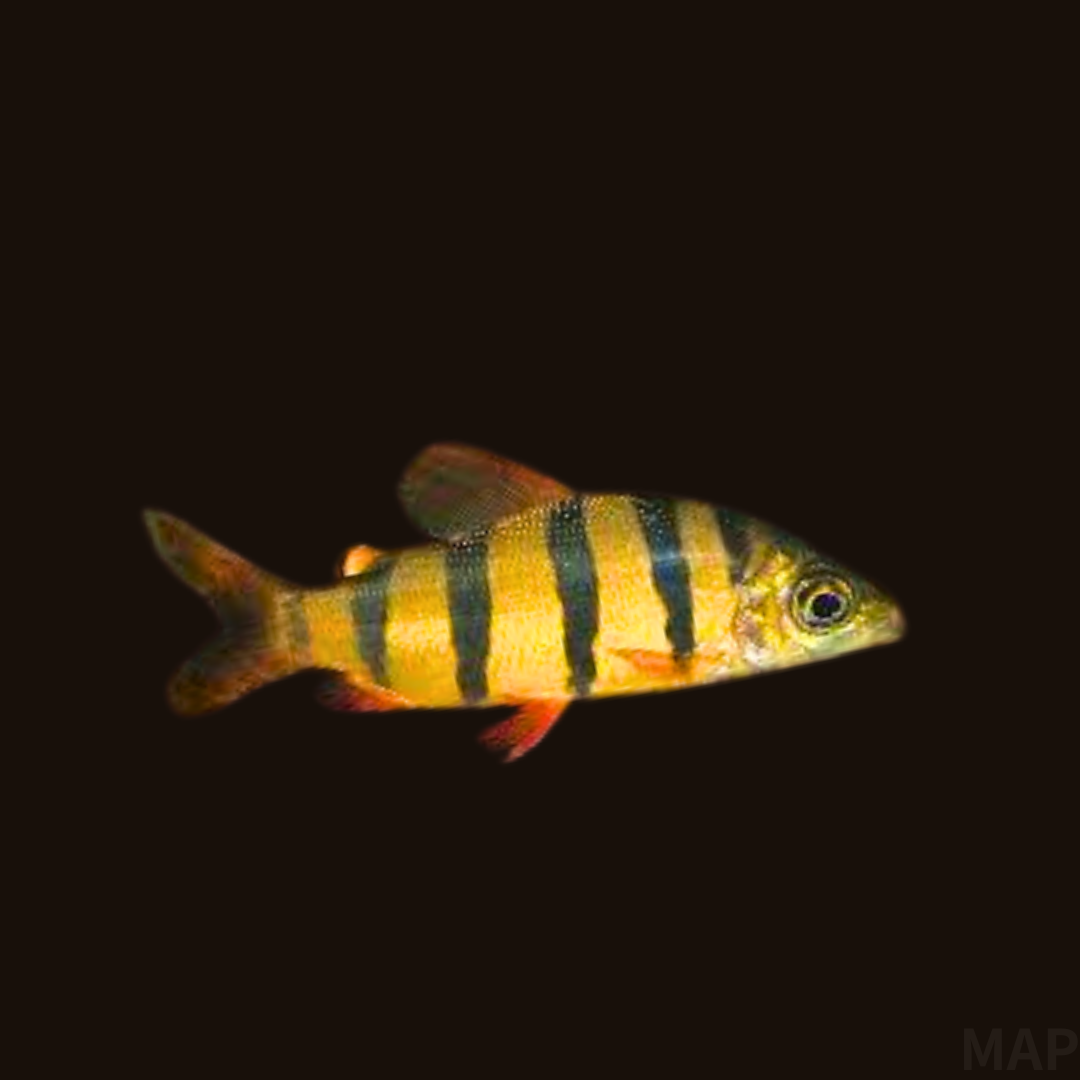
ショートノーズクラウンテトラは、アフリカのコンゴ川水系を象徴する大型のアフリカンカラシンです。幼魚期には鮮烈なオレンジの体色に6本の黒いバンド、そして真っ赤に染まるヒレを持ち、その圧倒的な美しさから世界中のアクアリストを魅了してきました。しかし、その愛らしい姿は成長とともに劇的な変貌を遂げます。成魚になると体長40センチメートルを超え、時には70センチメートル以上に達するモンスターフィッシュとしての風格を現します。体色も次第に落ち着いた灰色へと変化し、性格も非常にパワフルで縄張り意識が強いものへと移行します。飼育には巨大な設備と覚悟が必要ですが、飼育者を認識するような高い知性と、悠然と泳ぐ姿は、大型魚愛好家にとって究極の到達点の一つと言えるでしょう。The Short-nosed Crown Tetra is a large African characin that symbolizes the Congo River system. In its juvenile stage, it captivates aquarists worldwide with its vivid orange body, six bold black bands, and striking red fins. However, this charming appearance undergoes a dramatic transformation as it matures. Reaching lengths over 40 cm, and sometimes exceeding 70 cm in the wild, it develops into a formidable “monster fish.” Its coloration gradually fades to a subdued gray, and its temperament becomes highly powerful and territorial. While keeping this species requires massive equipment and commitment, its high intelligence—often recognizing its owner—and its majestic swimming presence make it one of the ultimate goals for large fish enthusiasts.
コンゴ民主共和国、タンザニア、アンゴラなどのコンゴ川流域、タンガニーカ湖周辺Congo River basin including DR Congo, Tanzania, and Angola; also found near Lake Tanganyika.
最大体長 / Max Size
飼育下で40〜50cm(野生下では最大76cmに達する)40–50 cm in captivity (up to 76 cm in the wild).
寿命 / Lifespan
10年以上(大型種のため、適切な環境下では長期飼育が可能)10+ years (as a large species, they can live long under proper care).
飼育環境 / Aquarium Environment
水槽サイズ / Tank Size
幼魚期は90cm規格水槽から可能だが、最終的には150cm×60cm×60cm(約540L)以上の大型水槽、理想は180cm以上の特注設備が必要Starts with a 90cm tank for juveniles, but eventually requires a 150cm (150-gallon) tank or larger; ideally a custom 180cm+ setup for adults.
水温 / Temperature
22〜28℃(25℃前後が最適)22–28°C (72–82°F), with 25°C (77°F) being optimal.
水質 / Water Quality
pH 6.0〜7.5(弱酸性〜中性)、総硬度 10〜20 dGHpH 6.0–7.5 (slightly acidic to neutral), total hardness 10–20 dGH.
レイアウト / Layout
細かい砂や砂利を底床にし、頑丈で角のない大型の流木や石を配置。水草は食害されるため、生きた植物の植栽は困難Fine sand or gravel substrate with large, smooth driftwood and rocks. Live plants are not recommended as they will be eaten.
注意点 / Precautions
排泄物が多く水質が悪化しやすいため、オーバーフロー式などの強力な濾過装置と頻繁な換水が必須。床の耐荷重対策も考慮することProduces heavy waste; powerful filtration (like a sump system) and frequent water changes are essential. Consider floor weight reinforcement for large tanks.
餌と給餌 / Feeding
餌の種類 / Diet
草食性の強い雑食性。スピルリナ配合の大型魚用ペレットを主食にし、茹でたほうれん草や冷凍赤虫、エビなどをバランスよく与えるOmnivorous with a strong herbivorous preference. Use spirulina-based pellets as a staple, supplemented with boiled spinach, frozen bloodworms, and shrimp.
給餌のポイント / Feeding Tips
植物質が不足すると調子を崩しやすいため、常に野菜類を取り入れることが健康維持と発色の鍵。食べ残しは水質悪化を招くため速やかに除去するDietary fiber is key to health and color; ensure regular vegetable intake. Promptly remove uneaten food to prevent water fouling.
性格と混泳 / Temperament and Tank Mates
性格 / Temperament
幼魚期は群れるが、成長とともに極めて排他的で攻撃的になる。特に同種間での争いは激しく、致命傷に至ることもあるJuveniles school together, but adults become extremely territorial and aggressive, especially toward their own kind.
混泳の相性 / Compatibility
基本は単独飼育を推奨。混泳させる場合は、ポリプテルスなどの底生魚や、遊泳層が異なり本種より強健な大型シクリッドなどに限定されるSingle-species setups are highly recommended. If mixed, only with robust companions like large Polypterus or hardy large cichlids that occupy different water levels.
病気と対策 / Diseases and Prevention
かかりやすい病気 / Common Diseases
白点病、エラ病(水質悪化時)、ストレスによる拒食Ich (White Spot Disease), Gill flukes (during water quality drops), and stress-induced anorexia.
対策と予防 / Prevention
新導入時の温度合わせを厳密に行い、強力な濾過で硝酸塩の蓄積を防ぐ。広々としたスペースを確保し、ストレスを最小限に抑えるCarefully acclimate temperature upon arrival. Maintain pristine water quality via high-end filtration to prevent nitrate buildup. Providing ample space is crucial to reducing stress.
増やし方(繁殖) / Breeding
繁殖形態 / Reproduction
卵生。自然界では大規模な回遊を伴う産卵行動を行うとされるEgg-layer. In the wild, they are believed to perform large-scale migrations for spawning.
繁殖のポイント / Breeding Tips
飼育下での繁殖例は極めて稀で、商業的な成功例は報告されていない。成魚の攻撃性が高いため、ペア形成自体が水槽内では困難を極めるBreeding in captivity is extremely rare and no commercial success has been reported. Their adult aggression makes pair bonding in a tank nearly impossible.
雑学と豆知識 / Trivia and Fun Facts
1. 特殊な顎関節「顎内関節」の秘密 / 1. Secrets of the Intramandibular Joint
この魚が植物や底床の有機物を効率よく食べられるのは、下顎に「顎内関節」という特殊な関節を持っているからです。これにより、比較的小さな口でありながら、驚くほど柔軟かつ強力な咬合力を発揮します。これはコンゴ川という競争の激しい環境で、他の魚が食べにくい底層の資源を独占するために獲得した、進化の結晶と言えるでしょう。The reason this fish can efficiently consume plants and benthic organic matter is due to a specialized “Intramandibular Joint” in its lower jaw. This allow even a relatively small mouth to exert surprising flexibility and powerful biting force. It is an evolutionary marvel acquired to monopolize bottom-layer resources that other fish find difficult to eat in the competitive environment of the Congo River.
2. 劇的な色彩変容:大人になるための保護色 / 2. Dramatic Color Change: Camouflage for Adulthood
幼魚期の鮮やかなオレンジと黒の縞模様は、浅瀬の茂みで外敵から身を隠すための「分断色」として機能します。しかし、体長が20cmを超えると、その輝きは徐々に失われ、重厚な灰色へと変わっていきます。これは巨大化した彼らにとってもはや隠れる必要がなくなり、深い河底の環境に馴染むための合理的な変化なのです。見た目の華やかさが消える代わりに、野性味溢れる迫力が備わります。The vivid orange and black stripes of juveniles function as “disruptive coloration” to hide from predators in shallow thickets. However, as they exceed 20cm, that brilliance gradually fades into a heavy gray. For a giant of their size, hiding is no longer necessary, and becoming a uniform gray helps them blend into the deep river bottom. While the visual flashiness disappears, it is replaced by a raw, wild presence.
3. 「魚が死んだ?」と飼い主を驚かせる睡眠習性 / 3. A Sleeping Habit That Startles Owners
ショートノーズクラウンテトラは、夜間に水槽の底で「体を横に倒して」眠るという非常に珍しい習性を持っています。初めてこれを見た飼い主は、魚が死んでしまったのではないかと驚愕することがよくあります。しかし、これは彼らが環境に慣れ、完全にリラックスしてエネルギー消費を抑えている証拠です。彼ら独自の、なんともユーモラスで無防備な休息の姿なのです。Short-nosed Crown Tetras have a unique habit of sleeping “sideways” on the bottom of the tank at night. Owners seeing this for the first time often panic, thinking the fish has died. However, this is actually evidence that they are fully acclimated and relaxed, minimizing energy consumption. It is their own humorous and defenseless way of resting.
4. 高い知性と人間への認識能力 / 4. High Intelligence and Human Recognition
一般的なカラシンとは異なり、彼らは非常に高い知性を持っています。ガラス越しに飼育者の動きをじっと観察し、餌をくれる人を認識して寄ってくるようになります。まるで大型のシクリッドやフグのような「パーソナリティ」を持っており、単なる観賞対象を超えて、家族の一員のようなペットフィッシュとしての絆を築ける数少ないアフリカ産カラシンです。Unlike typical characins, they possess high intelligence. They observe their owner’s movements through the glass and learn to recognize the person who feeds them. With a personality comparable to large cichlids or puffers, they are among the few African characins with whom you can build a bond as a pet fish rather than just an ornamental object.
まとめ / Conclusion
ショートノーズクラウンテトラは、その美しさ、特異な生態、そして成長に伴う圧倒的な存在感により、アクアリウムの奥深さを象徴するような魚です。幼魚期の鮮烈な姿に惹かれて飼育を始める方は多いですが、その終着点は1.5トンを超えるような巨大な水槽設備と、彼らの強い個性を丸ごと受け止める飼育者の深い愛情が求められる、まさにエキスパートのための魚と言えるでしょう。The Short-nosed Crown Tetra is a fish that symbolizes the depth of the aquarium hobby through its beauty, unique ecology, and overwhelming presence as it matures. While many are drawn to its vivid juvenile colors, the journey ends in a requirement for massive equipment exceeding 1.5 tons and the profound dedication of an owner who can embrace their strong personality. It is truly a fish for the dedicated expert.
彼らとの生活は、日々が発見の連続です。横になって眠る姿に驚かされ、野菜を夢中で食べる姿に癒やされ、そして力強く成長していく姿に感動を覚えることでしょう。このアフリカの至宝を健全に育てることは決して容易な道ではありませんが、それを成し遂げたとき、あなたはアクアリストとして比類なき達成感と、唯一無二のパートナーを得ることになるはずです。Life with them is a series of daily discoveries. You will be startled by their sleeping postures, healed by the sight of them munching on vegetables, and moved by their powerful growth. Raising this African treasure healthily is no easy path, but once achieved, you will find unparalleled fulfillment as an aquarist and a partner like no other.

 ポチップ
ポチップ



コメント