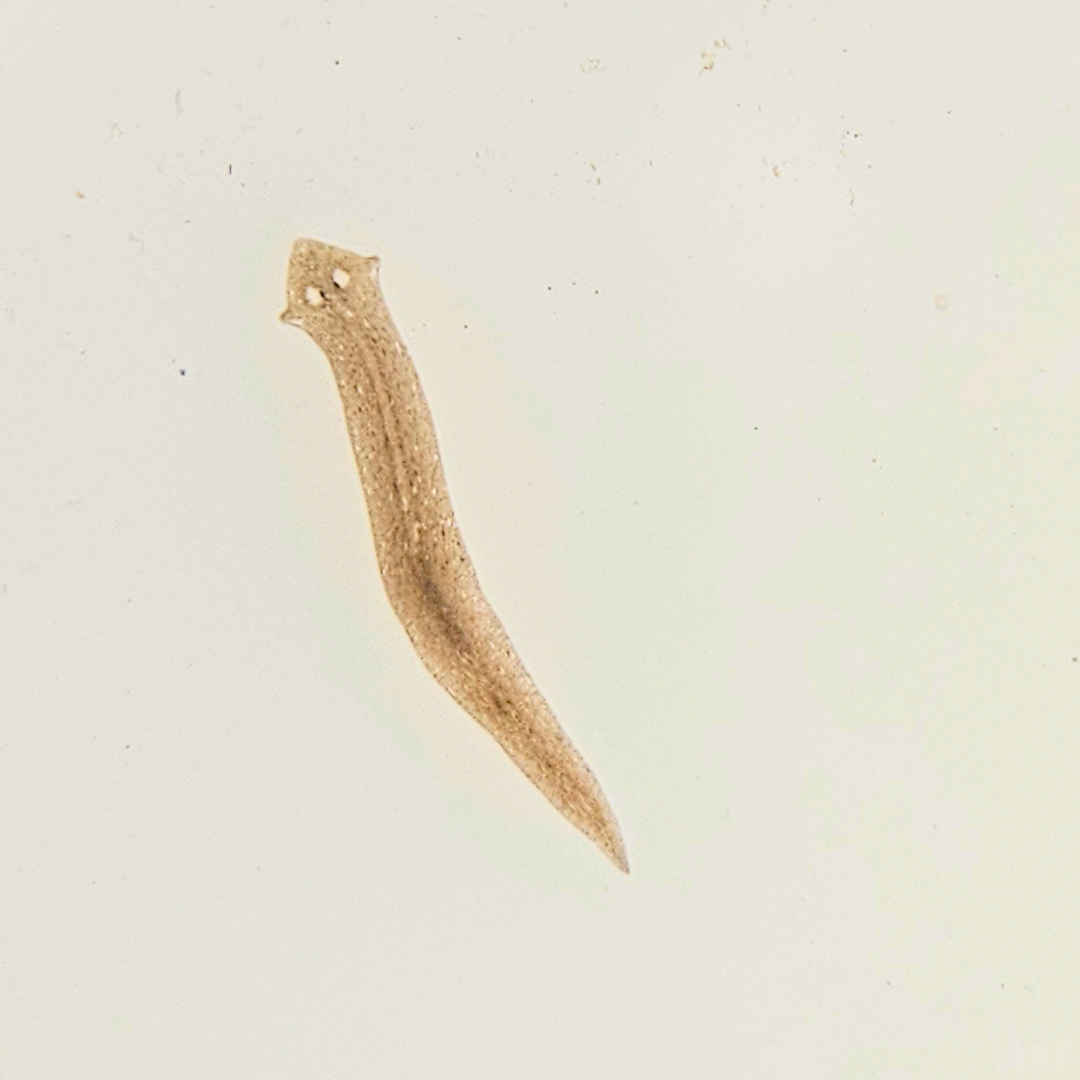
最大の特徴は、和名の由来ともなっている頭部の形状です。耳葉(じよう)と呼ばれる突起が鋭く尖り、まるで槍の穂先のような形をしています。黒褐色の体に寄り目がちの愛嬌のある顔立ちをしており、滑るように移動する姿は観察していて飽きることがありません。しかし一方で、日本の在来種であるナミウズムシよりも環境適応力や捕食性が高く、野外では在来種を脅かす外来生物としての側面も併せ持っています。飼育にあたっては、その生命力の強さを観察し楽しむと同時に、絶対に野外へ逸出させないという高いモラルが求められます。Girardia dorotocephala, commonly known as the Black Planaria, is a flatworm native to North America. In the field of biology, it is famous as a model organism with an astounding regenerative ability, contributing significantly to regenerative medicine and neuroscience research. Its most distinctive feature is the shape of its head, which resembles a spearhead with sharply pointed auricles. While they are fascinating creatures to observe, gliding smoothly with their cross-eyed appearance, they are also an invasive species in Japan, possessing higher adaptability and predatory instincts than the native Dugesia japonica. Keeping them requires high ethical standards to prevent their release into the wild.
北米原産(日本国内では関東・中部・近畿地方などを中心に定着)Native to North America (Introduced and established in Japan)
最大体長 / Max Size
15~25mm(環境により30mmを超える大型個体も出現)15-25mm (Can exceed 30mm in good conditions)
寿命 / Lifespan
分裂による無性生殖を行うため、個体としては半永久的に生存可能(理論上)Theoretically indefinite due to asexual reproduction by fission
飼育環境 / Aquarium Environment
水槽サイズ / Tank Size
タッパーやビーカー等の小型容器(水量0.5L~2L程度で十分飼育可能)。一般的な熱帯魚用規格水槽を用いる必要はありません。Small containers like Tupperware or beakers (0.5L-2L). Standard aquarium tanks are not necessary.
水温 / Temperature
18~23℃(高水温に弱く、28℃を超えると体が溶けて死滅する危険があります。夏場はワインセラーや冷蔵庫の野菜室への退避が必要です。)18-23°C (Sensitive to heat; temperatures over 28°C can be fatal. Cooling is required in summer.)
水質 / Water Quality
中性付近。塩素(カルキ)や重金属に非常に敏感なため、しっかりとカルキを抜いた水や天然水を使用します。Neutral pH. Highly sensitive to chlorine and heavy metals; use dechlorinated or natural water.
レイアウト / Layout
ベアタンク(底砂やフィルターを使用しない)推奨。底砂があると食べ残しが入り込み水質悪化の原因となります。Bare bottom recommended (no substrate or filter) to maintain water hygiene.
注意点 / Precautions
壁面を登るため、通気穴のある蓋が必須です。また、フィルターの水流はストレスになり、吸い込み事故の原因にもなるため、止水管理で頻繁な水換えを行う方法が適しています。A lid is essential as they climb walls. Avoid strong currents and filters; frequent water changes in still water are best.
餌と給餌 / Feeding
餌の種類 / Diet
肉食性。新鮮な鶏レバーや牛レバーを好みます。冷凍アカムシやイトミミズも食べますが、レバーの方が成長・分裂を促進します。Carnivorous. Prefers fresh chicken or beef liver. Also eats frozen bloodworms.
給餌のポイント / Feeding Tips
週に1~2回、細かく切ったレバーを与えます。30分~1時間ほどで取り出し、その後すぐに全換水を行ってください。食べ残しや体表から出る粘液を放置すると、水質が急変し全滅する恐れがあります。Feed 1-2 times a week. Remove uneaten food after 30-60 mins and perform a 100% water change immediately to prevent water fouling.
性格と混泳 / Temperament and Tank Mates
性格 / Temperament
肉食性で、同サイズの他の水生生物に対して捕食行動をとることがあります。特に弱った個体や脱皮直後の甲殻類などは襲われる可能性があります。Carnivorous and predatory towards other small aquatic organisms, especially weak or molting individuals.
混泳の相性 / Compatibility
基本的には単独飼育(種単独飼育)を強く推奨します。魚と一緒に飼うと、魚に食べられるか、逆に魚の卵や稚魚を捕食する可能性があります。また、在来のナミウズムシと一緒にすると、ナミウズムシを駆逐してしまうことがあります。Species-only tank is strongly recommended. They may be eaten by fish or prey on fish eggs/fry. Do not keep with native planarians.
病気と対策 / Diseases and Prevention
かかりやすい病気 / Common Diseases
「溶解(Melting)」現象。高水温や水質悪化により、自身の消化酵素等で体がドロドロに溶けて崩壊してしまうことがあります。“Melting” phenomenon. High temperatures or poor water quality can cause body disintegration.
対策と予防 / Prevention
夏場の温度管理(28℃以下、理想は23℃以下)を徹底すること。給餌後の水換えを怠らず、容器のヌメリを洗い流して清潔に保つことが最大の予防策です。Keep temperature below 23°C (max 28°C) and maintain strict hygiene with water changes after every feeding.
増やし方(繁殖) / Breeding
繁殖形態 / Reproduction
主に分裂による無性生殖を行います。体がくびれて千切れ、尾部から頭部が、頭部から尾部が再生して2匹になります。Asexual reproduction via fission. The body splits, and each part regenerates into a complete individual.
繁殖のポイント / Breeding Tips
適温(18~23℃)を保ち、栄養価の高いレバーを十分に与えると頻繁に分裂します。増えすぎると過密ストレスで全滅することがあるため、適宜別の容器に株分けを行ってください。Maintain 18-23°C and feed liver generously. Separate them into new containers to avoid overcrowding.
雑学と豆知識 / Trivia and Fun Facts
1. 驚異の再生能力とネオブラスト / 1. Neoblasts and Regeneration
彼らの体の20~30%は「ネオブラスト」と呼ばれる万能細胞で構成されています。これにより、体を細かく切断されても、そのすべての破片から脳や眼を含む完全な個体が再生します。切断後わずか1週間から10日程度で、小さなコピーが完成する様は生命の神秘そのものです。20-30% of their body consists of pluripotent stem cells called “neoblasts,” allowing them to regenerate a complete individual from a tiny fragment in just over a week.
2. 電気で書き換わる「顔」 / 2. Bioelectricity and Morphology
近年の研究(マイケル・レビン教授ら)により、細胞間の電気信号(膜電位)を操作するだけで、遺伝子をいじらずとも再生する頭の形を変えられることが判明しました。薬剤で電気回路を遮断すると、本種であるにもかかわらず、1億年以上前に分岐した別種のような丸い頭や四角い頭を持って再生してくるのです。これは形態形成の常識を覆す発見とされています。Research shows that manipulating bioelectric signals can alter head shape during regeneration, creating heads resembling other species without changing DNA.
3. 宇宙へ行ったプラナリア / 3. Planarians in Space
2015年、本種は国際宇宙ステーション(ISS)へ旅立ちました。微小重力下での実験において、ある個体は尾部から頭部を再生し、両端に頭を持つ「双頭」の状態で地球に帰還しました。これは重力が体の極性(前後)の決定に関与している可能性を示唆する貴重なデータとなりました。In 2015, they were sent to the ISS. One individual regenerated into a “double-headed” worm in microgravity, suggesting gravity plays a role in polarity determination.
4. 飢餓が生む「脱成長」 / 4. Degrowth Phenomenon
餌がない状態が続くと、彼らは餓死するのではなく、自らの体を分解・吸収してエネルギーにし、体を縮小させる「脱成長(Degrowth)」を行います。孵化直後のサイズまで小さくなっても生き続け、再び餌が得られれば成長を再開します。この能力が、厳しい自然環境での生存を支えています。Instead of starving, they shrink their bodies (“degrowth”) by consuming their own tissues for energy, surviving until food becomes available again.
5. 外来種としての「顔」 / 5. Invasive Nature
実験室のスターである彼らですが、日本の河川では在来種ナミウズムシを脅かす存在です。特に高水温や水質汚濁への耐性が高く、攻撃性も強いため、競合すると在来種を駆逐してしまうことがあります。飼育個体は絶対に野外に放さないよう、排水の管理にも注意が必要です。They are invasive in Japan, threatening native species due to their higher tolerance for heat/pollution and predatory behavior. Never release them into the wild.
まとめ / Conclusion
アメリカツノウズムシは、その小さな体に生命の不思議を凝縮させたような存在です。切っても再生する能力、電気信号による形の変化、そして飢餓への耐性など、知れば知るほど奥深い魅力を持っています。飼育自体は、清潔な水と適度な給餌、そして温度管理さえ守れば決して難しくありません。Girardia dorotocephala is a creature that embodies the mysteries of life in a small body. Its regenerative powers and physiological adaptability are truly fascinating. Keeping them is not difficult if you maintain clean water, proper feeding, and temperature control.
しかし、その強靭さは日本の生態系にとって脅威でもあります。彼らを飼育することは、生命科学の最前線に触れる喜びであると同時に、環境を守る責任を負うことでもあります。最後まで愛情と責任を持って管理し、この「黒い再生者」の魅力を堪能してください。However, their resilience poses a threat to local ecosystems. Keeping them is a joy but comes with the responsibility to protect the environment. Please manage them with care and never release them into the wild.



 アイのアクアグッズ案内水換え・底砂掃除の道具の選び方|砂利・砂・ソイルに合うクリーナーとポンプ道具の特徴や使い方、選ぶときのポイントをアイが紹介します。記事はコチラ →
 アイのアクアグッズ案内エーハイムはおもちゃから始まった? 小さな噴水から水槽へ、アイとコタロウの探訪道具の特徴や使い方、選ぶときのポイントをアイが紹介します。記事はコチラ →



コメント