

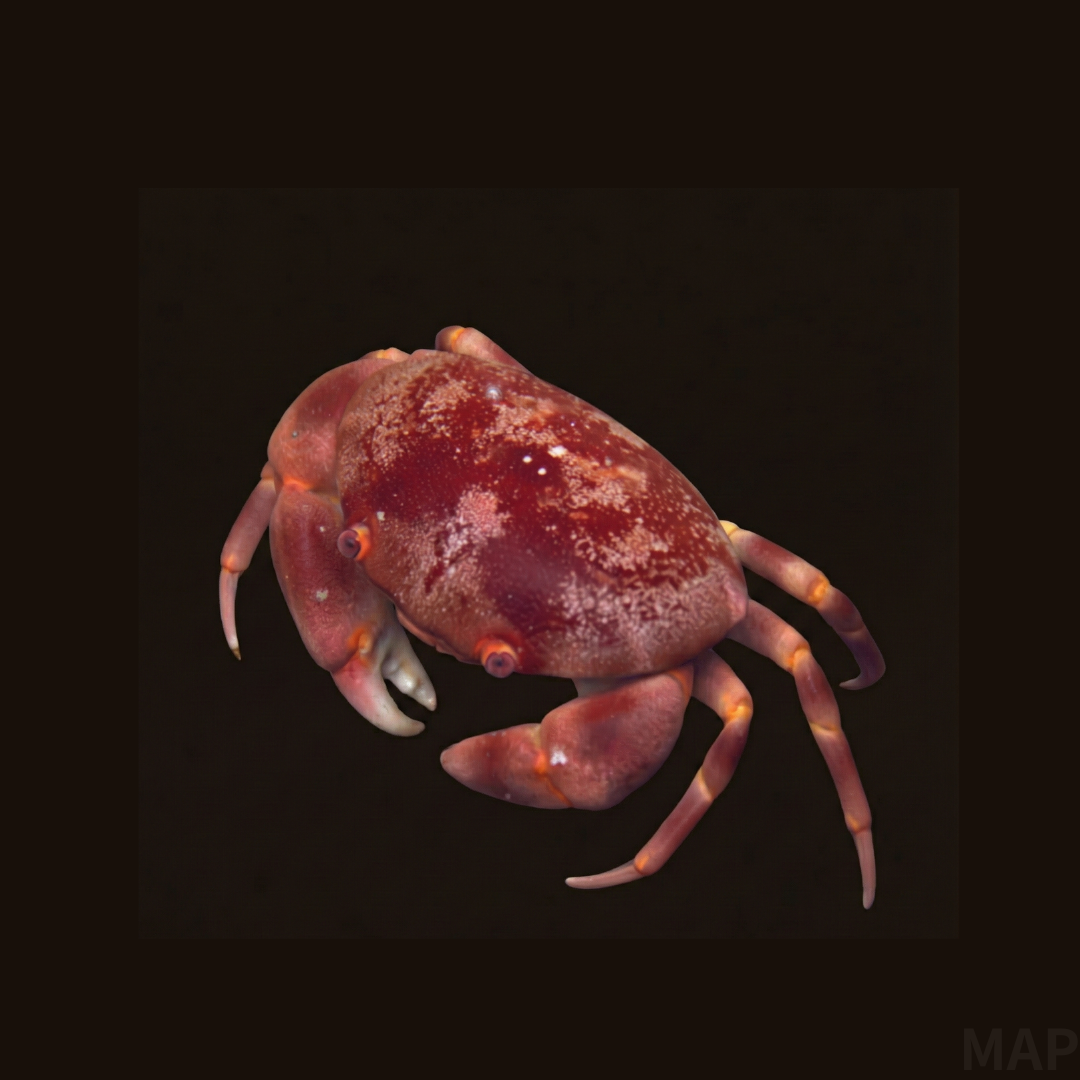
解説 / Description
ユウモンガニは、まるで磨き上げられた陶器のような滑らかな質感と、夕暮れの空に広がる雲のような赤褐色の斑紋が美しい大型のカニです。インド太平洋のサンゴ礁域に広く生息し、日本では沖縄周辺のほか、黒潮の影響を受ける和歌山や伊豆などの本州沿岸でも見られます。その最大の特徴は、学名の由来ともなった「ドーム状に隆起した(convex)」つるりとした甲羅です。ずんぐりとした愛嬌のある姿をしていますが、右側のハサミは貝殻を砕くために巨大化しており、その力は非常に強力です。また、体内にはフグ毒(テトロドトキシン)や麻痺性貝毒を蓄積している可能性があるため、絶対に食用にしてはいけません。観賞用としては非常に魅力的ですが、その力強さと毒性について正しい知識を持って接する必要がある生き物です。 The Convex Reef Crab is a large, beautiful crustacean known for its smooth, porcelain-like texture and reddish-brown marbled patterns resembling evening clouds. Widely distributed in the coral reefs of the Indo-Pacific, they can be found in Japan from Okinawa to the coasts of Honshu affected by the Kuroshio Current. Its most distinctive feature is the smooth, dome-shaped carapace, which gives it its scientific name “convexus.” Although it has a charming, stout appearance, its right claw is massively developed to crush shells, possessing immense power. Furthermore, it may accumulate lethal toxins such as tetrodotoxin or paralytic shellfish poison in its body, so it must strictly never be eaten. While attractive as an ornamental species, it requires proper knowledge regarding its strength and toxicity.
基本情報 / Basic Information
| 学名 / Scientific Name | Carpilius convexus |
|---|---|
| 通称 / Common Name | ユウモンガニConvex Reef Crab, Marbled Stone Crab |
| 分類 / Family | ユウモンガニ科(以前はオウギガニ科)Carpiliidae (formerly Xanthidae) |
| 英名 / English Name | Convex Reef Crab |
| 分布 / Distribution | インド太平洋全域(日本では沖縄、和歌山、伊豆半島など)Indo-Pacific (In Japan: Okinawa, Wakayama, Izu Peninsula, etc.) |
| 最大体長 / Max Size | 甲幅 8cm〜12cm(最大約15cm〜18cm)Carapace Width 8-12cm (Max approx. 15-18cm) |
| 寿命 / Lifespan | 数年以上(詳細は不明だが長期飼育例あり)Several years or more (Exact lifespan unknown, but long-lived) |
飼育環境 / Aquarium Environment
| 水槽サイズ / Tank Size | 60cm規格水槽以上(90cm以上のガラス水槽推奨)60cm standard tank or larger (90cm+ glass tank recommended) |
|---|---|
| 水温 / Temperature | 23 – 26℃ |
| 水質 / Water Quality | 海水(比重 1.023 – 1.025付近)Marine (Specific Gravity 1.023 – 1.025) |
| レイアウト / Layout | ライブロックやサンゴ岩で隠れ家を作る(崩れないよう固定必須)Live rock or coral rock caves (Must be secured to prevent collapse) |
| 注意点 / Precautions | 脱走の名人です。フタは重石やクリップで完全に固定してください。また、アクリル水槽はハサミで傷だらけになるため、ガラス水槽が推奨されます。Masters of escape. The lid must be securely weighted or clipped. Glass tanks are recommended as acrylic tanks will be heavily scratched by their claws. |
餌と給餌 / Feeding
| 餌の種類 / Diet | 肉食性。アサリ、オキアミ、イカ、魚の切り身など。Carnivorous. Clams, krill, squid, fish fillets, etc. |
|---|---|
| 給餌のポイント / Feeding Tips | 殻付きのアサリを与えることを推奨します。彼らが自慢のハサミを使って殻を割る行動は、本来の生態を引き出すだけでなく、ハサミの過度な伸びすぎを防ぐ効果も期待できます。Feeding clams with shells is recommended. The act of crushing shells with their claws not only stimulates their natural behavior but also helps prevent their claws from overgrowing. |
性格と混泳 / Temperament and Tank Mates
| 性格 / Temperament | 荒く、捕食性が強いです。特に夜間は活発に活動し、他の生物を襲うことがあります。Aggressive and predatory. Active mainly at night and may attack other tank inhabitants. |
|---|---|
| 混泳の相性 / Compatibility | 基本的に単独飼育が必須です。魚は寝込みを襲われて捕食され、貝類やウニ、エビも彼らの格好の餌となります。サンゴへの直接的な食害は少ないですが、力強く移動してなぎ倒してしまうことがあります。Solitary rearing is essentially mandatory. Fish may be eaten while sleeping, and snails, urchins, and shrimp are natural prey. While they rarely eat coral, they may physically damage or topple them while moving. |
病気と対策 / Diseases and Prevention
| かかりやすい病気 / Common Diseases | 特になし(非常に丈夫ですが、脱皮不全や物理的な怪我に注意)None specific (Very hardy, but beware of molting failure or physical injury) |
|---|---|
| 対策と予防 / Prevention | 適切な水質維持と、脱皮時の隠れ場所の確保が健康維持の鍵です。Maintaining water quality and providing hiding spots for molting are key to health. |
増やし方(繁殖) / Breeding
| 繁殖形態 / Reproduction | 卵生。幼生はプランクトン生活を送ります。Oviparous. Larvae go through a planktonic stage. |
|---|---|
| 繁殖のポイント / Breeding Tips | 水槽内での繁殖は極めて困難です。微細な幼生に適した餌の確保や環境管理が難しく、一般家庭での繁殖成功例はほとんどありません。Breeding in captivity is extremely difficult. Due to the challenge of feeding microscopic larvae, successful breeding in home aquariums is rare. |
雑学と豆知識 / Trivia and Fun Facts
| 1. 海の「金庫破り」 / 1. The Safe-cracker | 英語圏のアクアリストや研究者の間では、ユウモンガニを「金庫破り(The Safe-cracker)」と呼ぶことがあります。これは、左右非対称のハサミのうち、大きく発達した右側のハサミにある臼歯状の突起を使い、非常に硬い巻貝やカニの殻をまるで缶切りのようにこじ開けて中身を食べてしまう習性に由来します。彼らの前では、水槽内の貝類はひとたまりもありません。In English-speaking circles, this crab is sometimes called “The Safe-cracker.” This nickname comes from their ability to use the molar-like teeth on their massive right claw to pry open hard snail shells and crabs like a can opener. Snails in the tank don’t stand a chance against them. |
|---|---|
| 2. 決して食べてはいけない「毒ガニ」 / 2. WARNING: Toxic Crab | ユウモンガニを含む一部のサンゴ礁性カニ類は、食物連鎖を通じて体内にフグ毒(テトロドトキシン)や麻痺性貝毒(サキシトキシン)を蓄積している可能性があります。その毒性は個体や地域によって異なりますが、外見から判断することは不可能です。過去には近縁種で中毒事例も報告されており、公衆衛生の観点からも絶対に食用にしてはいけません。万が一死んでしまっても、調理などはせず適切に処分してください。Some reef crabs, including this species, may accumulate tetrodotoxin or paralytic shellfish poison through the food chain. Toxicity varies by individual and region, but cannot be judged by appearance. As there are risks of fatal poisoning, they must absolutely never be eaten. |
| 3. 「セブン-イレブン」との違い / 3. Not the “7-11 Crab” | 同属に非常によく似た「アカモンガニ」という種類がいます。アカモンガニは甲羅にはっきりとした丸い赤斑が並び、その数から海外では「セブン-イレブン・クラブ」というユニークな愛称で呼ばれます。一方、ユウモンガニの斑紋は雲のように不規則で境界が曖昧です。「夕暮れの雲(ユウモン)」と「明瞭な赤丸(アカモン)」で見分けることができます。A closely related species, Carpilius maculatus, looks very similar. It has distinct round red spots on its shell and is nicknamed the “7-11 Crab” due to the number of spots. In contrast, the Convex Reef Crab has irregular, cloud-like marbled patterns. |
まとめ / Conclusion
ユウモンガニは、そのつるりとした美しい甲羅と力強い姿で、一部の熱心なアクアリストを魅了してやみません。しかし、その強力なハサミは岩を動かし、同居人を傷つける可能性があり、脱走の名人でもあるため、飼育には頑丈な設備と細心の注意が必要です。 The Convex Reef Crab fascinates enthusiasts with its beautiful smooth shell and powerful presence. However, their powerful claws can move rocks and harm tank mates, and they are expert escapers, so keeping them requires sturdy equipment and careful attention.
そして最も重要なことは、彼らが「毒を持つ可能性がある」ということです。美しい外見の裏にあるリスクを正しく理解し、適切な距離感を持って飼育することこそが、このユニークな生き物と長く付き合うための秘訣と言えるでしょう。 Most importantly, remember that they may be toxic. Understanding the risks behind their beautiful appearance and maintaining a respectful distance is the key to a long-lasting relationship with this unique creature.

気になる道具や飼い方を見つけてみませんか?
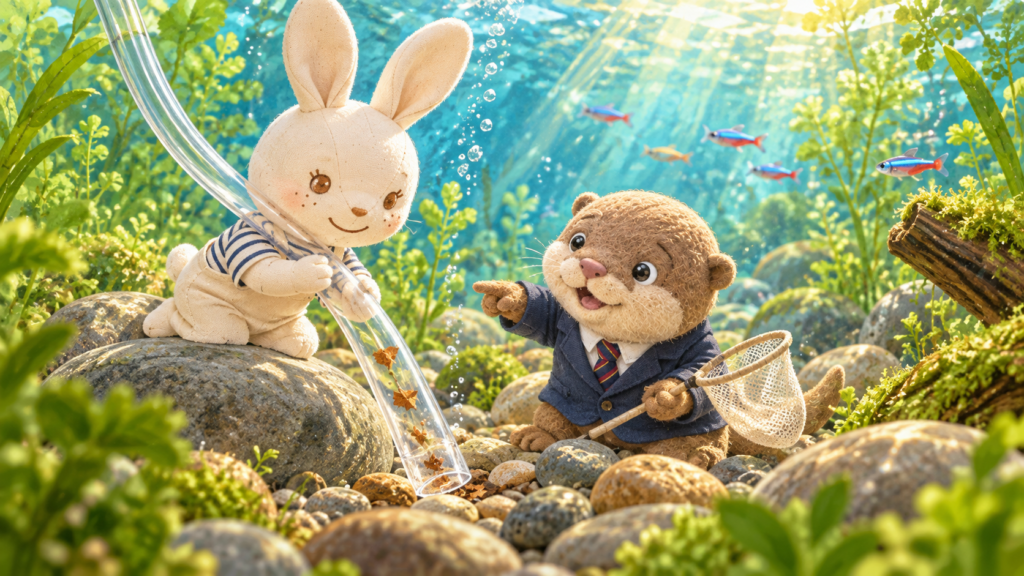 アイのアクアグッズ案内水換え・底砂掃除の道具の選び方|砂利・砂・ソイルに合うクリーナーとポンプ道具の特徴や使い方、選ぶときのポイントをアイが紹介します。記事はコチラ →
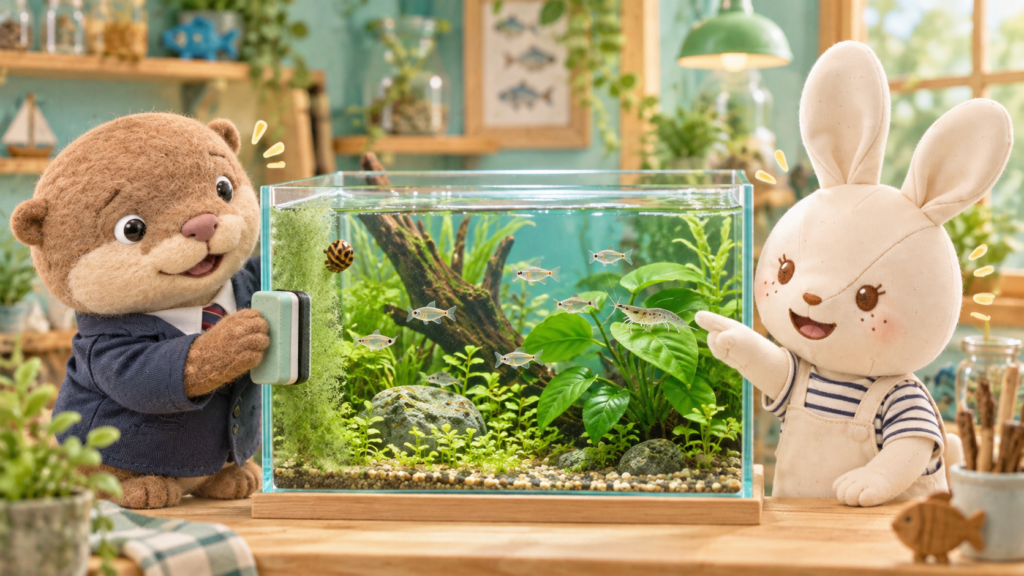 アイのアクアグッズ案内水槽のコケ掃除|道具の選び方とお掃除生体の得意・不得意道具の特徴や使い方、選ぶときのポイントをアイが紹介します。記事はコチラ →
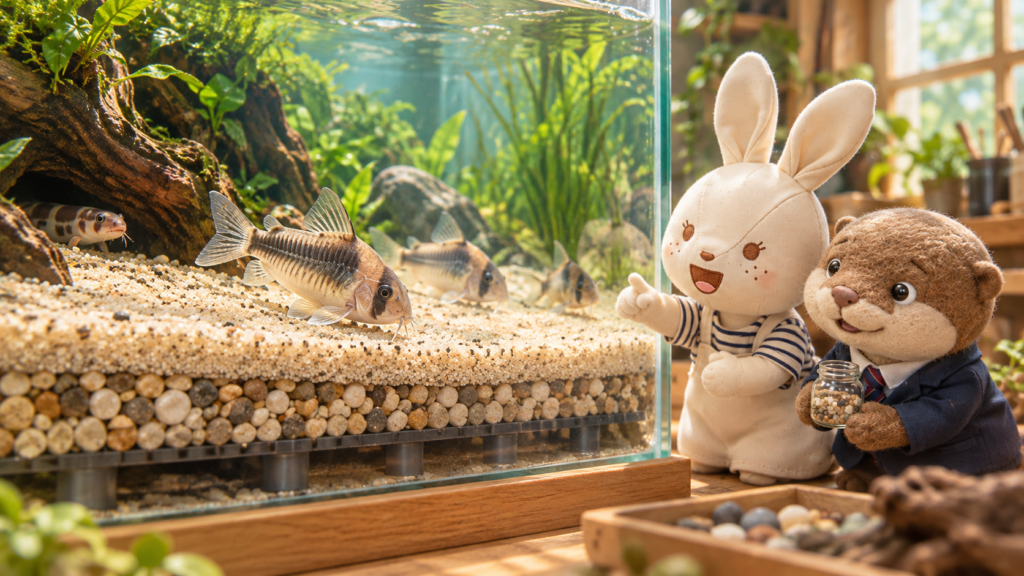 アイのアクアグッズ案内水槽の底砂の選び方|砂・砂利の違いとおすすめ商品道具の特徴や使い方、選ぶときのポイントをアイが紹介します。記事はコチラ →
 アイのアクアグッズ案内水草用ソイルの選び方|土・砂の違いとおすすめ商品道具の特徴や使い方、選ぶときのポイントをアイが紹介します。記事はコチラ →
さまざまな飼育テーマをご紹介。リンク先の記事には広告・商品紹介が含まれます。
案内・紹介記事一覧へ →分布マップ
ユウモンガニはインド太平洋全域に広く分布し、日本では沖縄、和歌山、伊豆半島などで見られます。この地図では、分布イメージを示すため沖縄周辺を概略代表地点として表示しています。
※この地点は分布欄の内容から作成した概略プロットです。実際の採集地点や厳密な生息範囲を示すものではありません。
参考文献・根拠資料
ユウモンガニ(Carpilius convexus)の記事内容のうち、分類、分布、生息環境、飼育条件の補助根拠、繁殖、毒性・注意点を支える資料に絞って選定しました。店舗、通販、個人ブログ、まとめサイトは含めていません。
-
DecaNet eds. (2026). Carpilius convexus (Forskål, 1775). World Register of Marine Species.
https://www.marinespecies.org/aphia.php?p=taxdetails&id=209150
対応箇所:学名、分類、Carpiliidae(ユウモンガニ科)、海産種であること、シノニム確認。 -
GBIF Secretariat. Carpilius convexus (Forskål, 1775). GBIF Backbone Taxonomy.
https://www.gbif.org/taxon/RFYP
対応箇所:受け入れられている種名、英名・和名、シノニム、分布確認のための生物多様性データベース。 -
Ocean Biodiversity Information System (OBIS). Carpilius convexus (Forskål, 1775).
https://obis.org/taxon/209150
対応箇所:海洋生物としての分類、分布・出現記録確認の補助資料。 -
Froese, R. and D. Pauly. Editors. SeaLifeBase: Carpilius convexus, Marbled stone crab.
https://sealifebase.org/summary/21379
対応箇所:インド太平洋の分布、最大甲幅、滑らかな甲羅と斑紋、サンゴ礁の石下・割れ目に潜む生息環境、底生肉食性、貝類・底生無脊椎動物を食べること、毒性・食用注意、推定適水温の補助根拠。 -
Ng, P. K. L. (1998). Crabs. In Carpenter, K. E. & Niem, V. H. (eds.), The Living Marine Resources of the Western Central Pacific, Volume 2. FAO Species Identification Guide for Fishery Purposes.
https://decapoda.nhm.org/pdfs/4113/4113.pdf
対応箇所:識別形質、甲羅の形状・色彩、最大甲幅15cm、サンゴ礁性、インド・西太平洋分布、アカモンガニとの識別。 -
鳥羽水族館 生きもの図鑑「ユウモンガニ」.
https://aquarium.co.jp/picturebook/carpilius-convexus.html
対応箇所:和名、学名、赤褐色の甲羅と淡い雲形斑、硬い丸い甲羅、日本での相模湾以南を含む分布の補助確認。 -
Qatar e-Nature. Carpilius convexus.
https://www.enature.qa/specie/carpilius-convexus/
対応箇所:岩礁・サンゴ礁、潮間帯下部から浅海域、割れ目や石下に潜む習性、底生肉食性、分布、毒性の可能性、生態情報が限られる点。 -
Clark, P. F., Ng, P. K. L., Noho, H. & Shokita, S. (2005). The first-stage zoeas of Carpilius convexus and Carpilius maculatus. Journal of Plankton Research, 27(2), 211–219.
https://doi.org/10.1093/plankt/fbh169
対応箇所:繁殖項目の「ゾエア幼生」「浮遊幼生段階」を裏付ける直接的な学術資料。 -
Yasumura, D., Oshima, Y., Yasumoto, T., Alcala, A. & Alcala, L. (1986). Tetrodotoxin and Paralytic Shellfish Toxins in Philippine Crabs. Agricultural and Biological Chemistry, 50(3), 593–598.
https://doi.org/10.1080/00021369.1986.10867447
対応箇所:サンゴ礁性カニ類におけるテトロドトキシンおよび麻痺性貝毒のリスク説明の補助根拠。 -
Perry, H. M. & Wallace, R. (1985). Blue crab shedding systems: water quality concerns. Mississippi-Alabama Sea Grant Consortium. FAO bibliographic record.
https://www.fao.org/4/ab712e/AB712E08.htm
対応箇所:閉鎖循環式の海水飼育で、脱皮成功・生存に関わる水質管理項目(溶存酸素、水温、塩分、pH、アンモニア、亜硝酸など)の補助根拠。ユウモンガニ専用資料ではないため、飼育条件・病気対策の一般補助資料として使用。
注記:水槽サイズ、フタ固定、ガラス水槽推奨、単独飼育などの実務的な飼育判断は、上記の「大型・強力な鉗脚をもつ底生肉食性のサンゴ礁性カニ」「脱皮時の水質・隠れ場所の重要性」という根拠から導く補足的記述です。ユウモンガニ専用の家庭水槽飼育論文として確認できる資料は限定的です。





コメント