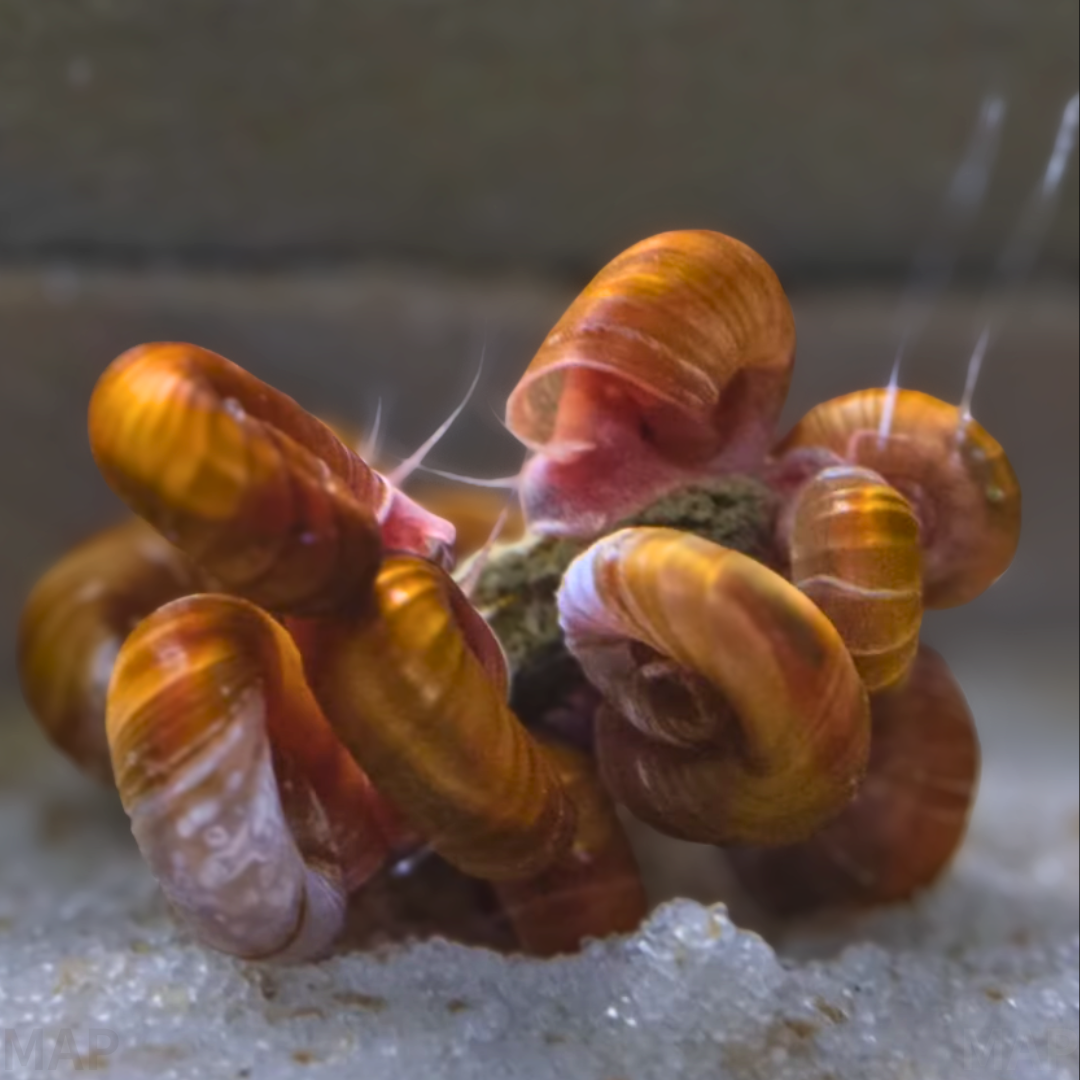
レッドラムズホーンは、北米フロリダ州を原産地とするヒラマキガイ科の淡水巻貝です。世界的に移入が進んでおり、一部で東南アジア原産と混同されることがありますが、本来は北米固有の種です。羊の角(ラムズホーン)を彷彿とさせる平面螺旋状の殻が特徴で、アクアリウムでは藻類や魚の残餌を処理するお掃除役として高く評価されています。生物学的な最大の特徴は、血液中に鉄ベースのヘモグロビンを持つことで、これにより低酸素環境への強い耐性を備えています。アルビノ個体では、透明な殻と組織を通してこの血液の赤色が透けて見えるため、鮮やかな色彩を放ちます。20世紀初頭の飼育技術の進展とともに熱帯魚水槽の定番となり、現代でもその実用性と美しさから広く愛されています。The Red Ramshorn Snail is a freshwater gastropod in the family Planorbidae, native to Florida, North America. Although sometimes mistakenly associated with Southeast Asia, it is an indigenous North American species that has become established globally. Named for its planispiral shell resembling a ram’s horn, it is highly valued as a utility snail for consuming algae and leftover food. Biologically, it is notable for possessing iron-based hemoglobin, allowing it to thrive in low-oxygen environments. In albino variants, the red color of the blood is visible through the translucent shell and tissues, resulting in its vibrant appearance. It became a staple in tropical aquariums following advancements in heating technology in the early 20th century.
北アメリカ大陸(フロリダ州原産)。現在は日本を含む世界各地に帰化。North America (Native to Florida); now naturalized globally, including Japan.
最大体長 / Max Size
約2.0cmから2.5cmApproximately 2.0cm to 2.5cm (0.8 to 1 inch).
寿命 / Lifespan
約1年から3年Approximately 1 to 3 years.
飼育環境 / Aquarium Environment
水槽サイズ / Tank Size
10リットル以上(30cm規格水槽など)。個体群の安定には20リットル以上が望ましい。10 liters or more (e.g., 30cm standard tank). 20+ liters preferred for stability.
水温 / Temperature
22度から28度22 to 28 degrees Celsius.
水質 / Water Quality
中性から弱アルカリ性(pH 7.0以上)。殻の健康維持にミネラル(カルシウム分)が必要です。Neutral to slightly alkaline (pH 7.0 or higher). Requires minerals for shell health.
レイアウト / Layout
水草、流木、石組み。底砂の種類は問いませんが、極端な酸性を招くソイルは避けるのが無難です。Planted, driftwood, or rockwork. Avoid soils that drastically lower pH.
注意点 / Precautions
酸性域では殻の表面が浸食され、白濁や穴あきが生じます。また、銅などの重金属や残留農薬に極めて敏感です。Acidic water erodes the shell surface. Highly sensitive to heavy metals like copper and pesticides.
餌と給餌 / Feeding
餌の種類 / Diet
付着藻類、魚の残餌、茹でた無農薬野菜、沈下性の人工飼料(カルシウム含有タイプ)。Biofilm, algae, leftovers, blanched organic vegetables, and sinking calcium wafers.
給餌のポイント / Feeding Tips
餌が多すぎると爆発的に繁殖するため、水槽内のバイオフィルムや残餌の量を見て調整してください。Adjust feeding based on available biofilm to prevent overpopulation.
性格と混泳 / Temperament and Tank Mates
性格 / Temperament
極めて温和。他の生体を攻撃することはありません。Extremely peaceful and harmless to tank mates.
混泳の相性 / Compatibility
多くの小型魚やエビ類と混泳可能です。フグ類や大型ローチ、キラースネールには捕食対象となります。Compatible with most small fish and shrimp. Vulnerable to puffers, loaches, and assassin snails.
病気と対策 / Diseases and Prevention
かかりやすい病気 / Common Diseases
殻の腐食(カルシウム不足による)、寄生虫の中間宿主。Shell erosion and acting as intermediate hosts for parasites.
対策と予防 / Prevention
pHを7.0以上に保ち、定期的な水換えでミネラルを補給します。導入時は信頼できるショップから購入してください。Maintain pH 7.0+ and replenish minerals through water changes. Source from reputable sellers.
増やし方(繁殖) / Breeding
雌雄の判別 / Sexing
雌雄同体。2個体がいれば交尾・繁殖が可能ですが、単独での繁殖例も報告されています。Hermaphroditic. Usually requires two for mating, but self-fertilization is possible.
繁殖形態 / Reproduction
卵生。強固なゼリー状の卵塊を平らな面に産み付けます。Egg-layer. Deposits tough, jelly-like egg capsules on flat surfaces.
繁殖のポイント / Breeding Tips
好適な水温と過剰な餌があれば容易に増えます。個体数を抑えたい場合は、残餌を徹底的に除去することが重要です。They multiply easily with warmth and excess food. Limit food to control numbers.
雑学と豆知識 / Trivia and Fun Facts
1. 生理学的な特異点:ヘモグロビンの保有1. Biological Uniqueness: Presence of Hemoglobin
多くの軟体動物が酸素運搬にヘモシアニン(銅ベース)を用いる中、ヒラマキガイ科はヘモグロビン(鉄ベース)を利用します。これは溶存酸素の少ない過酷な環境を生き抜くための進化的適応です。アルビノ個体において全身が赤く見えるのは、透明な組織を通してこの血液の色が直接視認されているためであり、着色料による色ではありません。Unlike most mollusks that use hemocyanin, this family uses hemoglobin for oxygen transport—an adaptation for low-oxygen habitats. Their red color in albino strains is the literal color of their blood showing through translucent skin.
2. 平面螺旋殻(プランニスパイラル)の構造2. The Planispiral Shell Structure
本種の殻は、螺旋が水平方向に巻いていく「平面螺旋」という特殊な形状をしています。一般的な巻貝のような頂点の突出がなく、この構造により狭い隙間や密集した水草の間を効率的に移動することが可能です。なお、殻の巻き方向の定義については解剖学的な視点により複雑な議論がありますが、外見上は円盤状に見えるのが最大の特徴です。The shell grows in a horizontal plane, a structure known as planispiral. This disc-like shape lacks the protruding spire found in most snails, allowing them to navigate through tight crevices and dense aquatic vegetation with ease.
3. アクアリウム史における種の交代3. Historical Shift in the Aquarium Hobby
20世紀初頭以前の室内飼育では、無加温が一般的だったため、冷水を好むヨーロッパ産の大型種が主流でした。しかし、オートヒーターの普及によって熱帯魚飼育が確立されると、高水温に強く適応力の高いフロリダ産のレッドラムズホーンがその地位を確立しました。技術の進歩が生態系の顔ぶれを変えた興味深い事例です。Prior to the early 20th century, unheated tanks dominated, favoring cold-water European species. As heaters became standard for tropical fish, the resilient, warm-water Florida strains established themselves as the hobby’s primary ramshorn species.
4. 日本国内における野外定着と生態学的責任4. Feral Populations and Ecological Responsibility
強健な本種は、日本各地の温排水が流れ込む水路や温暖な地域の水域で野外定着が報告されています。一度自然界へ逸出すると、在来の底生生物との競争を引き起こすなど、生態系へ不可逆的な影響を及ぼす恐れがあります。飼育者は「決して放流しない」という三原則を遵守し、卵を含めた排水管理を徹底する義務があります。Reported as established in Japan’s warmer waters, this resilient snail can disrupt native ecosystems. Owners must strictly adhere to the principle of never releasing pets and ensure proper disposal of tank water to prevent accidental escapes.
まとめ / Conclusion
レッドラムズホーンは、赤い血液を持つという生物学的な不思議さと、水槽の掃除屋としての機能性を兼ね備えた魅力的な生体です。北米原産である本種の特性を理解し、中性以上の水質とカルシウム補給を維持することで、その美しい色彩を長期間楽しむことができます。The Red Ramshorn Snail is a fascinating inhabitant, blending biological intrigue with functional utility. Understanding its North American origins and providing calcium-rich, neutral water ensures its health and vibrant coloration.
一方で、高い適応力と繁殖力は、飼育者の管理責任と表裏一体です。餌の量を適切にコントロールして個体群を維持し、万が一の際にも決して日本の自然環境へ放さないよう努めることが、持続可能なアクアリウム文化を守ることにつながります。Its resilience requires responsible ownership. By controlling feeding to manage the population and strictly preventing any release into the wild, we can enjoy this species while protecting our local ecosystems.
Wetherby, A. G. (1879)
“Notes on some new and little known North American freshwater Mollusca.”
Journal of the Cincinnati Society of Natural History. (Planorbella duryi の原記載文献)
Lieb, B., et al. (2006)
“Red blood with blue blood ancestry: Intriguing structure of a snail hemoglobin.”
Proceedings of the National Academy of Sciences (PNAS). (ヘモグロビンの構造と進化に関する研究)
Hirano, T., et al. (2023)
“First Record of the Feral Population of the Florida Ramshorn Snail, Planorbella duryi (Wetherby, 1879) (Gastropoda: Planorbidae) in Japan.”
American Malacological Bulletin. (日本国内における野外定着の最新報告事例)
Norton, C. G., et al. (2008)
“Inbreeding depression in the freshwater snail Planorbella trivolvis.”
Evolutionary Ecology Research. (ヒラマキガイ科の繁殖特性に関する知見)



 ポチップ
ポチップ

コメント