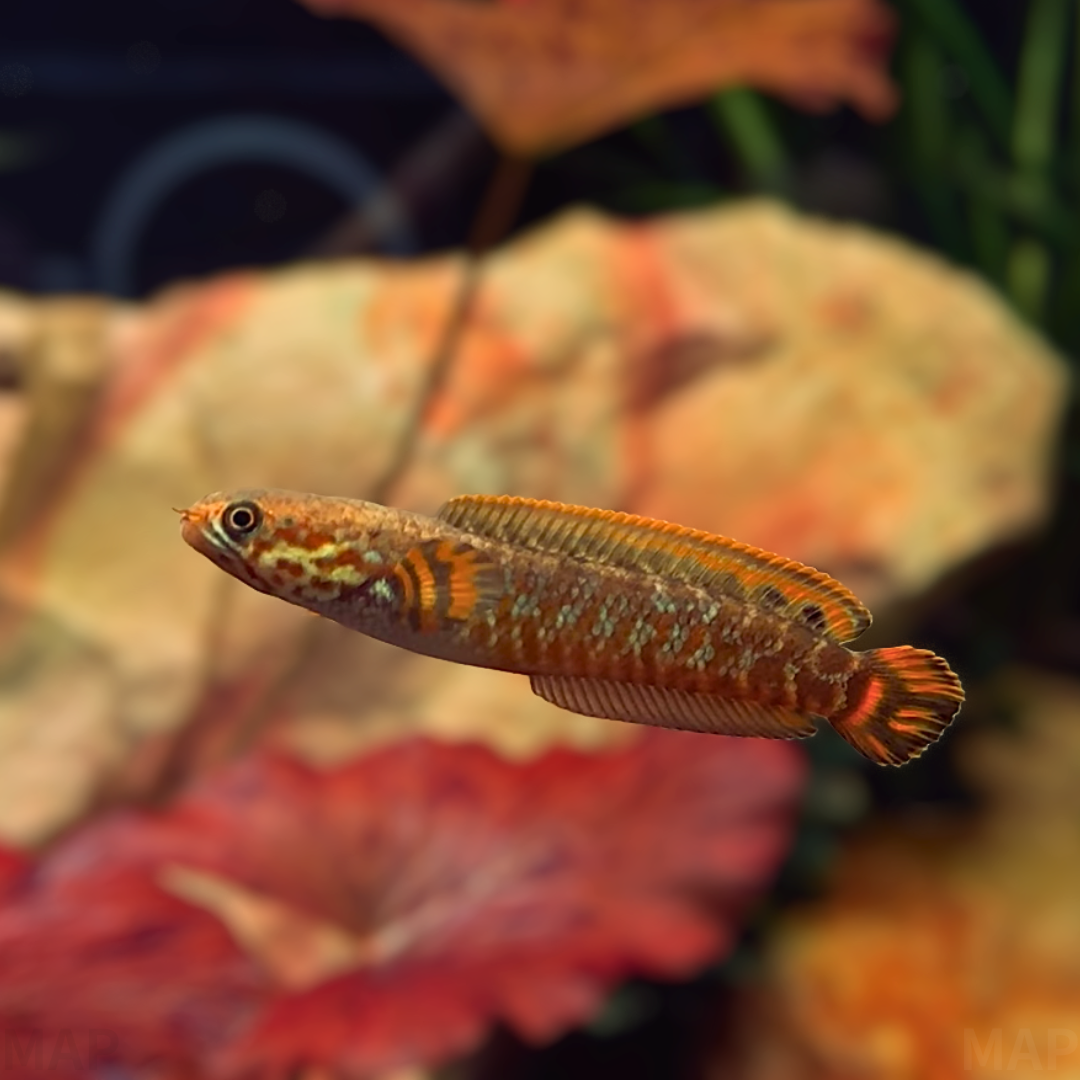
チャンナ・ブレヘリは、観賞魚の世界では「レインボースネークヘッド」の名で親しまれる、インド原産の小型スネークヘッドです。その名の通り、虹のように多彩な色彩を身に纏い、特にヒレを広げた際に現れる青やオレンジの鮮やかな模様は、多くのアクアリストを虜にしてきました。スネークヘッド特有の野性味溢れる顔つきと、小型種ならではの愛らしさを併せ持ち、人によく慣れる性格も相まって、ペットフィッシュとしての魅力が非常に高い魚種です。また、進化の過程で腹鰭を失った特異な形態や、空気呼吸を行うための迷宮器官など、生物学的にも非常に興味深い特徴を持っています。Channa bleheri, commonly known as the Rainbow Snakehead in the aquarium hobby, is a small snakehead species native to India. As the name suggests, it is adorned with a kaleidoscope of colors, with vibrant blue and orange patterns on its fins that have captivated aquarists worldwide. Combining a wild appearance characteristic of snakeheads with the charm of a smaller species, its personable nature makes it an excellent pet fish. Biologically, it possesses unique traits such as the absence of pelvic fins due to evolution and a labyrinth organ for air-breathing.
基本情報 / Basic Information
学名 / Scientific Name
Channa bleheri
通称 / Common Name
レインボースネークヘッドRainbow Snakehead
分類 / Family
タイワンドジョウ科(スネークヘッド科)Channidae
英名 / English Name
Rainbow Snakehead
分布 / Distribution
インド北東部(アッサム州、ブラマプトラ川水系)Northeastern India (Assam State, Brahmaputra River basin)
最大体長 / Max Size
約15cm 〜 25cm(飼育下では20cm前後が多い)Approx. 15cm – 25cm (commonly around 20cm in captivity)
寿命 / Lifespan
約5年 〜 8年程度Approx. 5 – 8 years
飼育環境 / Aquarium Environment
水槽サイズ / Tank Size
単独飼育であれば60cm規格水槽(約60リットル)から可能です。ペアや複数飼育、繁殖を目指す場合は90cm規格水槽(約160リットル)以上の広さが推奨されます。A 60cm standard tank (approx. 60L) is sufficient for a single specimen. For pairs or breeding groups, a 90cm standard tank (approx. 160L) or larger is recommended.
水温 / Temperature
通常時は20℃ 〜 26℃程度。ただし、繁殖や長期飼育のためには、冬季に15℃前後まで下げる「疑似クーリング」期間を設けることが重要です。Generally 20°C – 26°C. However, for breeding and long-term health, a “cooling” period around 15°C during winter is essential.
水質 / Water Quality
pH 5.5 〜 7.5(弱酸性から中性)を好みます。適応範囲は広いですが、極端な水質の変化は避けてください。Prefers pH 5.5 – 7.5 (slightly acidic to neutral). While adaptable, avoid extreme water quality fluctuations.
レイアウト / Layout
流木や石、水草(アマゾンソード等)を多用し、隠れ家を多く作ります。水面には浮草を浮かべ、必ず隙間のない蓋(重石付き)を設置してください。Provide plenty of hiding spots using driftwood, rocks, and aquatic plants. Use floating plants and ensure a tightly fitted lid with weights to prevent jumping.
注意点 / Precautions
ジャンプ力が非常に強く、僅かな隙間からも飛び出します。また、空気呼吸を行うため、水面と蓋の間に数センチの空気層を確保してください。Known for their jumping ability; secure any gaps in the lid. Ensure a space between the water surface and lid for air-breathing.
餌と給餌 / Feeding
餌の種類 / Diet
肉食性。冷凍アカムシ、コオロギなどの生餌を好みますが、慣れれば肉食魚用の人工飼料(ペレット)もよく食べます。Carnivorous. They prefer live or frozen foods like bloodworms and crickets but can be acclimated to high-protein sinking pellets.
給餌のポイント / Feeding Tips
非常に大食漢で餌をねだりますが、肥満になりやすいため注意が必要です。成魚には2〜3日に一度、控えめに与えるのが健康維持のコツです。They are greedy eaters but prone to obesity. For adults, feeding moderately every 2 to 3 days is ideal for their health.
性格と混泳 / Temperament and Tank Mates
性格 / Temperament
肉食魚としての荒々しさがありますが、スネークヘッドの中では比較的温和です。縄張り意識は強いため、同種間では注意が必要です。While showing predatory instincts, they are relatively peaceful for snakeheads. However, they are territorial, especially towards their own kind.
混泳の相性 / Compatibility
口に入るサイズの魚は捕食されます。他種との混泳は、同等以上のサイズで大人しい魚種に限られますが、基本的には単独またはペア飼育が推奨されます。Any fish small enough to fit in their mouth will be eaten. Mixing with other species is risky; single-species tanks or matched pairs are best.
病気と対策 / Diseases and Prevention
かかりやすい病気 / Common Diseases
輸入直後の野生個体は吸虫類(エラ吸虫等)などの内部・外部寄生虫を抱えていることが非常に多いです。また、水質悪化による肌荒れにも注意。Wild-caught specimens often carry internal and external parasites like trematodes. They are also susceptible to skin irritations from poor water quality.
対策と予防 / Prevention
導入時のトリートメント(駆虫)を徹底することが生存率を左右します。日頃のメンテナンスでは、定期的な換水と安定した水質維持を心がけてください。Thorough quarantine and deworming upon arrival are crucial for survival. Maintain stability with regular water changes and monitor their condition daily.
増やし方(繁殖) / Breeding
繁殖形態 / Reproduction
浮性卵を産み、水面で保護するタイプです。ペアで協力して卵と稚魚を外敵から守る、献身的な子育てを行います。They produce floating eggs protected at the surface. Both parents cooperate to guard the eggs and fry with dedicated care.
繁殖のポイント / Breeding Tips
冬季に水温を15℃前後まで下げる「クーリング」を経験させた後、春に水温を25℃以上に上げることで産卵が誘発されます。水流は極力弱く保ってください。Induced by a winter cooling period around 15°C, followed by a rise to 25°C+ in spring. Keep water flow minimal to prevent eggs from scattering.
雑学と豆知識 / Trivia and Fun Facts
1. 学名の由来とハイコ・ブレハー / 1. Origin of Name and Heiko Bleher
学名の「ブレヘリ(bleheri)」は、この魚を世界に紹介したドイツの著名な探検家、ハイコ・ブレハー氏に捧げられたものです。彼はインド北東部の旅の途中で、現地の人々が食料として泥の中から掘り出していたこの魚の美しさに気づき、観賞魚としての価値を見出しました。2025年にこの世を去った彼の功績は、この美しい魚の名を通じて今も語り継がれています。The specific epithet “bleheri” honors Heiko Bleher, a renowned German explorer who introduced this species to the world. During his travels in Northeast India, he noticed the beauty of this fish being dug out of the mud by locals for food. His legacy continues through the name of this stunning species.
2. 腹鰭を捨てた進化の形 / 2. Evolution Without Pelvic Fins
多くの魚にあるはずの「腹鰭」が、チャンナ・ブレヘリには存在しません。これは、泥地や狭い水脈を這うように移動する生活様式に適応した結果、邪魔になる鰭を退化させた「収斂進化」の例と考えられています。鰭を失うことで、複雑な地形でよりスムーズに活動できる能力を手に入れたのです。Unlike most fish, Channa bleheri lacks pelvic fins. This is considered an example of convergent evolution, where the fins were lost to adapt to moving through mud and narrow waterways. Losing these fins allowed for smoother navigation in complex environments.
3. 泥の中から現れる宝石 / 3. Jewels from the Mud
原産地では、乾季になると水が枯れ、泥沼化した過酷な環境になります。しかし、ブレヘリは空気呼吸を駆使して泥の中で生き延びることができます。ハイコ・ブレハーが目撃した「泥から掘り出されるシーン」は、まさにこの魚の驚異的な生命力を物語るエピソードと言えるでしょう。In their native habitat, the dry season brings harsh conditions where water disappears, leaving only mud. However, Bleheri survives by using its air-breathing ability within the mud. The story of them being “dug out” highlights their incredible resilience.
4. 日本の流通とカミハタの功績 / 4. Japanese Distribution and Kamihata’s Role
日本に届くブレヘリの多くは、インドからの直輸入便です。これを支えているのが、世界的な流通網を持つ神畑養魚(カミハタ)などの卸売業者です。カミハタはかつてハイコ・ブレハーと共にアマゾンの奥地へ遠征した歴史もあり、そうした国際的なパイプと確かな検疫技術が、遠いインドの地から美しい個体を日本の水槽へと届けています。Most Bleheri in Japan are direct imports from India, supported by wholesalers like Kamihata. With a history of expeditions alongside Heiko Bleher, their international network and quarantine expertise ensure healthy specimens reach Japanese aquarists.
5. 絶滅への懸念と「国内ブリード」の重要性 / 5. Conservation and Importance of Captive Breeding
現在、本種はIUCNレッドリストで「準絶滅危惧(NT)」に指定されています。生息地の破壊や乱獲が原因ですが、これを救う鍵は日本国内での繁殖(国内ブリード)にあります。国内で生まれた個体は日本の水質に慣れており、寄生虫のリスクも低いため、飼育しやすく野生個体の保護にも直結する、持続可能なアクアリウムへの第一歩となります。Currently listed as “Near Threatened” (NT) on the IUCN Red List due to habitat loss and over-harvesting. The key to conservation lies in captive breeding within Japan. Tank-bred specimens are hardier and parasite-free, representing a sustainable step forward for the hobby.
まとめ / Conclusion
チャンナ・ブレヘリは、単なる観賞魚という枠を超え、生命の神秘と歴史を教えてくれる素晴らしい存在です。その虹色の輝きを維持するためには、原産地の環境を想い、季節による温度変化や適切な給餌を心がける「対話」のような飼育が求められます。Channa bleheri is more than just an ornamental fish; it is a marvelous existence that teaches us about the mysteries of life and history. To maintain its iridescent glow, one must “converse” with the fish by mimicking its natural environment and seasonal changes.
あなたがこの虹色の宝石との生活を通じて、アクアリウムのさらなる深みと喜びを感じていただけることを願っています。正しい知識を持って接すれば、彼らはきっと期待以上の美しさと愛嬌で応えてくれるはずです。I hope that through living with this iridescent jewel, you will discover even deeper joy in the world of aquariums. If approached with the right knowledge, they will surely reward you with beauty and charm beyond expectation.
・
Vierke, J. (1991). Ein farbenprächtiger neuer Schlangenkopffisch aus Assam: Channa bleheri spec. nov. Das Aquarium, 25(259): 20-24. (新種記載文献)
・
Praveenraj, J., et al. (2018). Channa brunnea, a new species of snakehead (Teleostei: Channidae) from West Bengal, India. Zootaxa, 4471(2): 311-322. (系統分類および遺伝的距離に関する研究)
・
Britz, R. (2013). Channa andrao, a new species of dwarf snakehead from West Bengal, India. Zootaxa, 3731(2): 287-294. (近縁種との比較分析)
・
Prasad, G., et al. (2011). Reproductive biology and early development of the rainbow snakehead Channa bleheri from Assam, India. Cochin University of Science and Technology. (繁殖生態および初期発生に関する研究)
・
IUCN Red List of Threatened Species. (2010). Channa bleheri. (保全状況評価)
・
Bleher, H. (2019). Indian Ornamental Fishes Volume 1. (発見史および分布に関する記述)



 ポチップ
ポチップ



コメント