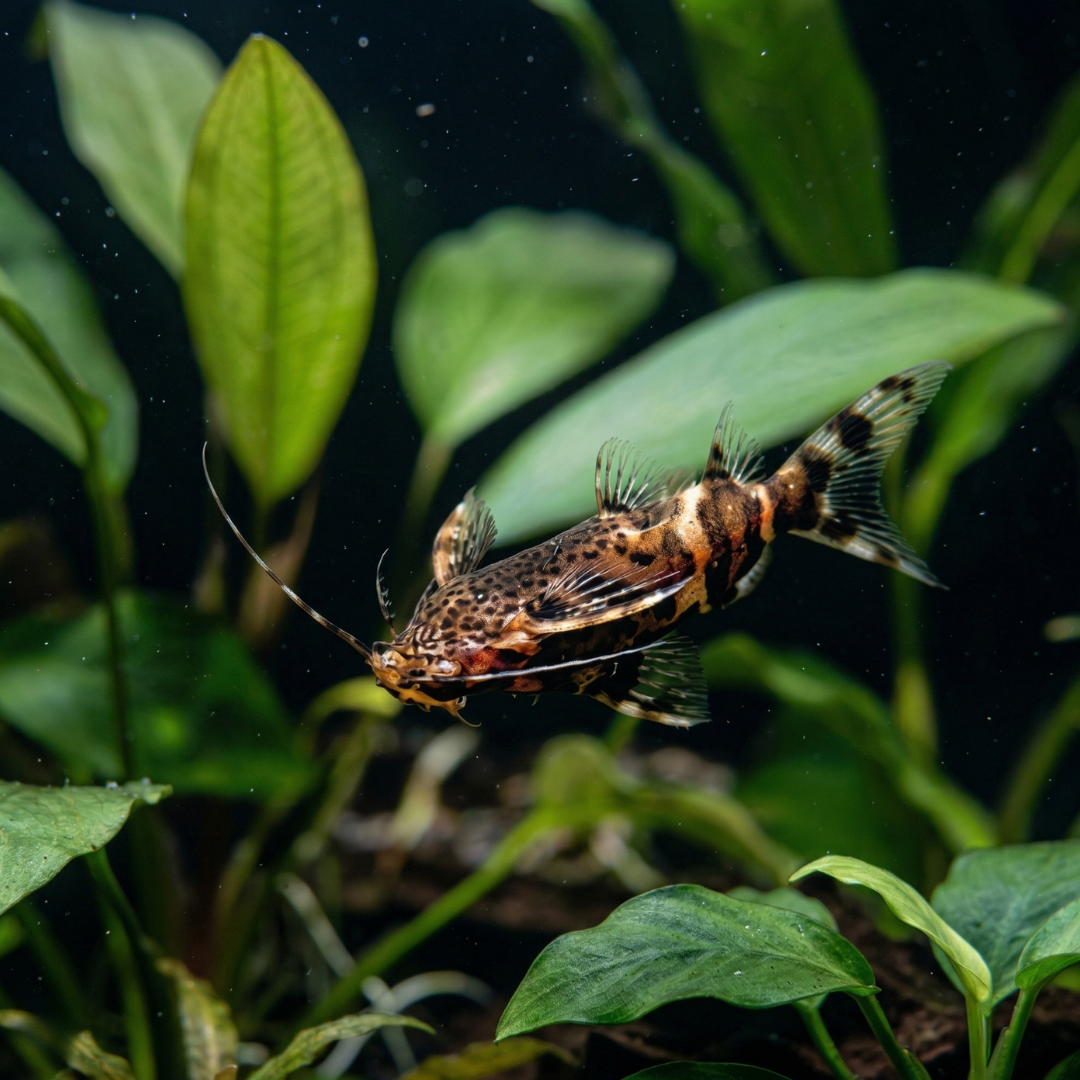
モコキエラ パイネイは、西アフリカのシエラレオネ共和国にのみ生息する、非常に珍しい小型のナマズです。サカサナマズ科に属していますが、本種だけでモコキエラ属を構成する一属一種の貴重な存在です。体にはクリーミーなベージュをベースとした美しい暗褐色の網目模様があり、その迷彩柄のような外見は多くのアクアリストを魅了しています。最大でも全長8cm程度と小型で、性格も非常に温和なため、コミュニティタンクでの飼育に最適です。時折、胸鰭を擦り合わせて「ジー」や「キュッ」と鳴くユニークな習性も持ち合わせています。Mochokiella paynei is an extremely rare small catfish endemic to the Republic of Sierra Leone in West Africa. Although it belongs to the Mochokidae family, it is a precious monotypic species that constitutes the genus Mochokiella by itself. It has a beautiful dark brown reticulate pattern on a creamy beige base, and its camouflage-like appearance fascinates many aquarists. It is small, reaching a maximum total length of about 8 cm, and its very gentle temperament makes it ideal for community tanks. It also has the unique habit of making a “gee” or “kyu” sound by rubbing its pectoral fins together.
シエラレオネ共和国(カセウェ森林保護区周辺の水系)Republic of Sierra Leone (Water systems around Kasewe Forest Reserve)
最大体長 / Max Size
約5cmから8cm程度(野生下では標準体長3.6cm)Approx. 5 cm to 8 cm (Standard length 3.6 cm in the wild)
寿命 / Lifespan
約3年から5年Approx. 3 to 5 years
飼育環境 / Aquarium Environment
水槽サイズ / Tank Size
45cm規格水槽(約30リットルから40リットル)以上。複数飼育なら60cm規格水槽(約57リットル)が推奨。45 cm standard tank (approx. 30-40 L) or larger. For group housing, a 60 cm standard tank (approx. 57 L) is recommended.
水温 / Temperature
22度から28度(最適は23度から25度)22 to 28 degrees Celsius (Optimal: 23-25 degrees Celsius)
水質 / Water Quality
弱酸性から中性(pH 5.0から7.5)、軟水から中硬水Slightly acidic to neutral (pH 5.0 to 7.5), soft to medium-hard water
レイアウト / Layout
流木や岩組み、シェルターを配置して隠れ家を多く作る。底砂はヒゲを傷めないパウダー状の砂が必須。Provide plenty of hiding spots with driftwood, rocks, and shelters. Fine, sandy substrate is essential to protect their barbels.
注意点 / Precautions
水質の急変や硝酸塩の蓄積に敏感です。また、角のある底砂はヒゲを損傷させ感染症の原因になるため避けてください。Sensitive to sudden water changes and nitrate accumulation. Avoid sharp substrates as they can damage barbels and lead to infections.
餌と給餌 / Feeding
餌の種類 / Diet
雑食性。沈下性の人工飼料(コリドラス用タブレットなど)、冷凍アカムシ、ブラインシュリンプ。Omnivorous. Sinking artificial food (tablets for Corydoras), frozen bloodworms, and brine shrimp.
給餌のポイント / Feeding Tips
夜行性の傾向があるため、消灯前や薄暗い時間帯に給餌すると確実に食べさせることができます。冷凍アカムシを特に好みます。As they are somewhat nocturnal, feeding just before the lights go out or during dim hours ensures they eat. They are particularly fond of frozen bloodworms.
性格と混泳 / Temperament and Tank Mates
性格 / Temperament
非常に温和で平和的。社会性があり、単独よりも複数匹のグループで飼育すると落ち着きます。Very peaceful and gentle. They are social and feel more secure when kept in groups rather than alone.
混泳の相性 / Compatibility
同サイズ程度の温和な小型魚(テトラ、シクリッド、コリドラスなど)と良好。極小のエビや稚魚は捕食の対象となる可能性があります。Excellent with peaceful small fish of similar size (tetras, cichlids, Corydoras). Tiny shrimp or fry may be considered prey.
病気と対策 / Diseases and Prevention
かかりやすい病気 / Common Diseases
白点病、尾腐れ病、ヒゲの細菌感染(カラムナリス症など)。Ich (white spot disease), fin rot, and bacterial infections of the barbels (Columnaris).
対策と予防 / Prevention
週に一度の部分換水で水質を維持し、底砂を清潔に保つことが最大の予防策です。導入時の水温変化にも注意が必要です。Maintaining water quality with weekly partial water changes and keeping the substrate clean are the best preventions. Be careful with temperature changes during introduction.
増やし方(繁殖) / Breeding
雌雄の判別 / Sexing
外見での判別は困難ですが、成熟したメスはオスに比べて腹部がふっくらと丸みを帯びます。Difficult to distinguish by appearance, but mature females have a plumper, rounder abdomen than males.
繁殖形態 / Reproduction
卵生。洞窟状の隙間に産卵するケーブスポウナーの性質を持つと推測されています。Oviparous. They are suspected to be cave spawners, laying eggs in crevices or cave-like environments.
繁殖のポイント / Breeding Tips
家庭水槽での繁殖例は極めて稀です。グループ飼育を行い、良好な水質と豊富な生餌(冷凍アカムシ等)を与えることでペア形成を促します。Breeding in home aquariums is extremely rare. Encourage pair formation by group housing and providing high-quality live or frozen food.
雑学と豆知識 / Trivia and Fun Facts
1. 発見者に捧げられた名前と歴史 / 1. A Name Dedicated to Its Discoverer
本種の学名「モコキエラ パイネイ」は、1980年に魚類学者ゴードン・J・ハウズによって記載されました。種小名の「paynei」は、シエラレオネの森林でこの魚を採集したイアン・A・ペイン博士に敬意を表して名付けられたものです。西アフリカの特定の地域にしかいない固有種であり、その希少性から「アフリカの宝石」のような存在として珍重されています。The scientific name “Mochokiella paynei” was described by ichthyologist Gordon J. Howes in 1980. The specific name “paynei” was given in honor of Dr. Ian A. Payne, who collected the fish in the forests of Sierra Leone. It is an endemic species found only in specific areas of West Africa and is prized as a “gem of Africa” due to its rarity.
2. おしゃべりなナマズ?音による会話 / 2. A Talkative Catfish? Vocal Communication
この仲間は英語で「スクイーカ―(鳴くもの)」と呼ばれます。モコキエラ パイネイも例外ではなく、胸鰭の棘条を肩帯に擦り合わせることで音を発することができます。これは単なる物理的な音ではなく、敵を威嚇したり仲間とコミュニケーションを取ったりするための高度な進化の結果です。夜静かな時に水槽から微かな音が聞こえたら、彼らがお喋りしているのかもしれません。These fish are called “Squeakers” in English. Mochokiella paynei is no exception and can produce sounds by rubbing its pectoral fin spines against its shoulder girdle. This is not just a physical sound but the result of advanced evolution for intimidating enemies or communicating with companions. If you hear a faint sound from the tank at night, they might be talking.
3. 「ギニア便」として届くシエラレオネの主 / 3. The Sierra Leonean Resident Arriving via “Guinea Shipment”
日本のアクアリウムショップでは本種が「ギニア産」として販売されることがよくあります。しかし、実際にはギニアの隣国シエラレオネの固有種です。これは、西アフリカの観賞魚輸出の拠点がギニアに集約されているため、輸送ルートの都合で便宜上「ギニア便」と一括りにされる日本の流通事情が生んだ面白いエピソードです。産地表記の裏側には、アフリカから日本へ届くまでの長い旅路の物語が隠されています。In Japanese aquarium shops, this species is often sold as being from “Guinea.” However, it is actually endemic to neighboring Sierra Leone. This is an interesting episode resulting from Japanese logistics, where fish are categorized as “Guinea shipments” for convenience because the export hub for West African ornamental fish is concentrated in Guinea. Behind the origin label lies the story of a long journey from Africa to Japan.
まとめ / Conclusion
モコキエラ パイネイは、その美しい迷彩模様と温和な性格、そして時折聞かせてくれる不思議な「声」など、飼育者に多くの発見と癒やしを与えてくれる素晴らしいナマズです。シエラレオネの限られた水系から届くこの小さな命は、アクアリウムの中に西アフリカの豊かな自然の息吹を運んできてくれます。Mochokiella paynei is a wonderful catfish that provides keepers with many discoveries and comfort through its beautiful camouflage pattern, gentle temperament, and occasional mysterious “voice.” This small life, arriving from the limited water systems of Sierra Leone, brings the breath of West Africa’s rich nature into the aquarium.
適切な水質管理と、彼らが安心して過ごせる隠れ家、そしてヒゲを傷つけない優しい底砂を用意してあげれば、日本の家庭でも長く付き合っていくことができます。希少な魚であるからこそ、一匹一匹を大切に育て、その魅力を存分に堪能してくださいね。If you provide proper water quality management, hiding spots where they can feel safe, and gentle substrate that does not damage their barbels, you can enjoy their company for a long time even in a Japanese home. Because it is a rare fish, please cherish each individual and fully enjoy its charm.
新種記載
Howes, G. J. (1980). A new genus and species of mochokid catfish from Sierra Leone. Bulletin of the British Museum (Natural History) Zoology, 38(3), 165-170.
モコキエラ属および本種の設立根拠となる原著論文です。
生態・音響
Pruzsinszky, J., & Ladich, F. (1998). Sound production and reproductive behaviour of the armored catfish Mochokiella paynei (Mochokidae). Environmental Biology of Fishes, 53(2), 183-191.
本種の摩擦音による発音メカニズムと繁殖行動を詳述した専門論文です。
保全状況
IUCN Red List of Threatened Species. Mochokiella paynei. (2019年評価版準拠)
国際自然保護連合による生息状況および絶滅リスクの評価データです。
実用情報(データベース・環境情報)
DB
FishBase. Species summary: Mochokiella paynei.
魚類学の世界的データベース。形態計測値および分布情報の裏付けとして参照しました。
DB
PlanetCatfish.com / Seriously Fish. Species Profile: Mochokiella paynei.
ナマズ専門家および愛好家による飼育環境・水質の二次情報資料です。
環境
Orange Sierra Leone / Ministry of Environment and Climate Change. Kasewe Forest Reserve Restoration Project (2024).
原産地の環境保全活動に関する行政・企業プレスリリースです。


 ポチップ
ポチップ




コメント