本種の最大の特徴は、体内に「褐虫藻(かっちゅうそう)」という微細な藻類を共生させていることです。彼らは動物でありながら、植物のように光合成を行い、その栄養を受け取ることで生きています。そのため、飼育には「餌」だけでなく、太陽の代わりとなる「十分な光」が不可欠です。日本近海にも生息しており、夏から初秋にかけて姿を見ることができますが、適切な環境を用意すれば自宅の水槽でその神秘的な生態を観察することができます。
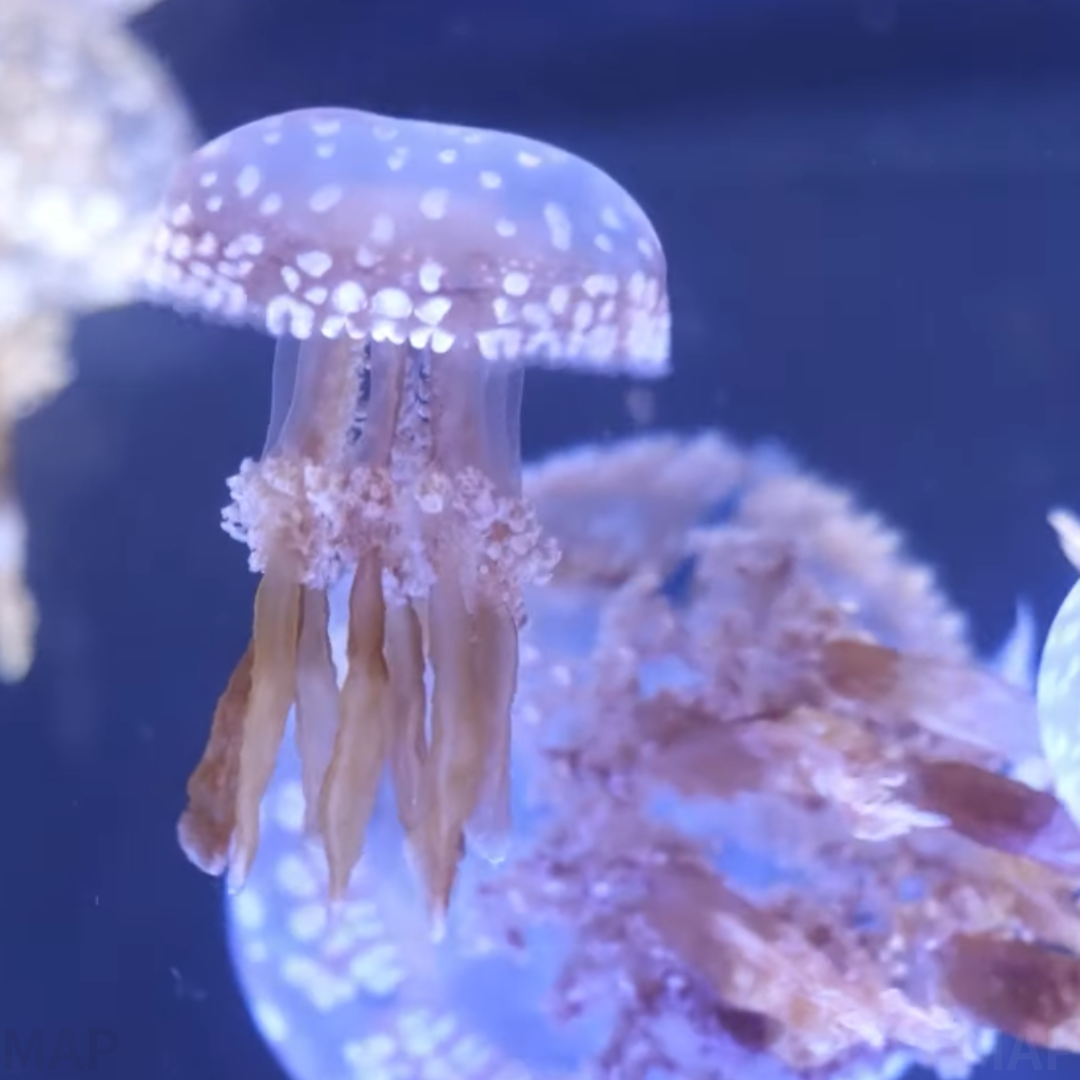
Mastigias papua, commonly known as the Spotted Lagoon Jellyfish, is an adorable floating jellyfish with a humorous, octopus-like appearance. Its hemispherical bell is scattered with cute white polka dots, and eight oral arms extend from beneath it. Its gentle, rhythmic pulsating swimming motion is highly soothing, making it extremely popular not only in aquariums but also among private aquarists.
The most distinctive feature of this species is its symbiotic relationship with microscopic algae called “zooxanthellae” within its body. Although they are animals, they live by photosynthesizing like plants and receiving nutrients from the algae. Therefore, in captivity, not only “food” but also “sufficient light” as a substitute for the sun is essential. They inhabit the waters near Japan and can be seen from summer to early autumn, but with the proper environment, their mysterious ecology can be observed in a home aquarium.
基本情報 / Basic Information
学名 / Scientific Name
Mastigias papua
通称 / Common Name
タコクラゲSpotted Lagoon Jellyfish, Mastigias Jelly
分類 / Family
根口クラゲ目 タコクラゲ科Rhizostomeae, Mastigiidae
英名 / English Name
Spotted Lagoon Jellyfish
分布 / Distribution
インド太平洋(日本では紀伊半島以南の温暖な海域)Indo-Pacific (In Japan: warm waters south of the Kii Peninsula)
最大体長 / Max Size
傘径 約5cm〜20cmBell diameter approx. 5cm – 20cm
寿命 / Lifespan
メデューサ(クラゲ)期は数ヶ月〜半年程度(ポリプは長期生存)Medusa stage: several months to half a year (Polyps live longer)
飼育環境 / Aquarium Environment
水槽サイズ / Tank Size
45cm規格水槽(約30L)以上推奨。水流を作るスペースが必要。45cm standard tank (approx. 30L) or larger recommended. Space for water flow is required.
水温 / Temperature
24〜28℃
水質 / Water Quality
海水(比重 1.020〜1.024)。清浄な水を好む。Marine water (Specific Gravity 1.020-1.024). Prefers clean water.
レイアウト / Layout
障害物は極力減らす。クラゲ専用水槽や、回転流を作れる円形・角丸水槽が理想的。Minimize obstacles. Jellyfish-specific tanks or tanks with rounded corners that create a rotating flow are ideal.
注意点 / Precautions
吸水口への張り付き事故が多いため、目の細かいスポンジでガードする。強い直射日光の代わりとなる高出力LEDライトが必要。Cover intakes with fine sponge to prevent suction accidents. High-output LED lights are needed to substitute for strong sunlight.
餌と給餌 / Feeding
餌の種類 / Diet
主に孵化直後のブラインシュリンプ幼生。光合成による栄養も必須。Mainly newly hatched brine shrimp nauplii. Nutrients from photosynthesis are also essential.
給餌のポイント / Feeding Tips
代謝が高いため、1日1〜2回たっぷりと与える。同時に1日8〜12時間、十分な光を当てて光合成を促すことが重要。Due to high metabolism, feed generously 1-2 times a day. It is also important to provide sufficient light for 8-12 hours a day to promote photosynthesis.
性格と混泳 / Temperament and Tank Mates
性格 / Temperament
非常に穏和。遊泳力はあるが水流には逆らえず、漂う性質が強い。Very peaceful. Although they can swim, they cannot swim against strong currents and tend to drift.
混泳の相性 / Compatibility
魚類には突かれるため、基本的に単独飼育が推奨される。同種のタコクラゲ同士であれば複数飼育が可能。Basically, single-species tanks are recommended as fish may nip at them. Multiple Spotted Lagoon Jellyfish can be kept together.
病気と対策 / Diseases and Prevention
かかりやすい病気 / Common Diseases
傘の変形・萎縮(栄養不足・光量不足)、水質悪化による体の溶解。Deformation or shrinking of the bell (malnutrition/insufficient light), dissolution of the body due to poor water quality.
対策と予防 / Prevention
サンゴ育成用などの強力なライトを使用し、餌を十分に与える。食べ残しで水が汚れないよう、強力な濾過とこまめなメンテナンスを行う。Use strong lights such as those for coral, and feed sufficiently. Ensure strong filtration and frequent maintenance to prevent water pollution from leftover food.
増やし方(繁殖) / Breeding
繁殖形態 / Reproduction
ポリプ世代(固着生活)とメデューサ世代(浮遊生活)を繰り返す。Alternates between polyp stage (sessile) and medusa stage (floating).
繁殖のポイント / Breeding Tips
ポリプを維持し、水温を25℃前後から18〜22℃まで下げる「冷却刺激」を与えることで、クラゲの赤ちゃん(エフィラ)が遊離する。Maintain polyps and apply “cooling stimulation” by lowering the temperature from around 25°C to 18-22°C to release baby jellyfish (ephyrae).
雑学と豆知識 / Trivia and Fun Facts
1. 「タコ」の由来と見えない口 / 1. Origin of the Name & Hidden Mouths
「タコクラゲ」という名前は、8本の口腕がタコの足のように見えることに由来します。しかし、タコとは決定的に違う点があります。それは「大きな口がない」ことです。彼らの口腕には目に見えないほどの小さな穴(吸口)が無数に開いており、そこからプランクトンを吸い込むようにして食べています。まるでストローでジュースを飲むかのような、不思議な食事スタイルを持っています。
The name “Tako Kurage” (Octopus Jellyfish) comes from its eight oral arms that look like octopus legs. However, they differ decisively from octopuses in that they lack a “large mouth.” Their oral arms are covered with countless microscopic holes (suctorial mouths), through which they suck in plankton. It is a mysterious eating style, much like drinking juice through a straw.
2. 植物と動物のハイブリッド / 2. Plant-Animal Hybrid
タコクラゲは、体内に「褐虫藻」という植物プランクトンを住まわせています。この褐虫藻が太陽光で光合成を行い、作り出した栄養(糖分など)を家賃としてタコクラゲに支払っているのです。タコクラゲの必要とするエネルギーの30〜60%はこの光合成で賄われていると言われています。そのため、彼らは光を求めて昼間に水面近くへ移動する日周運動を行うことがあります。
Spotted Lagoon Jellyfish host phytoplankton called “zooxanthellae” within their bodies. These algae photosynthesize in sunlight and pay “rent” to the jellyfish in the form of nutrients (sugars, etc.). It is said that 30-60% of the jellyfish’s energy needs are met by this photosynthesis. Therefore, they sometimes perform diurnal migration, moving near the water surface during the day in search of light.
3. パラオの湖に住む親戚たち / 3. Relatives in Palau’s Lakes
パラオ共和国の有名な「ジェリーフィッシュレイク」に住むゴールデンジェリーフィッシュは、かつてタコクラゲの亜種と考えられていました。しかし、1万年以上も湖に閉じ込められ外敵のいない環境で進化した結果、彼らは毒を退化させ、傘の水玉模様も消失し、独自の進化を遂げた別の種(Mastigias sp.)であることが分かってきました。一方、日本の海にいるタコクラゲは外洋型であり、可愛らしい水玉模様と、弱いながらも刺胞毒を持っています。
The Golden Jellyfish living in Palau’s famous “Jellyfish Lake” were once considered a subspecies of the Spotted Lagoon Jellyfish. However, having evolved in a lake isolated for over 10,000 years with no predators, they have lost their sting and the polka dots on their bells, revealing they are a distinct species (Mastigias sp.). On the other hand, the Spotted Lagoon Jellyfish in Japanese waters are of the oceanic type, possessing cute polka dots and a mild stinging capability.
4. 秋を告げる「冷却サイン」 / 4. The “Cooling Sign” of Autumn
日本の海では、タコクラゲは夏から秋にかけて姿を現します。では、それ以外の季節はどうしているのでしょうか?実は、岩などに付着した「ポリプ」というイソギンチャクのような姿で過ごしています。そして秋が近づき水温が20℃付近まで下がると、それを「冬が来る前の繁殖の合図」と捉え、ポリプが一斉に小さなクラゲ(エフィラ)を放出(ストロビレーション)します。この「温度低下」こそが、彼らの生命サイクルのスイッチとなっているのです。
In Japanese waters, these jellyfish appear from summer to autumn. What do they do in other seasons? They spend their time as “polyps,” looking like sea anemones attached to rocks. When autumn approaches and the water temperature drops to around 20°C, they take this as a “sign to breed before winter” and release tiny jellyfish (ephyrae) all at once. This “temperature drop” is the switch for their life cycle.
まとめ / Conclusion
タコクラゲは、そのユーモラスな動きと美しい姿で私たちを魅了するだけでなく、植物との共生という高度な生存戦略を持つ知的な生物です。飼育には適切な水流と十分な光が必要ですが、ゆらゆらと漂うその姿は、日常の喧騒を忘れさせてくれる極上の癒やしを与えてくれるでしょう。
The Spotted Lagoon Jellyfish not only fascinates us with its humorous movements and beautiful appearance but is also an intelligent creature with a sophisticated survival strategy of symbiosis with plants. Keeping them requires proper water flow and sufficient light, but their drifting presence offers a supreme healing experience that makes you forget the hustle and bustle of daily life.
日本国内でも季節になれば出会うことができる身近な存在でありながら、その生態には多くの不思議が詰まっています。もし飼育に挑戦する場合は、彼らが光合成できる環境を整え、小さな海を再現してあげてください。その小さな命の輝きは、あなたの水槽を幻想的な青い海へと変えてくれるはずです。
While they are familiar creatures that can be encountered seasonally in Japan, their ecology is full of wonders. If you decide to keep them, please provide an environment where they can photosynthesize and recreate a small ocean for them. The glow of their small lives will surely transform your aquarium into a fantastic blue sea.



 ポチップ
ポチップ
コメント