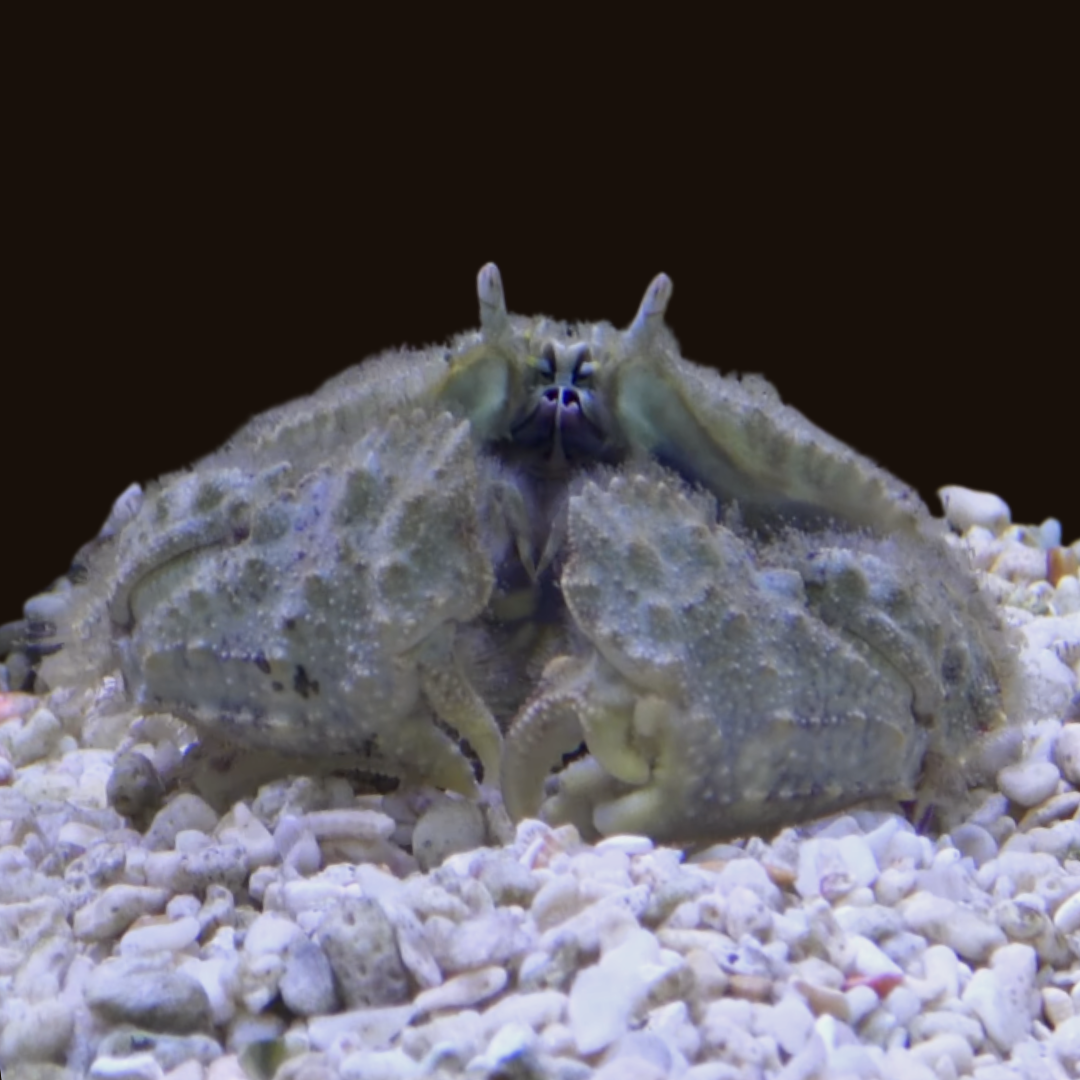
ソデカラッパは、丸みを帯びたドーム状の甲羅と、顔を隠すように折りたたまれた大きなハサミが特徴的な愛らしいカニです。その姿が恥ずかしがっているように見えることから、英語では「Shame-faced crab(恥ずかしがり屋のカニ)」とも呼ばれています。甲羅の表面はゴツゴツとした突起で覆われ、複雑な迷彩模様をしており、これは生息地であるサンゴ礁の砂礫底で見事な隠蔽効果を発揮します。彼らは単にかわいらしいだけでなく、右のハサミに強力な「缶切り」のような突起を持っており、硬い巻貝の殻をいとも簡単に割り砕いて食べてしまうという、驚くべき特技の持ち主でもあります。The Reef box crab (Calappa hepatica) is an adorable crab characterized by its rounded, dome-shaped carapace and large claws that fold neatly against its face. This posture gives it the appearance of hiding its face, earning it the name “Shame-faced crab.” The surface of its shell is rugged and covered in complex camouflage patterns, allowing it to blend perfectly into the sandy reef bottoms it inhabits. Beyond its cute appearance, it possesses a remarkable ability: a powerful “can-opener” like tooth on its right claw, which it uses to easily crack open hard snail shells for food.
基本情報 / Basic Information
学名 / Scientific Name
Calappa hepatica
通称 / Common Name
ソデカラッパReef box crab, Shame-faced crab
分類 / Family
カラッパ科 (Calappidae)Calappidae
英名 / English Name
Reef box crab, Shame-faced crab
分布 / Distribution
インド太平洋(日本国内では房総半島以南、特に南西諸島に多い)Indo-Pacific (In Japan: South of Boso Peninsula, common in the Ryukyu Islands)
最大体長 / Max Size
甲幅 4cm 〜 8cmCarapace width 4cm – 8cm
寿命 / Lifespan
5年 〜 10年程度Approx. 5 – 10 years
飼育環境 / Aquarium Environment
水槽サイズ / Tank Size
60cm規格水槽以上推奨(最低でも45cm水槽)60cm standard tank or larger recommended (Minimum 45cm tank)
パウダー状の細かいサンゴ砂を厚く敷く(5-10cm)ことが必須Must provide a deep layer (5-10cm) of fine coral sand.
注意点 / Precautions
砂に潜る習性があるため、粗い砂利は避けてください。肉食性で水を汚しやすいため、強力なろ過フィルターやプロテインスキマーの設置が望ましいです。Avoid coarse gravel as they burrow into the sand. Strong filtration and a protein skimmer are recommended due to their carnivorous diet which can foul the water.
アサリなどを殻付きで与えると、本来の行動である「殻割り」を観察でき、ハサミの摩耗(伸びすぎ防止)にも役立ちます。食べ残しは水質悪化の原因になるため、翌朝には必ず取り除いてください。Feeding clams with shells allows you to observe their natural shell-cracking behavior and helps keep their claws trim. Always remove uneaten food the next morning to prevent water pollution.
性格と混泳 / Temperament and Tank Mates
性格 / Temperament
セミ・アグレッシブ(やや攻撃的)。夜行性で、日中は砂に潜って目だけ出していることが多いです。Semi-aggressive. Nocturnal; often spends the day buried in sand with only eyes visible.
混泳の相性 / Compatibility
巻貝やヤドカリ、小型のエビ・カニは捕食対象となるため混泳できません。底で寝る魚(ハゼなど)も襲われるリスクがあります。中層〜上層を泳ぐスズメダイやクマノミなどとの混泳は比較的安全です。Cannot be kept with snails, hermit crabs, or small shrimp/crabs as they will be eaten. Bottom-dwelling fish are also at risk. Mid-to-top dwelling fish like Damselfish or Clownfish are relatively safe tank mates.
病気と対策 / Diseases and Prevention
かかりやすい病気 / Common Diseases
脱皮不全Molting failure
対策と予防 / Prevention
脱皮の兆候(食欲不振や砂に深く潜る行動)が見られたら、絶対に掘り返さず静観してください。カルシウム不足にならないよう、殻付きの餌を与えるのも有効です。If signs of molting appear (loss of appetite, deep burrowing), do not disturb them. Feeding shelled food helps prevent calcium deficiency.
増やし方(繁殖) / Breeding
繁殖形態 / Reproduction
ゾエア幼生として孵化し、メガロパ幼生を経てカニの姿になります。Hatches as zoea larvae, then metamorphoses into megalopa larvae before becoming a crab.
繁殖のポイント / Breeding Tips
水槽内での産卵はありますが、浮遊生活を送る幼生期(ゾエア)の育成が非常に難しく、一般的な飼育環境での繁殖サイクル確立は困難です。Spawning occurs in captivity, but raising the planktonic larvae (zoea) is extremely difficult, making breeding in a standard aquarium very challenging.
雑学と豆知識 / Trivia and Fun Facts
1. 学名の由来は「肝臓」? / 1. Origin of the Name
学名の種小名 hepatica は、ラテン語で「肝臓」を意味します。これは彼らの甲羅の独特な色や質感が、動物のレバー(肝臓)に似ていることに由来すると言われています。また、「カラッパ」という属名は、マレー語で「ココナッツ」を意味する言葉に関連しているという説があります。The species name “hepatica” comes from the Latin word for liver, likely due to the shell’s color and texture resembling liver. The genus name “Calappa” may be related to the Malay word for coconut.
2. 最強の「缶切り」を持つカニ / 2. The Ultimate Can-Opener
ソデカラッパの右のハサミには、根元に大きな突起があります。彼らはこれを「缶切り」のように使い、硬い巻貝の殻をパキパキと「剥く」ように割ることができます。数千万年にわたる巻貝との生存競争(軍拡競争)の末に手に入れた、進化の傑作とも言える武器です。The right claw features a large basal tooth used like a can-opener to peel open hard snail shells. This tool is an evolutionary masterpiece resulting from an arms race with gastropods over millions of years.
3. 砂の中での特殊な呼吸法 / 3. Breathing in the Sand
彼らは砂に完全に潜って生活するため、普通のカニのように足の根元から水を吸うとエラが砂で詰まってしまいます。そこで、ハサミを顔に押し当ててフィルター付きの隙間を作り、そこからきれいな水を取り込みます。吸った水は、口元の管から「噴水」のように上に向けて排出されます。To breathe while buried, they press their claws against their face to create a filtered intake for clean water. The used water is then ejected upwards like a fountain from tubes near their mouth.
4. 魚との意外な協力関係 / 4. Cooperation with Fish
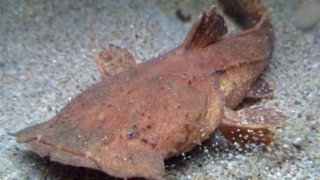
野生下では、ソデカラッパが砂を掘り返して餌を探す際、驚いて飛び出した小動物を狙って魚(モンダルマガレイなど)がついて回る様子が観察されています。カニは意図していませんが、結果的に他の魚の食事を助ける「生態系のエンジニア」としての役割も果たしているのです。In the wild, fish like flounders have been observed following foraging crabs to catch small animals disturbed by the digging. The crab acts as an unintentional “ecosystem engineer” for these followers.
まとめ / Conclusion
ソデカラッパは、ユニークな外見と、数千万年の進化が生み出した驚くべき生態を持つ魅力的なカニです。家庭の水槽でも、十分な厚さの細かいサンゴ砂と適切な餌を用意すれば、その愛らしい姿と野性味あふれる捕食行動の両方を楽しむことができます。The Reef box crab is a fascinating creature with a unique appearance and amazing adaptations honed over millions of years. With a deep sand bed and proper diet, you can enjoy both their adorable looks and wild feeding behaviors in your home aquarium.
「生きている缶切り」としてのハサミの力は強力ですので、指を挟まれないよう注意しつつ、この小さな「砂底のハンター」との生活を楽しんでみてはいかがでしょうか。Just be careful not to get your fingers pinched by their powerful “can-opener” claws, and enjoy life with this little “hunter of the sandy bottom.”





コメント