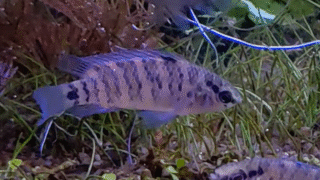
黄色い体に黒い縞模様が入る鮮烈な姿から、海外では「タイガーバーブ」の名で親しまれているコイ科の熱帯魚です。日本のアクアリウムブーム初期から知られる「丈夫・安価・美しい」の三拍子が揃った入門種ですが、実は非常に奥深い背景を持っています。活発に泳ぎ回る姿は水槽内を賑やかにしてくれますが、その元気良さゆえに他魚のヒレをかじってしまう「いたずらっ子」な一面も。しかし、適切な数で群泳させることでその魅力は真価を発揮し、水草水槽にダイナミックな景観を作り出します。Known as the “Tiger Barb” due to its striking yellow body and black stripes, the Sumatra Barb is a staple in the aquarium hobby. It has long been valued for being hardy, affordable, and beautiful. While they are energetic swimmers that liven up any tank, they are also known as “fin nippers” that may harass slower fish. However, when kept in a proper school, their aggression is dispersed, making them a dynamic and attractive addition to planted tanks.
基本情報 / Basic Information
学名 / Scientific Name
Puntigrus tetrazona (complex)
通称 / Common Name
スマトラ(スマトラ・バーブ)Sumatra Barb / Tiger Barb
分類 / Family
コイ科 プンティグルス属Cyprinidae (Genus: Puntigrus)
英名 / English Name
Tiger Barb
分布 / Distribution
東南アジア(スマトラ島、ボルネオ島など)Southeast Asia (Sumatra, Borneo, etc.)
最大体長 / Max Size
約 7cmApprox. 7cm
寿命 / Lifespan
3〜5年3 to 5 years
飼育環境 / Aquarium Environment
水槽サイズ / Tank Size
60cm規格水槽(約60L)以上推奨60cm Standard Tank (approx. 60L) or larger recommended
水温 / Temperature
24〜26℃ (20〜28℃)
水質 / Water Quality
弱酸性〜中性(pH 6.0〜8.0)Weakly acidic to Neutral (pH 6.0-8.0)
レイアウト / Layout
中央を遊泳スペースとして開け、周囲に水草や流木を配置して隠れ場所を作る。Keep the center open for swimming, and place plants or driftwood around the edges to create hiding spots.
注意点 / Precautions
運動量が多く酸素消費量が激しいため、ろ過能力には余裕を持たせること。飛び出し事故防止のため、水槽のフタは必須。Ensure strong filtration as they have high metabolism and oxygen consumption. A tank lid is essential to prevent jumping.
餌と給餌 / Feeding
餌の種類 / Diet
雑食性。人工飼料(フレークや顆粒)をよく食べる。色揚げ効果のある餌やブラインシュリンプなども好む。Omnivore. Readily accepts artificial feed (flakes or granules). Also enjoys color-enhancing foods and brine shrimp.
給餌のポイント / Feeding Tips
大食漢のため与えすぎに注意。1日2回、数分で食べきれる量を与える。赤みを強くしたい場合は、アスタキサンチンを含む飼料を補助的に与えると効果的。Avoid overfeeding as they are voracious eaters. Feed twice a day, only what they can finish in a few minutes. Use foods with astaxanthin to enhance their red coloration.
性格と混泳 / Temperament and Tank Mates
性格 / Temperament
非常に活発だが、他魚のヒレをかじる癖(フィン・ニッピング)がある。特に少数飼育だと攻撃性が他魚に向きやすい。Very active but prone to “fin nipping.” Aggression towards other fish tends to increase if kept in small numbers.
混泳の相性 / Compatibility
エンゼルフィッシュやグッピーなど、ヒレが長く動きが遅い魚との混泳は厳禁。解決策は「同種を5〜10匹以上で群泳させる」こと。群れ内での順位争いに集中し、他魚への関心が薄れる。ボティア類や動きの速いダニオ類とは相性が良い。Avoid long-finned, slow fish like Angelfish or Guppies. The solution is to keep a school of 5-10+ individuals. They will focus on social hierarchy within the group and bother others less. Compatible with Botias and fast-moving Danios.
病気と対策 / Diseases and Prevention
かかりやすい病気 / Common Diseases
白点病(水温変化時)、尾ぐされ病(水質悪化時)。Ich (White Spot Disease) and Columnaris (Fin Rot).
対策と予防 / Prevention
水温の急変を避けるためヒーターで管理する。古い水を嫌うため、定期的な換水と底砂掃除が最も効果的な予防策。Maintain stable temperature with a heater. Regular water changes and substrate cleaning are the best prevention, as they dislike old water.
増やし方(繁殖) / Breeding
繁殖形態 / Reproduction
ばら撒き型産卵。成熟したペア(オスは鼻先が赤くなる)が水草の茂みなどに卵を産み落とす。Egg scatterer. Mature pairs (males develop a red nose) scatter eggs among plant thickets.
繁殖のポイント / Breeding Tips
食卵する習性があるため、産卵後は親魚を直ちに隔離するか、鉢底ネットなどを敷いて卵を守る工夫が必要。稚魚にはインフゾリアや微細なパウダーフードを与える。They eat their own eggs. Remove parents immediately after spawning or use mesh to protect eggs. Feed fry with infusoria or micro-powder food.
雑学と豆知識 / Trivia and Fun Facts
1. 実は「スマトラ」ではない?流通個体の秘密1. The “Sumatra” Identity Crisis
一般に「スマトラ(学名:P. tetrazona)」として販売されている魚の多くは、実は近縁種の「アンキスポルス(P. anchisporus)」である可能性が高いと言われています。本物のP. tetrazonaは腹ビレが黒いのに対し、流通する多くの個体は腹ビレが鮮やかな赤色をしています。これは長年の養殖過程でボルネオ島原産のアンキスポルスが主流になった、あるいは交雑が進んだ結果と考えられています。Most fish sold as “Sumatra Barb (P. tetrazona)” are likely the related species “P. anchisporus.” While true P. tetrazona has black pelvic fins, most trade specimens have bright red ones. This suggests that the Borneo-native P. anchisporus or hybrids became dominant through years of farming.
2. 学名の変遷と「ゴミ箱」からの脱却2. Taxonomy: Escaping the “Trash Can”
かつてこの仲間は「プンティウス(Puntius)属」に含まれていましたが、この属は分類が難しいコイ科の小魚をとりあえず入れておく「ゴミ箱分類」の状態でした。2013年の研究で、虎縞模様を持つグループのために新属「プンティグルス(Puntigrus)」が設立されました。これはラテン語の「Puntius」と「Tigris(トラ)」を組み合わせた粋なネーミングです。Formerly classified in the genus “Puntius,” a “catch-all” group for difficult cyprinids. In 2013, the new genus “Puntigrus” was established for the tiger-striped group, cleverly combining “Puntius” and “Tigris” (Tiger).
3. 光るスマトラと日本の法律3. Glowing Fish and Legal Risks
海外では遺伝子組み換えにより蛍光色に光るスマトラ(GloFish)が開発されていますが、日本国内で未承認の遺伝子組換え生物を飼育・販売することは「カルタヘナ法」により禁止されています。美しいからといって安易に輸入したり購入したりしないよう、アクアリストとしての高いリテラシーが求められます。Genetically modified fluorescent “GloFish” exist abroad, but keeping or selling unapproved GMOs is prohibited in Japan under the “Cartagena Act.” Aquarists must be responsible and avoid importing or purchasing these regulated organisms.
まとめ / Conclusion
スマトラは、その美しさと「やんちゃ」な性格も含めて、多くのアクアリストに愛され続けてきた名魚です。単独ではトラブルメーカーになりがちですが、群れで泳がせることで、水槽内に躍動感あふれる素晴らしい景観を作り出してくれます。The Sumatra Barb is a classic fish loved for its beauty and “mischievous” personality. While they can be trouble-makers if kept alone, a school of them creates a dynamic and stunning display in the aquarium.
分類の不思議や歴史的背景を知ることで、小さな身体に秘められた野生のドラマを感じながら、飼育を楽しんでみてはいかがでしょうか。Understanding their taxonomic mysteries and history adds depth to the hobby, allowing you to appreciate the wild drama hidden within their small bodies.



 ポチップ
ポチップ

コメント