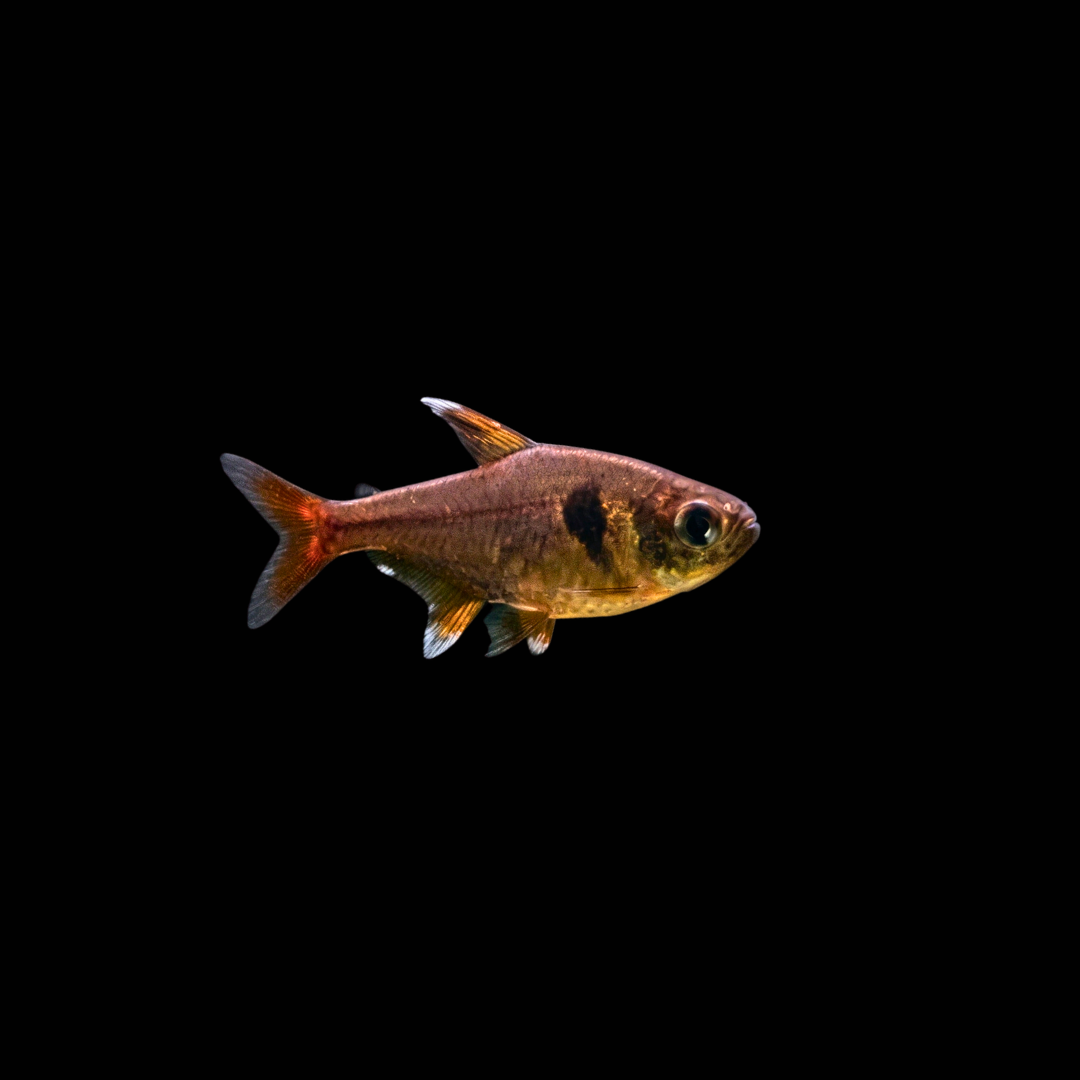
コーヒービーンテトラは、南米ブラジルのアマパー州を原産とする小型のカラシンです。その名の通り、体側の中心に位置する大きな黒い斑紋が「コーヒー豆」のように見えることからこの名がつきました。かつては野生個体の輸入が極めて稀で、愛好家の間では幻の珍カラシンとして知られていましたが、近年では東南アジアでの養殖が確立され、より身近な存在となりました。成熟したオスのヒレは鮮やかなオレンジ色に染まり、水草の緑に非常によく映える美しいコントラストを見せてくれます。The Coffee Bean Tetra is a small characin native to the state of Amapá, Brazil. As its name suggests, it features a prominent black oval spot on its flank that resembles a roasted coffee bean. Once considered a rare species available only as wild-caught individuals, it has become more accessible recently due to successful commercial breeding in Southeast Asia. Mature males develop vibrant orange fins, providing a stunning contrast against lush green aquatic plants.
ブラジル(アマパー州)、フランス領ギアナ(アラグアリ川、オヤポク川水系)Brazil (Amapá), French Guiana (Araguari and Oyapock River systems)
最大体長 / Max Size
約3.0から4.1センチメートルApprox. 3.0 to 4.1 cm
寿命 / Lifespan
約4年Approx. 4 years
飼育環境 / Aquarium Environment
水槽サイズ / Tank Size
50から80リットル以上(60cm規格水槽以上を推奨)50 to 80 liters or more (Recommended: 60cm standard tank)
水温 / Temperature
22から28度(24から26度が最適)22 to 28 degrees Celsius (24 to 26 degrees is optimal)
水質 / Water Quality
弱酸性から中性(pH 5.0から7.5)、軟水Slightly acidic to neutral (pH 5.0 to 7.5), soft water
レイアウト / Layout
流木やソイルを用い、水草を密植した落ち着いた環境。浮き草で光を和らげると良い。A calm environment with driftwood, soil, and densely planted aquatic plants. Floating plants help to dim the lighting.
注意点 / Precautions
強い光や激しい水流はストレスになります。本来の社会性を発揮させるため、10匹以上の群れで飼育しましょう。Strong light and intense currents can cause stress. It is best to keep them in a group of 10 or more to encourage natural social behavior.
1日2から3回、数分で食べ切れる量を与えます。栄養バランスを考え、人工飼料と生餌を組み合わせるのが理想的です。Feed 2 to 3 times a day in amounts they can finish within a few minutes. It is ideal to combine artificial and live foods for balanced nutrition.
性格と混泳 / Temperament and Tank Mates
性格 / Temperament
非常に温和で平和的。臆病な面があるため、隠れ家を用意してあげましょう。Very peaceful and calm. They can be shy, so providing hiding spots is essential.
混泳の相性 / Compatibility
他の小型カラシンやコリドラス、オトシンクルスなどと相性抜群。大型魚や肉食魚には食べられてしまうため厳禁です。Excellent compatibility with other small tetras, Corydoras, and Otocinclus. Avoid large or predatory fish as they may predate on them.
病気と対策 / Diseases and Prevention
かかりやすい病気 / Common Diseases
白点病、トリコディナ症(繊毛虫)、線虫感染などWhite spot disease (Ich), Trichodina, and nematode infections.
対策と予防 / Prevention
導入時の水合わせと検疫(トリートメント)を徹底。定期的な換水で水質を安定させ、ストレスを軽減することが最大の予防です。Ensure thorough water acclimation and quarantine upon introduction. Maintaining stable water quality through regular changes is the best prevention against stress-induced diseases.
増やし方(繁殖) / Breeding
雌雄の判別 / Sexing
オスはヒレがオレンジ色に強く発色し、メスは腹部がふっくらと丸みを帯びます。Males show vibrant orange fins, while females have rounder, fuller bellies.
繁殖形態 / Reproduction
卵生で、水草に卵を産み付ける「ばらまき型」です。親魚には食卵癖があるため注意が必要です。Oviparous egg-scatterers. Parents tend to eat their own eggs, so caution is required.
繁殖のポイント / Breeding Tips
低pHの軟水環境を整えた繁殖専用水槽を用意します。孵化後の稚魚は非常に小さいため、インフゾリアなどの微小な初期飼料が必須です。Prepare a dedicated breeding tank with low pH, soft water. As the fry are extremely small, they require microscopic first foods like Infusoria.
雑学と豆知識 / Trivia and Fun Facts
1. 日本人採集家への献名:ロベルト・タカセ氏の功績1. Honoring a Japanese Pioneer: The Legacy of Roberto Takase
種小名の「takasei」は、ブラジル・アマゾンで観賞魚採集の先駆者として活躍した日系移民、ロベルト・タカセ氏に由来します。彼は1961年にこの魚を発見し、学術的な研究のために標本を欧米の学者へと提供しました。日本の愛好家にとって、地球の裏側にあるアマゾンの魚に日本人の名前が刻まれていることは、非常に誇らしくロマンを感じさせるエピソードです。The specific name “takasei” honors Roberto Takase, a Japanese-Brazilian immigrant and pioneer in Amazonian ornamental fish collection. He discovered the species in 1961 and provided specimens to researchers. For Japanese hobbyists, having a countryman’s name associated with a fish from the distant Amazon adds a profound sense of pride and historical romance.
2. 「幻の珍カラ」から「定番種」へ2. From “Phantom Tetra” to “Aquarium Staple”
かつてコーヒービーンテトラは、ブラジル・アマパー州の限られた水系にしか生息しておらず、野生個体の入荷も極めて不安定でした。そのため、当時は一部のマニアだけが手にする「幻の珍カラ」という扱いでした。しかし、東南アジアでの養殖が成功したことで、現在は安定した供給が可能になり、多くのショップで見かけることができるようになりました。Historically, the Coffee Bean Tetra was a “phantom” species found only in specific river systems in Amapá, Brazil, with very irregular wild shipments. However, successful commercial breeding in Southeast Asia has stabilized the supply, transforming it from a rare collector’s item into a popular staple in the aquarium trade.
3. 似て非なる魚「スーパーコーヒービーン」3. The Look-alike: “Super Coffee Bean Tetra”
流通市場には「スーパーコーヒービーンテトラ」という名のよく似た魚が存在しますが、本種(H. takasei)とは別種として区別されます。大きな黒斑がある点は共通していますが、本種のオスに見られるような鮮やかなオレンジ色の発色や特有の模様が入らないといった違いがあります。購入の際は、その歴史と美しさを正しく理解して選ぶ楽しみがあります。A similar fish known as the “Super Coffee Bean Tetra” exists in the market but is considered a distinct species from H. takasei. While both share the large black spot, the Super version lacks the vibrant orange fin coloration seen in mature H. takasei males. Understanding these nuances is part of the joy for discerning aquarists.
まとめ / Conclusion
コーヒービーンテトラは、そのユニークな模様と温和な性格から、あらゆるレベルのアクアリストに推奨できる素晴らしい魚です。かつては入手困難だった「幻の魚」としての物語や、日系人採集家の情熱が詰まった背景を知ることで、水槽を泳ぐその姿はより一層愛おしく感じられることでしょう。With its unique markings and peaceful temperament, the Coffee Bean Tetra is a fantastic addition for aquarists of all levels. Knowing its history as a once-unattainable “phantom fish” and the passion of the Japanese-Brazilian collector behind its discovery makes watching them swim in your tank all the more special.
もしあなたが、アマゾンの歴史を感じながら、水草水槽に映えるアクセントを探しているなら、このコーヒービーンテトラは最高のパートナーになってくれるはずです。ぜひ、10匹程度の群れで、彼らが本来見せる自然な行動と美しいオレンジ色の発色を楽しんでみてください。If you are looking for an accent for your planted tank that carries a touch of Amazonian history, the Coffee Bean Tetra is an ideal partner. We highly recommend keeping them in a group of about ten to enjoy their natural behaviors and the magnificent orange coloration they display.
・
Gery, J. (1964). Two new tetras from the lower Amazon basin. Tropical Fish Hobbyist, vol. 12 (no. 7), pp. 41-45, 59-60.
・
Gery, J. (1977). Characoids of the world. T.F.H. Publications, Inc., Neptune City, N.J., 672 pp.
・
National Museum of Natural History, Smithsonian Institution. (2024). Fish Division Catalog Record (USNM 198138): Hyphessobrycon takasei.
・
Carvalho, F. R., and Malabarba, L. R. (2015). Reassessment and new combinations of species of Hyphessobrycon (Characiformes: Characidae). Zootaxa, 4021(3), 457-490.
・
Froese, R. and D. Pauly. Editors. (2024). FishBase. World Wide Web electronic publication. www.fishbase.org (Accessed: 2024-03).
・
Takase, R. (1961). Collection records from Serra do Navio, Amapa, Brazil. Manuscript, Roberto Takase Archive (Historical archive).
・
Pereira, J. C. S., et al. (2014). Parasitic fauna of Hyphessobrycon takasei and Hyphessobrycon amapaensis (Characidae), ornamental fish of the Amapa State, Brazil. Acta Scientiarum. Biological Sciences, 36(1), 115-121.


 ポチップ
ポチップ



コメント