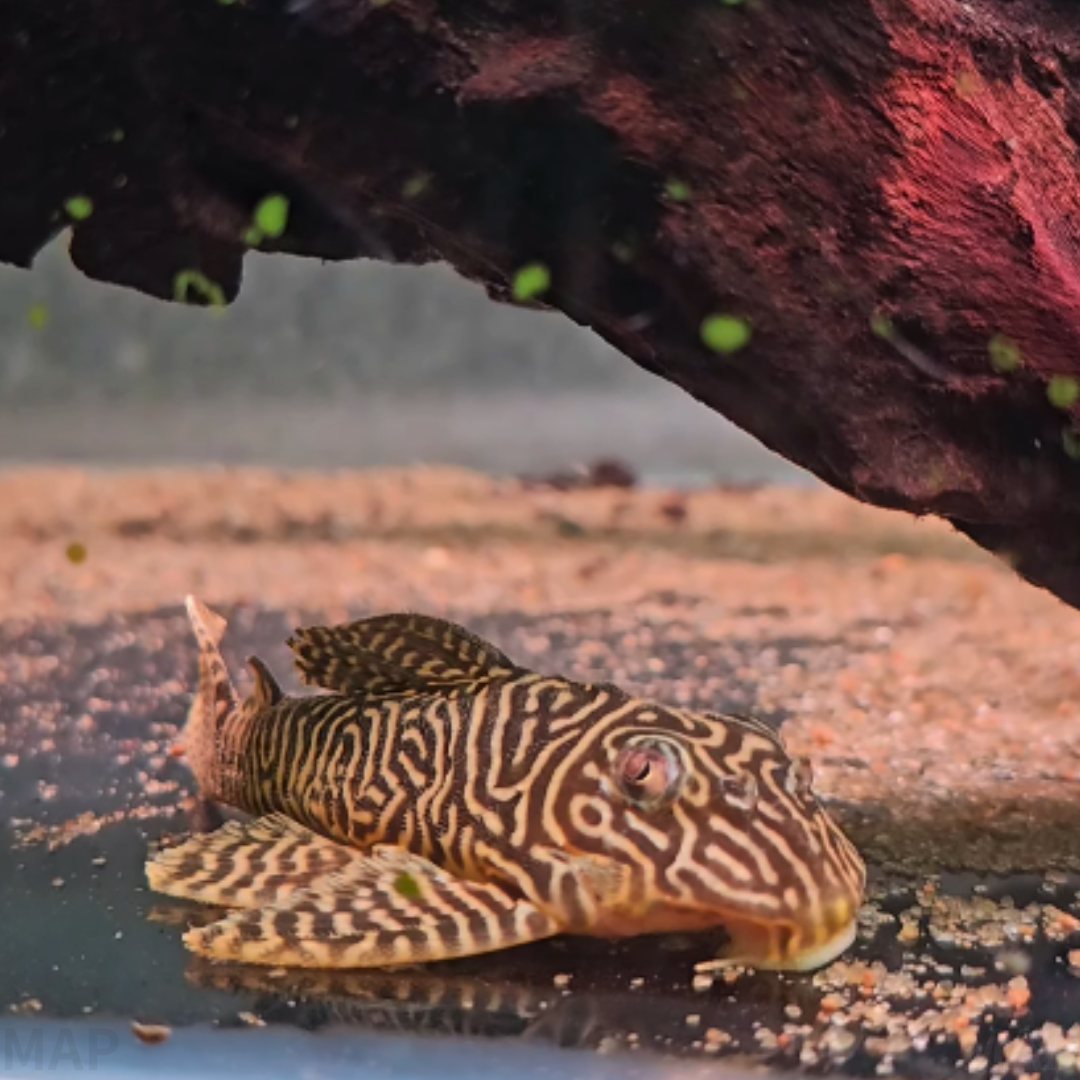
クィーンアラベスク・タイガープレコ(L260)は、ブラジルのタパジョス川下流域にのみ生息する非常に美しい小型のプレコです。その最大の特徴は、漆黒の体表に細かく張り巡らされた白銀の迷路模様であり、その芸術的な美しさから「アラベスク(唐草模様)」の名を冠しています。1990年代に紹介されて以来、その唯一無二の模様と扱いやすいサイズ感から、世界中のアクアリストを魅了し続けてきました。急流という過酷な環境に適応した彼らは、高い溶存酸素と清潔な水を好み、水槽内でもその独特な生態を観察することができます。The Queen Arabesque King Tiger Pleco (L260) is an exceptionally beautiful small pleco endemic to the lower Tapajós River in Brazil. Its most striking feature is the intricate network of silvery-white labyrinth patterns across a jet-black body, earning it the name “Arabesque” for its artistic elegance. Since its introduction in the 1990s, it has captivated aquarists worldwide with its unique patterning and manageable size. Adapted to harsh, fast-flowing environments, these fish thrive in clean water with high dissolved oxygen levels, offering a fascinating glimpse into their specialized ecology within the aquarium.
ブラジル:タパジョス川下流域(サンタレン周辺)Brazil: Lower Tapajós River (around Santarém)
最大体長 / Max Size
約8cm ~ 12cmApproximately 8cm to 12cm (3.1 to 4.7 inches)
寿命 / Lifespan
約5年 ~ 10年(飼育環境による)Approximately 5 to 10 years (depending on environment)
飼育環境 / Aquarium Environment
水槽サイズ / Tank Size
単独ないしペアなら60cm規格水槽(約60L)以上。繁殖コロニーを作る場合は90cm規格水槽(約155L)以上を推奨します。A 60cm standard tank (approx. 60L) for individuals or pairs. For breeding colonies, a 90cm standard tank (approx. 155L) or larger is recommended.
水温 / Temperature
26℃ ~ 30℃(プレコの中では比較的高温を好みます)26°C to 30°C (Preprefer relatively high temperatures among plecos)
水質 / Water Quality
pH 5.5 ~ 7.5(弱酸性から中性を維持し、アンモニアや亜硝酸は極力ゼロに保つ必要があります)pH 5.5 to 7.5 (Maintain slightly acidic to neutral water; ammonia and nitrite levels must be kept at zero)
レイアウト / Layout
丸みを帯びた川石や流木を配置し、多くの隠れ家を作ります。底砂は腹部を傷つけない細かい砂が適しています。強力なエアレーションや水流ポンプで、溶存酸素量を高めることが重要です。Arrange rounded river stones and driftwood to create numerous hiding spots. Fine sand is suitable as a substrate to prevent belly injuries. Increasing dissolved oxygen with strong aeration or powerheads is crucial.
注意点 / Precautions
水質の変化に敏感なため、週に一度の大規模な水換えが必要です。特に硝酸塩の蓄積には注意してください。Sensitive to water quality changes; requires large weekly water changes. Be particularly mindful of nitrate accumulation.
餌と給餌 / Feeding
餌の種類 / Diet
肉食傾向の強い雑食性です。沈下性の人工飼料に加え、冷凍アカムシやブラインシュリンプなどを好みます。Omnivorous with a strong carnivorous leaning. They prefer sinking pellets as well as frozen bloodworms and brine shrimp.
給餌のポイント / Feeding Tips
非常に臆病で夜行性のため、消灯直後の給餌が効果的です。輸入直後の痩せた個体には、消化の良い生のジャガイモのスライスを与えるリカバリー手法が知られています。Being very shy and nocturnal, feeding right after the lights go out is effective. For thin, newly imported individuals, providing raw potato slices is a known recovery technique to aid digestion and calorie intake.
性格と混泳 / Temperament and Tank Mates
性格 / Temperament
温和ですが非常に臆病です。オス同士では縄張り争いをすることがあります。Peaceful but very shy. Males may engage in territorial disputes.
混泳の相性 / Compatibility
他の小型魚との混泳は問題ありません。ただし、同属(ヒパンキストルス属)とは容易に交雑してしまうため、純血を守るためには他種プレコとの混泳は避けるべきです。Compatibility with other small fish is good. However, they easily hybridize with other Hypancistrus species, so keeping them with other plecos of the same genus should be avoided to preserve the pure bloodline.
病気と対策 / Diseases and Prevention
かかりやすい病気 / Common Diseases
白点病、エロモナス感染症、水質悪化による消化不良や突然死。Ich (white spot disease), Aeromonas infections, and sudden death or indigestion due to poor water quality.
対策と予防 / Prevention
導入時の水合わせを慎重に行い、高水温と高酸素状態を維持することで免疫力を高めます。底床を清潔に保つことが最大の予防策です。Carefully acclimatize them upon arrival and boost their immunity by maintaining high temperatures and oxygen levels. Keeping the substrate clean is the best preventive measure.
増やし方(繁殖) / Breeding
繁殖形態 / Reproduction
洞窟産卵型(ケーブスポウナー)です。オスが産卵筒の中で卵を保護し、新鮮な水を送り続けます。Cave spawners. The male protects the eggs inside a spawning cave and fans them with fresh water.
繁殖のポイント / Breeding Tips
水温の上昇や大量の水換えで「雨季の到来」を模倣することが産卵のトリガーとなります。成熟したオスはエラ蓋付近の棘(オドントード)が発達し、メスは腹部がふっくらとします。Triggering the “onset of the rainy season” through temperature increases and large water changes can stimulate spawning. Mature males develop prominent cheek spines (odontodes), while females appear rounder in the abdominal area.
雑学と豆知識 / Trivia and Fun Facts
1. 未だに「学名」を持たないミステリアスな存在 / 1. A Mysterious Entity Without a Formal Scientific Name
発見から30年近く経ち、これほど有名であるにもかかわらず、L260は未だに正式な新種記載がなされていない未記載種です。学名の代わりに「L260」というナンバーで呼ばれ続けている事実は、アマゾンの多様性がいかに膨大であるかを物語っています。Despite being discovered nearly 30 years ago and being world-famous, L260 remains an undescribed species without a formal scientific name. The fact that it is still referred to by its “L260” number highlights the sheer vastness of Amazonian biodiversity yet to be documented.
2. タパジョス川の危機と、水槽の中の「避難所」 / 2. The Tapajós Crisis and the Aquarium as a “Refuge”
彼らの故郷であるタパジョス川は、現在大規模なダム建設や水路開発、金採掘による水銀汚染という深刻な脅威にさらされています。野生個体群が絶滅の危機に瀕する中、アクアリウムにおける繁殖は、貴重な遺伝子資源を守る「域外保全」としての重要な役割を担い始めています。The Tapajós River, their home, is currently under severe threat from large-scale dam construction, waterway development, and mercury pollution from gold mining. As wild populations face extinction, aquarium breeding is taking on a vital role in “ex-situ conservation” to preserve precious genetic resources.
日本国内の熟練ブリーダーたちの間では、緊急時に稚魚を安全に取り出すため、人間の手で水中で崩すことができる特殊な陶器の産卵筒が考案されています。魚を傷つけずに収穫するためのこの細やかな配慮は、日本の観賞魚文化の成熟度を示す象徴的なエピソードです。Among experienced Japanese breeders, specialized ceramic spawning caves have been developed that can be crumbled by hand underwater in emergencies to safely remove fry. This meticulous care for harvesting without harming the fish is a symbolic example of the sophistication of Japan’s ornamental fish culture.
まとめ / Conclusion
クィーンアラベスク・タイガープレコは、単なる美しい観賞魚以上の存在です。漆黒に刻まれた銀のアラベスク模様は、アマゾンの急流が数千年の時をかけて作り上げた芸術品といえるでしょう。彼らを水槽に迎えることは、その背後にあるタパジョス川の壮大な生態系や地政学的な歴史に触れることを意味します。The Queen Arabesque King Tiger Pleco is more than just a beautiful ornamental fish. The silvery arabesque patterns etched onto its jet-black body are a piece of art crafted by the Amazonian rapids over millennia. Welcoming them into your tank means connecting with the magnificent ecosystem and geopolitical history of the Tapajós River.
適切な水質管理と深い愛情を持って接すれば、彼らはきっと水槽内で素晴らしい姿を見せ、次世代へと命を繋いでくれるはずです。この図鑑が、あなたとクィーンアラベスク・タイガープレコとの素晴らしい出会いの一助となれば幸いです。With proper water management and deep affection, they will surely thrive and continue the cycle of life within your aquarium. We hope this guide helps foster a wonderful connection between you and the magnificent Queen Arabesque Pleco.
1. L-Number System and Historical Records
DATZ (Die Aquarien- und Terrarienzeitschrift). 1996-1998 issues.
(Lナンバーシステムの創設およびL260の初紹介に関するドイツの専門誌)
2. Taxonomic Background of Hypancistrus
Isbrücker, I. J. H. and H. Nijssen. (1991).
“Hypancistrus zebra, a new genus and species of uniquely pigmented ancistrine loricariid catfish from the Rio Xingu, Brazil.”
(ヒパンキストルス属の設立および分類学的定義に関する原著論文)
3. International Biodiversity Database
PlanetCatfish.com. “Hypancistrus sp. (L260) Species Profile.”
(世界最大級のナマズ目専門データベースによる生態・飼育情報)
4. Brazilian Export Regulations (IBAMA)
Instituto Brasileiro do Meio Ambiente e dos Recursos Naturais Renováveis (IBAMA).
“Portaria MMA No. 445/2014” & “Decree No. 12,600/2025.”
(ブラジル政府による観賞魚輸出ポジティブリストおよび絶滅危惧種保護に関する法令)
5. Environmental and Geopolitical Reports
International Labour Organization (ILO). “Convention No. 169 Compliance Reports regarding Tapajós Waterway Development.”
(タパジョス川の開発に伴う先住民族の権利および環境負荷に関する報告書)



 ポチップ
ポチップ



コメント