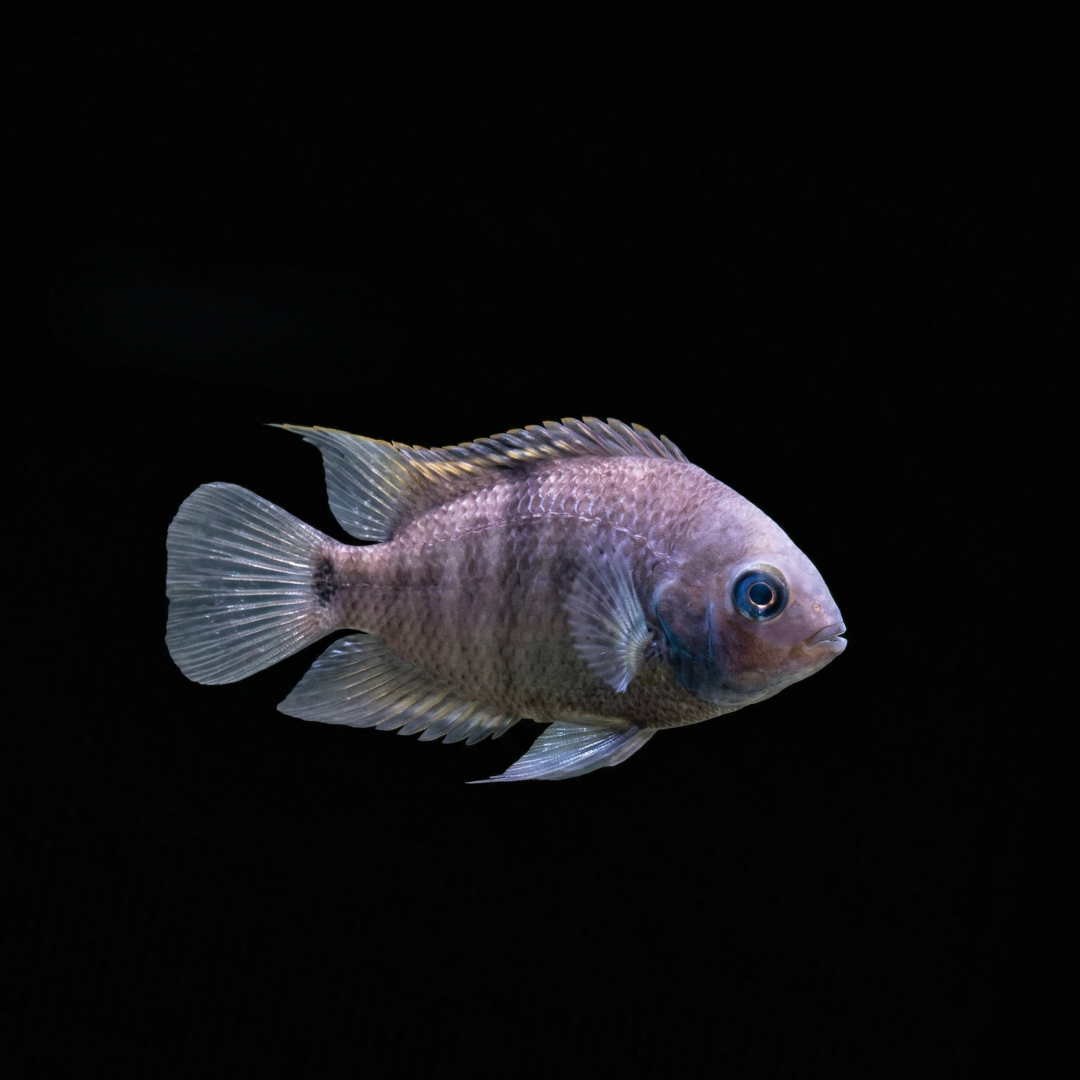
アマティトラニア・サジカは、コスタリカの太平洋側斜面に固有の、美しく知的な中型シクリッドです。英名の「Tバー・シクリッド」という名称は、体側面に現れる垂直バンドと水平のラインが交差し、アルファベットの「T」の字に見えることに由来します。その最大の魅力は、コスタリカン・ブルーアイド・シクリッドとも呼ばれる吸い込まれるような青い瞳と、繁殖期に見せる劇的な色彩の変化にあります。特に雌が発情期に背鰭と臀鰭を鮮やかな黄金色に染め上げる姿は、アクアリストの目を楽しませてくれます。中米産シクリッドの中では比較的温和な性格を持ち、日本の住宅事情に適した60センチメートルから90センチメートルの規格水槽で終生飼育が可能な、まさに日本の愛好家にとって理想的なシクリッドといえるでしょう。Amatitlania sajica is a beautiful and intelligent medium-sized cichlid endemic to the Pacific slope of Costa Rica. The common name “T-Bar Cichlid” comes from the dark horizontal and vertical bands on its side that intersect to form a “T” shape. Its primary attractions include its captivating blue eyes, earning it the name “Costa Rican Blue-eyed Cichlid,” and the dramatic color changes seen during breeding. Females, in particular, display a stunning metallic golden-yellow on their dorsal and anal fins when ready to spawn. Compared to other Central American cichlids, they are relatively peaceful and can be kept for their entire lifespan in 60cm to 90cm tanks, making them an ideal choice for aquarists.
約5年から8年以上(適切な飼育下ではさらに長寿になることがあります)Approx. 5 to 8+ years under proper care.
飼育環境 / Aquarium Environment
水槽サイズ / Tank Size
60cm規格水槽(約65リットル)から飼育可能ですが、混泳や繁殖を考慮すると90cm規格水槽(約110リットル以上)が推奨されます。Can be kept in a 60cm standard tank (approx. 65L), but a 90cm standard tank (approx. 110L or more) is recommended for community settings or breeding.
水温 / Temperature
23度から30度(推奨:25度前後)23 to 30 degrees Celsius (Recommended: around 25C)
水質 / Water Quality
pH 6.5から8.0(中性から弱アルカリ性の軟水から中硬水)。日本の水道水はカルキ抜きのみで適合しやすいです。pH 6.5 to 8.0 (neutral to slightly alkaline, soft to medium hard water). Japanese tap water is generally suitable after dechlorination.
レイアウト / Layout
底砂には細かめの砂利や川砂を用い、流木や平らな石、植木鉢などで隠れ家を多く作ります。水草は根を掘り返されるため、流木に活着させたアヌビアスなどが適しています。Use fine gravel or river sand. Provide many hiding spots with driftwood, flat stones, or clay pots. Use hardy plants like Anubias attached to wood, as they may dig up rooted plants.
注意点 / Precautions
底砂を口で運び出し、地形を造り替える「土木作業」を行う習性があるため、岩などの重いレイアウト材は底面に直接置くなど、崩落対策をしてください。They have a habit of digging and rearranging the substrate; ensure heavy rocks are placed securely to prevent collapse.
餌と給餌 / Feeding
餌の種類 / Diet
雑食性。人工飼料(ペレット、フレーク)によく慣れます。冷凍赤虫やブラインシュリンプ、時折植物性の餌(スピルリナ配合飼料など)も与えると健康的です。Omnivorous. They readily accept pellets and flakes. Supplement with frozen bloodworms, brine shrimp, and occasional plant-based foods for optimal health.
給餌のポイント / Feeding Tips
1日2回、数分で食べ切れる量を与えます。底付近で活動することが多いため、沈下性の餌を混ぜてあげるとスムーズに摂食できます。Feed twice daily in amounts they can consume within a few minutes. Sinking pellets are effective as they often feed near the bottom.
性格と混泳 / Temperament and Tank Mates
性格 / Temperament
シクリッドの中では比較的温和ですが、確固たる縄張り意識を持っています。特に繁殖期は非常に攻撃的になり、ペアで巣の周辺を強力に防衛します。Relatively peaceful for a cichlid but territorial. They become highly aggressive during breeding, fiercely defending their nesting site as a pair.
混泳の相性 / Compatibility
非繁殖期であれば、同程度のサイズで丈夫な魚(メチニスやソードテール、中型コリドラスなど)との混泳が可能です。近縁なコンヴィクト・シクリッドとは交雑の危険があるため避けてください。Possible with similarly sized, hardy fish (e.g., Silver Dollars, Swordtails, medium Corydoras) during non-breeding periods. Avoid keeping with Convict Cichlids to prevent hybridization.
病気と対策 / Diseases and Prevention
かかりやすい病気 / Common Diseases
白点病、水カビ病、エラ病など。Ich, Water Mold, and Gill Flukes.
対策と予防 / Prevention
週に一度、水量の3割程度の定期的な換水が最も効果的な予防です。導入時には水合わせを慎重に行い、新しい個体を入れる際はストレスを最小限に抑えましょう。Regular weekly water changes of 30 percent are the best prevention. Careful acclimation of new fish and minimizing stress are key to maintaining health.
増やし方(繁殖) / Breeding
雌雄の判別 / Sexing
雄は雌より一回り大きく、背鰭と臀鰭が長く伸長します。雌は繁殖期になると背鰭と臀鰭が鮮やかな黄金色に輝くため、判別は容易です。Males are larger with elongated fin tips. Females are easily identified by the brilliant golden-yellow color on their dorsal and anal fins during breeding.
繁殖形態 / Reproduction
洞窟産卵型。石の隙間や植木鉢の内部などに卵を産み付け、孵化後は親魚が稚魚を熱心に保護します。Cave spawners. They lay eggs in crevices or inside pots; both parents provide intensive care for the fry after hatching.
繁殖のポイント / Breeding Tips
5、6匹の幼魚から育てると自然にペアが形成されます。稚魚が自由遊泳を始めたら、孵化したてのブラインシュリンプなどをスポイトで群れに与えると生存率が向上します。Letting a group of 5-6 juveniles grow up together is the best way to form a natural pair. Once fry are free-swimming, offer freshly hatched brine shrimp to ensure high survival rates.
雑学と豆知識 / Trivia and Fun Facts
1. 学名に刻まれた「友情」の物語 / 1. A Story of Friendship in the Scientific Name
種小名のサジカ(sajica)は、実はラテン語の単語ではなく、ある人物の名前を組み合わせた頭字語です。この魚の命名者であるブッシング博士が、コスタリカでの調査を支えてくれた友人サルバドール・ヒメネス・カノッサ氏への敬意を込め、氏の名前から2文字ずつ(Salvador, Jiménez, Canossa)を抽出して「sajica」と名付けたのです。科学的な名称の中に、このような個人的な感謝の物語が隠されているのは、分類学の世界でも非常に心温まるエピソードといえます。The specific name “sajica” is not a Latin word but an acronym for Salvador Jiménez Canossa. Dr. Bussing, who described the species, named it in honor of his friend who supported his field research in Costa Rica. By combining the first two letters of his friend’s first name, father’s surname, and mother’s surname (Sa-Ji-Ca), Bussing immortalized their friendship in the annals of science.
2. 献身的な子育てと「シクリッド・ミルク」 / 2. Dedicated Parenting and “Cichlid Milk”
サジカの繁殖行動で最も驚くべき点は、親魚が自分の体から分泌される粘液を稚魚に与える行動が確認されていることです。ディスカスほど顕著ではありませんが、稚魚は親の体表をついばむようにして栄養豊富な粘液を摂取し、初期の成長を促進させます。また、親魚はヒレを小刻みに動かす「フィン・フリッキング」という視覚合図で稚魚を一斉に底に伏せさせるなど、高度なコミュニケーションを行いながら外敵から子を守り抜きます。One of the most remarkable aspects of Sajica breeding is that parents have been observed providing dermal mucus to their fry. While less famous than in Discus, the fry nibble on the parents’ skin to consume nutrient-rich mucus, boosting early growth. Additionally, parents use “fin flicking” as a visual signal to tell fry to hunker down when danger approaches, demonstrating highly sophisticated communication.
3. 絶滅の危機にある「野生の輝き」 / 3. Wild Splendor Under Threat
水槽内では非常に強健で繁殖させやすいサジカですが、野生の生息地では危機に直面しています。コスタリカの限られた地域にしか生息していないため、森林伐採や農業排水による環境悪化の影響を受けやすく、IUCNのレッドリストでは「危急種(Vulnerable)」に指定されています。このため、国際的な保全プログラムであるCARESにおいても優先保全種となっており、私たちアクアリストが自宅でこの魚を大切に育て、系統を維持していくこと自体が、種の保存に繋がる意義深い活動となっているのです。Despite being hardy in aquariums, wild populations are under threat due to habitat loss in their native Costa Rica. They are listed as “Vulnerable” on the IUCN Red List. Consequently, they are a priority species for the CARES Preservation Program. By keeping and breeding these fish responsibly, aquarists act as a vital safety net for the survival of the species, transforming a hobby into a meaningful conservation effort.
まとめ / Conclusion
アマティトラニア・サジカは、中米産シクリッドの荒々しい逞しさと、繊細な美しさ、そして驚くべき知性を兼ね備えた魅力溢れる魚です。日本の一般的な水道水で問題なく飼育でき、標準的な60センチメートル水槽からでもその豊かな生態を観察できる点は、限られたスペースでアクアリウムを楽しむ多くの方にとって大きなメリットといえるでしょう。Amatitlania sajica perfectly combines the robustness of Central American cichlids with delicate beauty and surprising intelligence. The fact that they can be easily maintained in standard Japanese tap water and in 60cm tanks makes them an accessible yet deeply rewarding choice for many aquarists working with limited space.
単に美しい魚を愛でるだけでなく、絶滅危惧種としての背景を知り、彼らが水槽の中で見せる家族愛に満ちた子育てを間近で感じることで、アクアリウムという趣味はより深い感動を私たちに与えてくれます。青い瞳の小さな宝石、サジカとの生活を、ぜひあなたも始めてみませんか。Beyond just appreciating their beauty, understanding their status as a vulnerable species and witnessing their devoted parenting brings a profound sense of fulfillment to the hobby. Why not start your journey with these blue-eyed jewels and experience the unique charm of the Sajica Cichlid yourself?
Bussing, W. A. (1974). Two new species of cichlid fishes, Cichlasoma sajica and C. diquis, from southeastern Costa Rica. Revista de Biología Tropical, 22(1), 29-49.
(本種の初記載論文。学名の由来や形態的特徴の原典)
Schmitter-Soto, J. J. (2007). A systematic revision of the genus Archocentrus (Perciformes: Cichlidae), with the description of two new genera and six new species. Zootaxa, 1603, 1-78.
(現在のアマティトラニア属への再編を定義した包括的分類研究)
IUCN Red List of Threatened Species. (2019). Amatitlania sajica. Assessment by Lyons, T.J. & Angulo, A.
(野生個体群の「危急種(VU)」評価および生息地環境の現状データ)
CARES Preservation Program. (n.d.). Priority Species List: Amatitlania sajica. Available at caresforfish.org.
(国際的な絶滅危惧魚類保護プログラムによる優先保全種指定データ)
McMahan, C. D., et al. (2015). Molecular systematics of the Middle American cichlid genus Archocentrus (Perciformes: Cichlidae). Molecular Phylogenetics and Evolution.
(分子系統解析に基づくアマティトラニア属の妥当性と姉妹群に関する研究)



 ポチップ
ポチップ



コメント