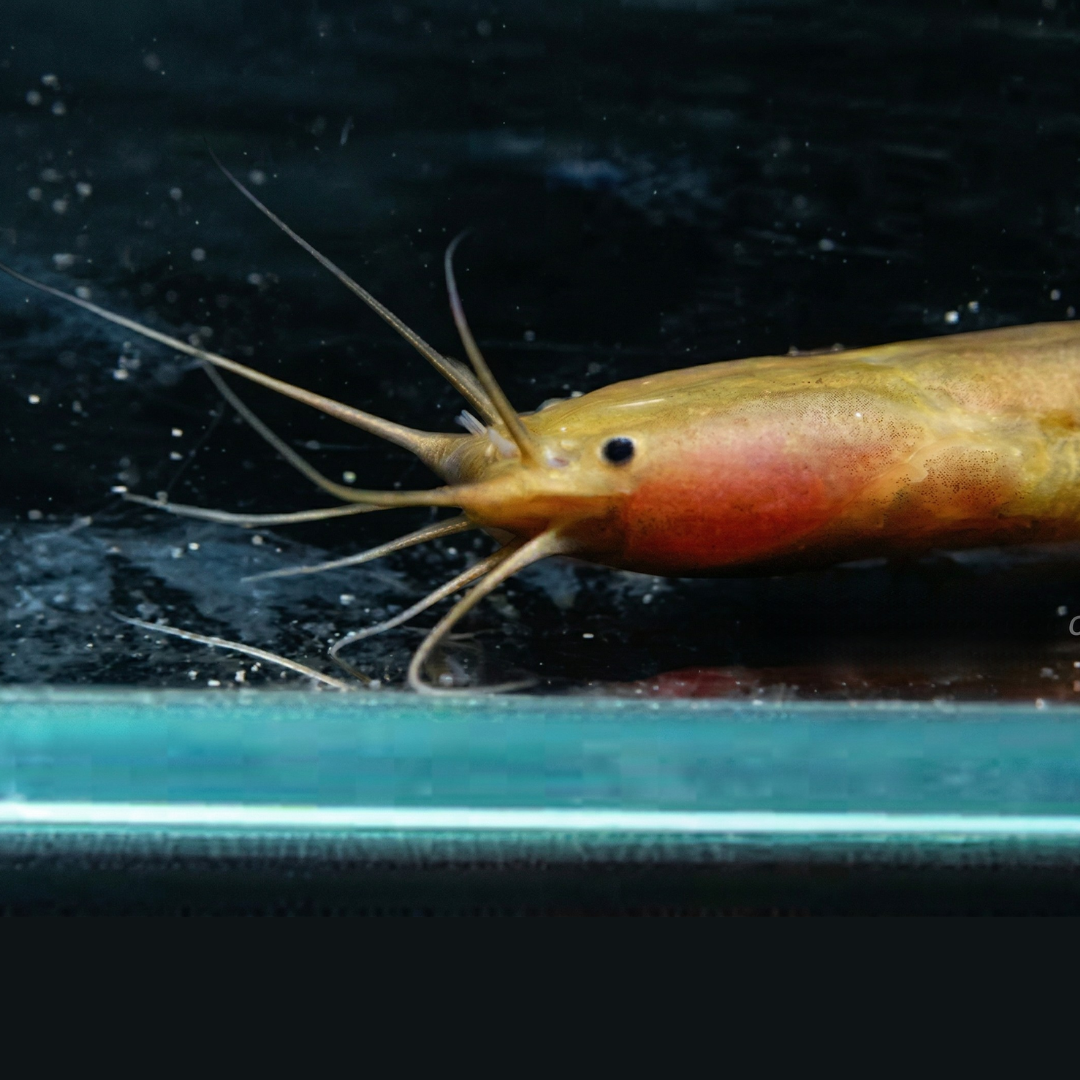
アフリカンイールキャットは、中央アフリカのコンゴ川水系などに生息するヒレナマズ科の極めて特異な一種です。その名の通り、ウナギのように細長い体型を持ち、胸ビレや腹ビレといった対ビレを完全に、あるいはほぼ完全に消失させているのが最大の特徴です。この形態は、泥深い沼地や樹木の根の隙間に潜り込むための究極の適応結果と言えます。しかし、本種の真の驚きは、水から這い上がり陸上で能動的に獲物を狩る能力にあります。魚類でありながら首を振るような動作で陸上の昆虫を捕食するその姿は、脊椎動物が水から陸へと進出した進化の過程を解き明かすための重要なモデルとして、世界中の科学者から注目されています。観賞魚としては、その奇抜な外見と、強健で人工飼料にも馴染みやすい性質から、古代魚や怪魚を好む愛好家の間で根強い人気を誇ります。The African Eel Catfish is a highly unique species within the Clariidae family, native to the Congo River basin in Central Africa. As the name suggests, it possesses an extremely elongated, eel-like body and is most notable for the complete or near-complete loss of its paired fins (pectoral and pelvic fins). This morphology is an ultimate adaptation for navigating through deep mud and tangled tree roots. However, its most astonishing trait is the ability to crawl out of the water and actively hunt prey on land. Despite being a fish, its method of predating terrestrial insects—using neck-like body movements—serves as a vital model for scientists studying the evolution of vertebrates from water to land. In the aquarium hobby, it remains popular among enthusiasts of “monster fish” and ancient species due to its bizarre appearance and hardy nature.
基本情報 / Basic Information
学名 / Scientific Name
Channallabes apus
通称 / Common Name
アフリカンイールキャットAfrican Eel Catfish
分類 / Family
ナマズ目ヒレナマズ科Siluriformes Clariidae
英名 / English Name
African Eel Catfish
分布 / Distribution
中央アフリカ(コンゴ民主共和国、アンゴラなどのコンゴ川水系)Central Africa (Congo River basin in countries such as DR Congo and Angola)
最大体長 / Max Size
約33センチメートル〜42センチメートルApproximately 33 cm to 42 cm
寿命 / Lifespan
約10年以上(飼育下)Approximately 10+ years (In captivity)
飼育環境 / Aquarium Environment
水槽サイズ / Tank Size
90cm規格水槽(約155リットル)以上。終生飼育には120cmワイド水槽(約320リットル)が理想的です。90cm standard tank (approx. 155L) or larger. A 120cm wide tank (approx. 320L) is ideal for lifelong care.
水温 / Temperature
22度〜25度。日本の夏場は高水温になりやすいため、水槽用クーラー等での管理を推奨します。22°C to 25°C. Cooling systems are recommended during Japanese summers as temperatures can rise excessively.
水質 / Water Quality
pH 6.5〜7.8(弱酸性〜弱アルカリ性)。適応力は高いですが、清潔な水を好みます。pH 6.5 to 7.8 (slightly acidic to slightly alkaline). While adaptable, they prefer clean water.
レイアウト / Layout
田砂などの粒子が細かく角のない底砂を厚めに敷きます。塩化ビニル管や流木など、全身を隠せるシェルターを複数設置してください。Use a thick layer of fine, smooth sand like “Ta-suna”. Provide multiple shelters such as PVC pipes or driftwood where they can hide their entire body.
注意点 / Precautions
極めて脱走が多いため、蓋の隙間をウールマット等で完全に塞ぎ、蓋の上に重石を置くなどの徹底した飛び出し防止策が必要です。They are notorious escape artists. It is essential to block all gaps in the lid with wool mats and place weights on top to prevent them from jumping out.
餌と給餌 / Feeding
餌の種類 / Diet
肉食傾向の強い雑食性。人工飼料(肉食魚用タブレット)、ミミズ、冷凍赤虫、エビなどを好みます。Omnivorous with a strong carnivorous leaning. They enjoy sinking pellets for carnivores, earthworms, frozen bloodworms, and shrimp.
給餌のポイント / Feeding Tips
夜行性のため、消灯後に給餌するのが効果的です。餌の匂いを察知すると非常に素早く動き、強力な顎で噛みつきます。Since they are nocturnal, feeding after lights-out is most effective. They move remarkably fast when they smell food and strike with powerful jaws.
性格と混泳 / Temperament and Tank Mates
性格 / Temperament
日中は隠蔽的ですが、夜間や捕食時は活動的かつ貪欲です。強力な咬合力を持つため、同居魚には注意が必要です。Hidden during the day but active and greedy at night or during feeding. Caution is needed with tank mates due to their strong bite.
混泳の相性 / Compatibility
同種同士の混泳は可能です。底生魚(ポリプテルスや他のナマズ等)とは争うため避け、口に入らないサイズの中・上層を泳ぐ魚が適しています。Intraspecific cohabitation is possible. Avoid other bottom-dwellers like Polypterus; instead, choose mid-to-top water swimmers large enough not to be eaten.
病気と対策 / Diseases and Prevention
かかりやすい病気 / Common Diseases
体表の傷からの水カビ病、エロモナス感染症。Saprolegniasis (water mold) and Aeromonas infections resulting from skin injuries.
対策と予防 / Prevention
鱗がないため、角のある砂利を避け、体表を傷つけないようにします。定期的な換水で水質を安定させることが最大の予防です。Since they lack scales, avoid sharp gravel to prevent skin damage. Maintaining stable water quality through regular water changes is the best prevention.
増やし方(繁殖) / Breeding
雌雄の判別 / Sexing
成熟したメスはオスよりも胴回りが太くなり、全体的に大型化する傾向があります。Mature females tend to have a thicker girth and reach a larger overall size than males.
繁殖形態 / Reproduction
泥の中や樹木の根の隙間に巣を作り、そこで産卵・繁殖を行うと考えられています。It is believed they build nests in mud or among tree roots where they spawn and reproduce.
繁殖のポイント / Breeding Tips
飼育下での繁殖例は極めて稀です。広い環境で複数匹を飼育し、換水による刺激(雨季の模倣)を与えることが鍵となる可能性があります。Breeding in captivity is extremely rare. Providing a spacious environment with multiple individuals and simulating the rainy season through water changes may be key.
雑学と豆知識 / Trivia and Fun Facts
1. 進化のミッシングリンクを埋める存在1. A Link in the Evolutionary Chain
アフリカンイールキャットが世界的に注目されたのは、2006年の「陸上捕食」の発見でした。水中では吸い込み(サクション)で餌を食べる魚類が、どのようにして空気中で獲物を噛みつくようになったのか。本種は首の代わりとなる体幹の屈曲を利用し、陸上の虫を仕留める独自のメカニズムを確立しており、魚類が陸上へ進出した初期の姿を現代に伝える「生きたモデル」として極めて重要な存在です。The African Eel Catfish gained global attention with the discovery of its terrestrial hunting in 2006. While most fish rely on suction feeding underwater, this species has established a unique mechanism using its trunk to mimic a neck for striking land-based insects, serving as a vital “living model” for the early evolution of vertebrates moving onto land.
2. 驚異の噛む力(バイトフォース)2. Extraordinary Bite Force
ウナギのような細長い体を手に入れる際、本種は頭蓋骨を極限まで狭く進化させました。しかし、その代償として失われた筋肉のスペースを補うように、下顎を動かす筋肉を頭部の外側にまで肥大させています。この発達した筋肉により、泥の中で出会う硬い甲虫類などの獲物を、文字通り「物理的に破壊して食べる」強力な噛む力を獲得しました。To achieve its eel-like body, the species evolved an extremely narrow skull. To compensate for the lost internal space, it developed hypertrophied jaw muscles that bulge on the sides of its head. This powerful musculature grants it the bite force necessary to physically crush and eat hard-shelled prey like beetles found in the mud.
3. 学名の由来に隠された特徴3. Meaning Behind the Scientific Name
学名の「apus」は、ギリシャ語で「無い」を意味する「a-」と「足」を意味する「pous」を組み合わせた言葉です。つまり「足(ヒレ)が無い」という意味であり、本種の最も目立つ解剖学的特徴である胸ビレと腹ビレの消失を直接的に表しています。初期の分類学者が、そのあまりにも極端な姿に驚きを込めて命名したことがうかがえます。The specific name “apus” combines the Greek “a-” (without) and “pous” (foot). Meaning “without feet,” it directly refers to the loss of pectoral and pelvic fins, the species’ most striking anatomical feature. It reflects the astonishment early taxonomists felt when encountering such an extreme form.
4. 現地の知恵:ヤマアラシの針で釣る魚4. Local Wisdom: Fishing with Porcupine Quills
生息地のコンゴ川流域では、本種は伝統的な手法で捕獲されています。日中は泥の奥深くに潜んでいるため、現地の漁師はヤマアラシの針を加工した鋭い釣り針を作り、それにシロアリを付けて泥の穴の中へと差し込みます。本種の隠蔽的な生態を熟知した、現地住民の深い観察眼から生まれた非常にユニークな漁法です。In its native Congo basin, the fish is caught using traditional methods. Since it hides deep in the mud during the day, local fishers use sharpened porcupine quills as hooks, baited with termites, and lower them directly into mud burrows—a unique technique born from deep observation of the species’ secretive ecology.
5. 市場での同定:純正個体と近似種の違い5. Market Identification: True vs. Similar Species
日本のアクアリウム市場では、ナイジェリア産のジムナラベス・ティプス(Gymnallabes typus)が「アフリカンイールキャット」として流通することがあります。しかし、本物の「コンゴ便」のアフリカンイールキャット(C. apus)は、胸ビレが完全に欠損しているか、目視困難なほど小さいのが特徴です。購入時には、胸ビレの有無や原産地を確認することで、より希少な純正個体を見極めることができます。In the Japanese hobby, Gymnallabes typus from Nigeria is often sold as the African Eel Catfish. However, the true C. apus from the Congo lacks pectoral fins entirely or has them so small they are invisible to the eye. Buyers can identify the rare genuine species by checking for the absence of pectoral fins and confirming the origin.
まとめ / Conclusion
アフリカンイールキャットは、単に「ウナギに似た変わったナマズ」というだけでなく、脊椎動物が未知の陸上世界へと踏み出した歴史をその身に宿した、まさに生きた教科書のような存在です。その飼育は、適切な脱走対策と優しい底砂の選択という基本を抑えることで、自宅の水槽内で進化のダイナミズムを毎日観察できるという、至高の知的体験をもたらしてくれます。The African Eel Catfish is more than just an odd, eel-like catfish; it is a living textbook that carries the history of vertebrates stepping into the unknown terrestrial world. By following the basics of proper escape prevention and selecting gentle substrate, keeping this species offers a supreme intellectual experience, allowing you to witness the dynamism of evolution daily within your own home aquarium.
もしあなたが、生命の神秘と進化の歩みに深い敬意を抱くアクアリストであれば、この「足を持たない冒険者」を水槽に迎えることは、素晴らしい選択となるでしょう。彼らの隠れ家から覗く長いヒゲと、夜の静寂の中で見せる俊敏な動きは、あなたのアクアリウムライフにこれまでにない奥深さと感動を与えてくれるはずです。If you are an aquarist with a deep respect for the mysteries of life and the journey of evolution, welcoming this “footless adventurer” into your tank would be a wonderful choice. Their long barbels peeking from shelters and their agility in the stillness of the night are sure to bring unprecedented depth and excitement to your aquarium life.
Van Wassenbergh, S., et al. (2006). A terrestrial feeding mechanism in fish. Nature, 440(7086), 881.
Devaere, S., Adriaens, D., & Verraes, W. (2007). Survey of the African anguilliform Clariidae (Teleostei, Siluriformes), with a description of two new species and notes on the phylogenetic position of Channallabes and Gymnallabes. Belgian Journal of Zoology, 137(1), 101-109.
Gunther, A. (1873). New species of fish from the West Coast of Africa. Annals and Magazine of Natural History. (Channallabes apusの初記載論文)


 ポチップ
ポチップ




コメント